
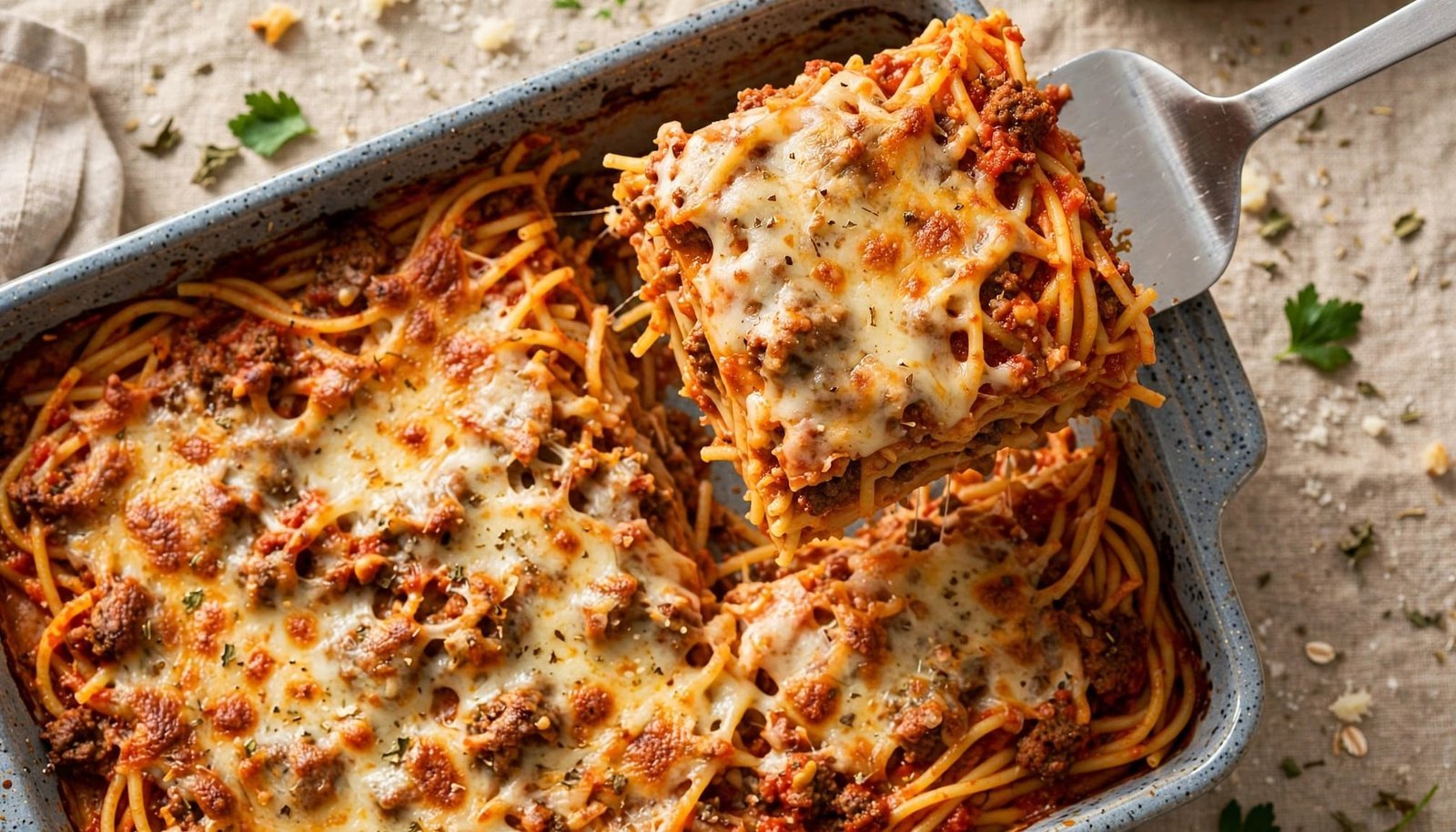
This easy baked spaghetti recipe uses everyday ingredients and cooked pasta, so you don’t need to guess how much liquid the noodles will absorb.
You’ll brown the beef, stir together a moist sauce, then bake everything under mozzarella and Parmesan. Start with the amounts below, then follow the baking steps and practical tips for making dinner ahead and keeping leftovers tender.
What You’ll Need for Baked Spaghetti
Use a 9-by-13-inch baking dish for a casserole with room for the sauce and cheese topping. Gather these ingredients before starting:
- 8 ounces dry spaghetti.
- 1 pound ground beef.
- One 24-ounce jar tomato sauce or marinara.
- One 14.5-ounce can diced tomatoes, undrained.
- 2 cups shredded mozzarella.
- 1/2 cup grated Parmesan.
- 2 garlic cloves, minced.
- 1 teaspoon Italian seasoning.
- 1/2 teaspoon salt, or to taste, plus salt for the pasta water.
- 1/4 teaspoon black pepper.
- A little oil or cooking spray for the baking dish.
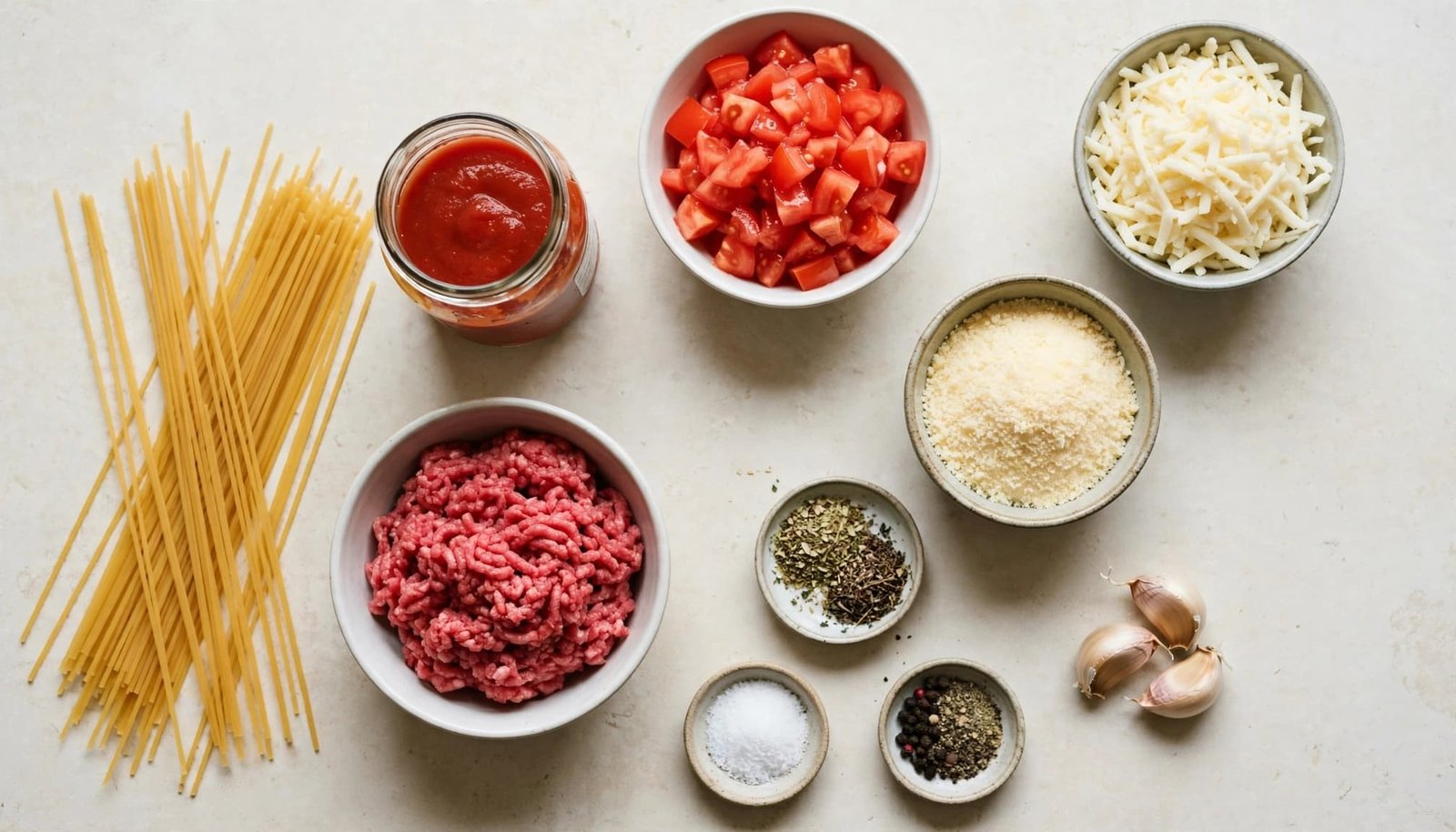
Ground beef gives the sauce its savory flavor, while diced tomatoes add texture and moisture. Mozzarella forms the melted topping, and Parmesan adds a salty, nutty finish.
Freshly shredded low-moisture mozzarella melts smoothly, but pre-shredded cheese works when you want less preparation. Taste the sauce before adding all the salt, since jarred sauce and Parmesan already contain some.
This recipe uses cooked spaghetti, so it doesn’t need broth or extra baking liquid. Keep the juice from the diced tomatoes; it helps the pasta stay moist in the oven.
Easy Baked Spaghetti Recipe With Ground Beef and Cheese
Prepare the pasta and beef sauce before assembling the casserole. A large skillet makes mixing easier, although you can use the drained pasta pot if the skillet feels crowded.
Step 1: Cook the Pasta and Heat the Oven
Heat the oven to 350°F, then lightly grease your baking dish. Place an oven rack near the middle so the casserole heats evenly without sitting too close to the upper heating element.
Bring a large pot of salted water to a boil. Add the spaghetti and cook according to the package directions until just tender, with a slight firmness in the center.
Drain well and set aside while you finish the sauce. Don’t leave the spaghetti sitting in its cooking water, since it will continue softening. Avoid cooking it until completely soft; another 30 minutes in the oven can make those strands lose their shape.
Read also: 16 Easy Apple Pie Filling and Cake Mix Recipes
Step 2: Brown the Beef and Build the Sauce
Put the ground beef in a large skillet over medium-high heat. Break it into small pieces as it cooks, then continue until browned and cooked to 160°F.
Drain excess fat carefully before adding the remaining ingredients. A small amount of fat carries flavor, but a visible pool can leave the finished casserole greasy.
Reduce the heat to medium. Stir in the garlic and Italian seasoning, then cook for about 30 seconds, until fragrant.
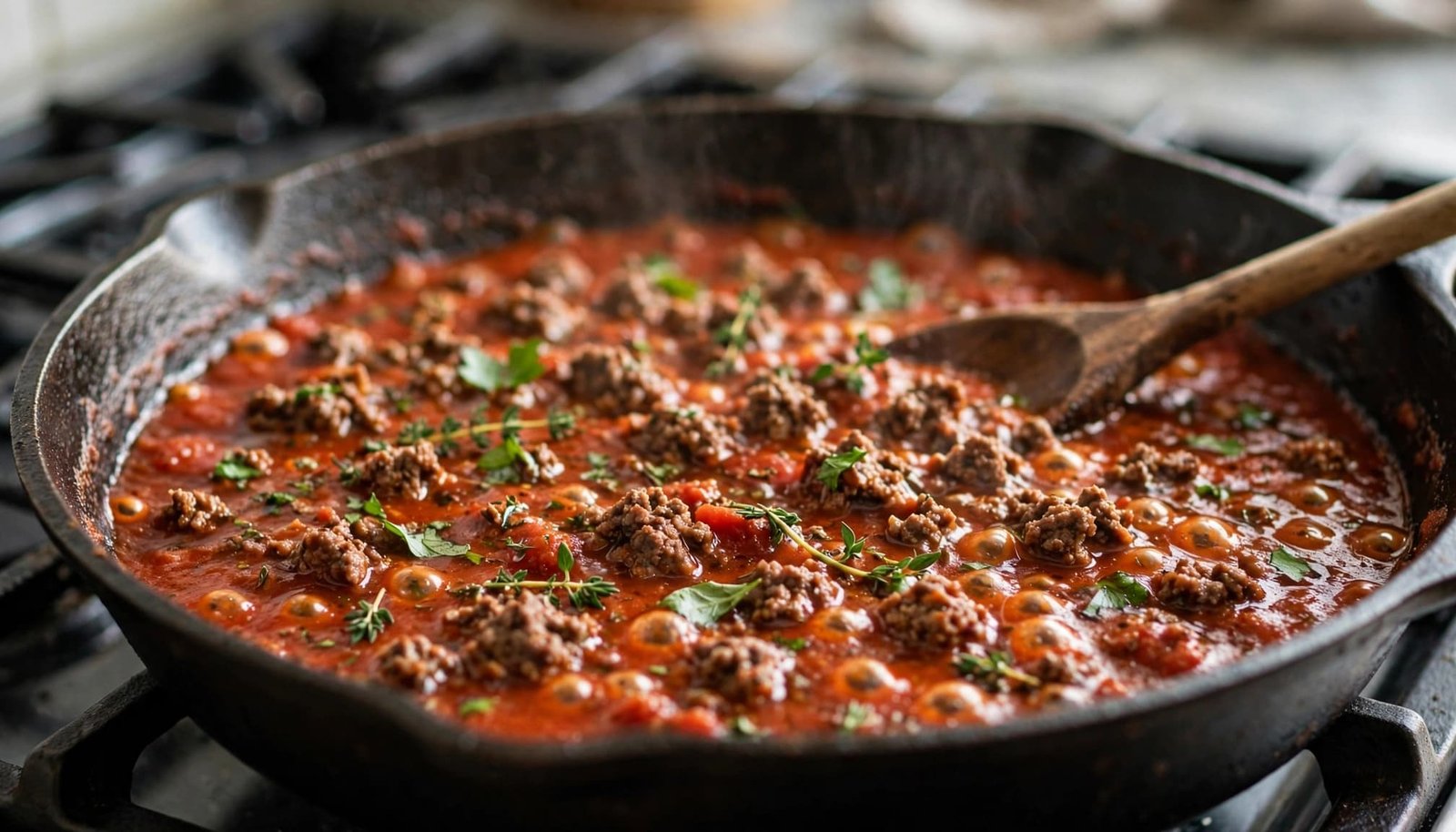
Add the tomato sauce and undrained diced tomatoes. Simmer gently for about 5 minutes, stirring occasionally, then taste and adjust the salt and pepper.
Keep the sauce loose enough to coat the spaghetti easily. Don’t simmer it down into a thick paste, since the pasta will absorb some moisture during baking.
Step 3: Combine, Top, and Bake Until Bubbly
Fold the drained spaghetti into the beef sauce until the strands are coated throughout. Lift and turn the pasta gently rather than stirring hard, which can break softer noodles.
Transfer everything to the prepared dish and spread it into an even layer. Pull any exposed strands into the sauce so they don’t become hard around the edges.
Scatter the mozzarella evenly over the top, then add the Parmesan. Spread the cheese to the corners rather than piling it in the middle.
Bake uncovered for about 30 minutes, until the cheese has melted and the sauce bubbles around the edges. Check the center with a food thermometer; the casserole should reach 165°F before serving. If the center needs longer, continue baking and cover loosely if the cheese is already browned.
Read also: 21 Easy Thanksgiving Appetizers for Every Kind of Gathering
Step 4: Rest the Casserole Before Serving
Set the dish on a heatproof surface and let it rest for 5 to 10 minutes. This gives the sauce time to settle, so it doesn’t immediately run away from each serving.
Use a broad spatula for portions or a large spoon for softer scoops. Without an egg-based binder, this casserole stays loose rather than cutting into firm squares. Serve while warm, with a green salad or cooked vegetables if you want a simple side.
Simple Tips for Tender Pasta and a Saucy Casserole
The pasta should be tender enough to eat before baking, but still hold its shape when lifted. Mushy spaghetti won’t become firmer in the oven, even with a crisp cheese topping.
Drain the beef before adding tomatoes so the sauce stays cohesive rather than oily. Once everything is combined, each strand should look coated, with a little sauce visible between the noodles.
Melted cheese can look ready before the middle is hot. Check the center temperature rather than judging by the topping alone.
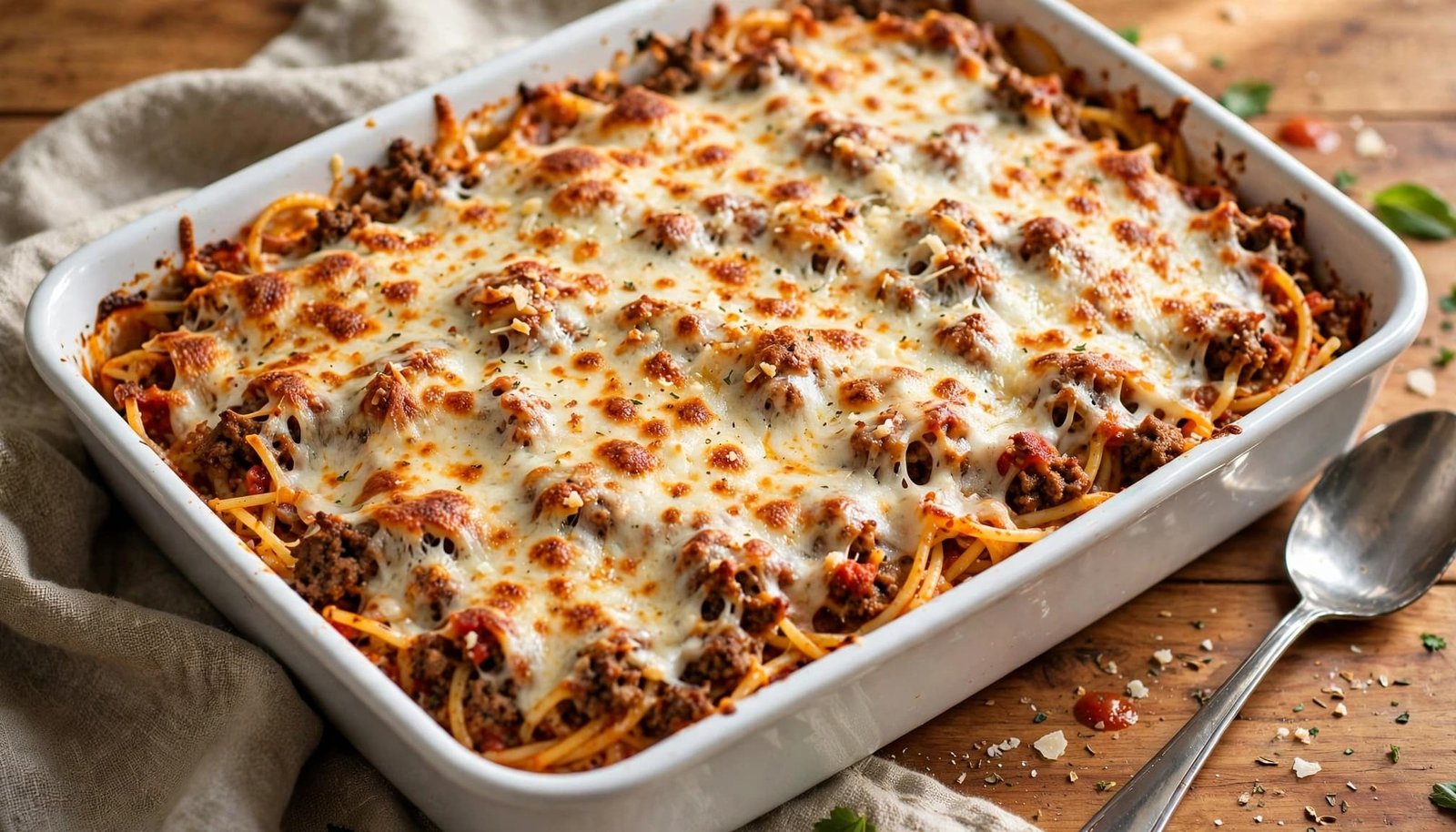
If the topping browns before the casserole is hot throughout, cover loosely with foil and continue baking. Keep the foil raised slightly so it doesn’t pull away the melted cheese.
Glass, ceramic, and metal dishes heat differently, and ovens don’t always bake at the same pace. Use bubbling sauce as a visible cue, then confirm a 165°F center with your thermometer. Avoid extending the bake simply to darken the cheese, since that can dry the edges.
Easy Ways to Change Up the Beef and Cheese
Keep this easy baked spaghetti recipe familiar by changing one or two ingredients at a time. Ground turkey works in place of beef; cook it to 165°F before adding the sauce.
Italian sausage adds more seasoning and richness. For another version, our fall casserole dinner ideas include baked spaghetti with Italian sausage.
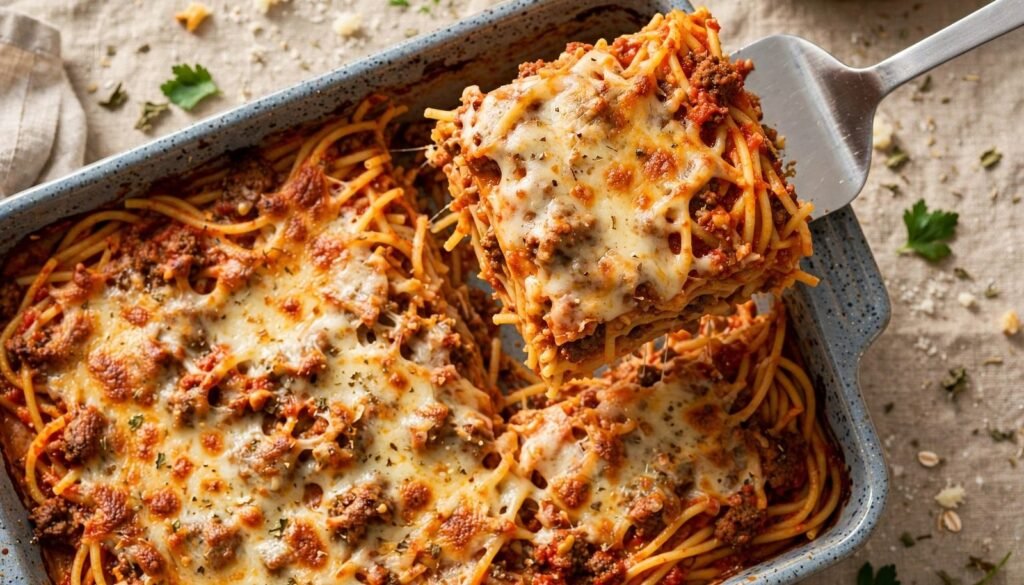
Add sautéed mushrooms or spinach if you want vegetables in the filling. Cook mushrooms until their released liquid evaporates, and squeeze thawed frozen spinach thoroughly before stirring it in. Extra vegetable moisture can leave watery sauce beneath the pasta.
For a different topping, replace half the mozzarella with shredded provolone. Keep the Parmesan for its sharper flavor, then add a small pinch of red pepper flakes to the sauce if you want heat. Taste before adding more, especially when using spicy sausage.
Make-Ahead, Storage, and Reheating Tips
Assemble the casserole ahead, cover it, and refrigerate until you’re ready to bake. A refrigerator-cold dish needs longer than the freshly assembled version, so use the center temperature as your stopping point.
Bake covered initially to hold moisture, then uncover near the end to finish the topping. Use a baking dish suitable for refrigerator-to-oven cooking to avoid damage from sudden temperature changes.
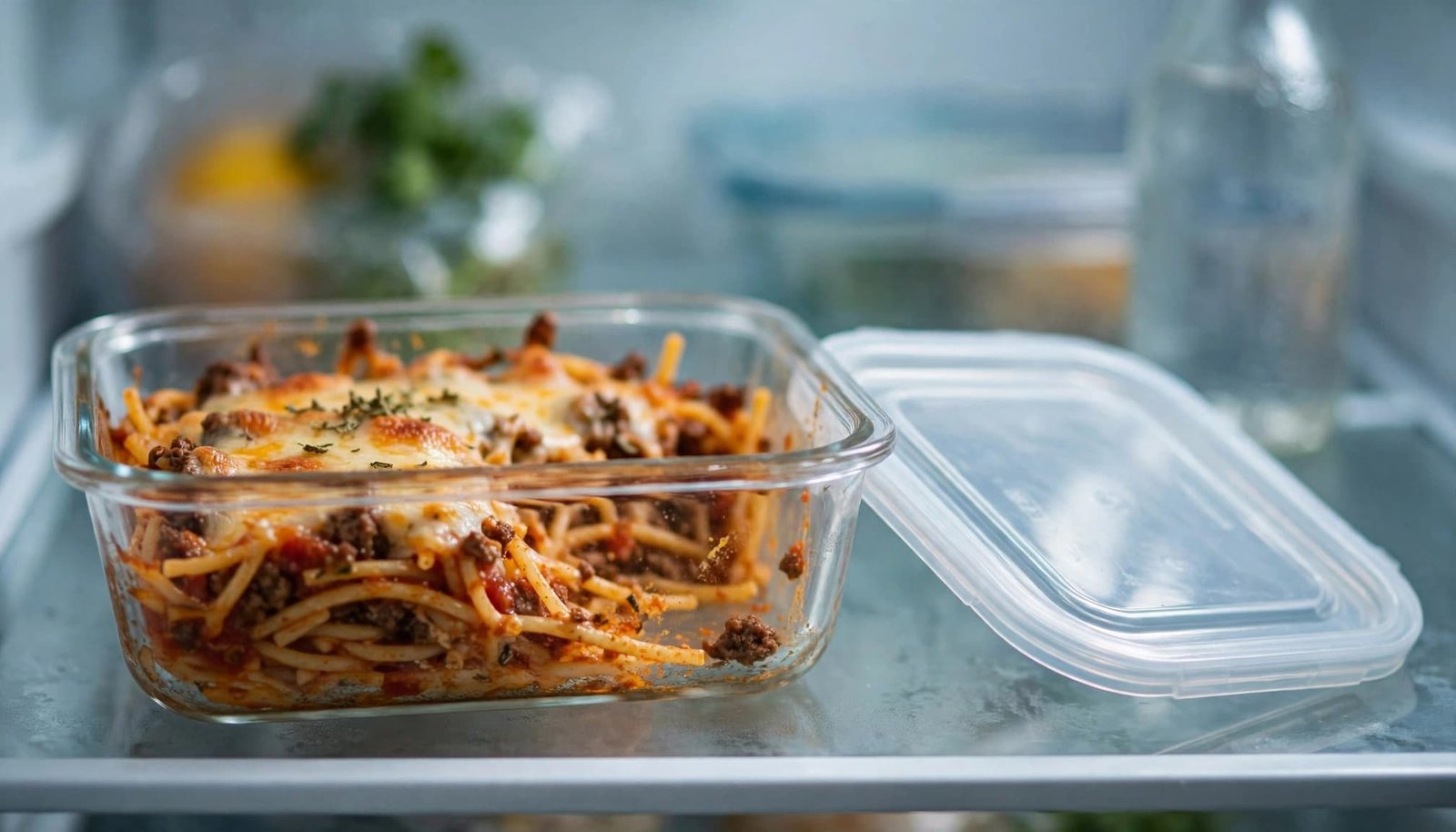
Divide leftovers into covered, shallow containers and refrigerate within 2 hours. Don’t leave the whole casserole on the counter until completely cool; smaller portions cool more quickly.
Use refrigerated leftovers within 3 to 4 days, or freeze them for longer storage. USDA’s leftover food safety guidance also recommends reheating leftovers to 165°F.
Reheat portions covered in the microwave or an oven-safe dish. Add a spoonful of sauce or water if the pasta looks dry, then heat until the center reaches 165°F. When microwaving, rotate the container and check several places, since the edges may become hot before the middle.
Frequently Asked Questions
Can I Use Leftover Cooked Spaghetti?
Yes, use properly refrigerated spaghetti and loosen any clumps before mixing it into the sauce. Warm pasta may need slightly less baking time, while cold pasta can take longer. Add extra sauce if the strands look dry, then check for a 165°F center.
Can I Assemble Baked Spaghetti the Night Before?
Yes, cover the assembled casserole and refrigerate it overnight, then bake it the next day. Allow extra time because the filling starts cold. Keep it covered during the first part of baking and check that the center reaches 165°F before serving.
How Do I Keep Baked Spaghetti From Drying Out?
Coat all the noodles with sauce before adding the cheese, and avoid overcooking them during the initial boil. Cover the casserole loosely if the topping browns before the center is hot. Once it reaches 165°F, remove it rather than leaving it in the oven to stay warm.
Can I Freeze Baked Spaghetti?
Yes, freeze baked spaghetti in tightly covered, freezer-safe containers, preferably in meal-sized portions. Thaw overnight in the refrigerator for more even reheating, or reheat directly from frozen with additional time. Keep portions covered and heat until the center reaches 165°F.
A Familiar Dinner You Can Make Your Own
This easy baked spaghetti recipe brings everyday ingredients together in a warm, shareable meal. Keep the pasta just tender and the sauce generous, then give the casserole a short rest before serving.
Try it as written first, then change the cheese or add a favorite cooked vegetable next time. A little care with moisture keeps both dinner and the leftovers tender.
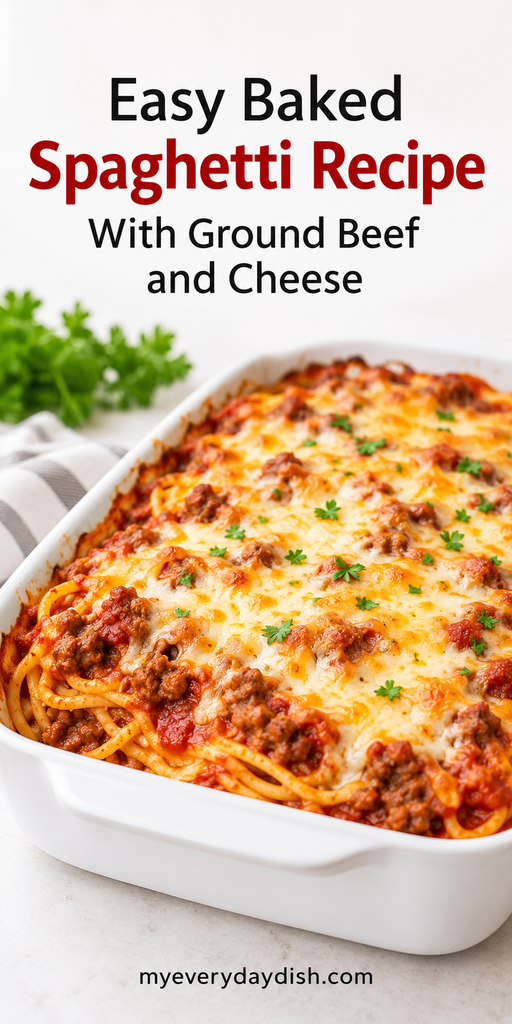
Save the pin for later

I’m the creator of My Everyday Dish, a food blog focused on easy homemade recipes, comforting family meals, simple baking, and seasonal food ideas. I love finding practical ways to make everyday cooking less stressful and more enjoyable. Here, I share recipes with simple ingredients, clear instructions, and plenty of flavor, helping you make delicious meals and treats you’ll feel confident serving at home.
Leave a Reply