
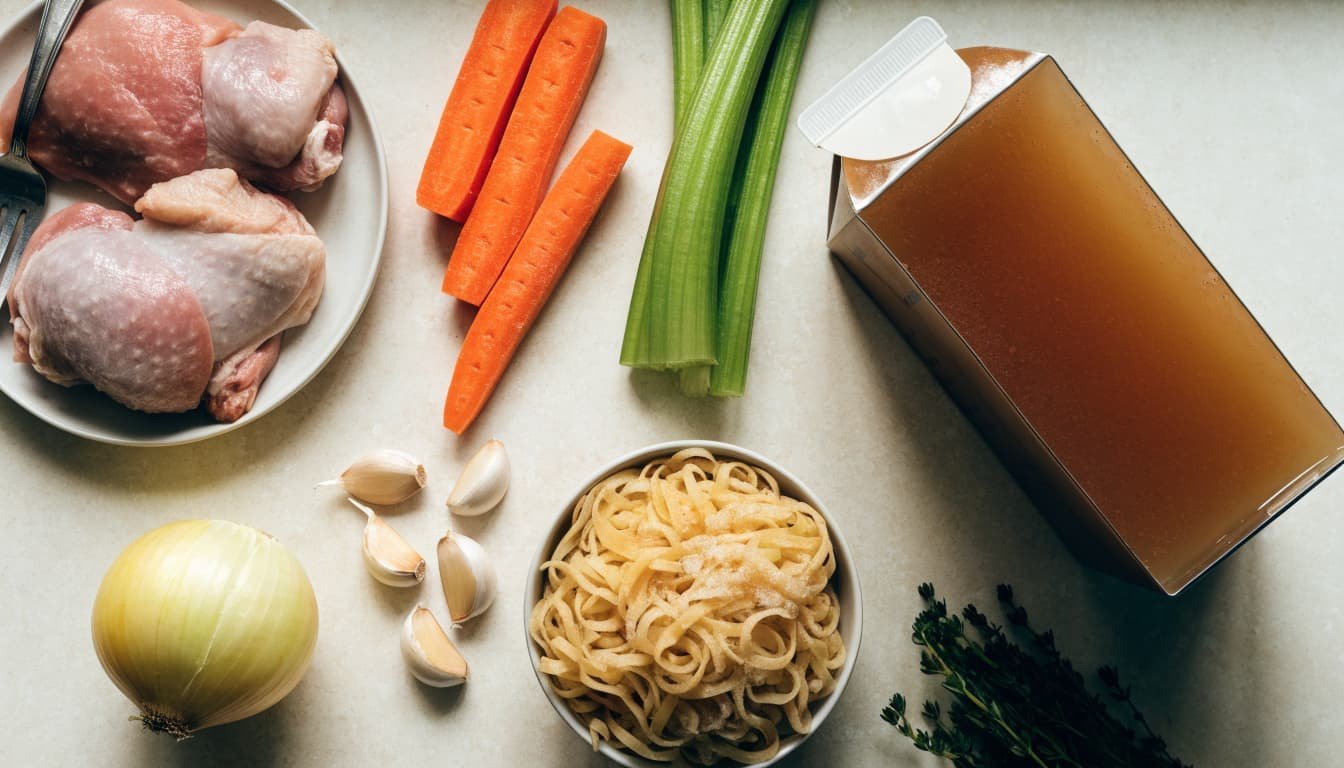
Homemade chicken noodle soup with frozen egg noodles gives you a hearty family meal without rolling dough or cooking pasta separately. The noodles cook right in the broth, where they soften and give the soup a little body.
Start with chicken, carrots, celery, and a few pantry seasonings, then add the noodles near the end so they keep their shape. You’ll get tender chicken and a savory broth without a long ingredient list. The measured recipe below makes six servings, followed by the cooking steps and small adjustments that help the soup turn out well.
The Best Homemade Chicken Noodle Soup Recipe With Frozen Egg Noodles
Yield: 6 servings Prep time: 15 minutes Cook time: About 45 minutes, depending on noodle thickness Total time: About 1 hour
This recipe starts with raw, boneless chicken thighs. Use a 6-quart pot so there’s room for the noodles to expand.
Ingredients
- 2 tablespoons olive oil or butter
- 1 medium yellow onion, diced
- 3 medium carrots, peeled and sliced about 1/4 inch thick
- 3 celery stalks, sliced
- 3 garlic cloves, minced
- 1 teaspoon dried thyme
- 1 bay leaf
- 8 cups low-sodium chicken broth, plus extra for thinning
- 1 1/2 pounds raw boneless, skinless chicken thighs, fully thawed
- 12 ounces frozen egg noodles
- 1/2 teaspoon salt, plus more to taste
- 1/4 teaspoon black pepper, plus more to taste
- 2 tablespoons chopped fresh parsley
Recipe at a Glance
Soften the vegetables in oil, then briefly cook the garlic and thyme. Add broth, chicken, bay leaf, salt, and pepper; bring to a boil, then simmer until the chicken reaches 165°F.
Shred the chicken and return it to the pot. Add frozen noodles, cook until tender according to the package, then finish with parsley.
Read also: Easy Tortellini Soup Recipe With Cream Cheese
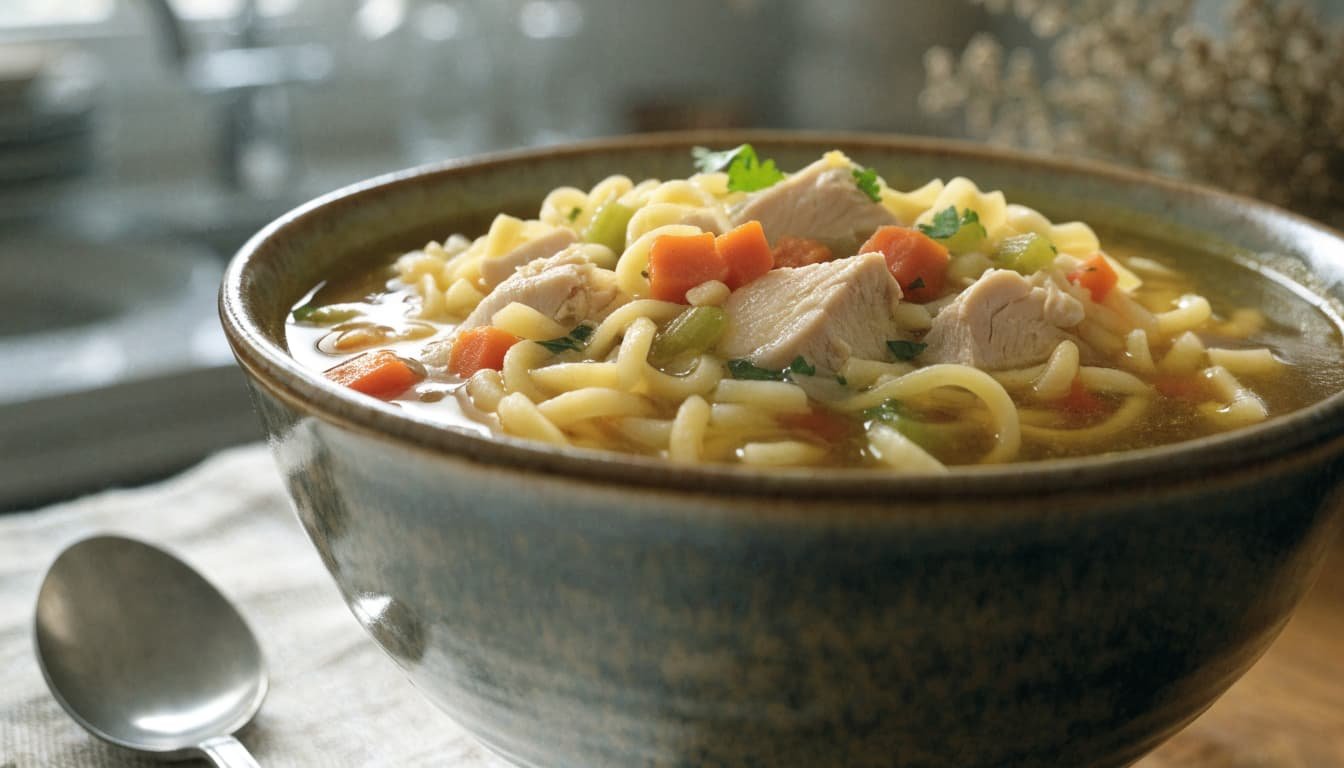
What You’ll Need for a Flavorful Pot of Chicken Noodle Soup
The broth carries much of the flavor in chicken noodle soup with frozen egg noodles. Choose one you enjoy on its own, since herbs won’t cover an unpleasant or overly salty base.
Broth, Chicken, and Vegetables
Low-sodium broth leaves room to adjust the seasoning after the chicken cooks. Homemade broth works too; if it’s unsalted, expect to add a little more salt near the end.
Chicken thighs stay tender during simmering and shred into pieces that fit easily on a spoon. Trim away large pieces of surface fat before cooking so the broth doesn’t become greasy.
Onion and carrots bring sweetness, while celery adds a mild savory flavor. Cut the vegetables into similar-size pieces so you don’t end up with soft celery and firm carrots.
Herbs and Frozen Egg Noodles
Dried thyme flavors the broth as it simmers, while parsley adds a fresher taste after cooking. Keep the bay leaf whole so you can remove it before serving.
Leave the noodles frozen until you’re ready to add them. Package directions are the best timing guide because frozen egg noodles vary in thickness and density.
Check whether your package calls for a gentle boil or a simmer. Keep enough movement in the broth to cook the noodles evenly without breaking up the vegetables.
Read also: Easy Slow Cooker Italian Penicillin Soup Recipe
How to Make Chicken Noodle Soup With Frozen Egg Noodles
1. Sauté the Vegetables and Build the Broth
Heat the oil over medium heat. Add onion, carrots, and celery, then cook for 6 to 8 minutes, stirring occasionally, until the onion softens.
Stir in garlic and thyme for 30 seconds. Add broth, bay leaf, chicken, salt, and pepper. Bring to a boil, then lower the heat to a gentle simmer.
2. Cook the Chicken Until Tender and Safe
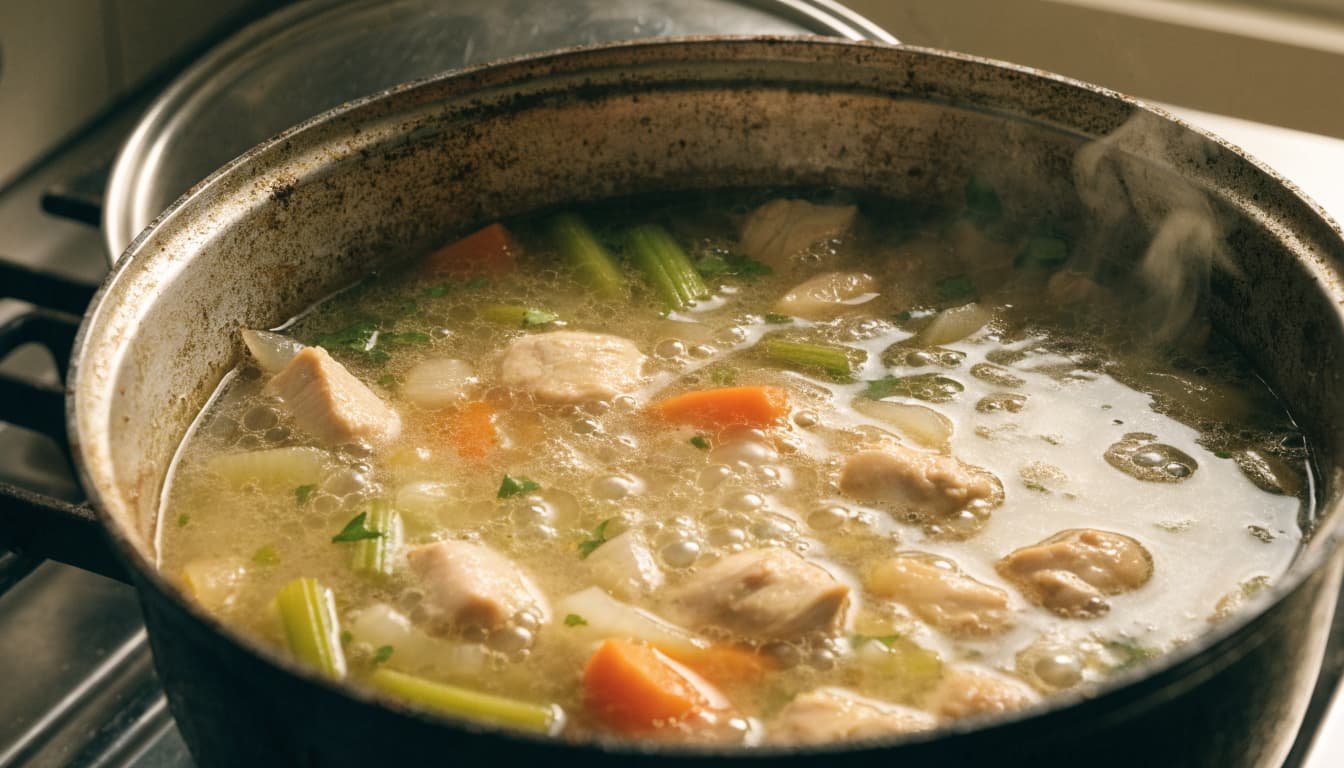
Simmer partially covered for about 20 to 25 minutes. Check each thigh at its thickest point with a food thermometer; it must reach 165°F.
Move the chicken to a clean plate, shred it, then return it to the pot. Keep raw-poultry utensils separate from cooked food, following USDA food-handling guidance.
3. Add the Frozen Egg Noodles at the End
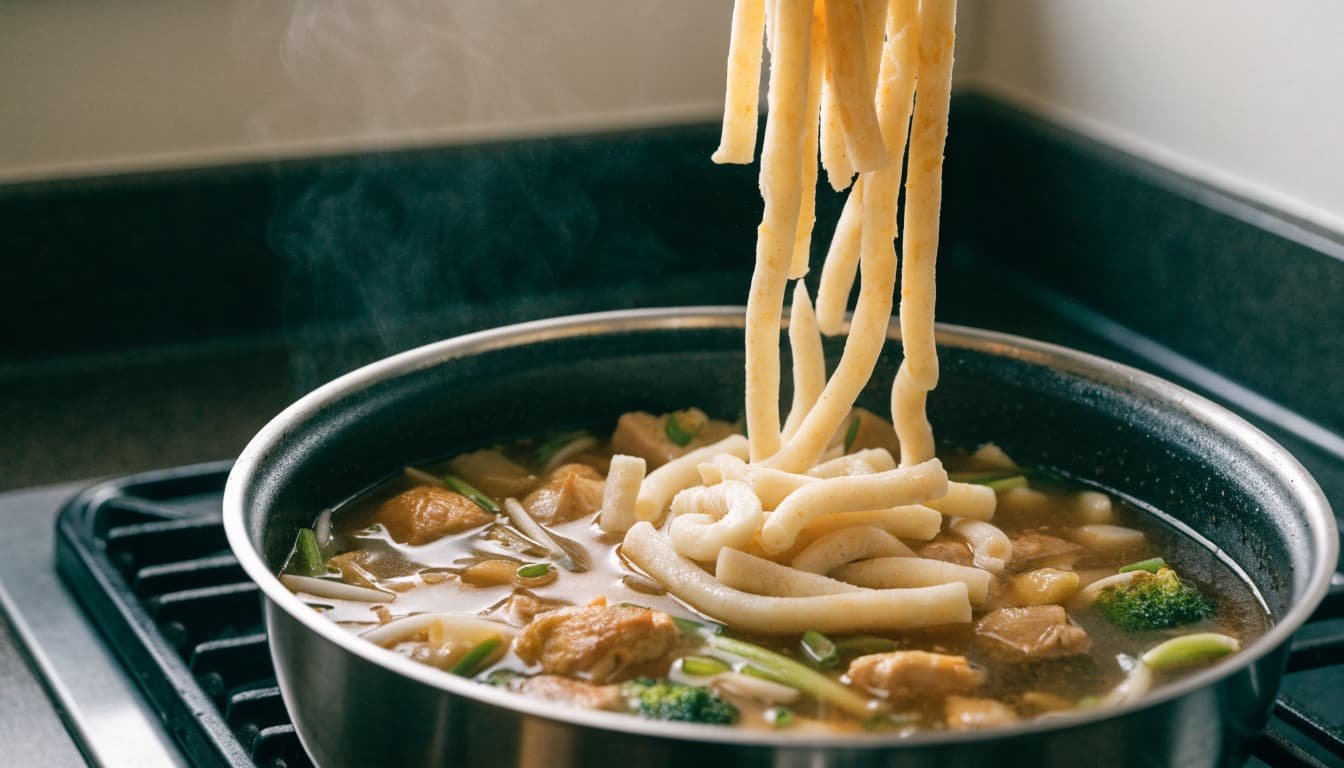
Make sure the carrots are tender before adding the frozen noodles. Stir gently to separate them, then cook according to the package directions.
Some thinner noodles take about 8 to 12 minutes; thicker varieties need longer. Begin checking a few minutes early. They’re ready when the center is tender rather than firm or doughy.
4. Taste, Adjust, and Serve Warm
Remove the bay leaf, then taste a spoonful of broth after it cools slightly. Add salt and pepper in small amounts, stirring before tasting again.
Stir in parsley and ladle into bowls as soon as the noodles are tender. Leaving the pot over heat will continue softening them.
Simple Ways to Make the Soup Taste Its Best
Keep the broth at a gentle simmer after its initial boil. Small bubbles should break the surface without tossing the chicken and vegetables around the pot.
A hard boil can break up the vegetables and reduce the broth faster than you want. If the liquid drops noticeably while the chicken cooks, add a little broth before the noodles go in.
Adjust the Broth Before Adding More Salt
Taste after the chicken has cooked, then season again after the noodles soften. The broth becomes more concentrated as water evaporates, so a generous early addition of salt can leave it too salty.
Frozen noodles also absorb liquid as they cook and sit. Add warm broth, about 1/2 cup at a time, until the soup has the balance of noodles and liquid you prefer.
Choose Your Noodle Texture
Cook the noodles separately if you want firmer noodles or expect several days of leftovers. Follow the package directions in a separate saucepan, then divide the cooked noodles among bowls before adding soup.
Cooking them in the pot is simpler and gives the broth more body. Separate cooking keeps the broth lighter, but it adds another pan to wash.
Stop cooking when the noodle center becomes tender. Noodles left in hot broth keep softening even after the burner is off.
Easy Swaps, Leftover Storage, and Freezer Tips
Make a Few Practical Swaps
Use boneless chicken breasts instead of thighs if you prefer leaner meat. Start checking their temperature earlier, then remove them as soon as they reach 165°F so they don’t become dry.
For a cooked-chicken version, omit the raw thighs and simmer the vegetables in broth until tender. Add about 3 cups of shredded rotisserie chicken during the final few minutes of noodle cooking and heat thoroughly.
Replace the dried thyme with 1 tablespoon of fresh thyme leaves if available. If you don’t have parsley, leave it out rather than adding extra dried thyme.
For another cooked-chicken dinner, our homemade chicken tortellini soup uses shredded chicken with cheese-filled pasta.
Cool, Store, and Reheat Gently
Divide leftover soup into shallow containers and refrigerate within 2 hours. Don’t wait for a large pot to cool completely on the counter.
Use refrigerated soup within 3 to 4 days, following USDA leftover storage guidance. If you’ve cooked the noodles separately, refrigerate them in their own container.
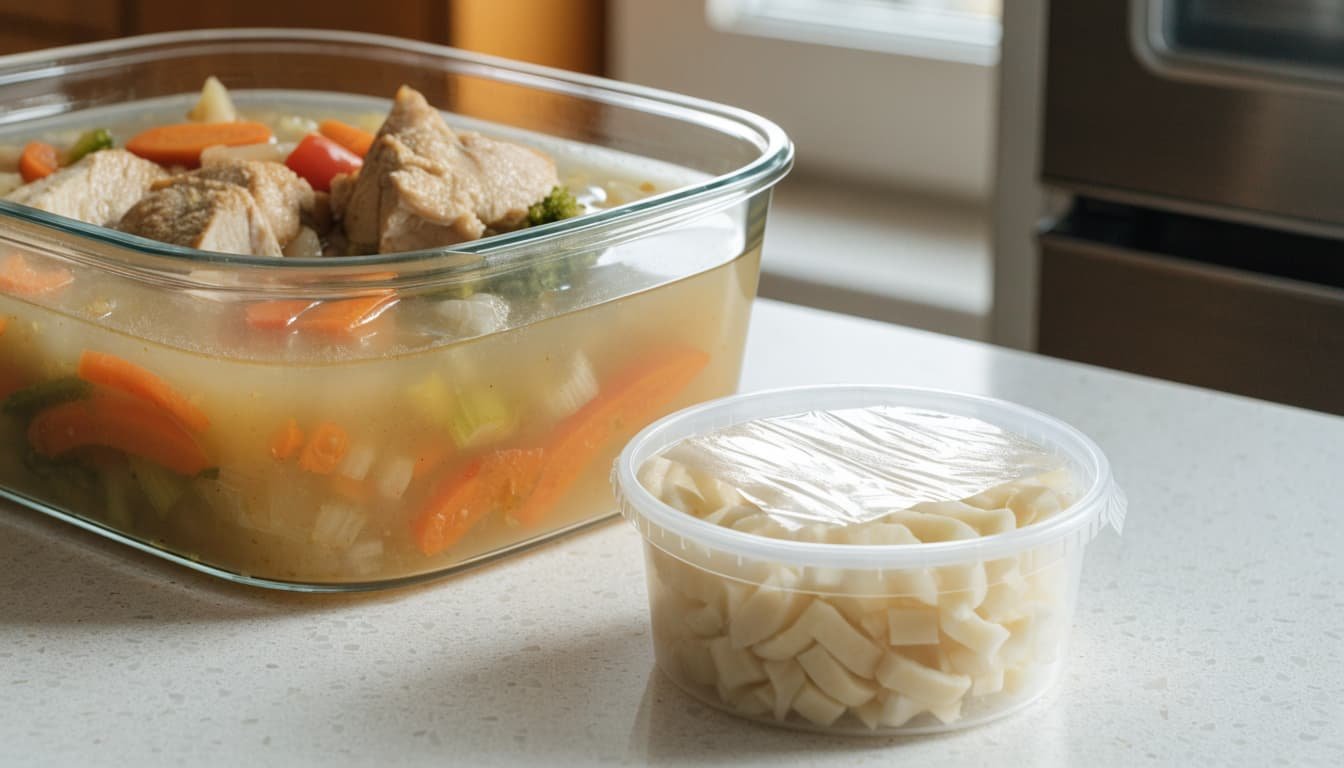
For the best texture, freeze the chicken-and-vegetable base without noodles and use it within about 2 to 3 months. Leave space in freezer-safe containers because the liquid expands as it freezes.
Thaw overnight in the refrigerator, then bring the soup base to a boil before adding fresh frozen noodles. Reheat leftovers to 165°F and add broth if the soup has thickened.
Frequently Asked Questions
Can I Put Frozen Egg Noodles Straight Into the Soup?
Yes, add them directly from the freezer once the chicken is cooked and the vegetables are tender. Don’t thaw them on the counter first, since softened noodles can stick together and become harder to separate. Use the package timing, then check a noodle before deciding whether it needs longer.
How Do I Keep the Noodles From Getting Mushy?
Serve the soup promptly once the noodles are tender, rather than keeping the finished pot warm for an extended period. If everyone is eating at different times, cook smaller batches of noodles separately and add them to individual bowls. Keep leftover noodles apart from the broth whenever possible.
Can I Use Cooked Chicken Instead of Raw Chicken?
Yes, cooked chicken works well, but the vegetables still need time to soften in simmering broth. Add the shredded chicken near the end so it heats through without spending the entire cooking time in the pot. Use about 3 cups for this recipe.
Can I Freeze Chicken Noodle Soup With the Noodles in It?
Yes, although the noodles may become softer after thawing and reheating. Freeze individual portions if you don’t mind that texture, then reheat only what you’ll eat. For firmer noodles, freeze the soup base alone and cook a fresh batch when serving.
A Warm Bowl With Simple Ingredients
This chicken noodle soup with frozen egg noodles starts with everyday ingredients and a manageable cooking order. Let the chicken and vegetables finish first, then give the noodles only the time they need.
Follow the steps, taste the broth near the end, and adjust the seasoning for your table. A little extra broth can loosen a thick pot, while serving promptly keeps the noodles tender without letting them soften too far.
Save the pin for later

I’m the creator of My Everyday Dish, a food blog focused on easy homemade recipes, comforting family meals, simple baking, and seasonal food ideas. I love finding practical ways to make everyday cooking less stressful and more enjoyable. Here, I share recipes with simple ingredients, clear instructions, and plenty of flavor, helping you make delicious meals and treats you’ll feel confident serving at home.
Leave a Reply