
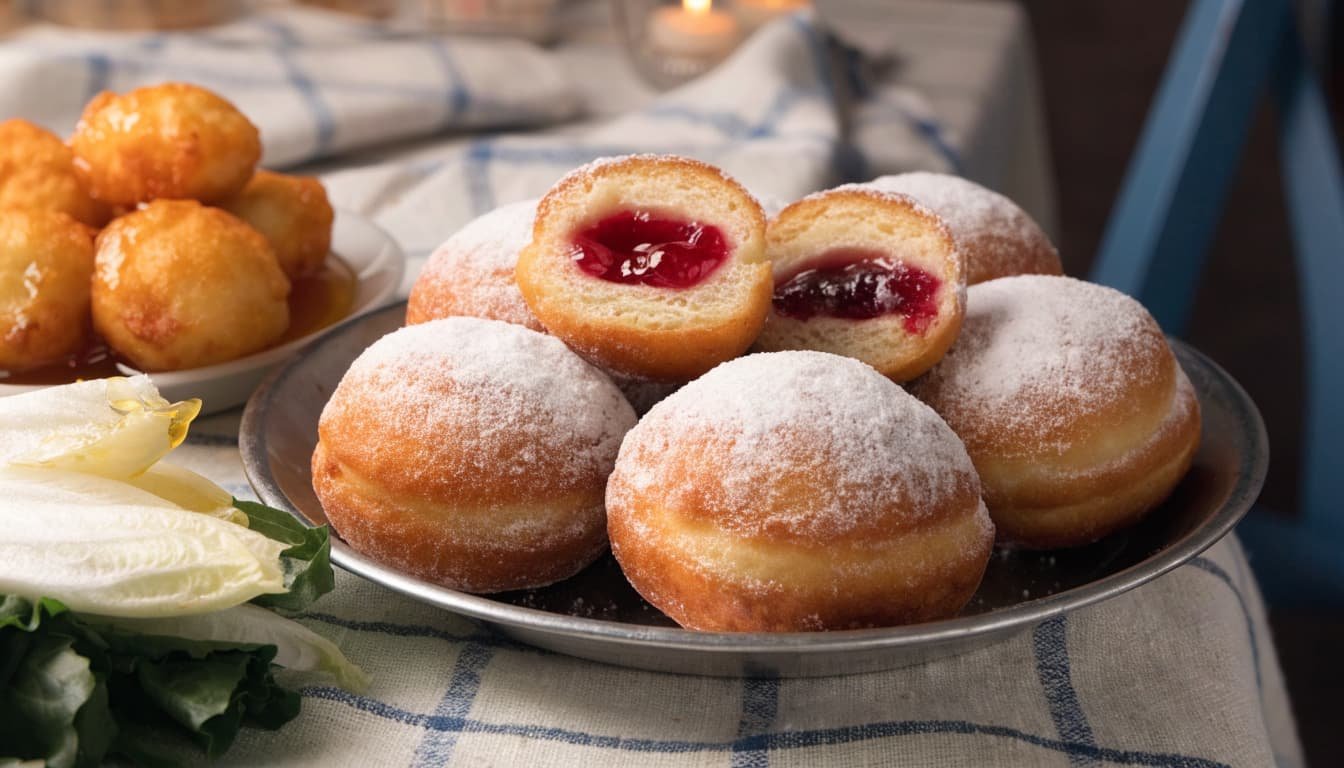
Plan a Hanukkah meal that feels right for your gathering, whether you’re hosting a full family dinner or keeping things simple. Latkes and sufganiyot are familiar fried favorites that recall the oil in the Hanukkah story, though customs and menus vary among Jewish communities.
These 15 ideas pair those holiday favorites with practical mains, sides, and sweets, including modern options for a flexible menu. Start with latkes, the first festive staple to bring to the table.
15 Festive Hanukkah Meal Ideas for a Delicious Holiday Celebration
Latkes make an easy starting point for a Hanukkah dinner, and a few simple swaps bring new colors and flavors to the table. Keep each pancake thin, remove excess moisture, and fry in uncrowded batches for crisp edges.
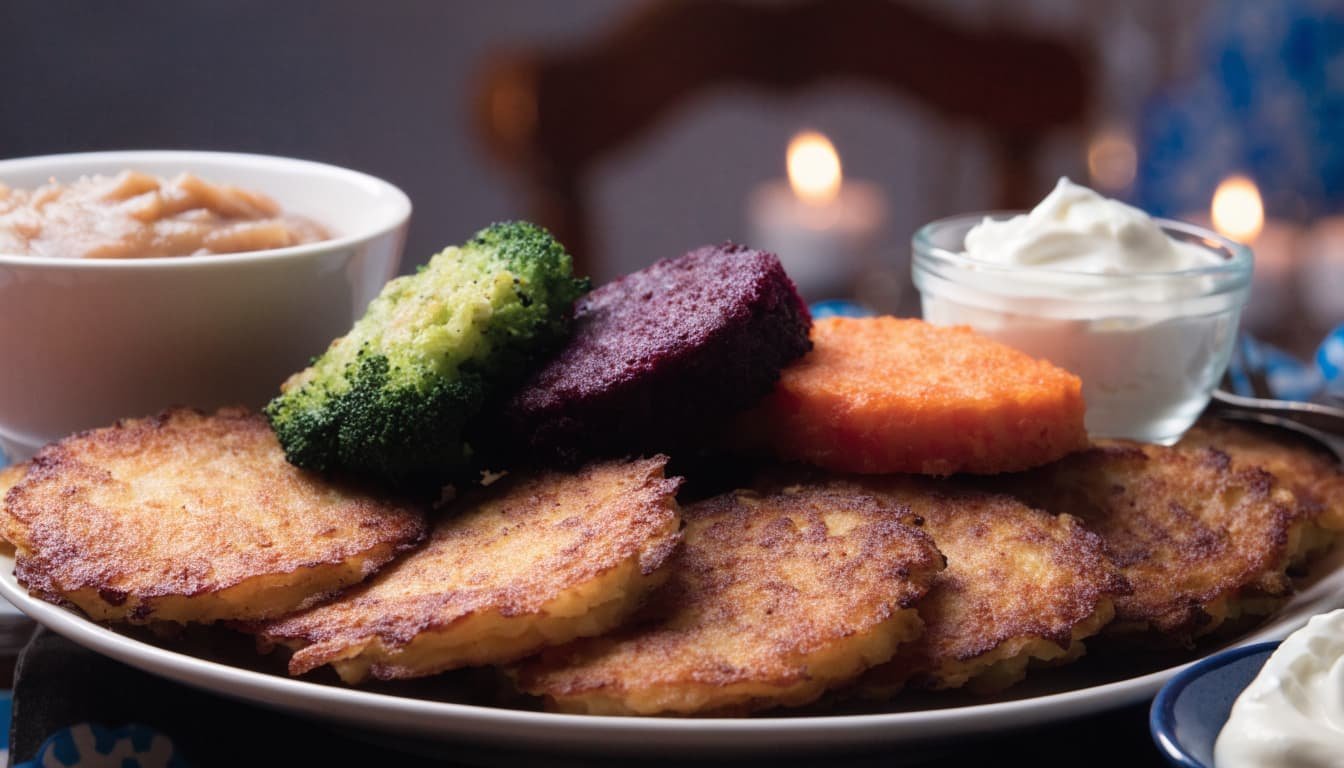
1. Classic Potato Latkes with Applesauce and Sour Cream
Grate russet potatoes and onion, then wrap them in a clean kitchen towel and squeeze out as much liquid as possible. This step helps the pancakes brown instead of steam. Stir the shreds with egg, flour, salt, and pepper, then shape small portions into thin patties.
Fry in batches in shimmering oil, turning once, until both sides are browned and the centers are cooked through. For more guidance on draining the shreds, see this latke preparation and frying advice. Drain on paper towels and serve with applesauce, sour cream, or both. Leave room between patties so the oil stays hot.
2. Sweet Potato Latkes for a Colorful Twist
For a sweeter, colorful variation, grate sweet potatoes and mix them with egg, flour, salt, pepper, and seasonings such as paprika. Press the mixture into thin patties, then fry in batches until tender inside and crisp at the edges.
Drain briefly and serve with applesauce or a savory dip. Since sweet potatoes can release moisture, squeeze the shreds before mixing for better browning.
3. Parsnip Latkes with a Sweet, Earthy Flavor
Peel and grate parsnips, then combine them with egg, flour, salt, pepper, and a little onion if you like. Shape the mixture into small patties and fry until golden on both sides and tender in the middle.
Before cooking the full batch, fry one small test latke. Taste it and check whether it holds together; adjust the seasoning or binder as needed.
Read also: 12 Healthy Vegetarian Soup Ideas for Dinner
4. Green Vegetable Latkes for a Fresh Holiday Plate
Combine shredded zucchini with chopped leafy greens, egg, flour, and seasonings. First, squeeze the zucchini firmly to remove excess liquid, then mix everything together and form thin patties.
Pan-fry in batches until crisp and cooked through. Serve with a lemony yogurt dip or a dairy-free herb sauce. Swap in seasonal greens or other shredded vegetables to suit what’s available.
5. Vegan Potato Latkes That Stay Crisp
For a plant-based version, mix shredded potatoes and onion with starch, salt, pepper, and matzo meal or another suitable binder. Rest the mixture briefly, then shape it into thin patties and fry in batches until golden and crisp.
Drain well on paper towels, and serve with applesauce for an easy dairy-free topping. Follow a tested vegan latke recipe for exact ingredient ratios, since the right balance helps the patties hold together.
Build a Hearty Hanukkah Dinner with Latkes, Mains, and Sides
Once you have a few latke variations on the menu, add dishes that make dinner feel complete. These ideas include a dairy-focused option, filling mains, and sides that can be prepared ahead. Customs vary, and kosher meal planning may mean serving dairy and meat at separate meals.
6. Cheese Latkes for a Dairy-Focused Meal
For a dairy-style latke, stir shredded or crumbled cheese into a simple batter of grated potato, egg, flour, and seasoning. Shape small pancakes, then cook them in a lightly oiled pan until set and browned on both sides. Serve with fresh fruit or a lightly dressed salad for a balanced plate.
Dairy foods appear in some Hanukkah customs, though practices vary across Jewish communities. If you follow kosher dietary rules, plan this as a dairy meal rather than pairing it with meat; kosher dietary guidance explains the separation.
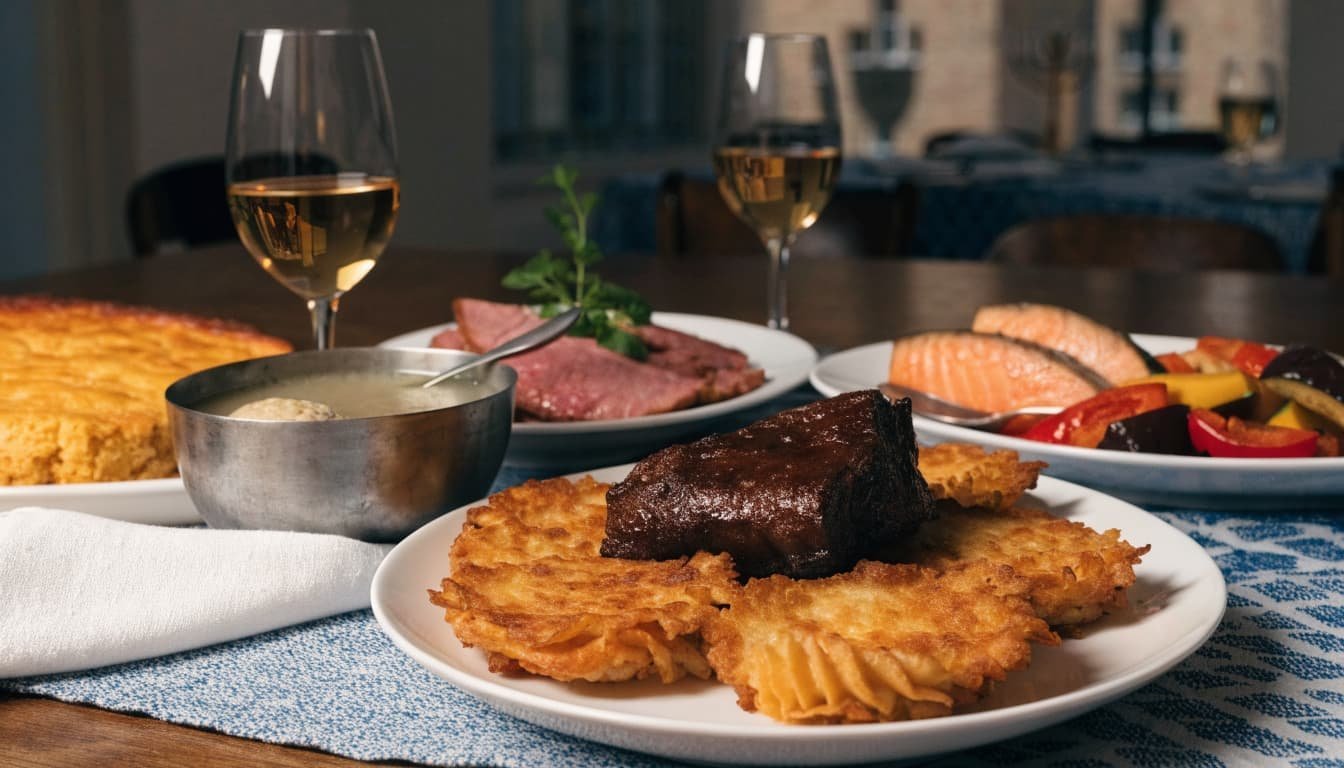
7. Latkes Topped with Braised Short Ribs
Season short ribs and brown them on all sides, then transfer them to a covered pot with aromatics and braising liquid. Cook slowly until the meat turns tender enough to pull apart. Meanwhile, prepare crisp latkes and spoon the warm ribs over them just before serving.
This is a special-occasion dish that takes several hours, so it works best for a planned dinner. Serve it as a hearty main, with a simple vegetable side to balance the rich meat.
Read also: Easy Chicken Tortellini Vegetable Soup for a Cozy Homemade Dinner
8. Slow-Cooked Brisket with a Simple Pan Sauce
Season and brown the brisket, then add sliced onions and braising liquid. Cover and cook slowly until fork-tender. Let the meat rest before slicing across the grain, then serve it with strained or reduced cooking juices.
Brisket makes a satisfying festive main, though it isn’t part of every Jewish community’s Hanukkah menu. Pair it with latkes or savory kugel, and prepare it ahead to make serving easier.
9. Matzo Ball Soup as a Warm First Course
Mix matzo ball dough according to a tested recipe, then chill or rest it as directed. With wet hands, shape the dough into balls and simmer them in broth until cooked through. Serve in clear chicken or vegetable broth with carrots and herbs.
Matzo ball soup makes a comforting first course, but it isn’t unique to Hanukkah. Follow a tested recipe for ingredient amounts and cooking times, since matzo meal and resting methods can affect the texture.
10. Savory Kugel with Onion and Herbs
Choose a noodle or grated-potato kugel, then combine the cooked noodles or prepared potatoes with eggs, seasonings, onion, and herbs. Spread the mixture in a greased baking dish and bake until set and browned. Kugel has many versions and can be made ahead as a practical side.
11. Salmon with Roasted Vegetables for an Easy Main
Cut vegetables into even pieces, season them, and roast until nearly tender. Add seasoned salmon to the pan and continue cooking until the fish flakes easily. Finish with lemon and fresh herbs for a bright, simple dinner. This contemporary menu option isn’t Hanukkah-specific; for another approach, see these easy sheet-pan salmon and vegetables. Follow a tested recipe for exact oven temperature and timing.
Serve Hanukkah Sweets and Savory Bites for a Festive Finish
Finish the meal with familiar sufganiyot, then add a shareable fritter or a crisp vegetable side. These ideas include both well-known treats and less familiar regional preparations, though recipes and customs vary among Jewish communities.

12. Jam-Filled Sufganiyot for a Classic Holiday Treat
Prepare a yeast dough according to a tested recipe, then let it rise until doubled. Roll it out, cut rounds, and leave them to proof again before frying. Cook the doughnuts in batches at the temperature specified by the recipe, turning each once so both sides brown evenly. For example, one recipe uses 365°F; follow the temperature and timing for the recipe you choose.
Drain the sufganiyot and let them cool slightly before filling each one with jam. Finish with a dusting of confectioners’ sugar. Oil temperature matters: oil that is too cool can leave the doughnuts greasy, while overly hot oil can brown the outside before the centers cook through.
13. Sufganiyot with Chocolate, Custard, or Fruit Fillings
Use the same rise, shaping, proofing, and frying method, then choose a filling to suit your guests. Strawberry or raspberry jam keeps the flavor fruity, while chocolate spread or custard offers a richer option. These are variations to consider, not fillings shared by every family or tradition.
A piping bag makes it easier to add filling through a small opening in the side of each cooled doughnut. For more filling ideas, the Jewish Food Society’s sufganiyot recipe includes options such as jam, chocolate spread, and custard.
14. Honey-Drizzled Bimuelos for a Shareable Dessert
Bimuelos are fried Hanukkah treats found in some traditions, not a universal holiday custom. Prepare the batter or dough using a tested recipe, then fry small portions until golden. Drain them well and drizzle with honey while warm.
Pile the fritters on a platter so guests can share them. Since recipes vary, follow the recipe’s guidance for consistency, portion size, and frying time.
15. Crisp Torzelli as a Distinctive Vegetable Side
Torzelli, made with curly endive, offer a less familiar regional option for the holiday table. Wash the leaves carefully and dry them thoroughly, then prepare and fry them according to a reliable recipe until crisp. Drain and season soon after frying.
Handle the leaves carefully around hot oil, and serve torzelli shortly after cooking for the best texture. They make a distinctive vegetable side, though they aren’t part of every family’s Hanukkah menu.
Plan a Balanced Hanukkah Menu Without Making Dinner Complicated
A festive Hanukkah dinner can feel complete without serving all 15 ideas at once. Choose one main, one or two sides, and a dessert. If latkes or another fried dish is on the menu, balance it with something fresh or light, such as a salad or roasted vegetables.
Choose Dishes That Fit Your Guests and Kitchen
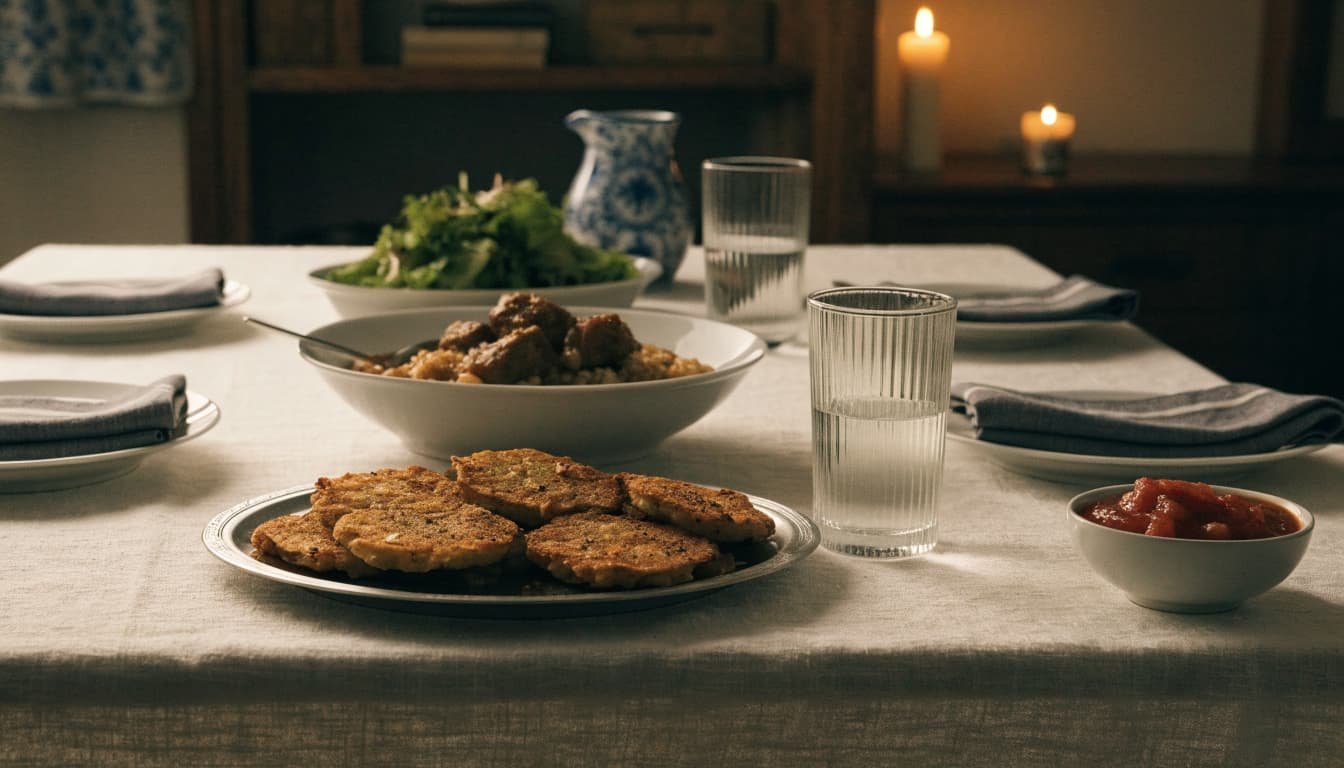
Start with the dishes your guests will enjoy and the time you have to cook. For example, pair brisket with kugel and a green vegetable, or serve salmon with latkes and a crisp salad. A vegetarian menu could center on vegetable kugel or a hearty soup, while vegan guests can enjoy plant-based latkes with applesauce and roasted vegetables.
Before settling the menu, ask about allergies and dietary needs. Check ingredient labels and avoid cross-contact when preparing food for guests with allergies. If you keep kosher, follow the standards you observe. Practices vary, including how people handle meat and dairy, so plan the dishes and serving setup accordingly. Yale’s overview of Jewish dietary restrictions notes that individual practices differ.
Fried foods like latkes and sufganiyot honor a meaningful Hanukkah tradition, but they aren’t required at every celebration. Choose the foods that suit your table, and keep the menu welcoming rather than overly ambitious.
Prep Ahead So the Meal Feels Relaxed
Make the dishes that benefit from resting ahead of time. Braised brisket or short ribs, soup, and sauces can often be prepared in advance and reheated before dinner. You can also wash and grate vegetables earlier, but follow a tested recipe’s storage instructions to keep grated potatoes from browning.
Set out toppings such as applesauce, sour cream, herbs, or dairy-free sauces before guests arrive. Then save frying latkes for close to mealtime, when you can serve them at their crispest. As each batch finishes, arrange the latkes in a single layer on a rack and keep them warm in the oven. Avoid stacking them if crisp edges matter, since trapped steam can soften them. A little advance prep leaves you with fewer last-minute tasks and more time to enjoy the meal.
Frequently Asked Questions
A few practical details can help you choose dishes and time the cooking. These answers cover common questions about Hanukkah foods, menu planning, and make-ahead prep.
What foods are commonly eaten during Hanukkah?
Latkes and sufganiyot are familiar fried foods associated with the Hanukkah story of oil, though recipes and customs vary among Jewish communities. The University of Rochester’s overview of Hanukkah foods explains the meaning behind these holiday favorites.
Do all Hanukkah meals need to include fried food?
No. Fried foods are a meaningful custom for many people, but they aren’t required at every meal or in every household. You can celebrate with a menu built around soup, a main dish, vegetables, and dessert.
How can I keep latkes crisp while cooking several batches?
Drain each batch on a wire rack or paper towels, then arrange the latkes in a single layer on a baking sheet. Keep them warm in a low oven without covering them tightly, since trapped steam can soften their edges.
Can I make Hanukkah latkes without eggs?
Yes. Vegan latkes use binders such as starch and matzo meal to help the potato mixture hold together. Follow a tested egg-free recipe for the right proportions and texture, since simply omitting eggs from a standard recipe may leave the latkes fragile.
What is a simple Hanukkah menu for a small gathering?
Serve latkes with one main dish or soup, a vegetable side, and one dessert. For example, pair salmon with roasted vegetables and finish with sufganiyot, adjusting the dishes for your guests’ preferences and dietary needs. For a meat-free gathering, browse our protein-rich vegetarian holiday recipes.
Can I prepare sufganiyot ahead of time?
It depends on the recipe, so follow its instructions for storing or chilling the dough. You can prepare dough components ahead when the recipe allows, then fry and fill the doughnuts close to serving for the best texture.
Conclusion
A memorable Hanukkah meal can be simple, whether you serve one favorite dish, share a holiday dessert, or set out a full festive spread. Choose recipes that fit your time, guests, and traditions, then make the menu your own.
Above all, let good food and time together shape the celebration.
Save the pin for later


I’m the creator of My Everyday Dish, a food blog focused on easy homemade recipes, comforting family meals, simple baking, and seasonal food ideas. I love finding practical ways to make everyday cooking less stressful and more enjoyable. Here, I share recipes with simple ingredients, clear instructions, and plenty of flavor, helping you make delicious meals and treats you’ll feel confident serving at home.
Leave a Reply