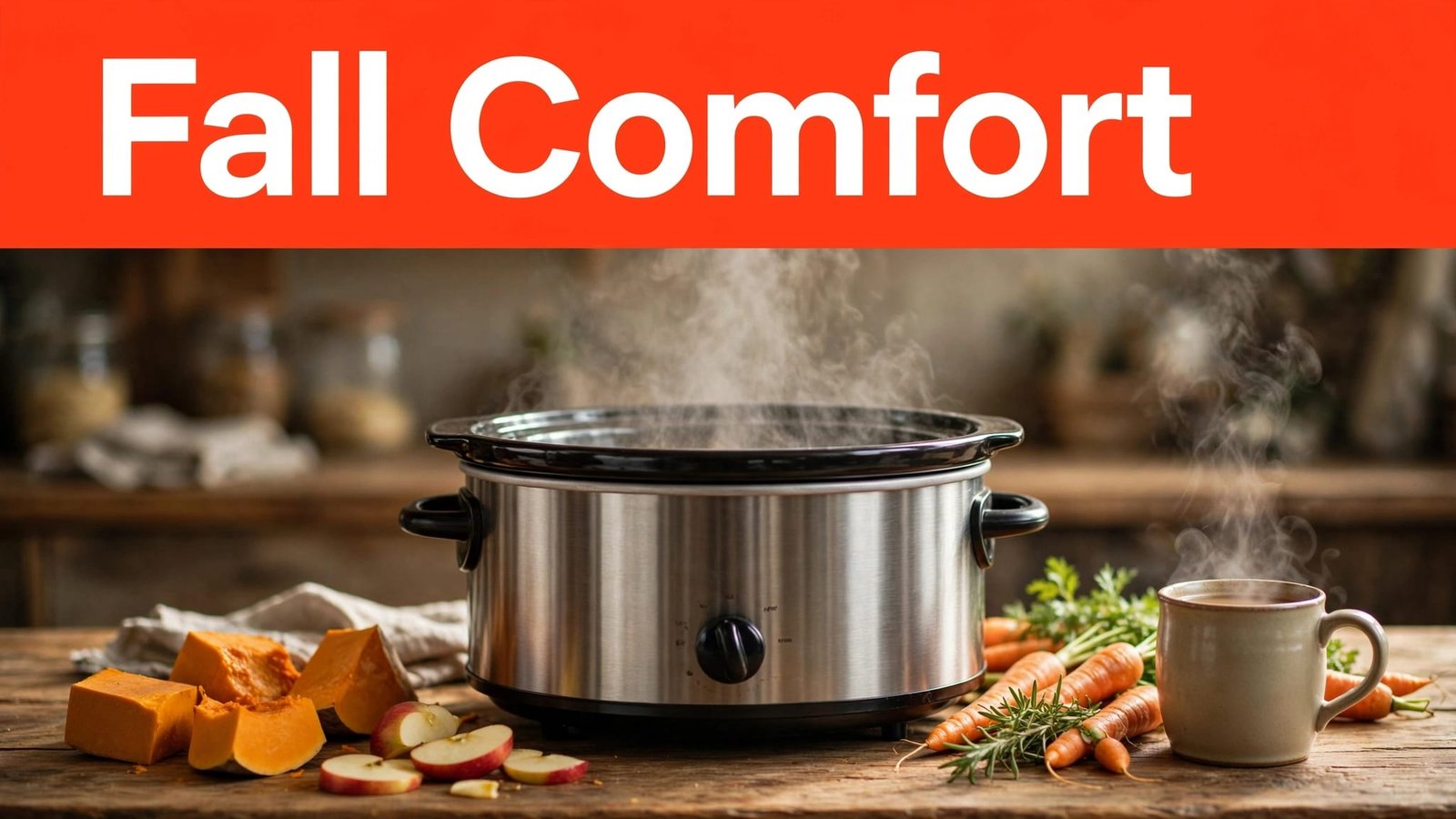
On a busy fall day, I love coming home to the smell of chili or beef stew simmering in my slow cooker. I use it to make warm, filling meals with less hands-on work, so dinner is ready even when my schedule is full.
These 25 fall slow cooker recipes include soups, beef, chicken, pork, vegetarian dishes, pasta, desserts, and drinks, with familiar flavors like apples, pumpkin, squash, root vegetables, beans, cider, maple, and warm spices. You’ll find simple steps, cooking times, helpful ingredient swaps, and safe storage advice, including how to refrigerate leftovers within two hours and keep them for three to four days. Let’s start with the comforting soups that make cool evenings easier.
Cozy Fall Soups and Chilis for the Slow Cooker
These first five recipes bring familiar fall flavors to the table with simple ingredients and little hands-on work. I brown ground meat when it adds flavor, but most vegetables, beans, broth, and spices can go straight into the slow cooker. For food safety, thaw meat before cooking, keep the lid on while the cooker runs, and refrigerate leftovers in shallow containers within two hours. The USDA slow cooker safety guidance also advises reheating leftovers on the stove, in the microwave, or in the oven instead of using the slow cooker.
1. Classic Slow Cooker Beef and Bean Chili
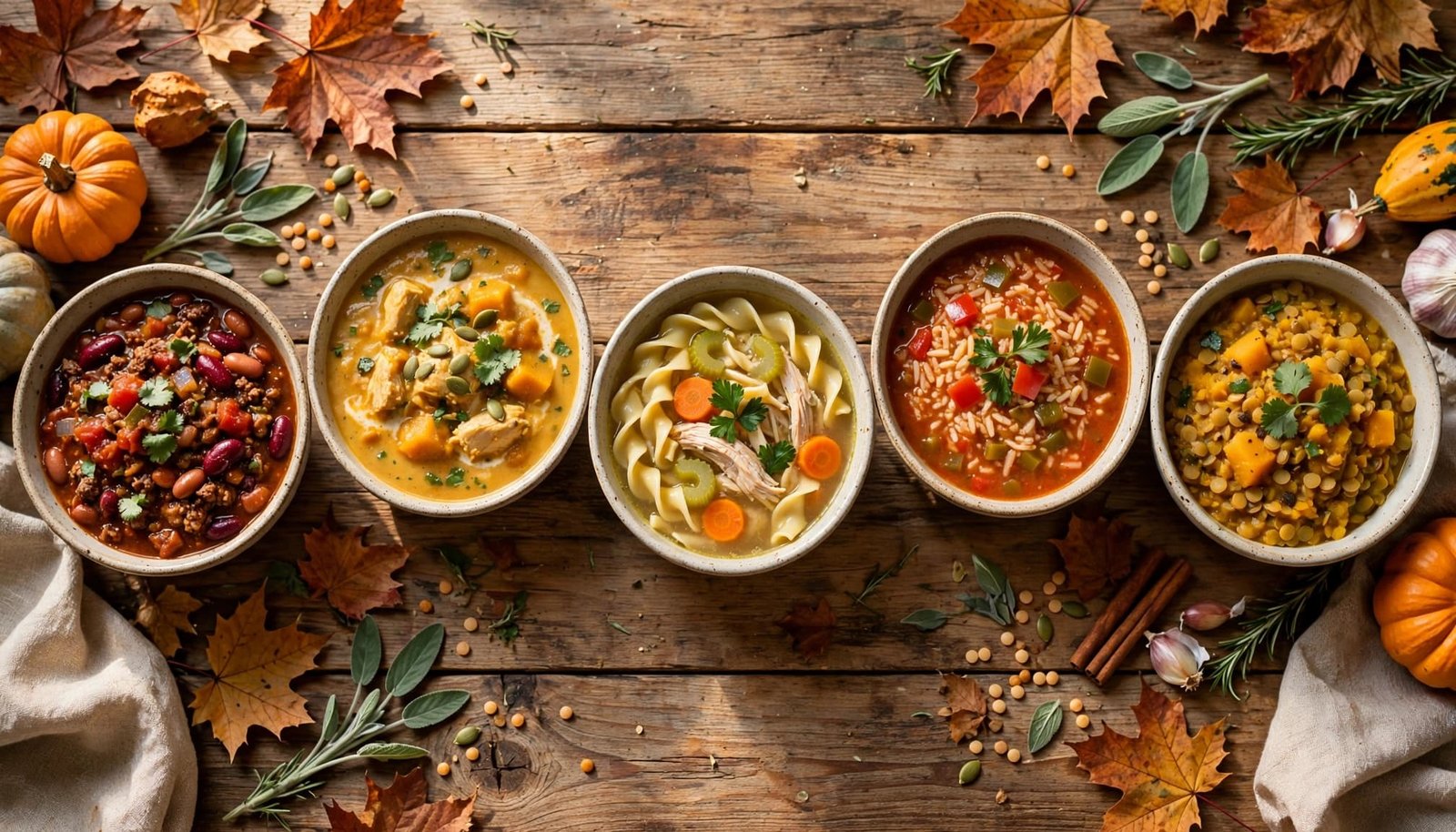
This beef and bean chili is my reliable choice when I want a filling fall dinner without unusual ingredients. Kidney beans, tomatoes, bell pepper, onion, and warm spices create a thick, savory chili that tastes even better the next day.
Prep time: 20 minutes Slow cooker setting: LOW or HIGH Cooking time: 6 to 8 hours on LOW, or 3 to 4 hours on HIGH
First, brown the ground beef in a skillet over medium heat. Break it into small pieces as it cooks, then drain the excess fat. This step gives the chili a richer flavor and keeps the finished dish from becoming greasy.
Add the drained beef to the slow cooker with kidney beans, diced tomatoes, chopped onion, bell pepper, minced garlic, chili powder, cumin, and smoked paprika. Stir in a little salt and black pepper, then cover and cook until the vegetables are tender and the flavors come together. Stir during the final 30 minutes, especially if the chili looks thicker around the edges.
Serve each bowl with shredded cheddar, sour cream, or sliced green onions. I also like to add cornbread because it soaks up the tomato-rich sauce. For a milder version, reduce the chili powder and let everyone add hot sauce at the table.
2. Creamy Pumpkin Chicken Chili
Pumpkin puree gives this chicken chili a smooth texture and a gentle fall flavor without making it sweet. White beans, corn, tomatoes, cumin, and chili powder keep the recipe hearty, while a small amount of cream or cream cheese adds richness at the end.
Prep time: 15 minutes Slow cooker setting: LOW or HIGH Cooking time: 5 to 6 hours on LOW, or 3 to 4 hours on HIGH
Place boneless chicken breasts or thighs in the cooker first. Add pumpkin puree, drained white beans, corn, diced tomatoes, chopped onion, chicken broth, cumin, and chili powder. Stir the mixture around the chicken, then cover and cook until the chicken is tender and reaches a safe internal temperature.
Remove the chicken and shred it with two forks. Return it to the slow cooker, then stir in a little heavy cream or softened cream cheese. Add the dairy during the final few minutes, rather than at the beginning, so it stays smooth and doesn’t curdle during the long cooking time.
Top the chili with pepitas, cilantro, fresh lime juice, or diced avocado. If you prefer a thinner soup, add extra broth before serving. Pumpkin puree is easy to find in the fall, and canned beans and corn keep the preparation simple on busy weeknights.
3. Hearty Chicken Noodle Soup
Chicken noodle soup is one of the easiest ways to make a slow cooker work for you. The broth develops a full flavor while the chicken, carrots, celery, onion, and garlic cook together with bay leaf and dried herbs.
Prep time: 15 minutes Slow cooker setting: LOW Cooking time: 5 to 6 hours, plus 20 to 30 minutes for the noodles
Add thawed chicken, sliced carrots, chopped celery, onion, garlic, chicken broth, one bay leaf, and herbs such as thyme or parsley to the cooker. The vegetables can go in raw, and the chicken doesn’t need browning for this soup. Cover and cook until the chicken pulls apart easily.
Remove the chicken and discard the bay leaf. Shred the meat, then return it to the broth. Add egg noodles or another short pasta during the final 20 to 30 minutes, keeping the cooker covered so the noodles cook evenly.
Check the texture before serving. If the pasta has absorbed more broth than expected, stir in hot chicken broth until the soup reaches the consistency you like. I usually add a little extra parsley and black pepper just before ladling it into bowls.
4. Stuffed Pepper Soup
Stuffed pepper soup has the same comforting flavors as the classic baked dish, but the slow cooker makes it easier to prepare. Ground beef or turkey, bell peppers, tomatoes, Italian seasoning, and broth create a savory base that works well with cooked rice.
Prep time: 20 minutes Slow cooker setting: LOW or HIGH Cooking time: 5 to 6 hours on LOW, or 3 to 4 hours on HIGH
Brown the ground beef or turkey in a skillet first, then drain it well. Add the cooked meat to the slow cooker with chopped bell peppers, onion, diced tomatoes, broth, Italian seasoning, salt, and pepper. Cover and cook until the peppers are tender and the broth tastes rich.
Stir in cooked rice during the final 15 to 20 minutes. Adding it near the end prevents the rice from becoming overly soft and keeps the soup from thickening too much. If the broth looks low, add a splash before serving.
Finish each bowl with shredded mozzarella or grated Parmesan. To make the soup lower in carbohydrates, leave out the rice and add extra bell peppers, chopped zucchini, or cauliflower rice near the end. The familiar tomato and pepper combination still provides plenty of fall comfort.
5. Butternut Squash and Lentil Dahl
This butternut squash and lentil dahl is a warm vegetarian option with creamy coconut milk, earthy lentils, and gentle curry spices. The squash softens into the broth, so you get a satisfying meal without needing many ingredients.
Prep time: 20 minutes Slow cooker setting: LOW or HIGH Cooking time: 6 to 7 hours on LOW, or 3 to 4 hours on HIGH
Rinse brown or green lentils under cool water and check for any small stones. Add them to the slow cooker with cubed butternut squash, coconut milk, broth, chopped onion, garlic, grated ginger, and curry powder. Stir well, cover, and cook until the lentils are tender and the squash breaks apart easily.
Check the texture before serving. If the dahl is too thick, stir in more broth. If it seems thin, leave the lid off for a few minutes while it rests. Add fresh spinach and lime juice at the end, then stir until the spinach wilts.
Serve the dahl over rice or with warm naan. I like to add extra lime at the table because its acidity balances the creamy coconut milk. You can also use pre-cut squash to reduce prep time without changing the recipe.
Hearty Beef Stews and Braised Favorites for Crisp Days
Tougher beef cuts become tender with time, which makes them a natural fit for slow cooking. I usually choose beef chuck, chuck roast, short ribs, or stewing beef because their fat and connective tissue soften during a long LOW cook. For the best texture, cut pieces evenly and avoid filling the cooker beyond two-thirds full.
Start with thawed beef and keep the lid closed while the meal cooks. I also refrigerate leftovers in shallow containers within two hours, then reheat them on the stovetop or in the microwave. The USDA safe temperature chart recommends reheating leftovers to 165°F.
6. Classic Slow Cooker Beef Stew
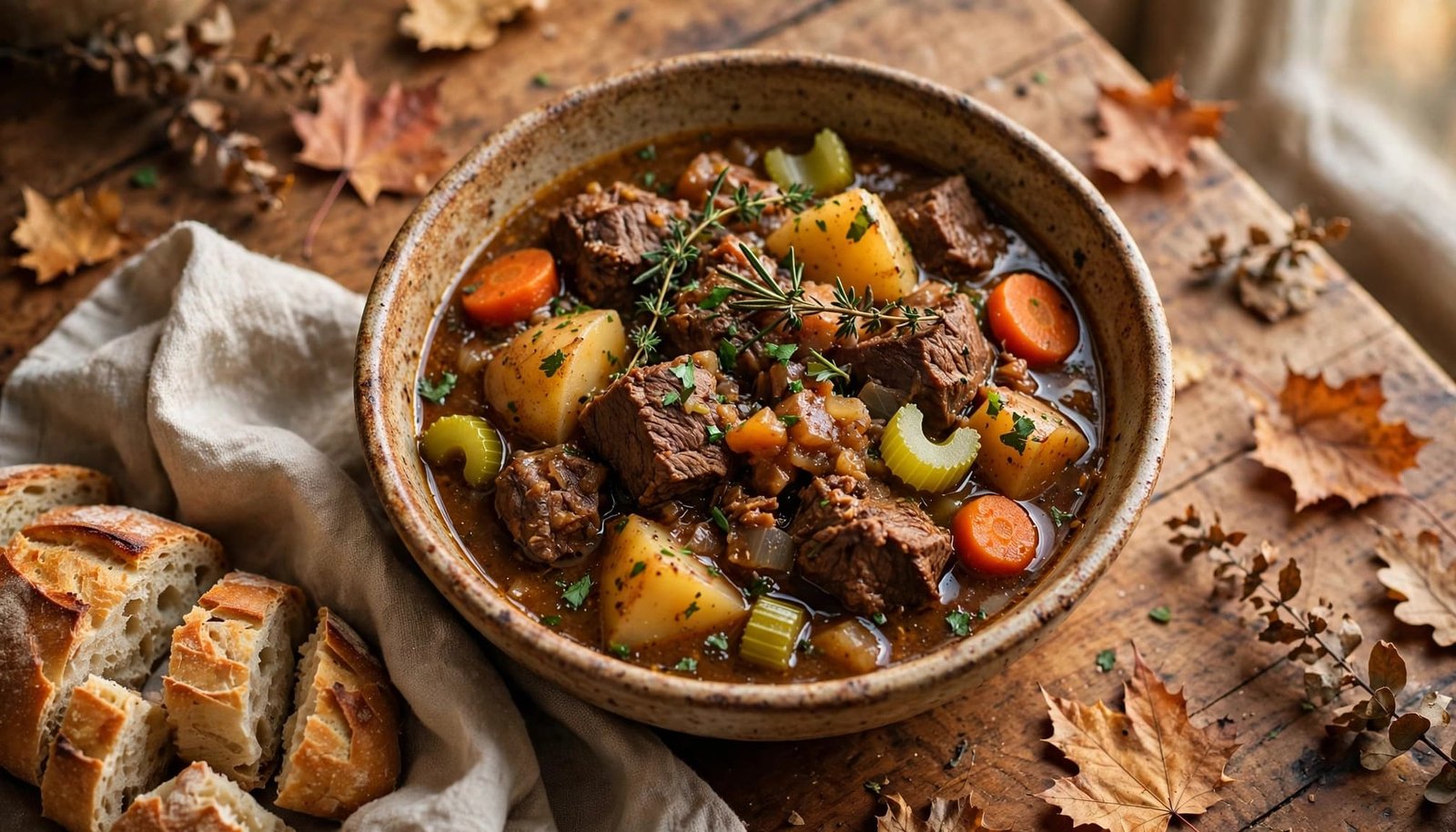
Beef chuck gives this stew a rich, satisfying texture. Cut the beef into 1 1/2-inch cubes so the pieces cook at the same rate. Dice the potatoes, carrots, celery, and onion into similar-sized chunks, then mince the garlic.
Prep time: 25 minutes Slow cooker setting: LOW or HIGH Cooking time: 8 hours on LOW, or 4 to 5 hours on HIGH
Season the beef with salt and black pepper. Although you can add it directly to the cooker, I prefer browning the cubes in batches in a hot skillet with a little oil. Searing creates browned bits that give the broth a fuller flavor. Avoid crowding the pan, or the beef may steam instead of brown.
Transfer the beef to the slow cooker. Add the potatoes, carrots, celery, onion, garlic, beef broth, tomato paste, Worcestershire sauce, thyme, and one bay leaf. The broth should come partway up the ingredients, rather than completely covering them. Cover and cook until the beef and vegetables are tender.
If the broth needs more body, stir together 2 tablespoons of flour with a little cold water, or use 1 tablespoon of cornstarch mixed with 2 tablespoons of cold water. Stir the slurry into the stew during the final 20 to 30 minutes. Remove the bay leaf before serving, then ladle the stew with crusty bread or a simple green salad.
7. Tender Pot Roast with Root Vegetables
A well-marbled chuck roast works best for pot roast because it stays moist during the long cooking time. Choose a roast that fits comfortably in your cooker, then season every side with salt, black pepper, garlic powder, and dried herbs.
Prep time: 20 minutes Slow cooker setting: LOW Cooking time: 8 to 9 hours
First, heat oil in a large skillet and brown the roast on all sides. This step takes a few minutes, but it adds a deep, savory flavor to the finished dish. While the roast browns, cut the carrots and potatoes into large, even pieces so they don’t turn mushy before the meat is ready.
Place the carrots, potatoes, onion, and garlic in the bottom of the slow cooker. Pour in beef broth and Worcestershire sauce, then add thyme, rosemary, or another herb blend. Set the browned roast on top of the vegetables. Keeping the meat above the vegetables allows the broth to circulate around everything as it cooks.
Cover and cook for 8 to 9 hours on LOW, until a fork slides into the roast easily. Move the meat to a cutting board and let it rest for 10 to 15 minutes before slicing against the grain. Meanwhile, strain the cooking liquid into a saucepan, skim off excess fat, and simmer it with a flour or cornstarch slurry until it thickens into gravy. Spoon the gravy over the roast and vegetables, or serve it with mashed potatoes.
8. Slow Cooker Beef Short Ribs
Bone-in beef short ribs become tender and rich after a long, gentle cook. I choose ribs with good marbling and trim away only thick, hard pieces of surface fat. Leave enough fat to keep the meat moist and flavorful.
Prep time: 25 minutes Slow cooker setting: LOW Cooking time: 7 to 8 hours
Season the short ribs with salt and pepper, then sear them in a hot skillet on every side. Work in batches if needed. Browning the ribs first adds color and flavor, while the bones enrich the sauce as the ribs cook.
Add sliced onion, garlic, beef broth, tomato paste, balsamic vinegar or red wine, thyme, and carrots to the slow cooker. Arrange the seared ribs among the vegetables, with the meaty sides facing up. The liquid should reach about one-third to halfway up the ribs. Too much liquid can make the sauce thin.
Cover and cook on LOW for 7 to 8 hours, until the meat pulls away from the bones. Transfer the ribs to a platter, then skim excess fat from the sauce. If you want a thicker finish, simmer the sauce in a saucepan or stir in a small cornstarch slurry. Serve the ribs over mashed potatoes, creamy grits, or buttered noodles.
9. Beef and Bacon Casserole
This slow cooker casserole combines stewing beef with bacon, mushrooms, onions, and carrots. Use 1 1/2-inch beef cubes so they remain substantial after the long cooking time. The bacon adds salt and richness, so season the dish carefully at the beginning.
Prep time: 30 minutes Slow cooker setting: LOW or HIGH Cooking time: 7 to 8 hours on LOW, or 4 to 5 hours on HIGH
Cook the bacon in a skillet until crisp, then transfer it to a plate. Leave a small amount of bacon fat in the pan and brown the beef in batches. Add the onions and mushrooms to the same skillet, cooking until the onions soften and the mushrooms release some moisture.
Transfer the bacon, beef, onions, and mushrooms to the slow cooker. Add carrots, garlic, beef broth, tomato paste, thyme, and black pepper. The broth should cover about half of the ingredients. Cover and cook until the beef is tender and the carrots can be pierced easily with a fork.
For a thicker sauce, combine flour with cold water before stirring it in during the final 20 minutes. Cornstarch mixed with cold water works too. Serve this casserole over mashed potatoes, egg noodles, or thick slices of toasted bread that can catch every bit of the sauce.
10. Slow Cooker Beef and Barley Soup
Pearl barley adds a chewy texture and makes this beef soup filling enough for dinner. Use beef chuck cut into bite-size cubes, then combine it with carrots, celery, onion, tomatoes, broth, garlic, thyme, and bay leaf.
Prep time: 20 minutes Slow cooker setting: LOW Cooking time: 7 to 8 hours
Place the beef, pearl barley, carrots, celery, onion, tomatoes, broth, garlic, thyme, and other herbs in the slow cooker. Browning the beef first adds extra flavor, but you can skip that step when you need a faster preparation. Keep the cooker no more than two-thirds full because barley expands as it cooks.
Cover and cook on LOW for 7 to 8 hours. Check that the beef is tender and the barley is soft before serving. If the soup becomes thicker than you prefer, stir in extra hot broth during the final 15 minutes. Remove the bay leaf, taste for salt and pepper, and serve with a green salad or warm bread.
Easy Slow Cooker Chicken and Pork Mains
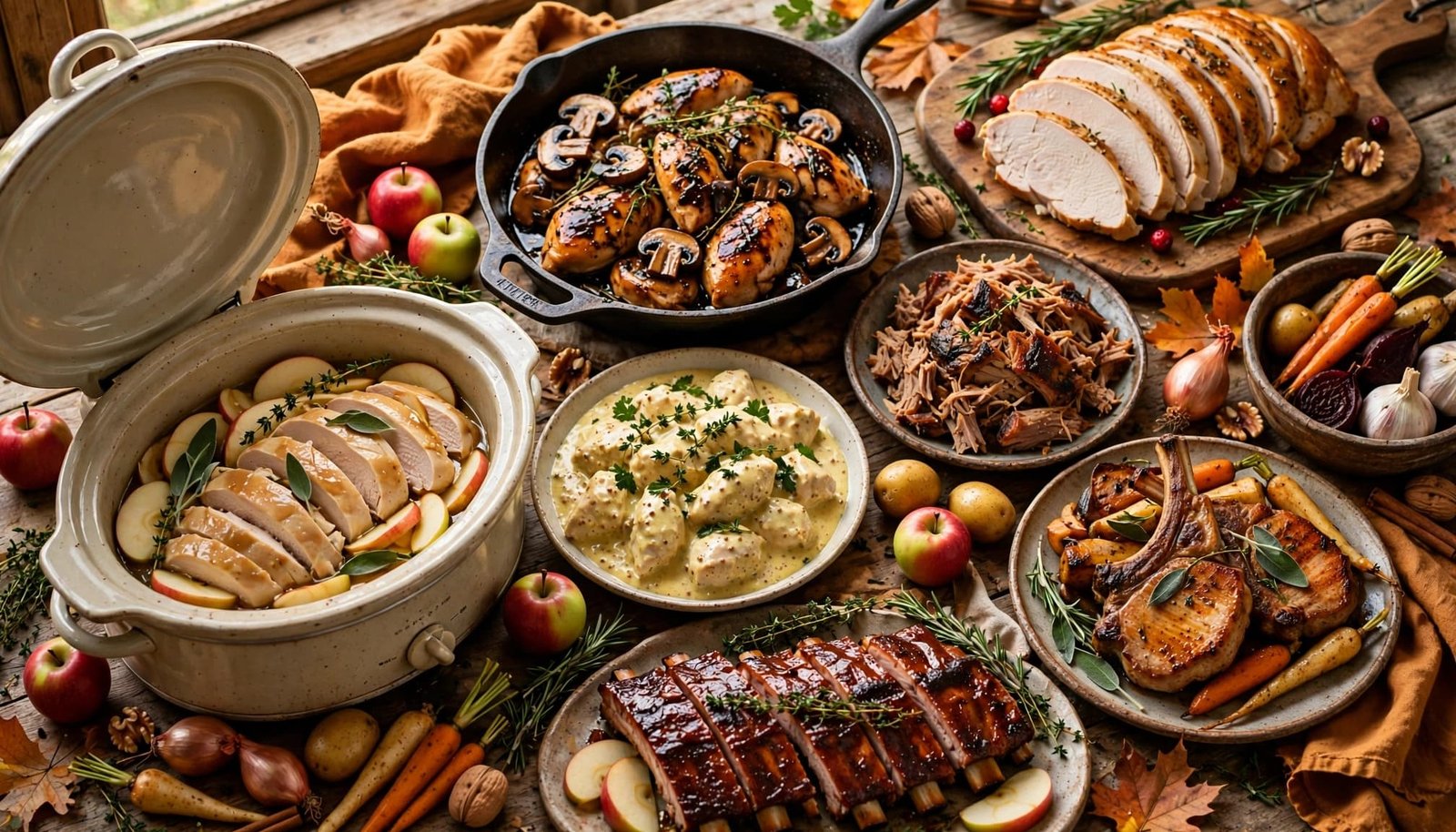
Chicken and pork make dependable slow cooker dinners for busy weeknights, meal prep, and casual gatherings. I keep the sauces flavorful but avoid adding too much liquid, because meat releases juices as it cooks. Chicken also cooks faster than beef, so check it early and remove it once it reaches a safe temperature.
11. Apple Cider Chicken with Root Vegetables
Apple cider, maple syrup, and thyme give this chicken a gentle sweetness that works well with fall vegetables. I use boneless chicken thighs because they stay tender, but chicken breasts also work if you check them early.
Prep time: 20 minutes Cooking time: 4 to 5 hours on LOW, or 2 to 3 hours on HIGH
Add chopped carrots, sweet potatoes, onion, and garlic to the bottom of the slow cooker. Season the chicken with salt, pepper, and thyme, then arrange it over the vegetables. Whisk apple cider with Dijon mustard, a small amount of maple syrup, and more thyme. Pour the sauce around the chicken, stopping when the ingredients are lightly coated rather than drowned.
Cover and cook until the thickest piece reaches 165°F on a food thermometer. Remove the chicken and slice it, or shred the thighs with two forks. For thicker sauce, mix 1 tablespoon of cornstarch with 2 tablespoons of cold water and stir it into the hot cooking liquid. Serve with rice or warm bread. Leftovers work well in grain bowls or wraps.
12. Creamy Mustard and Leek Chicken
Leeks bring a mild onion flavor to this creamy chicken dinner. To clean them, trim away the root and dark green tops, slice the white and pale green sections, then rinse them in a bowl of cold water to remove hidden grit.
Prep time: 20 minutes Cooking time: 4 to 5 hours on LOW
Season chicken thighs or breasts with salt, pepper, and thyme. Place the sliced leeks and minced garlic in the slow cooker, then set the chicken on top. Pour in chicken broth mixed with Dijon mustard. Cover and cook until the chicken is tender.
Stir in heavy cream or softened cream cheese during the final 20 to 30 minutes. Use a thermometer in the thickest part, and remove the chicken when it reaches 165°F. Slice chicken breasts or shred thighs before returning them to the sauce. I serve this over mashed potatoes or noodles, while leftovers make a flavorful sandwich or lunch wrap.
13. Balsamic Chicken with Mushrooms
Balsamic vinegar adds brightness to this savory mushroom chicken, while a little honey softens its sharpness. The finished sauce tastes especially good over mashed potatoes, polenta, rice, or pasta.
Prep time: 15 minutes Cooking time: 4 to 5 hours on LOW, or 2 to 3 hours on HIGH
Season chicken thighs with salt, pepper, and Italian seasoning. Place chopped onion and garlic in the cooker, then add the chicken. Arrange sliced mushrooms around the meat so they cook in the broth without covering the chicken completely.
Whisk together balsamic vinegar, chicken broth, honey, and another pinch of Italian seasoning. Pour it over the ingredients, cover, and cook until the chicken reaches 165°F. Slice the thighs or shred them, depending on how you plan to serve them.
If the sauce is thin, transfer it to a saucepan and simmer it until reduced, or add a small cornstarch slurry. Refrigerated leftovers are useful in sandwiches, pasta bowls, or salads.
14. Slow Cooker Turkey Breast with Gravy
This turkey breast gives you a smaller, easier alternative to roasting a whole bird. I use either boneless or bone-in turkey, depending on how many people I’m serving.
Prep time: 20 minutes Cooking time: 5 to 6 hours on LOW
Pat the turkey dry, then rub it with softened butter, salt, pepper, sage, and rosemary. Add onion, celery, carrots, garlic, and broth to the slow cooker. Set the turkey over the vegetables, keeping the skin side up if you use a bone-in breast.
Cook until the thickest part reaches 165°F. Check away from the bone with a thermometer, then transfer the turkey to a cutting board and let it rest for 15 to 20 minutes before slicing. Reserve the cooking juices for gravy. Strain them into a saucepan, skim off excess fat, and whisk in a cornstarch slurry. Simmer until thick.
Serve the sliced turkey with gravy, mashed potatoes, or roasted vegetables. Leftovers are excellent in sandwiches, wraps, and salads. For more temperature guidance, use this safe minimum temperature chart.
15. Maple Pulled Pork
Maple syrup balances the tang of apple cider vinegar in this easy pulled pork. Pork shoulder has enough connective tissue and fat for a long cook, so it stays moist while becoming easy to shred.
Prep time: 20 minutes Cooking time: 8 hours on LOW, or 4 to 5 hours on HIGH
Trim away thick pieces of excess fat, leaving a thin layer for flavor. Season the pork with salt, pepper, smoked paprika, and mustard. Place sliced onion and garlic in the slow cooker, then set the pork on top.
Whisk together maple syrup, apple cider vinegar, mustard, and broth. Pour the sauce around the pork, cover, and cook until the meat reaches at least 145°F and pulls apart easily. For the best pulled texture, continue cooking until a fork slides into the roast with little resistance.
Transfer the pork to a bowl, discard large pieces of fat, and shred it with two forks. Stir in enough cooking sauce to keep it moist. Serve it on buns with slaw, over baked potatoes, or in tacos. Extra pork also works in rice bowls and quesadillas.
16. Apple Butter Pork Chops
Apple butter gives these pork chops a rich fall flavor without requiring a long ingredient list. Choose thick chops, because thin cuts can dry out during slow cooking.
Prep time: 15 minutes Cooking time: 3 to 4 hours on LOW
If you want extra browning, sear the chops briefly in a hot skillet. Then arrange sliced apples and onion under the pork in the slow cooker. Whisk apple butter with mustard, broth, thyme, salt, and pepper, then spoon the sauce over the chops.
Cover and begin checking the meat before the cooking time ends. Pork chops should reach 145°F, followed by a three-minute rest. Slice the chops against the grain before serving, or cut leftovers into strips for wraps and salads.
I like these with mashed sweet potatoes or green beans. Keep the apples and onions with the pork when storing leftovers so they can flavor sandwiches, grain bowls, or reheated plates.
17. Slow Cooker BBQ Pork Ribs
Slow cooker ribs become tender enough to pull from the bone, then a quick broil adds the sticky surface many people expect from barbecue. Handle the raw ribs separately from the finished meat, and wash utensils that touched the uncooked pork.
Prep time: 20 minutes Cooking time: 6 to 7 hours on LOW, or 3 to 4 hours on HIGH
Turn the ribs bone-side up and slide a knife under the thin membrane. Pull it away with a paper towel for a better texture. Cut the rack into sections that fit your cooker, then coat both sides with a dry rub.
Mix barbecue sauce with apple cider vinegar and a little brown sugar or honey. Place the ribs in the slow cooker and coat them with the sauce. Cover and cook until the meat is tender and reaches a safe temperature on a thermometer. Move the ribs to a foil-lined baking sheet, brush with more sauce, and broil briefly if you want a sticky crust.
Let the ribs rest for a few minutes before cutting between the bones. Serve with slaw, cornbread, or baked beans. Remove meat from the bones for leftover sandwiches, tacos, or loaded baked potatoes.
Vegetarian, Pasta, and Sweet Fall Comfort Food
The final recipes show how much variety you can get from one slow cooker. Beans, vegetables, pasta, cheese, apples, and cider can each become a complete fall meal or treat without much hands-on work. I add delicate ingredients late, especially pasta, dairy, rice, and fresh greens, so they keep their best texture.
18. Slow Cooker White Bean and Kale Soup
Cannellini beans, carrots, celery, onion, garlic, diced tomatoes, broth, and rosemary create a filling vegetarian soup with simple pantry ingredients.
Prep time: 20 minutes Cooking time: 5 to 6 hours on LOW
Add chopped carrots, celery, onion, garlic, diced tomatoes, broth, rosemary, salt, and pepper to the slow cooker. For the quickest version, use two cans of drained and rinsed cannellini beans. Use soaked dried beans only when your recipe gives enough liquid and cooking time for them to become fully tender.
Stir in the canned beans at the beginning, cover, and cook on LOW for 5 to 6 hours. Add chopped kale during the final 15 to 20 minutes, just long enough for it to soften without turning dull. Finish with lemon juice and grated Parmesan, if desired.
Serve with toasted bread or a simple salad. Refrigerate leftovers in shallow containers within two hours, then reheat them on the stove or in the microwave. Add broth if the beans absorb too much liquid.
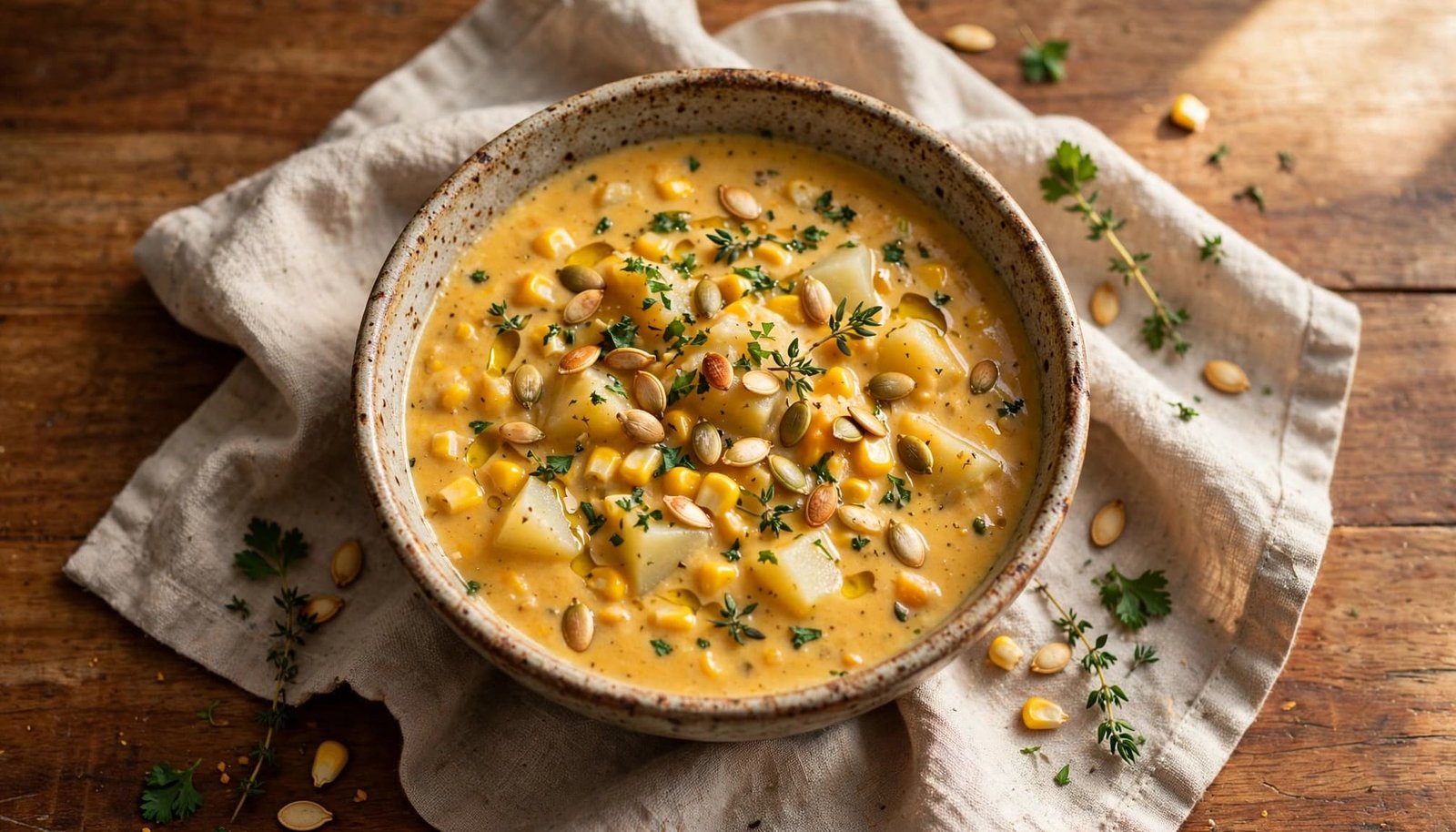
19. Creamy Pumpkin and Corn Chowder
Pumpkin puree adds color and body to this creamy chowder, while corn and potatoes make it substantial enough for a meatless dinner.
Prep time: 15 minutes Cooking time: 4 to 6 hours on LOW
Add pumpkin puree, corn, diced potatoes, onion, garlic, vegetable broth, thyme, salt, and pepper to the cooker. Cover and cook on LOW until the potatoes are tender. Blend part of the soup with an immersion blender, or transfer a few cups to a regular blender, then stir it back into the pot for a thicker texture.
Add milk or coconut milk during the final 15 to 20 minutes. Dairy can separate during a long cook, so keep it out of the cooker until the vegetables are soft. Top each bowl with toasted pumpkin seeds, chopped chives, or crispy bacon for those who eat meat.
Cool leftovers promptly and refrigerate them in covered, shallow containers. Reheat gently and add a splash of broth or milk if the chowder thickens.
20. Slow Cooker Vegetable Curry
This vegetable curry is a complete vegetarian meal with sweet potatoes, cauliflower, chickpeas, bell peppers, tomatoes, coconut milk, and warm spices.
Prep time: 20 minutes Cooking time: 4 to 5 hours on LOW, or 2 to 3 hours on HIGH
Cut the vegetables into similar-sized pieces so they finish at about the same time. Layer sweet potatoes and cauliflower in the cooker first, followed by bell peppers, onion, garlic, ginger, tomatoes, chickpeas, curry powder, cumin, and coconut milk.
Cover and cook until the vegetables are tender. Add spinach during the final 10 minutes, then stir until it wilts. Serve the curry over rice with lime juice and fresh cilantro. Keep cooked rice separate when storing leftovers, then reheat it with the curry.
21. Slow Cooker Mac and Cheese
Slow cooker mac and cheese works best when you treat the pasta and cheese sauce separately. Elbow macaroni, evaporated milk, regular milk, cheddar, Monterey Jack, butter, mustard, and seasonings create a smooth, rich side or meatless main dish.
Prep time: 15 minutes Cooking time: About 1 to 2 hours on LOW for the sauce
Whisk the evaporated milk, regular milk, melted butter, mustard, salt, pepper, and a little garlic powder in the cooker. Add the shredded cheddar and Monterey Jack, then cook on LOW and stir carefully until smooth.
Don’t leave uncooked pasta in the cooker all day. Cook the macaroni separately until just tender, or add it only when your slow cooker recipe is designed for a short pasta cook. Fold the drained pasta into the cheese sauce near the end.
For a smooth texture, shred cheese from a block, avoid overheating, and add cheese gradually. Evaporated milk helps prevent a dry sauce, while a splash of regular milk can loosen it. Refrigerate leftovers promptly and reheat them gently with milk.
22. Slow Cooker Tortellini and Spinach Soup
Refrigerated tortellini turns a tomato-based soup into a satisfying meal. Carrots, tomatoes, broth, garlic, and Italian seasoning build the base, while Italian sausage adds an optional savory layer.
Prep time: 20 minutes Cooking time: 5 to 6 hours on LOW, plus 20 to 30 minutes
If you’re using sausage, brown it in a skillet first and drain the excess fat. Add it to the slow cooker with carrots, tomatoes, broth, garlic, Italian seasoning, salt, and pepper. Cook until the carrots are tender and the soup tastes well blended.
Add refrigerated tortellini during the final 20 to 30 minutes. Stir in spinach just before serving, allowing the heat to wilt it. Leftovers thicken as the pasta absorbs broth, so add extra broth when reheating. Store the soup in shallow containers and refrigerate it within two hours.
23. Slow Cooker Spaghetti Bolognese
This sauce works with ground beef or lentils, so you can make a traditional dinner or a hearty vegetarian version. Onion, carrot, celery, garlic, crushed tomatoes, tomato paste, Italian herbs, and broth give it a full flavor.
Prep time: 25 minutes Cooking time: 6 to 8 hours on LOW
Brown the ground beef in a skillet, drain it, and transfer it to the cooker. For the lentil version, rinse the lentils and add them with enough broth for them to cook properly. Stir in the vegetables, garlic, crushed tomatoes, tomato paste, herbs, and broth.
Cover and cook the sauce on LOW for 6 to 8 hours. Boil the spaghetti separately instead of leaving it in the slow cooker all day, then toss it with the sauce just before serving. Freeze cooled sauce in labeled, airtight containers for up to three months. Refrigerate leftovers promptly and keep the pasta separate when possible.
24. Apple Crisp with Oat Topping
Warm apple crisp brings dessert to the slow cooker with sliced apples, oats, flour, brown sugar, cinnamon, butter, and a little lemon juice.
Prep time: 20 minutes Cooking time: 2 to 3 hours on HIGH, or about 4 hours on LOW
Toss the apples with lemon juice, cinnamon, and a spoonful of brown sugar. Mix oats, flour, brown sugar, cinnamon, and softened butter until crumbly. Layer the apples in the cooker, then scatter the topping evenly over them.
If your recipe allows it, leave the lid slightly vented during part of the cooking time to release excess moisture. Serve the crisp warm with vanilla ice cream or yogurt. Refrigerate leftovers in a covered container and reheat individual portions gently.
25. Warm Slow Cooker Apple Cider
Warm apple cider fills the kitchen with cinnamon and citrus as it simmers with sliced apples, oranges, cloves, and star anise.
Prep time: 10 minutes Cooking time: 2 to 4 hours on LOW
Pour apple cider into the slow cooker and add sliced apples, orange rounds, cinnamon sticks, cloves, and star anise. Add maple syrup if you want more sweetness. Cover and cook on LOW for 2 to 4 hours, then strain out the spices before serving.
Serve it as a nonalcoholic drink in mugs. For an adult variation, add bourbon or rum only to individual mugs after serving, not to the shared cooker. Refrigerate leftover cider in a covered container and reheat it on the stove or in the microwave.
How to Get Better Results from Every Fall Slow Cooker Recipe
A few small habits can improve every slow cooker recipe in this collection. I get the best results when I plan the cooking time, cut ingredients evenly, avoid overfilling the crock, and add delicate ingredients near the end.
Browning meat is optional, but I do it when I want a richer, more savory dish. Searing beef, pork, sausage, or ground meat in a skillet creates browned bits that add depth to stews, chili, and sauces. However, browning won’t make an unsafe recipe safe, and it isn’t necessary when you’re short on time.
Cut vegetables into similar-sized pieces so they finish together. Dense vegetables, such as potatoes, carrots, and winter squash, should be cut into moderate chunks. Small pieces can become soft long before the meat is tender. Place firm vegetables near the bottom, where they receive steady heat, and arrange meat over them when the recipe allows.
The slow cooker should be half to two-thirds full for reliable cooking. A nearly empty cooker may heat too quickly, while an overfilled one may cook unevenly and take too long to reach a safe temperature. Keep the lid closed during cooking, too. Each peek releases heat and moisture, which can add cooking time and leave you with a thinner or less tender meal.
Safe Preparation, Cooking, and Leftover Storage
Keep raw meat, poultry, and other perishable ingredients refrigerated until you’re ready to prep them. Always thaw meat and poultry completely in the refrigerator before putting them in the slow cooker. Never place frozen meat directly into the cooker, because it may spend too long at an unsafe temperature while the appliance heats.
Use a separate cutting board and knife for raw meat when possible. Wash your hands, counters, utensils, and cutting boards with hot, soapy water after handling raw ingredients. Also, keep cooked food away from plates or tools that touched raw meat. When doneness is uncertain, check the thickest part with a reliable food thermometer instead of judging by color or texture.
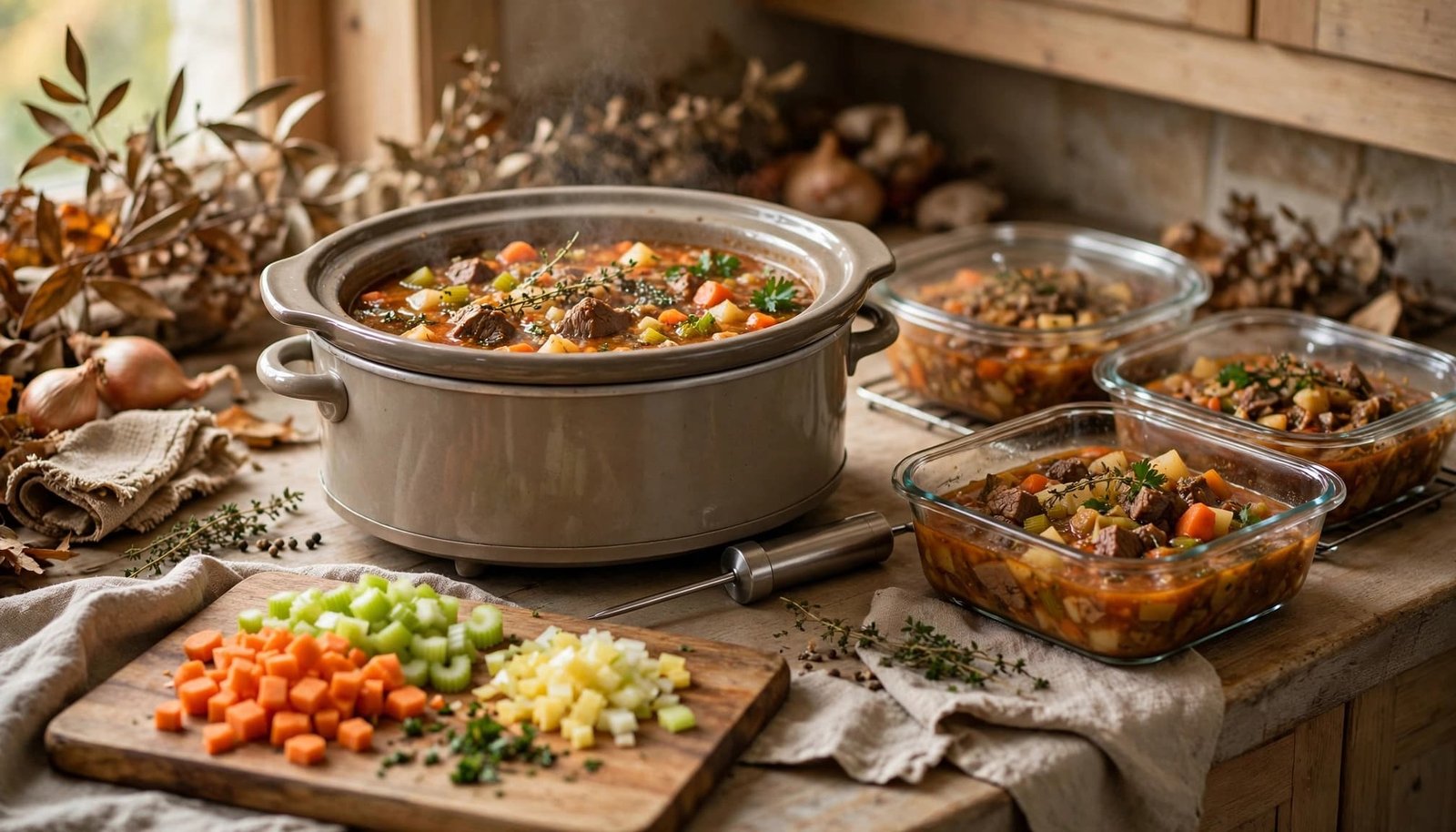
Cooking times vary by recipe, appliance, ingredient size, and how full the crock is. This guide gives me a useful starting point:
- Chicken often needs 3 to 6 hours, depending on the cut and setting.
- Soups and chilis commonly need 4 to 8 hours.
- Beef roasts often need about 8 hours on LOW.
- Desserts usually need 2 to 4 hours.
Start checking lean chicken and pork earlier than a recipe’s maximum time. Tough beef cuts need enough time for connective tissue to soften, so testing them too early can make you think the recipe failed. A fork should slide easily into tender roasts, but a thermometer should confirm safe doneness when you’re cooking poultry or uncertain cuts.
Add ingredients according to how well they tolerate long cooking. Pasta, rice, cheese, cream, fresh herbs, and greens usually need less time than meat and root vegetables.
- Add dry pasta near the end, often during the final 20 to 30 minutes, or cook it separately.
- Stir in cooked rice near the end so it doesn’t absorb all the broth and turn mushy.
- Add cheese and cream during the final 15 to 30 minutes to reduce curdling and separation.
- Add fresh herbs shortly before serving for a brighter flavor.
- Stir in spinach, kale, and other greens during the final 10 to 20 minutes.
For more detail on safe temperatures and storage, I follow the USDA’s slow cooker food safety guidance. When holding a finished dish for serving, keep it above 140°F and check the temperature with a thermometer. If the appliance cannot heat food properly or maintain that temperature, replace it.
Refrigerate leftovers in covered, shallow containers within two hours after cooking. Shallow containers help the food cool faster and more evenly. When you’re ready to eat, reheat leftovers to 165°F on the stovetop, in the oven, or in the microwave. Stir soups and sauces during reheating so cold spots don’t remain.
Never use the slow cooker to reheat leftovers. It heats food too slowly for safe reheating. Instead, reheat the food completely on another appliance, then transfer it to a preheated slow cooker only when you need to hold it hot for serving. The USDA safe temperature chart lists 165°F as the safe reheating temperature for leftovers.
Frequently Asked Questions
These answers cover the practical details that often come up after choosing a recipe. I use them when I need to adjust a dish, plan ahead, or rescue a slow cooker meal that didn’t turn out as expected.
Can I double a slow cooker recipe?
You can double many recipes, but only if the ingredients fit comfortably in the cooker. Keep the crock half to two-thirds full, because an overfilled slow cooker may heat unevenly.
The cooking time may increase, especially for dense stews, large roasts, and recipes with lots of chilled ingredients. I check doneness with a food thermometer and test vegetables with a fork instead of relying on the original time alone.
How can I make a slow cooker recipe less watery?
Start with less broth than you think you need, since meat and vegetables release liquid as they cook. You can always add more near the end, but removing excess liquid takes longer.
For soups, transfer some of the cooking liquid to a saucepan and simmer it until reduced. A cornstarch slurry can also thicken the sauce, but mix cornstarch with cold water first so it doesn’t form lumps. I add dairy only near the end, then let the dish heat gently without boiling.
Can I prepare these fall recipes the night before?
Yes, you can chop vegetables, measure spices, mix sauces, and brown meat ahead of time. Store each prepared component in the refrigerator rather than assembling raw ingredients in the crock and leaving them at room temperature.
For an easier morning, I keep the meat and vegetables in separate covered containers overnight. Then I add them to the slow cooker just before cooking begins. This approach also keeps ingredients cold and reduces the chance of forgetting a step during a busy morning.
Which slow cooker size works best for these recipes?
A 5- to 7-quart slow cooker works well for most full-size soups, chilis, stews, and pulled pork recipes. Smaller 3- to 4-quart cookers are better for half batches, side dishes, and desserts.
If your cooker is too large for the recipe, the food may cook faster and dry out around the edges. When you use a smaller cooker, never pack it to the top. Leave enough room for bubbling and heat circulation.
Can I freeze slow cooker leftovers?
Most chili, soup, stew, shredded meat, and tomato-based sauces freeze well. Cool the food promptly, divide it into meal-size containers, remove excess air, and label each container with the name and date.
I freeze pasta separately whenever possible because noodles can become soft after thawing. Cream-based soups may separate slightly, but gentle reheating and a splash of broth can improve the texture. For broader storage guidance, the USDA explains how to handle leftovers safely.
What should I do if the food finishes before dinner?
Keep the cooked food in the slow cooker on its warm setting only if the appliance holds it at 140°F or higher. Check with a food thermometer, especially when the meal will sit for more than a short time.
If the food has cooled, reheat it on the stovetop, in the microwave, or in the oven until it reaches 165°F. I never use the slow cooker to reheat cold leftovers because it warms food too slowly. Once the food is hot, transfer it to a preheated slow cooker for serving.
Conclusion
These 25 fall slow cooker recipes make comfort food easier without sacrificing flavor. Choose a soup, stew, chicken dish, vegetarian meal, pasta, dessert, or warm cider based on your schedule and the ingredients you have on hand.
I like to prep vegetables and sauces ahead of time, follow the recommended cooking and food safety guidance, and save leftovers in small containers for quick meals. Try one recipe this week, then make it your own with seasonal toppings and simple ingredient swaps.

Leave a Reply