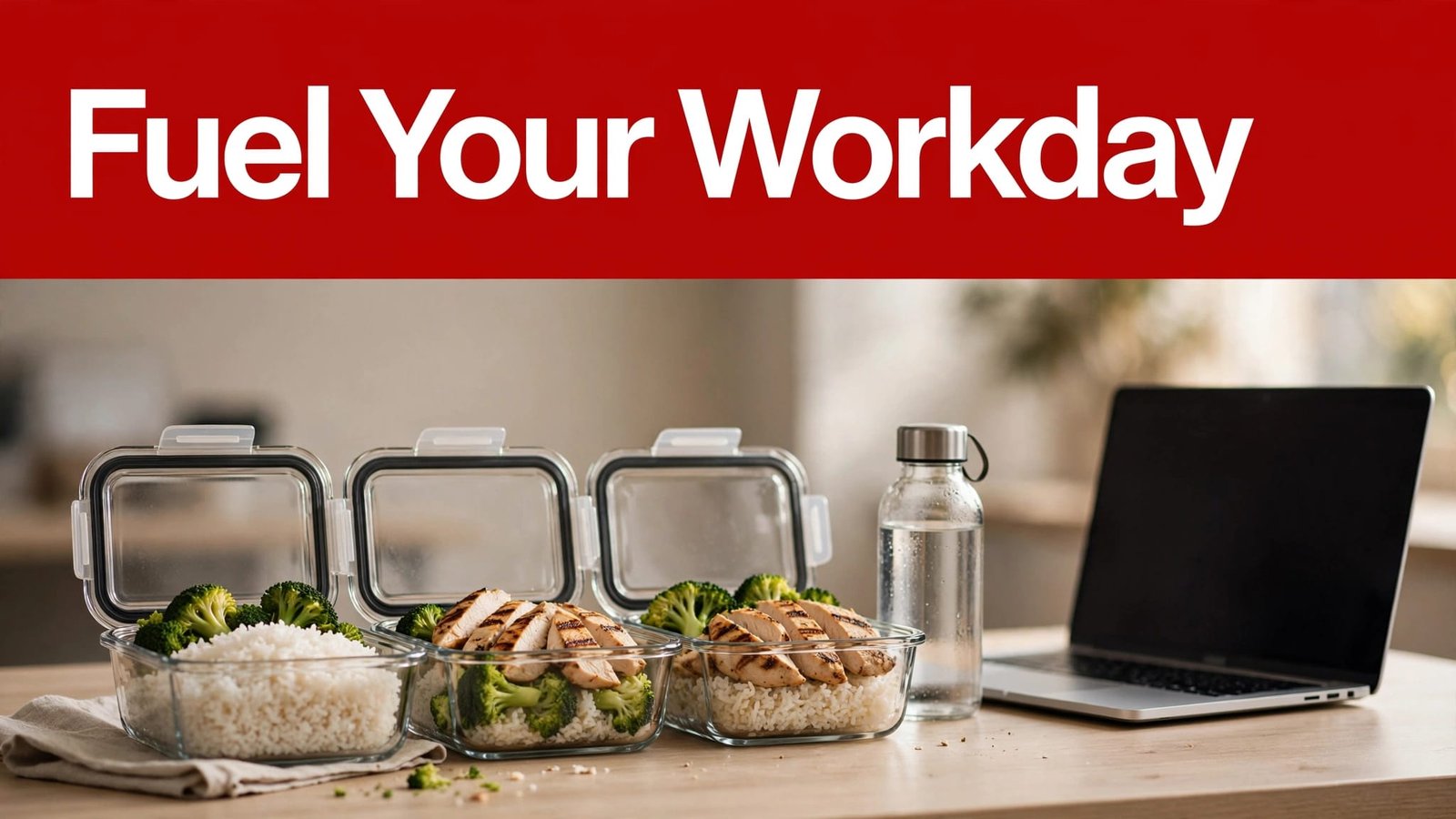
A protein-rich lunch can help you stay full through the afternoon, support muscle repair, and reduce the energy slump that often hits during the workday. A practical target is about 20 to 30 grams of protein per lunch, although your needs vary with body size, activity level, age, and health.
These 25 healthy high-protein lunch recipes are portable, easy to prep, office-friendly, and made with common ingredients. Adjust portions to fit your needs, and check with a health professional if you have kidney disease or another condition that affects protein intake. Start with these simple recipes for satisfying work lunches.
Healthy High-Protein Lunch Recipes for Men at Work
These work-friendly recipes use simple ingredients and fit into a lunch bag without much fuss. Each one includes a short ingredient list, an estimated protein range, serving guidance, and clear preparation steps.
Protein amounts are approximate because brands, portion sizes, and cooking methods vary. For more precise nutrition information, compare your ingredients with USDA FoodData Central. Use an insulated lunch bag and ice pack for cold recipes, and keep dressings, sauces, and crisp toppings separate until you’re ready to eat.
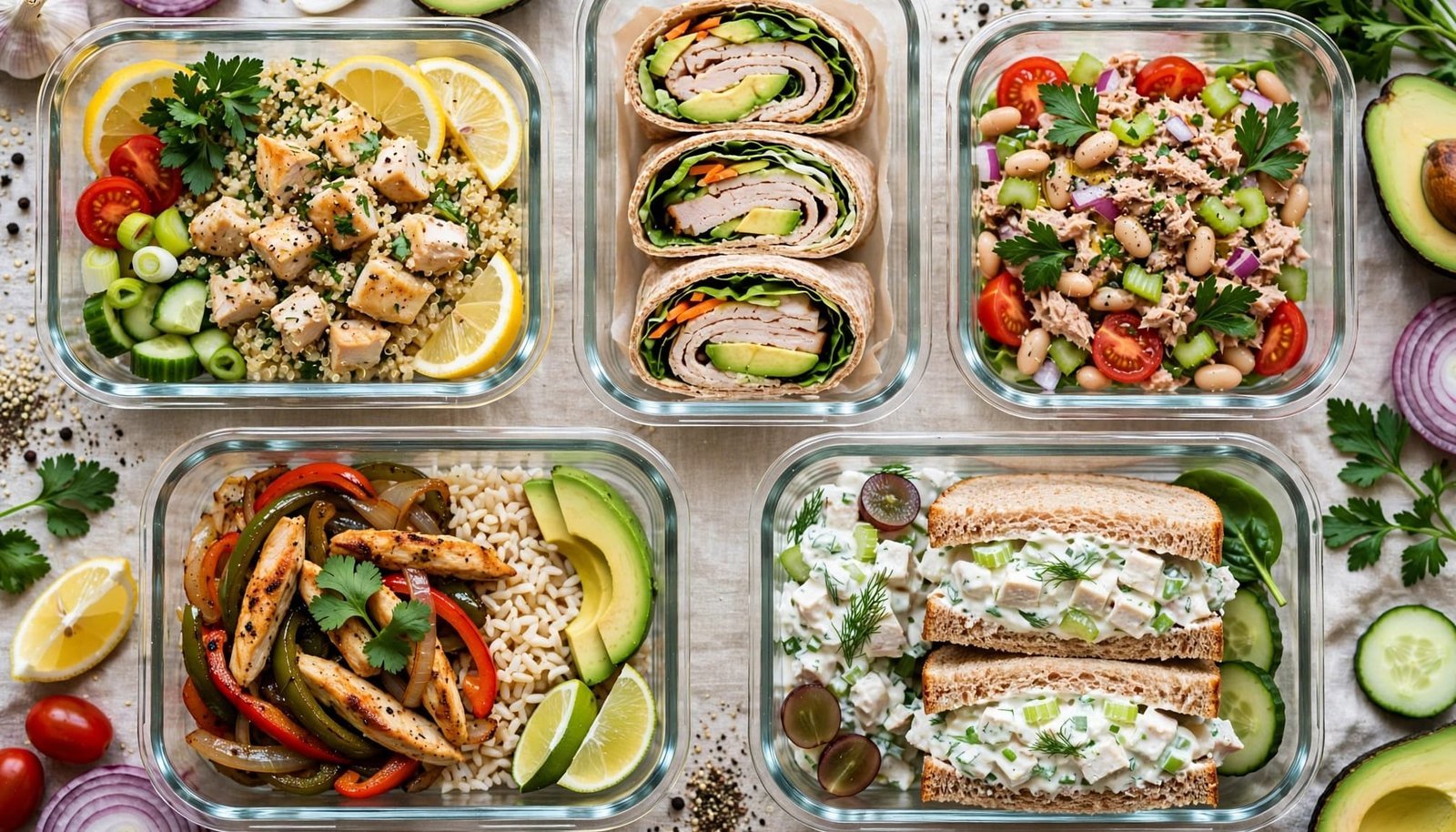
1. Lemon Chicken and Quinoa Power Bowl
This chicken quinoa bowl delivers a balanced mix of lean protein, whole grains, vegetables, and creamy dressing. It works well cold, or you can warm the chicken and quinoa before adding the fresh vegetables.
Ingredients for one serving:
- 4 ounces cooked chicken breast
- 3/4 cup cooked quinoa
- 1/2 cup chopped cucumber
- 1/2 cup cherry tomatoes
- 1 cup mixed greens
- 1/3 cup plain Greek yogurt
- 1 tablespoon lemon juice
- 1 teaspoon olive oil
- Garlic powder, black pepper, and salt
First, season the chicken with garlic powder, pepper, salt, and a little lemon juice. Cook it in a skillet until it reaches 165°F, then let it rest before slicing. Prepare the quinoa according to the package directions and allow it to cool slightly.
Next, chop the cucumber and tomatoes. Whisk the Greek yogurt, lemon juice, olive oil, and seasonings in a small container. Layer the greens, quinoa, vegetables, and chicken in a leakproof lunch container. Pack the dressing separately when possible so the greens stay crisp.
A serving provides approximately 35 to 40 grams of protein, depending on the chicken portion and Greek yogurt brand. Add extra cucumber or greens if you want more volume without making the bowl heavy.
Read also: 18 Quick and Easy Work Lunch Sandwich Ideas
2. Turkey and Avocado Whole Wheat Wrap
This turkey wrap is easy to assemble at home and simple to eat between meetings. Avocado adds creaminess, while spinach and tomato bring freshness without requiring a separate side dish.
Ingredients for one wrap:
- 4 ounces sliced lean turkey
- 1/2 ripe avocado
- 1 whole wheat tortilla
- A handful of baby spinach
- 3 to 4 tomato slices
- 2 tablespoons plain Greek yogurt
- 1 teaspoon yellow or Dijon mustard
- Black pepper
Mash the avocado with a fork and spread it across the tortilla, leaving a little space around the edges. Stir the Greek yogurt and mustard together, then spread the mixture over the avocado.
Add the turkey, spinach, tomato, and black pepper. Fold both sides of the tortilla inward, then roll it tightly from the bottom. Cut the wrap in half and secure it with parchment paper or a reusable wrap. If you’re preparing it several hours ahead, pat the tomato dry first to limit moisture.
This recipe contains about 25 to 30 grams of protein. The Greek yogurt mustard sauce adds a small protein boost and keeps the wrap moist without the weight of mayonnaise. Pack sliced fruit or raw vegetables on the side for a more filling lunch.
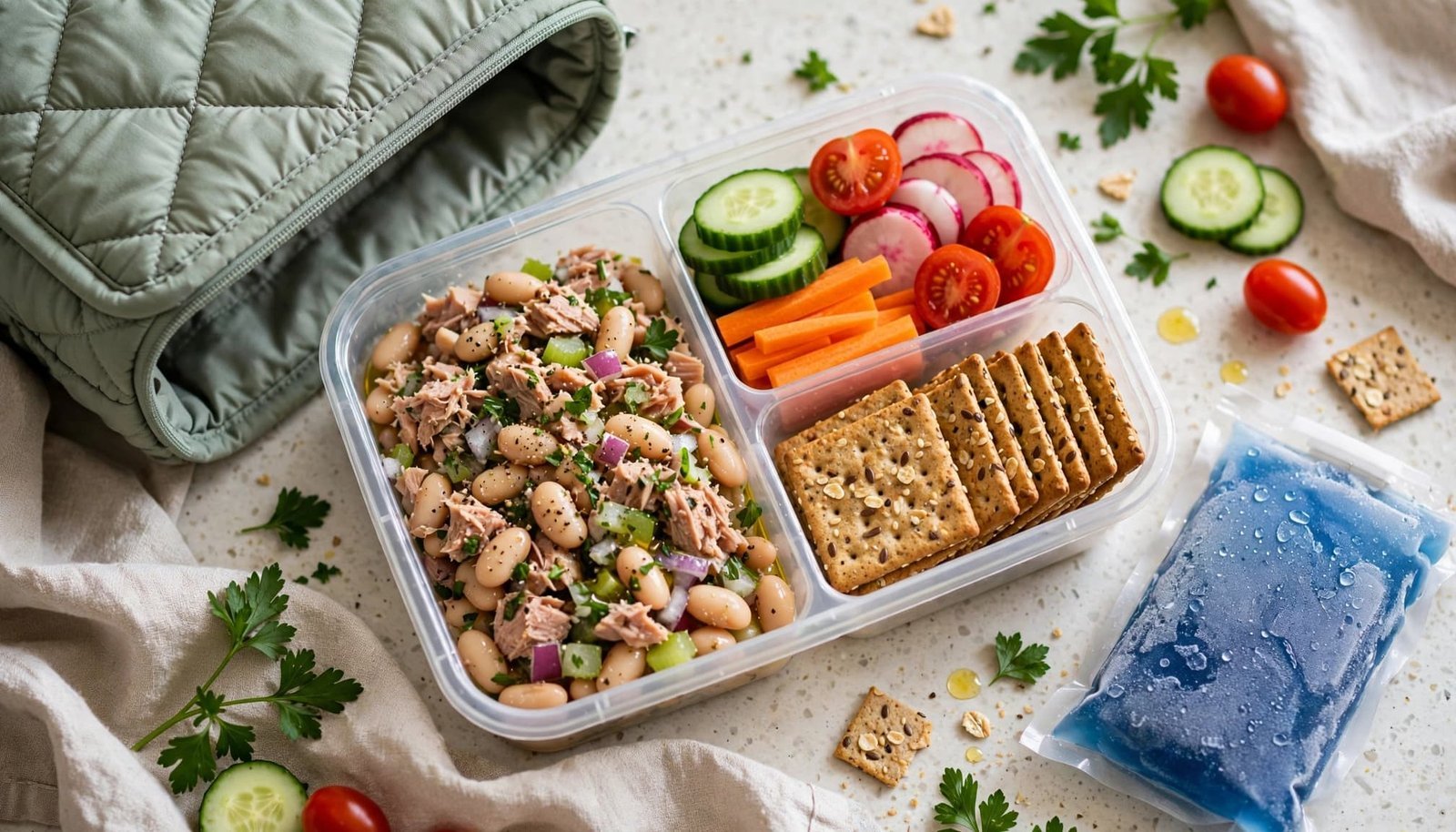
3. Tuna and White Bean Salad
Tuna and white beans make a fast, no-cook lunch with plenty of protein and fiber. The salad tastes best chilled, so prepare it the night before and store it in a sealed container.
Ingredients for one serving:
- 1 can tuna in water, drained
- 1/2 cup white beans, drained and rinsed
- 1 celery stalk, finely chopped
- 2 tablespoons diced red onion
- 1 tablespoon chopped parsley
- 1 tablespoon lemon juice
- 1 teaspoon olive oil
- Black pepper and a small pinch of salt
Drain the beans, rinse them under cool water, and drain the tuna thoroughly. Chop the celery, red onion, and parsley while the beans drain. Whisk the lemon juice, olive oil, pepper, and salt in a small bowl.
Add the tuna, beans, celery, onion, and parsley to a larger container. Pour over the dressing and toss gently so the beans stay intact. Chill the salad before packing it in your lunch bag.
A serving provides approximately 30 to 35 grams of protein, depending on the tuna can size and bean portion. Eat it with whole grain crackers, spoon it over greens, or wrap it in lettuce leaves. Keep crackers separate until lunchtime so they remain crunchy.
Read also: 18 Meatless Lunch Ideas for Work With Vegetarian Sandwiches
4. Chicken Fajita Rice Bowl
This rice bowl brings familiar fajita flavors to the office and reheats well in a microwave. Prepare several portions during meal prep, then store fresh toppings separately for better texture.
Ingredients for one serving:
- 4 ounces cooked chicken breast
- 3/4 cup cooked brown rice
- 1/2 cup black beans
- 1/2 bell pepper, sliced
- 1/4 onion, sliced
- 1 tablespoon salsa
- 2 tablespoons plain Greek yogurt
- Fajita seasoning
Cook the bell pepper and onion in a skillet with fajita seasoning until tender. Warm the chicken and brown rice, then stir in the black beans. Layer the rice mixture, chicken, peppers, and onions in a microwave-safe container.
At work, remove the lid and heat the bowl until hot, stirring halfway through. Add salsa and Greek yogurt after reheating. Keeping these toppings separate prevents the rice from becoming watery and protects the yogurt’s texture.
Expect approximately 35 to 40 grams of protein per serving. Add fresh cilantro, lime juice, or sliced jalapeño if you want more flavor without another heavy sauce.
5. Greek Yogurt Chicken Salad Sandwich
Greek yogurt replaces most of the mayonnaise in this chicken salad, creating a creamy filling with extra protein. Grapes provide sweetness, while celery and walnuts add crunch.
Ingredients for one sandwich:
- 4 ounces cooked chicken, diced
- 1/3 cup plain Greek yogurt
- 1 celery stalk, finely chopped
- 1/4 cup halved grapes or diced apple
- 1 tablespoon chopped walnuts
- 1 teaspoon Dijon mustard
- 2 slices whole grain bread
- Black pepper
Cook the chicken until it reaches 165°F, then cool it completely before dicing. Chop the celery and fruit into small pieces. Stir the Greek yogurt, Dijon mustard, and black pepper together in a bowl.
Fold in the chicken, celery, fruit, and walnuts until everything is coated. Pack the filling in a separate container and spoon it onto the bread just before eating. This simple step keeps the sandwich from becoming soggy.
The filling provides about 30 grams of protein, depending on the chicken and yogurt used. For a firmer sandwich, use chilled chicken, drain excess liquid from the yogurt, and place a lettuce leaf between the filling and bread.
Easy High-Protein Meal Prep Lunches That Reheat Well
Warm lunches work best when you prepare sturdy ingredients in batches and keep fresh toppings separate. Store cooked meals in small, shallow containers within two hours, then refrigerate them or carry them in an insulated lunch bag with an ice pack. At work, reheat leftovers until steaming hot, or confirm they reach 165°F with a food thermometer.
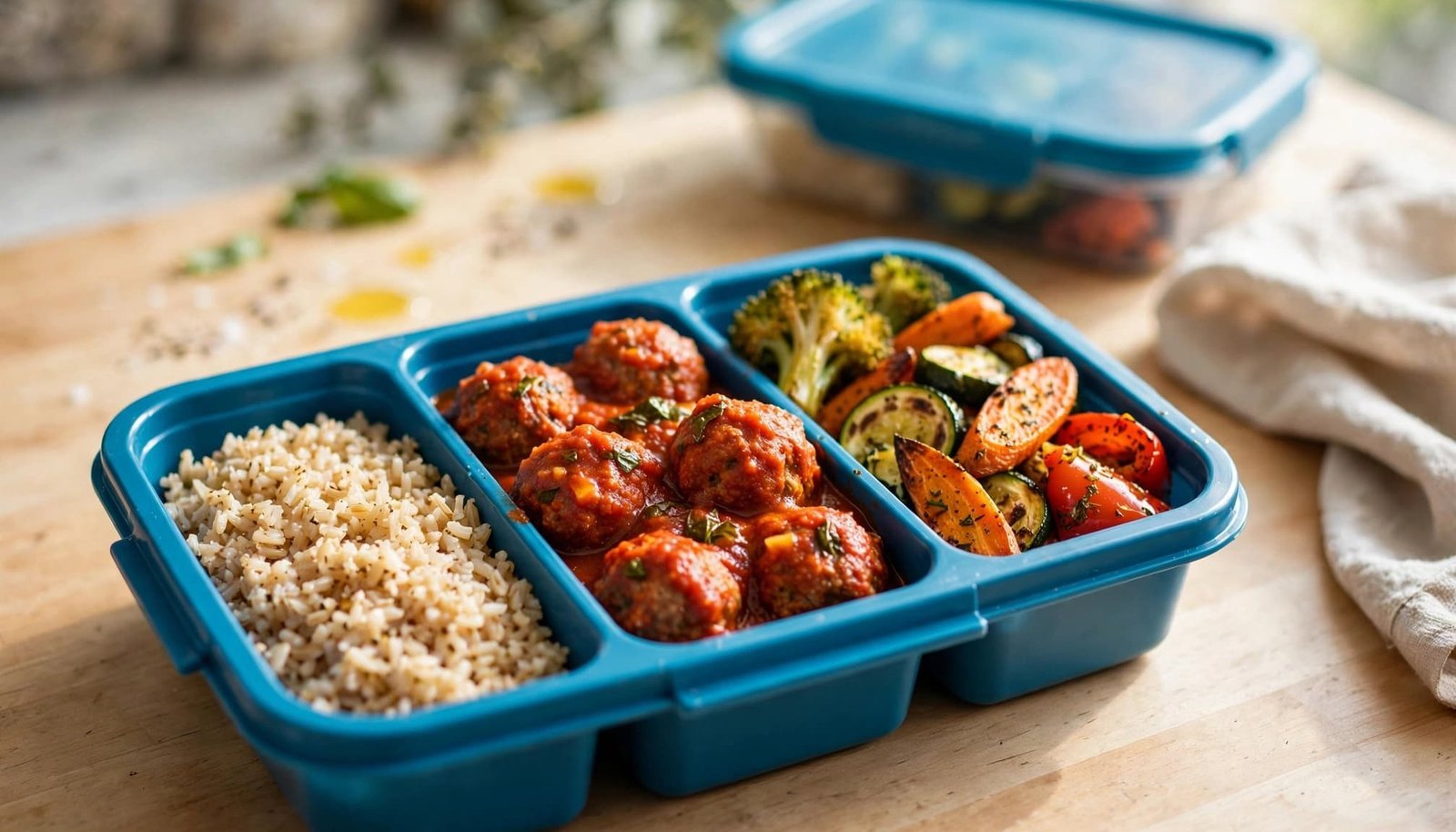
6. Turkey Meatball and Marinara Grain Bowl
These turkey meatball bowls reheat well because the marinara keeps the meat moist. Brown rice adds lasting energy, while roasted vegetables provide color, fiber, and texture.
Ingredients for one serving:
- 4 to 5 ounces lean ground turkey
- 2 tablespoons quick oats or breadcrumbs
- 1 large egg
- 1/2 teaspoon Italian seasoning
- 1/2 cup marinara sauce
- 3/4 cup cooked brown rice
- 1 cup chopped vegetables, such as zucchini, broccoli, or bell pepper
- Garlic powder, black pepper, and salt
First, combine the ground turkey, oats or breadcrumbs, egg, Italian seasoning, garlic powder, pepper, and a small amount of salt. Shape the mixture into small meatballs, then place them on a lined baking sheet.
Bake at 400°F until the meatballs are fully cooked and reach 165°F in the center, usually about 15 to 20 minutes depending on their size. Warm the marinara in a saucepan, add the meatballs, and simmer briefly so the sauce coats each one.
Meanwhile, cook the brown rice and roast the vegetables with a little olive oil and seasoning. Portion the rice into meal-prep containers, then add the meatballs, marinara, and vegetables. Keep the sauce in a separate compartment if you prefer firmer rice.
Each bowl provides about 30 to 35 grams of protein. Refrigerate the portions promptly, and reheat the rice, vegetables, and meatballs until steaming hot before eating.
7. Teriyaki Salmon Edamame Bowl
Salmon and edamame create a filling combination with complete protein and a satisfying texture. Shredded carrots and cucumber keep the bowl fresh, while a lower-sugar teriyaki sauce adds flavor without making lunch overly sweet.
Ingredients for one serving:
- 4 ounces salmon fillet
- 1/2 cup shelled edamame
- 3/4 cup cooked brown rice
- 1/2 cup shredded carrots
- 1/2 cup sliced cucumber
- 1 to 2 tablespoons lower-sugar teriyaki sauce
- Garlic powder, black pepper, and a squeeze of lime
Season the salmon with garlic powder, pepper, and lime. Bake it at 400°F until it flakes easily and reaches 145°F in the thickest part. Let it cool slightly before dividing it into portions.
Cook the brown rice according to the package directions, then steam the edamame until tender. Prepare the carrots and cucumber while the rice cools. Place the rice, salmon, and edamame in a container, and pack the teriyaki sauce on the side.
A serving contains about 30 to 35 grams of protein, depending on the salmon and edamame portions. Add the cucumber and carrots after reheating so they stay crisp.
Cooked salmon should remain refrigerated at 40°F or below and eaten within three to four days. The same timing applies to the other cooked ingredients. The USDA leftovers guidance also recommends reheating leftovers to 165°F.
8. Beef and Black Bean Taco Bowl
Lean beef and black beans give this taco bowl a strong protein base, while brown rice and vegetables make it filling enough for a long afternoon. Use lean ground beef and keep the cheese portion modest for a lighter lunch.
Ingredients for one serving:
- 4 ounces lean ground beef
- 1/2 cup black beans, drained and rinsed
- 3/4 cup cooked brown rice
- 1/4 cup corn
- 1 cup shredded lettuce
- 1/2 cup diced tomatoes
- 2 tablespoons salsa
- 1 tablespoon shredded cheese
- Taco seasoning
Brown the ground beef in a skillet, breaking it into small pieces as it cooks. Drain excess fat, then stir in the taco seasoning and black beans. Cook for another two to three minutes, adding a splash of water if the mixture seems dry.
Prepare the brown rice and let it cool slightly before portioning. Add the beef and bean mixture, rice, and corn to each container. Store the lettuce, tomatoes, salsa, and cheese separately so the vegetables stay crisp and the toppings remain cool.
This bowl provides approximately 30 to 35 grams of protein. At lunchtime, heat the rice, beef, beans, and corn first, then add the lettuce, tomatoes, salsa, and controlled cheese portion.
9. Chicken Lentil Curry With Rice
Chicken and lentils make this curry especially useful for batch cooking. The lentils thicken the sauce, add fiber, and help the meal stay satisfying after reheating.
Ingredients for one serving:
- 3 ounces chicken breast, cut into bite-size pieces
- 1/2 cup cooked lentils
- 1/2 cup crushed or diced tomatoes
- 1 cup baby spinach
- 1/4 cup low-fat coconut milk or plain Greek yogurt
- 3/4 cup cooked rice
- Onion, garlic, curry powder, cumin, and paprika
Sauté diced onion and garlic in a little oil until soft. Add the chicken, curry powder, cumin, paprika, and black pepper, then cook until the chicken is no longer pink on the outside.
Stir in the lentils and tomatoes, then simmer until the chicken reaches 165°F and the sauce thickens. Add the spinach near the end, cooking just until it wilts. Remove the pan from the heat before stirring in low-fat coconut milk. If using Greek yogurt, let the curry cool for a minute first to prevent curdling.
Serve the curry with cooked rice, or store the rice in a separate compartment. Keeping the grains apart prevents them from absorbing too much sauce. A portion provides about 35 grams of protein, depending on the chicken, lentil, and yogurt amounts.
For meal prep, cool the curry and rice in shallow containers before refrigerating. Reheat both until steaming hot, stirring the curry halfway through so the center warms evenly.
10. Egg and Turkey Breakfast-for-Lunch Muffins
Egg muffins turn breakfast ingredients into a portable lunch that reheats in minutes. Eggs, egg whites, and lean turkey supply the protein, while spinach and peppers add vegetables without making the muffins heavy.
Ingredients for one serving of muffins:
- 1 whole egg
- 3 egg whites
- 2 ounces lean turkey, diced
- 1/2 cup chopped spinach
- 1/4 cup diced bell pepper
- 1 tablespoon shredded cheese
- Black pepper and a small pinch of salt
Whisk the egg and egg whites in a bowl. Fold in the turkey, spinach, bell pepper, cheese, and seasonings. Grease a muffin tin, divide the mixture among the cups, and bake at 375°F until the centers are set.
Let the muffins cool completely before packing them. Pair a serving with fruit or one slice of whole grain toast for a more balanced lunch. Store the muffins separately from fruit and toast so moisture doesn’t soften the bread.
Two to three muffins provide roughly 25 to 30 grams of protein, depending on the turkey and egg-white portions. Reheat them until hot throughout, but avoid overheating, which can make the eggs rubbery. They also taste good cold when you need a quick lunch away from the office microwave.
Cold High-Protein Lunches for Busy Office Days
Cold lunches are useful when the office microwave is occupied or your schedule leaves little time to reheat food. Crunchy vegetables, sturdy grains, beans, eggs, tuna, and yogurt-based sauces hold up well for several hours when packed cold and kept properly chilled.
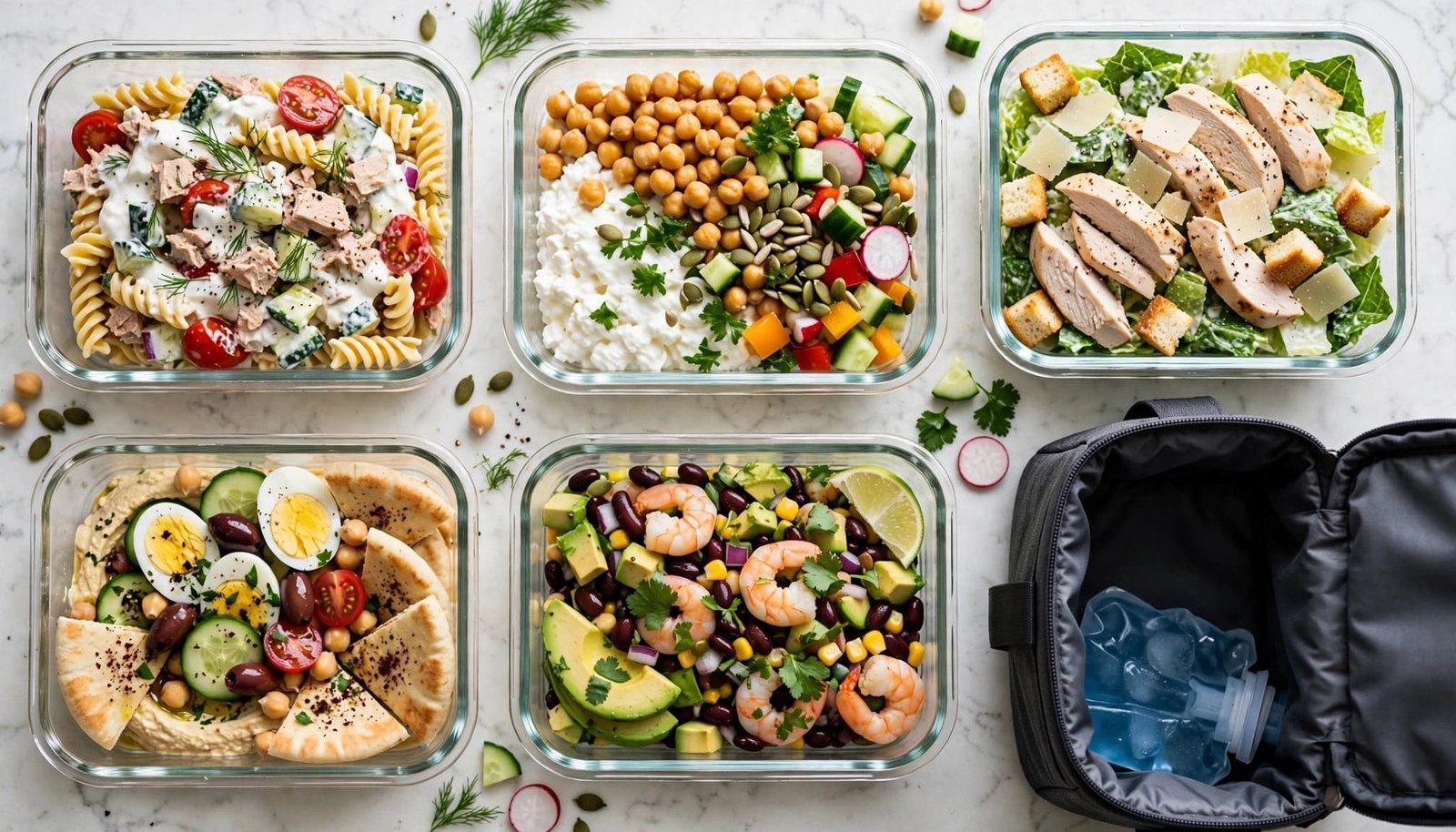
Pack these meals straight from the refrigerator into an insulated lunch bag. The USDA recommends using at least two cold sources, such as two frozen gel packs or one gel pack with a frozen water bottle. Keep perishable foods at 40°F or below, and follow the USDA guidance for safe bag lunches.
11. Tuna Greek Yogurt Pasta Salad
Tuna, whole wheat pasta, and Greek yogurt create a creamy, filling lunch without mayonnaise. Peas add extra protein and color, while celery and cucumber provide the crunch that keeps a cold pasta salad from feeling heavy.
Ingredients for one serving:
- 1 cup cooked whole wheat pasta
- 1 can tuna in water, drained
- 1/3 cup plain Greek yogurt
- 1/4 cup peas
- 1 celery stalk, finely chopped
- 1/2 cup diced cucumber
- Lemon pepper to taste
- A small squeeze of lemon juice
Cook the pasta according to the package directions, then drain and rinse it under cool water. Let it cool completely so it doesn’t thin the yogurt dressing. Drain the tuna thoroughly while the pasta cools.
Stir the Greek yogurt, lemon juice, and lemon pepper together in a small bowl. Chop the celery and cucumber, then combine the pasta, tuna, peas, vegetables, and dressing in a leakproof container. Chill the salad before placing it in your lunch bag.
This recipe provides approximately 30 to 35 grams of protein, depending on the tuna can size and yogurt brand. Keep it chilled until lunchtime, and pack crackers or extra vegetables separately if you want more texture.
12. Cottage Cheese and Chickpea Crunch Bowl
Cottage cheese gives this bowl a soft, creamy base, while chickpeas, vegetables, and pumpkin seeds add fiber and texture. It takes only a few minutes to assemble, so you can prepare it the night before or build it quickly in the morning.
Ingredients for one serving:
- 1 cup low-fat cottage cheese
- 1/2 cup chickpeas, drained and rinsed
- 1/2 cucumber, chopped
- 1/2 cup halved cherry tomatoes
- 1/2 cup shredded or sliced carrots
- 1 tablespoon pumpkin seeds
- Fresh parsley, dill, or cilantro
- Black pepper and a small pinch of salt
Rinse the chickpeas under cool water and drain them well. Chop the cucumber, tomatoes, and carrots into bite-size pieces. Season the cottage cheese with pepper, herbs, and a small amount of salt.
Layer the cottage cheese, chickpeas, and vegetables in a container. Store the pumpkin seeds in a separate small compartment or bag, then add them just before eating so they stay crisp.
For a lemon herb dressing, whisk together 1 tablespoon lemon juice, 1 teaspoon olive oil, chopped parsley, black pepper, and a pinch of garlic powder. Drizzle it over the bowl at lunchtime. A serving contains about 25 to 30 grams of protein, depending on the cottage cheese portion.
13. Chicken Caesar Protein Salad
This chicken Caesar salad keeps the familiar flavor of the classic version while adding more protein through grilled chicken and Greek yogurt dressing. Romaine stays crisp when it is washed, dried well, and packed away from the sauce.
Ingredients for one serving:
- 4 ounces grilled chicken breast
- 2 to 3 cups chopped romaine
- 2 tablespoons grated Parmesan
- 1/4 cup whole grain croutons
- 1/3 cup plain Greek yogurt
- 1 teaspoon lemon juice
- 1 teaspoon Dijon mustard
- 1 teaspoon grated Parmesan
- Garlic powder and black pepper
Cook the chicken until it reaches 165°F, then let it rest before slicing. Whisk the Greek yogurt, lemon juice, Dijon mustard, Parmesan, garlic powder, and pepper together to make the dressing.
Wash and dry the romaine thoroughly. Place the greens in a large container, then pack the sliced chicken, Parmesan, croutons, and dressing separately when possible. Toss everything together just before eating.
The salad provides approximately 30 to 35 grams of protein. Keeping the dressing separate protects the lettuce and prevents the croutons from becoming soft. If you prepare the chicken in advance, refrigerate it promptly and use it within the recommended storage window for cooked leftovers.
14. Mediterranean Egg and Hummus Pita
Hard-boiled eggs and hummus make this pita a simple meat-free lunch with a creamy, savory filling. Cucumber, tomato, and spinach add freshness, while whole wheat pita provides a sturdy wrap that travels well.
Ingredients for one pita:
- 2 large hard-boiled eggs
- 3 tablespoons hummus
- 1 whole wheat pita
- 1/2 cucumber, thinly sliced
- 1/2 tomato, chopped
- A handful of baby spinach
- 1 tablespoon crumbled feta, optional
- Black pepper and paprika
Boil the eggs, cool them completely, and slice them. Chop the cucumber and tomato, then pat the tomato dry with a paper towel to reduce moisture. Spread the hummus inside the pita before adding the spinach, eggs, vegetables, feta, and seasonings.
Wrap the pita tightly in parchment paper or a reusable sandwich wrap. It provides about 20 to 25 grams of protein, depending on the egg size, hummus, and feta. For a higher-protein lunch, add 2 ounces of tuna or sliced cooked chicken.
Keep the pita cold in an insulated lunch bag. If you prepare it several hours ahead, place the wetter vegetables in the center of the filling and avoid overfilling the pita, which can cause tearing and sogginess.
15. Shrimp and Avocado Bean Salad
Shrimp, black beans, and avocado create a balanced cold lunch with protein, fiber, and satisfying fats. Lime dressing keeps the flavors fresh and helps slow the avocado’s browning.
Ingredients for one serving:
- 4 ounces cooked shrimp
- 1/2 cup black beans, rinsed and drained
- 1/2 avocado, diced
- 1/4 cup corn
- 1/2 cup chopped tomatoes
- 1 cup mixed greens
- 1 tablespoon lime juice
- 1 teaspoon olive oil
- Garlic powder, black pepper, and a small pinch of salt
Use thawed cooked shrimp, or cook raw shrimp until opaque and fully cooked. Let the shrimp cool before assembling the salad. Rinse the black beans, chop the tomatoes and avocado, and whisk the lime juice, olive oil, garlic powder, pepper, and salt together.
Toss the shrimp, beans, corn, tomatoes, and dressing in a container shortly before serving. Add the avocado last, then coat it with the lime dressing so the exposed surfaces receive plenty of juice. Place the mixture over the greens, or pack the greens separately for a crisper salad.
This lunch provides about 30 grams of protein. Keep the salad cold with an insulated bag and two frozen cold sources. Add the avocado and dressing close to lunchtime when possible, especially if you prefer a firm texture.
Budget-Friendly Protein Lunches With Eggs, Beans, and Canned Fish
High-protein lunches don’t require expensive meat or specialty products. Eggs, beans, lentils, canned fish, Greek yogurt, and peanut butter are affordable staples that work well in portable meals. They also provide different textures, so budget lunches don’t have to feel repetitive.
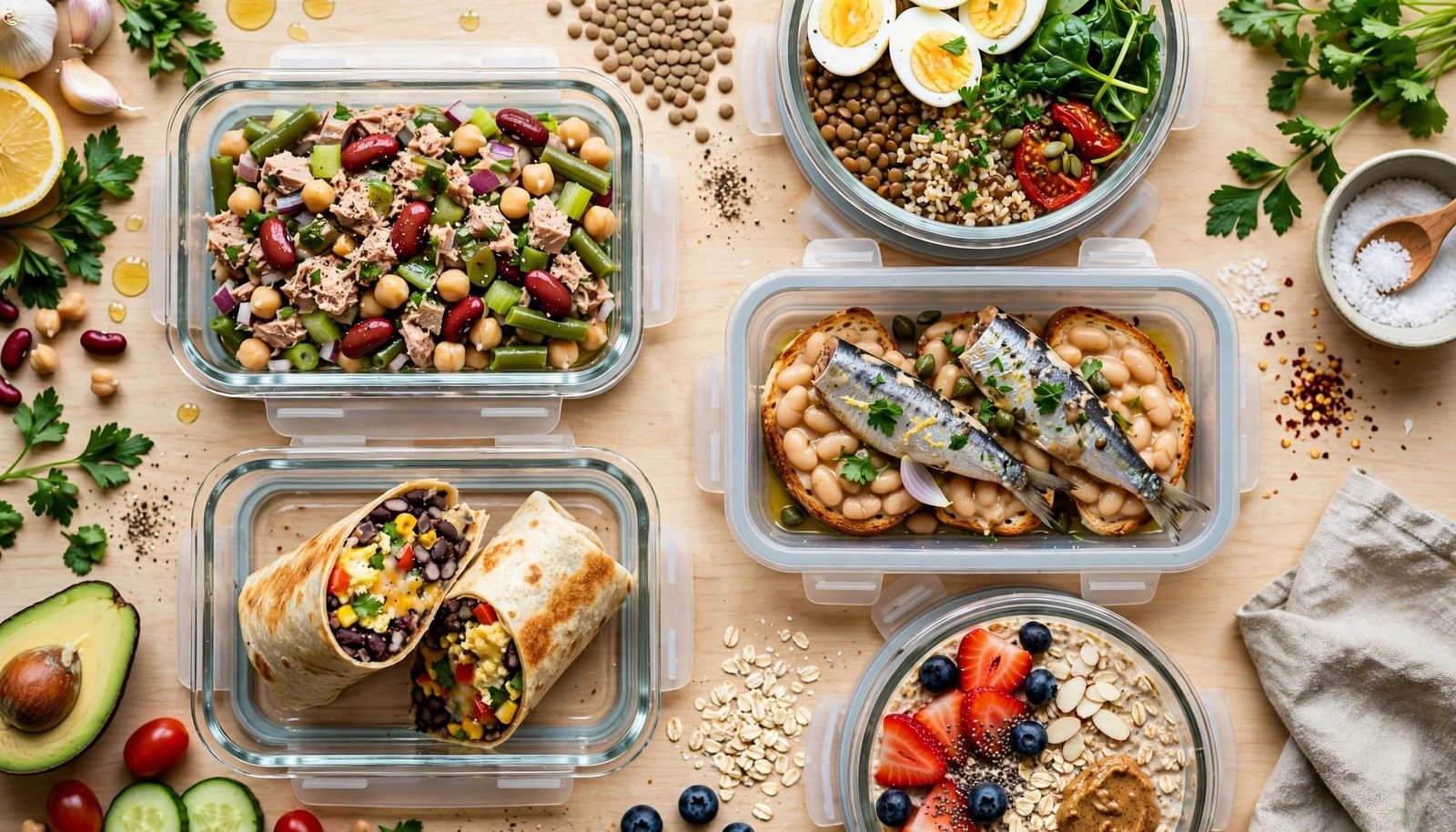
16. Three-Bean Tuna Lunch Box
This no-cook lunch combines tuna with chickpeas, kidney beans, and green beans for a filling mix of protein and fiber. Serve it with whole grain pita or fruit for an easy work lunch that travels well.
Ingredients for one serving:
- 1 can tuna in water, drained
- 1/3 cup chickpeas, drained and rinsed
- 1/3 cup kidney beans, drained and rinsed
- 1/3 cup green beans, drained
- 2 tablespoons finely chopped red onion
- 1 tablespoon chopped parsley
- 1 tablespoon red wine vinegar
- 1 teaspoon olive oil
- Black pepper and a small pinch of salt
First, drain and rinse the chickpeas and kidney beans. Drain the green beans and tuna well, then chop the red onion and parsley. Whisk the vinegar, olive oil, pepper, and salt in a small bowl.
Add everything to a leakproof container and toss gently. Mixing carefully keeps the beans intact and prevents the tuna from turning into a paste. Chill the lunch before packing it with an ice pack.
A serving provides approximately 30 to 35 grams of protein, depending on the tuna can size. Add whole grain pita, an apple, or another piece of fruit if you need more carbohydrates for an active afternoon.
For a fish-free version, replace the tuna with another 1/2 cup of beans plus 2 tablespoons of pumpkin seeds. The protein amount will vary, but the meal will still provide useful fiber and staying power. Compare portions with USDA FoodData Central’s food search when you want a closer nutrition estimate.
17. Lentil and Egg Grain Bowl
Lentils, eggs, and whole grains create a meat-free lunch with a satisfying combination of protein, fiber, and complex carbohydrates. Roasted vegetables add flavor and make the bowl easier to enjoy cold or warm.
Ingredients for one serving:
- 1/2 cup cooked lentils
- 2 large hard-boiled eggs
- 1/2 cup cooked quinoa or brown rice
- 1 cup roasted vegetables
- 1 cup mixed greens
- 1 teaspoon Dijon mustard
- 1 tablespoon lemon juice
- 1 teaspoon olive oil
- Black pepper
Cook the grain and lentils if you’re starting with dry ingredients. Meanwhile, boil the eggs, cool them under cold water, and slice them once they are fully chilled. Roast vegetables such as broccoli, carrots, zucchini, or bell peppers until tender.
Whisk the mustard, lemon juice, olive oil, and pepper together for the vinaigrette. Layer the greens, grain, lentils, roasted vegetables, and eggs in a lunch container, then pack the dressing separately when possible.
This bowl contains about 25 to 30 grams of protein. Canned lentils can save time because they require no soaking or simmering. Drain and rinse them before adding them to the bowl, which also removes excess liquid and helps the vegetables stay crisp.
If you avoid eggs, add extra lentils and a small portion of edamame. For a dairy-free lunch, the recipe already fits without changes. Keep cooked eggs refrigerated and use them within about one week, while prepared leftovers should stay at 40°F or below.
18. Sardine and White Bean Toast Box
Sardines pair well with creamy white beans, lemon, and parsley. Packing the spread separately from the toast keeps the bread crisp until lunch, which makes this meal better than a soggy sandwich.
Ingredients for one serving:
- 1 can sardines, drained
- 1/2 cup white beans, drained and rinsed
- 1 tablespoon lemon juice
- 1 tablespoon chopped parsley
- 2 slices whole grain toast
- Sliced cucumber, bell pepper, or carrots
- Black pepper
Mash the white beans with lemon juice, parsley, and black pepper. Drain the sardines and place them in a separate compartment. Pack the toast and sliced vegetables away from the bean mixture.
At lunchtime, spread the beans over the toast and add the sardines. The meal provides approximately 25 to 30 grams of protein, depending on the sardine and bread brands.
Canned salmon is a milder substitute if sardines taste too strong. For a fish-free option, use mashed chickpeas with an extra spoonful of Greek yogurt or hummus. Vegans can skip the yogurt and add sunflower seeds for more texture.
19. Black Bean and Egg Breakfast Burrito
A breakfast burrito can make a practical lunch when you fill it with eggs, black beans, spinach, and salsa. The ingredients are inexpensive, and you can freeze several burritos for busy workdays.
Ingredients for one burrito:
- 2 large eggs
- 1/2 cup black beans, warmed
- 1 whole wheat tortilla
- 1/2 cup spinach
- 2 tablespoons salsa
- 1 tablespoon shredded cheese
- Black pepper
Scramble the eggs in a nonstick skillet. Warm the black beans in a separate pan or microwave-safe bowl, then sauté the spinach until wilted. Place the tortilla on a clean surface and layer in the eggs, beans, spinach, salsa, and cheese.
Fold in the sides and roll the tortilla tightly from the bottom. Wrap it in foil or parchment paper, then refrigerate it for the next day. Each burrito provides approximately 25 to 30 grams of protein.
To freeze burritos, leave out watery ingredients such as fresh tomatoes and cool the filling completely before wrapping. Freeze them in individual packages for up to a few months. Reheat a refrigerated burrito in the microwave until hot throughout. For a frozen burrito, microwave it at reduced power first, turn it halfway through, and continue heating until the center reaches 165°F.
Use dairy-free shredded cheese or mashed avocado if you avoid dairy. For an egg-free version, increase the black beans and add crumbled tofu seasoned with turmeric, pepper, and salsa.
20. Peanut Butter Greek Yogurt Protein Overnight Oats
Overnight oats offer a low-cost alternative to packaged protein breakfasts. Greek yogurt and peanut butter add protein, while oats, chia seeds, and berries create a filling lunch that needs no reheating.
Ingredients for one serving:
- 1/2 cup rolled oats
- 1/2 cup plain Greek yogurt
- 1/2 cup milk
- 1 tablespoon peanut butter
- 1 tablespoon chia seeds
- 1/2 cup berries
Stir the oats, yogurt, milk, peanut butter, and chia seeds in a jar or lidded container. Cover and refrigerate overnight. Add the berries just before eating so they keep their shape and fresh flavor.
The finished oats provide about 25 to 30 grams of protein, depending on the yogurt and milk. Powdered peanut butter can lower the fat content while keeping the familiar nut flavor. Use a slightly larger amount if you want a stronger peanut taste.
For a dairy-free version, choose soy yogurt and fortified soy milk, which typically provide more protein than many other plant-based options. If you have a peanut allergy, use sunflower seed butter or almond butter where appropriate. Keep the jar chilled with an ice pack, and don’t leave it at room temperature for more than two hours.
Portable Chicken, Beef, and Plant-Based Lunches to Change Up Your Routine
The final recipes add variety with stuffed vegetables, pita sandwiches, pasta, tofu, and a salad bowl. Each lunch travels well when you separate sauces, protect crisp ingredients, and use a container with a tight seal.
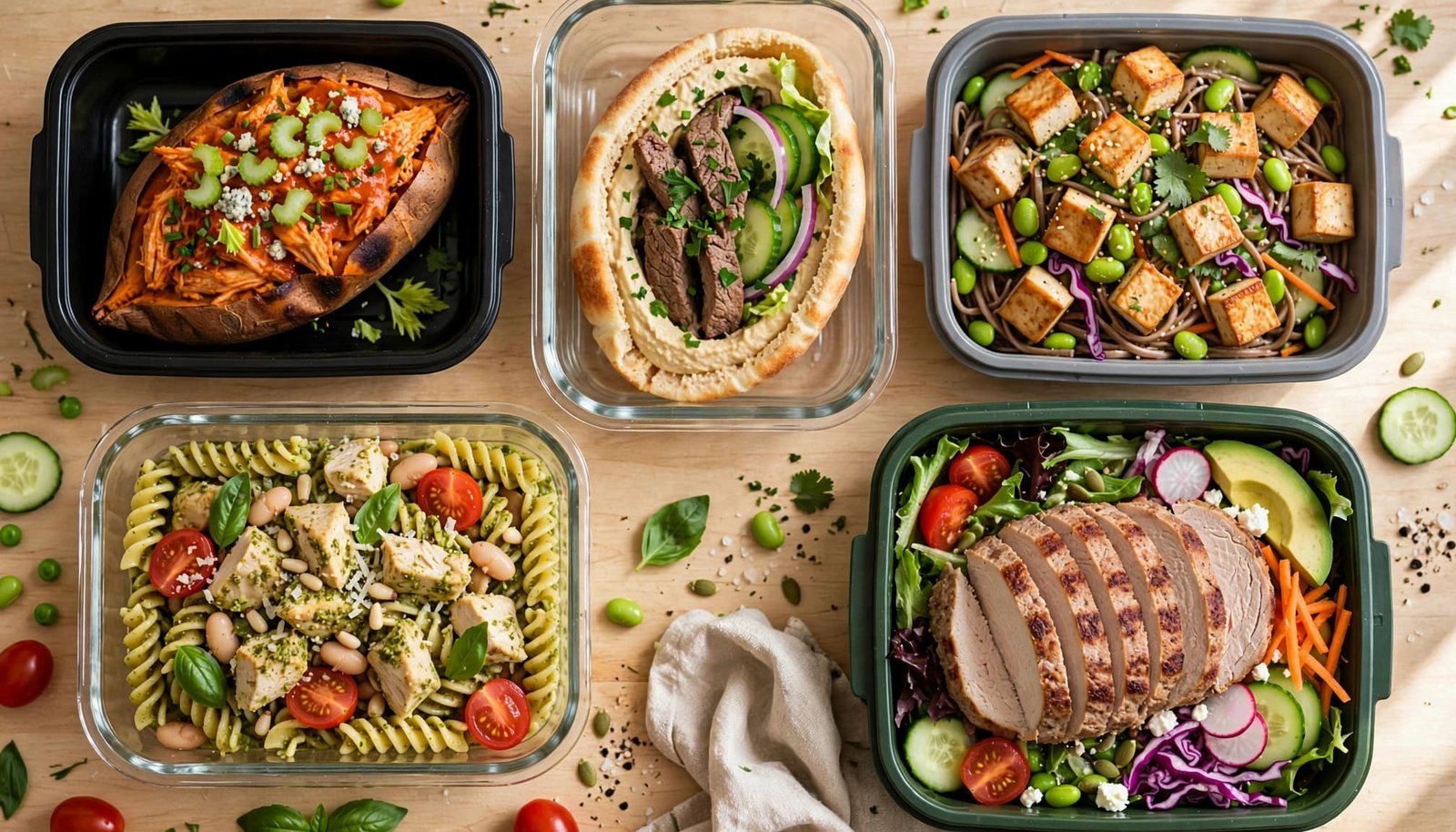
21. Buffalo Chicken Stuffed Sweet Potato
A sweet potato filled with buffalo chicken gives you a warm, satisfying lunch with a spicy edge. Greek yogurt ranch cools the sauce, while celery adds crunch. The finished meal provides about 30 to 35 grams of protein, depending on the chicken and yogurt portions.
Ingredients for one serving:
- 1 medium sweet potato
- 4 ounces cooked shredded chicken
- 1 to 2 tablespoons buffalo sauce
- 1 celery stalk, finely sliced
- 2 tablespoons plain Greek yogurt
- 1 teaspoon ranch seasoning
- Black pepper
Bake the sweet potato at 400°F until tender, usually 45 to 60 minutes. For a faster option, pierce it several times and microwave it for five to eight minutes, turning it halfway through.
Warm the cooked chicken in a skillet or microwave-safe container, then stir in the buffalo sauce. Mix the Greek yogurt with ranch seasoning and black pepper. Split the sweet potato, fluff the center with a fork, and add the chicken.
Top it with celery and the yogurt ranch. When preparing this lunch ahead, pack the celery and ranch in separate leakproof containers. Reheat the potato and chicken first, then add the cold toppings just before eating.
22. Lean Beef and Hummus Pita Pocket
This pita pocket turns leftover steak or cooked lean beef strips into a quick work lunch. Hummus adds moisture and a little plant protein, while cucumber, lettuce, and tomato keep the filling fresh. Expect about 30 grams of protein per pita.
Ingredients for one serving:
- 4 ounces cooked lean beef strips or leftover steak
- 1 whole wheat pita
- 3 tablespoons hummus
- 1 cup shredded lettuce
- 1/2 cucumber, sliced
- 1/2 tomato, diced
- Black pepper
Slice the beef into thin strips and warm it briefly if you prefer a hot filling. Spread hummus inside the pita, leaving room around the edge so it doesn’t squeeze out when you take a bite.
Add the lettuce, cucumber, tomato, and beef. Pat the tomato dry first to reduce excess moisture. Fold or wrap the bottom of the pita with parchment paper, foil, or a reusable sandwich sleeve. The wrap catches leaks and makes the pocket easier to eat at your desk.
Chicken works well in place of beef, especially leftover grilled chicken. For a meatless option, use seasoned baked tofu or extra hummus with chickpeas. Pack the pita in a shallow container that fits your lunch bag without crushing the bread.
23. Tofu Edamame Noodle Salad
This plant-based noodle salad combines baked tofu, edamame, soba noodles, and crunchy vegetables. A sesame lime dressing brings everything together without making the lunch heavy. One serving contains approximately 25 to 30 grams of protein.
Ingredients for one serving:
- 4 ounces extra-firm tofu
- 1/2 cup shelled edamame
- 1 cup cooked soba noodles
- 1/2 cup shredded cabbage
- 1/2 cup shredded carrots
- 1 tablespoon lime juice
- 1 teaspoon sesame oil
- 1 teaspoon low-sodium soy sauce
- 1/2 teaspoon honey or maple syrup
- Grated ginger, optional
Press the tofu between clean towels for 15 to 20 minutes, then cut it into cubes. Bake the cubes at 425°F until firm and lightly browned, usually 25 to 30 minutes. Steam the edamame while the tofu cooks.
Prepare the soba noodles according to the package directions. Drain them immediately and rinse them under cold water until cool. Toss the noodles with a small amount of sesame oil, then drain them well. The rinse removes excess starch, while the oil keeps the strands from sticking together.
Whisk the lime juice, sesame oil, soy sauce, honey or maple syrup, and ginger. Combine the noodles, tofu, edamame, cabbage, carrots, and dressing in a leakproof container. Keep the dressing separate if you want the vegetables to stay especially crisp.
24. Chicken Pesto Pasta With White Beans
Chicken, whole wheat pasta, and white beans make this cold pasta lunch more filling than a standard deli salad. Spinach and cherry tomatoes add freshness, while a modest amount of pesto supplies plenty of flavor. The recipe provides about 35 grams of protein.
Ingredients for one serving:
- 1 cup cooked whole wheat pasta
- 3 ounces cooked chicken, sliced
- 1/2 cup white beans, drained and rinsed
- 1 cup baby spinach
- 1/2 cup halved cherry tomatoes
- 1 tablespoon pesto
- 2 tablespoons plain Greek yogurt
- Black pepper
Cook the pasta according to the package directions, then drain and cool it completely. Rinse the white beans and let them drain while you slice the chicken and halve the tomatoes.
For a lighter, creamier sauce, stir the pesto into the Greek yogurt. Add the pasta, chicken, beans, spinach, tomatoes, and sauce to a large bowl, then toss gently. Portion the salad into a container with a tight lid.
If you plan to eat it several hours later, pack the spinach and tomatoes separately or place them on top of the pasta. This keeps the greens from wilting. You can also warm the pasta, chicken, and beans at work, then add the spinach and tomatoes afterward.
25. Turkey Burger Salad Bowl
A turkey burger becomes a portable salad bowl with roasted potatoes, mixed greens, pickles, tomatoes, onions, and a tangy yogurt sauce. It provides approximately 30 to 35 grams of protein and delivers the familiar flavor of a burger without the soggy bun.
Ingredients for one serving:
- 4 ounces lean ground turkey
- 1 cup diced potatoes
- 2 cups mixed greens
- 1/2 cup chopped tomatoes
- 1 small dill pickle, chopped
- 2 tablespoons sliced red onion
- 2 tablespoons plain Greek yogurt
- 1 teaspoon mustard
- 1 teaspoon pickle juice
- Garlic powder, black pepper, and salt
Season the turkey with garlic powder, pepper, and a small amount of salt. Form it into one patty and cook it in a skillet until the center reaches 165°F. Let the patty rest before slicing it into strips.
Toss the diced potatoes with a little oil and seasoning, then roast them at 425°F until tender and browned. Stir the Greek yogurt, mustard, and pickle juice together for the burger sauce.
Place the greens, tomatoes, pickles, onions, potatoes, and sliced turkey in a sturdy container. Pack the sauce separately and add it at lunchtime. A compartmented container works well because it keeps the roasted potatoes from softening the greens.
For food safety, carry this lunch in an insulated bag with frozen gel packs. Keep cold foods at 40°F or below, and reheat cooked leftovers to 165°F, following USDA leftovers guidance. Choose containers that seal tightly, fit your bag, and leave enough room to keep sauces upright.
How to Prep, Pack, and Store High-Protein Work Lunches Safely
Safe meal prep starts with simple habits: cook manageable amounts, cool food quickly, use clean airtight containers, and keep perishable lunches cold until you eat them. A protein-rich lunch only helps if it stays fresh during the workday.
Build a Balanced Lunch From Four Simple Parts
A balanced high-protein work lunch usually needs four parts:
- One protein source, such as chicken, tuna, eggs, Greek yogurt, tofu, salmon, beans, or lean beef.
- One high-fiber carbohydrate, such as quinoa, brown rice, whole wheat pasta, oats, beans, potatoes, or whole grain bread.
- At least one vegetable or fruit, including greens, broccoli, peppers, carrots, berries, apples, or tomatoes.
- A healthy fat or flavorful sauce, such as avocado, olive oil dressing, hummus, pesto, tahini, nuts, seeds, or Greek yogurt sauce.
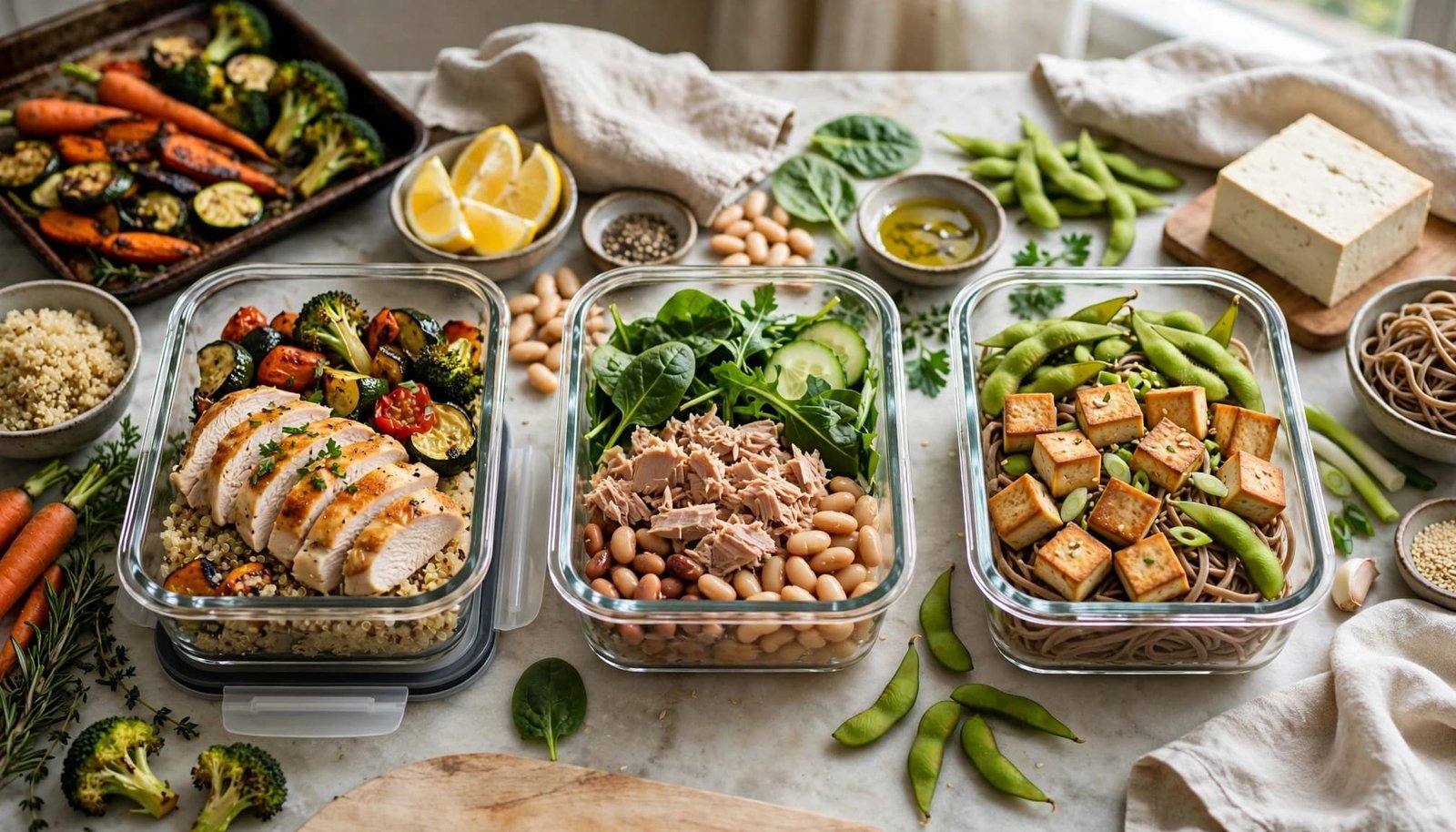
Photo by Julia M Cameron
For example, combine chicken with quinoa and roasted vegetables, tuna with white beans and leafy greens, or tofu with soba noodles and edamame. These combinations give you protein for fullness, carbohydrates for energy, produce for fiber and nutrients, and enough flavor to keep lunch enjoyable.
Sauces also make meal prep easier to repeat. A lemon yogurt dressing works with chicken and grains, while sesame-lime sauce fits tofu noodles. For tuna and beans, try olive oil, lemon juice, herbs, and black pepper.
Your ideal portion depends on hunger, activity, body size, goals, and your total daily intake. Someone with a physically demanding job may need more rice or potatoes, while someone eating a lighter dinner may prefer a larger lunch. Adjust the portions without losing the basic structure.
Choose Portions That Match Your Protein Goal
Many adults can use 20 to 30 grams of protein as a practical lunch target. People with higher protein needs may prefer meals closer to 25 to 35 grams, especially when lunch is several hours before dinner or follows a workout.
You don’t need to increase processed meat to raise the protein in a meal. Instead, add one of these simple options:
- Stir plain Greek yogurt into a sauce or pack it with fruit.
- Add beans or lentils to grain bowls, salads, soups, and wraps.
- Include a hard-boiled egg beside a sandwich or salad.
- Mix cottage cheese into a bowl with vegetables, chickpeas, or whole grain crackers.
- Add edamame to noodle salads, rice bowls, or chilled pasta.
- Increase the chicken portion by an ounce or two when you need more protein.
For example, a lunch with 3 ounces of chicken may provide less protein than you want. Adding a small serving of edamame or Greek yogurt can raise the total without making the meal overly large. Beans and lentils also add fiber, which processed meat cannot provide in the same way.
Protein is only one part of a healthy lunch. Keep vegetables, fruit, fiber-rich carbohydrates, and unsaturated fats in the container too. A meal with 40 grams of protein but no produce or carbohydrate may leave you short on energy and variety.
Use a Simple Weekly Meal-Prep Plan
Cook enough food for about three to four refrigerated workdays rather than preparing an entire week of lunches at once. This keeps the meals fresher and matches the USDA Food Safety and Inspection Service recommendation to eat most refrigerated leftovers within three to four days at 40°F or below. You can review the USDA leftovers guidance for the standard storage and freezing recommendations.
A practical schedule looks like this:
- Choose two proteins on prep day. Cook chicken, turkey, beef, fish, eggs, tofu, or beans. Using two options prevents every lunch from tasting the same.
- Prepare one or two grains. Cook quinoa, brown rice, whole wheat pasta, or another sturdy carbohydrate. Let the food cool in shallow containers instead of leaving a large, hot batch on the counter.
- Wash and cut produce. Keep delicate greens, tomatoes, sauces, and crunchy toppings separate when they could become soggy.
- Pack individual servings. Use airtight containers with tight-fitting lids. Labeling the containers with the day can help you use the oldest meals first.
- Refrigerate promptly. Keep your refrigerator at 40°F or below, and cool cooked food as quickly as possible before storage.
- Pack lunch with an ice pack. Place the container inside an insulated lunch bag with a frozen gel pack. Don’t leave chicken, fish, eggs, yogurt, or other perishable foods at room temperature throughout the workday.
Cooked chicken, beef, fish, and turkey are commonly kept for three to four days in the refrigerator. Cooked rice and quinoa may last about five to seven days when handled safely, but a three-to-four-day window is the more conservative choice for work-lunch meal prep. Freeze any portions you won’t eat soon.
Soups, cooked grains, chili, meatballs, shredded chicken, and some cooked fish freeze well. Freeze them in single-serving containers, leave room for expansion, and thaw them in the refrigerator before reheating. When food smells sour, develops mold, feels unusually slimy, or looks spoiled, discard it rather than tasting it to check.
Frequently Asked Questions
Choosing a high-protein work lunch becomes easier when you match the meal to your appetite, schedule, storage options, and fitness goals. These answers cover the practical details that help you use the recipes safely and consistently.
How much protein should a man eat at lunch?
For many adults, 20 to 30 grams of protein is a practical target for lunch. A more protein-forward meal may provide 25 to 35 grams, especially for someone with higher activity levels or a larger appetite.
Your ideal amount depends on body weight, age, activity, health status, and your total daily diet. A man who exercises regularly may need more protein across the day, while someone with a medical condition affecting protein intake should follow guidance from a health professional.
What is the best high-protein lunch for meal prep?
The best meal-prep lunch is one you enjoy, can store safely, and will actually eat at work. Sturdy options include chicken and quinoa bowls, turkey meatballs with rice, tuna bean salad, and lentil curry.
Meals with cooked grains, beans, sauces, and roasted vegetables usually hold their texture well. If you prefer cold lunches, choose tuna bean salad or a grain bowl; if you have access to a microwave, turkey meatballs and lentil curry reheat especially well.
Can I prepare these lunches on Sunday for the whole week?
You can prepare several lunches on Sunday, but most cooked meat, fish, eggs, and grains are best used within a few refrigerated days. Keep Monday through Thursday portions in the refrigerator, then freeze later portions when the recipe freezes well.
Soups, curries, meatballs, burrito fillings, cooked chicken, and some grain bowls usually freeze better than salads, wraps, or meals with fresh greens. Thaw frozen portions in the refrigerator and reheat cooked leftovers to 165°F before eating.
How can I add protein without adding much meat?
Greek yogurt, cottage cheese, beans, lentils, edamame, tofu, eggs, and seeds can raise the protein in a lunch without requiring a large serving of meat. Add chickpeas to a salad, edamame to a noodle bowl, or Greek yogurt to a dressing or sauce.
Plant proteins also work well across the day. Combining beans, lentils, soy foods, grains, nuts, and seeds gives meals more fiber and variety while reducing your reliance on meat.
What should I pack if my workplace has no microwave?
Choose lunches that taste good cold, such as tuna bean salad, chicken salad wraps, egg and hummus pitas, overnight oats, shrimp bean salad, and cold pasta salads. Pack sauces, greens, crackers, and crunchy toppings separately when they may become soggy.
Use an insulated lunch bag with a frozen ice pack so perishable food stays cold. The USDA’s bag lunch guidance recommends cold sources to help keep food at 40°F or below during transport.
Are these lunches good for muscle gain or weight loss?
These lunches can fit either goal when your portions match your total calorie needs. For muscle gain, add more rice, quinoa, potatoes, oats, or healthy fats when you need extra calories alongside regular strength training.
For weight loss, emphasize vegetables, lean proteins, beans, and measured portions of sauces, oils, cheese, and calorie-dense toppings. No single lunch guarantees muscle gain or weight loss, so look at your overall eating pattern, activity, sleep, and portion sizes.
Conclusion
A successful high-protein work lunch is portable, satisfying, easy to prepare, and safe to store. Choose meals that combine protein with fiber-rich grains, vegetables, or beans, then keep sauces and crisp toppings separate when needed.
Pick two or three recipes to start, prep the proteins and grains ahead, and rotate sauces and vegetables to keep your lunches interesting. Begin with the chicken quinoa bowl, tuna bean salad, or an egg-based option, then build a workweek routine that makes healthy eating easier.
Save the pin for later

I’m the creator of My Everyday Dish, a food blog focused on easy homemade recipes, comforting family meals, simple baking, and seasonal food ideas. I love finding practical ways to make everyday cooking less stressful and more enjoyable. Here, I share recipes with simple ingredients, clear instructions, and plenty of flavor, helping you make delicious meals and treats you’ll feel confident serving at home.
Leave a Reply