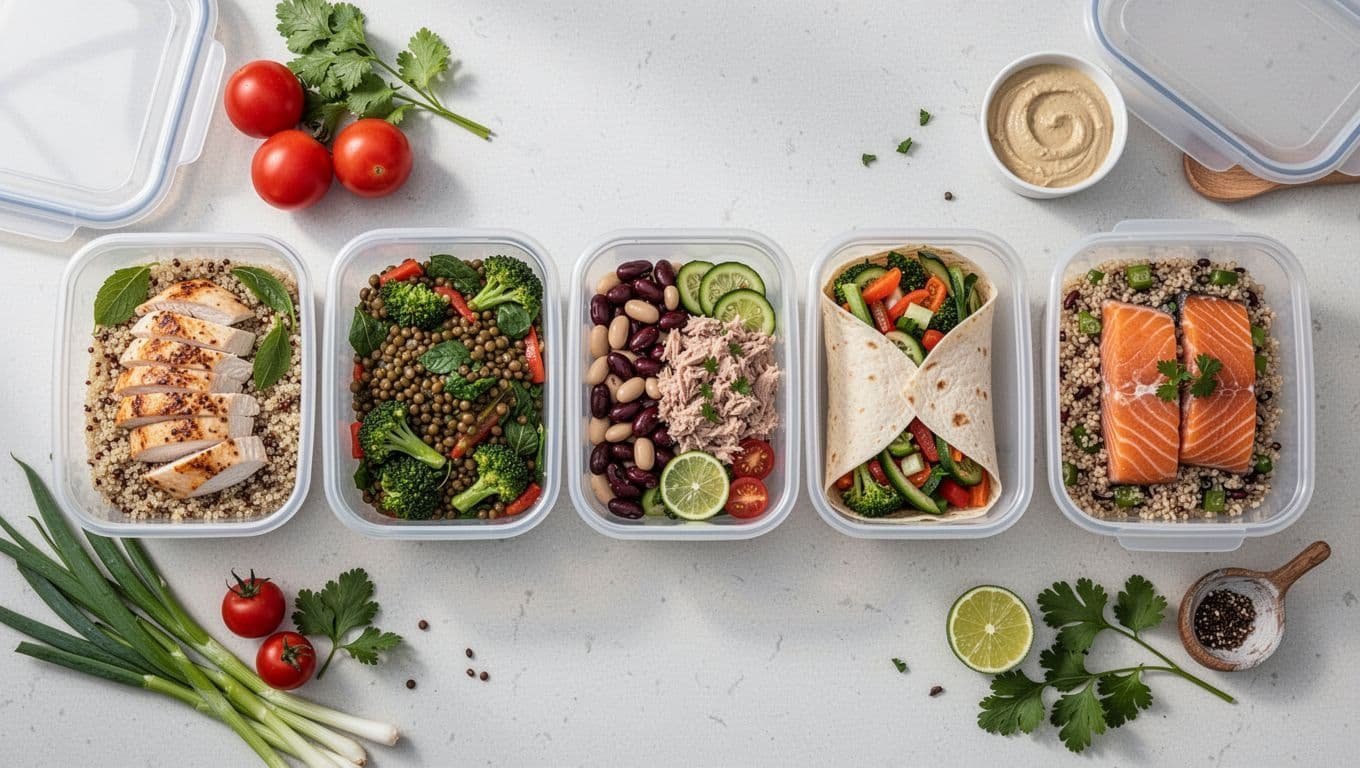
Finding a filling, healthy lunch during a busy workday can be tough, especially when convenience foods leave you hungry again soon after eating. These 50 healthy work lunch ideas include practical options for meal prep, packed lunches, and quick assembly, so you can make better choices even on hectic days.
How These Lunches Support Clean Eating and Weight Loss
Each meal combines vegetables, lean protein, fiber-rich carbohydrates, and measured portions of healthy fats. This balance can support steady energy and a calorie-conscious eating pattern without making lunch feel restrictive. Explore the ideas below to find simple lunches that fit your schedule and preferences.
How These Lunches Support Clean Eating and Weight Loss
Healthy weight-loss lunches work best when they follow a balanced eating pattern, not a strict list of forbidden foods. Each meal can include filling ingredients, sensible portions, and enough variety to keep your workday satisfying. The USDA’s MyPlate guidance also emphasizes nutrient-dense foods and portions that match your daily calorie needs.
Build lunch with the simple plate method
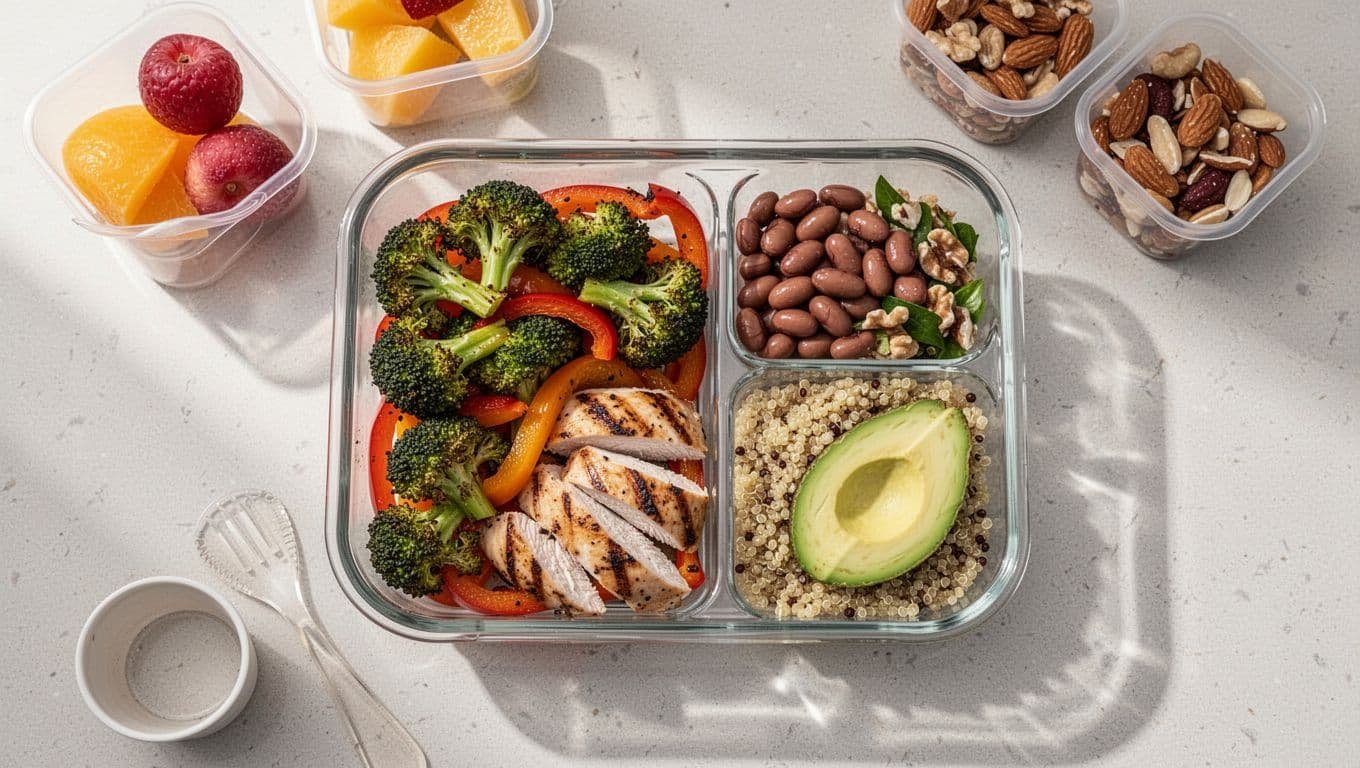
Use the plate method as a flexible guide when packing your container:
- Fill about half of the container with non-starchy vegetables, such as leafy greens, broccoli, cauliflower, cucumbers, tomatoes, peppers, or green beans.
- Fill one quarter with protein, including chicken, fish, eggs, beans, lentils, tofu, or another protein you enjoy.
- Fill the final quarter with whole grains or starchy vegetables, such as brown rice, quinoa, oats, potatoes, corn, or whole-grain pasta.
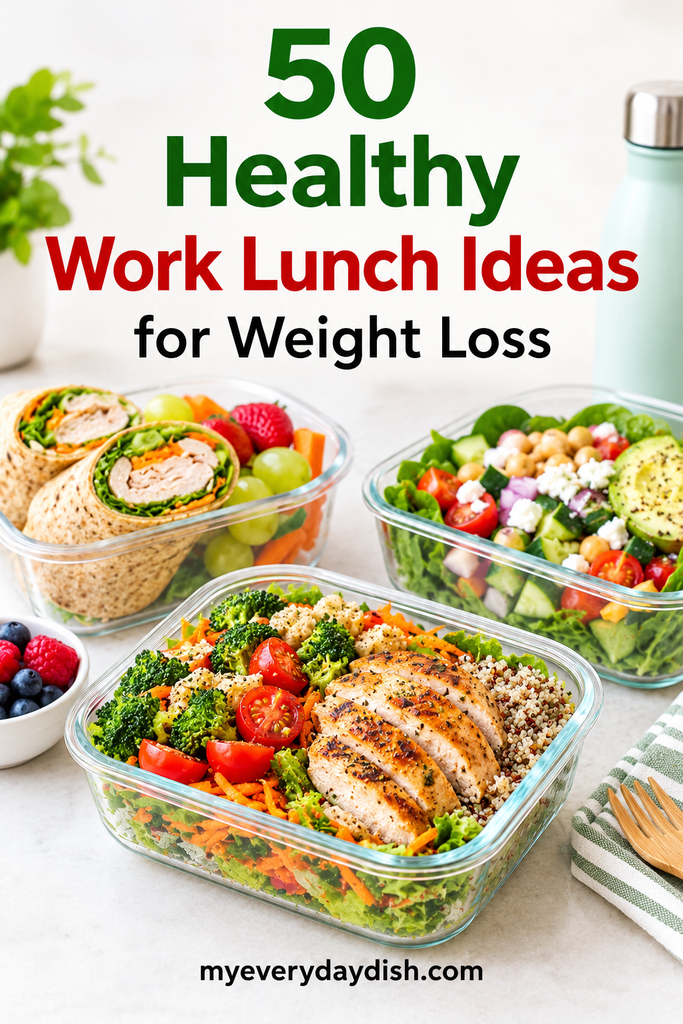
This structure helps you create a balanced meal without measuring every ingredient. You can add a small serving of fruit, nuts, avocado, or olive oil for more flavor and nutrients. For example, a lunch bowl might combine roasted vegetables, grilled chicken, quinoa, sliced avocado, and a piece of fruit.
Why balanced lunches can support weight loss
Protein and fiber can help you feel full after eating, which may make it easier to avoid constant snacking during the afternoon. Beans, lentils, vegetables, fruit, oats, and whole grains add fiber, while chicken, fish, eggs, tofu, and legumes provide protein. Together, these foods can give your lunch more staying power than a meal built mostly from refined carbohydrates.
Portion awareness matters, too. Nuts, avocado, olive oil, cheese, and dressings can fit into a healthy lunch, but their calories can add up quickly because they are energy-dense. Measure dressings, use a small handful of nuts, and choose portions that suit your needs.
Read also: 30 Healthy Lunch Ideas for Pregnancy With Easy Recipes
Weight loss depends on your overall calorie balance and eating pattern, not one special food or recipe.
These lunches support clean eating by emphasizing minimally processed ingredients while leaving room for personal preferences. Still, no single meal guarantees weight loss. Your total intake, activity level, sleep, and eating habits across the week matter more than any one lunch.
Adjust portions based on your hunger, body size, activity level, allergies, and health goals. If you manage diabetes, kidney disease, food allergies, or another medical condition, follow guidance from your healthcare professional when planning meals.
50 Healthy Lunch Ideas for Work to Support Clean Eating and Weight Loss
These first 18 lunches are balanced, portable, and easy to prepare ahead. Each one combines protein, produce, fiber-rich carbohydrates, or healthy fats to help you stay satisfied through the afternoon.
How these lunches support clean eating and weight loss
Build your lunch around vegetables, a protein source, and a sensible serving of whole grains or starchy vegetables. This approach follows the Healthy Eating Plate method, while portion sizes can be adjusted to match your hunger, activity level, and goals.
18 balanced lunches that travel well
- Chicken quinoa bowl: Pack grilled chicken, quinoa, cucumbers, tomatoes, spinach, and lemon dressing. Prepare several bowls at once for an easy, protein-rich lunch.
- Turkey hummus wrap: Fill a whole-wheat tortilla with turkey, hummus, lettuce, peppers, and shredded carrots. Wrap it tightly so it stays neat during your commute.
- Tuna white bean salad: Mix tuna, white beans, celery, parsley, and olive oil with lemon juice. The beans add fiber and make this no-reheat lunch more filling.
- Lentil vegetable salad: Combine cooked lentils, roasted zucchini, cherry tomatoes, arugula, and feta. Store the dressing separately to prevent soggy greens.
- Salmon brown rice bowl: Add cooked salmon, brown rice, broccoli, edamame, and a small spoonful of sesame dressing. It holds well in the refrigerator and reheats quickly.
- Greek chicken salad: Toss chicken, romaine, cucumbers, tomatoes, olives, and a little feta with Greek dressing. Pack pita wedges separately for controlled portions.
- Turkey taco bowl: Layer lean ground turkey, black beans, brown rice, lettuce, salsa, and avocado. Keep the avocado and salsa in separate containers until lunchtime.
- Chickpea cucumber pita: Stuff whole-wheat pita with mashed chickpeas, cucumber, tomato, spinach, and tahini yogurt sauce. Chickpeas provide plant protein and lasting fiber.
- Egg and roasted vegetable box: Pack hard-boiled eggs, roasted sweet potato, broccoli, grapes, and whole-grain crackers. This cold lunch needs no office kitchen.
- Chicken pasta salad: Combine whole-wheat pasta, chicken, spinach, tomatoes, and artichokes with vinaigrette. Make a batch for several grab-and-go lunches.
- Tofu peanut noodle bowl: Toss baked tofu, soba noodles, shredded cabbage, carrots, and peanut-lime sauce. The vegetables add volume without making the bowl heavy.
- Turkey chili: Prepare lean turkey chili with beans, tomatoes, peppers, and onions. Freeze individual portions, then reheat one at work.
- Mediterranean tuna bowl: Add tuna, farro, roasted peppers, cucumbers, greens, and hummus to a container. Farro gives the meal a chewy, satisfying texture.
- Black bean quinoa salad: Mix black beans, quinoa, corn, tomatoes, cilantro, and lime juice. It stays fresh for days and works well without reheating.
- Chicken pesto grain bowl: Combine chicken, barley, green beans, tomatoes, and a measured spoonful of pesto. The grain and protein help curb afternoon cravings.
- Shrimp avocado salad: Pack cooked shrimp, mixed greens, corn, tomatoes, avocado, and lime dressing. Keep the dressing separate so the salad remains crisp.
- Lentil soup and fruit: Pair homemade lentil soup with an apple or orange. The soup travels well in a thermos and offers fiber with plant-based protein.
- Hummus snack plate: Arrange hummus, carrots, cucumbers, boiled eggs, olives, and whole-grain pita. Portion the ingredients into a container for a flexible, satisfying lunch.
Read also: 20 Easy Lunch Recipes for Work and Homemade Lunchbox Ideas
More Easy Meal Prep Lunches for Busy Workdays
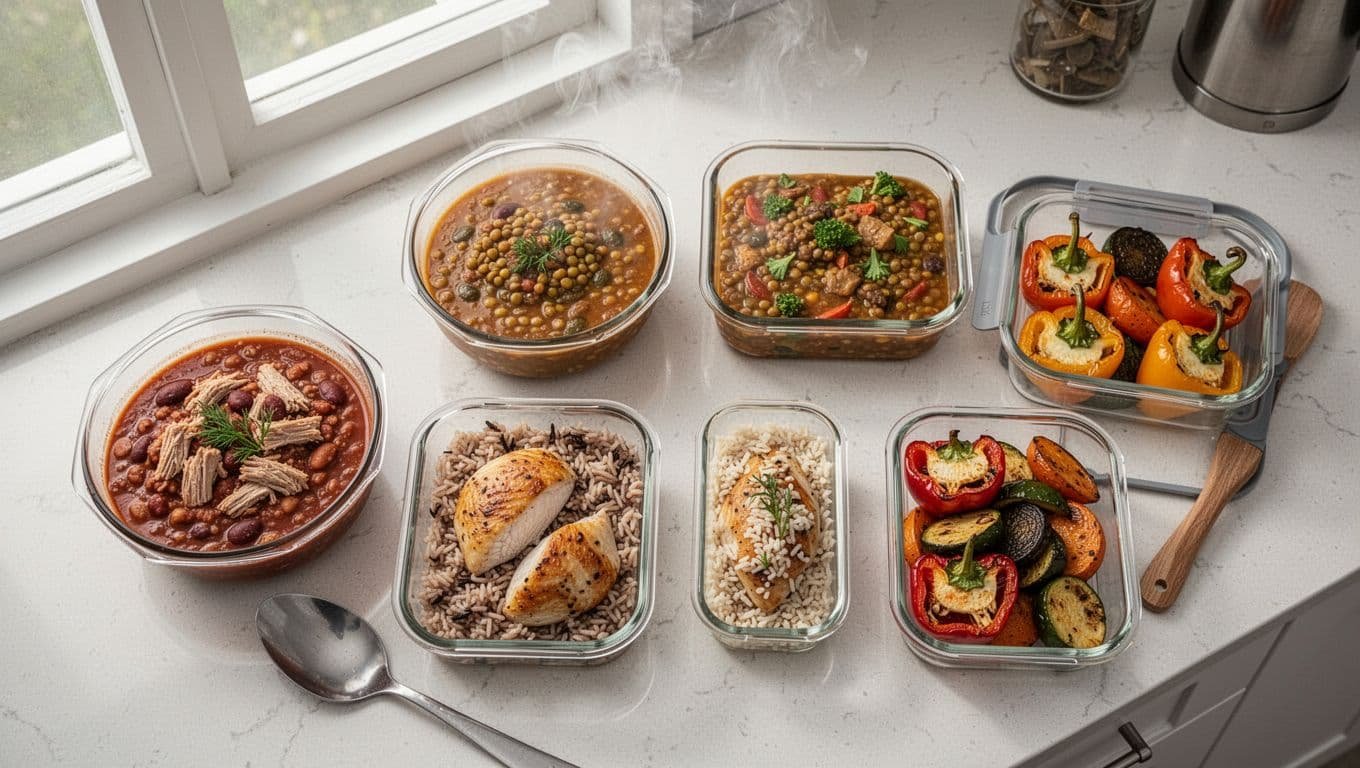
Comforting lunches can still support weight loss when you build them around lean protein, vegetables, and moderate portions of whole grains or legumes. These ideas work well for batch cooking, so one cooking session can cover several busy workdays.
How these lunches support clean eating and weight loss
Batch cooking makes balanced choices easier when your schedule gets crowded. Use leftovers from dinner, then add fresh vegetables, beans, brown rice, quinoa, or another filling carbohydrate to create a complete lunch.
Keep portions practical by filling about half your container with vegetables, then adding protein and a smaller serving of grains or legumes. Store cooked food in shallow containers, refrigerate it within two hours, and use most leftovers within three to four days. When reheating, follow the USDA guidance to bring leftovers to 165°F using a food thermometer.
18 comforting lunches for busy workdays
- Chicken and vegetable stew: Simmer chicken, carrots, celery, potatoes, and green beans in a light broth. Portion it into containers and reheat gently.
- Turkey and bean chili: Cook lean ground turkey with black beans, tomatoes, onions, and peppers. Freeze extra portions if you won’t eat them within four days.
- Leftover roasted chicken bowl: Combine leftover chicken with roasted Brussels sprouts, brown rice, and a spoonful of cranberry relish for a satisfying lunch.
- Stuffed bell peppers: Fill peppers with lean turkey, quinoa, tomatoes, onions, and spinach. Bake several at once, then reheat one portion at work.
- Beef and vegetable barley soup: Use lean beef, barley, mushrooms, carrots, and cabbage in a tomato-based broth. Pack it in a leakproof thermos.
- Chicken enchilada casserole: Layer shredded chicken, corn tortillas, black beans, salsa, and a small amount of cheese. Bake and divide into measured portions.
- Lentil shepherd’s pie: Top lentils, mushrooms, peas, and carrots with mashed sweet potatoes. Store individual servings for simple microwave reheating.
- Turkey meatballs with whole-wheat pasta: Serve baked meatballs and marinara over a modest portion of pasta with steamed broccoli.
- Leftover fajita rice bowl: Add leftover chicken or shrimp, sautéed peppers, onions, brown rice, and salsa. Keep avocado separate until lunch.
- White bean chicken soup: Combine shredded chicken, cannellini beans, kale, carrots, and broth. The beans add fiber and make a small portion more filling.
- Vegetable and tofu curry: Simmer tofu, cauliflower, green beans, and peppers in a light curry sauce. Serve it with a measured portion of brown rice.
- Chicken and sweet potato hash: Cook diced chicken, sweet potatoes, onions, and spinach in one skillet. Divide the hash before adding toppings.
- Black bean stuffed sweet potato: Bake sweet potatoes ahead, then fill them with black beans, salsa, Greek yogurt, and chopped scallions.
- Turkey cabbage skillet: Cook lean turkey with shredded cabbage, carrots, brown rice, and low-sodium seasonings. It reheats well without becoming soggy.
- Salmon cakes with roasted vegetables: Prepare salmon cakes with oats and herbs, then pair them with roasted broccoli and a small serving of potatoes.
- Chickpea tomato stew: Simmer chickpeas, tomatoes, zucchini, spinach, and spices. Pack it with quinoa or whole-grain toast for added staying power.
- Chicken and broccoli stir-fry: Use leftover chicken with broccoli, snap peas, and brown rice. Add sauce after reheating to preserve the vegetables’ texture.
- Turkey vegetable lasagna: Layer whole-wheat noodles with lean turkey, spinach, zucchini, tomato sauce, and light cheese. Freeze individual portions for future lunches.
For more food-safety details, review the USDA’s guide to safe leftover storage.
Quick No-Heat and Budget-Friendly Lunches You Can Pack Anywhere
These lunches work well when your office has no reliable microwave, your break is short, or your grocery budget is tight. Canned beans, frozen vegetables, eggs, canned fish, leftover grains, and seasonal produce keep preparation simple without sacrificing balance.
How these lunches support clean eating and weight loss
Each option combines filling protein or fiber with produce and a moderate portion of carbohydrates. That balance can help you stay satisfied while keeping portions easier to manage.
Frozen vegetables can cost less than fresh produce and require no chopping. Canned beans offer inexpensive plant protein, while leftover rice, quinoa, barley, or pasta can become the base of another lunch instead of going to waste. Choose canned goods labeled low-sodium when possible, then rinse beans before using them.
Perishable foods still need proper cooling. Pack eggs, fish, dairy, and leftovers with an ice pack, and don’t leave them at room temperature for more than two hours. On hot days above 90°F, the limit is one hour. Follow FoodSafety.gov’s cold storage guidance for safe storage times.
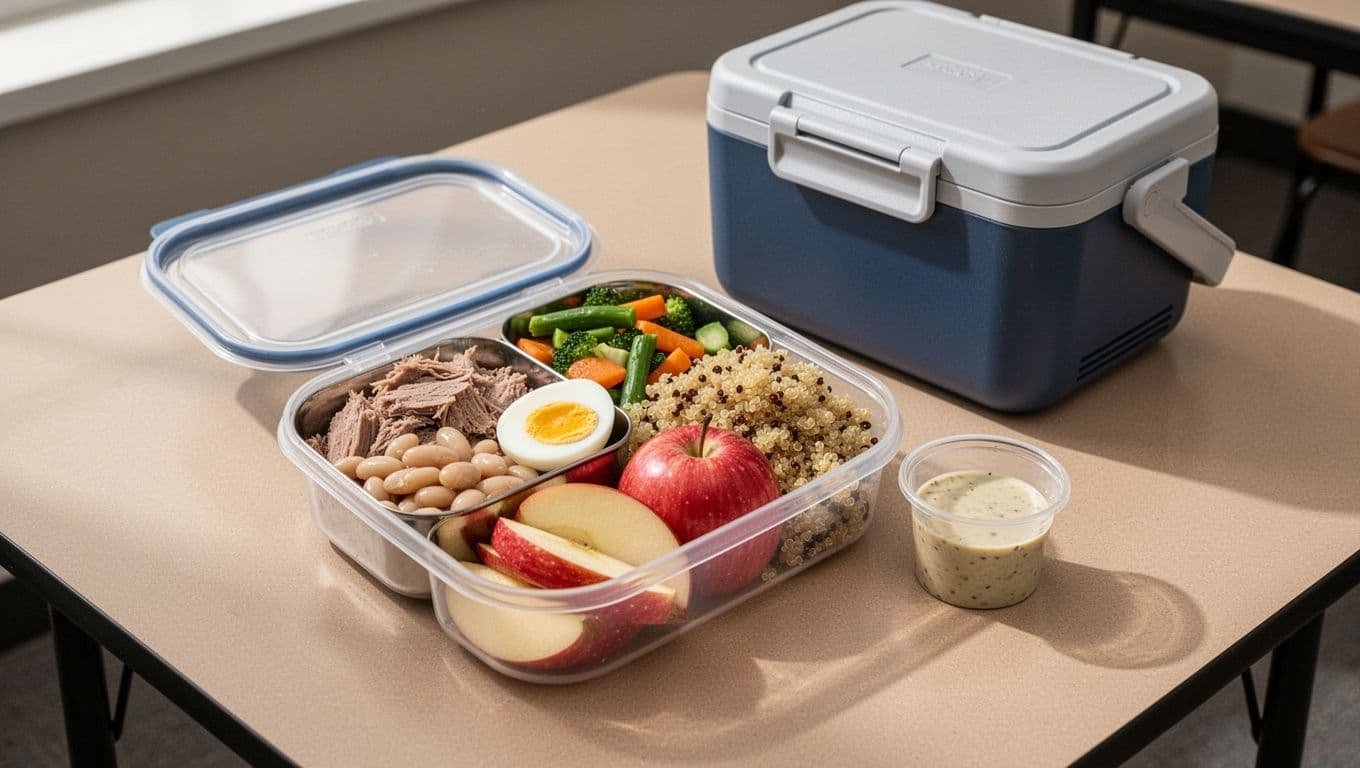
14 affordable lunches that need no reheating
- White bean tuna salad: Mix canned tuna, rinsed white beans, celery, lemon juice, and pepper. Serve with whole-grain crackers or cucumber slices.
- Egg and bean breakfast bowl: Pack sliced hard-boiled eggs, black beans, leftover brown rice, salsa, and shredded lettuce. Use avocado only when you have room in your budget.
- Chickpea pasta salad: Toss canned chickpeas, leftover whole-wheat pasta, frozen peas, tomatoes, and Italian dressing. Use gluten-free pasta if needed.
- Peanut butter apple wrap: Spread natural peanut butter on a whole-wheat tortilla, then add thin apple slices and cinnamon. Choose a gluten-free tortilla for a simple swap.
- Sardine potato salad: Combine canned sardines, leftover potatoes, green beans, parsley, and lemon juice. Canned salmon works well if you prefer a milder flavor.
- Hummus lentil box: Pack hummus, cooked lentils, carrots, cucumbers, olives, and grapes. Add gluten-free crackers instead of pita when needed.
- Cottage cheese produce cup: Pair cottage cheese with cherry tomatoes, leftover quinoa, and seasonal fruit. Use unsweetened dairy-free yogurt and edamame for a dairy-free version.
- Black bean corn salad: Combine black beans, corn, tomatoes, cabbage, and lime juice. Frozen corn works just as well as fresh and requires no cooking.
- Chicken cranberry lettuce cups: Fill lettuce leaves with leftover chicken, chopped apple, celery, and a small spoonful of Greek yogurt. Use dairy-free mayonnaise if needed.
- Tuna cucumber boats: Spoon tuna mixed with mustard and mashed avocado into cucumber halves. Serve with fruit or a small portion of crackers.
- Edamame grain salad: Mix thawed frozen edamame, leftover quinoa, shredded carrots, cabbage, and sesame dressing. This vegetarian option also works with gluten-free tamari.
- Egg salad veggie box: Pack chopped eggs with mustard, celery, and a measured amount of mayonnaise alongside carrots and grapes. Keep the container chilled.
- Bean and seasonal produce bowl: Combine canned pinto beans, leftover barley, roasted vegetables, and salsa. Use rice or quinoa for a gluten-free base.
- Tuna-stuffed tomato: Fill a large tomato with canned tuna, white beans, herbs, and lemon juice. Add a boiled egg for extra protein when you need a more filling lunch.
How to Prep, Store, and Portion Work Lunches Safely
A simple prep routine makes healthy work lunches easier to pack, portion, and enjoy. Choose foods you can mix in several ways, then store them carefully so convenience never comes at the expense of food safety.
How these lunches support clean eating and weight loss
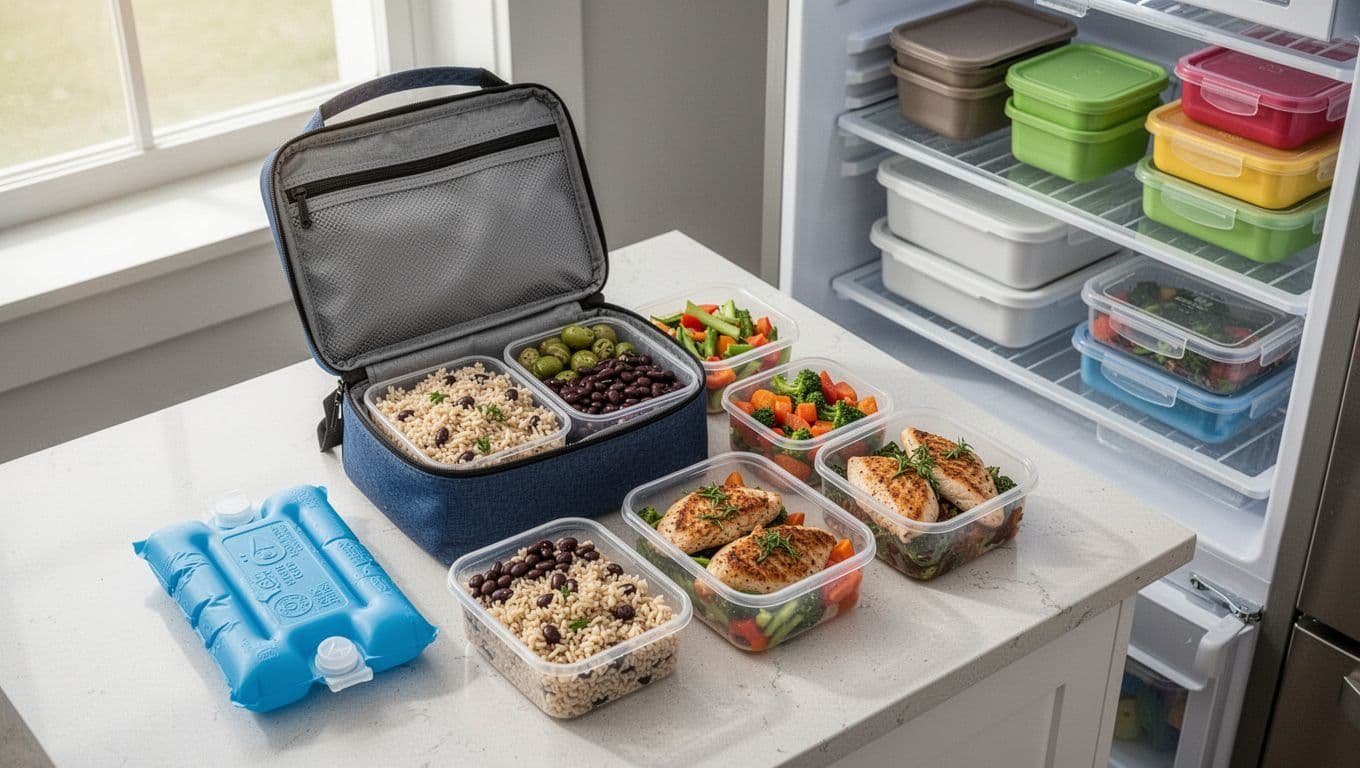
At the start of each week, choose two proteins, two grains or legumes, and several vegetables. For example, prepare chicken and boiled eggs, then pair them with quinoa, brown rice, black beans, roasted broccoli, cucumbers, and peppers. Mixing these ingredients into bowls, salads, wraps, and snack boxes keeps meals varied without requiring a new recipe every day.
Portion calorie-dense foods instead of avoiding them. Measure oils, dressings, nuts, cheese, avocado, and sauces with a spoon or small food scale. These ingredients add flavor and nutrients, but modest servings make calorie control easier.
A measured dressing can support a satisfying lunch, while an unmeasured pour can add several hundred calories.
Cool cooked meals promptly. Refrigerate them within two hours, or within one hour when temperatures exceed 90°F. Most leftovers should be eaten within three to four days. Reheat cooked food to 165°F, checking the center with a food thermometer. The USDA guide to leftovers and food safety provides storage and reheating guidance.
Pack lunch the night before
Use an insulated lunch bag with an ice pack for meals containing meat, eggs, dairy, fish, or cooked leftovers. Thaw frozen food in the refrigerator rather than on the counter.
Before bed, run through this short checklist:
- Portion the main dish into a sealed container.
- Add vegetables, fruit, or another planned side.
- Measure dressing, sauces, nuts, or toppings separately.
- Place the lunch bag and ice pack in the refrigerator.
- Pack a fork, napkin, and water bottle.
This routine turns lunch into a ready-to-go meal instead of a last-minute decision.
Frequently Asked Questions
These questions cover the everyday decisions that can make healthy work lunches easier to follow. Use the answers to adjust the ideas to your appetite, schedule, and food preferences.
How do these lunches support clean eating and weight loss?
These lunches focus on vegetables, fruit, lean proteins, beans, whole grains, and lightly processed ingredients. That combination can help you build satisfying meals without relying on oversized portions or highly processed convenience foods.
Weight loss still depends on your overall eating pattern and calorie intake. The CDC’s healthy eating guidance recommends choosing nutrient-dense foods while matching food intake to your personal needs.
Can I eat the same healthy lunch several days in a row?
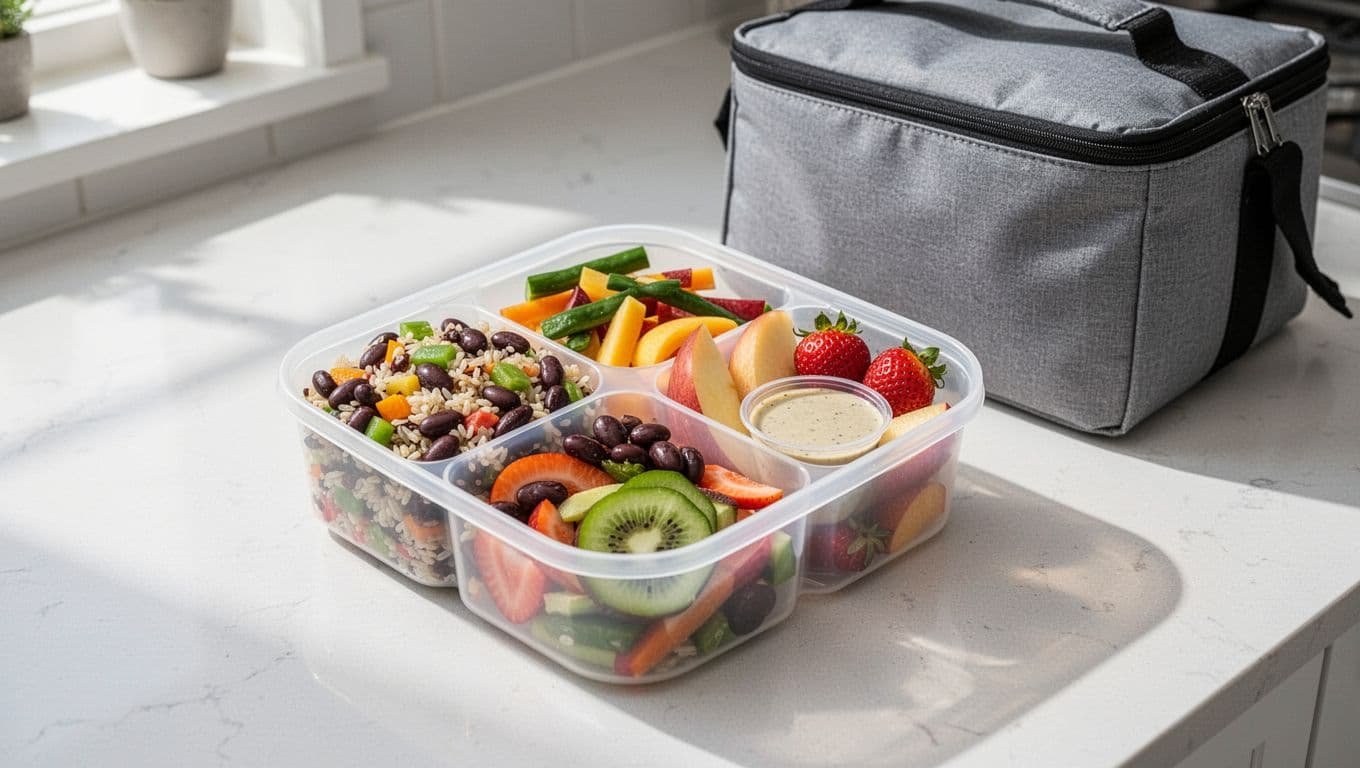
Yes, repeating lunch can make meal prep faster and reduce last-minute takeout decisions. However, prepare enough variety across the week to cover different vegetables, proteins, grains, and flavors.
For example, use cooked chicken in a grain bowl one day, a wrap the next day, and a salad later in the week. Change sauces and toppings instead of preparing an entirely new meal each morning.
How can I make a vegetarian work lunch filling?
Pair a plant-based protein with fiber-rich carbohydrates and plenty of vegetables. Beans, lentils, chickpeas, tofu, edamame, eggs, and unsweetened Greek yogurt can all add staying power to a meatless lunch.
A lentil salad with quinoa and roasted vegetables is more filling than a vegetable-only salad. If you eat dairy or eggs, adding cottage cheese, yogurt, or a boiled egg can increase the meal’s protein.
Should I eat lunch at a specific time for weight loss?
You don’t need to eat lunch at one exact time. Choose a schedule that fits your workday and helps you avoid becoming so hungry that you overeat later.
If you regularly feel distracted by hunger before lunch, move the meal earlier or plan a small snack. Your total daily eating pattern matters more than whether lunch starts at noon.
What should I do if I buy lunch at work?
Use the same structure as a packed lunch: choose a protein, vegetables, and a sensible serving of whole grains or another carbohydrate. Grilled chicken salads, bean bowls, broth-based soups, and turkey sandwiches can work well.
Request sauces and dressings on the side, then choose water or an unsweetened drink. When portions are large, save half before you start eating.
How can I keep these lunches interesting?
Rotate the flavor profile rather than changing every ingredient. Lemon and herbs, salsa and lime, pesto, curry spices, or a small amount of peanut-lime dressing can give the same basic chicken, bean, or grain combination a different taste.
Also vary the texture with crunchy vegetables, roasted ingredients, fresh fruit, or seeds. Small changes help prevent lunch fatigue while keeping your preparation routine simple.
Conclusion
Healthy work lunches don’t need to be complicated, expensive, or bland. Start with two or three ideas from this list, use the plate method, prep a few ingredients ahead, and adjust portions to fit your hunger, schedule, and goals.
A consistent mix of vegetables, protein, fiber-rich carbohydrates, and measured healthy fats can make clean eating easier throughout the workweek. Try one lunch from the list this week, then build your routine from there.
Save the pin for later

I’m the creator of My Everyday Dish, a food blog focused on easy homemade recipes, comforting family meals, simple baking, and seasonal food ideas. I love finding practical ways to make everyday cooking less stressful and more enjoyable. Here, I share recipes with simple ingredients, clear instructions, and plenty of flavor, helping you make delicious meals and treats you’ll feel confident serving at home.
Leave a Reply