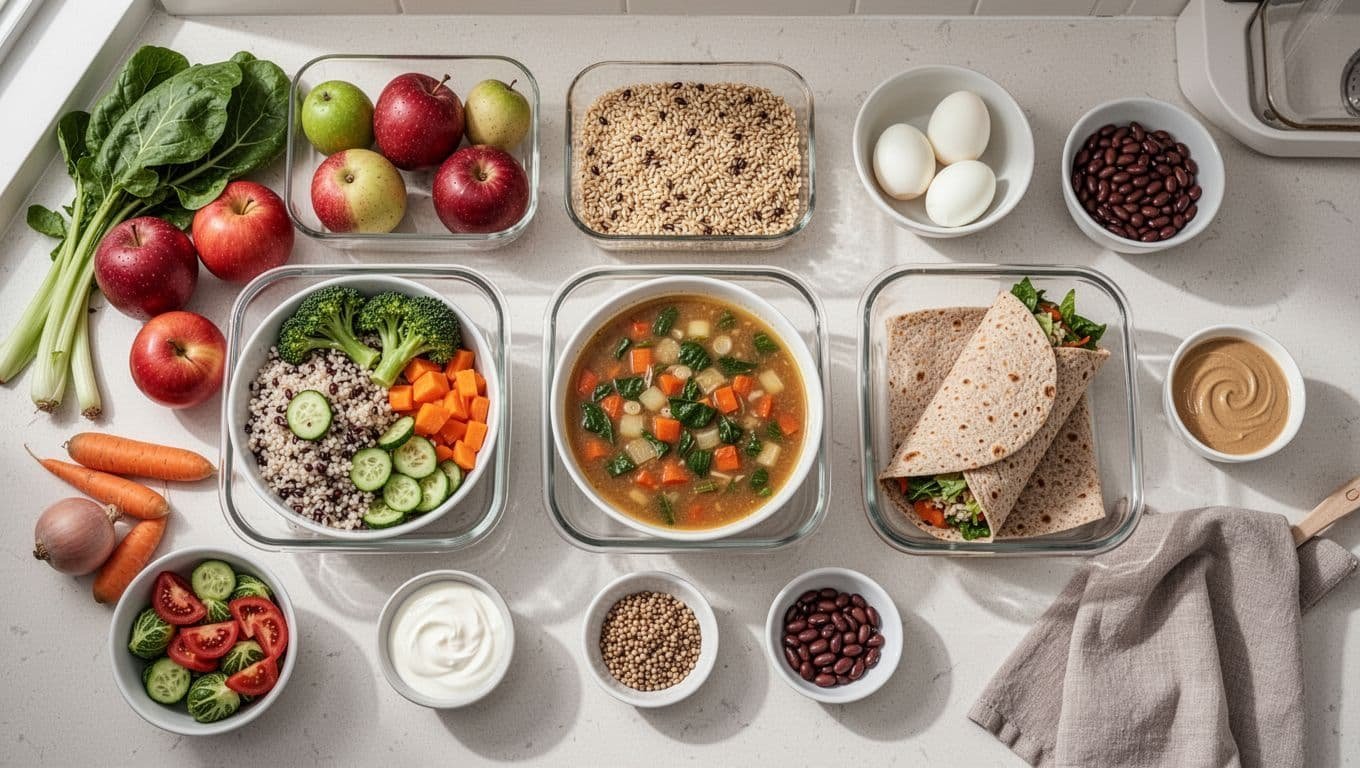
Finding a filling, nourishing lunch during pregnancy can feel difficult when your appetite, nausea, and food safety concerns change from day to day. These healthy pregnancy lunch ideas make it easier to build satisfying meals with protein, whole grains, vegetables, fruit, and pasteurized dairy.
You’ll find 30 simple lunch recipes with clear preparation steps and easy ingredient swaps, so you can adjust each meal to suit your cravings and what you have on hand.
Follow your health care provider’s advice, especially if you have allergies, gestational diabetes, anemia, or another pregnancy concern. Start with these practical recipes for nourishing lunches you can make without a lot of fuss.
How to Build a Healthy Pregnancy Lunch That Keeps You Full
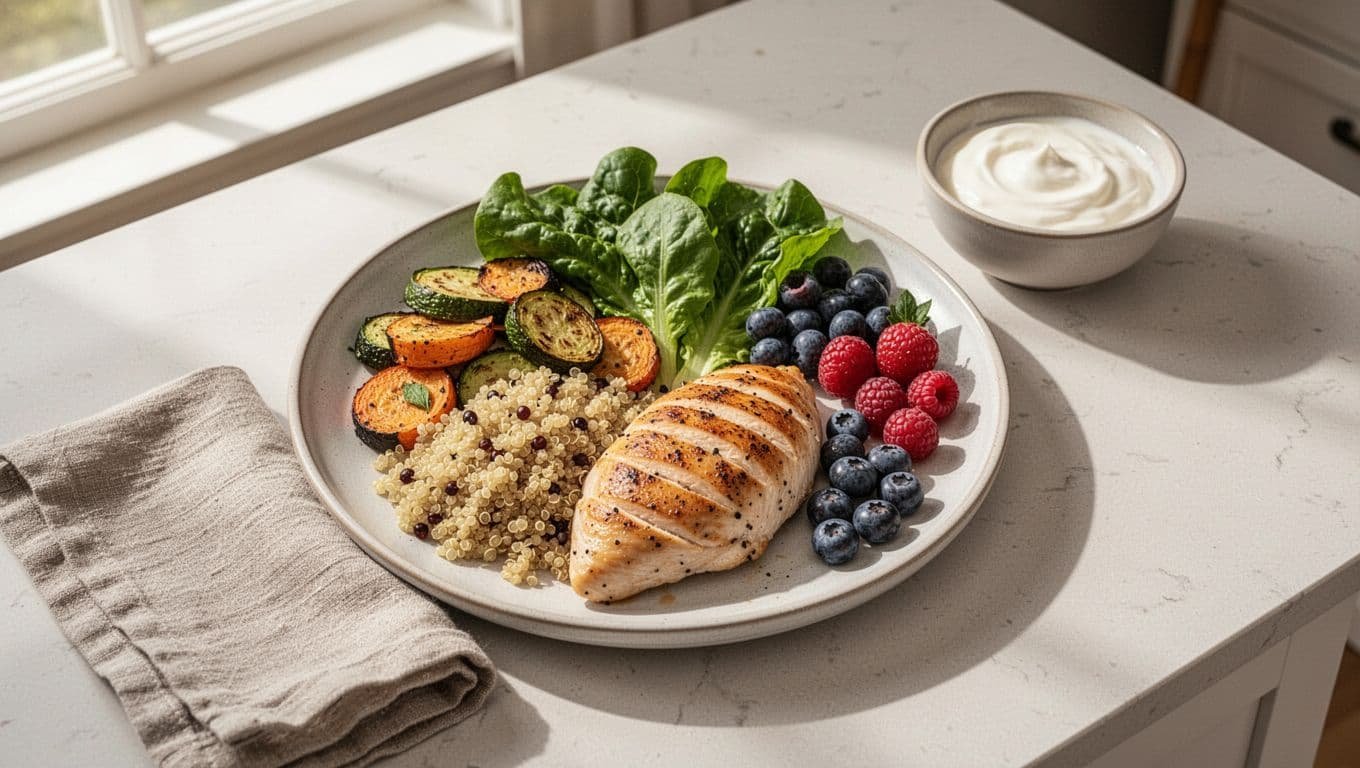
A filling pregnancy lunch doesn’t need strict calorie tracking or complicated recipes. Build it around a simple plate formula: fill half your plate with vegetables and fruit, then divide the remaining half between protein and whole grains. Add a small serving of pasteurized dairy when it fits the meal.
This structure gives you steady sources of fiber, protein, vitamins, and minerals while leaving room for foods you enjoy. It also works with sandwiches, grain bowls, salads, soups, and leftovers.
Start with protein for lasting fullness
Protein helps make lunch more satisfying, especially when your appetite changes throughout pregnancy. A practical portion is about the size of your palm, or roughly 3 to 4 ounces of cooked meat, poultry, fish, tofu, or tempeh.
You can also use two eggs, about 3/4 cup of beans or lentils, or a serving of Greek yogurt. Easy choices include:
- Cooked chicken added to a whole-grain wrap or salad.
- Eggs served with avocado toast and fruit.
- Black beans or lentils mixed with brown rice and vegetables.
- Tofu tossed with cooked vegetables and quinoa.
- Pasteurized cottage cheese or yogurt paired with oats and berries.
These foods provide protein while also contributing nutrients such as iron, choline, calcium, or vitamin D. Eggs, chicken, dairy, and soy foods are useful choline sources, while beans and lentils can add iron and fiber. ACOG includes healthy eating guidance during pregnancy that covers several of these nutrient needs.
Add whole grains and high-fiber produce
Use about 1/2 to 1 cup of cooked brown rice, quinoa, oats, or whole-grain pasta as a starting portion. For bread or tortillas, one or two slices or one medium whole-grain wrap usually gives your meal a satisfying base. Adjust the amount based on your hunger, activity, and any guidance from your health care provider.
Next, make vegetables or fruit the largest part of the meal. Add roasted broccoli, spinach, peppers, tomatoes, carrots, cucumbers, berries, an apple, or sliced melon. Fiber from these foods supports fullness and can help your lunch feel more substantial without relying on oversized portions.
A balanced lunch is easier to repeat when you keep a few cooked staples ready, such as eggs, chicken, quinoa, beans, or chopped vegetables.
Cover pregnancy nutrients with variety
No single lunch needs to provide every nutrient. Instead, rotate ingredients across the week so your meals include foods linked with folate, iron, calcium, vitamin D, and choline.
Dark leafy greens, beans, lentils, and fortified grains can contribute folate and iron. Yogurt, milk, and pasteurized cheese provide calcium, while fortified dairy products may also supply vitamin D. Eggs, chicken, tofu, milk, and beans help you include choline-rich foods.
A small serving of pasteurized yogurt or cheese can round out a lunch, especially when the meal contains vegetables, grains, and beans but little calcium. Your prenatal supplement may cover some nutrients, but it shouldn’t replace varied meals. The NIH’s pregnancy nutrition fact sheet offers current information about vitamins and minerals during pregnancy.
If nausea or heartburn makes a full plate uncomfortable, divide lunch into two smaller meals. Try half a sandwich with fruit now, then yogurt with oats later. Smaller portions eaten more often may feel easier than one large meal, while still helping you get enough food across the day.
Read also: 60 Quick and Easy Lunch Ideas for Working From Home
30 Healthy Lunch Ideas for Pregnancy With Easy Recipes
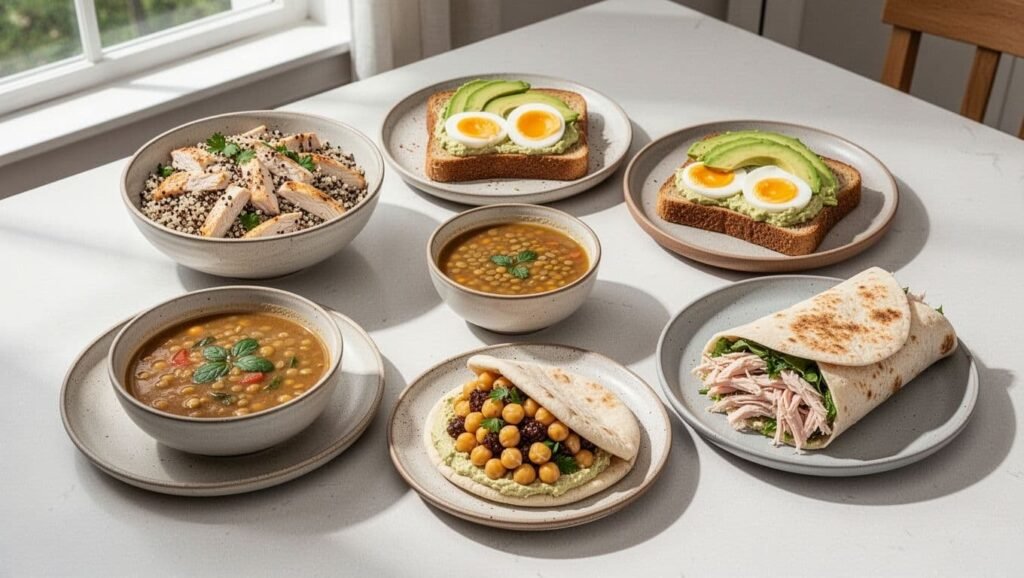
These flexible lunch recipes use simple ingredients and clear steps. Choose pasteurized dairy, fully cooked proteins, and properly chilled leftovers. For current pregnancy food-safety advice, review the CDC’s safer food choices.
1. Chicken, Quinoa, and Roasted Vegetable Bowl
Use chicken breast, quinoa, zucchini, bell peppers, spinach, and pasteurized yogurt.
- Cook quinoa and roast chopped vegetables until tender.
- Slice fully cooked chicken and whisk yogurt with lemon juice.
- Assemble everything over spinach. Replace chicken with chickpeas.
2. Creamy Avocado and Egg Whole-Grain Toast
Use whole-grain toast, firm hard-boiled eggs, avocado, and tomato.
- Boil eggs until yolks and whites are firm, then cool and chop.
- Mash avocado with lemon juice, pepper, and a little salt.
- Layer avocado, egg, and tomato on toast. Add fruit for fiber.
3. Lentil and Vegetable Soup
Use lentils, carrots, celery, tomatoes, onion, low-sodium broth, and spinach.
- Saute onion, carrots, and celery.
- Add lentils, tomatoes, and broth; simmer until tender.
- Stir in spinach and check the texture. Refrigerate leftovers within two hours and reheat until steaming.
4. Greek-Style Chickpea Salad Pita
Use rinsed chickpeas, cucumber, tomato, olives, whole-grain pita, and pasteurized feta.
- Chop the vegetables and whisk lemon juice with olive oil.
- Combine chickpeas, vegetables, olives, feta, and dressing.
- Stuff the pita. Add avocado or roasted peppers.
5. Turkey and Hummus Wrap With Crunchy Vegetables
Use a whole-grain tortilla, hummus, cooked turkey, lettuce, cucumber, and carrot.
- Reheat deli turkey until steaming hot, then cool briefly.
- Spread hummus over the tortilla and add the fillings.
- Roll tightly and slice. Use cooked chicken or mashed chickpeas instead.
6. Salmon and Sweet Potato Lunch Bowl
Use fully cooked low-mercury salmon, sweet potato, brown rice, greens, and yogurt-herb sauce.
- Roast sweet potato cubes and prepare brown rice.
- Bake salmon until opaque and flaky, checking bones and temperature.
- Mix yogurt with herbs, then assemble the bowl.
7. Spinach, Mushroom, and Cheese Frittata
Use eggs, spinach, mushrooms, onion, and pasteurized shredded cheese.
- Saute onion, mushrooms, and spinach.
- Whisk eggs, combine everything in an oven-safe pan, and add cheese.
- Bake until the center is fully set. Refrigerate portions promptly.
8. Black Bean and Brown Rice Stuffed Pepper
Use bell peppers, brown rice, black beans, corn, tomatoes, cumin, and pasteurized cheese.
- Halve and soften the peppers in the oven.
- Mix rice, beans, corn, tomatoes, and cumin.
- Stuff and bake until tender; top with cheese. Use Greek yogurt instead of sour cream.
9. Chicken, Apple, and Walnut Salad
Use chilled fully cooked chicken, apple, celery, walnuts, greens, and pasteurized Greek yogurt.
- Cool cooked chicken promptly and chop it.
- Mix yogurt with lemon juice and pepper.
- Combine all ingredients and serve over greens or in a whole-grain wrap. Use pumpkin seeds for nut allergies.
10. Tomato, Mozzarella, and White Bean Grain Bowl
Use cooked farro or quinoa, white beans, tomatoes, basil, and pasteurized mozzarella.
- Prepare the grain and rinse the beans.
- Chop tomatoes and basil; whisk olive oil with lemon juice.
- Combine and top with mozzarella. Use cooked vegetables instead of raw tomatoes.
11. Tofu and Vegetable Stir-Fry With Brown Rice
Use firm tofu, broccoli, carrots, bell peppers, brown rice, and low-sodium sauce.
- Press and cube tofu, then brown it in a skillet.
- Stir-fry vegetables until tender and fully cooked.
- Add sauce and tofu, then serve over hot rice.
12. Baked Potato With Broccoli and Cheddar
Use a potato, broccoli, pasteurized cheddar, beans or cooked chicken, and Greek yogurt.
- Bake or microwave the potato until soft, then steam broccoli.
- Warm the beans or chicken.
- Split the potato and add toppings. Choose herbs or plain yogurt for less sodium.
13. Tuna and White Bean Salad With Whole-Grain Crackers
Use canned light tuna, white beans, celery, parsley, lemon juice, and olive oil.
- Drain tuna and beans.
- Mix with celery, parsley, lemon, and oil.
- Serve with crackers and vegetables. Choose canned light tuna and follow guidance for albacore limits.
14. Turkey Meatball and Vegetable Soup
Use ground turkey, carrots, zucchini, tomatoes, beans, and broth.
- Shape seasoned turkey meatballs and bake or brown them thoroughly.
- Simmer vegetables and broth.
- Add meatballs and cook until no pink remains. Refrigerate promptly and reheat until steaming.
15. Egg Salad Lettuce Cups With Whole-Grain Bread
Use firm hard-boiled eggs, pasteurized Greek yogurt, mustard, celery, and lettuce.
- Cool and chop the cooked eggs.
- Mix eggs with yogurt, mustard, and celery.
- Spoon into lettuce cups and serve with bread and fruit. Try mashed avocado as the dressing.
16. Roasted Vegetable and Hummus Sandwich
Use whole-grain bread, hummus, roasted zucchini, eggplant, peppers, spinach, and tomato.
- Roast chopped vegetables until tender and cool them safely.
- Toast bread and spread with hummus.
- Layer vegetables and spinach, then wrap for lunch. White bean spread also works.
17. Chicken and Vegetable Couscous Bowl
Use whole-wheat couscous, cooked chicken, roasted carrots, cucumber, spinach, and lemon dressing.
- Prepare couscous and roast or reheat carrots.
- Slice chicken and whisk lemon juice with olive oil.
- Assemble over spinach. Substitute chickpeas for chicken.
18. Black Bean Quesadilla With Salsa and Avocado
Use whole-grain tortillas, black beans, corn, peppers, pasteurized cheese, avocado, and cooked salsa.
- Mash and season beans.
- Fill the tortilla with beans, vegetables, and cheese.
- Cook until crisp and melted, then slice and serve with avocado. Skip raw sprouts.
19. Creamy Tomato and White Bean Soup
Use canned tomatoes, white beans, carrots, onion, garlic, broth, and pasteurized Greek yogurt.
- Cook onion, carrots, and garlic, then add tomatoes and broth.
- Simmer and blend part of the soup.
- Stir in beans and yogurt after removing it from high heat. Serve with whole-grain toast.
20. Chicken Caesar-Style Pasta Salad
Use whole-wheat pasta, cooked chicken, romaine, pasteurized Parmesan, and egg-free yogurt dressing.
- Cook pasta, rinse it cool, and prepare the chicken.
- Whisk the dressing and combine all ingredients.
- Chill thoroughly and keep cold until serving.
21. Baked Falafel and Quinoa Salad
Use chickpeas, oats or whole-wheat flour, herbs, garlic, quinoa, cucumber, tomato, and tahini yogurt sauce.
- Blend chickpeas with oats, herbs, and garlic; shape and bake until firm and hot.
- Prepare quinoa and chop the vegetables.
- Plate the salad with falafel and sauce. Avoid raw sprouts.
22. Sweet Potato, Black Bean, and Corn Tacos
Use roasted sweet potato, black beans, corn, tortillas, avocado, and pasteurized cheese.
- Roast sweet potato and warm beans and corn.
- Heat tortillas and fill them.
- Add avocado and cheese. Include cooked peppers or cabbage.
23. Cottage Cheese, Fruit, and Whole-Grain Toast Plate
Use pasteurized cottage cheese, toast, berries or peaches, pumpkin seeds, and cucumber.
- Wash and cut the produce.
- Toast bread and portion the cottage cheese.
- Add fruit, cucumber, and seeds. For a savory plate, use tomatoes and black pepper.
24. Shrimp and Avocado Brown Rice Bowl
Use fully cooked low-mercury shrimp, brown rice, avocado, cucumber, carrots, and lime dressing.
- Cook shrimp until pearly and opaque, never use raw seafood.
- Prepare rice and chop vegetables.
- Whisk lime juice with olive oil and assemble the bowl.
25. Vegetable and Egg Fried Rice
Use chilled cooked brown rice, fully cooked eggs, peas, carrots, spinach, and low-sodium soy sauce.
- Scramble eggs until firm and set them aside.
- Stir-fry vegetables, then add properly chilled rice.
- Return eggs, add sauce, and serve hot. Refrigerate rice within two hours.
26. Chicken Noodle Soup With Spinach
Use cooked chicken, whole-grain noodles, carrots, celery, onion, broth, and spinach.
- Saute vegetables, then simmer them in broth.
- Cook noodles in the soup.
- Add chicken and spinach, then serve hot. Freeze cooled portions in individual containers.
27. Lentil Sloppy Joe Whole-Grain Sandwich
Use cooked lentils, onion, bell pepper, tomato sauce, paprika, and whole-grain buns.
- Saute onion and pepper.
- Add lentils, sauce, and paprika; simmer until thick.
- Toast buns and assemble. Add shredded carrot or a side salad.
28. Pesto Chicken and Vegetable Pasta
Use whole-wheat pasta, cooked chicken, broccoli, tomatoes, and pesto with pasteurized cheese.
- Cook pasta and broccoli until tender.
- Warm chicken and combine everything with pesto.
- Serve immediately. Use white beans instead, and choose pasteurized cheese for homemade pesto.
29. Roasted Chickpea and Vegetable Pita Bowl
Use chickpeas, cauliflower, carrots, whole-grain pita, greens, and lemon-tahini sauce.
- Dry and season chickpeas, then roast them with vegetables.
- Whisk tahini with lemon juice and water.
- Warm pita and assemble over greens. Skip raw sprouts.
30. Beef and Vegetable Barley Bowl
Use lean ground beef, barley, carrots, peas, spinach, and low-sodium tomato sauce.
- Brown beef thoroughly, then cook the vegetables.
- Stir in sauce and reheat cooked barley.
- Combine and add spinach until wilted. Substitute lentils or mushrooms for beef.
Pregnancy Food Safety Rules for Lunches, Leftovers, and Meal Prep
Read also: 15 High Protein Low Fat Lunch Recipes for Healthy Eating
Safe meal prep during pregnancy comes down to four habits: clean, separate, cook, and chill. These steps help protect lunches, leftovers, and ready-to-eat foods from harmful bacteria without making everyday cooking stressful.
Clean and separate foods
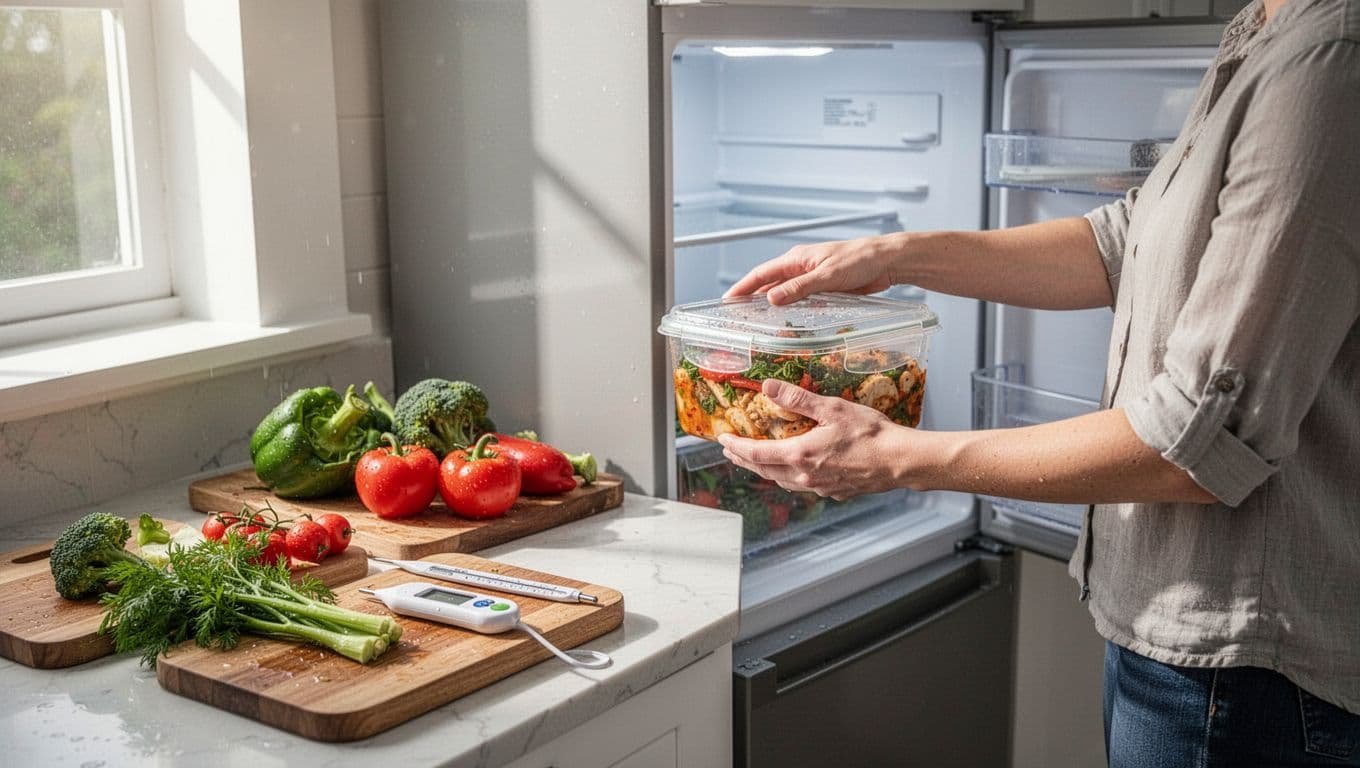
Wash your hands with soap before cooking and after handling raw meat, poultry, seafood, or eggs. Rinse produce under running water, even when you plan to peel it, and clean knives, counters, and cutting boards after each use.
Keep raw meat, poultry, seafood, and eggs away from foods you will eat without cooking. Use separate cutting boards when possible. Store raw proteins in sealed containers on the lowest refrigerator shelf so juices cannot drip onto prepared food.
Choose pasteurized milk, yogurt, and cheese. Soft cheeses such as feta, Brie, queso fresco, and blue cheese are suitable only when the package says they were made with pasteurized milk. The CDC’s safer food choices for pregnancy provides a useful reference for these decisions.
Cook proteins thoroughly
Avoid raw or undercooked eggs, meat, poultry, seafood, and raw sprouts. Cook eggs until both the whites and yolks are firm, and cook ground meats until they reach 160°F. Poultry should reach 165°F, while whole cuts of beef, pork, lamb, and veal should reach 145°F followed by a three-minute rest.
Deli meats, luncheon meats, and hot dogs should be reheated to 165°F or until steaming hot before you eat them. This includes meat added to a sandwich, wrap, or lunch bowl. For more detail, review the FDA’s pregnancy food safety guidance.
Cooked fish can be part of a healthy pregnancy diet. Choose lower-mercury options such as salmon, shrimp, pollock, or canned light tuna. Avoid swordfish, shark, king mackerel, marlin, orange roughy, tilefish, and bigeye tuna. Limit albacore, also called white tuna, according to current medical guidance, which generally recommends no more than 6 ounces per week.
Chill and reheat leftovers safely
Keep your refrigerator at 40°F or below. Divide soups, rice, casseroles, and other large portions into shallow containers so they cool faster. Refrigerate perishable food within two hours of cooking or serving. When the temperature is above 90°F, use the one-hour limit.
Label containers with the preparation date, and reheat leftovers until they are steaming hot throughout. If a lunch has sat at room temperature beyond the safe limit, discard it rather than relying on smell or appearance. A simple routine keeps meal prep practical: cool food promptly, store it covered, and reheat only the portion you plan to eat.
Easy Ways to Prep These Pregnancy Lunches Ahead of Time
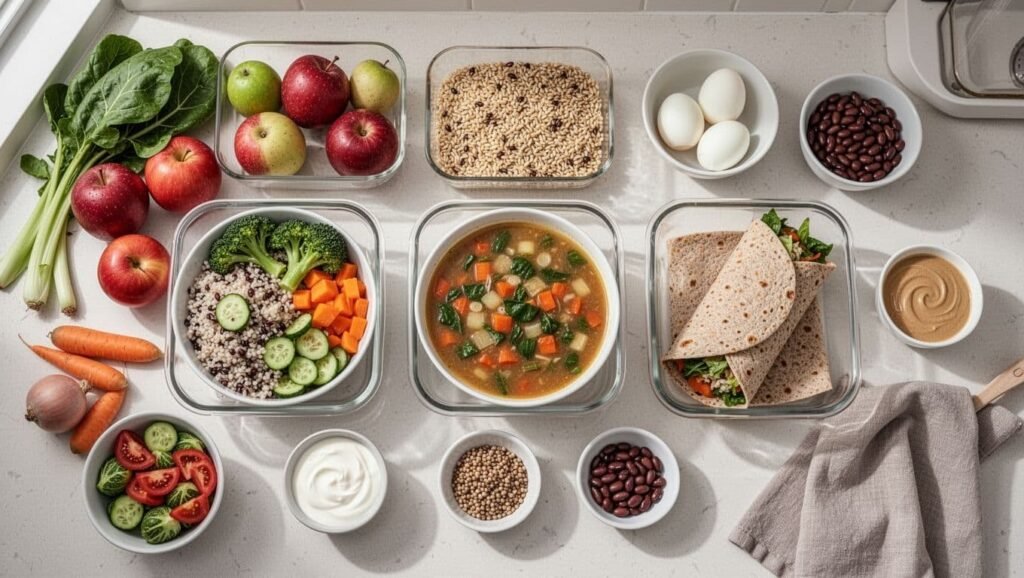
A little batch cooking can turn these pregnancy lunch ideas into quick, mix-and-match meals. Set aside one hour after grocery shopping to prepare a few building blocks, then assemble different lunches throughout the week.
Prepare flexible ingredients in batches
Start with foods that can work in several recipes. Cook a batch of brown rice, quinoa, barley, or whole-wheat couscous. Once the grains cool, portion them into shallow containers and refrigerate them promptly.
While the grains cook, roast a sheet pan of vegetables. Broccoli, carrots, zucchini, sweet potatoes, cauliflower, and bell peppers hold up well in bowls, wraps, soups, and sandwiches. Wash fresh fruit and vegetables, dry them thoroughly, and store ready-to-eat portions where you can see them.
You can also prepare:
- Hard-boiled eggs with firm whites and yolks for toast, salads, and lettuce cups.
- Rinsed and portioned beans for stuffed peppers, quesadillas, bowls, and soups.
- Fully cooked chicken or salmon for two or three lunches.
- Small containers of plain Greek yogurt sauce or lemon-tahini dressing.
Keep sauces in separate containers until serving. The same applies to crunchy toppings, avocado, greens, and pita or tortilla pieces. Separating wet ingredients prevents soggy wraps and salads.
Use a simple three-day lunch plan
A short plan helps you avoid cooking a different recipe every day. Prepare one grain, a tray of vegetables, a pot of soup, and a few sauces, then assemble lunches in minutes.
| Day | Lunch | Prep shortcut |
|---|---|---|
| Day 1 | Chicken, quinoa, and roasted vegetable bowl | Add yogurt sauce just before eating. |
| Day 2 | Lentil and vegetable soup with whole-grain toast | Reheat the soup thoroughly and pack toast separately. |
| Day 3 | Turkey and hummus wrap with crunchy vegetables | Keep hummus, greens, and sliced vegetables separate until assembly. |
For a vegetarian plan, replace chicken with chickpeas or tofu. You can also freeze extra soup in individual portions, which gives you a ready-made lunch for a later week.
Store, label, and reheat safely
Write the preparation date on every container, especially when you prepare several foods at once. Keep cold lunches in a refrigerator at 40°F or below, and use an insulated lunch bag with ice packs when refrigeration isn’t available.
Follow the FDA’s pregnancy food-safety guidance and refrigerate perishable food within two hours. If the temperature is above 90°F, use the one-hour limit. The USDA’s leftovers guidance also recommends keeping cold foods properly chilled and discarding food left out too long.
Reheat soups, rice bowls, casseroles, and meat-containing meals to 165°F. Stir halfway through microwave heating so the center gets hot, and bring soups or sauces to a boil before serving.
Make lunches easier during nausea
When nausea appears, strong smells and rich seasonings can make meal prep harder. Choose mild herbs, plain rice, potatoes, toast, or crackers, then add stronger sauces only if they sound appealing.
Cold fruit, chilled yogurt, and smaller portions may feel easier than a large hot meal. You can pack half a wrap for lunch and save the other half for later. A few bites of a protein food, such as yogurt, eggs, beans, or nut butter, can also make a small meal more satisfying. If vomiting prevents you from keeping food or fluids down, contact your health care provider.
Frequently Asked Questions
Pregnancy lunches can be simple, but food temperature, storage, and ingredient choices still matter. Use these answers as practical guidance, then follow your health care provider’s advice for your specific pregnancy.
Can I eat cold leftovers for lunch while pregnant?
You can eat some properly stored leftovers cold, such as cooked chicken in a salad or chilled roasted vegetables, if you refrigerated them promptly and kept them at 40°F or below. Refrigerate perishable food within two hours, or within one hour when the temperature is above 90°F. Keep portions covered and cold until you eat them, and follow your health care provider’s advice if you have added food-safety concerns.
Reheating is the safer choice for meat, poultry, soups, casseroles, rice dishes, and other cooked meals. Heat leftovers until steaming hot throughout, ideally to 165°F, and stir microwaved food so the center gets hot. The FDA’s guidance for ready-to-eat foods explains why refrigerated ready-to-eat foods require extra care during pregnancy.
What can I eat for lunch if I have morning sickness?
Small, mild meals often feel easier than a large lunch when nausea is strong. Try toast with a fully cooked egg, a plain rice bowl, broth-based soup, yogurt with fruit, or a simple wrap with chicken, beans, or hummus. Eat when your symptoms are calmer, and keep strong smells, heavy sauces, and spicy ingredients separate until you know what you can tolerate.
You can also divide lunch into two smaller portions and eat them at different times. Sip fluids regularly, especially if solid food feels difficult. Contact your health care provider if you have severe vomiting, signs of dehydration, or trouble keeping food and liquids down.
Are salads safe to eat during pregnancy?
Salads can be safe when you wash produce thoroughly under running water and use clean knives, cutting boards, and hands. Leave out raw sprouts, and make sure meat, poultry, seafood, eggs, and cheese meet pregnancy food-safety guidance. Use fully cooked proteins, pasteurized cheese, and dressings without raw eggs.
Keep prepared salads cold and eat them promptly. Homemade chicken salad, egg salad, or tuna salad is easier to control because you know how the ingredients were handled. Be more cautious with refrigerated salads from deli counters, which the FDA lists among higher-risk ready-to-eat foods during pregnancy.
Can I use deli turkey in a pregnancy sandwich?
Deli turkey and other luncheon meats should be reheated until steaming hot before you eat them. This advice applies even when the meat has been stored correctly because certain bacteria can grow in refrigerated ready-to-eat foods. Read the FDA’s pregnancy food-safety guidance for its recommendations on deli meats and hot dogs.
For a cold sandwich, use fully cooked chicken, firm cooked eggs, beans, lentils, or tofu instead. Hummus, avocado, pasteurized cheese, and roasted vegetables can add moisture and flavor without relying on cold luncheon meat. If you reheat turkey, let it cool briefly before assembling the sandwich, but don’t leave it at room temperature for an extended period.
What fish is a good choice for a pregnancy lunch?
Choose fully cooked, low-mercury fish such as salmon, shrimp, pollock, cod, or canned light tuna. These options work well in grain bowls, soups, pasta salads, and sandwiches, but cook fish until it reaches 145°F or the flesh turns opaque and flakes easily. The FDA’s seafood guidance for pregnancy includes current advice about safer choices and serving amounts.
Avoid high-mercury species, including swordfish, shark, king mackerel, marlin, orange roughy, and bigeye tuna. Skip raw seafood, sushi, ceviche, and undercooked shellfish during pregnancy. Follow current FDA guidance and your health care provider’s advice for the type and amount of fish that suits you.
How can I make these lunches work for gestational diabetes?
Pair carbohydrates with protein, fiber, and healthy fats to make lunch more satisfying and support steadier blood sugar. For example, combine a whole-grain wrap with chicken and vegetables, or serve brown rice with tofu, broccoli, and avocado. Choose whole grains more often, and pay attention to portions of rice, pasta, bread, potatoes, fruit, and beans.
Your carbohydrate target may differ from someone else’s, so don’t apply a general meal plan without guidance. Use the portions and meal timing provided by your obstetric team, diabetes educator, or registered dietitian. Regular meals and planned snacks may fit your care plan better than skipping lunch and eating a larger meal later.
Conclusion
A healthy pregnancy lunch can be simple, satisfying, and flexible. Start with protein, add colorful produce, choose a high-fiber carbohydrate, and follow safe food-handling practices when cooking, storing, and reheating meals.
The 30 recipes can be mixed and matched based on your cravings, energy, budget, and available ingredients. Ask your health care provider about personal nutrition needs, food restrictions, or symptoms that make eating difficult.
Save the pin for later

I’m the creator of My Everyday Dish, a food blog focused on easy homemade recipes, comforting family meals, simple baking, and seasonal food ideas. I love finding practical ways to make everyday cooking less stressful and more enjoyable. Here, I share recipes with simple ingredients, clear instructions, and plenty of flavor, helping you make delicious meals and treats you’ll feel confident serving at home.
Leave a Reply