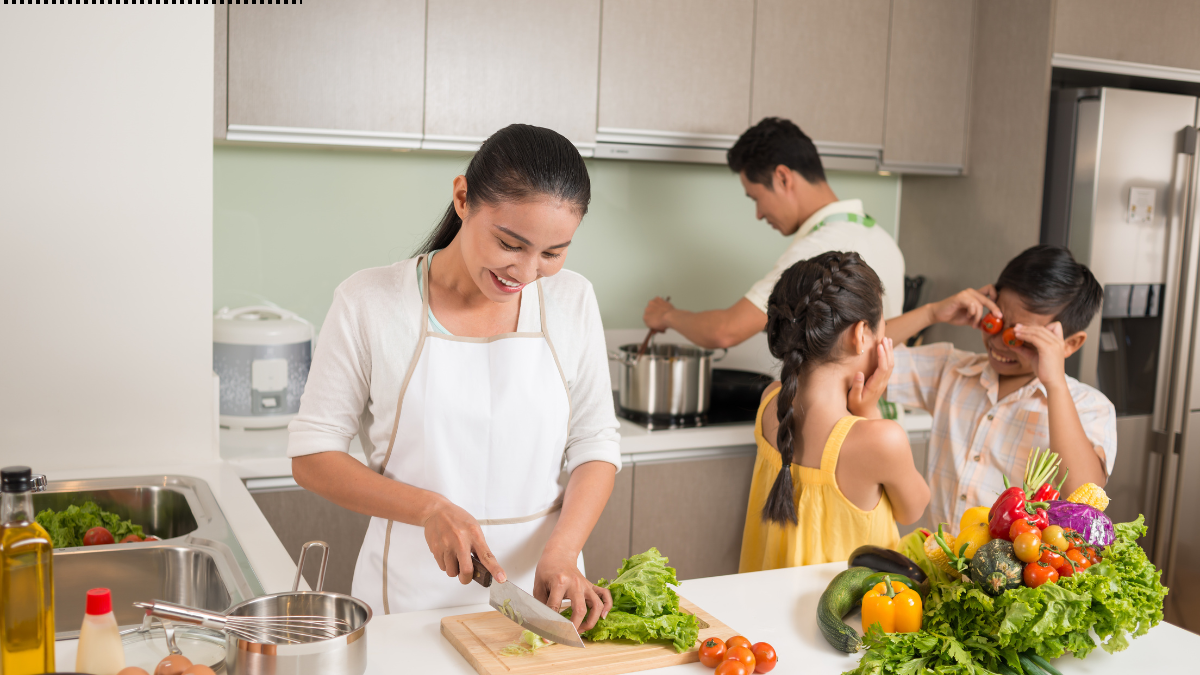
A high-protein, low-fat lunch can make healthy eating easier because it gives you a satisfying meal without leaving you weighed down in the afternoon. With plenty of vegetables, a sensible portion of carbohydrates, and a flavorful protein source, lunch can feel filling and enjoyable instead of repetitive or restrictive.
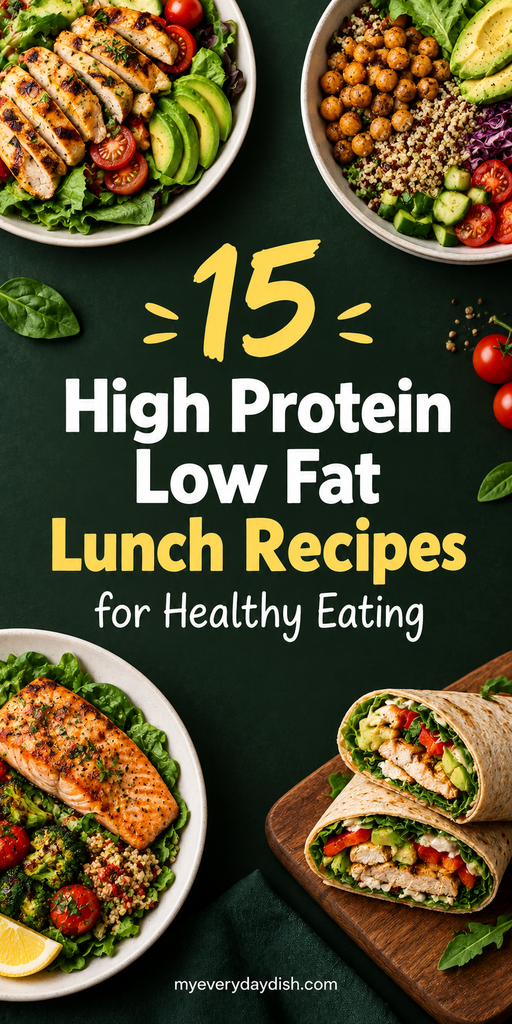
These 15 recipes offer practical ideas for busy home cooks, including chicken burrito bowls, seafood salads, lean turkey wraps, egg bowls, Greek yogurt chicken salad, tofu stir-fries, bean-filled tacos, and lentil grain bowls.
Most lunches can aim for about 20 to 40 grams of protein, plenty of vegetables, and a modest serving of healthy carbohydrates such as brown rice, quinoa, whole-grain bread, sweet potatoes, or lentils. Since calorie and fat content depend on portions and ingredients, check each recipe’s nutrition information and measure higher-fat additions such as dressings, cheese, oils, and avocado.
You won’t need complicated techniques or hard-to-find ingredients. These lunches rely on simple prep methods, including roasting, grilling, sautéing, boiling, and assembling, so you can prepare a satisfying meal even on a busy weekday. Start with the first recipe and find a new high-protein lunch to add to your routine.
How to Build a Filling High-Protein, Low-Fat Lunch
A satisfying high-protein, low-fat lunch starts with balance, not restriction. Build your plate around lean protein, plenty of vegetables, and a modest portion of nutritious carbohydrates. This approach gives you lasting energy while keeping oil, heavy sauces, and oversized portions in check.
Use a simple plate formula
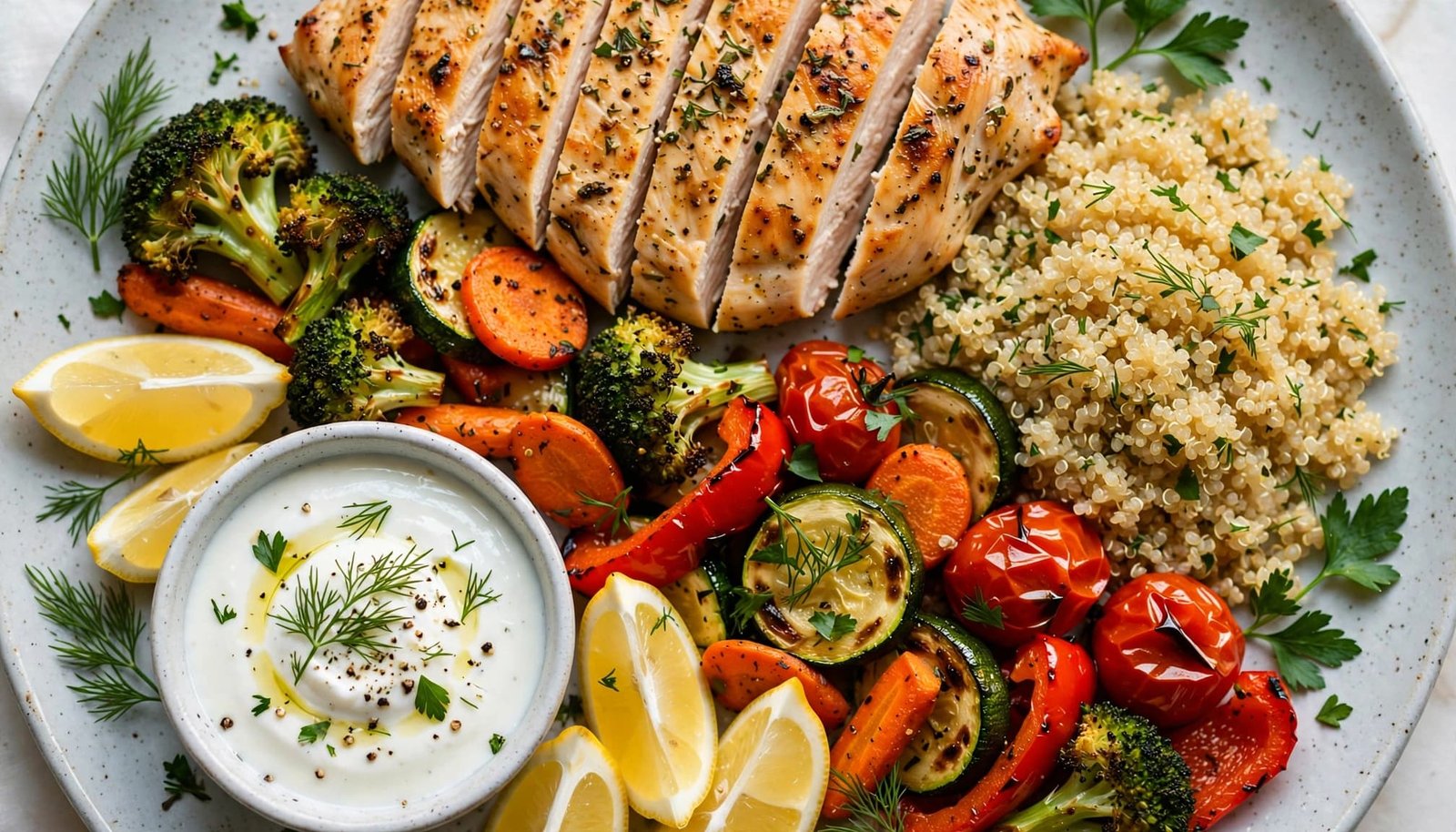
Start with 3 to 5 ounces of cooked lean protein, or a suitable plant-based portion. Skinless chicken, turkey, fish, shrimp, egg whites, tofu, tempeh, lentils, and beans can all fit into a high-protein lunch. A practical protein goal is about 20 to 40 grams per meal, although your needs depend on your age, body size, activity level, and overall diet.
Fill about half your plate with non-starchy vegetables. Try leafy greens, broccoli, cauliflower, zucchini, tomatoes, cucumbers, peppers, mushrooms, or green beans. Then add a small serving of whole grains, beans, or another carbohydrate, such as brown rice, quinoa, farro, a small sweet potato, or whole-wheat pita.
This pattern matches the basic approach promoted by the Dietary Guidelines for Americans, which encourages more vegetables, whole grains, legumes, and varied protein foods.
Read also: 28 High-Protein Pumpkin Breakfast Recipes for Fall
Add flavor without excess fat
Low-fat meals don’t need to taste plain. Instead of depending on large amounts of oil, cheese, or creamy dressing, build flavor with acidic ingredients, herbs, and spices.
Useful additions include:
- Lemon juice or vinegar to brighten grain bowls, salads, and seafood.
- Garlic, onion, paprika, cumin, chili powder, or Italian seasoning for depth.
- Salsa, mustard, or hot sauce for bold flavor with few calories.
- Low-sodium broth to cook grains, lentils, or vegetables.
- Plain Greek yogurt mixed with lemon, herbs, or garlic as a creamy dressing.
Measure oils, dressings, avocado, nuts, and cheese because small portions can add a lot of fat quickly. You can still include these foods, but treat them as accents rather than the foundation of the meal.
A useful lunch should leave room for flavor. Fresh herbs, citrus, spices, and salsa often do more for a meal than an extra spoonful of oil.
Adjust portions for your health needs
These guidelines work well for many healthy adults, but they aren’t a personal medical prescription. If you have kidney disease, ask a doctor or registered dietitian before making major changes to your protein intake. The National Kidney Foundation’s nutrition guidance explains that protein needs can change with kidney function and treatment.
People with liver disease, especially cirrhosis, should also get individualized advice before increasing protein. Use these recipes as flexible starting points, then adjust ingredients and portions to match your health needs.
High-Protein, Low-Fat Lunch Recipes for Healthy Eating
These first five lunches use familiar ingredients and simple methods, so they work well for meal prep. Store portions in airtight containers, and keep sauces separate when possible for fresher texture.
1. Lemon Chicken and Quinoa Veggie Bowl
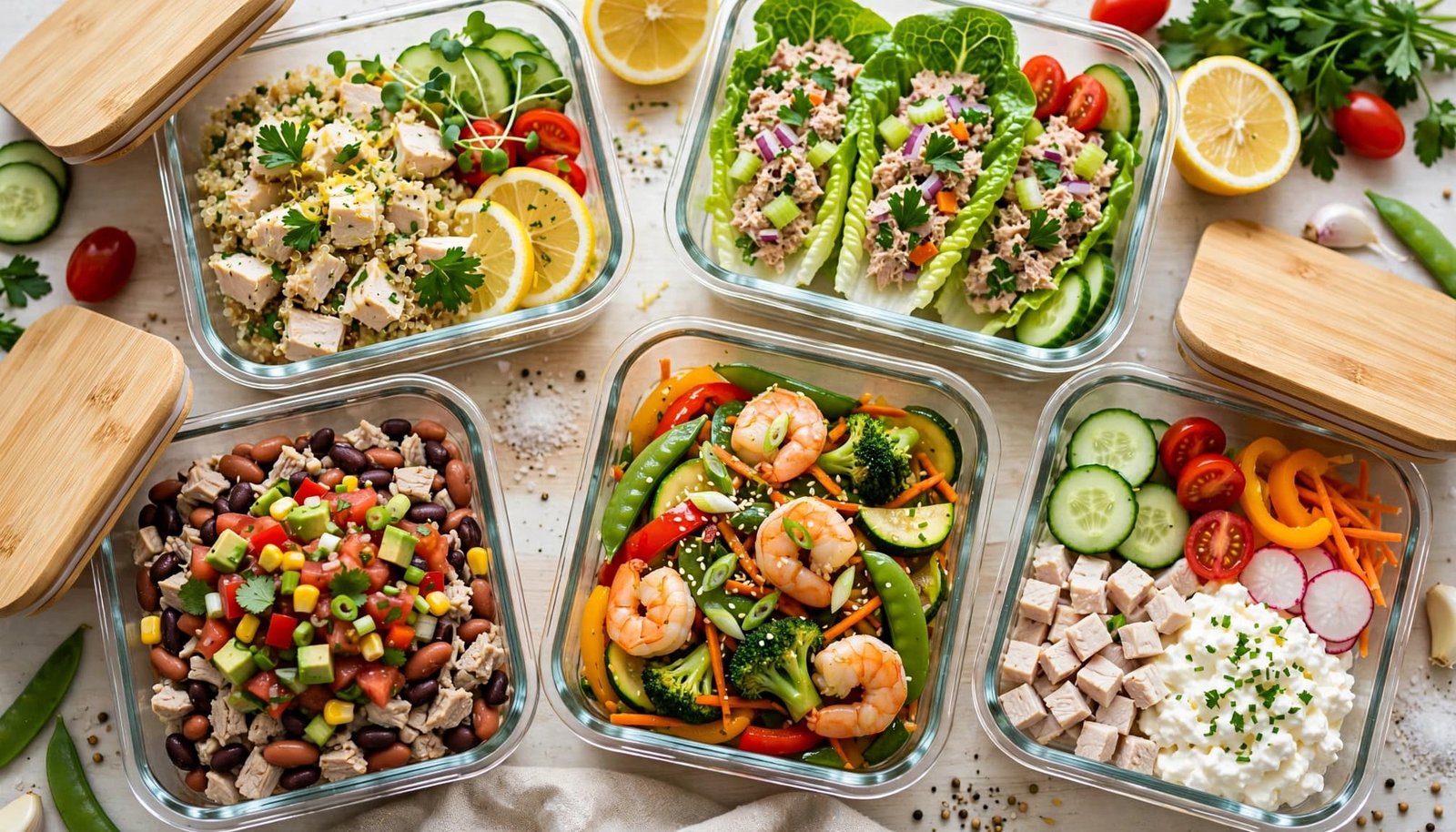
This bright bowl combines lean chicken, quinoa, crisp cucumber, and tender broccoli. It makes 2 servings, with about 30 to 40 grams of protein per serving.
Ingredients: 10 ounces skinless chicken breast; 1 cup cooked quinoa; 2 cups broccoli; 1 cucumber, sliced; 2 tablespoons lemon juice; 1 minced garlic clove; 1 teaspoon dried herbs; cooking spray; salt and pepper.
- Season the chicken with garlic, herbs, pepper, and half the lemon juice.
- Coat a nonstick skillet with cooking spray. Cook the chicken over medium heat until it reaches 165°F inside, then slice it.
- Steam or roast the broccoli until tender. Reheat the quinoa with a splash of water if needed.
- Divide quinoa, broccoli, cucumber, and chicken between two bowls. Finish with the remaining lemon juice.
- For a light sauce, stir plain Greek yogurt with lemon juice, herbs, and pepper.
Read also: 28 Cheap Fall Dinner Recipes That Are Easy to Make
2. Tuna Salad Lettuce Wraps with Greek Yogurt
Greek yogurt replaces mayonnaise in this cool, crunchy lunch. The recipe makes 2 servings, with about 25 to 35 grams of protein per serving.
Ingredients: 2 cans water-packed tuna, drained; 1/2 cup nonfat Greek yogurt; 1 celery stalk, diced; 2 tablespoons red onion; 1 teaspoon mustard; 1 tablespoon lemon juice; pepper; 6 sturdy lettuce leaves.
Drain the tuna well, then mix it with yogurt, celery, onion, mustard, lemon juice, and pepper. Chill the filling for 15 minutes if you prefer a firmer texture. Spoon it into lettuce leaves and serve with whole-grain crackers or sliced vegetables. Refrigerate leftovers within two hours and use them within 3 to 4 days. USDA leftovers guidance provides additional storage advice.
3. Turkey and Bean Salsa Bowl
Lean turkey and black beans create a filling base without much added fat. This recipe makes 2 servings, with about 30 to 35 grams of protein per serving.
Ingredients: 8 ounces lean ground turkey; 1 cup low-sodium black beans; 1 cup diced tomatoes; 1/2 cup corn; 1/2 cup salsa; 2 cups shredded lettuce; 1/2 cup cooked brown rice or cauliflower rice; cumin and chili powder.
Brown the turkey in a nonstick skillet, breaking it apart until fully cooked. Add cumin, chili powder, and half the salsa. Warm the beans separately with the tomatoes and corn. Layer rice, lettuce, turkey, beans, and remaining salsa in bowls. Add a small amount of cheese or avocado only if desired.
4. Shrimp and Vegetable Stir-Fry
This fast stir-fry delivers seafood and vegetables with very little oil. It makes 2 servings, with about 25 to 35 grams of protein per serving.
Ingredients: 10 ounces peeled shrimp; 2 cups broccoli; 1 bell pepper, sliced; 1 cup snap peas; garlic and ginger; 2 tablespoons low-sodium soy sauce; 1 tablespoon lime juice; 1 teaspoon cornstarch mixed with 2 tablespoons broth; 1/2 cup cooked rice per serving.
Cook the vegetables in a nonstick skillet with a splash of water or broth. Add garlic, ginger, and shrimp, then cook until the shrimp are pink, firm, and opaque. Stir in soy sauce, lime juice, and cornstarch slurry. Simmer briefly until thickened, then serve over rice.
5. Cottage Cheese, Turkey, and Crunchy Vegetable Plate
No cooking is needed for this protein-rich lunch. Arrange 2 servings, each with about 25 to 35 grams of protein.
Ingredients: 1 cup low-fat cottage cheese; 6 ounces sliced lower-sodium turkey breast; 1 cucumber; 2 carrots; 1 cup cherry tomatoes; 2 slices whole-grain toast or crispbread; black pepper, paprika, or everything bagel seasoning.
Divide the cottage cheese, turkey, vegetables, and toast between two plates. Add pepper, paprika, or seasoning for extra flavor. Choose lower-sodium turkey when available, especially if cottage cheese also contains added sodium.
Easy Lean Protein Lunches You Can Meal Prep
The next five lunches are made for busy weeks. They hold up well in the refrigerator, and each recipe uses simple prep methods. Store dressings, greens, and crunchy toppings separately when possible so every meal stays fresh.
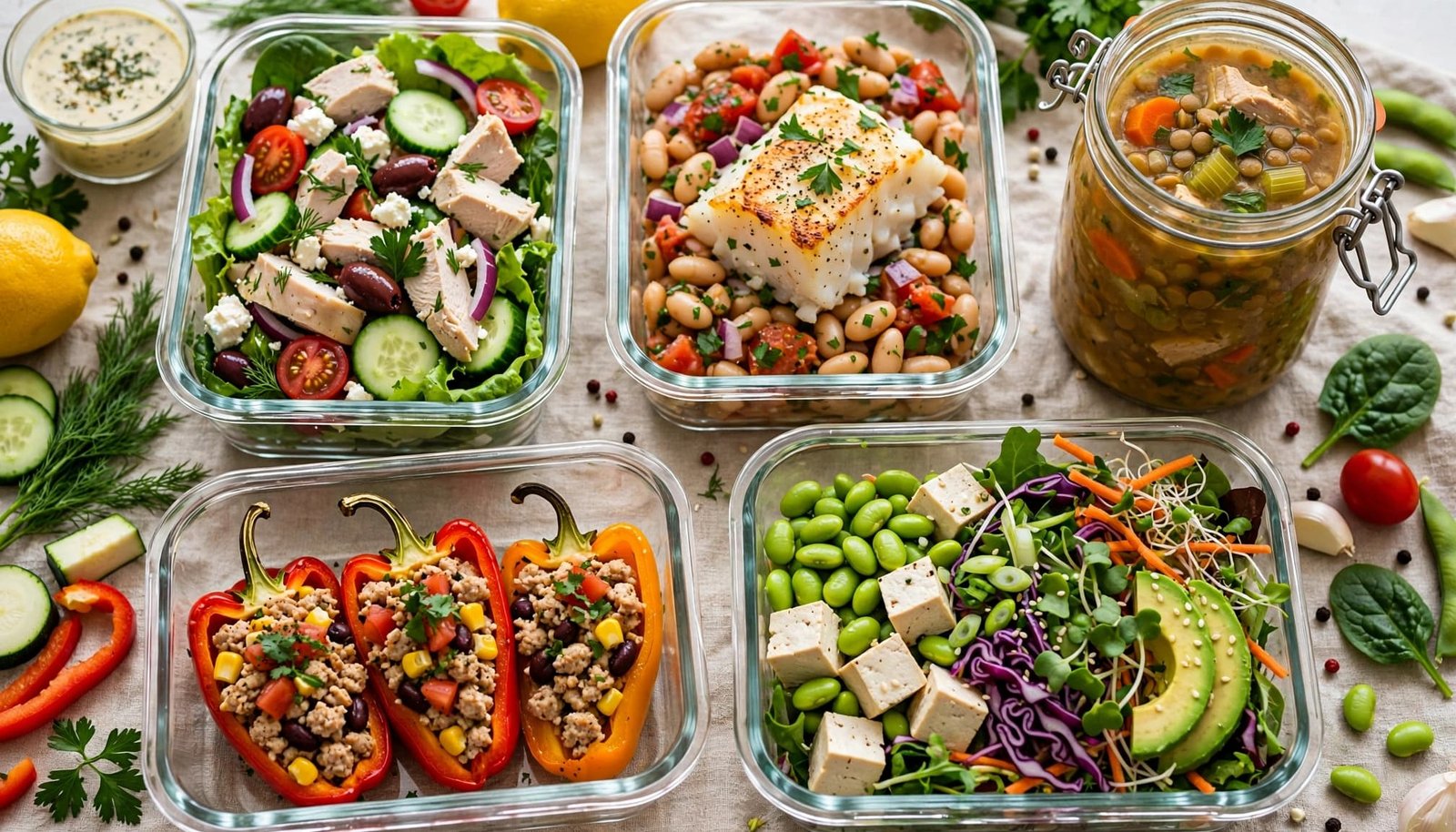
6. Greek Chicken Salad with Light Yogurt Dressing
This salad makes 2 servings, with about 30 to 40 grams of protein per serving. Whisk 1/2 cup nonfat Greek yogurt with lemon juice, minced garlic, dried herbs, pepper, and a splash of water. Chop romaine or mixed greens, cucumber, tomato, red onion, and chickpeas. Slice cooked chicken breast, then divide everything between containers. Add a small sprinkle of feta if desired, but keep it limited because it adds fat and sodium. Store the dressing separately, then add it just before eating.
7. Baked Cod with White Beans and Tomato Herb Salad
Plan for 2 servings, with about 30 to 35 grams of protein each. Season cod fillets with garlic, lemon, pepper, parsley, and a light coating of cooking spray or olive oil. Bake until the thickest part reaches 145°F, the safe temperature for fish according to the USDA safe temperature chart. Rinse canned white beans and combine them with chopped tomatoes, parsley, lemon juice, and garlic. Serve the cod with the bean salad, leafy greens, or a small portion of brown rice. Use chickpeas if white beans aren’t available.
8. Chicken and Lentil Soup
This hearty soup makes 3 to 4 servings, with about 25 to 35 grams of protein per serving. Sauté onion, carrots, and celery in a nonstick pot with cooking spray or a splash of low-sodium broth. Add diced tomatoes, broth, herbs, and cooked lentils, then simmer until the vegetables soften. Stir in shredded chicken breast during the final few minutes so it stays tender. For meal prep, divide the soup into shallow containers and refrigerate it within two hours. Use it within 3 to 4 days, or freeze extra portions.
9. Turkey Taco Stuffed Peppers
This recipe makes 4 pepper halves, with about 25 to 35 grams of protein per serving. Halve and seed bell peppers, then soften them in the microwave or a covered baking dish. Cook lean ground turkey with onion, tomatoes, black beans, taco seasoning, and a small amount of cooked brown rice. Spoon the mixture into the peppers and bake until tender. Top each serving with salsa, cilantro, or a spoonful of nonfat Greek yogurt instead of lots of cheese. Quinoa can replace the rice.
10. Edamame Tofu Power Salad
Make 2 servings, each with about 25 to 35 grams of protein. Press extra-firm tofu, cube it, and bake or pan-sear it with minimal oil until lightly browned. Cook shelled edamame, then prepare cabbage or mixed greens, carrots, and cucumber. Whisk rice vinegar, lime juice, low-sodium soy sauce, and ginger for the dressing. Combine the tofu, edamame, and vegetables just before serving, or pack the dressing separately. Use tamari for a gluten-free option.
Fast No-Fuss Lunches for Busy Weekdays
These final lunches use flexible staples you can keep on hand, such as leftover chicken, canned beans, eggs, Greek yogurt, tofu, and whole-grain wraps. Prep the ingredients ahead, then assemble a balanced meal in minutes.
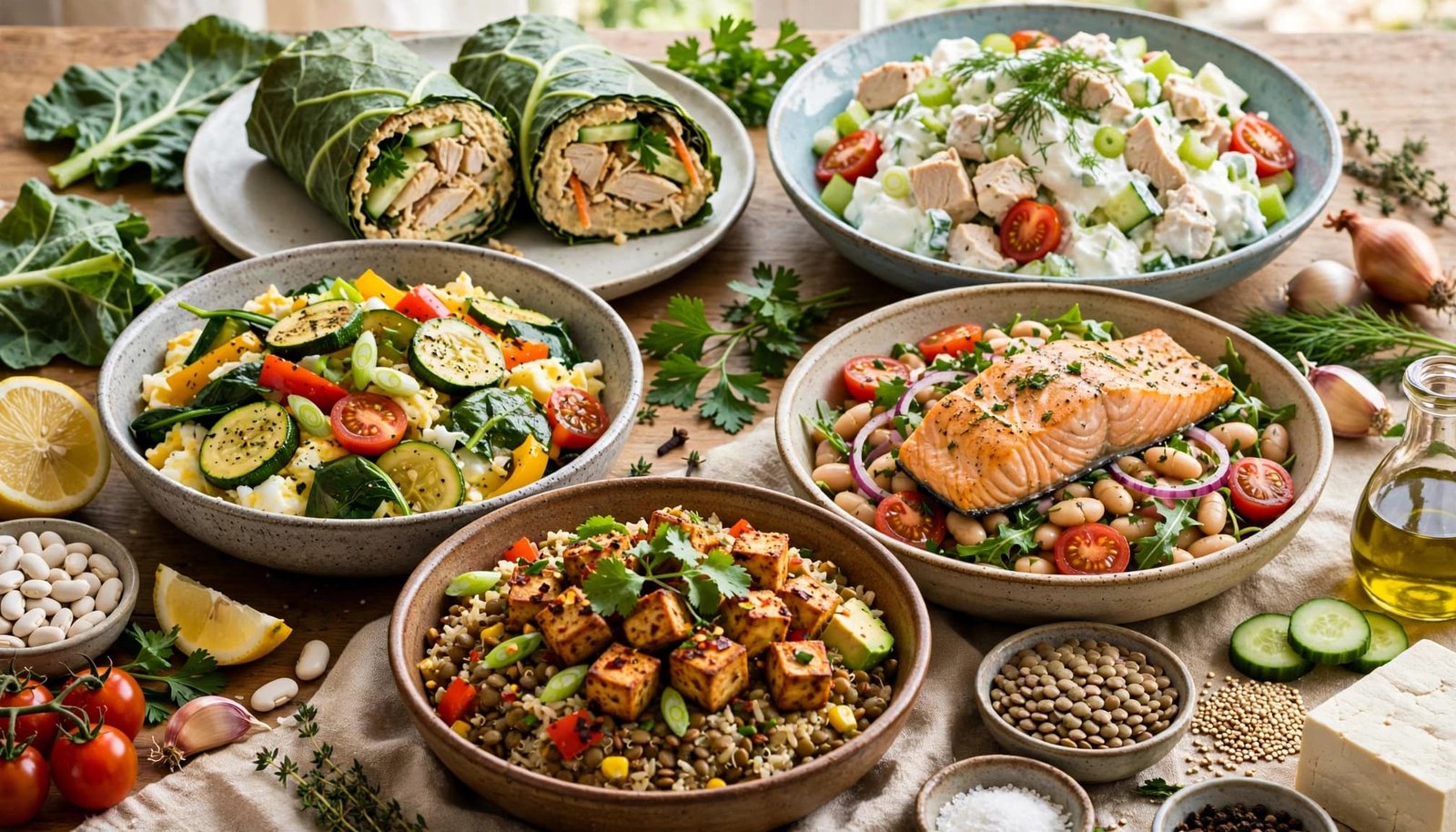
11. Chicken Hummus Collard Green Wraps
These sturdy wraps make 2 servings, with about 25 to 35 grams of protein per serving.
Ingredients: 8 ounces sliced or shredded chicken breast; 2 large collard green leaves; 2 tablespoons hummus; 1/2 cucumber, sliced; 1 tomato, chopped; 1/2 cup shredded carrots; lemon juice; black pepper.
Trim the thick stem from each collard leaf so it bends easily. For a softer wrap, blanch the leaves in boiling water for 30 seconds, then cool and pat them dry. Spread a thin layer of hummus over each leaf, leaving the edges clear. Add chicken, cucumber, tomato, carrots, lemon juice, and pepper. Fold in the sides, then roll tightly from the bottom. Use Greek yogurt mixed with mustard and lemon juice instead of hummus if you want less added fat.
12. Greek Yogurt Chicken Salad with Apple and Celery
This lighter chicken salad makes 2 servings, with about 30 to 35 grams of protein per serving.
Ingredients: 8 ounces cooked chicken breast, chopped; 1/2 cup nonfat Greek yogurt; 1/2 apple, diced; 1 celery stalk, diced; 1/4 cup grapes or 1 tablespoon dried cranberries; 1 teaspoon mustard; black pepper.
Stir the yogurt, mustard, and pepper together in a bowl. Fold in the chicken, apple, celery, and grapes or cranberries. Chill the salad for 15 to 30 minutes, then serve it over greens or spoon it into whole-grain bread. Skip mayonnaise, or add only a teaspoon for extra richness. For nutrition estimates, compare ingredients using USDA FoodData Central.
13. Egg White and Vegetable Breakfast-for-Lunch Bowl
This warm bowl provides about 20 to 30 grams of protein per serving.
Ingredients: 1 cup egg whites; 1 whole egg; 1 cup spinach; 1/2 cup sliced mushrooms; 1/2 cup tomatoes; 2 tablespoons diced onion; 1/2 cup roasted potatoes or 1 slice whole-grain toast; pepper and herbs.
Cook the mushrooms, tomatoes, and onion in a nonstick skillet with a splash of water. Add spinach and stir until wilted. Whisk the egg whites and whole egg, pour them into the skillet, and stir until fully set. Serve with roasted potatoes or toast. Mostly egg whites keep fat lower, while the whole egg adds flavor and a softer texture.
14. Salmon and White Bean Lemon Salad
This chilled salad makes 2 servings, with about 25 to 35 grams of protein per serving.
Ingredients: 1 can salmon, drained and checked for bones; 1 cup rinsed white beans; 1/2 cucumber; 1 celery stalk; 2 cups greens; 1/3 cup nonfat Greek yogurt; lemon juice; dill; mustard.
Mix Greek yogurt, lemon juice, dill, and mustard for the dressing. Gently combine the salmon, beans, cucumber, celery, and dressing, then serve over greens. Salmon offers valuable nutrients but has more natural fat than cod or tuna, so keep the portion balanced and skip added oil. Chill before serving.
15. Spicy Lentil and Tofu Grain Bowl
Each bowl provides about 25 to 35 grams of protein.
Ingredients: 1 cup cooked lentils; 8 ounces extra-firm tofu; 2 cups chopped cabbage and spinach; 1 cup cooked brown rice or quinoa; salsa or hot sauce; lime juice; cilantro; cumin; smoked paprika.
Press and cube the tofu, season it with cumin and smoked paprika, then bake until lightly browned. Warm the lentils and reheat the grain with a splash of water. Build each bowl with the grain, lentils, tofu, cabbage, and spinach. Finish with salsa, lime juice, and cilantro instead of a heavy sauce. Replace tofu with extra black beans or chickpeas when needed.
How to Prep, Store, and Reheat These Lunches Safely
Meal prep works best when you prepare flexible components instead of assembling every lunch at once. Cook a few lean proteins, grains, legumes, and vegetables, then combine them in different ways throughout the week. This keeps meals fresh and gives you more control over portions, flavors, and texture.
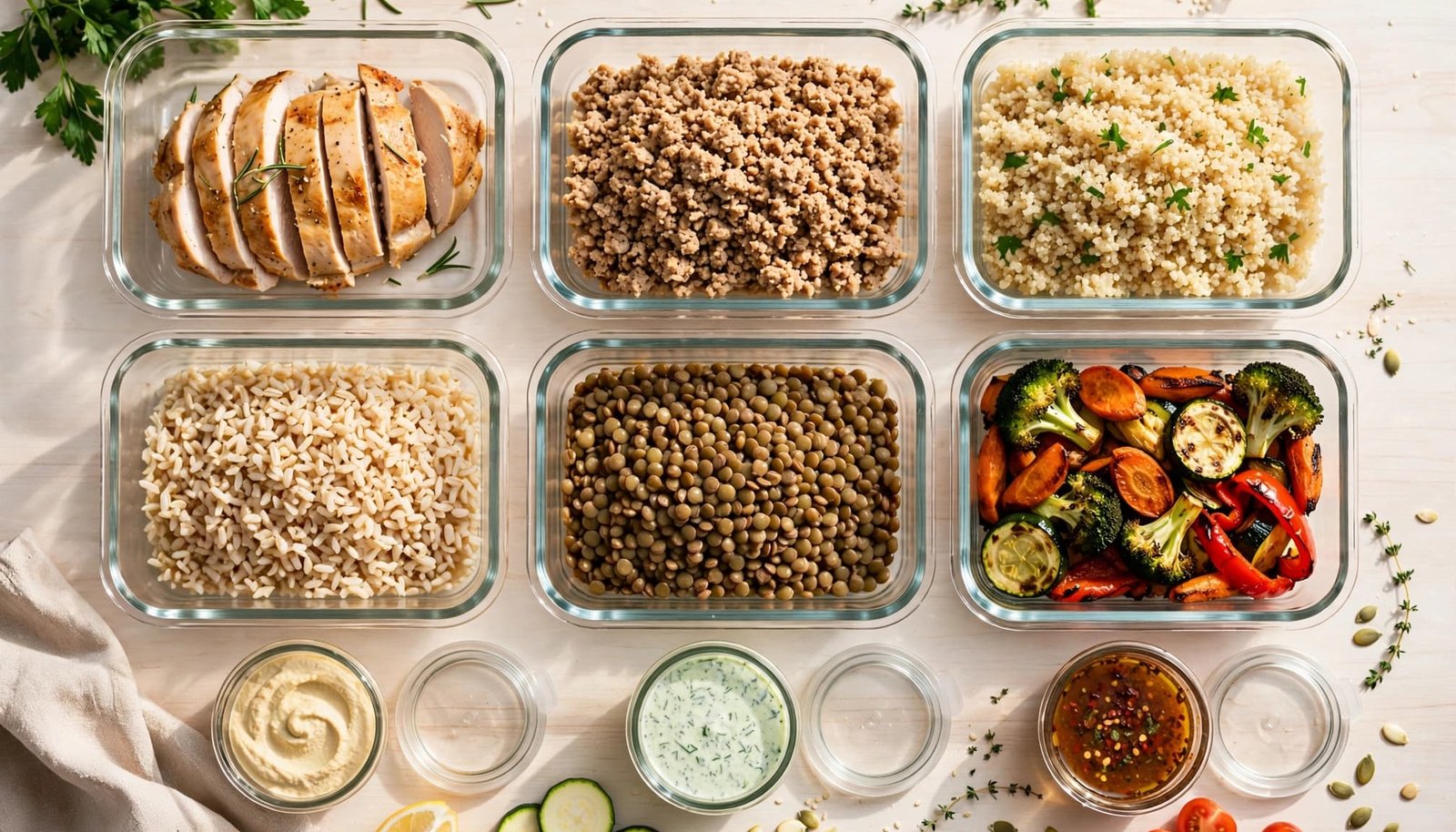
Batch-cook flexible ingredients
Roast or grill several chicken breasts, then slice them for salads, wraps, grain bowls, or soup. You can also brown lean ground turkey with onion, tomatoes, and spices, then use the filling in stuffed peppers, tacos, or a salsa bowl.
While the protein cooks, prepare one grain and one legume. Make quinoa, brown rice, or another whole grain in a medium batch. Simmer lentils until tender, or rinse canned beans for a faster option. Roasted broccoli, peppers, zucchini, carrots, and cauliflower can fill out several lunches without much extra work.
Cool cooked foods in small, shallow containers so they lose heat quickly. Keep your refrigerator at 40°F or below, and refrigerate cooked leftovers within two hours. The limit drops to one hour when food sits in temperatures above 90°F. The USDA food safety basics offer additional guidance for storing and handling leftovers.
Store components for better texture
Use airtight containers and date them if you prepare several meals at once. Cooked leftovers should generally be used within 3 to 4 days. If you won’t eat them in that window, freeze them while they’re still fresh.
Keep ingredients that soften quickly away from the rest of the meal. Store dressings, salsa, leafy greens, and crunchy toppings separately, then combine them just before eating. This prevents soggy lettuce, watery vegetables, and softened tortilla strips or crackers.
Soup freezes well in individual portions, especially chicken and lentil soup. Cooked turkey filling and lentils also freeze successfully in shallow, freezer-safe containers. Leave a little room for expansion, then thaw frozen portions in the refrigerator before reheating.
Reheat leftovers to 165°F
Use a food thermometer rather than relying only on appearance. Poultry, including chicken and turkey, should reach 165°F during cooking. Fish should reach 145°F, while ground meat should reach 160°F.
Reheated leftovers should reach 165°F throughout. Stir soups, rice bowls, and saucy fillings halfway through microwaving so the center heats evenly. Add a splash of water or broth to grains and cover them loosely to reduce drying.
Portion meals according to your appetite and activity. Choose a larger serving of vegetables or grains after a demanding day, or use less rice, sauce, or topping when you want a lighter lunch. Keep the protein portion steady, then adjust the other components to make each meal fit your needs.
Frequently Asked Questions
These recipes give you a practical starting point, but lunch still needs to fit your appetite, schedule, preferences, and health needs. Use the answers below to adjust portions, swap ingredients, and keep your meals enjoyable.
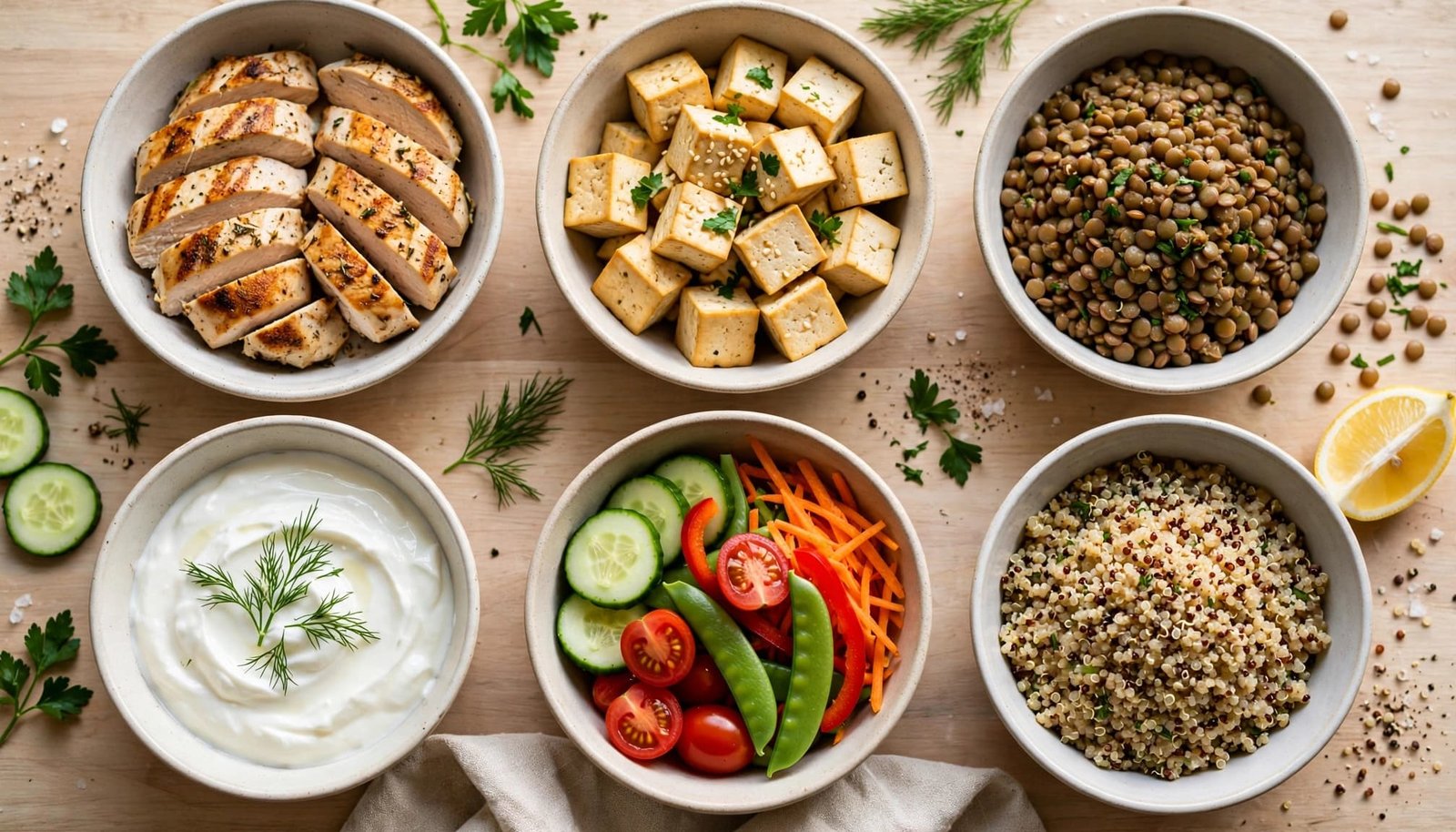
How much protein should a healthy lunch contain?
About 20 to 40 grams of protein is a practical range for many adults at lunch. However, your needs vary with body size, age, activity level, total diet, and health status. Use these recipes as flexible templates, not strict medical prescriptions, and ask a doctor or registered dietitian for personalized guidance if you have a health condition.
Can these lunches be made without meat?
Yes. Tofu, edamame, lentils, beans, Greek yogurt, cottage cheese, and eggs can all provide useful protein without meat. Combining two plant proteins, such as tofu with edamame or lentils with beans, often creates a more filling meal with better texture and variety. Add vegetables and a modest portion of whole grains to round out the lunch.
What is the best low-fat protein for lunch?
Skinless chicken breast, turkey breast, cod, shrimp, tuna packed in water, egg whites, nonfat Greek yogurt, and low-fat cottage cheese are all lean choices. Still, portion size and cooking method matter. Frying a lean protein or covering it with a rich sauce can add far more fat than grilling, baking, poaching, or using a yogurt-based sauce.
How can I make a high-protein lunch more flavorful without adding much fat?
Use citrus juice, vinegar, salsa, mustard, garlic, ginger, fresh herbs, dried spices, hot sauce, or low-sodium broth. A sauce made with nonfat Greek yogurt, lemon, herbs, and pepper adds creaminess without requiring much oil. Layer flavor while cooking, then add a bright finishing ingredient at serving time. This usually works better than adding extra oil to the entire dish.
How long do high-protein meal-prep lunches last in the refrigerator?
Most cooked leftovers should be eaten within 3 to 4 days when stored at 40°F or below. Refrigerate them within two hours, or within one hour if the temperature is above 90°F, as outlined in the USDA food safety basics. Seafood and delicate salads may taste best sooner, so freeze anything you won’t eat within the safe storage window.
Are high-protein, low-fat lunches good for weight loss?
They may help with fullness and calorie control, especially when meals include vegetables and sensible portions. Weight change still depends on your total food intake, activity, sleep, medications, and individual health factors. Choose portions that match your needs rather than assuming every low-fat lunch supports weight loss for everyone.
Conclusion
These 15 high-protein, low-fat lunch recipes show that healthy eating can fit into a busy schedule without relying on complicated methods or bland ingredients. Chicken, seafood, turkey, eggs, tofu, beans, lentils, vegetables, and whole grains give you plenty of ways to build satisfying meals with variety.
Choose one or two recipes to start, then prep a few lean proteins and vegetables for easier lunches during the week. Sauces, herbs, spices, citrus, and salsa can keep familiar ingredients fresh and flavorful while helping you control added fat.
Try one recipe this week, then adjust the ingredients, portions, and seasonings to match your tastes and dietary needs. A few simple choices can make balanced lunches easier to enjoy consistently.
Save the pin for later

I’m the creator of My Everyday Dish, a food blog focused on easy homemade recipes, comforting family meals, simple baking, and seasonal food ideas. I love finding practical ways to make everyday cooking less stressful and more enjoyable. Here, I share recipes with simple ingredients, clear instructions, and plenty of flavor, helping you make delicious meals and treats you’ll feel confident serving at home.
Leave a Reply