Packing a school lunch your child will actually eat can feel like a daily puzzle. The best options don’t need to be complicated, they can be portable, filling, and fun while balancing protein, whole grains, fruit, vegetables, dairy or a suitable alternative, plus a small enjoyable extra.
These 55 healthy school lunch ideas include sandwiches, wraps, bento boxes, pasta salads, breakfast-style lunches, leftovers, and allergy-conscious swaps. Start with these practical combinations to make lunchtime easier and more appealing.
How to Build a Healthy School Lunch Kids Will Actually Eat
A reliable school lunch formula includes protein, a fiber-rich grain or starch, fruit, vegetables, and healthy fat. Add an optional dip or small treat to make the meal more appealing. This approach follows familiar USDA meal components without turning lunch into a nutrition lesson.
Keep portions small enough for your child to finish, and offer foods they already recognize. Variety can come from different colors, shapes, and textures rather than unfamiliar ingredients.
Make Lunches Balanced, Portable, and Easy to Pack
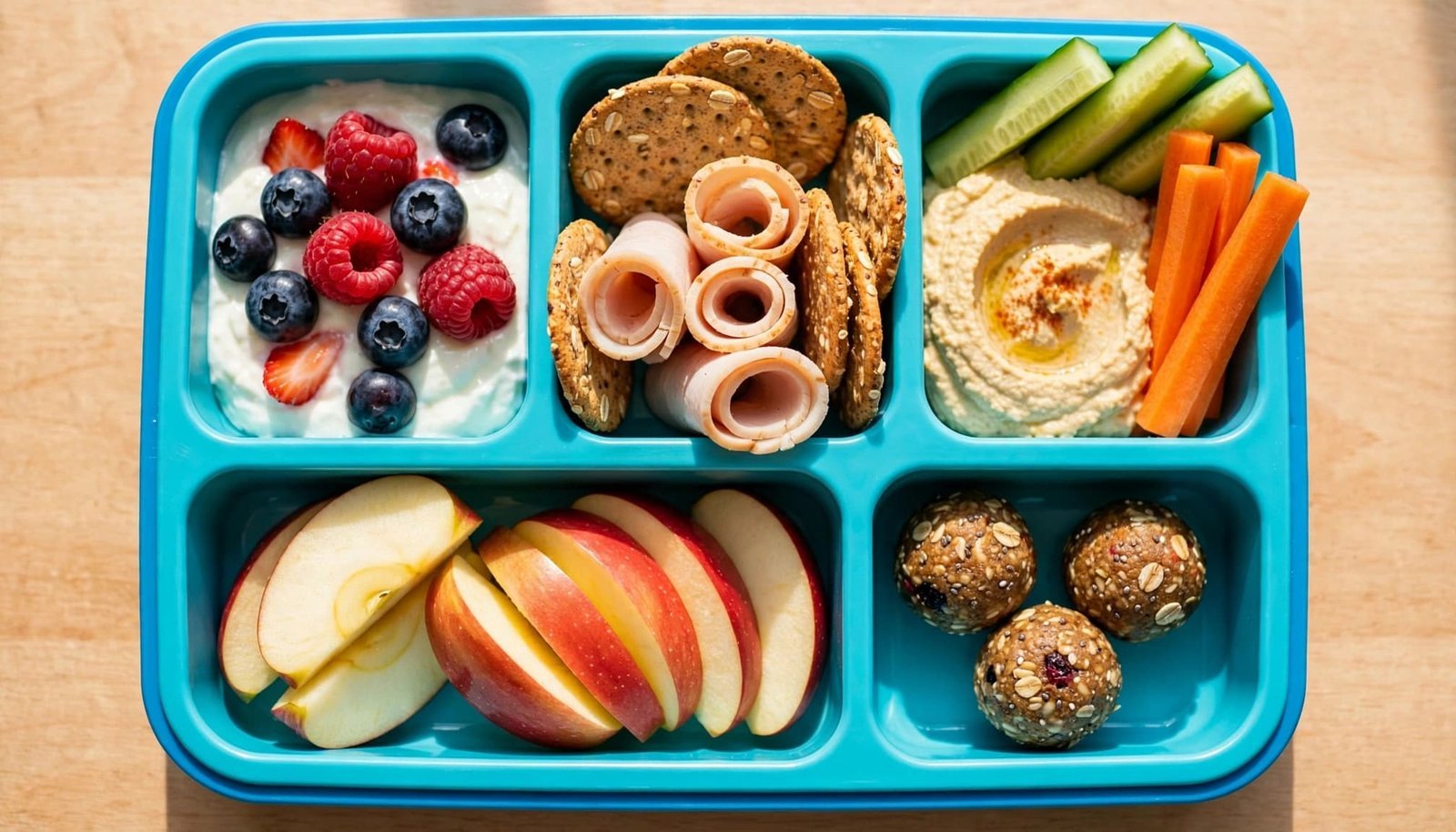
Pair foods from different groups so lunch feels complete but stays easy to eat. For example, try turkey with whole-grain crackers, yogurt with fruit, or hummus with sliced vegetables. A cheese stick, sunflower seed butter, avocado, or a few olives can add healthy fat, depending on your child’s preferences and school rules.
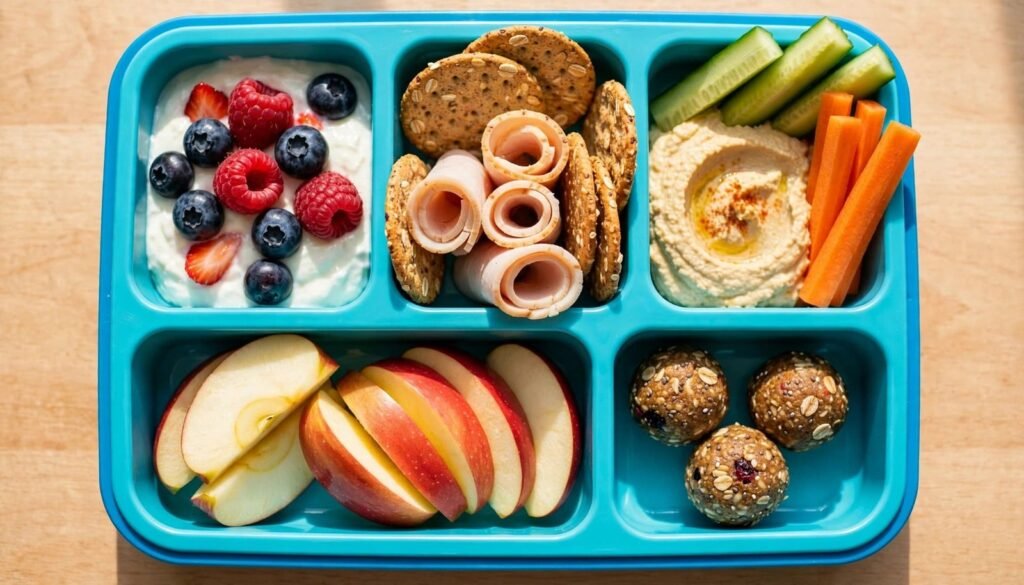
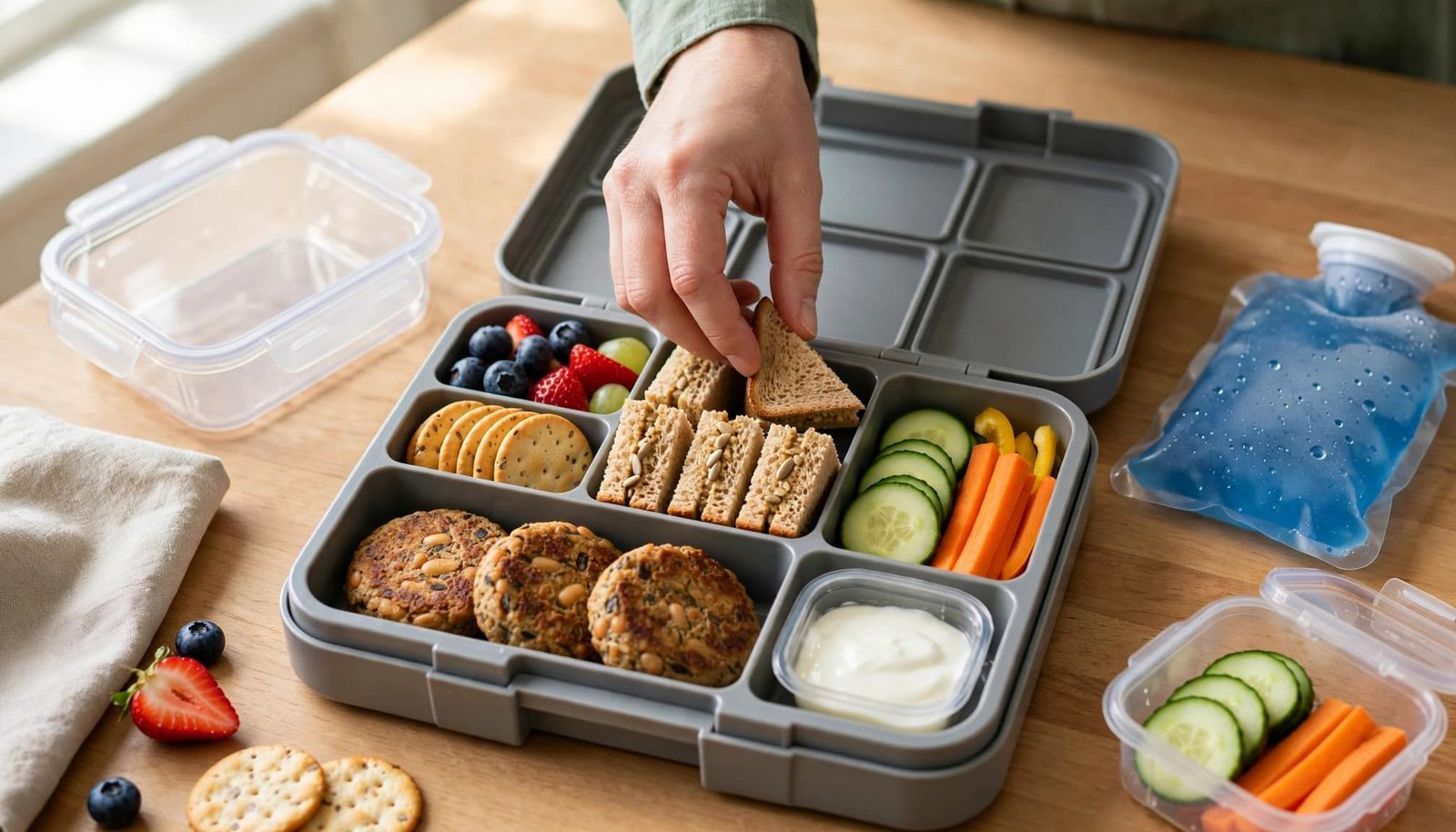
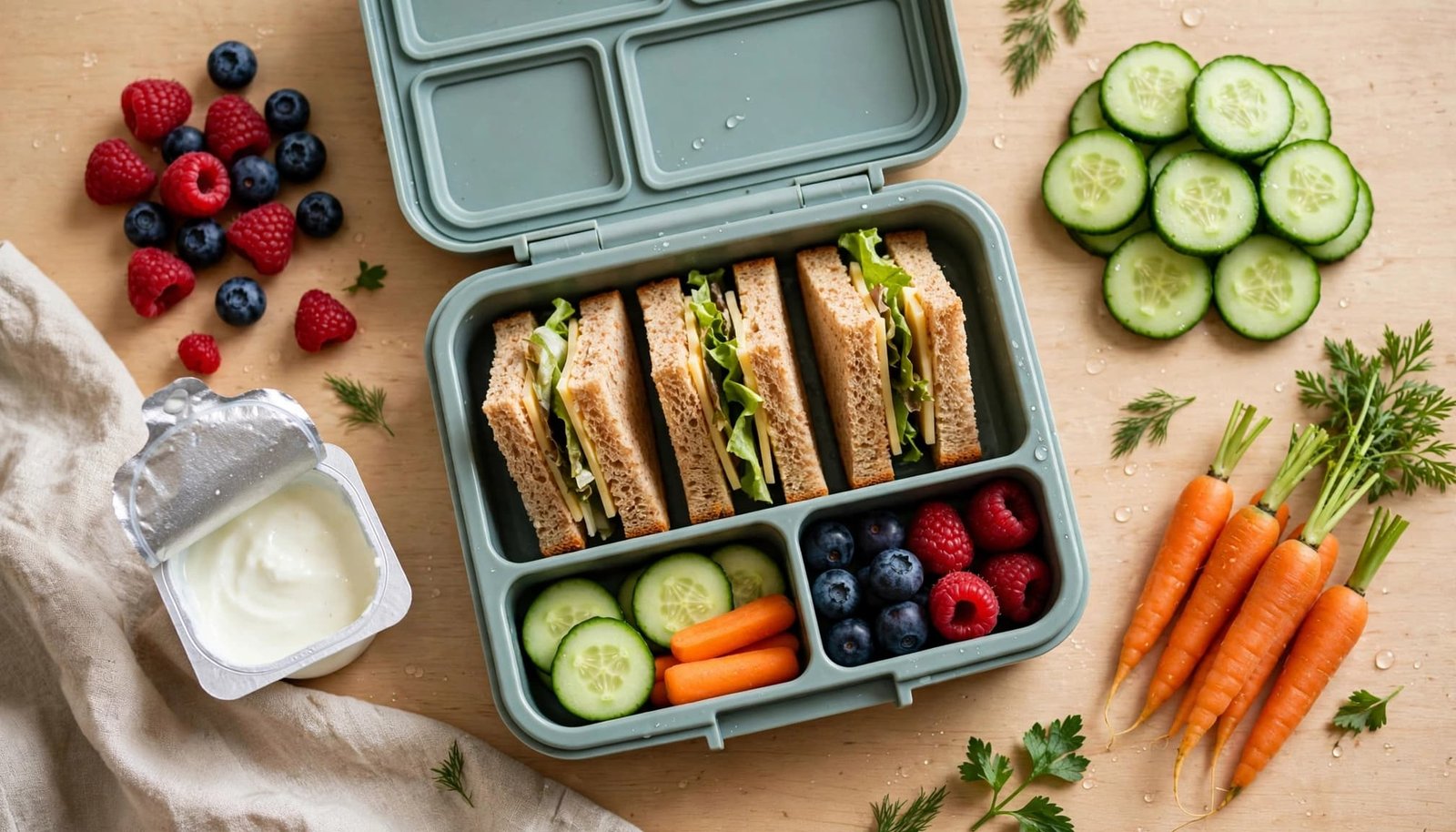
A compartment container keeps foods separate and gives kids a few choices at lunchtime. Include familiar shapes, such as cucumber rounds, apple slices, or sandwich strips. Pack at least one food your child reliably enjoys, then add a small portion of something new.
Prevent soggy bread by spreading hummus, cream cheese, or nut-free seed butter between the bread and wetter fillings. You can also pack tomatoes, pickles, and fruit separately. Choose foods that taste good cold, since many school lunches won’t have access to a microwave. The USDA’s meal and snack standards offer a useful reference for balancing grains, produce, protein, and dairy.
Plan Around Allergies, Preferences, and Food Safety
Check your school’s allergy rules before packing lunch, especially when using nuts, sesame, dairy, eggs, wheat, or soy. Read packaged-food labels each time you buy them, and look for the ingredient list and nearby “Contains” statement. Use clean utensils and containers to reduce cross-contact, and label your child’s lunch when staff need to identify it quickly.
Simple swaps keep familiar meals on the menu:
- Choose oat or rice products instead of wheat when allowed.
- Try dairy-free yogurt or fortified soy milk instead of dairy.
- Use mashed beans, avocado, or seed butter instead of egg or nuts.
- Replace hummus with a bean dip if sesame is restricted.
- Select sunflower seed butter or pumpkin seed butter when peanuts and tree nuts are not allowed.
- Use chicken, beans, or lentils in place of soy-based proteins.
Perishable foods, including meat, eggs, yogurt, and cut vegetables, should stay in an insulated lunch bag with cold sources. USDA guidance recommends using at least two frozen cold sources, placing them above and below the food, and refrigerating the lunch overnight if you pack it ahead of time. Wet ingredients should stay separate whenever possible, so the meal remains fresh and appetizing by lunchtime.
Read also: 18 Quick and Easy Work Lunch Sandwich Ideas
Healthy School Lunch Ideas Kids Will Love
These lunch ideas keep familiar foods interesting with simple shapes, dips, colors, and mix-and-match ingredients. Use the portions your child can finish, pack wet ingredients separately, and follow your school’s allergy policy before choosing swaps.
Sandwiches, Wraps, and Handheld Favorites
Handheld lunches work well for busy school days because children can eat them without utensils. Cut sandwiches into strips, wraps into pinwheels, and quesadillas into small wedges for easier bites.
- Turkey, cheese, and avocado whole-grain sandwich: Layer sliced turkey, cheddar, avocado, and lettuce on whole-grain bread. Pack cucumber rounds or apple slices on the side.
- Hummus and crunchy veggie wrap: Spread hummus on a whole-wheat tortilla, then add shredded carrots, cucumber, bell pepper, and spinach. Pack the vegetables separately if your child prefers a crisp texture. For a sesame-free option, use white bean dip instead of hummus.
- Chicken salad wrap: Mix chopped chicken with Greek yogurt or mayonnaise, then add diced celery and grapes. Spoon it into lettuce leaves or a tortilla. Use mashed avocado instead of mayonnaise for a dairy-free version.
- Tuna and cucumber pita: Fill a small whole-wheat pita with tuna salad and cucumber slices. Add shredded lettuce or pack cherry tomatoes separately. Choose mashed chickpeas instead of tuna for a vegetarian lunch.
- Egg salad and spinach sandwich: Combine chopped hard-boiled eggs with Greek yogurt or mayonnaise, then add spinach between two slices of whole-grain bread. Mashed white beans can replace the eggs for an egg-free option.
- Turkey and veggie pinwheels: Spread cream cheese or hummus over a tortilla, add turkey, spinach, and shredded carrots, then roll and slice into pinwheels. Use dairy-free cream cheese when needed.
- Peanut-free sunflower butter and banana sandwich: Spread sunflower seed butter on whole-grain bread and add banana slices. Pumpkin seed butter works well when sunflower products are restricted. Pack yogurt or cucumber slices to add protein or vegetables.
- Roasted vegetable and feta wrap: Fill a tortilla with roasted zucchini, peppers, carrots, and a small amount of feta. Serve the vegetables chilled, and swap in dairy-free crumbled cheese for a dairy-free lunch.
- Mini chicken quesadillas with salsa: Add cooked shredded chicken and cheese between small tortillas, then toast and cut into wedges. Pack mild salsa in a separate container. Use black beans instead of chicken for a vegetarian version.
- Bean and cheese burrito wedges: Fill a small tortilla with mashed pinto beans, shredded cheese, and avocado. Roll, warm, cool, and slice into wedges. Use dairy-free cheese or extra avocado for a vegan option.
- Mini pita pizzas with vegetables: Spread tomato sauce inside mini pitas, then add mozzarella, mushrooms, bell peppers, or spinach. Bake until warm, cool completely, and pack with grapes or snap peas.
Read also: Halloween Treats for Kids to Bring to a School Party
Bento Boxes and Protein-Packed Lunches
Bento lunches give kids several small choices without requiring a complicated recipe. Add one familiar food, one protein-rich item, and produce in colors your child enjoys.
- Turkey, cheese, crackers, grapes, and cucumber bento: Add folded turkey slices, cheese cubes, whole-grain crackers, halved grapes, and cucumber rounds. Choose certified gluten-free crackers when wheat is restricted.
- Hard-boiled egg, roasted potatoes, berries, and snap peas: Pack an egg with bite-size roasted potatoes, strawberries or blueberries, and snap peas. For an egg-free box, use roasted chickpeas or turkey slices.
- Greek yogurt, granola, fruit, and veggie sticks: Pack plain or lightly sweetened Greek yogurt with granola, berries, and carrot sticks. Use dairy-free yogurt and nut-free granola when needed.
- Chicken bites with whole-grain crackers and melon: Add chilled baked chicken bites, crackers, and cubes of melon. Include steamed broccoli or cucumber slices for a vegetable. Plant-based chicken bites can replace the poultry.
- Cottage cheese, pineapple, tomatoes, and seed crackers: Pair cottage cheese with pineapple chunks, grape tomatoes, and seed crackers. Use dairy-free cottage cheese or mashed white beans for a dairy-free lunch.
- Hummus, falafel, pita triangles, and carrots: Pack baked falafel with pita triangles, hummus, and carrot sticks. Replace hummus with avocado dip for a sesame-free option.
- Edamame, rice balls, orange slices, and cucumber: Add shelled edamame, small rice balls, orange sections, and cucumber slices. Use chickpeas or peas instead of edamame for a soy-free lunch.
- Tuna salad with crackers, apple slices, and peas: Place tuna salad in a small sealed container beside whole-grain crackers, apple slices, and peas. Mashed chickpeas make a simple fish-free substitute.
- Chickpea salad with pita and bell peppers: Mash chickpeas with yogurt, mayonnaise, or avocado, then pack them with pita triangles and bell pepper strips. Choose gluten-free pita when necessary.
- Turkey meatballs with mozzarella, fruit, and broccoli: Pack small turkey meatballs with mozzarella pearls, berries, and steamed broccoli. Use lentil meatballs and dairy-free cheese for a vegetarian or dairy-free box.
- Cheese cubes, roasted chickpeas, popcorn, and berries: Combine cheese cubes, crunchy roasted chickpeas, plain popcorn, and berries. Choose vegan cheese and check popcorn labels for dairy or nut ingredients.
Pasta, Grain Bowls, and Colorful Cold Salads
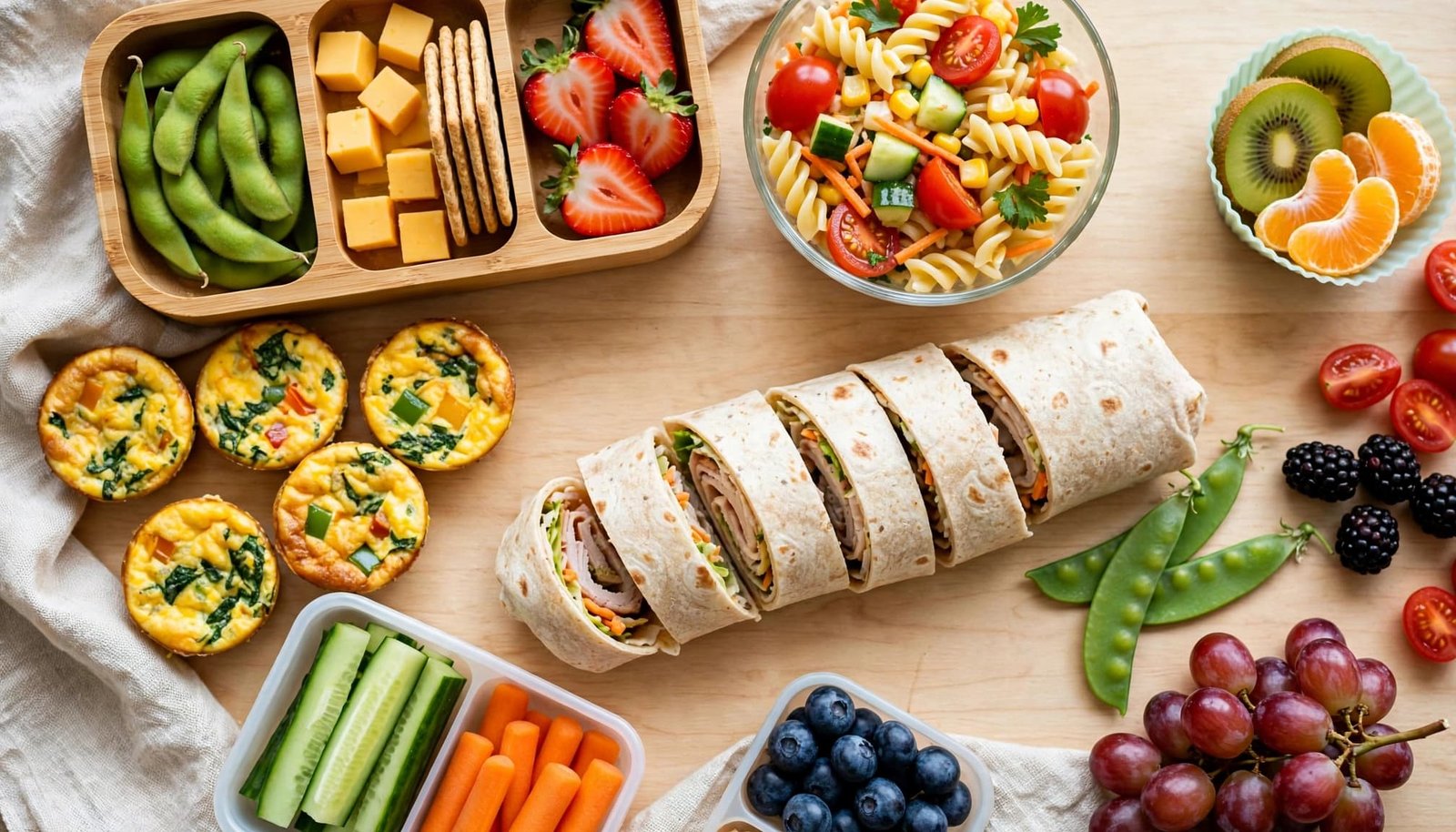
Cold grains and pasta are easy to prepare ahead of time, but they need careful cooling. Divide cooked foods into shallow containers, refrigerate them promptly, and keep lunches cold with frozen packs. The USDA recommends using an insulated lunch bag with at least two cold sources for perishable foods, such as chicken, eggs, tuna, or dairy.
- Pesto pasta salad with peas and broccoli: Toss whole-wheat pasta with pesto, peas, and small broccoli florets. Use a nut-free pesto made with pumpkin seeds or sunflower seeds when required.
- Chickpea pasta with vegetables and light tomato sauce: Mix chickpea pasta with a light tomato sauce, zucchini, and diced bell peppers. Choose a gluten-free pasta made from rice or corn if chickpeas are not suitable.
- Greek pasta salad with feta, cucumber, and olives: Combine pasta, cucumber, olives, feta, and a small amount of vinaigrette. Use dairy-free feta for a dairy-free lunch, and choose gluten-free pasta when needed.
- Mexican bean and corn salad: Mix black beans, corn, diced tomatoes, avocado, and brown rice with lime juice. Pack the avocado and dressing separately if your child prefers firmer textures.
- Quinoa bowl with chicken, carrots, and avocado: Layer cooked quinoa with shredded chicken, grated carrots, and avocado. Replace chicken with chickpeas for a vegetarian option.
- Brown rice bowl with edamame and roasted vegetables: Add brown rice, shelled edamame, roasted sweet potato, and broccoli. Use peas or chickpeas instead of edamame for a soy-free version.
- Couscous salad with chickpeas and diced vegetables: Toss couscous with chickpeas, cucumber, tomatoes, and parsley. Use quinoa or rice for a gluten-free alternative.
- Cold sesame-free noodle salad with chicken and shredded carrots: Toss rice noodles with chicken, shredded carrots, cucumber, and a mild dressing made without sesame. Sunflower seed butter can add creaminess if the school allows seeds.
- Tuna and whole-wheat pasta salad: Combine tuna, whole-wheat pasta, peas, and diced cucumber with Greek yogurt or mayonnaise. Use chickpeas instead of tuna for a vegetarian lunch.
- Caprese pasta salad with tomatoes and mozzarella: Mix pasta with cherry tomatoes, mozzarella pearls, and basil. Pack a small container of vinaigrette separately to prevent sogginess.
- Lentil and sweet potato grain bowl: Combine lentils, roasted sweet potato, brown rice, and cucumber. Add a lemony yogurt sauce separately, or use mashed avocado for a vegan bowl.
For food safety, refrigerate cooked grains, pasta, meat, eggs, and vegetables within two hours. Keep cold foods at or below 40°F, and discard perishable food that sits out too long. USDA food safety basics provide more guidance for handling leftovers and packed foods.
Breakfast-for-Lunch and Mini Baked Favorites
Breakfast foods can make lunch feel special, especially when you balance sweeter items with protein, fruit, or vegetables. Bake a batch on the weekend, freeze extras, and thaw portions in the refrigerator before packing.
- Mini vegetable egg muffins: Bake eggs with spinach, bell peppers, and shredded cheese in a mini muffin pan. For an egg-free version, use chickpea flour batter with vegetables.
- Whole-grain waffle sandwich with yogurt and berries: Fill two small waffles with Greek yogurt and sliced berries. Use dairy-free yogurt and check the waffle label for egg or milk if allergies are present.
- Pancake dippers with fruit and yogurt: Pack small whole-grain pancakes with yogurt for dipping and sliced strawberries or bananas. Add turkey sausage or cheese to make the sweet lunch more filling.
- Breakfast burrito with scrambled egg, beans, and cheese: Wrap scrambled egg, black beans, cheese, and mild salsa in a small tortilla. Use tofu scramble or mashed beans for an egg-free option.
- Overnight oats with banana and sunflower seed butter: Combine oats, milk, yogurt, banana, and sunflower seed butter in a sealed container. Use fortified oat milk and sunflower seed butter for a dairy-free, nut-free version.
- Greek yogurt parfait with berries and oat crumble: Layer Greek yogurt, berries, and a nut-free oat crumble. Add pumpkin seeds only if the school permits seeds, or use toasted coconut for extra texture.
- Whole-grain banana mini muffins with cheese: Pack two small banana muffins with cheese cubes and cucumber slices. Choose dairy-free cheese or roasted chickpeas when needed.
- Spinach and cheese frittata squares: Bake eggs with spinach and cheese, then cut the frittata into small squares. Replace cheese with dairy-free shreds, or use seasoned chickpea flour batter instead of eggs.
- Apple and cinnamon baked oatmeal cups: Bake oats with diced apples, cinnamon, and milk in muffin cups. Pair two cups with yogurt, turkey slices, or pumpkin seed butter.
- Sweet potato and black bean mini muffins: Mix mashed sweet potato, black beans, corn, and a savory whole-grain batter. These muffins are naturally filling and can be made egg-free with a suitable binder.
- Cottage cheese pancakes with sliced peaches: Pack small cottage cheese pancakes with peach slices. Use dairy-free cottage cheese or mashed banana in the batter for a dairy-free variation.
Leftover Remixes, Dips, and Fun Snack-Style Lunches
Dinner leftovers become easier for kids to eat when you change the shape and portion size. Cut roasted meat into small pieces, place sauces in dip cups, and let children assemble simple combinations.
- Leftover roasted chicken with pita, hummus, and vegetables: Slice leftover chicken and pack it with pita triangles, hummus, and cucumber or carrot sticks. Use white bean dip for a sesame-free lunch.
- Mini taco cups with turkey, beans, cheese, and guacamole: Fill baked tortilla cups with ground turkey, black beans, and cheese. Pack guacamole and salsa separately, and use lentils instead of turkey for a vegetarian option.
- Leftover meatballs with marinara and whole-grain bread: Pack sliced meatballs with marinara for dipping and small pieces of whole-grain bread. Lentil meatballs and dairy-free bread can fit vegetarian or dairy-free needs.
- Chicken fried rice with peas and carrots: Reheat leftover rice with cooked chicken, peas, and carrots, then cool it safely before packing. Use scrambled egg, tofu, or edamame instead of chicken.
- Leftover vegetable stir-fry with rice and edamame: Pack chilled stir-fried vegetables with brown rice and edamame. Replace edamame with chickpeas if soy is restricted, and use a sesame-free sauce.
- Baked potato bar with beans, broccoli, and cheese: Pack a small baked potato with black beans, steamed broccoli, and shredded cheese in separate sections. Choose dairy-free cheese or avocado for a vegan option.
- Guacamole, veggie sticks, and black bean dip box: Add guacamole, black bean dip, bell pepper strips, carrots, cucumber, and whole-grain crackers. Use gluten-free crackers when needed.
- Fruit and cheese kabobs with whole-grain crackers: Thread grapes, berries, melon, and cheese onto short food-safe picks, or place the pieces loose for younger children. Add dairy-free cheese and seed crackers when necessary.
- Rainbow snack box with vegetables, fruit, yogurt dip, and popcorn: Pack vegetables in several colors with fruit, yogurt dip, and plain popcorn. Use dairy-free yogurt or bean dip for a vegan option.
- Mini salmon cakes with cucumber and berries: Make small salmon cakes with oats or breadcrumbs, then serve them with cucumber rounds and berries. Use gluten-free oats or chickpea flour if wheat is restricted.
- Build-your-own lunch box with turkey, tortilla strips, cheese, corn, avocado, and salsa: Pack each ingredient separately so your child can create small tacos or bowls. Add beans instead of turkey, dairy-free cheese, and gluten-free tortilla strips when needed.
Use shallow containers to cool leftovers faster before refrigeration, and pack them only after they are fully chilled. Place cold sources above and below perishable food in the lunch bag, as recommended in USDA school lunch safety guidance. That small step helps keep leftover remixes safe and ready to eat at lunchtime.
Simple Packing Tips That Keep School Lunches Fresh
A few repeatable habits make these 55 lunch ideas easier on busy mornings. Use an insulated lunch bag, at least two frozen ice packs, and leakproof containers with separate compartments. Keep cold foods refrigerated until packing time, and use a thermos for foods that should stay warm.
Easy Swaps for Picky Eaters and Common Allergies
Adjust the meal your child already likes instead of creating a separate lunch. Replace meat with beans, lentils, eggs, tofu, or dairy-free alternatives. Sunflower seed butter works well in place of peanut butter, while gluten-free bread or crackers can replace wheat-based options.
When sesame is restricted, use mashed avocado, white bean dip, or a dairy-free spread instead of hummus. Check your school’s allergy policy before packing seeds, dairy, eggs, soy, or wheat. Also read packaged-food labels every time, including the “Contains” statement and allergen warnings.
A Quick Lunchbox Formula for Busy Mornings
Build each lunch with five parts:
- One protein, such as turkey, eggs, beans, lentils, tofu, or yogurt.
- One grain or starchy food, such as bread, rice, pasta, potatoes, or crackers.
- One fruit.
- One vegetable.
- One dairy item or suitable alternative.
On the weekend, prepare two proteins, two grains, and several washed fruits and vegetables. Cook grains, boil eggs, bake muffins, and portion leftovers into shallow containers so they cool quickly. Then mix and match ingredients throughout the week.
Pack wet foods separately to protect texture. For hot leftovers, reheat them to 165°F, preheat the thermos with boiling water, empty it, and add the food while piping hot. Cold perishable foods should stay below 40°F with frozen packs. See the USDA’s bag lunch safety guidance.
Rotate two or three favorite lunches, then introduce only one new food at a time. Familiar foods give your child a reliable choice while the new ingredient becomes easier to accept.
Frequently Asked Questions
Parents often have a few practical questions after choosing healthy school lunch ideas. These answers can help you adjust portions, prepare meals ahead, and make lunch easier for your child.
Can I prepare school lunches the night before?
Yes, you can prepare most lunches the night before and refrigerate them in sealed containers. Cut produce, assemble dry ingredients, and portion dips ahead of time, but add crackers or other crunchy foods in the morning if they may soften overnight.
How much food should I pack?
Start with portions your child can finish comfortably, then adjust based on age, appetite, and how much comes home. A small serving of each food group is often more useful than a full container that feels overwhelming.
What healthy foods can I pack without refrigeration?
Choose shelf-stable options such as whole fruit, unopened applesauce, whole-grain crackers, bread, peanut butter if permitted, and sealed tuna or salmon pouches. Hard cheese and cut produce need more careful temperature control, so follow your school’s storage rules and use an insulated bag when needed. Food safety guidance for packed lunches can help you choose safer options.
How can I stop sandwiches from getting soggy?
Spread hummus, cream cheese, or seed butter directly against the bread before adding wetter ingredients. Keep tomatoes, pickles, sauces, and juicy fruit in separate containers, then let your child assemble them at lunchtime.
Can I freeze school lunch items?
Many muffins, pancakes, waffles, quesadillas, meatballs, and sandwiches freeze well. Wrap individual portions, thaw them in the refrigerator, and pack perishable foods with cold sources so they stay chilled through the school day.
What should I do if my child keeps bringing lunch home?
Ask which foods they enjoyed and which ones felt difficult to eat, rather than pressuring them to finish. Pack one dependable favorite with a smaller portion of a new food, and check whether the lunch was too cold, messy, dry, or time-consuming to eat.
Conclusion
Healthy school lunches don’t need to be elaborate. Choose a few foods your child already enjoys, add one new item at a time, and use the mix-and-match formula to create balanced lunches throughout the week.
With a little preparation and variety, familiar foods can stay fresh and interesting. A bit of fun can make healthy lunches easier for the whole family.
Save the pin for later

I’m the creator of My Everyday Dish, a food blog focused on easy homemade recipes, comforting family meals, simple baking, and seasonal food ideas. I love finding practical ways to make everyday cooking less stressful and more enjoyable. Here, I share recipes with simple ingredients, clear instructions, and plenty of flavor, helping you make delicious meals and treats you’ll feel confident serving at home.
Leave a Reply