
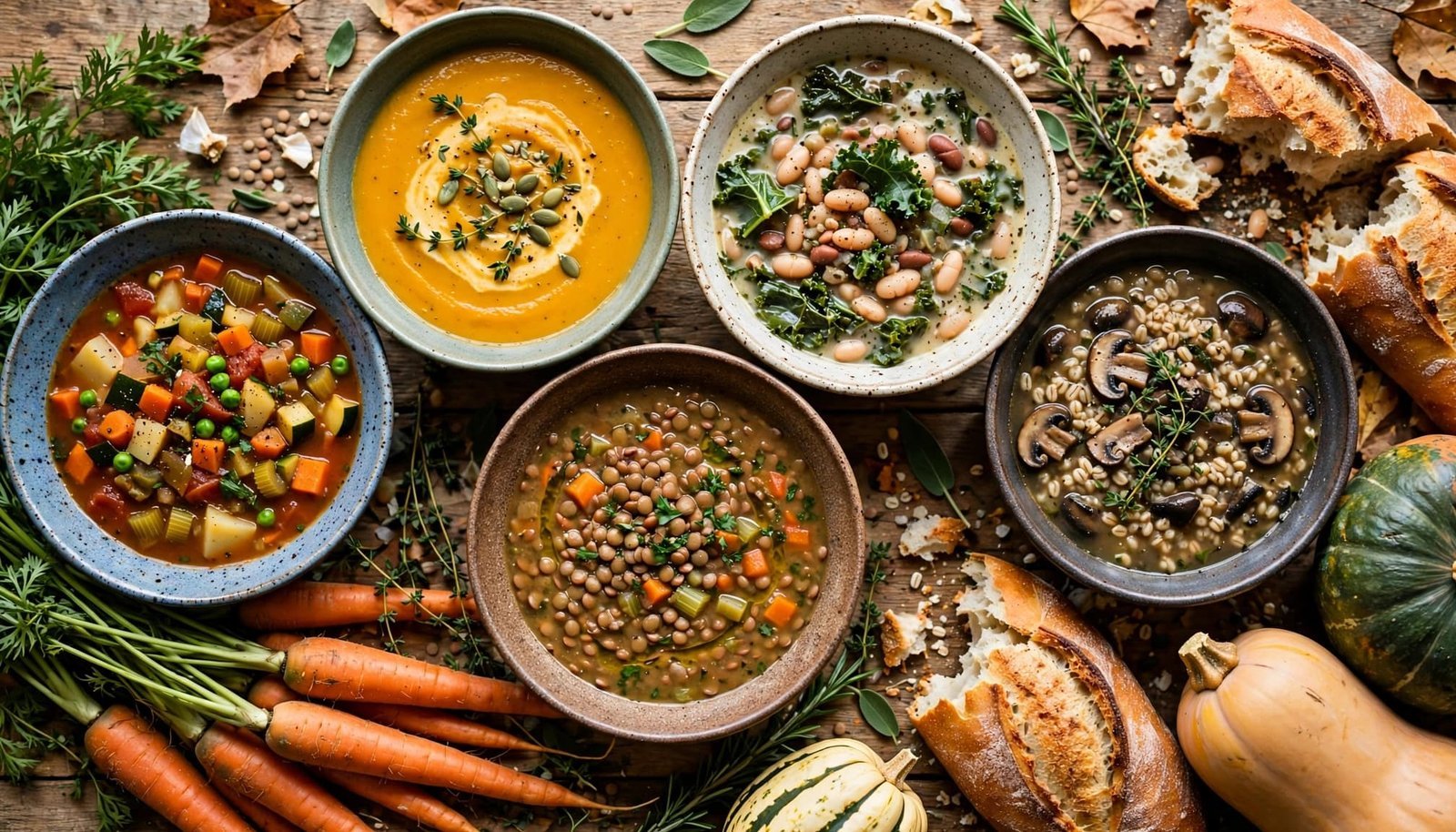
Cool fall days call for cozy bowls of soup, and they make eating more vegetables feel easy and satisfying. This collection brings you 38 simple vegetarian fall soup recipes filled with beans, lentils, grains, mushrooms, tomatoes, squash, and other seasonal produce.
Many recipes come together in one pot, can be adjusted for a vegan diet, or prepared ahead for busy weeknights. Each one includes a short ingredient list and simple step-by-step cooking guidance, so grab your favorite vegetables and start with these comforting soups.
38 Easy Vegetarian Fall Soup Recipes for Healthy Eating
Fall soups can be creamy, brothy, chunky, or packed with plant protein. The recipes below include vegan-friendly bowls, family favorites, and flexible options for using seasonal vegetables, canned beans, lentils, and pantry grains.
Beans, peas, and lentils fit USDA’s vegetable group and also provide plant protein. They are especially useful in vegetarian soups because they add substance without requiring meat. You can learn more from the USDA’s guidance on beans, peas, and lentils.
1. Classic Vegetable Soup
Sauté diced onion, celery, carrots, and garlic in olive oil until fragrant. Add potatoes, green beans, tomatoes, vegetable broth, and Italian herbs. Simmer until the vegetables are tender, then season with salt, pepper, and fresh parsley. Frozen green beans work well when fresh ones aren’t available.
2. Creamy Butternut Squash Soup
Soften onion and garlic, then add roasted or sautéed butternut squash and vegetable broth. Simmer until hot and blend until smooth. Finish with a small amount of coconut milk or plain Greek yogurt, plus nutmeg and toasted pumpkin seeds. Use unsweetened plant milk for a dairy-free version.
3. Hearty Lentil Vegetable Soup
Cook onion, celery, carrots, and garlic until soft. Stir in brown or green lentils, diced tomatoes, vegetable broth, oregano, and basil. Simmer until the lentils are tender, adding water if the soup becomes too thick. Finish with lemon juice to brighten the earthy flavor.
Read also: Homemade Tortellini Ground Beef Soup Recipe
4. Tomato Basil White Bean Soup
Sauté onion and garlic, then add canned tomatoes, cannellini beans, and vegetable broth. Simmer until the flavors blend, then stir in spinach and fresh basil just before serving. Great Northern beans make an easy substitute for cannellini beans.
5. Mushroom Barley Soup
Brown sliced mushrooms with onion, celery, carrots, and garlic. Add pearl barley, vegetable broth, thyme, and the remaining vegetables. Simmer until the barley is tender, then add fresh parsley and adjust the salt and pepper. Cremini mushrooms provide a deeper flavor than standard white mushrooms.
6. Creamy Potato and Leek Soup
Wash sliced leeks well, then sauté them with garlic until soft. Add potatoes and vegetable broth, and simmer until the potatoes break apart easily. Blend all or part of the soup, then stir in milk, cream, or unsweetened plant milk. Finish with pepper and chives.
7. Three-Bean Chili Soup
Sauté onion and bell pepper, then add black beans, kidney beans, pinto beans, tomatoes, corn, vegetable broth, chili powder, and cumin. Simmer until thick and flavorful. Top each bowl with avocado, cilantro, or plain yogurt. Use dairy-free yogurt to keep it vegan.
8. Carrot Ginger Soup
Cook onion, garlic, and fresh ginger until fragrant. Add carrots and vegetable broth, then simmer until the carrots are tender. Blend until smooth and season with lemon juice and black pepper. A splash of coconut milk adds creaminess without heavy cream.
9. Tuscan White Bean and Kale Soup
Sauté onion, celery, carrots, and garlic. Add tomatoes, cannellini beans, vegetable broth, and Italian herbs, then simmer briefly. Stir in chopped kale and cook until tender. If kale tastes too strong, substitute baby spinach and add it during the final minutes.
10. Creamy Broccoli Cheddar Soup
Soften onion and carrots, then add vegetable broth and broccoli. Simmer until tender, blending part of the soup for body. Return it to the pot and stir in milk and sharp cheddar off the heat. A small potato can replace flour as a natural thickener.
11. Sweet Potato Black Bean Soup
Sauté onion and garlic, then add diced sweet potatoes, black beans, tomatoes, vegetable broth, cumin, and smoked paprika. Simmer until the potatoes are tender. Mash a few beans and potato pieces directly in the pot to thicken the soup without blending it.
12. Roasted Pumpkin Soup
Cook onion and garlic, then stir in pumpkin purée, vegetable broth, and sage. Simmer gently and blend until smooth. Finish with milk or coconut milk, black pepper, and toasted pepitas. Roasted pumpkin works well when you have leftover squash from another meal.
13. Vegetable Minestrone
Sauté onion and garlic, then add tomatoes, carrots, celery, zucchini, white beans, and vegetable broth. Simmer until the vegetables are nearly tender. Add small pasta and cook until done, then top with Parmesan if desired. Use a small gluten-free pasta when needed.
14. Creamy Cauliflower Soup
Cook onion and garlic until soft. Add cauliflower, potatoes or white beans, and vegetable broth, then simmer until everything is tender. Blend until creamy and season with lemon juice, pepper, and parsley. White beans add extra body and make the soup more filling.
15. Split Pea Soup with Vegetables
Rinse green split peas before cooking. Sauté onion, carrots, celery, and garlic, then add potatoes, split peas, vegetable broth, bay leaf, and thyme. Simmer until thick and tender, stirring occasionally. Remove the bay leaf before serving and adjust the consistency with water.
Read also: 25 Fall Slow Cooker Recipes for Easy Comfort Food
16. Autumn Corn and Potato Chowder
Sauté onion and bell pepper, then add potatoes, corn, vegetable broth, and smoked paprika. Simmer until the potatoes are tender. Stir in milk and lightly mash some potatoes for a thicker texture. Frozen corn works just as well as fresh corn.
17. Cabbage and White Bean Soup
Cook onion, carrots, celery, and garlic until fragrant. Add green cabbage, tomatoes, white beans, and vegetable broth. Simmer until the cabbage softens, then finish with vinegar or lemon juice. That small amount of acidity keeps the soup from tasting flat.
18. Moroccan Chickpea Soup
Toast cumin, coriander, and cinnamon with onion and garlic. Add carrots, celery, chickpeas, tomatoes, and vegetable broth, then simmer until tender. Stir in spinach or kale and finish with lemon juice. Add a pinch of cayenne if you prefer more heat.
19. Creamy Mushroom Soup
Brown mushrooms well before adding onion, garlic, thyme, and vegetable broth. Simmer briefly, then blend part of the soup for a thick, rustic texture. Stir in milk, cream, or blended white beans before serving. Reserve a few browned mushrooms for the top.
20. Roasted Red Pepper and Tomato Soup
Sauté onion and garlic, then add roasted red peppers, tomatoes, vegetable broth, and basil. Simmer until the flavors combine, then blend until smooth. Add a splash of vinegar for balance. Jarred roasted peppers make this recipe especially quick on busy nights.
21. Green Lentil and Sweet Potato Soup
Cook onion and garlic, then add green lentils, sweet potatoes, tomatoes, vegetable broth, cumin, and paprika. Simmer until the lentils and potatoes are tender. Finish with chopped cilantro or parsley. Add extra broth the next day because lentils continue absorbing liquid.
22. Creamy Spinach and Potato Soup
Sauté onion and garlic, then simmer potatoes in vegetable broth until tender. Add fresh spinach during the final minutes, allowing it to wilt. Blend until smooth and adjust with milk, pepper, and lemon juice. White beans can replace some of the potatoes.
23. Italian Chickpea and Pasta Soup
Cook onion, carrots, celery, and garlic until softened. Add tomatoes, chickpeas, vegetable broth, and rosemary, then simmer. Stir in small pasta and cook until tender, adding more broth if needed. Serve with grated Parmesan or a drizzle of olive oil.
24. Apple and Butternut Squash Soup
Sauté onion, then add butternut squash, a tart apple, vegetable broth, ginger, and cinnamon or sage. Simmer until soft and blend until creamy. Balance the sweetness with lemon juice. Choose a firm apple, such as Granny Smith, for a sharper flavor.
25. Mexican-Inspired Black Bean Soup
Sauté onion, bell pepper, and garlic, then add black beans, tomatoes, corn, vegetable broth, cumin, and chili powder. Simmer until thick, blend a small portion, and finish with lime juice and cilantro. Add diced jalapeño with the aromatics for extra heat.
26. Creamy Corn and Potato Soup
Soften onion and garlic, then add potatoes, corn, and vegetable broth. Simmer until the potatoes are tender. Blend part of the soup and stir in milk or blended cashews. A few whole corn kernels stirred in at the end add texture.
27. Tuscan Ribollita Soup
Cook onion, carrots, celery, and garlic, then add tomatoes, cannellini beans, and vegetable broth. Simmer until tender, stir in kale, and add day-old whole-grain bread. The bread thickens the soup as it sits. Use sturdy sourdough if whole-grain bread isn’t available.
28. Curried Pumpkin and Red Lentil Soup
Sauté onion, garlic, ginger, and curry powder. Add pumpkin purée, red lentils, and vegetable broth, then simmer until the lentils break down. Stir in coconut milk and lime juice. The result should be thick, smooth, and gently spiced.
29. Vegetable Tortellini Soup
Sauté onion and garlic, then add tomatoes, zucchini, carrots, and vegetable broth. Simmer until the vegetables are nearly tender. Add cheese or vegan tortellini with spinach and cook according to the package directions. Serve immediately so the pasta stays pleasantly firm.
30. Creamy Celery Root Soup
Cook onion and garlic, then add diced celery root, potato, vegetable broth, and thyme. Simmer until soft and blend until smooth. Finish with toasted seeds or fresh herbs. Celery root has a savory flavor that pairs well with a little lemon juice.
31. Barley and Vegetable Bean Soup
Sauté onion, garlic, and mushrooms, then add pearl barley, navy beans, carrots, celery, tomatoes, and vegetable broth. Simmer until the barley is tender, adding more broth as needed. Finish with parsley. This soup becomes thicker after refrigeration, so loosen leftovers before reheating.
32. French Lentil and Carrot Soup
Sauté onion, celery, carrots, and garlic. Add green or French lentils, vegetable broth, thyme, and a bay leaf, then simmer until tender. Remove the bay leaf and finish with Dijon mustard or lemon juice. French lentils hold their shape for a pleasantly hearty texture.
33. Creamy Pea and Potato Soup
Cook onion and garlic, then simmer potatoes in vegetable broth. Add frozen peas during the final minutes so they retain their color. Blend until smooth and garnish with mint, parsley, or yogurt. Frozen peas make this soup possible in any season.
34. Tomato Orzo Soup with White Beans
Sauté onion and garlic, then add crushed tomatoes, vegetable broth, white beans, and Italian seasoning. Simmer, stir in orzo, and cook until tender. Add spinach at the end. Keep extra broth nearby because orzo absorbs liquid quickly.
35. Roasted Cauliflower and Chickpea Soup
Roast cauliflower and chickpeas until browned. Meanwhile, sauté onion and garlic, then simmer them with vegetable broth and cumin. Add the roasted ingredients, blend some or all of the soup, and finish with lemon juice. Reserve a few chickpeas as a crunchy topping.
36. Gingered Carrot and Lentil Soup
Cook onion, garlic, and fresh ginger, then add carrots, red lentils, vegetable broth, and turmeric. Simmer until soft, then blend or leave the soup chunky. Add lemon juice before serving. A spoonful of plain yogurt provides a cool contrast.
37. Fall Vegetable and Gnocchi Soup
Sauté onion and garlic, then add squash, carrots, white beans, and vegetable broth. Simmer until the vegetables are tender. Add gnocchi and kale near the end, cooking until the gnocchi is soft. Shelf-stable or refrigerated gnocchi both work well.
38. Easy Harvest Soup with Beans and Barley
Sauté onion, celery, carrots, mushrooms, and garlic. Add pearl barley, navy beans, tomatoes, vegetable broth, and thyme, then simmer until the barley is tender. Finish with parsley and black pepper. Add more broth before serving if the barley has thickened the soup.
How to Make Vegetarian Fall Soup Healthy, Filling, and Flavorful
A satisfying vegetarian fall soup needs more than a pot full of vegetables. The best bowls combine vegetables, plant protein, whole grains, flavorful broth, and a bright finishing ingredient. This simple formula gives the soup color, texture, staying power, and balanced flavor without depending on heavy cream or excess salt.
Start with two or three vegetables, such as carrots, onions, celery, squash, mushrooms, potatoes, cabbage, or leafy greens. Add beans, chickpeas, split peas, or lentils for plant protein and fiber. A whole grain, such as barley, brown rice, quinoa, or whole-grain pasta, makes the soup more filling and helps it carry you through the evening.
Use low-sodium vegetable broth when possible, especially if your recipe also includes canned tomatoes, beans, or prepared pasta. Rinse canned beans under cool water before adding them to the pot. The FDA recommends rinsing sodium-containing canned foods, and this quick step removes some of the salt.
Flavor develops in layers. Brown mushrooms until their edges turn golden, roast squash or cauliflower before adding it, and cook onions and garlic until soft. Herbs such as thyme, rosemary, sage, parsley, and cilantro add freshness, while spices such as cumin, smoked paprika, curry powder, and chili flakes bring warmth. Finish the soup with lemon juice, lime juice, vinegar, or a spoonful of Dijon mustard to sharpen the flavors.
The goal is a soup that tastes full and satisfying before you add toppings. When the base has enough flavor, you can use less cream, cheese, and salt while still serving a comforting meal.
Easy Swaps for Vegan, Gluten-Free, and Dairy-Free Soups
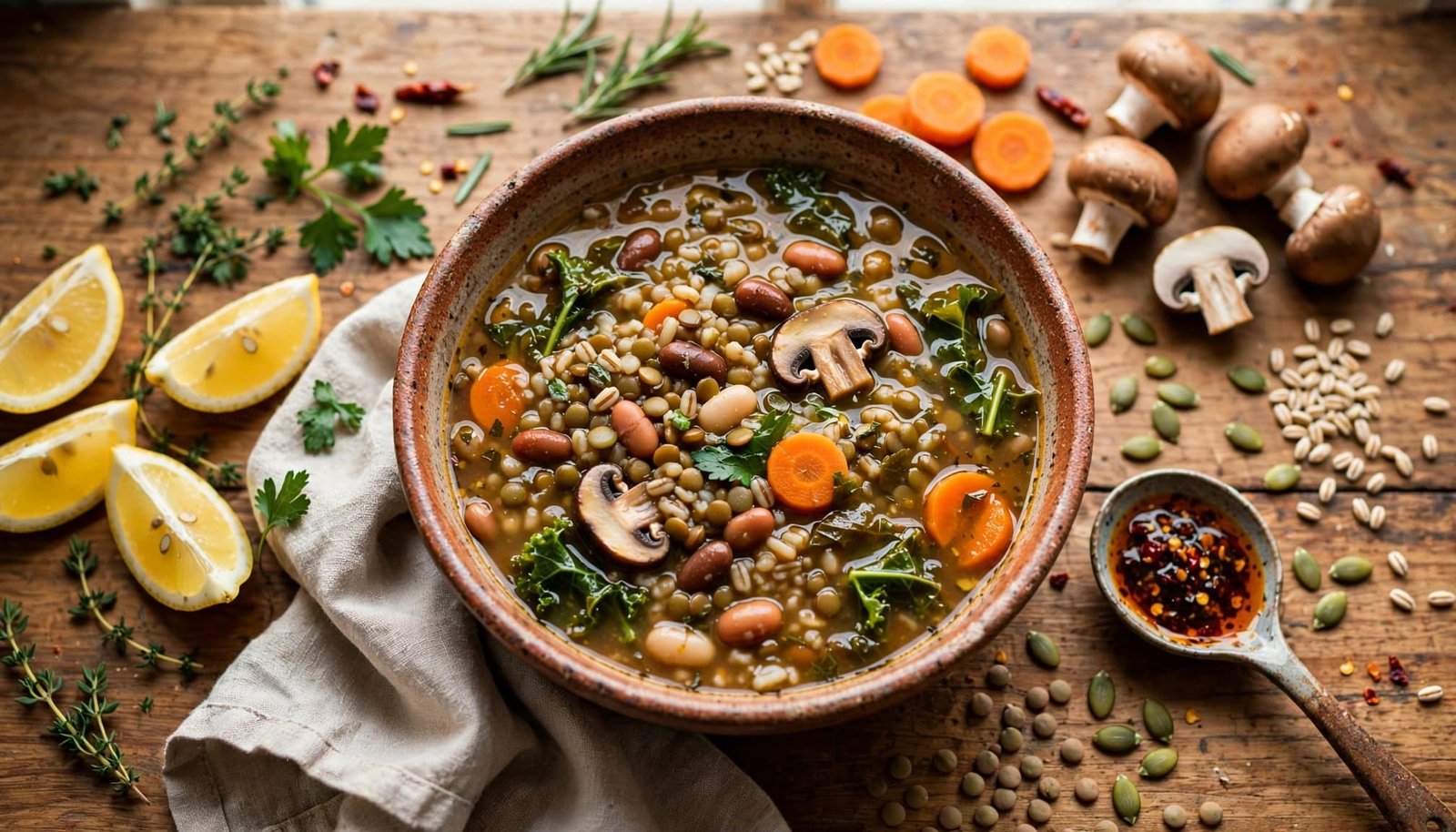
Many vegetarian fall soups already need only one or two changes to fit a vegan, dairy-free, or gluten-free diet. Make substitutions based on the soup’s texture and flavor instead of swapping ingredients at random.
For a dairy-free or vegan soup, replace milk with unsweetened plant milk. Unsweetened oat, soy, almond, or cashew milk works well in potato soup, corn chowder, broccoli soup, and creamy vegetable blends. Choose an unflavored product so the soup keeps its savory taste. Soy milk adds more protein, while oat milk gives a slightly thicker texture.
Coconut milk brings richness to pumpkin, squash, carrot, curry, and sweet potato soups. Use full-fat coconut milk when you want a silky texture, or choose light coconut milk for a thinner result. Since coconut milk has a distinct flavor, pair it with ginger, curry powder, lime juice, cumin, or chili rather than adding it to every creamy soup.
Blended white beans are another useful replacement for cream. Puree cannellini beans, Great Northern beans, or navy beans with a little broth, then stir the mixture into the pot. The beans thicken the soup and add plant protein and fiber without making the soup taste strongly of beans. This works especially well in mushroom, cauliflower, potato, and spinach soups.
Cashew cream creates a smooth finish for recipes that need a richer texture. Soak raw cashews until soft, blend them with water, and stir the cream into the soup near the end of cooking. If you have a high-speed blender, you can blend soaked cashews until completely smooth. Otherwise, strain the mixture before adding it.
A few other dairy swaps can finish a bowl without changing the recipe’s structure:
- Use plain, unsweetened vegan yogurt in place of sour cream or Greek yogurt.
- Replace butter with olive oil or plant-based butter when sauteing vegetables.
- Finish the soup with nutritional yeast when you want a savory, cheese-like flavor.
- Add pureed potatoes, cauliflower, or white beans when you need body without cream.
Gluten-free substitutions require more label checking because gluten can appear in grains, pasta, broth, canned ingredients, spice blends, and prepared foods. Replace barley with brown rice, wild rice, quinoa, or certified gluten-free oats. Use gluten-free pasta instead of regular pasta, and select certified gluten-free oats when adding them as a thickener.
Regular gnocchi often contains wheat flour, so choose gluten-free gnocchi if the package confirms that it fits your needs. Rice-based gnocchi can work well in vegetable soups, although it may soften faster than wheat gnocchi. Add it close to serving time and follow the package directions.
Broth is one of the easiest ingredients to overlook. Some vegetable broths contain wheat-based flavorings, dairy ingredients, or shared-facility warnings. Check the label every time if you need a strict gluten-free or dairy-free soup. The same advice applies to canned cream soups, bouillon, flavored beans, tortellini, and spice blends.
A soup can be vegetarian and still contain hidden dairy or gluten, so check every packaged ingredient instead of assuming the recipe is safe.
For a reliable gluten-free base, combine vegetables, beans or lentils, rice or quinoa, and a clearly labeled gluten-free broth. Add herbs, spices, lemon juice, or vinegar yourself so you control both the flavor and the ingredient list.
Best Toppings and Side Dishes for a Complete Meal
Toppings give a simple soup contrast and character, but they should support the main ingredients. A creamy squash soup may need something crunchy, while a brothy bean soup may benefit from a cool or creamy finish. Start with one or two toppings instead of covering the bowl with every option in the kitchen.
Fresh herbs are an easy first choice. Add parsley to bean soup, cilantro to black bean soup, dill to potato soup, or sage to squash and pumpkin soup. Lemon zest adds a bright, fragrant note without adding much liquid, while a squeeze of lemon juice balances earthy lentils, mushrooms, and greens.
For crunch, sprinkle on pumpkin seeds, sunflower seeds, chopped walnuts, or toasted whole-grain breadcrumbs. Pumpkin seeds pair naturally with fall squash, and toasted breadcrumbs make creamy soups feel more substantial. If you use store-bought breadcrumbs, check the label for gluten and choose whole-grain or gluten-free crumbs when needed.
Avocado works well on black bean, corn, tomato, and chili-style soups. Its creamy texture can replace sour cream or cheese, especially in vegan bowls. Shredded cheddar, crumbled feta, grated Parmesan, plain yogurt, and sour cream are also options for vegetarian soups, but use modest portions so they don’t hide the vegetables.
A drizzle can change the whole bowl. Try chili oil on lentil or tomato soup, extra-virgin olive oil on white bean soup, or herb oil on pureed vegetables. Keep the amount small because oils add richness quickly. A spoonful across the surface often provides enough flavor in every bite.
Choose a side dish based on the soup’s texture and ingredients. Brothy soups pair well with whole-grain bread, toasted sourdough, or a simple green salad. Bread helps soak up the broth and adds carbohydrates that round out a lighter vegetable soup. A salad with lemon vinaigrette also adds crispness beside a warm bowl.
Creamy soups pair better with roasted vegetables or a bean-based side. Serve broccoli soup with roasted carrots, cauliflower soup with roasted chickpeas, or potato soup with a small white bean salad. These pairings add texture and plant protein without making the meal feel heavy.
Use this quick guide when building a complete dinner:
- Pair a light vegetable broth with whole-grain bread and a bean salad.
- Serve lentil or bean soup with a simple salad dressed in lemon or vinegar.
- Add roasted chickpeas or vegetables beside creamy squash, potato, or cauliflower soup.
- Top chili-style soups with avocado, cilantro, or plain yogurt and serve them with a small portion of whole-grain cornbread.
- Serve pasta-based soups with a crisp salad instead of another starchy side.
A balanced topping should add contrast rather than compete with the vegetables. If the soup already contains barley, beans, and potatoes, choose herbs, lemon zest, or seeds instead of adding a large amount of bread and cheese. When the soup is mostly broth and vegetables, a whole-grain side or bean-based topping can provide the extra substance you need.
For more general guidance on combining vegetables, beans, and whole grains in everyday meals, see these Dietary Guidelines for Americans. A few thoughtful additions can turn a simple fall soup into a complete meal while keeping the vegetables at the center of the bowl.
How to Store, Reheat, and Freeze Homemade Soup Safely
Homemade soup is one of the easiest fall meals to prepare ahead. A large pot can become several lunches or dinners, but safe storage matters just as much as good seasoning. Cool soup quickly, refrigerate it promptly, and reheat only the portion you plan to eat.
Soup shouldn’t sit at room temperature for more than two hours. If the room or outdoor temperature is above 90°F, refrigerate it within one hour. Keep your refrigerator at 41°F or below, and use refrigerated leftovers within 3 to 4 days. For more food-safety details, follow the USDA’s guidance on safe leftover storage and reheating.
Simple Meal Prep Tips for Fall Soup
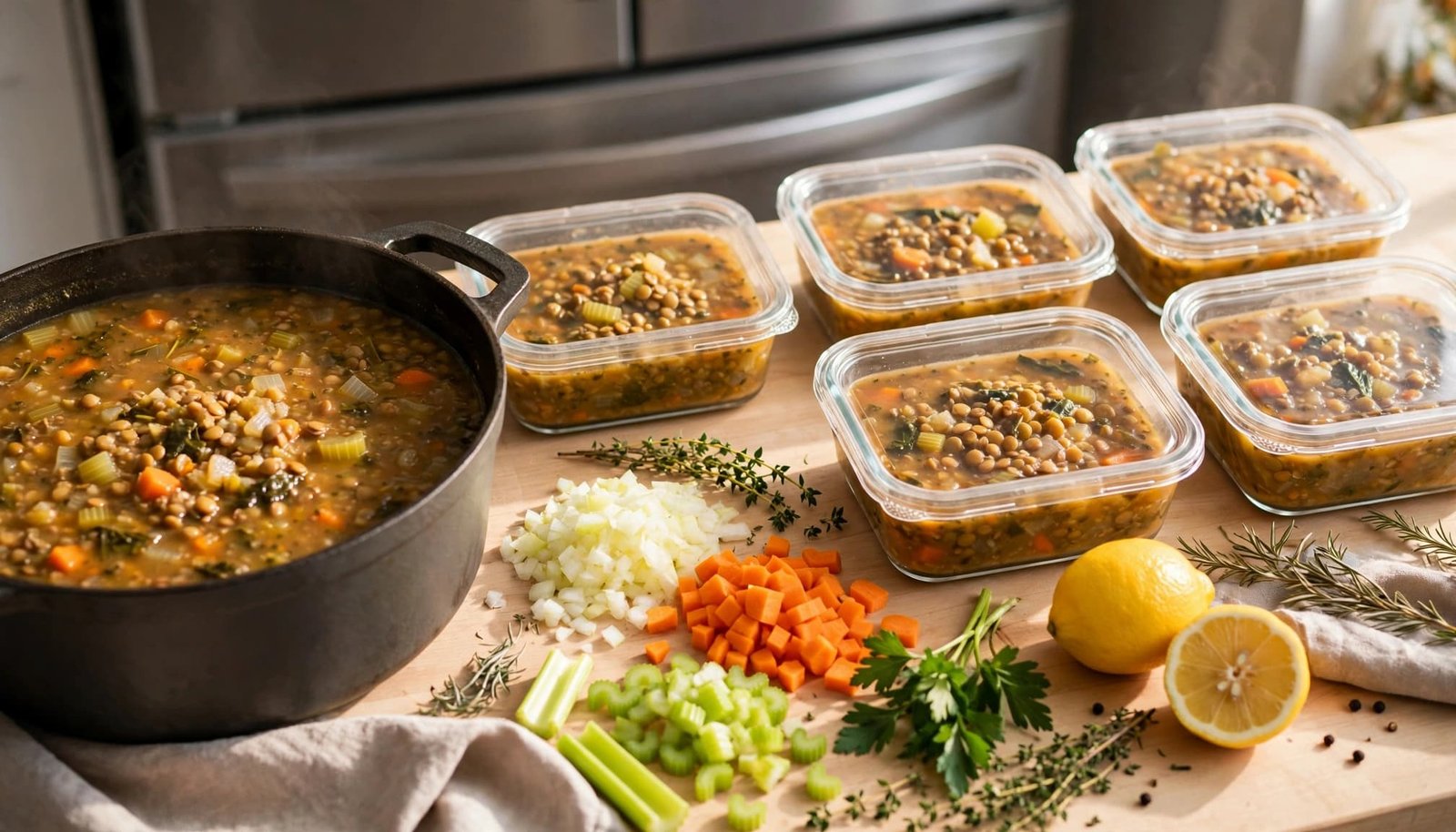
Meal prep starts before the soup reaches the stove. Chop onions, carrots, celery, garlic, and other aromatics a day or two ahead, then store them in airtight containers in the refrigerator. Grouping the vegetables together saves time when you’re ready to cook, while keeping herbs, greens, and garnishes separate preserves their freshness.
When you make soup, consider cooking a double batch. The extra portion takes little additional effort, and you can serve one batch for dinner while saving the rest for later in the week. Stir the soup well before portioning it so the vegetables, beans, grains, and broth distribute evenly.
A large, hot pot of soup cools too slowly in the refrigerator. Instead, divide it into shallow containers, leaving a little space at the top for expansion. Smaller portions release heat faster and make the soup easier to store safely. Set the containers uncovered or loosely covered in the refrigerator until the soup cools, then seal them tightly. Once cold, label each container with the soup name and date.
Single-serving portions work best for lunches and quick dinners. They also prevent you from repeatedly heating and cooling the entire batch. Choose freezer-safe containers or sturdy freezer bags, and leave about an inch of headspace because soup expands as it freezes. Lay filled freezer bags flat on a tray until solid, then stack them to save space.
Most bean, lentil, tomato, and vegetable soups freeze very well. Their ingredients usually maintain a pleasant texture after thawing, especially when the soup contains sturdy vegetables and legumes. Freeze soup without fresh herbs or crunchy toppings, then add those after reheating.
Cream-based soups need more care. Milk, cream, cheese, and some blended sauces can separate or become grainy after freezing. You can still freeze them, but the texture may change. For better results, freeze the vegetable and broth base before adding cream, milk, cheese, or yogurt. Stir those ingredients into the thawed soup during reheating.
Pasta, rice, and delicate greens also benefit from separate storage when you plan to keep soup for several days. These ingredients continue absorbing broth in the refrigerator, so they can become swollen, soft, or mushy. Cook pasta or rice separately, refrigerate it in its own container, and add it to each bowl after warming the soup. Stir spinach, kale, or other tender greens into the hot soup just before serving.
Pasta and rice are easiest to control when they stay separate from the soup until reheating. You can add only what you need and keep the broth from disappearing overnight.
To reheat refrigerated soup, warm one serving in a saucepan over medium heat or use a microwave-safe bowl. Stir thick soups several times because dense lentil, bean, potato, and squash soups can develop cold spots. Continue heating until the center reaches 165°F, checking with a food thermometer when possible. Let the soup come to a gentle simmer, but avoid prolonged boiling, especially with cream-based recipes.
Frozen soup can thaw overnight in the refrigerator, or you can reheat it directly from frozen in a saucepan. Use low to medium heat, add a splash of water or broth, and stir as the frozen block loosens. Microwave reheating also works, but pause to stir the soup every minute or two so the edges don’t become scorching hot while the center remains cold.
Thick leftovers often need extra liquid. Add a few tablespoons of vegetable broth or water at a time, then stir until the soup reaches the texture you want. Lentils, barley, rice, beans, and pasta can absorb a surprising amount of broth while they sit, so don’t add all the liquid at once.
Reheated soup may also taste flatter than it did on the first day. Fresh parsley, cilantro, dill, basil, or chives can restore a bright flavor. A squeeze of lemon juice, lime juice, or a small splash of vinegar can sharpen bean, lentil, tomato, and vegetable soups without requiring extra salt. Add delicate herbs and citrus after heating so their flavor stays fresh.
Use this simple storage routine for the best results:
- Divide hot soup into shallow containers within two hours of cooking or serving.
- Refrigerate or freeze the portions promptly, then seal and label them with the date.
- Eat refrigerated soup within 3 to 4 days, or freeze it for longer storage and best quality.
- Reheat only the portion you need until it reaches 165°F throughout.
- Adjust thick soup with broth or water, then finish it with fresh herbs or lemon juice.
With these steps, a pot of fall soup can move safely from weeknight dinner to ready-made lunch without losing its flavor or texture.
Frequently Asked Questions
A good vegetarian fall soup should be easy to adapt, satisfying enough for a full meal, and practical to store for later. The answers below cover the questions that often come up after choosing a recipe, especially when you want to adjust ingredients, improve texture, or prepare a large batch for the week.
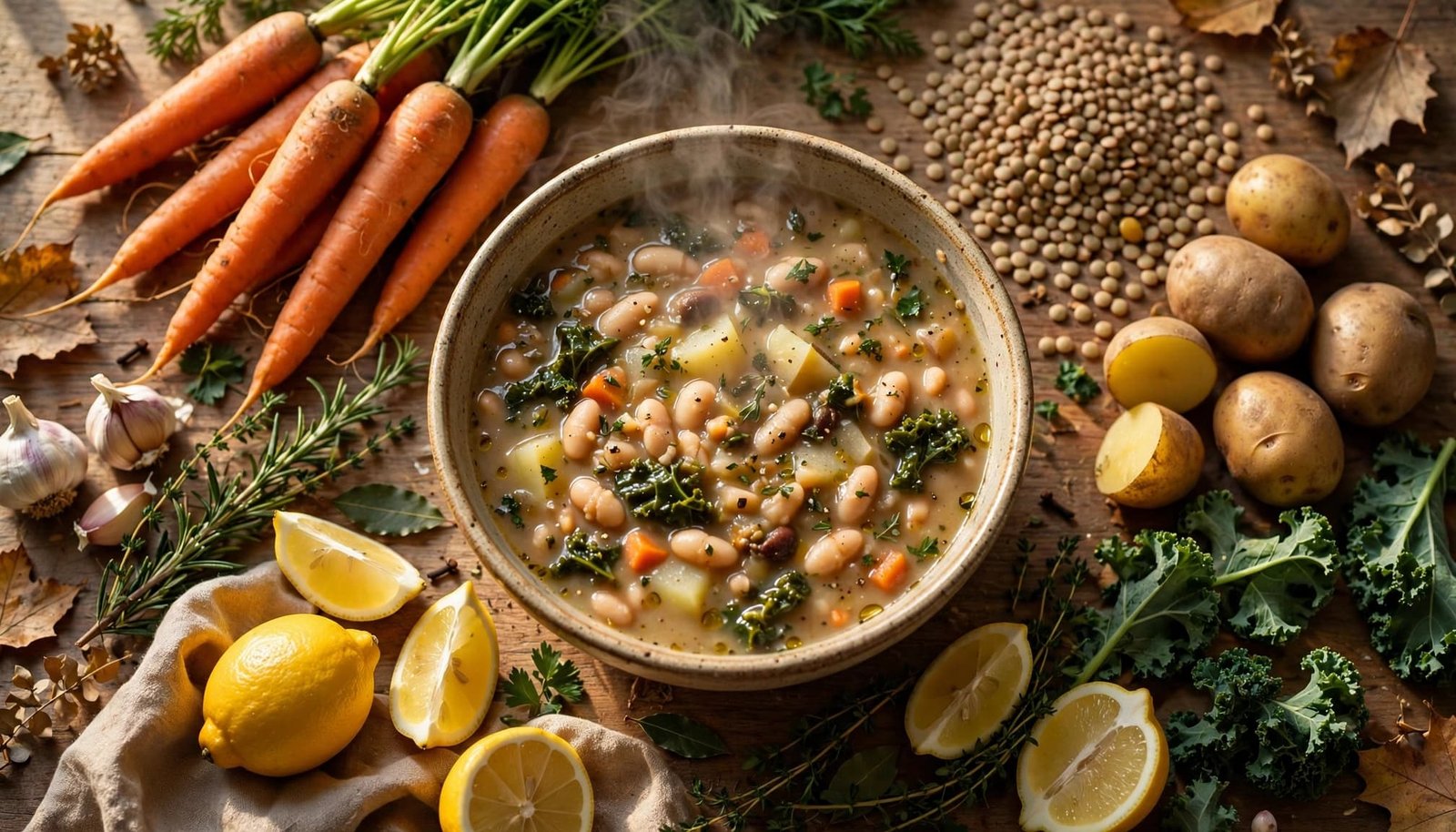
What makes a vegetarian soup filling?
Beans, lentils, chickpeas, peas, barley, potatoes, and whole-grain pasta give soup more staying power than vegetables and broth alone. These ingredients add plant protein, fiber, complex carbohydrates, and lasting energy, which can help you feel satisfied between meals.
For the best balance, combine one protein-rich ingredient with several vegetables and, when appropriate, a whole grain or starchy vegetable. For example, lentils pair well with carrots, tomatoes, kale, and potatoes, while chickpeas work with squash, spinach, and whole-grain pasta. White beans can add substance to a tomato soup without overpowering its flavor.
A broth filled only with vegetables may taste fresh but leave you hungry soon after eating. Adding beans, lentils, or barley gives the bowl a heartier texture and makes it more suitable as a main dish. You can also serve a lighter soup with whole-grain bread or a simple bean salad if the recipe does not contain a substantial protein source.
Can I make these fall soups vegan?
Most vegetarian fall soups can become vegan with a few simple substitutions. Use vegetable broth instead of chicken broth, and replace dairy with unsweetened plant milk, coconut milk, blended white beans, cashew cream, or plain dairy-free yogurt. The best option depends on the recipe, since coconut milk works especially well with pumpkin and curry, while blended beans suit mushroom, potato, cauliflower, and spinach soups.
Check packaged ingredients before adding them to the pot. Regular tortellini may contain cheese, some gnocchi includes eggs or dairy, and prepared broth can contain unexpected animal-based ingredients. Pasta, bouillon, pesto, Parmesan, sour cream, yogurt, and creamy toppings also need label checks.
For a vegan finish, try fresh herbs, toasted pumpkin seeds, avocado, nutritional yeast, chili oil, or a squeeze of lemon. These toppings add flavor and texture without relying on cheese or sour cream. If you are cooking for someone with a strict vegan diet, check every packaged ingredient rather than relying on a product’s flavor description.
How can I thicken soup without heavy cream?
You can thicken soup without heavy cream by blending part of the cooked ingredients and stirring the puree back into the pot. This method keeps some vegetables whole while giving the broth a fuller texture. It works well for potato, cauliflower, squash, tomato, lentil, and bean soups.
Mashing potatoes or beans directly in the pot is another easy option. Use the back of a spoon or a potato masher to break down a small portion, then stir the mixture through the soup. For an especially smooth result, blend white beans with a little broth before adding them.
Pureed vegetables also add body while keeping the soup vegetable-forward. Carrots, pumpkin, sweet potatoes, cauliflower, and cooked squash can all create a creamy texture without dairy. These methods often increase the soup’s fiber content as well, especially when you use beans or lentils as the thickener.
Add liquid slowly if the soup becomes too thick. Barley, pasta, rice, lentils, and potatoes continue absorbing broth as the soup rests, so a recipe that looks perfect at dinner may need extra vegetable broth the next day.
Why does my soup taste bland?
Bland soup usually needs better seasoning technique rather than one large addition of salt. Season the vegetables while they cook, add herbs and spices with the broth, and taste again near the end. Layering the flavor gives each ingredient time to release its character.
Browning also makes a major difference. Let onions, mushrooms, carrots, celery, and garlic soften in oil before adding the liquid, and allow mushrooms to develop golden edges instead of stirring them constantly. This creates a deeper base for soups that contain beans, lentils, barley, or potatoes.
Use enough broth to carry the flavors through the entire pot. Water can work, but it may produce a thinner-tasting soup unless you add extra herbs, spices, tomato paste, or other flavor builders. Thyme, rosemary, sage, cumin, smoked paprika, curry powder, chili flakes, and bay leaves are useful choices for fall soups.
Finally, add a small amount of lemon juice, vinegar, or grated cheese after cooking. Acid sharpens the other flavors and can make a soup taste more complete without adding much salt. Add only a little at a time, stir well, and taste before adding more.
Can vegetarian soup be frozen?
Broth-based bean, lentil, tomato, and vegetable soups usually freeze well in airtight containers. Cool the soup promptly, divide it into practical portions, and leave space at the top because the liquid expands as it freezes. Freezer bags can save space when laid flat, while rigid containers protect soups from spills and freezer odors.
Cream-based soups can change texture after thawing. Milk, cream, cheese, and yogurt may separate or become slightly grainy, although blending the reheated soup can sometimes improve the consistency. For the best result, freeze the broth and vegetable base first, then add dairy, plant milk, or cashew cream while reheating.
Pasta, rice, and potatoes may soften during freezing and thawing. If texture matters, prepare those ingredients separately and add them after the soup warms. The same approach works for delicate greens, fresh herbs, and crunchy toppings.
Label every container with the soup name and date. Thaw frozen soup overnight in the refrigerator when possible, or warm it gently in a saucepan with a splash of broth or water. If you plan to keep the soup longer than the refrigerator window, freezing it promptly is safer than waiting several days.
How long does homemade soup last in the refrigerator?
Properly cooled homemade soup is generally best used within 3 to 4 days when refrigerated at 41°F or below. Divide a large batch into shallow containers so it cools faster, then cover the containers tightly once the soup has chilled. The USDA also recommends refrigerating cooked leftovers within two hours, as explained in its leftover food safety guidance.
Reheat only the amount you plan to eat, and bring it to 165°F throughout. Stir thick soups several times during reheating because beans, potatoes, lentils, and grains can create cool spots. Add broth or water if the soup has thickened in the refrigerator.
Discard soup that sat at room temperature for more than two hours. You should also throw it away if it develops an unpleasant odor, unusual color, mold, bubbling that is not part of the recipe, or a slimy texture. When you are unsure how long the soup has been stored, discard it rather than tasting it to test its safety.
Conclusion
These 38 vegetarian fall soup recipes make healthy eating feel simple, affordable, and comforting. You can choose a quick tomato and bean soup, creamy squash, hearty lentil, mushroom, barley, or vegetable bowl based on the produce and pantry staples you already have.
Make one pot for dinner, then save extra portions for easy lunches or another weeknight meal. With so many flexible choices, a warm, nourishing fall soup is always within reach.
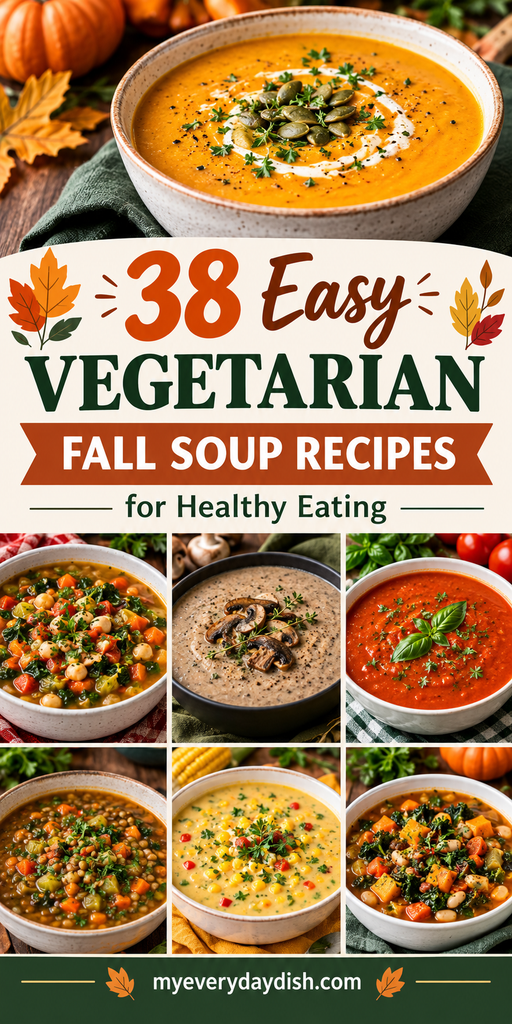
Save the pin for later

I’m the creator of My Everyday Dish, a food blog focused on easy homemade recipes, comforting family meals, simple baking, and seasonal food ideas. I love finding practical ways to make everyday cooking less stressful and more enjoyable. Here, I share recipes with simple ingredients, clear instructions, and plenty of flavor, helping you make delicious meals and treats you’ll feel confident serving at home.
Leave a Reply