
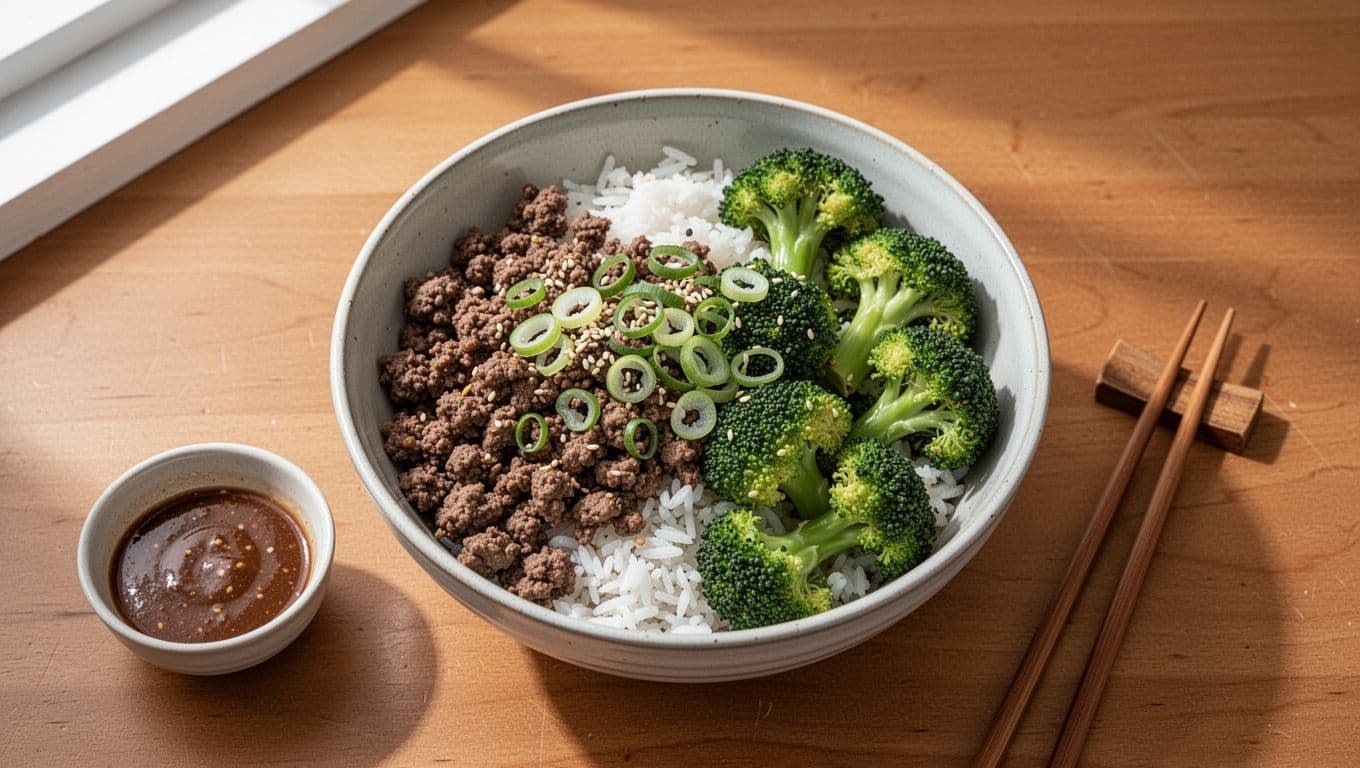
These Healthy Korean Ground Beef and Rice Bowls With Broccoli come together in about 30 minutes, yet they feel more satisfying than a last-minute meal.
Lean beef, reduced-sodium soy sauce, extra vegetables, and a small amount of sweetener keep the flavors balanced. The recipe is budget-conscious, family-friendly, and easy to portion for lunches.
Healthy Korean Ground Beef and Rice Bowls With Broccoli
Each bowl has a simple job: rice makes the meal filling, broccoli adds fresh texture, and the beef brings a savory, lightly sweet finish. Garlic, ginger, sesame oil, and rice vinegar give the sauce its familiar Korean-inspired flavor without turning it overly salty or sugary.
For four servings, start with 1 pound lean ground beef, 3 cups cooked rice, and 3 cups broccoli florets. You will also need three minced garlic cloves, 2 teaspoons grated ginger, 1/4 cup reduced-sodium soy sauce, 1 teaspoon sesame oil, 1 tablespoon rice vinegar, and 1 to 2 teaspoons brown sugar or honey.
Red pepper flakes add gentle heat, while sliced green onions and sesame seeds brighten the finished bowls. Keep gochujang on the table for anyone who wants more spice. Thin carrots, bell pepper, cucumber, or shredded cabbage also fit naturally into the meal.
Use a light hand with sweetener. The sauce should coat the meat and round out the salty soy sauce, not taste like a glaze. Once cooked, ground beef must reach 160°F when checked with a food thermometer.
Key Takeaways
- Lean ground beef and reduced-sodium soy sauce keep the bowl hearty without an overly rich sauce.
- Steam broccoli for a crisp-tender bite, or roast it when you want browned edges.
- Cook rice first, then make the beef and vegetables while it rests.
- Portion the components separately for lunches, especially if you want the broccoli to stay firmer.
- Adjust the heat with red pepper flakes or gochujang after you taste the sauce.
How to Make Korean Beef Bowls With Broccoli Step by Step
Prepare the rice, broccoli, and sauce
Start the rice first, since it usually takes the longest. White rice works well for speed, while brown rice needs more cooking time. Fluff cooked rice with a fork, then cover it to hold in warmth.
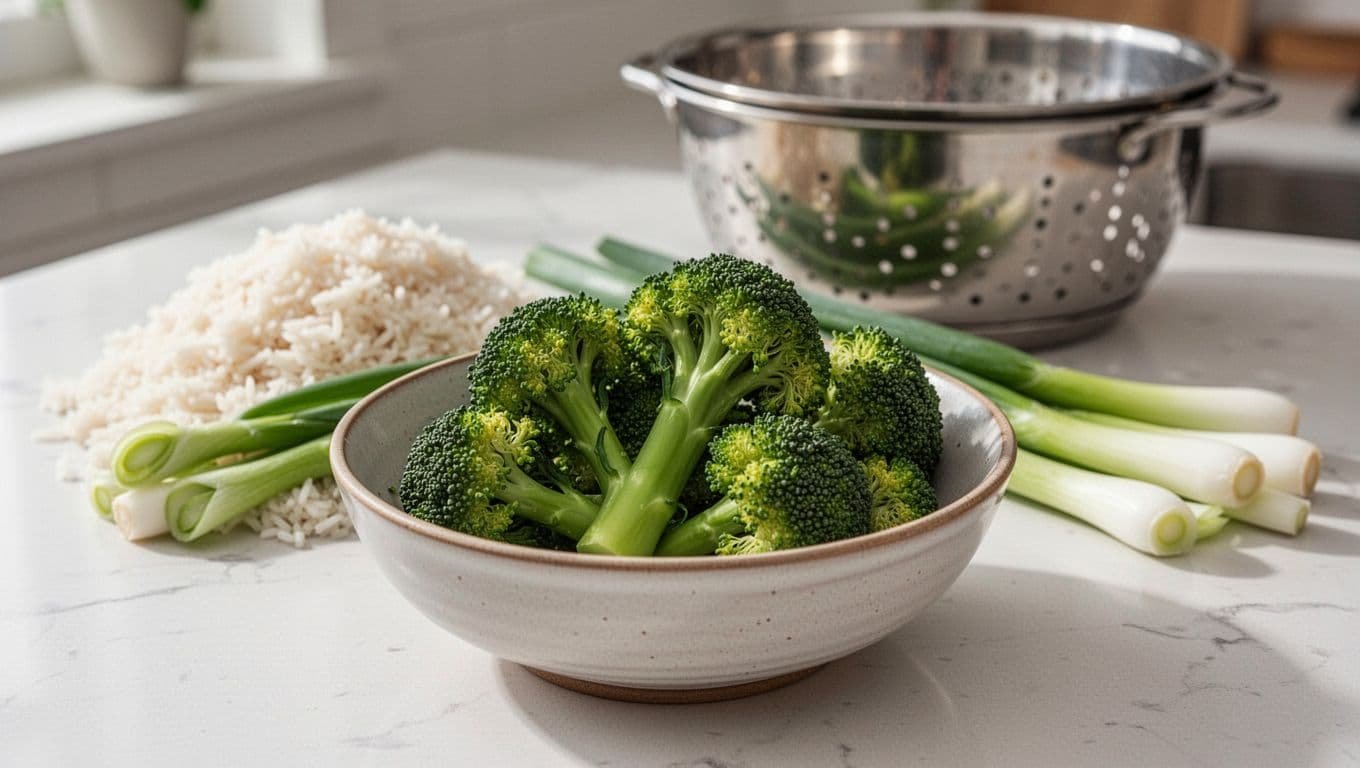
Meanwhile, cut broccoli into even, bite-sized florets. Similar-sized pieces cook at the same pace, so you will not end up with tough stems and soft crowns in the same bowl.
Whisk the soy sauce, sesame oil, rice vinegar, brown sugar or honey, garlic, ginger, and red pepper flakes in a small bowl. Taste the sauce before it meets the meat. It should be savory, aromatic, and lightly sweet, with a small acidic lift from the vinegar.
Read also: Easy Stuffed Poblano Peppers With Ground Beef
Brown and sauce the ground beef
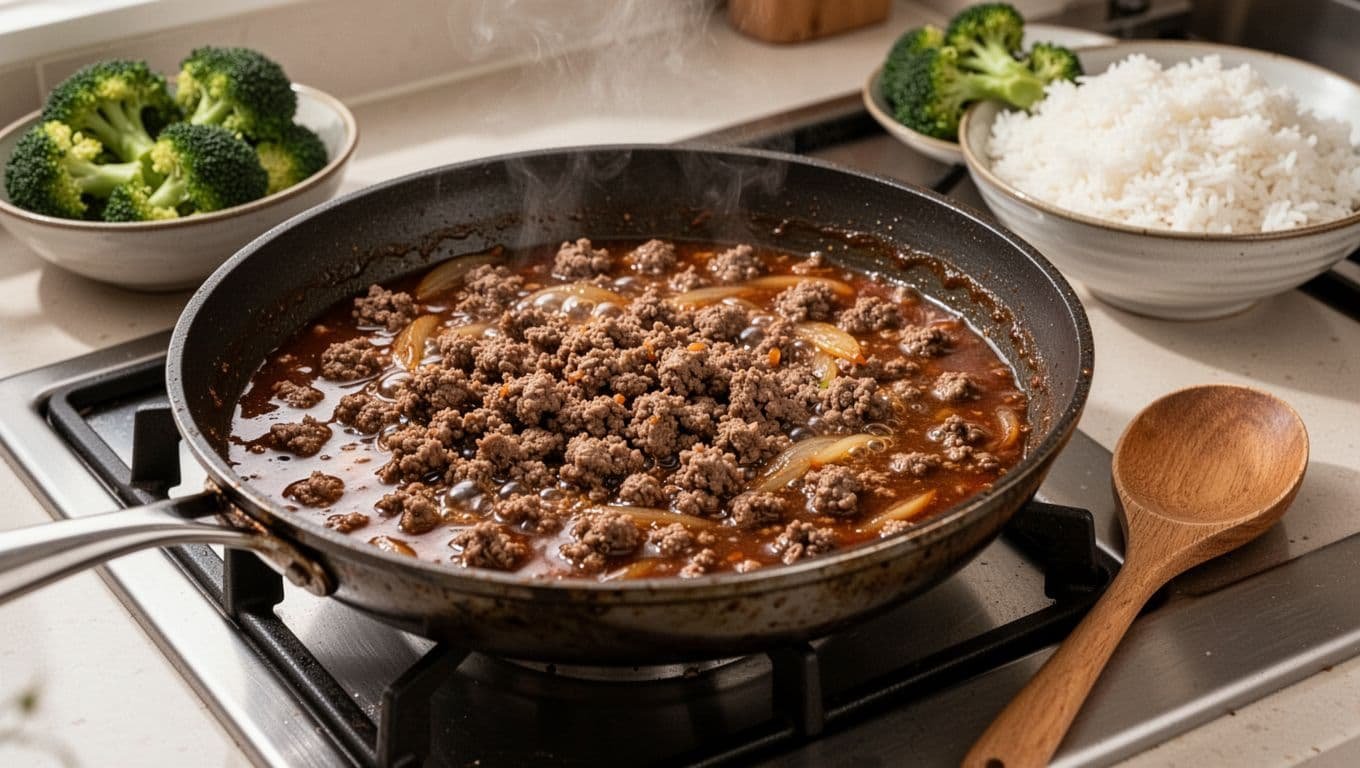
Heat a large skillet over medium-high heat. Add the beef and cook for about 6 to 8 minutes, breaking it into small crumbles with a spoon or spatula. The pieces should lose their raw appearance and develop a few browned spots.
If the skillet has excess grease, carefully drain it before adding the sauce. Then pour in the sauce and stir until every piece of beef is coated. Lower the heat to medium and simmer for 5 to 10 minutes.
The sauce is ready when it clings to the beef and leaves only a thin layer in the pan. Stir often near the end, because the sweetener can catch on the skillet if the heat is too high.
Finish the Bowls Without Overcooking the Broccoli
Steam or roast the vegetables
For steamed broccoli, bring a small amount of water to a simmer in a pot fitted with a steamer basket. Cover and steam the florets for about 4 to 5 minutes. They should turn bright green and yield to a fork while still holding their shape.
Roasting gives the vegetable a deeper, toastier flavor. Toss the florets with a little oil, arrange them in one layer on a sheet pan, and roast at 425°F until browned at the edges and tender, usually 15 to 20 minutes.
Assemble and handle leftovers safely
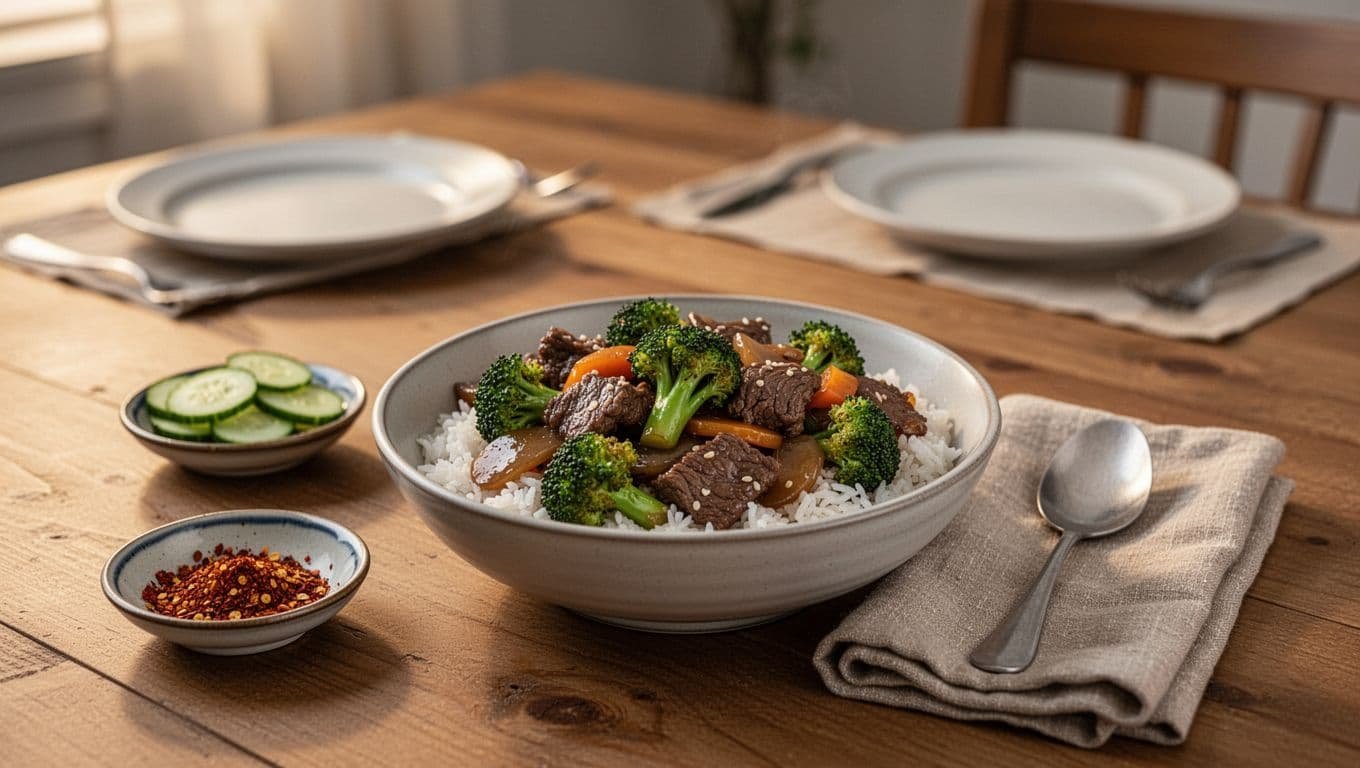
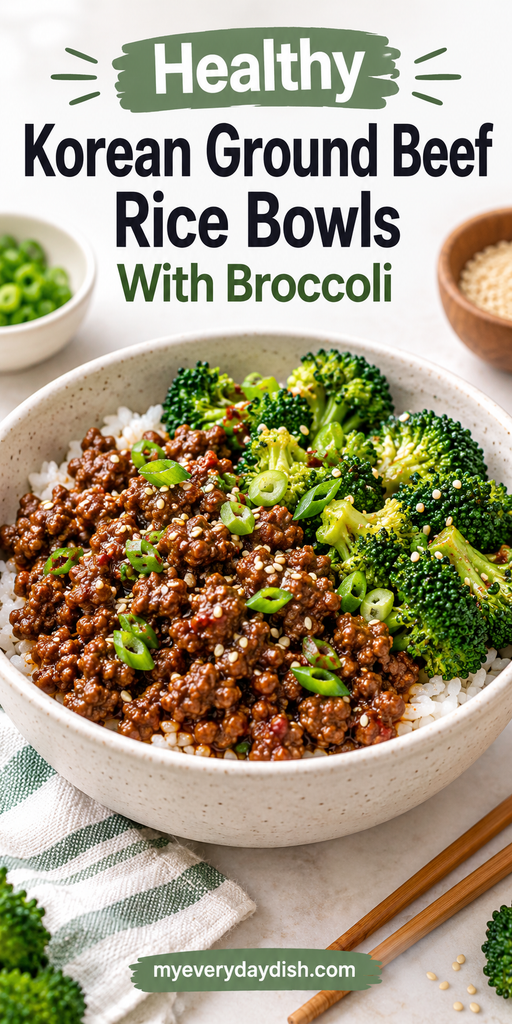
Spoon about 3/4 cup cooked rice into each bowl. Add one-fourth of the saucy beef and a generous scoop of broccoli. Finish with green onions, sesame seeds, and cucumber slices if you have them.
Check the thickest area of the beef with a thermometer instead of relying on color. The USDA’s safe temperature chart lists 160°F for ground meats.
After dinner, move leftover rice and beef into shallow containers and refrigerate them promptly. The USDA’s leftover food-safety guidance also recommends reheating leftovers to 165°F.
Read also: 12 Easy Fall Soup Recipes With Ground Beef
Browning improves flavor, but it does not replace checking the internal temperature of ground beef.
Easy Ways to Keep These Beef and Rice Bowls Healthy and Flexible
Change the base and increase the vegetables
Measured rice portions help the bowl stay balanced while leaving room for plenty of broccoli. Use white rice for its soft, neutral texture, brown rice for a chewier base, or quinoa for a nuttier option. Cauliflower rice works when you want a lighter vegetable-forward bowl, although it releases more moisture.
Add thin carrot ribbons, sliced bell pepper, cabbage, or onions to stretch the meal. Saute firm vegetables before the beef, then return them to the skillet after the sauce thickens. Fresh cucumber is best added at the table because its cool crunch contrasts with the warm beef.
Keep salt, sweetness, and heat in check
Choose lean ground beef and drain the pan if needed. Reduced-sodium soy sauce helps you control salt, while a teaspoon or two of honey or brown sugar is enough to soften the vinegar and ginger.
For mild bowls, use a small pinch of red pepper flakes. For more heat, stir gochujang into an individual serving or add it gradually to the skillet. A splash of rice vinegar before serving can wake up a sauce that tastes too rich.
Prep lunches with better texture
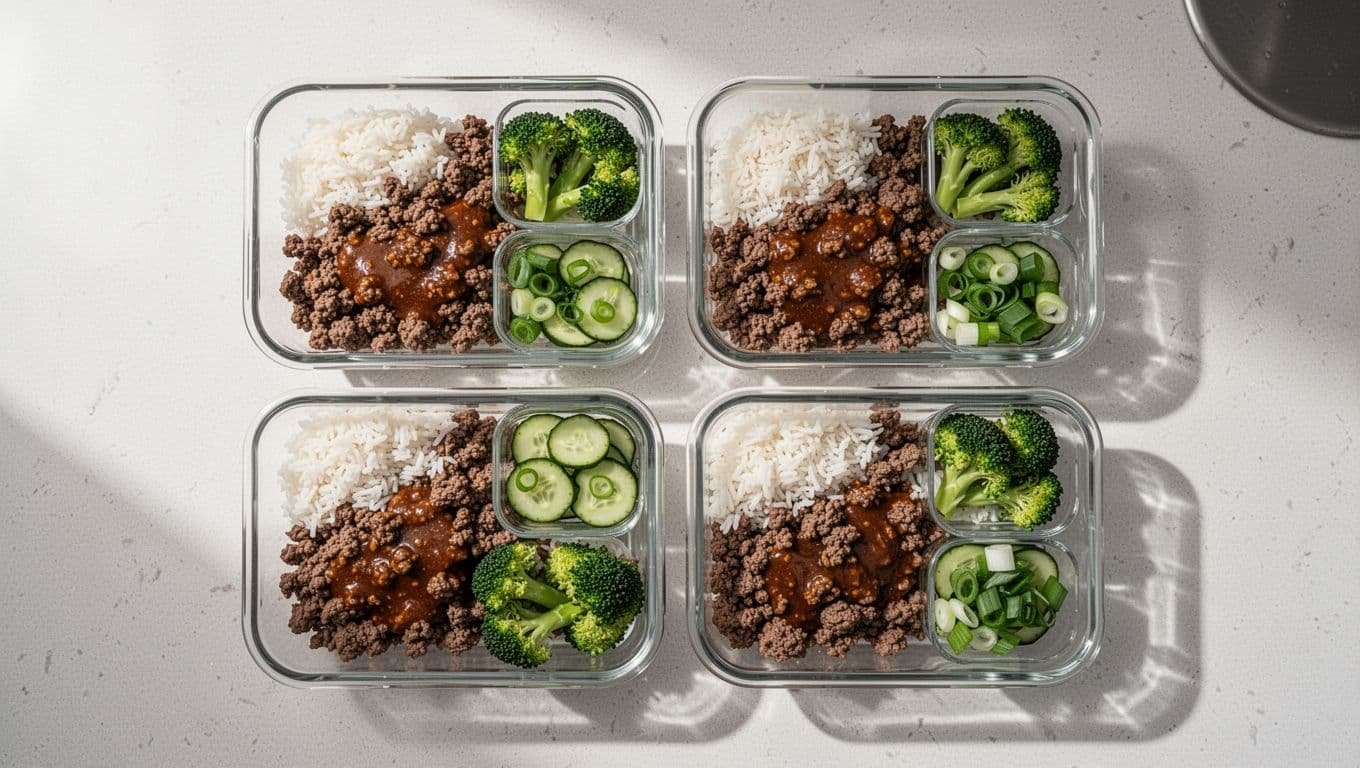
Pack rice, beef, and broccoli in separate sections when possible. That small step keeps the broccoli from soaking in sauce and becoming soft. Add cucumber, green onions, and sesame seeds after reheating.
The USDA’s ground beef storage advice stresses prompt chilling for cooked beef. Refrigerate meal-prep portions within two hours of cooking, or within one hour if outdoor temperatures are above 90°F.
Frequently Asked Questions
Can I use ground turkey instead of ground beef?
Yes. Ground turkey works well with the same sauce and cooks quickly in a skillet. Because it is leaner, add a small amount of sesame oil if the pan looks dry, and check that it reaches its safe internal temperature before serving.
What can I use if I do not have rice vinegar?
Use a small amount of apple cider vinegar or distilled white vinegar. Start with less than the recipe calls for, since both can taste sharper than rice vinegar. Add a little more after tasting the sauce.
Can I make these bowls without broccoli?
Yes. Green beans, shredded cabbage, snap peas, carrots, or bell peppers all work well. Choose a vegetable that can stay slightly crisp, since the texture keeps the bowl from feeling heavy.
How do I reheat meal-prep bowls?
Reheat the rice, beef, and broccoli until hot throughout. Add a teaspoon of water before covering the container if the rice seems dry. The FoodSafety.gov temperature guide lists 165°F for leftovers.
Why did my sauce turn too thick?
A sauce can reduce quickly if the skillet is very hot or wide. Stir in a tablespoon of water at a time until it loosens and coats the beef again. Next time, lower the heat as soon as the sauce begins to bubble.
A Weeknight Bowl Worth Repeating
These Korean-inspired beef bowls bring together saucy ground beef, crisp-tender broccoli, and warm rice in one practical meal. They work for busy dinners because every component is easy to adjust.
Keep the spice mild for kids, add extra vegetables for bigger appetites, or switch the rice base to suit your table. Make a batch once, then let the combination earn a regular place in your weeknight rotation.
Save the pin for later

I’m the creator of My Everyday Dish, a food blog focused on easy homemade recipes, comforting family meals, simple baking, and seasonal food ideas. I love finding practical ways to make everyday cooking less stressful and more enjoyable. Here, I share recipes with simple ingredients, clear instructions, and plenty of flavor, helping you make delicious meals and treats you’ll feel confident serving at home.
Leave a Reply