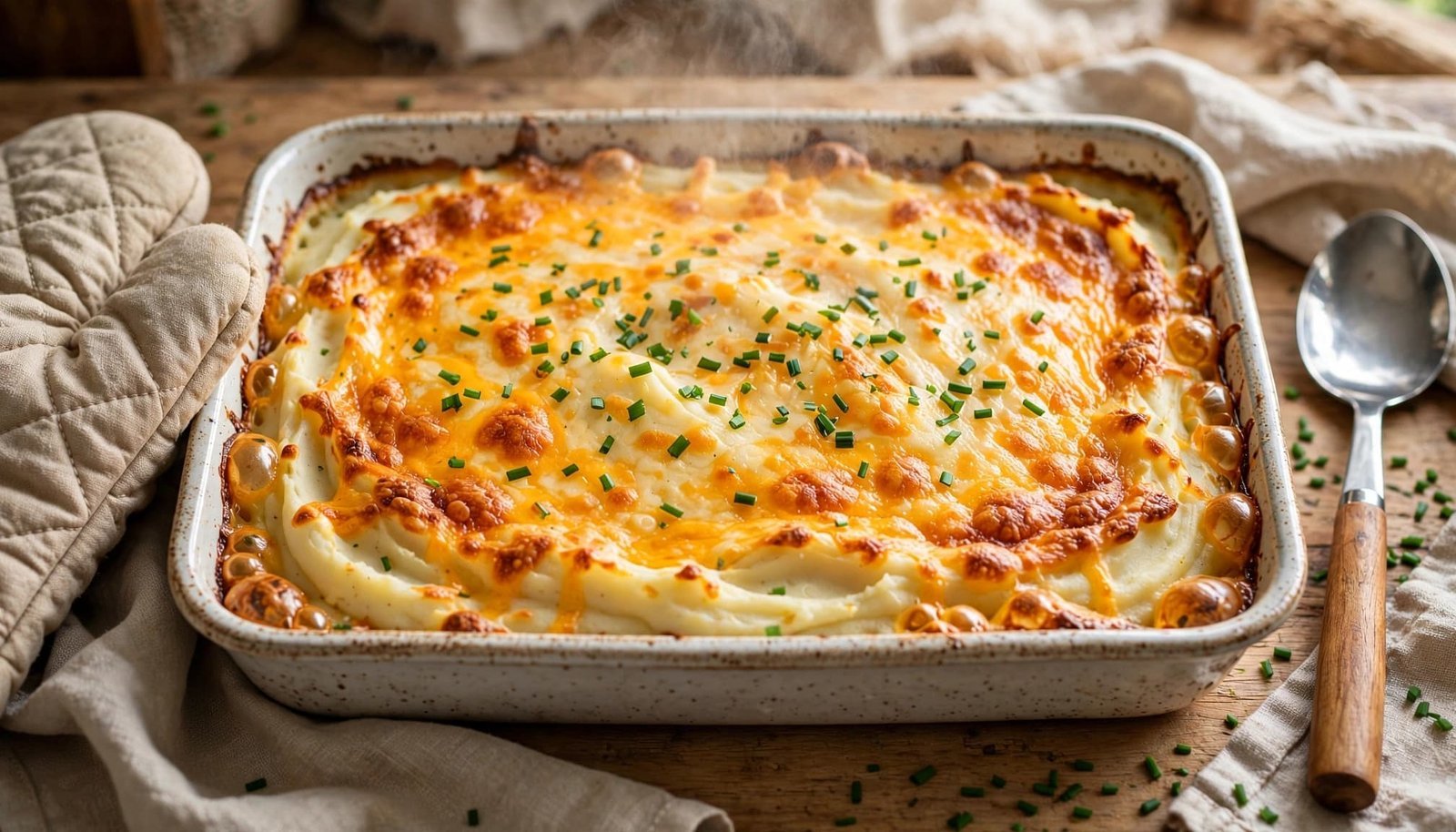
Buttery mashed potatoes get even better when sour cream, cream cheese, and cheddar join the bowl. Once baked until hot, bubbly, and lightly browned, they become a comforting casserole with the flavor of loaded potato skins and far less work.
This twice baked mashed potatoes recipe with cheese is an easy fit for Sunday dinners, holiday spreads, and potlucks. Choose the right potatoes, keep the mash light, and give the casserole time to heat through for a creamy center and golden top.
Key Takeaways
- Yukon Gold potatoes make a naturally creamy mash, while russets create a lighter texture. A blend gives you both qualities.
- The potato mixture should be a little softer than you want on the plate because it firms in the oven.
- Sharp cheddar brings flavor, while bacon, chives, scallions, roasted garlic, and Parmesan are optional additions.
- You can assemble the dish a day ahead, then bake it when dinner is close.
Twice Baked Mashed Potatoes Recipe With Cheese
This casserole keeps everything you love about twice-baked potatoes in one scoopable baking dish. It skips the work of baking, hollowing, and refilling individual potato skins, yet still delivers creamy potatoes and melted cheese in every serving.
Gather the Ingredients for Rich, Creamy Mashed Potatoes
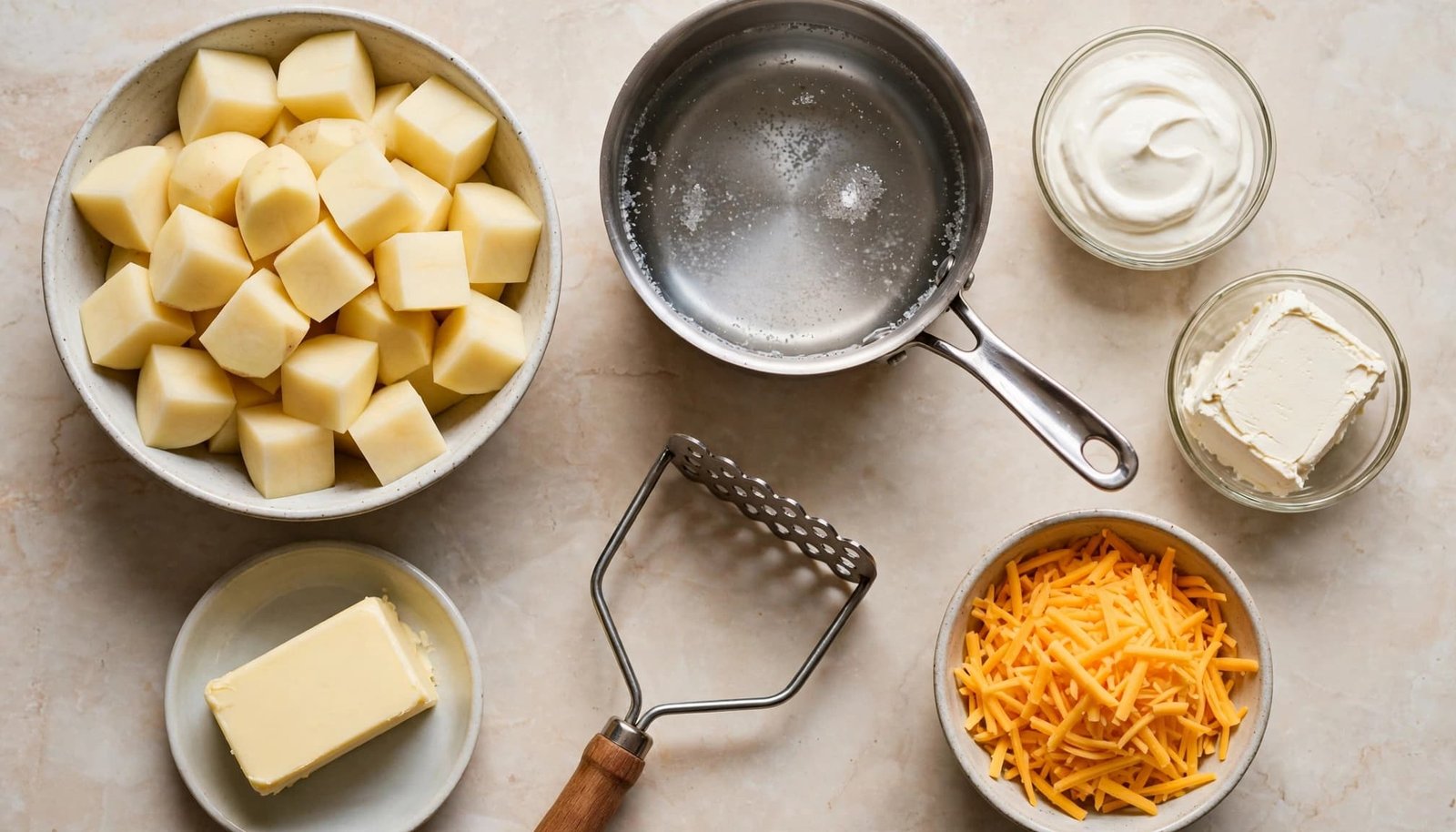
Start with Yukon Golds, russets, or a combination of both. Yukon Gold potatoes have a creamy texture and buttery flavor. Russets turn fluffier after mashing. Mixing the two gives the casserole a soft, rich center that still feels light.
Butter adds richness, while warm milk loosens the potatoes without cooling them down. Sour cream gives the filling a pleasant tang, and cream cheese helps the potatoes stay together after baking. Use sharp cheddar for a stronger cheese flavor that doesn’t disappear among the dairy.
Read also: 18 Easy Sweet Potato Dessert Recipes for Any Occasion
Salt and black pepper bring the filling into focus. Taste before transferring the potatoes to the baking dish, since potato varieties and cheese brands vary in saltiness.
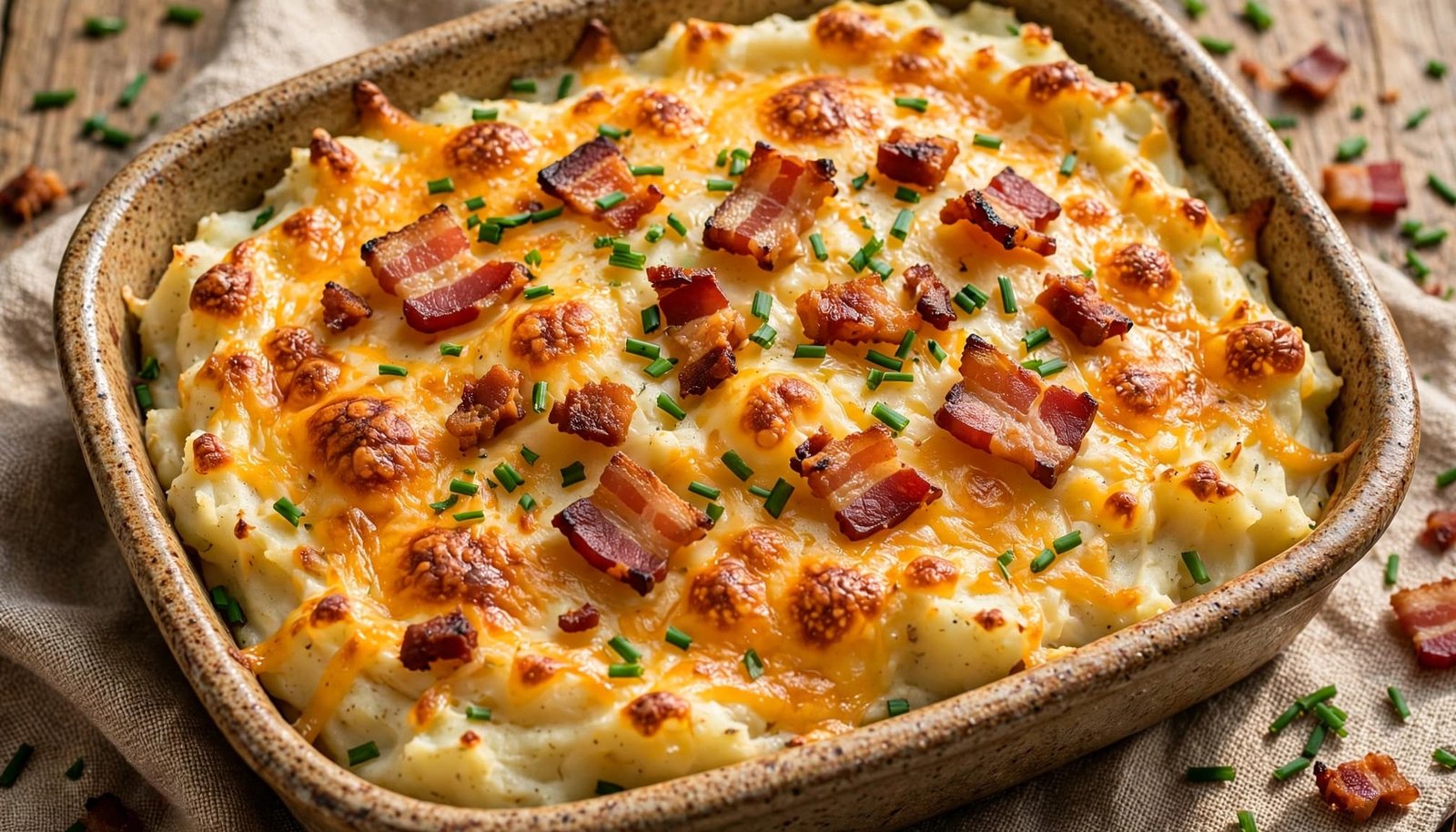
Cooked bacon, chives, scallions, roasted garlic, and Parmesan are all optional. Bacon adds a salty crunch, while herbs bring freshness. Parmesan works best as a supporting flavor, rather than the only cheese.
Follow These Simple Steps for the First Bake and Second Bake
This casserole has a simple cook-and-bake process. Prepare the mashed potato filling first, then bake it until the cheese melts and the center is hot.
- Peel the potatoes and cut them into evenly sized pieces. Put them in a large pot, cover with cold water, and salt the water generously. Starting in cold water helps the pieces cook evenly.
- Bring the pot to a boil, then cook the potatoes for about 20 to 25 minutes. They are ready when a fork slides through the center without resistance.
- Drain the potatoes well, then leave them in the hot pot for a minute or two. That brief steam-dry step removes extra moisture and prevents a watery casserole.
- Warm the butter and milk before adding them. Mash the potatoes by hand with a potato masher or pass them through a ricer. Stop as soon as the potatoes are smooth and creamy.
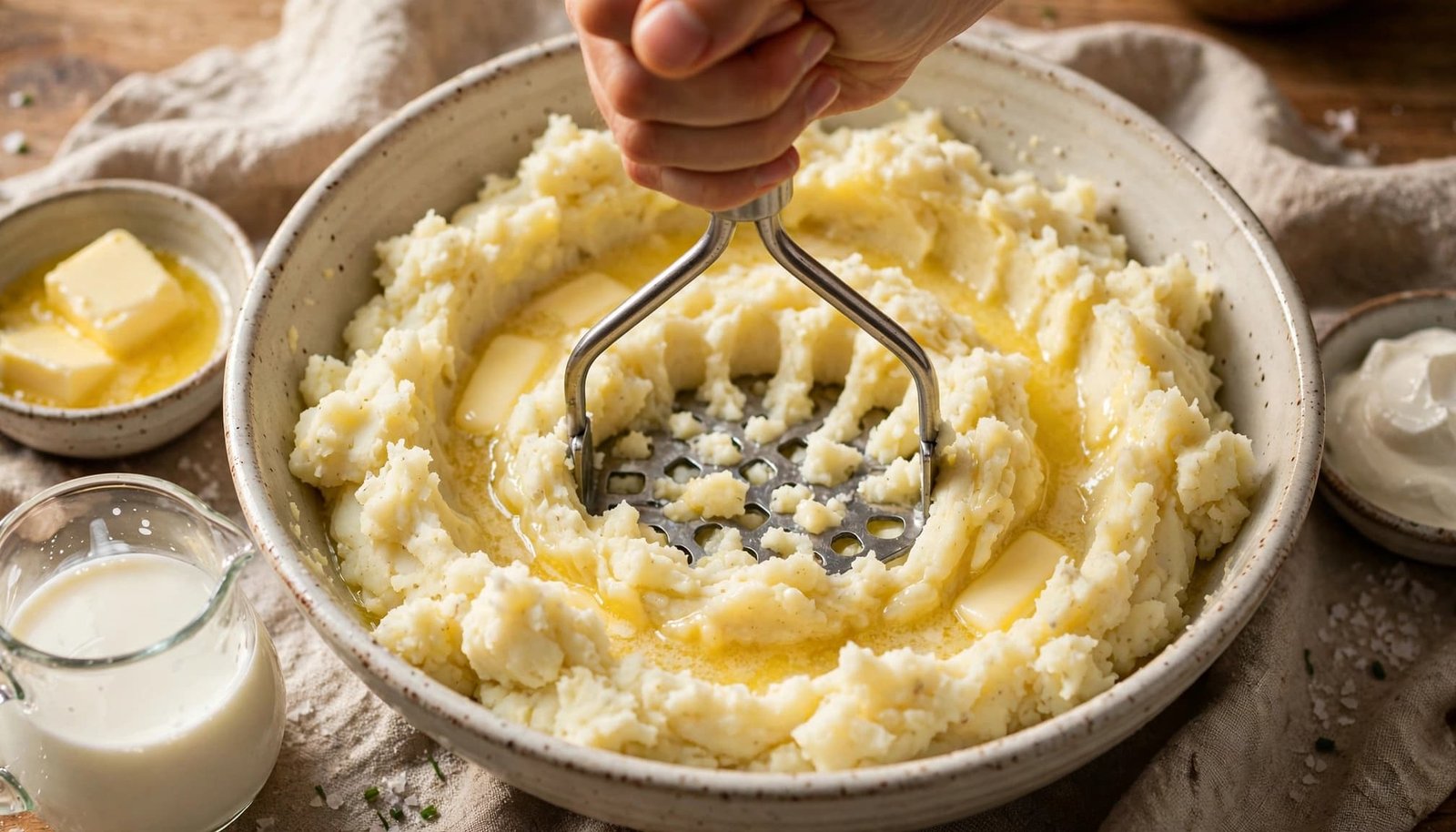
- Fold in the warm butter and milk, sour cream, cream cheese, most of the cheddar, salt, and pepper. Mix gently, since overmixing can turn potatoes gluey. The filling should look slightly softer than your desired final texture.
- Spread the mixture into a greased baking dish. Scatter the remaining cheddar over the top, then add bacon if you want it.
- Bake uncovered at 350°F for 25 to 35 minutes. The center should be hot, the cheese should be fully melted, and the edges should bubble gently.
- For a darker top, broil the dish for a brief moment after baking. Let it rest for several minutes before serving so it holds its shape when scooped.
How to Make the Cheesy Potato Casserole Taste Its Best
A few small choices separate a creamy, satisfying casserole from one that feels heavy or bland. Texture, seasoning, and dish shape all affect the finished potatoes.
Choose the Right Potato and Keep the Mash Light
Yukon Golds create a smooth, rich mash that suits a cheese-filled casserole. Russets make a fluffier mash but can feel drier if you don’t add enough dairy. A half-and-half blend is a reliable choice when you want balance.
Cook potatoes until they are fully tender before draining. Then let them steam dry briefly. Avoid using a blender or food processor, since both can work the starch too hard and leave the potatoes sticky. A masher or ricer gives you much more control.
Build Layers of Flavor With Cheese and Toppings
Sharp cheddar gives this twice baked mashed potatoes recipe with cheese its boldest flavor. Monterey Jack or mozzarella adds a softer, stretchier melt. A blend of cheddar and Monterey Jack gives you both a flavorful filling and a smooth cheese layer.
Taste the mash before it goes into the baking dish. Add more salt or pepper at that stage, not after the casserole has baked. Crisp bacon, sliced scallions, chives, paprika, and Parmesan all work well on top. If you plan to freeze the dish, save fresh herbs for after reheating.
Prevent Dry Edges and Get a Golden, Bubbly Top
A shallow baking dish gives you more surface area for golden cheese. A deeper dish holds heat longer, so it may need a few additional minutes in the oven.
Freshly assembled potatoes usually don’t need foil. However, loosely cover the dish if the cheese browns before the center is hot. Bake at 350°F, then broil for only one to two minutes if you want more color.
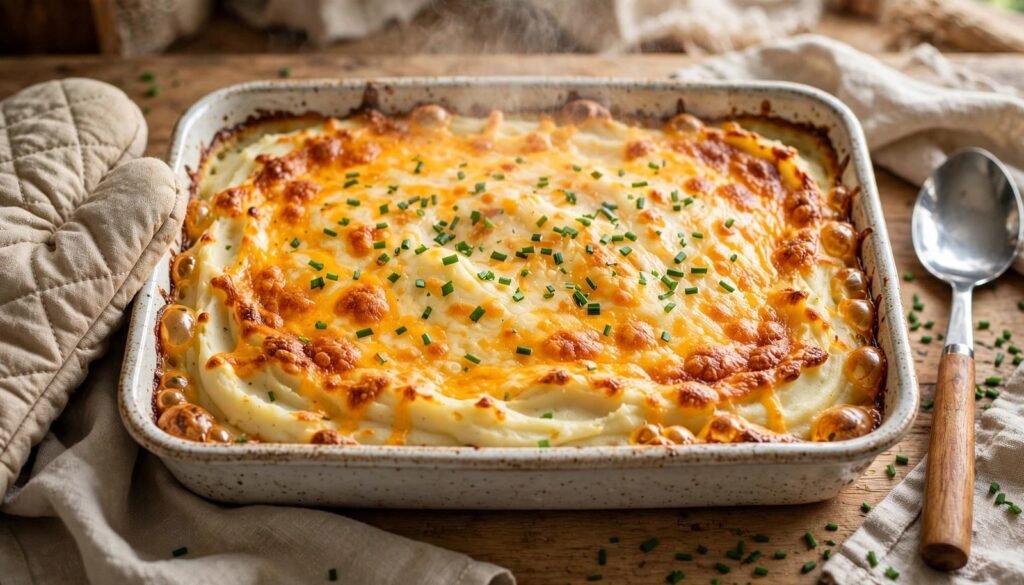
Resting the casserole for a few minutes helps the dairy-rich filling settle, so each serving stays creamy without running across the plate.
Make-Ahead, Storage, and Reheating Instructions
This dish is especially useful when you need to free up oven time before a holiday meal. Assemble it through the cheese topping, cover tightly, and refrigerate for up to one day before baking.
Prep Ahead and Store Leftovers Safely
Bake a cold casserole covered, adding about 10 to 15 minutes to the baking time. Then remove the foil so the cheese can brown. Check that the center is hot before serving.
Refrigerate cooked potatoes within two hours. Store leftovers in a shallow container so they cool faster, and keep the refrigerator at 40°F or below. The USDA’s leftovers storage guidance recommends eating cooked leftovers within three to four days.
For extra protection, follow USDA advice for keeping cold foods at 40°F or below. Reheat the thickest part of the casserole to 165°F. Freezing is also possible for three to four months, although the potatoes may be slightly softer after thawing.
Serve This Potato Side Dish for Holidays or Weeknight Dinners
Serve cheesy mashed potatoes with roast chicken, turkey, ham, steak, or meatloaf. They also pair well with roasted vegetables when you want a meatless dinner plate. Since the casserole is rich, a smaller scoop leaves room for other holiday dishes.
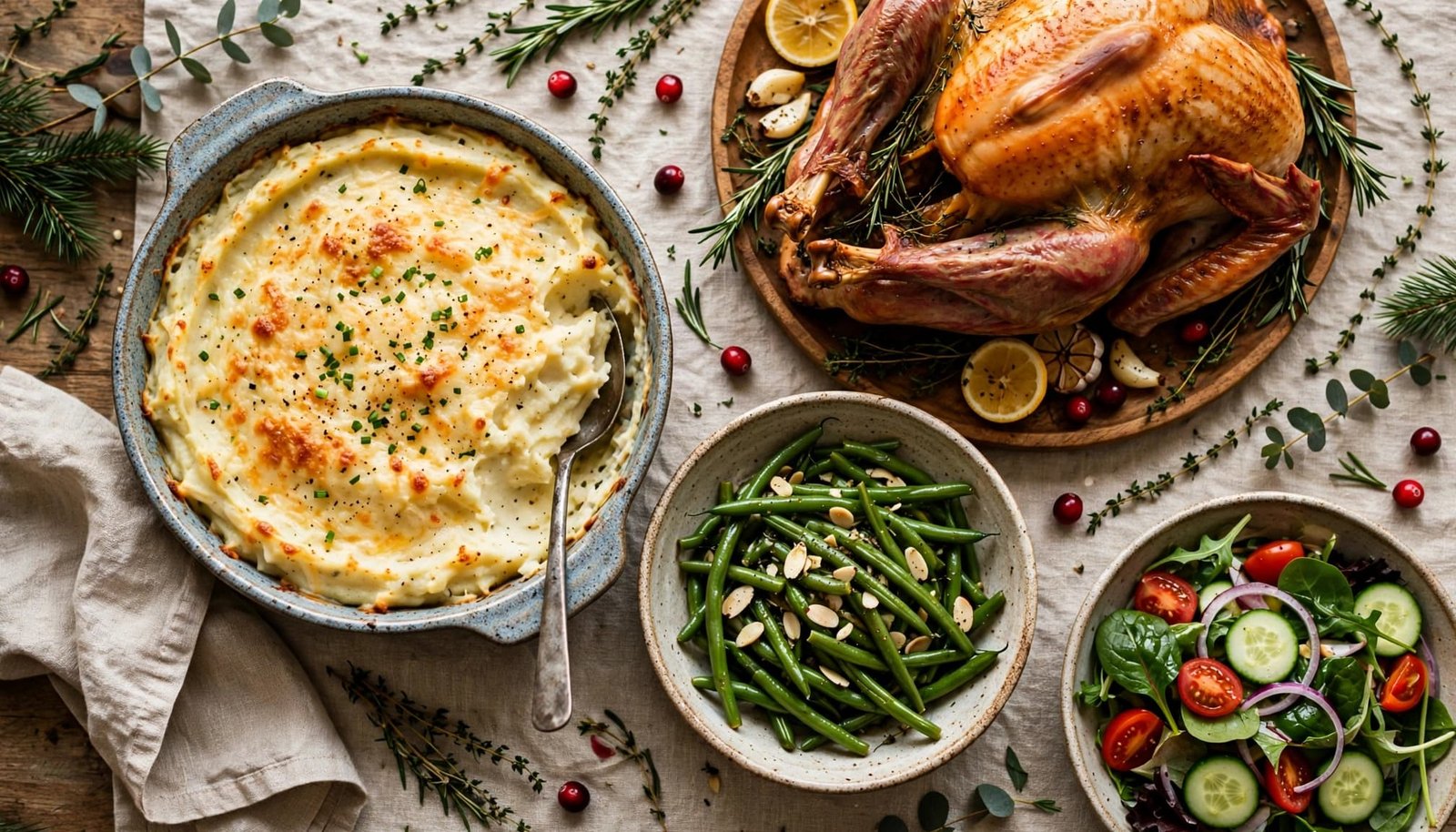
Finish individual servings with chives, bacon, or a little extra melted cheddar. For one portion, microwave with a splash of milk until hot. Reheat the full dish in a 350°F oven until warmed through.
Frequently Asked Questions
Can I use pre-shredded cheese?
You can, although freshly shredded cheese often melts more smoothly. Pre-shredded cheese contains anti-caking ingredients that can make the topping slightly less creamy. Sharp cheddar still provides plenty of flavor either way.
Do I need to add an egg to the potato mixture?
No egg is needed for this casserole. Cream cheese and the baked cheese topping give the potatoes enough structure. An egg would make the filling firmer and more custard-like.
Can I make the dish vegetarian?
Yes. Leave out the bacon and use chives, scallions, roasted garlic, paprika, or Parmesan for extra flavor. Check the cheese label if you need a fully vegetarian option.
Can I double the recipe for a potluck?
Yes, but use two baking dishes instead of one extra-deep dish when possible. Two dishes heat more evenly and give guests more of that browned cheese topping. Rotate the dishes during baking if they share an oven rack.
Why does my casserole look loose right after baking?
The potato mixture is hot, and the dairy is still fluid when it first comes out of the oven. Let the dish rest for a few minutes before serving. It will set into a creamy, scoopable texture.
A Comforting Side Dish for Any Gathering
This recipe turns everyday mashed potatoes into a creamy, cheesy baked side with a golden top. Cook the potatoes until tender, avoid overmixing, season the filling before baking, and give the casserole enough time to heat through.
Add bacon, herbs, roasted garlic, or your favorite melting cheese to make the dish your own. A warm pan of twice baked mashed potatoes recipe with cheese belongs on the table at your next family meal or gathering.
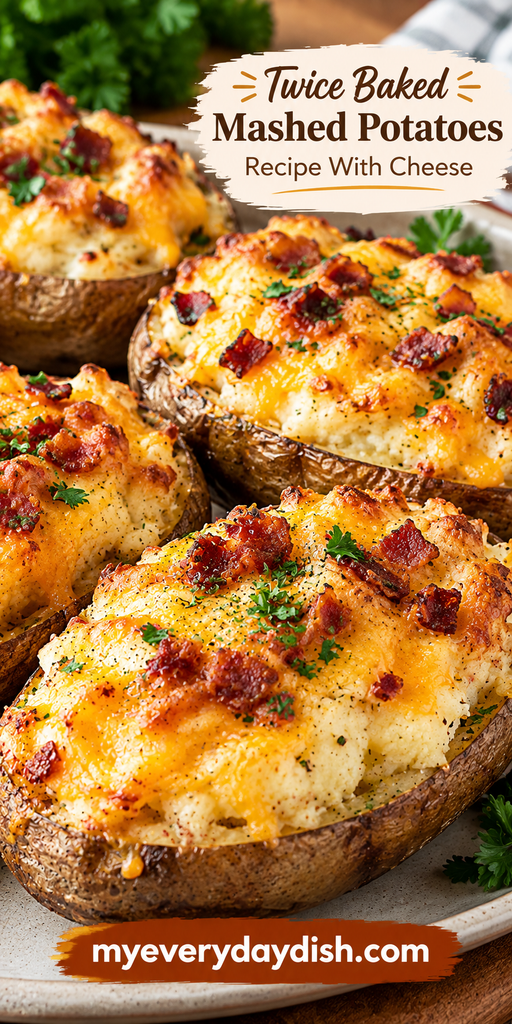
Save the pin for later

I’m the creator of My Everyday Dish, a food blog focused on easy homemade recipes, comforting family meals, simple baking, and seasonal food ideas. I love finding practical ways to make everyday cooking less stressful and more enjoyable. Here, I share recipes with simple ingredients, clear instructions, and plenty of flavor, helping you make delicious meals and treats you’ll feel confident serving at home.
Leave a Reply