
A bowl of warm mashed potatoes has a way of making the whole Thanksgiving plate feel complete. Russets are a smart choice because their high starch content cooks into a light, fluffy texture that eagerly soaks up butter, cream, turkey juices, and gravy.
This easy mashed russet potatoes recipe for Thanksgiving relies on a few familiar ingredients and careful handling, not special equipment. With even cuts, warm dairy, and gentle mashing, you can serve a smooth, comforting side without ending up with sticky potatoes.
Use this recipe for a small gathering, then scale it up when the guest list grows.
Easy Mashed Russet Potatoes Recipe for Thanksgiving, Step by Step
This recipe makes about 6 servings. Plan on roughly 3 pounds of russet potatoes, or about 1/2 pound per guest, for a standard Thanksgiving meal.
Ingredients
- 3 pounds russet potatoes
- 1 to 1 1/4 cups whole milk, half-and-half, or heavy cream
- 6 tablespoons unsalted butter
- Kosher salt, for the cooking water and seasoning
- Freshly ground black pepper, optional
Method
- Peel the potatoes if you prefer a completely smooth mash. Then cut them into even 1-inch chunks so they finish cooking at the same time.
- Put the potatoes in a large pot and cover them with cold water by at least 1 inch. Generously salt the water, then bring it to a boil over high heat.
- Lower the heat and simmer for 15 to 20 minutes. The potatoes are ready when a fork slides into a piece with no resistance.
- Drain the potatoes thoroughly. Return them to the warm, empty pot for 1 to 2 minutes so excess moisture can evaporate.
- Meanwhile, warm the milk or cream in a small saucepan or microwave-safe measuring cup. Melt the butter.
- Mash the potatoes gently, adding the butter first. Pour in the warm dairy a little at a time, stopping when the potatoes are soft, smooth, and fluffy.
- Taste and add more salt as needed. Finish with black pepper if you like.
A hand masher makes excellent mashed russet potatoes and leaves a pleasant homemade texture. For an extra-smooth bowl, press the cooked potatoes through a potato ricer or food mill before adding the butter and dairy.
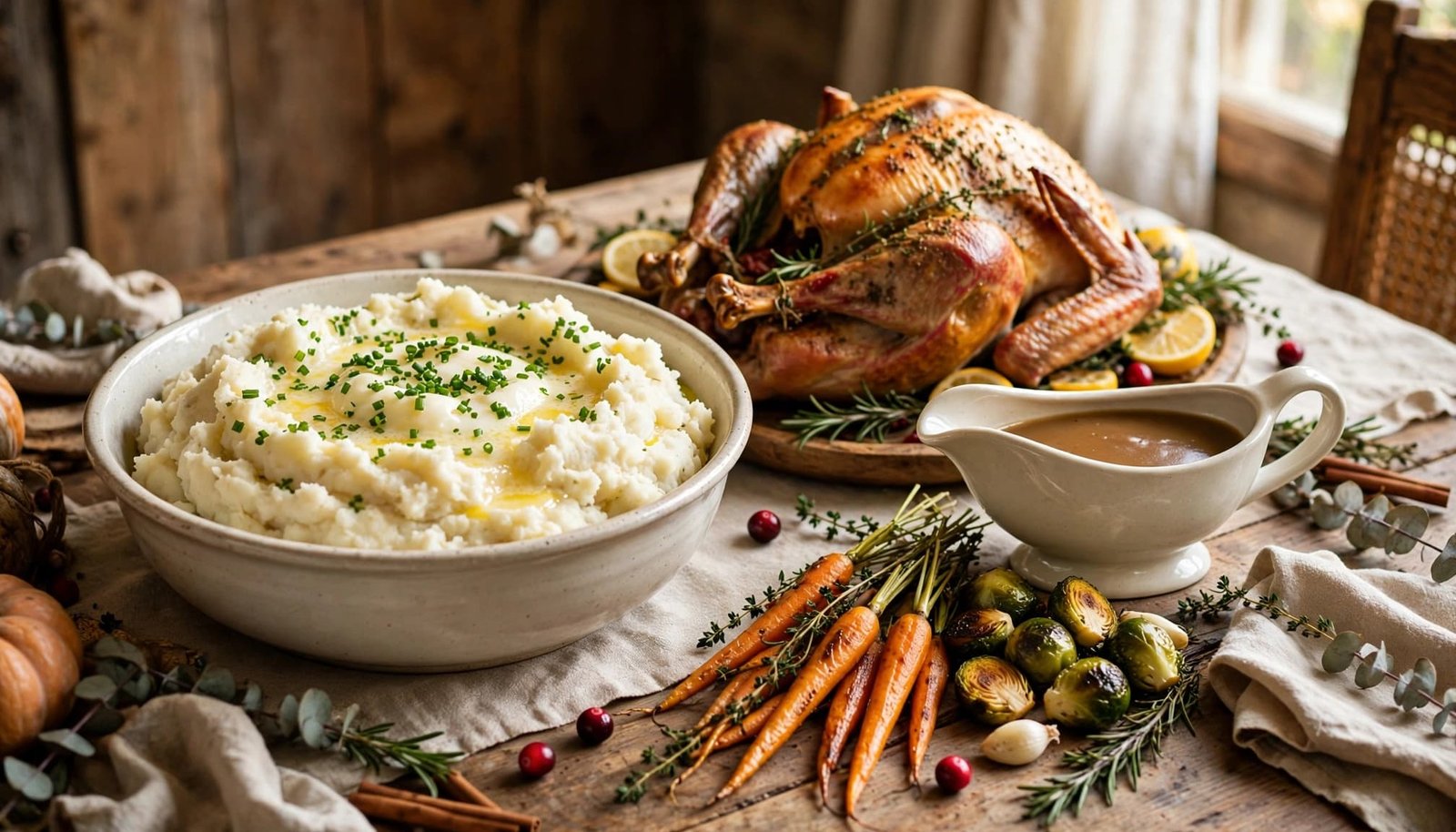
How to Get Fluffy, Creamy Mashed Potatoes Every Time
Great mashed potatoes come down to moisture, temperature, and restraint. Russets break apart readily after cooking because they contain more starch than waxy potato varieties. That gives them their signature soft, cloudlike texture.
Start cold and season the water
Starting potatoes in cold water gives the centers time to cook as the water heats. If chunks go into already-boiling water, the outsides can soften before the middles are tender.
Salt the cooking water generously. The potatoes absorb seasoning as they simmer, so the finished dish tastes seasoned throughout instead of merely salty on the surface. Cutting pieces to the same size also matters because one undercooked piece can leave hard lumps in an otherwise smooth bowl.
Read also: Easy Homemade Apple Pie Recipe for Thanksgiving
Drain well, then add warm ingredients
Test several chunks before draining. A fork should pass through each one easily. If the center feels firm, let the potatoes cook a few minutes longer.
After draining, give the potatoes time in the warm pot. Extra water makes mashed potatoes loose and bland. Warm butter and milk blend in quickly, while cold dairy can cool the potatoes and require more stirring.
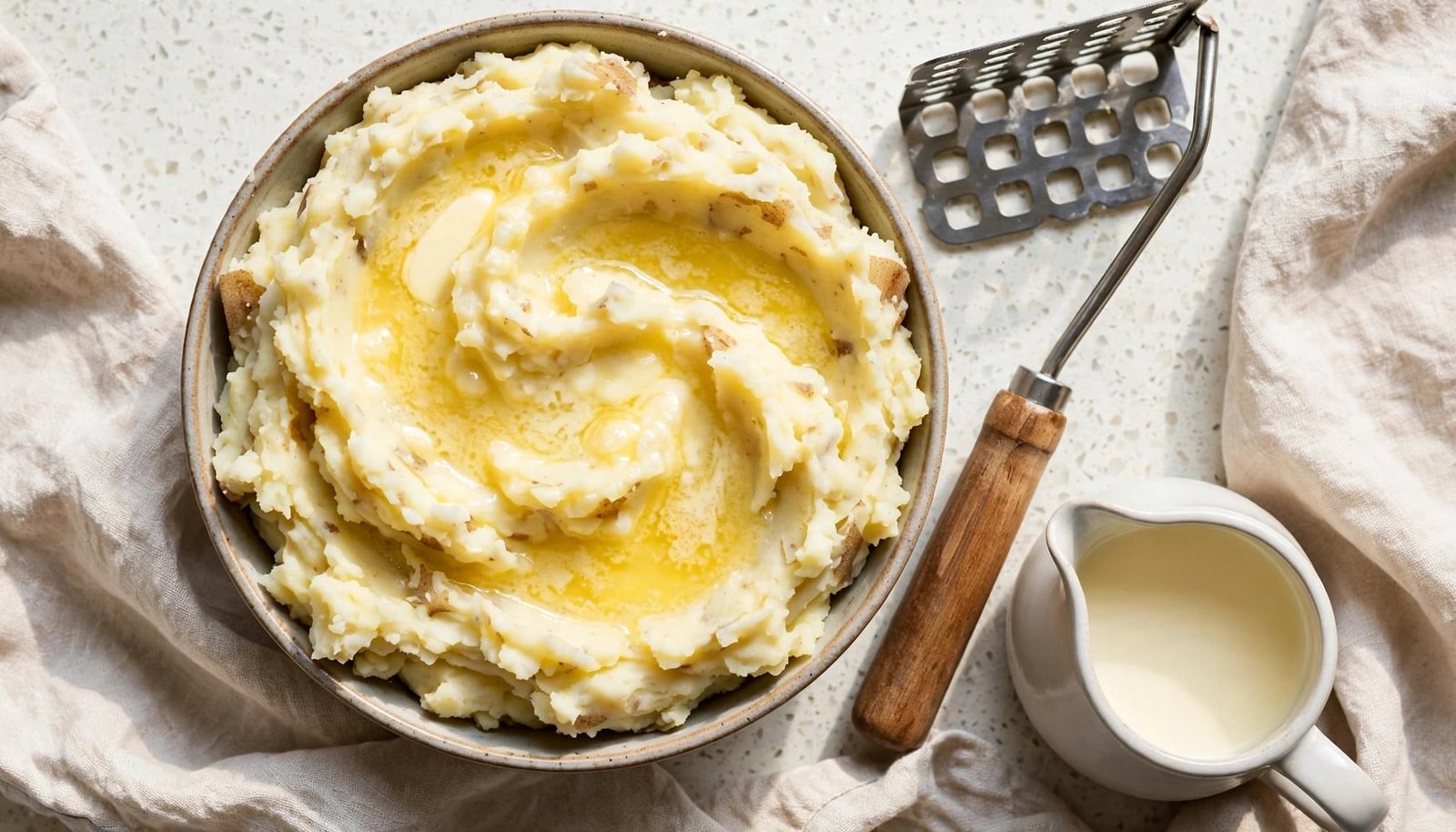
Fix common texture problems
If the potatoes feel too thick, add warm milk, cream, or a spoonful of reserved cooking water. Add liquid gradually because it is much easier to loosen potatoes than to correct a watery bowl.
If they seem dry, stir in another tablespoon of butter or a little cream. Avoid a blender, food processor, or electric mixer. Those tools work the starch aggressively and can turn a fluffy side into a gluey paste. Mash only until the ingredients come together, then stop.
The final minute in the warm pot often makes a bigger difference than adding more cream, because it removes the water that dilutes both texture and flavor.
Make-Ahead Thanksgiving Mashed Potatoes and Serving Ideas
Thanksgiving timing gets easier when one major side is ready before the turkey comes out. You can make these mashed potatoes up to 2 days ahead, cool them promptly, cover them, and refrigerate them.
Make the potatoes slightly looser than usual, or hold back a little milk or cream for reheating. Chilled potatoes firm up, so that reserved dairy restores their soft texture without overmixing.
Three dependable ways to reheat them
For the stovetop, warm the potatoes over low heat with a splash of milk or cream. Stir gently and keep the pot covered between stirs to prevent drying.
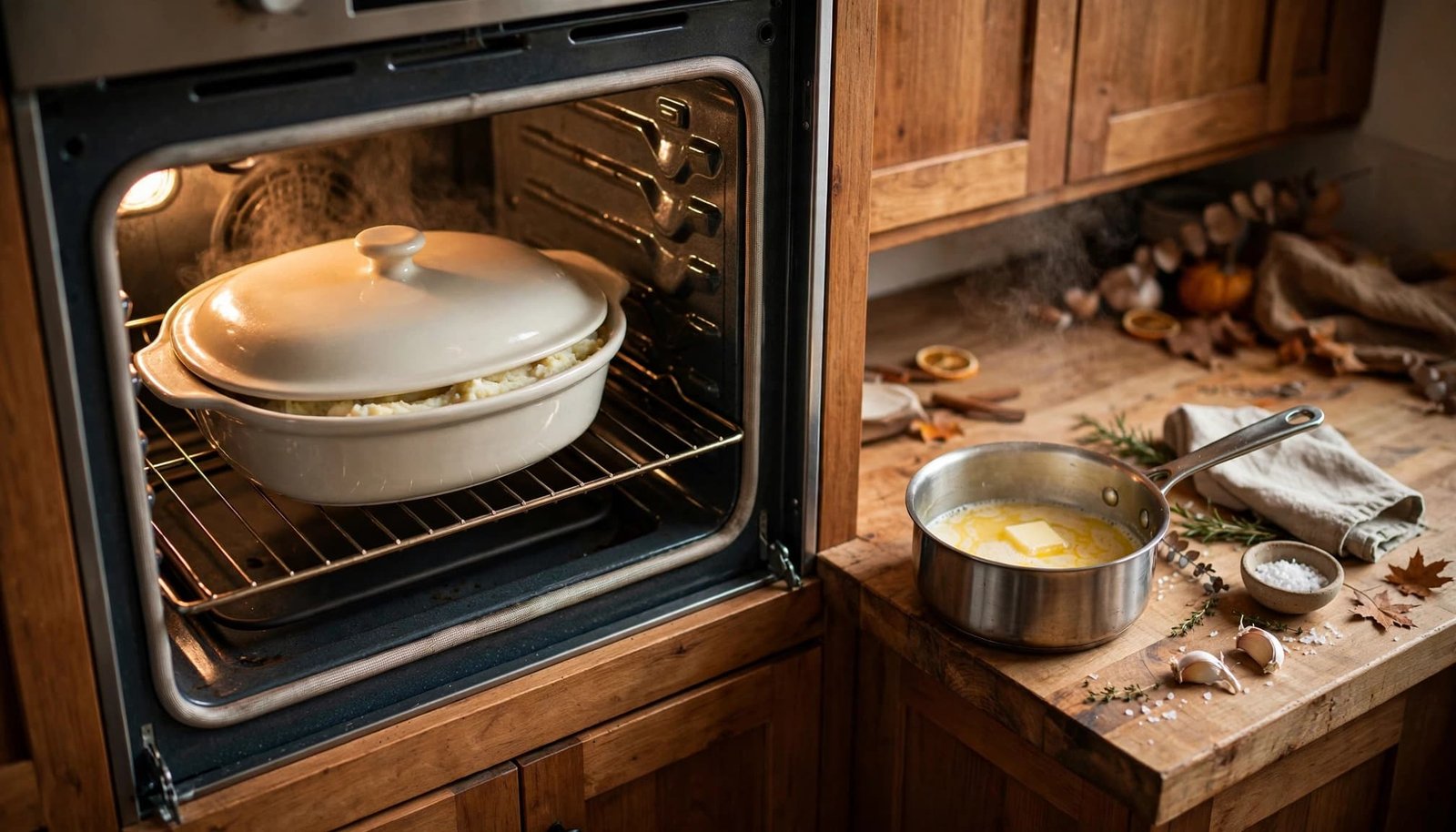
For the oven, transfer the potatoes to a buttered baking dish, cover tightly, and heat at 350°F for 25 to 30 minutes. Stir halfway through, then add a little butter before serving. A slow cooker also works well on the low or warm setting, especially when oven space is limited.
Read also: 30 Cozy Pumpkin Dessert Recipes for Fall
Finish the bowl at the table
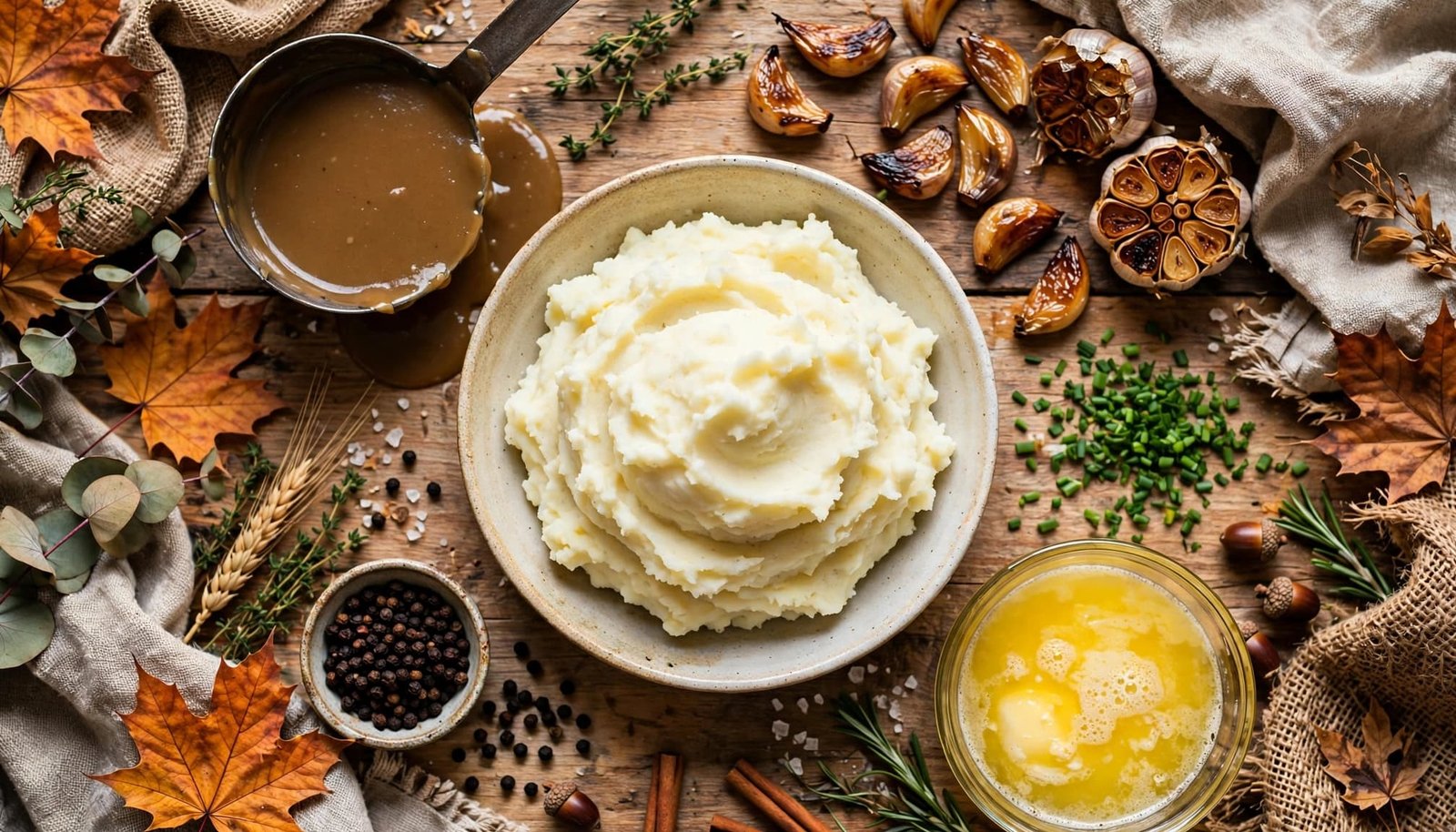
A pool of melted butter is always welcome. Chopped chives, cracked black pepper, roasted garlic, or warm pan gravy add flavor without hiding the potato’s simple character.
Serve mashed russet potatoes beside roasted turkey, stuffing, green beans, and cranberry sauce. For larger groups, make extra. Second helpings are common, and leftover potatoes are useful for breakfast cakes or shepherd’s pie.
Cool leftovers and refrigerate them within 2 hours. The USDA guidance on leftovers and food safety recommends keeping refrigerated leftovers at 40°F or below and reheating them to 165°F.
Key Takeaways for a Better Thanksgiving Side
The best mashed potatoes do not need complicated additions. Russets, butter, warm dairy, and salt create a dependable base that fits almost every Thanksgiving menu.
Keep these details in mind as you cook:
- Cut the potatoes evenly and begin with cold, well-salted water.
- Drain them completely, then let steam escape in the warm pot.
- Add butter before warm milk or cream, and mash only until fluffy.
- Make the dish ahead when needed, then reheat it slowly with extra dairy.
Frequently Asked Questions
Can I leave the potato skins on?
Yes, although the texture will be more rustic. Scrub russet potatoes thoroughly, remove any green spots or eyes, and cut them into even chunks. Leaving some peel on adds earthy flavor and flecks of color, but peeled potatoes create the smoothest result.
What kind of dairy is best for mashed potatoes?
Whole milk makes a classic, creamy mash that still tastes like potato. Half-and-half gives a richer finish, while heavy cream creates the most indulgent texture. Use whichever fits the rest of your menu, but always warm it before adding it.
Can I use Yukon Gold potatoes instead of russets?
You can, but the result will differ. Yukon Golds are naturally buttery and creamy, yet they are less fluffy than russets because they have less starch. For a middle ground, use half russets and half Yukon Golds.
How do I safely store leftover mashed potatoes?
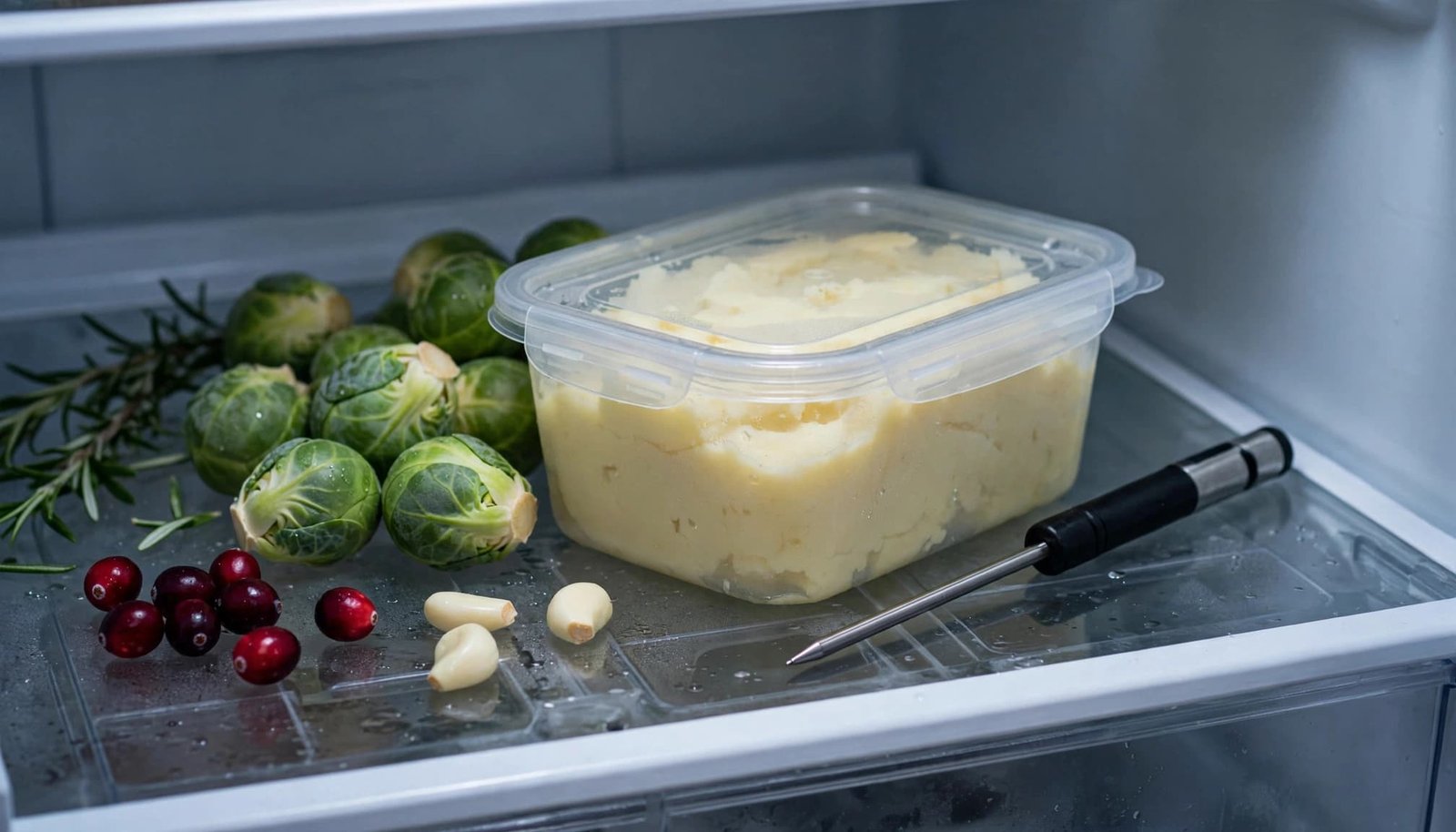
Move leftovers into a shallow covered container and refrigerate within 2 hours of cooking. The USDA recommends using refrigerated leftovers within 3 to 4 days, kept at 40°F or below. Check FoodKeeper storage guidance when planning holiday leftovers and reducing food waste.
Can I freeze mashed russet potatoes?
Yes, although dairy-rich mashed potatoes reheat best when frozen in portions. Cool them first, pack them tightly in freezer-safe containers, and thaw in the refrigerator before reheating. Stir in warm milk and butter after heating if the potatoes need more moisture.
Why are my mashed potatoes gummy?
Gumminess usually comes from overmixing. A blender, food processor, or prolonged beating breaks open too much starch and changes the texture. Use a hand masher, ricer, or food mill, then mix only until the potatoes are combined and smooth.
A Comforting Thanksgiving Classic
Russet potatoes become light and fluffy with simple ingredients and a gentle touch. Warm dairy, thorough draining, and restrained mashing keep the texture soft instead of watery or gluey.
Because you can prepare them ahead, this side also gives you more room to focus on the rest of the meal. Bring them to the table hot, add a final spoonful of butter, and serve them with turkey, gravy, and your favorite Thanksgiving sides.
Save the pin for later

I’m the creator of My Everyday Dish, a food blog focused on easy homemade recipes, comforting family meals, simple baking, and seasonal food ideas. I love finding practical ways to make everyday cooking less stressful and more enjoyable. Here, I share recipes with simple ingredients, clear instructions, and plenty of flavor, helping you make delicious meals and treats you’ll feel confident serving at home.
Leave a Reply