
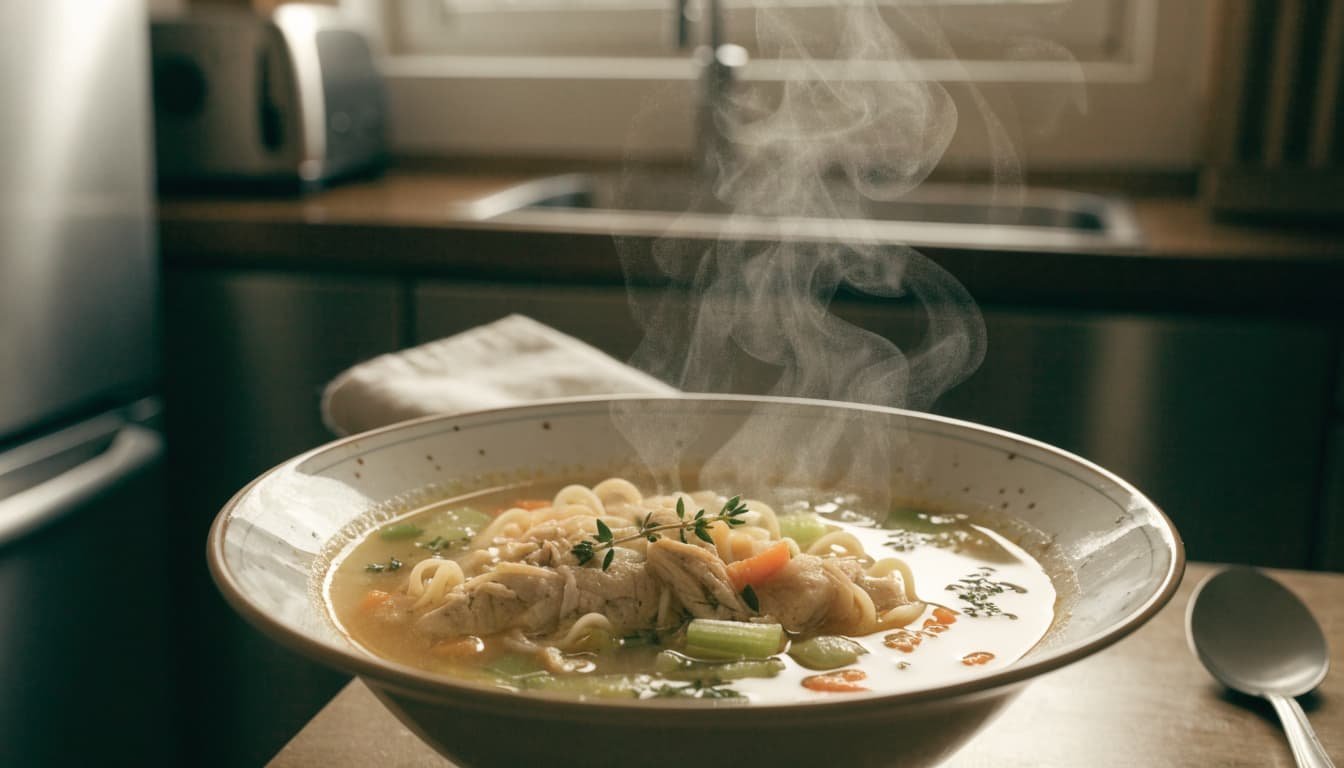
Homemade chicken noodle soup brings tender chicken, soft vegetables, and a savory broth together with ingredients you can find at any grocery store. A few careful steps keep the chicken moist and the noodles tender, without a long list of seasonings or extra equipment.
You’ll soften the vegetables, simmer the chicken in broth, then add the noodles near the end so they don’t overcook. If you expect leftovers, keep the noodles separate to preserve their texture and leave more broth for the next bowl. Start by gathering your ingredients and preparing the vegetables before the pot goes on the stove.
Homemade Chicken Soup Noodles With Simple Ingredients
This recipe makes about six servings with a balance of chicken, vegetables, broth, and egg noodles. Broth salt levels vary, so begin with modest seasoning and adjust after the chicken cooks.
What You’ll Need for Six Servings
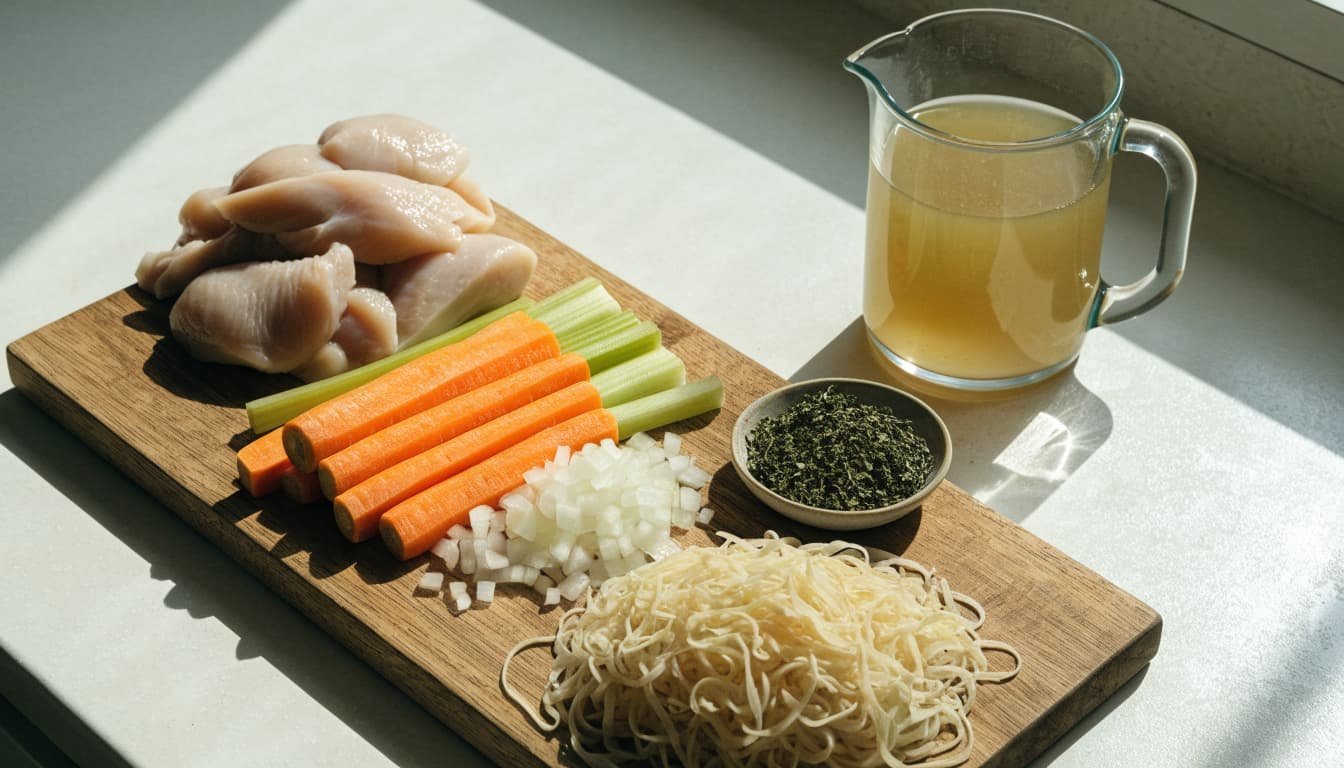
These amounts make a practical starting point for one family-size pot:
- 1 pound boneless, skinless chicken breasts or thighs
- 8 cups chicken broth
- 8 ounces dry egg noodles
- 1 medium onion, diced
- 2 medium carrots, sliced
- 2 celery ribs, sliced
- 1 tablespoon olive oil or butter
- 1/2 teaspoon dried thyme and 1/4 teaspoon black pepper
- Salt to taste
If you use low-sodium broth, you’ll likely need more salt than you would with regular broth. Keep extra broth available if you prefer a thinner soup.
Prep the Vegetables and Chicken First
Slice the carrots and celery into similar-size pieces so they soften at a similar pace. Dice the onion and measure the thyme before heating the pot.
Use boneless breasts for a milder flavor or thighs for a richer broth. Leave the chicken in whole pieces for simmering, then shred it after cooking.
How to Make Chicken Noodle Soup Step by Step
Set out a large soup pot, a food thermometer, and a clean plate for the cooked chicken. A pot holding about 6 quarts gives you room to stir without spilling broth.
1. Soften the Onion, Carrots, and Celery
Warm the oil or butter over medium heat, then add the onion, carrots, and celery. Cook for about 7 to 8 minutes, stirring occasionally, until the onion looks translucent and the vegetables begin to soften.
You don’t need to brown them. If the onion starts coloring quickly, lower the heat and stir more often so it softens without scorching.
The carrots will still feel firm at this stage, which is fine. They’ll finish cooking in the broth while the chicken simmers.
Scrape any softened onion away from the bottom before adding the liquid. This keeps small pieces from sticking while the pot comes up to temperature.
Read also: 17 Easy Healthy High-Protein Fall Soup Recipes
2. Simmer the Chicken in Broth and Seasonings
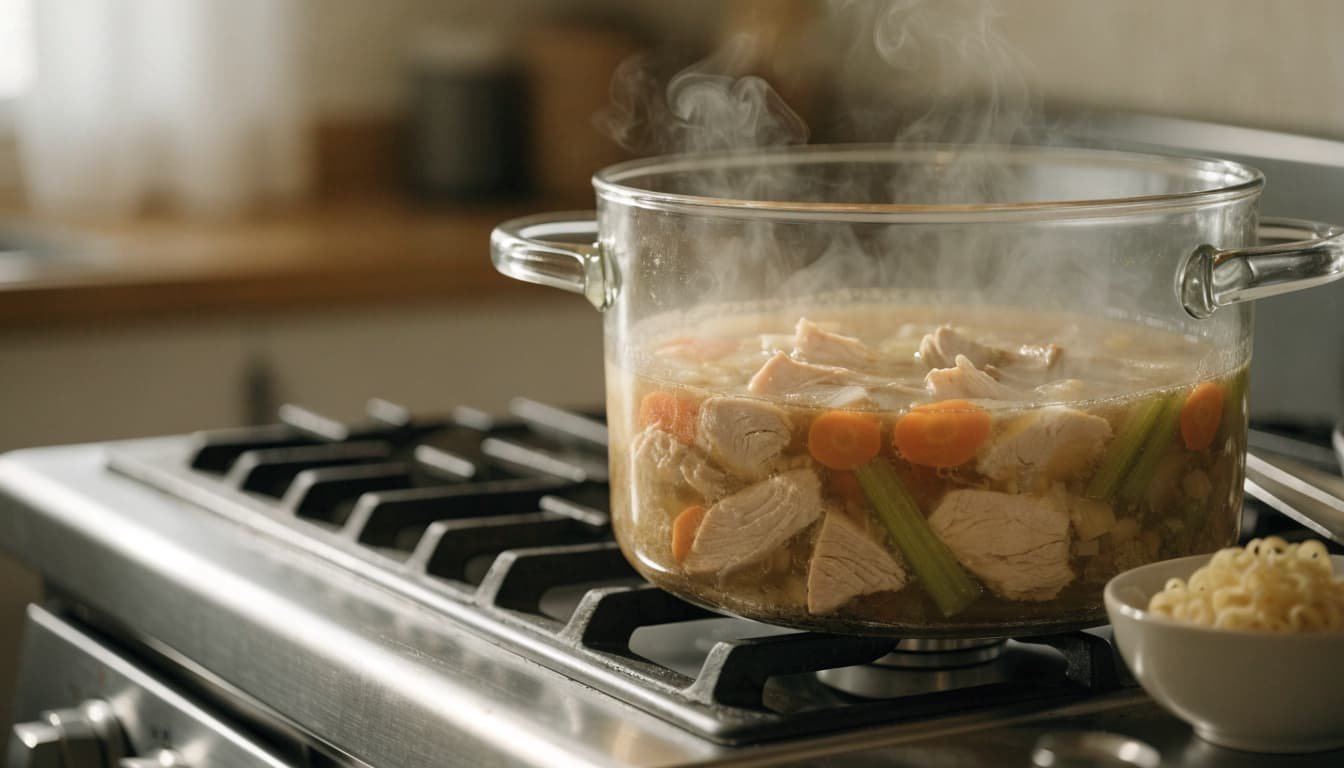
Pour in the chicken broth, then add the chicken, thyme, black pepper, and a modest pinch of salt. Bring the liquid to a gentle boil, then reduce the heat to maintain a slow simmer.
Look for small bubbles breaking the surface rather than vigorous movement throughout the pot. A gentle simmer helps keep the chicken tender and limits how quickly the broth evaporates.
Cook until the thickest part of each piece reaches 165°F (74°C) on a food thermometer. This matches the USDA FSIS safe temperature chart for poultry.
Insert the thermometer into the center of the thickest portion. If you substitute bone-in chicken, keep the probe away from the bone.
Chicken pieces vary in thickness, so temperature is more dependable than a fixed cooking time. Check each large piece before removing it.
3. Shred the Chicken and Taste the Broth
Transfer the cooked chicken to a clean plate and let it rest until it’s comfortable to handle. Keep the broth at a low simmer while you work.
Pull the meat apart with two forks, or cut it into bite-size pieces. Smaller pieces are easier to scoop alongside the noodles and vegetables.
Taste a spoonful of broth after letting it cool slightly. Add salt or pepper a little at a time, stirring and tasting between additions.
Season before adding the noodles because they’ll absorb some of that liquid. Keep the chicken on the plate for now so it doesn’t continue cooking unnecessarily.
4. Cook the Noodles Until Just Tender
Add the egg noodles to the simmering broth and stir gently to separate them. Follow the package directions, usually about 6 to 11 minutes, and begin testing near the shorter end.
Stir occasionally so the noodles cook evenly and don’t settle against the bottom. They’re ready when they’re tender through the center but still hold their shape.
Return the shredded chicken near the end and let it heat through. Then taste the soup once more, since the noodles may have changed the balance of broth and seasoning.
Remove the pot from the heat as soon as the noodles are ready. Serve promptly rather than keeping the finished soup simmering, which softens the pasta further and can dry out the chicken.
Keep the Broth Flavorful and the Noodles Tender
The finished soup should have enough liquid for the noodles to move freely. Taste it before serving, especially if you added extra broth during cooking.
Easy Fixes for Bland or Thick Soup
If the broth tastes flat, add a small pinch of salt, stir, and taste again. Black pepper can add warmth, but extra herbs won’t correct every seasoning problem.
If the soup has thickened, stir in warm broth or water a little at a time. Broth preserves more flavor, while water is useful when the soup already tastes salty.
Why the Noodles Can Turn Soft in Leftovers
Noodles keep absorbing broth after the heat is off, so soup often becomes thicker as it sits. That extra soaking also makes the noodles softer.
For meals planned ahead, cook the noodles separately and add them to individual bowls. You can also leave them out of the soup base and cook a fresh portion when reheating.
Simple Swaps and Serving Ideas for Your Soup
Keep substitutions modest so the chicken and broth remain the main flavors. A different pasta or herb can work without adding several new ingredients.
Use the Chicken, Noodles, and Herbs You Have
Breasts and thighs both work, while leftover cooked chicken needs only enough time in the pot to heat through. Let the vegetables become tender before adding cooked meat.
Use dried parsley instead of thyme, or choose another small pasta shape and follow its package timing. Vegetable broth also works, though its flavor and salt level may differ.
If you prefer a hands-off method, our slow cooker chicken noodle soup gives you another way to prepare a similar meal.
Make It a Filling, Easy Weeknight Meal
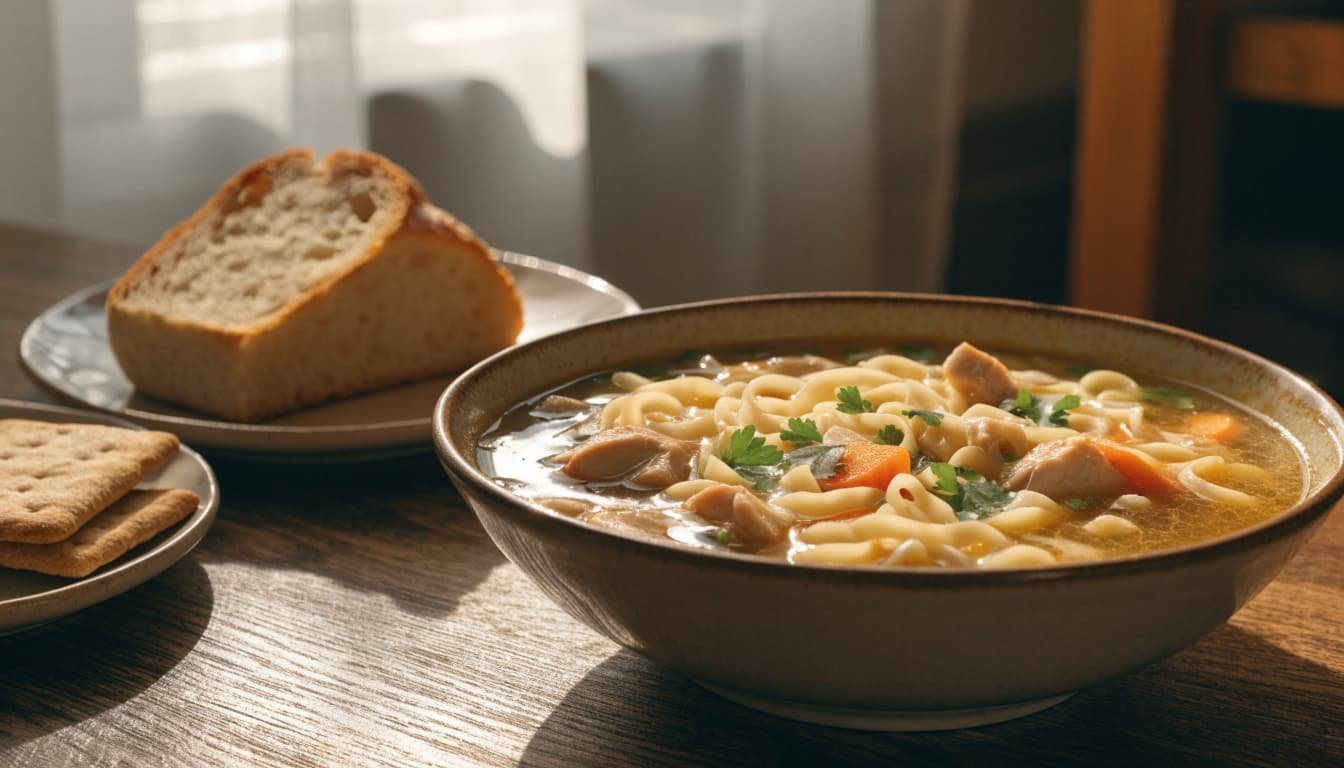
Serve the soup with crusty bread, toast, or plain crackers. Add a handful of frozen peas near the end if you want another vegetable without more chopping.
Store and Reheat Chicken Noodle Soup Safely
Divide leftovers into shallow containers rather than leaving a deep pot on the counter to cool. Smaller portions chill faster and make individual meals easier to reheat.
Cool and Reheat Portions Safely
Refrigerate soup promptly, within 2 hours of cooking, and keep containers covered. If the room temperature is above 90°F, refrigerate within 1 hour.
Keep your refrigerator at 40°F (4°C) or below, and use refrigerated soup within 3 to 4 days. Reheat leftovers to 165°F, stirring so the center heats evenly.
For broth-based soup, bring the liquid to a boil during reheating. Warm only the amount you plan to serve to avoid repeatedly heating the whole batch.
Save the Noodles Separately for Better Leftovers
Store cooked noodles separately from the soup base to limit softening. Refrigerate both promptly, then combine individual portions during reheating.
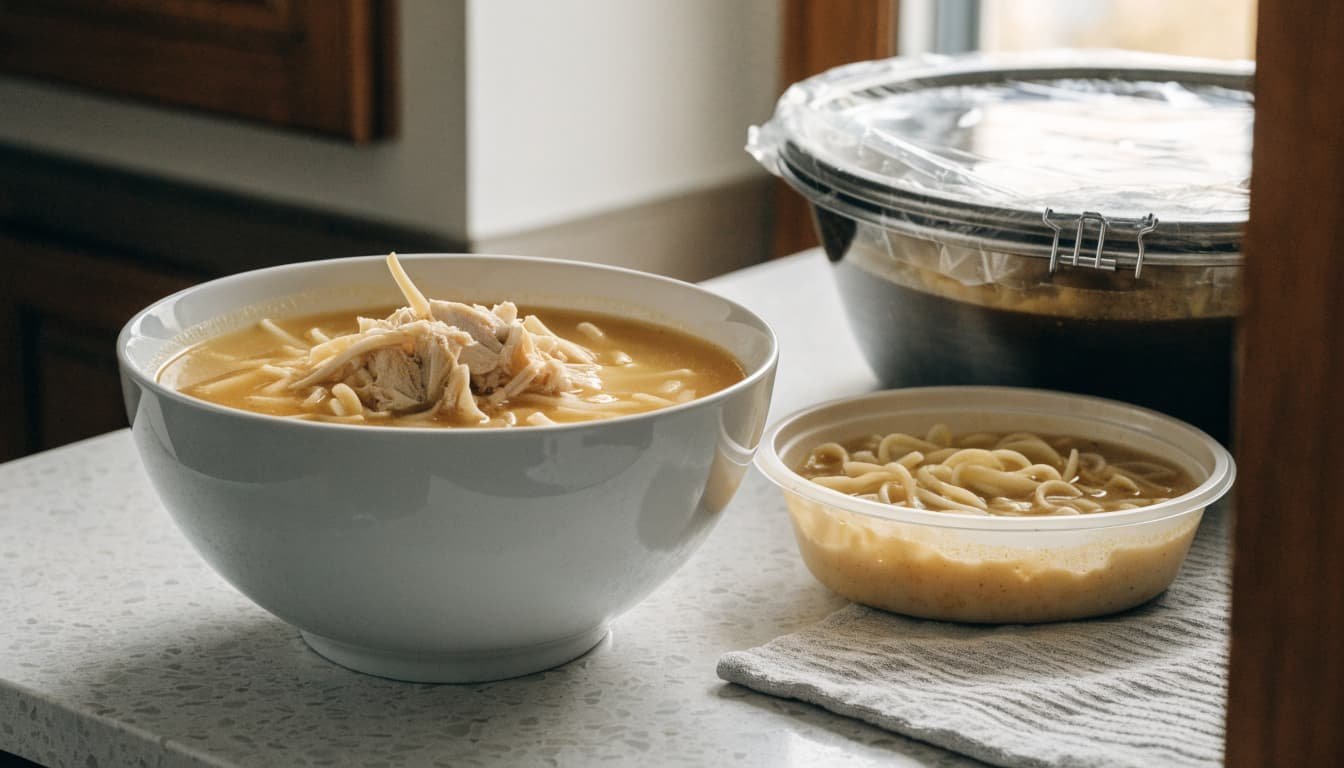
Freeze the chicken and vegetable soup base without noodles for about 2 to 3 months for best quality. Thaw it in the refrigerator, reheat thoroughly, then cook fresh noodles or add separately cooked noodles before serving.
Frequently Asked Questions
Can I use cooked rotisserie chicken?
Yes, shred the meat and stir it in near the end, once the vegetables and noodles are nearly ready. Rotisserie chicken is already seasoned, so taste the broth before adding more salt.
Can I make the soup without egg noodles?
You can use another small pasta shape, following its package cooking time. You can also leave out the noodles entirely for a lighter chicken and vegetable soup with more broth in each serving.
Can I make chicken noodle soup ahead of time?
Prepare the chicken and vegetable base ahead, then refrigerate it for up to 3 to 4 days. Cook noodles separately or add them during reheating so they don’t spend several days soaking in broth.
How can I tell when the chicken is done?
The thickest part should reach 165°F (74°C) on a food thermometer. The USDA FSIS guidance on doneness versus safety distinguishes appearance from safe temperature, so don’t rely on color or estimated cooking time alone.
A Simple Homemade Soup Worth Making Again
A gentle simmer and well-timed noodles turn familiar ingredients into a comforting meal without much extra work. Taste the broth before serving, then adjust the salt and pepper to suit the chicken and broth you’ve used.
If you’re saving another meal, store the noodles separately and reheat only the portions you need. You’ll keep more broth in the bowl and avoid overly soft pasta, whether you’re serving dinner tonight or warming lunch the next day.
Save the pin for later


I’m the creator of My Everyday Dish, a food blog focused on easy homemade recipes, comforting family meals, simple baking, and seasonal food ideas. I love finding practical ways to make everyday cooking less stressful and more enjoyable. Here, I share recipes with simple ingredients, clear instructions, and plenty of flavor, helping you make delicious meals and treats you’ll feel confident serving at home.
Leave a Reply