
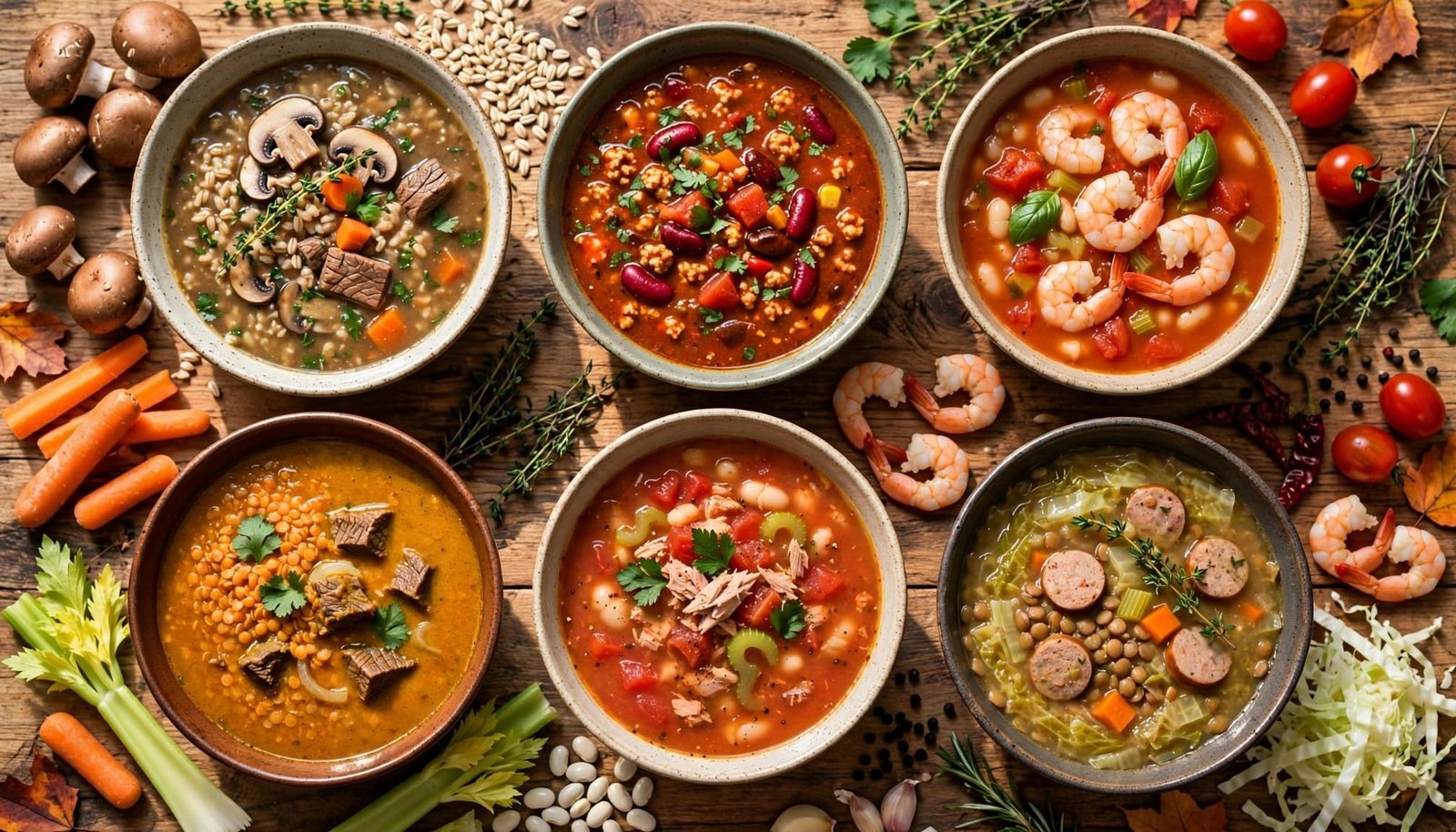
Cooler weather calls for a soup pot, especially when you want a meal that feels cozy without leaving you hungry an hour later. These healthy high-protein fall soup recipes combine satisfying ingredients such as chicken, turkey, lentils, beans, lean beef, and cottage cheese with fiber-rich vegetables and seasonal flavors like pumpkin, squash, sweet potato, and warm spices.
You’ll find 18 recipes in this roundup, including hearty choices for meat eaters, filling vegetarian soups, and creamy options made without relying on heavy cream.
Each recipe includes a short ingredient list, a simple cooking method, a serving idea, and an approximate protein note when it can be reasonably estimated, so you can choose a bowl that fits your needs.
Grab your favorite pot and start with these easy fall soups that turn everyday ingredients into filling, flavorful meals.
Easy Healthy High-Protein Fall Soup Recipes for Every Craving
These fall soup recipes make it easier to serve a filling meal from one pot. High-protein soup can start with shredded chicken, turkey, lean beef, seafood, beans, lentils, peas, edamame, Greek yogurt, cottage cheese, or bone broth. Each option brings a different texture and flavor, so you can choose a creamy, brothy, spicy, or hearty bowl based on your craving.
Vegetables add color, fiber, and important nutrients while making each soup more satisfying. Carrots, sweet potatoes, winter squash, tomatoes, kale, mushrooms, and corn all pair well with savory proteins and fall spices. For a useful reference when comparing ingredients, USDA FoodData Central provides nutrition information for foods such as canned beans, cottage cheese, Greek yogurt, poultry, and vegetables.
How to Build a High-Protein Fall Soup
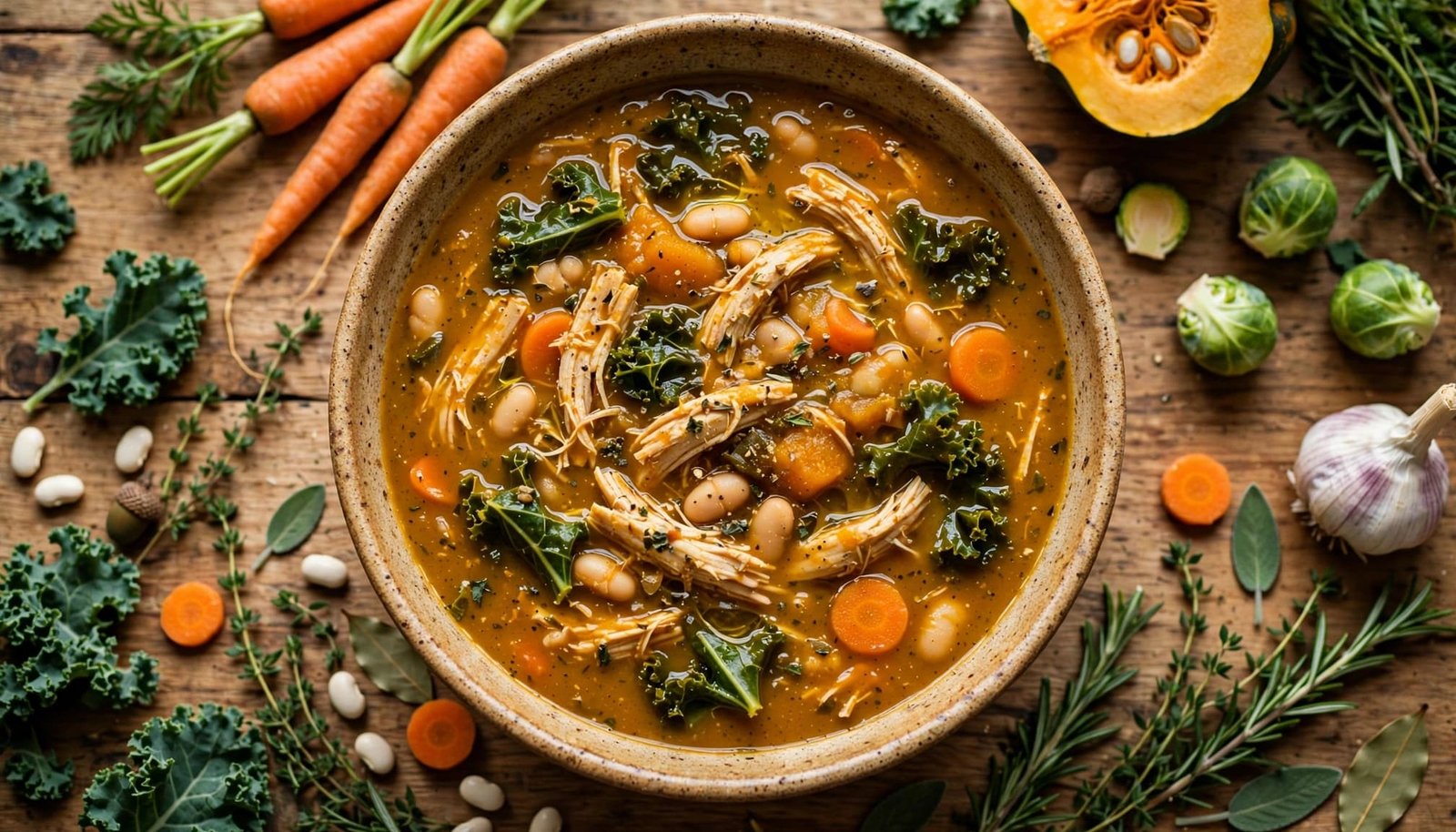
Start with a protein that matches the soup’s base. Chicken and turkey work well in brothy soups, while lean ground beef adds richness to tomato-based recipes. Lentils, split peas, beans, and edamame make plant-based soups hearty without requiring meat.
For creamy soups, blend part of the beans or vegetables, then stir in Greek yogurt or cottage cheese after reducing the heat. This method adds body and protein without depending on a large amount of heavy cream. Seafood, such as salmon, shrimp, or canned tuna, can also add protein to quick soups, but add it near the end so it doesn’t overcook.
A balanced bowl usually includes:
- A protein source, such as poultry, lean meat, seafood, beans, lentils, or low-fat dairy.
- Several vegetables for fiber, color, and texture.
- A flavorful base made with broth, tomatoes, pumpkin, squash, herbs, or spices.
- A serving size and approximate protein estimate based on the ingredients used.
Tips for Choosing Better Soup Ingredients
Read broth and canned-food labels before adding them to the pot. Sodium can vary widely between regular, reduced-sodium, and no-salt-added products. The FDA recommends using the Nutrition Facts label and its sodium % Daily Value to compare options.
Drain and rinse canned beans when practical, especially if you’re watching sodium. Choose lean cuts of meat, skinless poultry, and plain Greek yogurt or cottage cheese. You can then adjust salt at the end, after the broth, beans, and other packaged ingredients have already contributed flavor.
Each recipe below includes a prep overview, key ingredients, numbered cooking steps, serving size, and an approximate protein amount per bowl. Since brands and portion sizes differ, treat the protein notes as helpful estimates rather than exact nutrition claims.
Chicken and Turkey Soups That Make Fall Dinners Easy
These poultry-based soups turn familiar ingredients into filling fall dinners. Use low-sodium broth so you can control the salt, and simmer chicken gently to keep it tender. For food safety, cook chicken and turkey to 165°F, as measured with a food thermometer, following FoodSafety.gov’s cooking temperature chart.
1. Lemon Herb Chicken and White Bean Soup
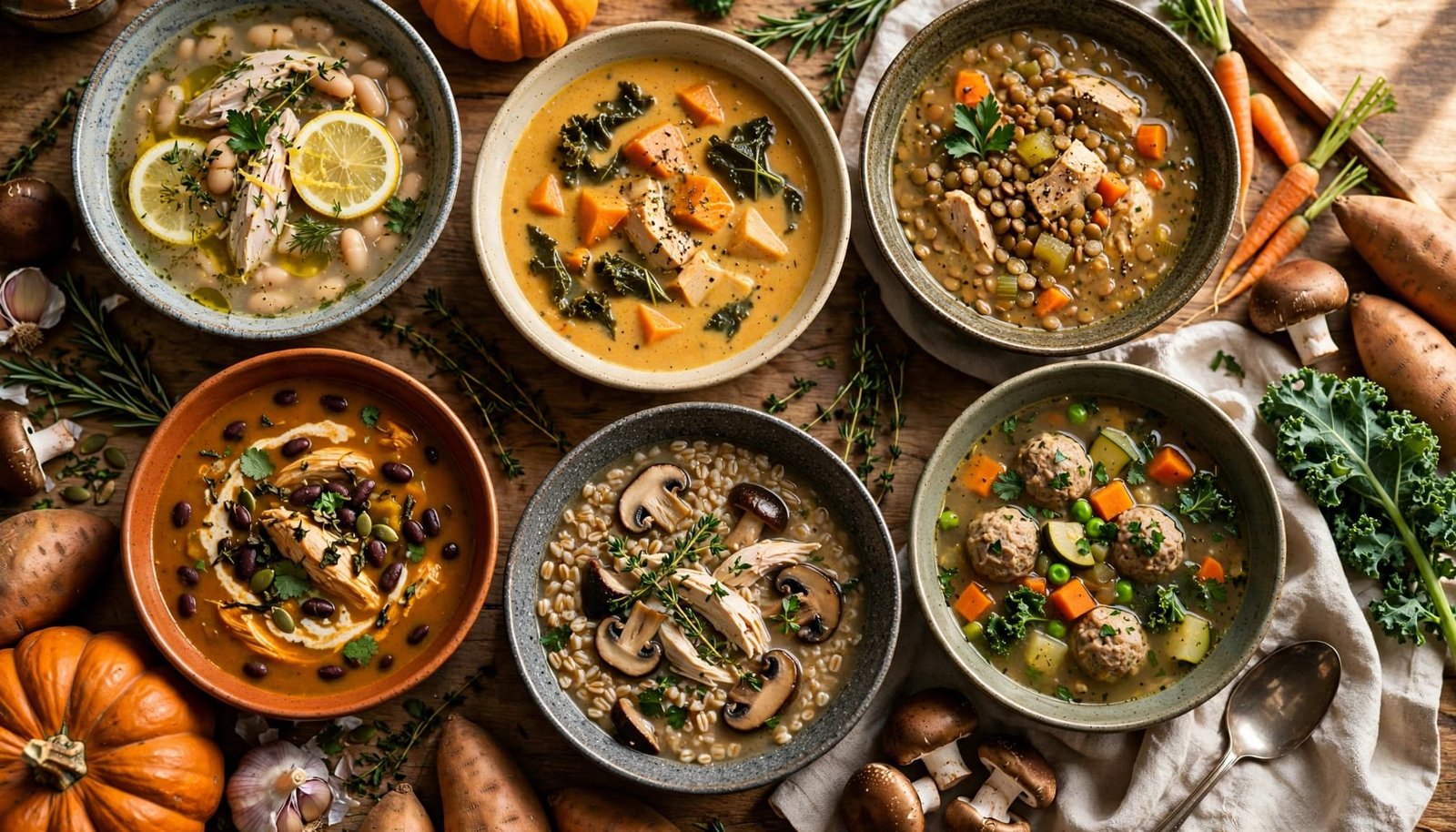
Sauté diced onion, carrots, celery, and garlic in olive oil until softened. Add low-sodium chicken broth, thyme, and boneless chicken breast. Simmer gently until the chicken reaches 165°F, then transfer it to a plate and shred it. Return the chicken to the pot with rinsed cannellini beans, lemon juice, and chopped parsley. Warm everything for a few minutes before serving. The beans add fiber and extra plant protein, while lemon keeps the broth bright. This recipe provides approximately 30 grams of protein per serving, depending on the chicken and bean portions.
Read also: Healthy Homemade Pumpkin Spice Creamer for Fall Mornings
2. Creamy Turkey, Kale, and Sweet Potato Soup
Brown lean ground turkey in a large pot, breaking it into small pieces. Add onion and garlic, then cook until fragrant. Stir in diced sweet potato, poultry seasoning, and low-sodium broth. Simmer until the sweet potato is tender. For a creamy texture, blend a small amount of rinsed white beans with broth and stir the mixture into the soup. Add chopped kale during the final few minutes so it stays green and slightly firm. Each bowl contains about 27 grams of protein, without relying on heavy cream.
3. Chicken and Lentil Harvest Soup
Rinse brown or green lentils under cold water and check for debris. Sauté onion and garlic, then add carrots, diced tomatoes, cumin, smoked paprika, and low-sodium broth. Simmer until the lentils are nearly tender. Stir in shredded cooked chicken and spinach only during the last few minutes, so the chicken stays moist and the greens don’t overcook. Lentils provide protein and fiber, which give this soup a hearty texture without making it heavy. Plan on approximately 29 grams of protein per serving.
4. Rotisserie Chicken, Pumpkin, and Black Bean Soup
Sauté onion and garlic, then add pumpkin purée, diced tomatoes, corn, low-sodium broth, cumin, and chili powder. Simmer the pumpkin base for about 10 minutes to blend the flavors. Stir in rinsed black beans and shredded rotisserie chicken near the end, heating just until warm. Finish each bowl with fresh lime juice. Choose plain pumpkin purée, not pumpkin pie filling, because pie filling contains sugar and added spices. This quick soup has about 25 grams of protein per serving.
5. Chicken, Farro, and Mushroom Soup
Sauté onion, carrots, celery, and mushrooms with thyme. Add rinsed farro and low-sodium broth before adding cooked chicken, since farro needs time to soften and can become mushy if overcooked. Simmer until the farro is tender but pleasantly chewy, then stir in diced chicken breast or leftover chicken during the final few minutes. Bone broth can add extra savory flavor, but compare labels if you need to limit sodium. Each serving offers roughly 28 grams of protein.
6. Turkey Meatball and Vegetable Soup
Mix lean ground turkey with Italian herbs, garlic, and black pepper, then shape small meatballs. Brown them lightly, or simmer them directly in low-sodium broth for a lighter result. Add onion, carrots, zucchini, and white beans, cooking until the vegetables are tender. Stir in spinach at the end. Check the largest meatball with a thermometer, and serve only when the turkey reaches 165°F. The vegetable-forward broth keeps the soup light, while each bowl supplies about 26 grams of protein.
Read also: 15 Delicious Soup Recipes for Christmas Eve
Bean, Lentil, and Plant-Based Soups Packed With Protein
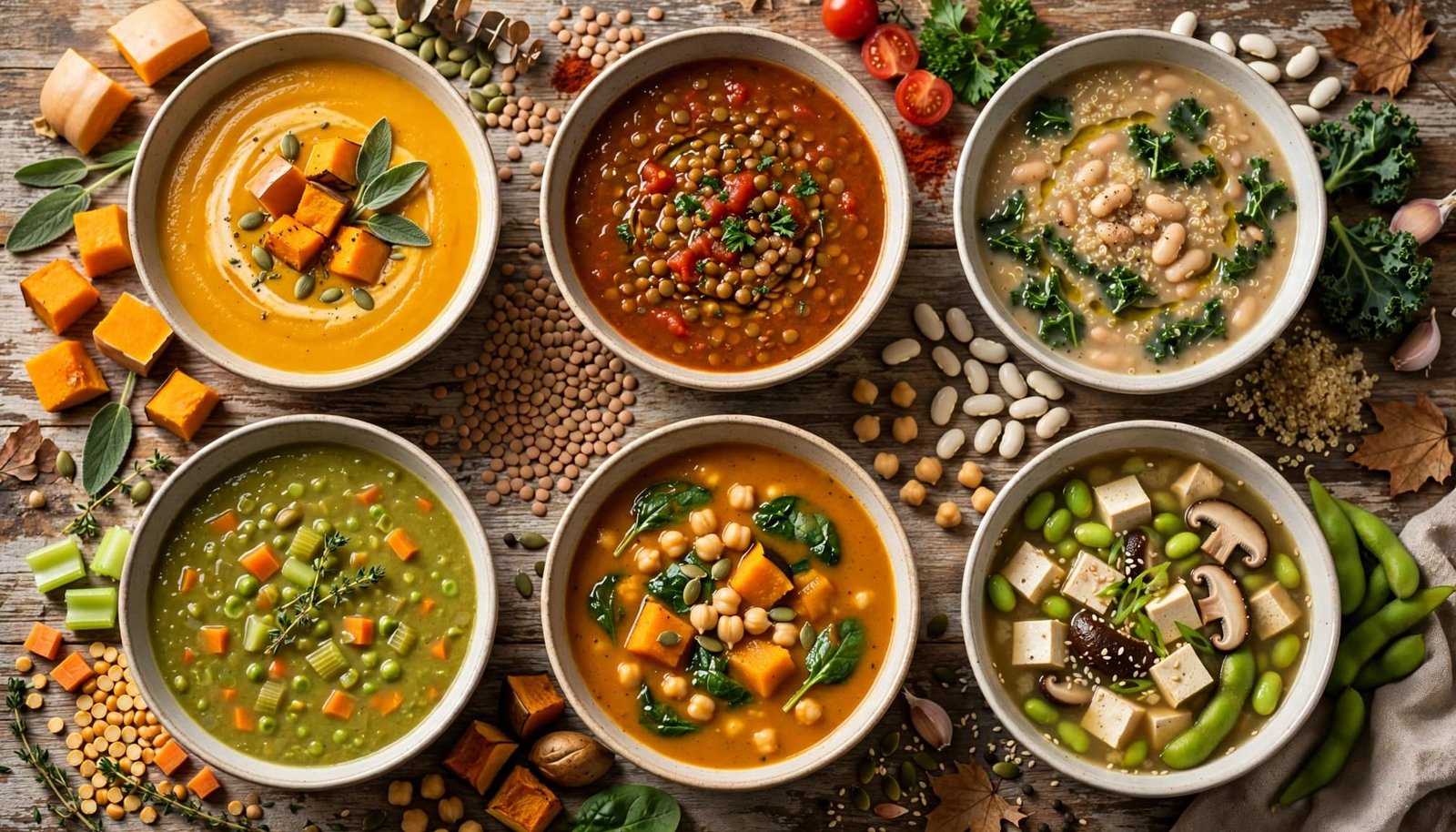
Beans, lentils, peas, edamame, tofu, and quinoa make fall soups filling without requiring meat. Use low-sodium vegetable broth or unsalted broth, then build flavor with garlic, herbs, spices, citrus, or vinegar. For canned beans, drain them in a colander and rinse under cold water before adding them to the pot.
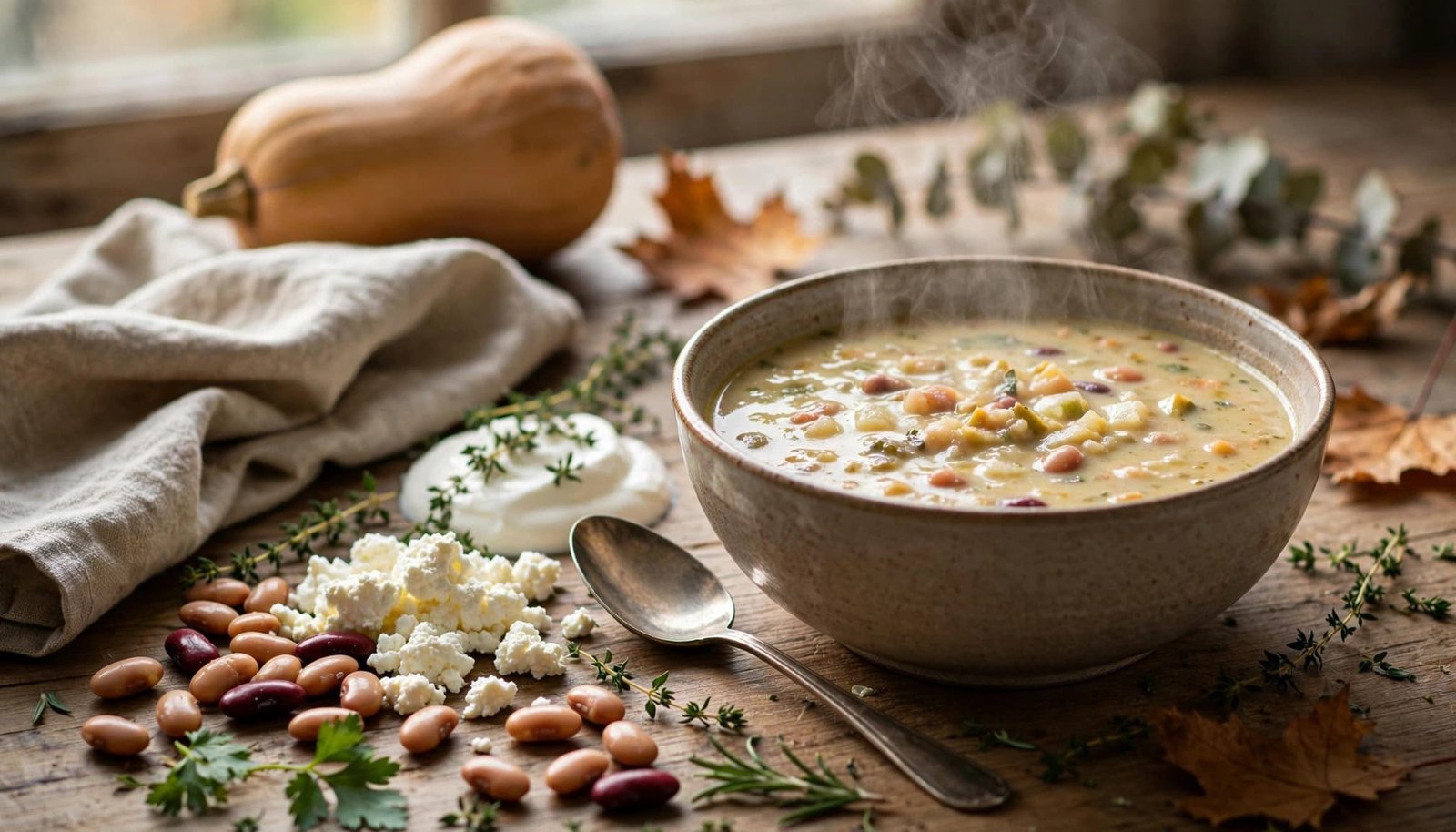
7. Creamy Butternut Squash and Cottage Cheese Soup
Roast cubed butternut squash with onion, garlic, sage, black pepper, and a little olive oil until tender and lightly browned. For a faster option, simmer the squash and aromatics in vegetable or bone broth until soft. Blend the mixture with enough broth to reach your preferred consistency, then let the soup cool slightly.
Blend in cottage cheese until smooth and creamy. Avoid boiling the soup after adding cottage cheese, since high heat can make the dairy separate or turn grainy. Nutmeg adds a warm finish, while a little extra black pepper keeps the sweet squash balanced. For another cozy seasonal collection, see these fall soup recipes.
8. Smoky Lentil and Tomato Soup
Rinse brown or green lentils and check them for small stones or debris. Sauté diced carrots, onion, celery, and garlic in olive oil until the vegetables soften. Add smoked paprika and cumin, stirring for about 30 seconds so the spices release their flavor.
Next, pour in crushed tomatoes and broth, then add the lentils. Simmer until the lentils are tender, usually 25 to 35 minutes depending on the variety. Stir in spinach or chopped kale during the final few minutes. A splash of red wine vinegar or apple cider vinegar brightens the tomatoes and keeps the soup from tasting flat.
9. White Bean, Kale, and Quinoa Soup
Rinse quinoa in a fine-mesh strainer before cooking to remove its natural bitter coating. Add it to a pot with cannellini beans, carrots, celery, diced tomatoes, garlic, rosemary, and vegetable broth. Simmer until the quinoa becomes tender and its small spiral-like germ separates.
Stir in chopped kale after the quinoa cooks, giving the greens several minutes to soften while retaining some texture. If the soup becomes too thick, add more broth. Finish each bowl with grated Parmesan, plain Greek yogurt, or pumpkin seeds. The base stays vegetarian, and each topping adds its own flavor and protein.
10. Split Pea and Vegetable Soup
Sort and rinse dried split peas before adding them to the pot. Combine them with carrots, celery, onion, potatoes, garlic, thyme, bay leaf, and vegetable broth. Simmer the soup until the peas become soft and begin to break down, which may take about an hour or longer.
Remove the bay leaf, then use an immersion blender to partially blend the soup. Leave some vegetables whole for texture, or blend more thoroughly for a smoother bowl. Split peas naturally thicken the broth, so you don’t need cream. Add extra broth if the soup becomes too dense as it sits.
11. Chickpea, Pumpkin, and Spinach Soup
Sauté onion and garlic until tender, then stir in pumpkin purée, diced tomatoes, cumin, and coriander. Add broth and rinsed chickpeas, and simmer until the flavors come together. Stir in spinach during the final minute or two, just until it wilts.
Pumpkin gives the soup body without heavy cream, while chickpeas add plant protein and fiber. Serve it with whole-grain toast or a spoonful of plain Greek yogurt. A squeeze of lemon can sharpen the earthy spices before serving.
12. Edamame, Tofu, and Mushroom Miso Soup
Simmer sliced mushrooms and fresh ginger in low-sodium broth until the mushrooms soften and the broth becomes fragrant. Add shelled edamame and cubes of firm tofu, handling them gently so the tofu keeps its shape. Add bok choy or spinach near the end.
Remove the pot from high heat before stirring miso into a small amount of warm broth, then return that mixture to the soup. Don’t boil miso for a long time, because extended high heat can dull its flavor. Taste before adding seasoning, since miso and broth may already provide plenty of sodium.
Lean Beef and Seafood Soups for a Hearty Protein Boost
Lean beef and seafood bring variety to fall soup recipes without making every bowl feel heavy. Pair them with barley, lentils, beans, cabbage, or colorful vegetables for meals that offer protein, fiber, and lasting comfort.
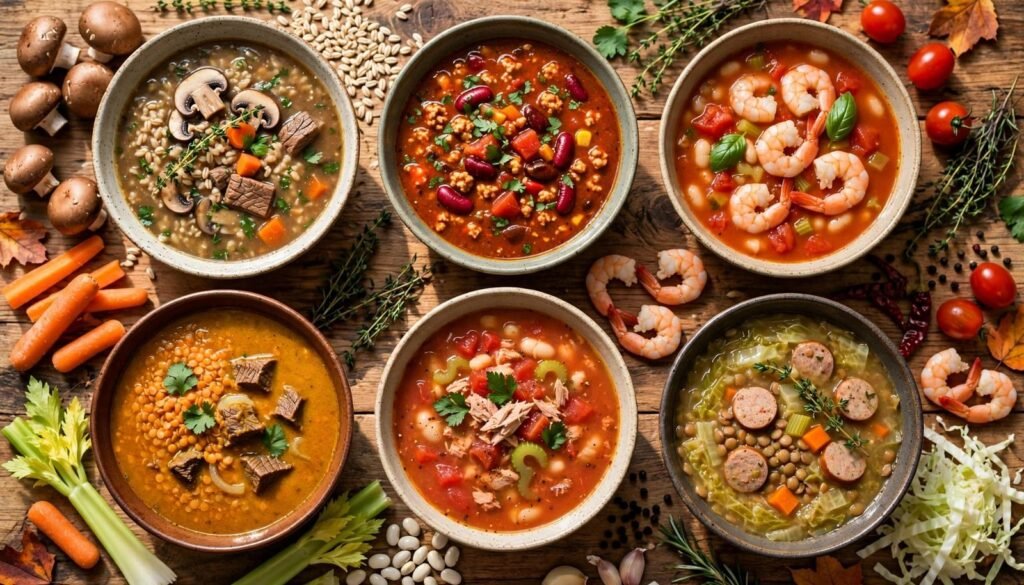
13. Lean Beef, Barley, and Mushroom Soup
Use lean stew beef or extra-lean ground beef with pearl barley, mushrooms, carrots, celery, onion, garlic, thyme, and low-sodium broth. Brown the beef in a large pot, then transfer it to a plate. Add the vegetables and cook until softened. Pour in a little broth and scrape up the browned bits from the bottom.
Return the beef to the pot with the remaining broth, barley, and thyme. Simmer until the beef is tender and the barley is chewy. Barley adds texture and fiber, but quinoa works well when you need a faster-cooking grain. Keep the heat gentle, since boiling lean beef aggressively can make it tough.
14. Turkey Chili Soup With Black Beans
Brown lean ground turkey in a soup pot, breaking it into small pieces. Add onion and bell pepper, then cook until tender. Stir in garlic, chili powder, and cumin for the final minute. Add black beans, kidney beans, tomatoes, corn, and broth, then simmer until the flavors combine.
Use extra chili powder or a pinch of cayenne for more heat. For a milder bowl, reduce the spices and choose mild tomatoes. Top the soup with avocado, cilantro, or plain Greek yogurt. The beans add fiber and make the lean turkey feel more substantial.
15. Shrimp, White Bean, and Tomato Soup
Sauté onion and garlic, then add diced tomatoes, white beans, Italian herbs, and broth. Simmer until the base is hot and flavorful, then stir in spinach. Add peeled shrimp during the final few minutes and cook only until they turn pink and opaque.
Finish with fresh lemon juice and black pepper. Don’t simmer shrimp for too long, because overcooking makes the texture rubbery. For handling and storage advice, follow the FDA’s seafood safety guidance, and discard seafood with an unpleasant odor or questionable freshness.
16. Lean Beef and Red Lentil Curry Soup
Brown lean ground beef, then add onion, carrots, and garlic. Stir in curry powder and grated ginger so the spices become fragrant. Add tomatoes, red lentils, and broth, then simmer until the lentils soften and the soup turns creamy.
Red lentils cook faster than brown lentils, which makes them useful for weeknight meals. They also absorb plenty of liquid, so add extra broth if the soup thickens too much. Serve with cilantro or a spoonful of plain yogurt.
17. Tuna, White Bean, and Tomato Soup
Simmer onion, celery, garlic, tomatoes, cannellini beans, and broth until the vegetables soften. Fold in drained canned tuna packed in water during the final few minutes. Adding it at the end helps the tuna keep its texture instead of breaking apart into a paste.
Choose lower-sodium tuna when possible, and compare household seafood recommendations before serving it often. You can find additional safe fish handling advice for storage and preparation.
18. Chicken Sausage, Lentil, and Cabbage Soup
Brown sliced lean chicken sausage, then sauté onion, carrots, and garlic in the same pot. Add green lentils, tomatoes, and broth, and simmer until the lentils become tender. Stir in chopped cabbage during the final 10 minutes, cooking until it softens but still has some bite.
Compare sausage labels for protein, saturated fat, and sodium, since products vary widely. For a less processed option, replace the sausage with white beans or extra lentils.
How to Make High Protein Fall Soup Taste Great and Store Safely
A high-protein fall soup tastes best when each ingredient enters the pot at the right time. Build flavor in layers, then balance the finished bowl with something bright, fresh, or creamy. For more seasonal inspiration, browse this collection of soup recipes.
Build Flavor and Protein in Layers
Start by sautéing onion, celery, carrots, garlic, or leeks in olive oil until softened. If you’re using ground turkey, lean beef, or chicken sausage, brown it next so the meat develops a savory crust. Add broth, tomatoes, pumpkin, squash, beans, lentils, or other sturdy ingredients, then simmer until the slowest-cooking ingredients are tender.
Add quick-cooking proteins and greens near the end. Shredded chicken, tofu, edamame, spinach, kale, and cooked seafood need only a few minutes to warm through. You can also increase protein by stirring in cottage cheese or plain Greek yogurt after lowering the heat. Blend cottage cheese with a little warm broth first for a smoother finish.
Bone broth can add savory flavor and some protein, but check the label because protein amounts vary by brand. Beans, lentils, tofu, and dairy usually provide a more dependable protein boost.
Texture matters as much as flavor. Blend only part of a bean, lentil, or vegetable soup to thicken the broth while keeping some pieces intact. If the soup becomes too thick, add warm broth a little at a time. A splash of lemon juice, vinegar, or lime juice at the end can wake up a rich soup, while fresh parsley, cilantro, or dill adds a clean finish.
Cool and Store Soup Safely
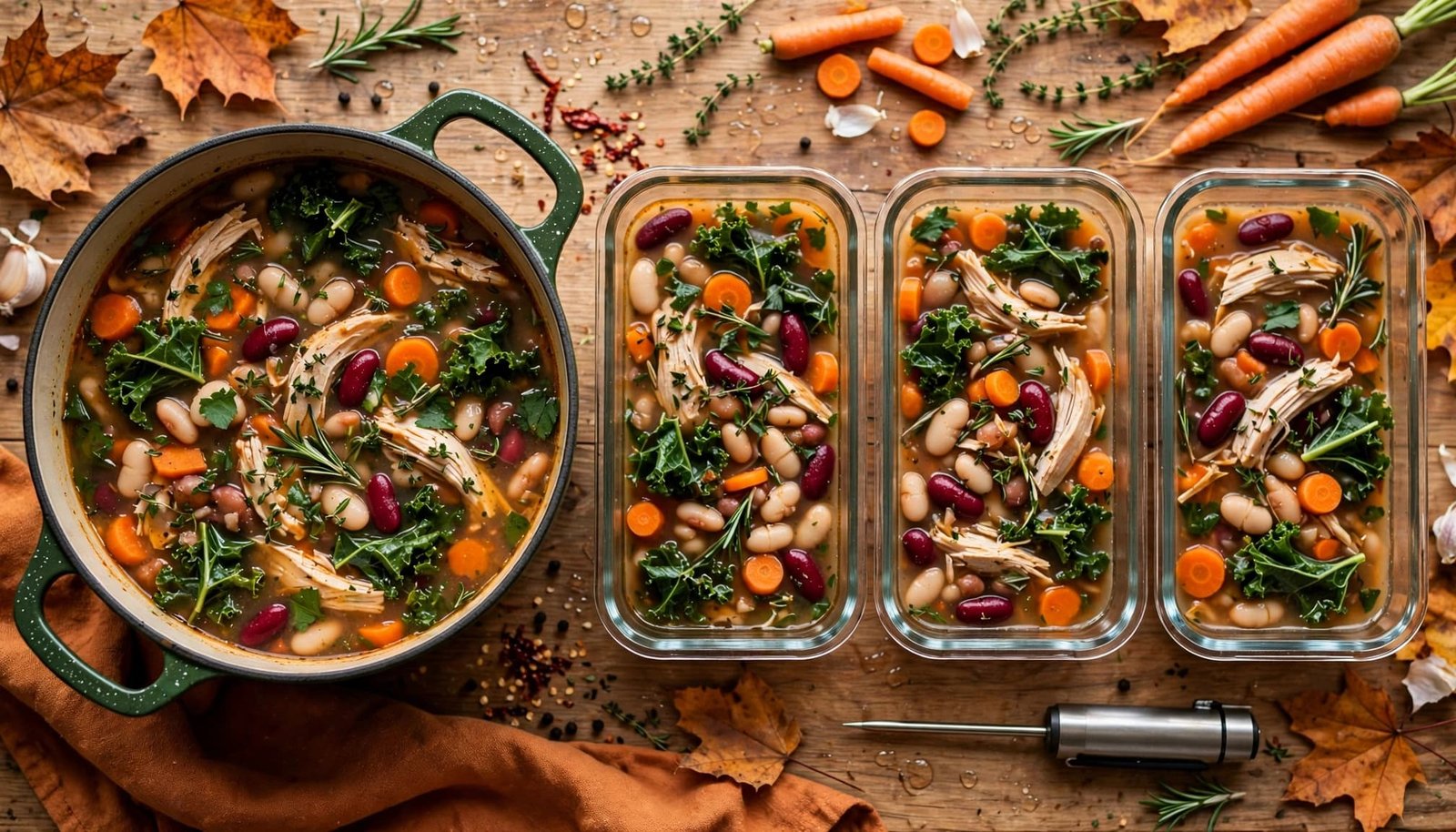
Refrigerate soup within 2 hours of cooking. If the room is above 90°F, refrigerate it within 1 hour. Divide large batches into shallow containers so they cool faster, rather than leaving a deep pot on the counter. The USDA’s leftover food guidance recommends keeping refrigerated food at 40°F or below.
Eat refrigerated soup within 3 to 4 days. When reheating, bring each portion to 165°F, measured with a food thermometer. Reheat only what you plan to eat, since repeated heating can reduce both quality and texture.
Frequently Asked Questions
A high-protein fall soup can be simple, flexible, and filling, but a few details affect the final result. Use these answers to adjust the recipes for your diet, improve texture, control sodium, and store leftovers safely.
What makes a soup high in protein?
Protein can come from meat, poultry, seafood, beans, lentils, peas, tofu, edamame, cottage cheese, Greek yogurt, or bone broth. Combining two sources, such as chicken with white beans or lentils with Greek yogurt, can make a bowl more satisfying. The full recipe and serving size determine the final protein amount, so a soup with one chicken breast divided among four servings will provide less protein per bowl than one divided among two.
Bone broth may add protein, but the amount varies by brand. Check the nutrition label instead of assuming it provides the same protein as chicken, beans, or dairy.
Can I make these fall soups vegetarian?
Yes. Replace chicken, turkey, or beef with beans, lentils, tofu, edamame, quinoa, or extra vegetables. White beans work well in creamy soups, while lentils and quinoa add substance to brothy recipes without requiring meat.
Use vegetable broth instead of chicken or beef broth, and taste before adding salt. If you finish the soup with Parmesan, Greek yogurt, cottage cheese, or another dairy topping, check that it fits your diet.
How can I add more protein to a creamy soup?
Blend cottage cheese into the soup with a little warm broth until smooth, then stir it into the pot after lowering the heat. You can also add plain Greek yogurt at the end, once the soup has cooled slightly. White beans blend especially well with squash, pumpkin, potato, and tomato-based soups.
Bone broth is another option when its flavor suits the recipe and you want a savory base. Don’t boil Greek yogurt or cottage cheese for a long time, because high heat can cause dairy to separate, curdle, or become grainy.
Can high-protein soup be frozen?
Broth-based bean, lentil, chicken, and vegetable soups usually freeze well. Pour cooled soup into airtight containers, leaving room at the top for expansion, then label each container with the date. The USDA lists soups and stews at about 2 to 3 months for best freezer quality in its freezing and food safety guidance.
Dairy-based soups, potatoes, and seafood may change texture after thawing. Freeze a small portion first if you’re unsure, and add fresh yogurt or herbs after reheating.
How do I keep soup from becoming too salty?
Start with low-sodium broth, rinse canned beans, and delay added salt until the soup has finished cooking. Toppings, canned tomatoes, miso, cheese, and processed meats such as sausage can add more sodium than expected.
If the finished soup tastes too salty, dilute it with unsalted broth or water, then add lemon juice or vinegar for balance. Acid won’t remove sodium, but it can make the overall flavor taste brighter and less heavy.
What should I serve with a high-protein soup?
Choose a side that adds texture and energy without taking attention away from the soup. A simple green salad, roasted vegetables, whole-grain toast, or a small piece of cornbread can complete the meal.
For a creamy soup, crisp salad greens or roasted vegetables provide contrast. With a brothy bean, lentil, or chicken soup, whole-grain toast can help make the meal more substantial without adding excessive portions.
Conclusion
These healthy high-protein fall soup recipes make it easy to build a cozy meal around protein, vegetables, and pantry staples. Whether you choose chicken, turkey, beans, lentils, tofu, or seafood, you can create a satisfying bowl without complicated ingredients or heavy preparation.
Start with the recipe that matches what you already have, then adjust the beans, grains, herbs, and toppings to fit your taste and nutrition needs.
For meal prep, divide cooled soup into shallow containers, refrigerate it within two hours, and enjoy it within 3 to 4 days. With so many flexible options, you can try a new high-protein fall soup each week and keep cool-weather meals both comforting and practical.
Save the pin for later

I’m the creator of My Everyday Dish, a food blog focused on easy homemade recipes, comforting family meals, simple baking, and seasonal food ideas. I love finding practical ways to make everyday cooking less stressful and more enjoyable. Here, I share recipes with simple ingredients, clear instructions, and plenty of flavor, helping you make delicious meals and treats you’ll feel confident serving at home.
Leave a Reply