
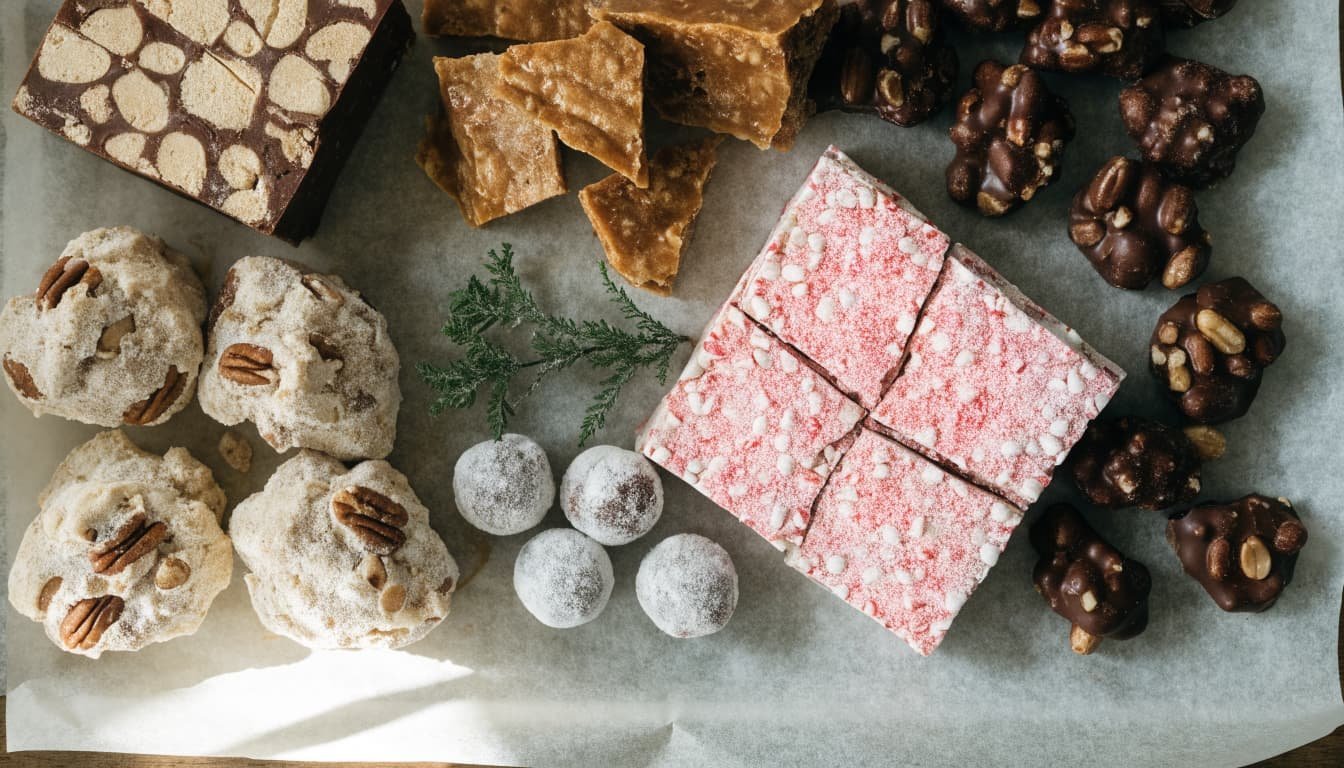
Homemade Christmas candy brings familiar flavors and a cozy feel to the holidays, especially when you tuck a few pieces into a tin for friends and family. These 12 recipes include stovetop classics like fudge and brittle, along with simpler no-bake treats such as chocolate clusters and peppermint bark.
Each recipe has clear steps and practical tips to help you get the texture you want, whether you’re cooking sugar syrup or melting chocolate. Start with the candy that sounds manageable, then choose a few more to fill your holiday tin.
Get Ready to Make Christmas Candy at Home
A little setup makes homemade Christmas candy easier to manage, especially when a recipe needs your full attention at the stove. Gather the tools first, then clear a cool, dry place for candies to set.
Gather the Right Tools
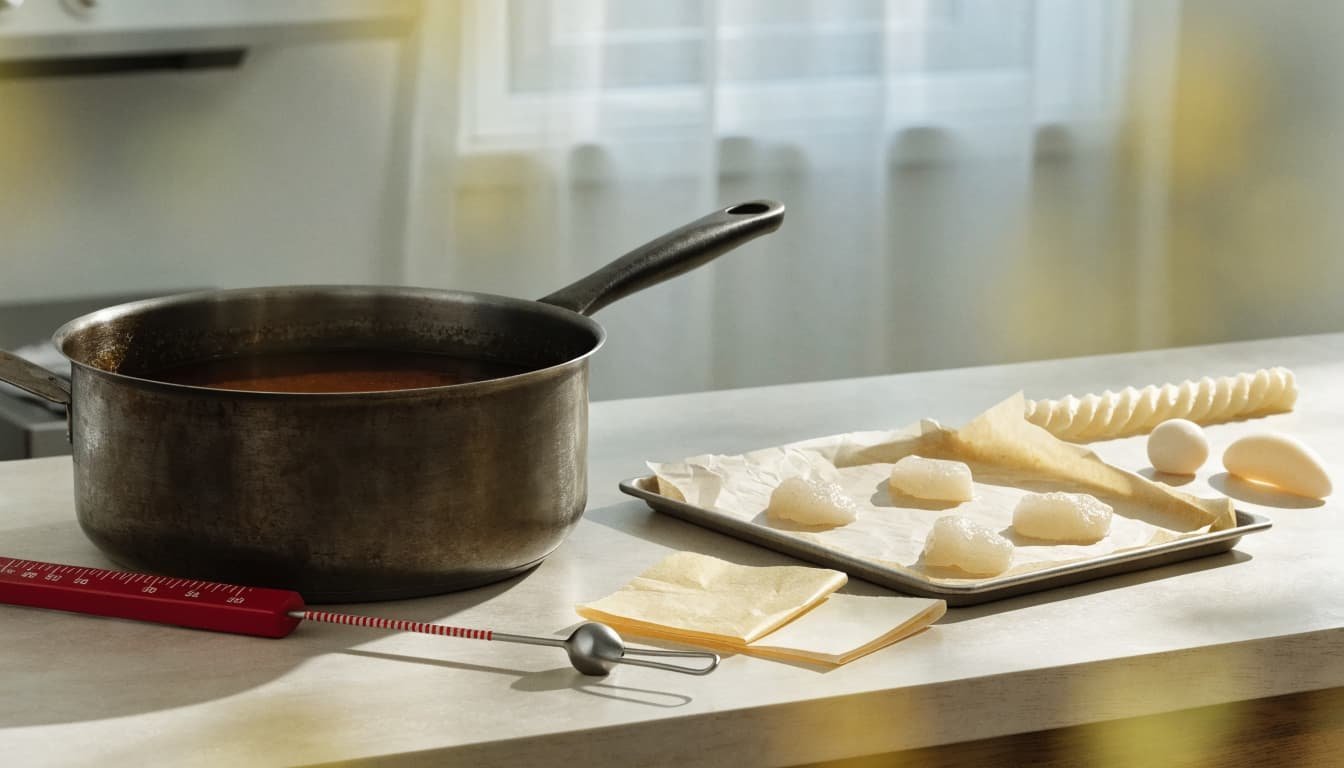
Use a heavy saucepan so heat spreads more evenly as sugar cooks. Keep a lined or greased baking sheet nearby for candies you need to pour or spread, and use parchment paper to make lifting and cleanup easier.
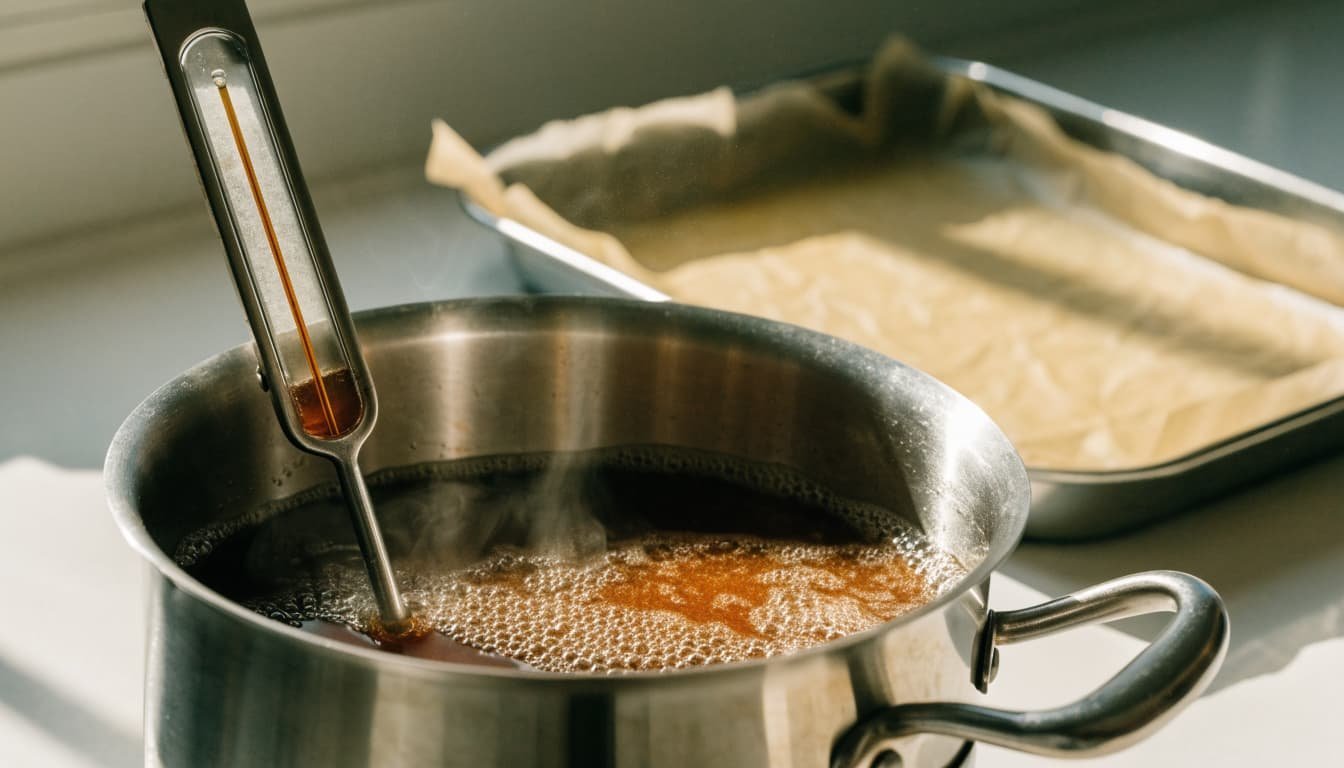
A reliable candy thermometer helps with recipes such as brittle, caramels, and divinity. Follow the temperature in each recipe, since the right endpoint depends on the candy you’re making. The University of Arkansas Extension explains how to check a candy thermometer’s accuracy before you begin.
Set Up Safely
Hot sugar can cause serious burns, so keep children away from the stove and pouring area. Move slowly when handling hot pans, and set them on a stable, heat-safe surface.
Choose a cool, dry spot for candies to set, but follow each recipe’s directions for storing the finished batch. Divinity can be especially sensitive to weather; humidity may keep it soft or prevent it from setting well.
12 Easy Old-Fashioned Christmas Candy Recipes for the Holidays
These first six Christmas candy recipes include a mix of stovetop favorites and simple chocolate treats. Follow the recipe’s measurements and cooking cues, then let each candy cool or set fully before serving.
1. Chocolate Marshmallow Creme Fudge
Marshmallow creme helps make fudge smooth and sliceable, without relying on guesswork for a creamy texture. If you enjoy seasonal variations, try our pumpkin pecan fudge too.
Ingredients: Chocolate, sugar, butter, marshmallow creme, any liquid specified in the recipe, and optional chopped nuts.
- Line or grease the pan before you start cooking.
- Cook the sugar, butter, and recipe-specified liquid as directed.
- Stir in the chocolate and marshmallow creme until smooth.
- Fold in chopped nuts, if using, then spread the fudge in the pan.
- Cool fully before cutting into squares.
Let the fudge set at room temperature unless your recipe says otherwise. A clean, fully cooled cut gives each piece a neater edge.
Read also: 16 Homemade Christmas Pretzel Candy Recipes
2. Old-Fashioned Peanut Brittle
Peanut brittle has a crisp, glassy texture with roasted peanuts in every bite. Have your pan ready before cooking, since hot syrup needs to be spread promptly.
Ingredients: Sugar, peanuts, butter, and baking soda.
- Set a heat-safe baking sheet on a stable surface.
- Cook the sugar mixture according to the recipe, checking it with a candy thermometer and following its stated target.
- Stir in the peanuts and butter.
- Remove the pan from the heat, then add the baking soda.
- Spread the mixture thinly on the baking sheet and cool completely before breaking.
The syrup gets dangerously hot and can cause severe burns. Keep children away from the stove and pouring area, and avoid touching the brittle until it has cooled.
3. Classic Pecan Divinity
Divinity is light and airy when it sets well, with pecans adding a gentle crunch. Dry weather helps the candy firm up; humidity can leave it soft or make setting difficult.
Ingredients: Sugar, corn syrup, egg whites, vanilla, and pecans.
- Beat the egg whites to the stage stated in the recipe.
- Cook the sugar and corn syrup to the recipe’s thermometer target.
- Slowly beat the hot syrup into the egg whites.
- Continue beating until the mixture looks glossy and thick.
- Fold in pecans, then spoon the candy into small mounds.
Work with a dry bowl and follow the recipe’s cues for both the egg whites and syrup. Divinity can be sensitive to moisture, so choose a dry day when possible.
4. Creamy Southern Pecan Pralines
Pralines combine buttery sweetness with toasted pecans, then set into soft, creamy mounds. Prepare the lined tray first so you can portion the mixture as soon as it reaches the right stage.
Ingredients: Pecans, sugar, butter, cream or milk as specified by the recipe, and vanilla.
- Line a tray with parchment or lightly grease it.
- Cook the sugar and dairy mixture with butter as directed.
- Add the pecans and stir only as the recipe instructs.
- When the mixture thickens, drop spoonfuls onto the tray.
- Let the pralines set fully before serving.
Overmixing can make pralines grainy. A candy thermometer can help you reach the recipe’s target stage, while careful stirring helps preserve a creamy texture.
5. Chocolate Peppermint Bark
Peppermint bark layers chocolate with crushed candy for a crisp holiday treat. Melt the chocolate gently, since high heat can scorch it or leave it grainy.
Ingredients: Dark or semisweet chocolate, white chocolate, and crushed peppermint candies.
- Line a pan with parchment.
- Melt the dark or semisweet chocolate, then spread it evenly in the pan.
- Let it set until firm enough to support another layer.
- Melt the white chocolate and spread it over the first layer.
- Add crushed peppermint, chill until set, then break into pieces.
Let the first layer firm up before adding the white chocolate. This helps the layers stay distinct when you break the bark.
Read also: Easy Crockpot Christmas Candy Recipes for Homemade Holiday Treats
6. Chocolate Peanut Clusters
Chocolate peanut clusters take little hands-on cooking, making them a useful choice when you want a quick batch. The finished texture is crisp from the peanuts, with a smooth chocolate coating.
Ingredients: Chocolate, roasted peanuts, and optional pretzels or a pinch of salt.
- Melt the chocolate gently, stirring until smooth.
- Stir in the peanuts.
- Drop small clusters onto parchment.
- Add pretzels or a pinch of salt, if you like.
- Let the clusters set before serving or packing.
Follow the recipe’s cooling directions to learn whether the clusters set at room temperature or need refrigeration. Allow them to firm up completely so they hold their shape.
More Easy Christmas Candy Recipes to Round Out Your Holiday Tin
These six recipes add chewy, crunchy, and chocolate-covered candies to your holiday tin. A thermometer helps with cooked sugar, while several no-bake options need only a little melting and setting time.

7. Buttery Chocolate-Topped Toffee
Toffee has a crisp, buttery base topped with chocolate and chopped nuts. Use a candy thermometer and follow the recipe’s hard-crack target, since the cooking temperature affects how firmly the candy sets. Utah State University Extension’s candy-making guide offers helpful guidance on working with cooked sugar.
Ingredients: Butter, sugar, salt, chocolate, and chopped nuts.
- Line a baking sheet or tray with parchment.
- Cook the butter, sugar, and salt as directed, stirring as instructed, until the mixture reaches the recipe’s hard-crack stage.
- Carefully pour the hot toffee onto the tray and spread it into an even layer.
- Add chocolate while the toffee is still warm. Sprinkle with chopped nuts.
- Cool completely, then break into pieces.
For an easier variation, make saltine-cracker toffee. It skips the traditional cooked-sugar method and gives you a crisp base.
8. Soft Homemade Caramels
Homemade caramels are chewy, buttery, and easy to portion for sharing. A candy thermometer helps you reach the recipe’s target, but even a small change in cooking can make the finished pieces softer or firmer.
Ingredients: Sugar, butter, cream, vanilla, and optional coarse salt.
- Line a square pan with parchment.
- Cook the sugar, butter, and cream together, stirring as the recipe directs.
- Use a candy thermometer to cook the mixture to the recipe’s stated target.
- Stir in vanilla, then pour the hot caramel into the pan.
- Cool completely, cut into pieces, and wrap individually. Add coarse salt if you like.
Measure the target carefully, since a few degrees can change the texture. Let the slab cool fully before cutting so the caramels hold their shape.
9. Coconut Chocolate Haystacks
These no-bake clusters are a simple choice when you want a chocolate treat without cooking sugar. The ingredient ratio matters: use enough melted chocolate to coat and bind the coconut so each haystack holds together.
Ingredients: Shredded coconut, melted chocolate, and optional toasted nuts.
- Line a tray with parchment.
- Melt the chocolate gently, stirring until smooth.
- Fold in the coconut and optional toasted nuts.
- Spoon small mounds onto the lined tray.
- Let the haystacks set fully before serving.
If the mixture looks dry and crumbly, add a little more melted chocolate. A well-coated mixture should hold its shape when spooned onto the tray.
10. Gumdrop Nougat
Gumdrops add bright color and a chewy bite to this soft candy. Follow the recipe’s method for preparing the nougat base, then use its recommended chilling or resting time so the pieces firm up properly.
Ingredients: The white chocolate or marshmallow base ingredients specified in the recipe, chopped gumdrops, and optional nuts.
- Line a pan with parchment.
- Melt or prepare the nougat base as directed.
- Fold in the chopped gumdrops and optional nuts.
- Press the mixture evenly into the pan.
- Chill or rest it as the recipe instructs, then cut into small squares.
The candy can stick to the knife as you cut it. Lightly grease the blade to make cleaner slices.
Read also: Easy Christmas Candy Recipes With Almond Bark for the Holidays
11. Old-Fashioned Potato Candy
Potato candy uses cooked potato to bring moisture to a simple powdered-sugar dough. Add the sugar gradually, since the potato’s moisture can make the dough sticky if you add too little at first.
Ingredients: Cooked potato, powdered sugar, peanut butter, and vanilla.
- Mash the cooked potato until smooth, then stir in the vanilla.
- Add powdered sugar gradually until a workable dough forms.
- Roll the dough between sheets of parchment into a thin rectangle.
- Spread with peanut butter, then roll the dough into a log.
- Chill until firm and slice.
The dough should roll without sticking excessively to the parchment. Add more powdered sugar a little at a time if it feels too soft.
12. Chocolate-Dipped Buckeyes
Buckeyes pair a firm peanut butter center with a thin chocolate coating. Chill the centers before dipping, which makes them easier to handle and helps them keep their shape.
Ingredients: Peanut butter, butter, powdered sugar, and chocolate.
- Mix the peanut butter and butter until smooth.
- Work in powdered sugar until the mixture is firm enough to roll.
- Shape into balls and chill until firm.
- Melt the chocolate gently, then dip each ball, leaving a small circle uncovered at the top.
- Let the coating set before serving or packing.
Keep the centers chilled as you work, especially if the kitchen is warm. The uncovered tops give buckeyes their familiar look.
How to Store, Serve, and Share Your Homemade Candy
Homemade candy is easier to pack when you treat each type according to its texture and recipe. Fudge, divinity, brittle, and chocolate bark don’t all belong in the same container or the refrigerator, so check the storage directions for each batch.

Store Each Candy the Way Its Recipe Directs
Let candy cool or set fully before you pack it. Then follow the recipe’s directions for room-temperature storage or refrigeration. Avoid assuming that a refrigerator is best for every candy, since the recipe’s ingredients and texture affect how it should be kept.
Choose a clean container that fits the batch without crushing the pieces. A tight-fitting lid helps protect candy from dust and other kitchen odors. USU Extension’s food storage booklet also recommends keeping stored food protected in airtight containers.
Separate pieces that could stick together or share flavors. Put parchment between sticky caramels, fudge, or other soft candies, and keep strongly flavored pieces apart from milder ones. Peppermint bark can lend its flavor to nearby candy, while damp or sticky pieces may cling to chocolate.
Pack a Tin for Serving or Gifting
For a mixed tin, place sturdy candies on the bottom and add fragile pieces near the top. Brittle and peppermint bark can break under heavier candy, so a little care during packing keeps the assortment easier to serve. If you’re bringing candy to a gathering, arrange a few pieces on a small platter and keep the rest covered until needed.
Small assortments make thoughtful gifts without requiring a large batch of every recipe. Add a label with the candy names and common allergens, such as peanuts, tree nuts, milk, or other ingredients used in the recipes. If you’re packing several kinds, separate them with parchment and label the tin clearly so everyone knows what’s inside.
Frequently Asked Questions
A few small choices can affect how homemade candy sets, especially when you work with cooked sugar or melted chocolate. These answers cover common adjustments that can help you get a better result.
Why Did My Fudge Turn Grainy?
Fudge can turn grainy when sugar crystals form before the mixture is ready to be beaten. Follow the recipe’s cooling and stirring directions closely, since stirring too soon can encourage crystals to form. If the recipe tells you to let the mixture cool before beating, wait until it reaches that stage. A smooth, glossy mixture is a better cue than beating for extra time.
Can I Make Christmas Candy Without a Candy Thermometer?
Yes, choose recipes that don’t rely on cooking sugar to a precise stage, such as chocolate bark, peanut clusters, or coconut haystacks. For brittle, caramels, and other cooked-sugar candies, a thermometer gives you a more dependable way to reach the texture the recipe describes. Without one, follow the recipe’s visual cues carefully, but expect results to vary more from batch to batch.
Can I Substitute Regular Marshmallows for Marshmallow Creme?
The two ingredients don’t always work as a direct swap. Marshmallow creme has a softer consistency, while regular marshmallows contain more structure and can melt differently in the fudge mixture. Use a recipe written for the ingredient you have, or follow its specific substitution directions. That helps the finished fudge set with the texture you expect.
Why Did My Chocolate Develop White Streaks?
White streaks or a pale film can appear when chocolate experiences temperature changes or when cocoa butter separates on the surface. This is called chocolate bloom, and it can affect the candy’s appearance and texture. If the chocolate was stored properly and the candy smells and tastes normal, bloom is generally a quality issue rather than a reason to discard it. Store chocolate candies in a cool, dry place to reduce temperature swings.
Can I Freeze Homemade Christmas Candy?
Some candies freeze better than others, so check the recipe before freezing a batch. For candies that can be frozen, pack them in an airtight container with parchment between layers to prevent sticking. Thaw the container while it is still closed, which helps limit condensation on the candy. If the pieces become damp or lose their texture, use them soon rather than packing them into a gift tin.
Can I Reduce the Sugar in a Candy Recipe?
Don’t reduce the sugar in a cooked-candy recipe unless its instructions allow it. Sugar affects how the mixture cooks and sets, so using less can leave candy too soft, sticky, or unable to hold its shape. If you want a less-sweet treat, choose a recipe with a naturally stronger flavor, such as dark chocolate bark with a small amount of peppermint.
Conclusion
A tin of homemade Christmas candy brings several classic flavors together, from creamy fudge to crisp brittle. Start with one or two recipes that feel manageable, then try more as your confidence grows.
Handle cooked sugar carefully, and store each candy according to its recipe so the texture holds. With a little planning, you can share a mixed tin that feels right at home with the holidays.
Save the pin for later


I’m the creator of My Everyday Dish, a food blog focused on easy homemade recipes, comforting family meals, simple baking, and seasonal food ideas. I love finding practical ways to make everyday cooking less stressful and more enjoyable. Here, I share recipes with simple ingredients, clear instructions, and plenty of flavor, helping you make delicious meals and treats you’ll feel confident serving at home.
Leave a Reply