

Homemade Christmas candy is manageable when you start with almond bark, which melts into a ready-to-use coating. Christmas candy recipes with almond bark need little equipment, and you can choose peppermint pieces, salty clusters, or a colorful cookie bark.
The name can be confusing: almond bark is a confectionery coating and doesn’t necessarily contain almonds, so check the package’s ingredient list and allergen statement. A lined tray, dry bowl, and a few favorite mix-ins are enough to begin. Choose the combination you want, then follow the same gentle melting method for each batch.
Easy Christmas Candy Recipes With Almond Bark for the Holidays
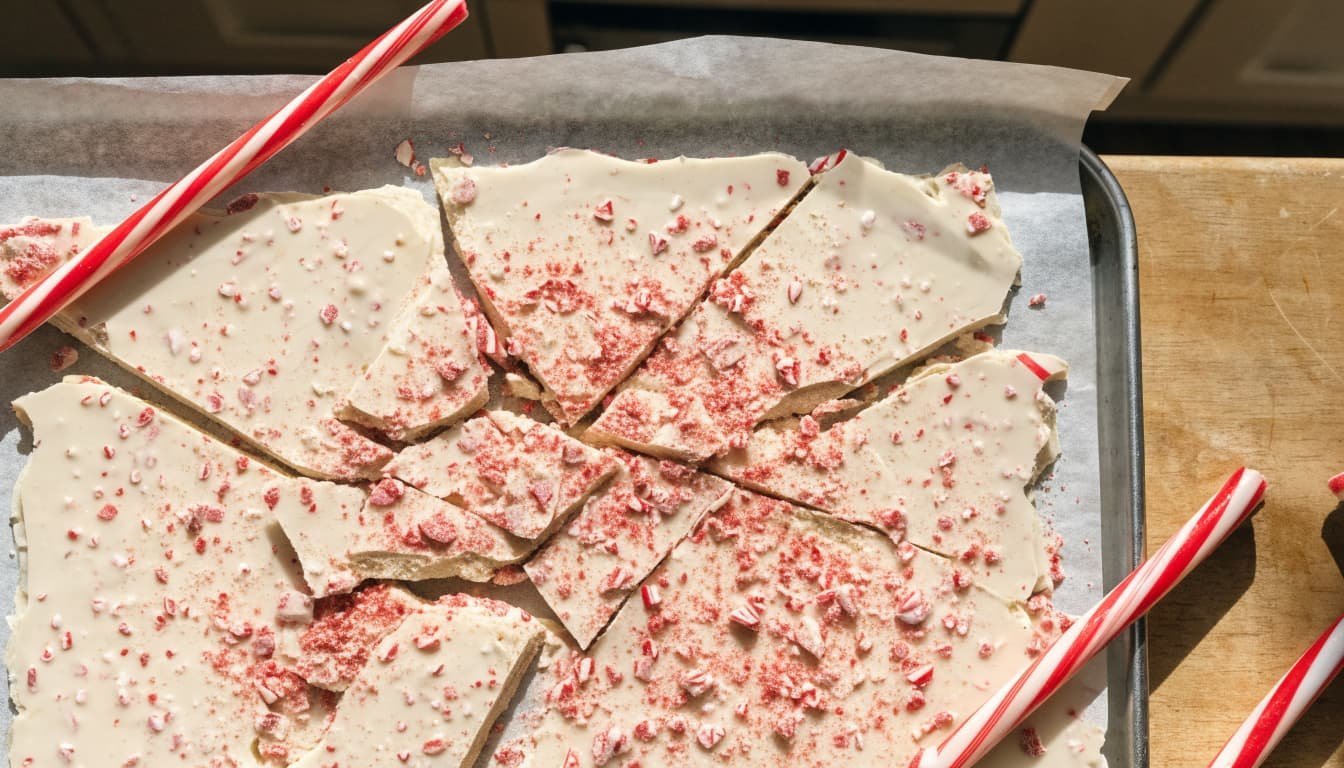
Peppermint bark gives you a firm, sweet base with small pieces of crisp mint candy. White almond bark keeps the red candy pieces visible, and the finished sheet breaks into irregular pieces for serving or packing. Choose this version if you want a simple candy with a clear peppermint flavor.
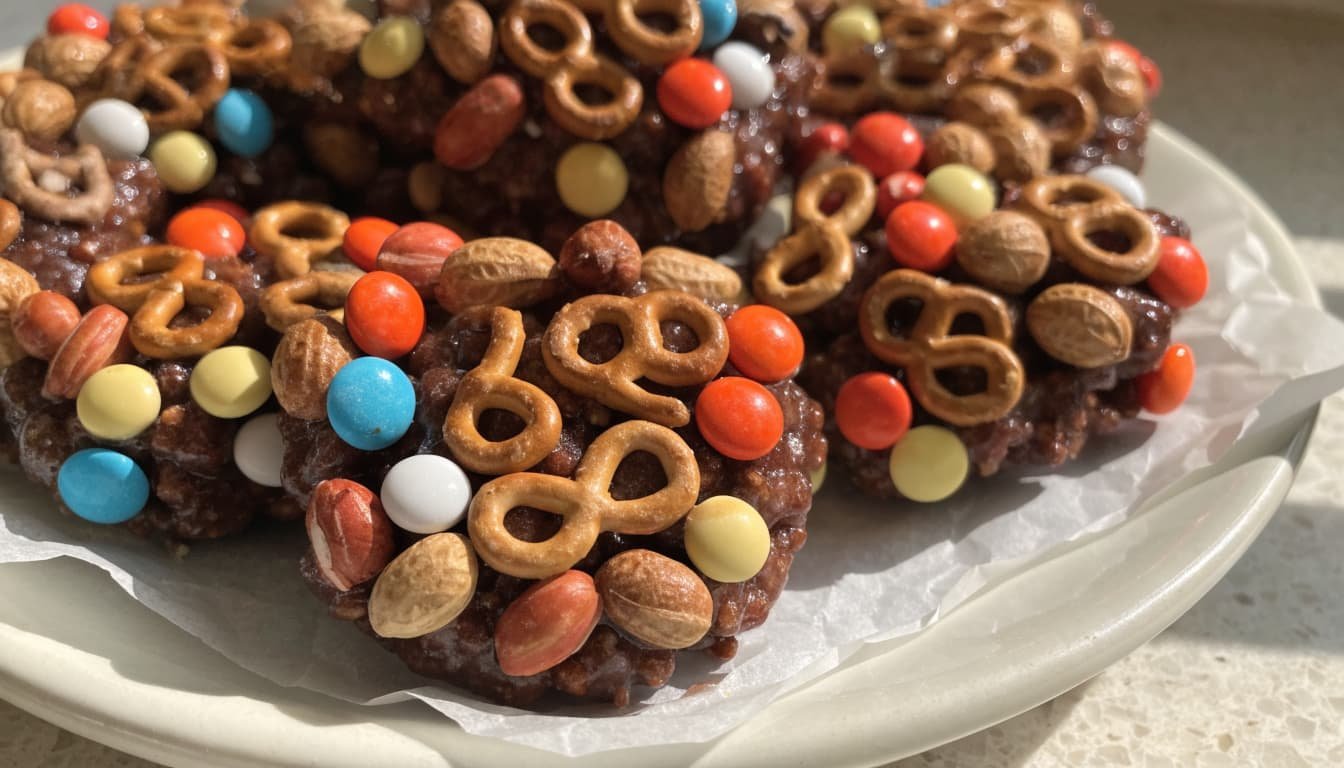
Peanut-pretzel clusters combine roasted peanuts, crisp pretzels, and sweet coating in individual spoonfuls. The salted ingredients balance the coating’s sweetness, while candy-coated chocolates add color. Clusters are convenient when you want portions ready to place on a platter without breaking a larger sheet.
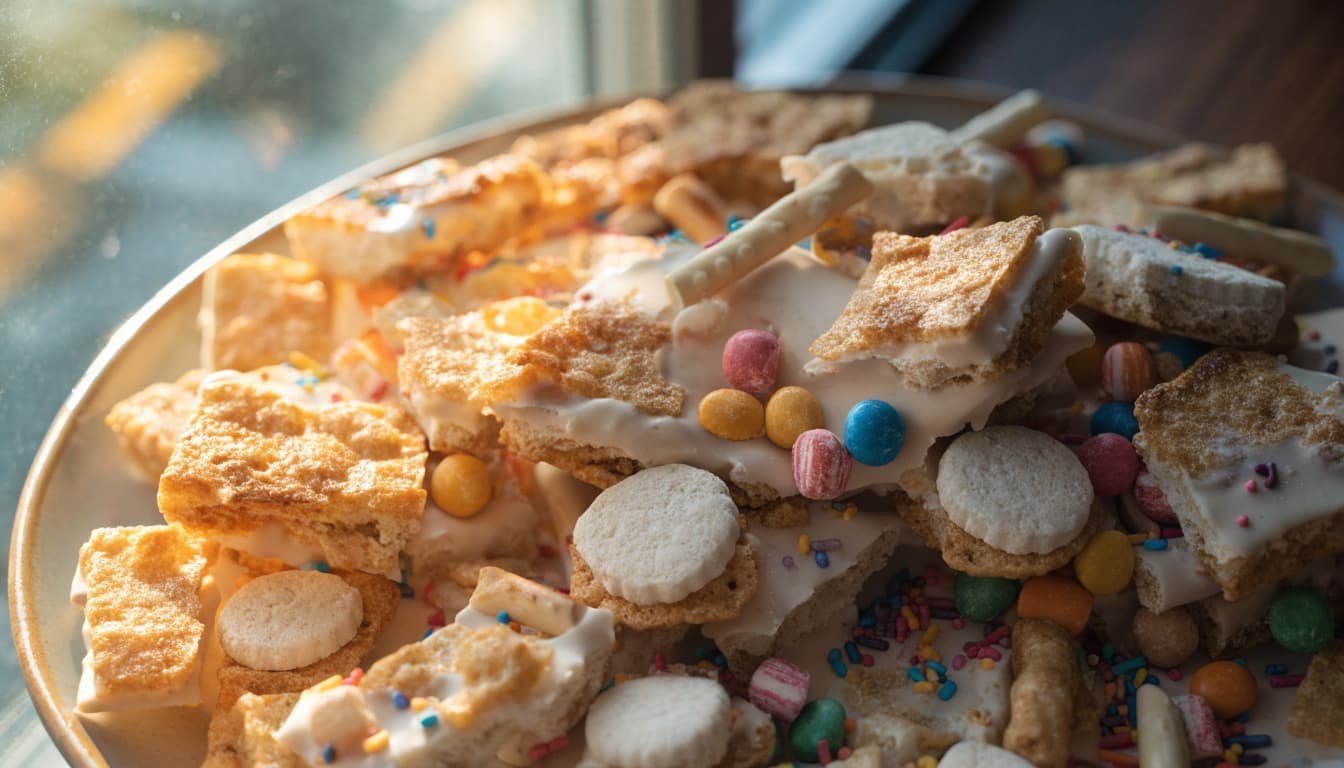
Cookie-and-snack bark gives you more variety in each piece. Small cookies, cereal, pretzels, and festive candies create a rougher texture than peppermint bark. Keep the layer shallow so the coating can hold everything together without leaving loose pockets of snacks.
All three are no-bake options, though they still need time to firm before serving. Start with one batch while you get familiar with how quickly your coating sets.
For a mixed holiday tray, add cookies from our gluten-free Christmas cookie recipes. Keep each variety separate so guests can identify their choices.
How to Make Almond Bark Christmas Candy, Step by Step
Line a tray with parchment and prepare the mix-ins first. Break the almond bark into small, similar-sized pieces, then place them in a completely dry, microwave-safe bowl.
Heat in 30-second bursts, stirring between each one. Shorten the intervals near the end; wattage and batch size affect the total time. Stop when stirring melts the last small pieces.
For stovetop melting, set a heat-safe bowl over gently simmering water without letting its bottom touch the water. Stir often and keep water and steam out of the coating.
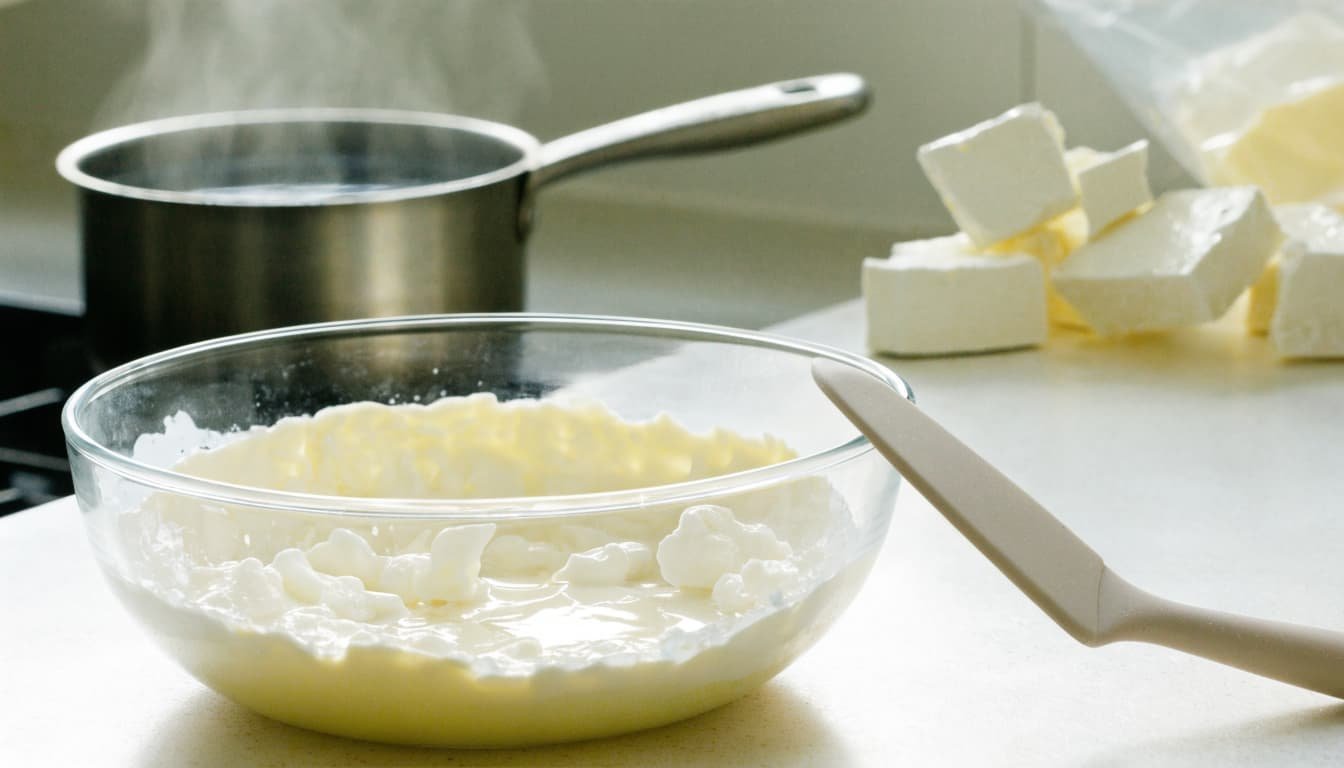
Stir in mix-ins, then spread or spoon onto parchment. Add toppings while soft. Let the candy firm at room temperature, or chill briefly until set.
Make Peppermint Bark With Crushed Candy Canes
Use 24 ounces of white almond bark with 12 candy canes or 30 to 40 starlight mints. Crush the candy into small bits rather than powder, then reserve some for the surface.
Stir the remaining peppermint into the melted coating. Spread it evenly over parchment, then scatter the reserved candy on top before the surface hardens. Keep the layer fairly thin so the finished pieces are easy to bite.
Let the bark set completely, then lift it off the parchment and break it into serving pieces.
Make Peanut-Pretzel Clusters With a Sweet-Salty Crunch
Stir roasted salted peanuts and mini pretzels into melted almond bark a little at a time. Stop adding them while enough coating remains to cover the pieces and bind each spoonful.
Break larger pretzels before stirring so the clusters stay manageable. Drop small spoonfuls onto parchment, leaving space between them, then press candy-coated chocolates onto each mound while soft.
Let the clusters firm before lifting them. If loose pretzels keep falling away during portioning, stir in more melted coating before shaping the remaining mixture.
Make Colorful Cookie-and-Snack Bark
Arrange pretzels, crisp cereal, small cookies, and festive candies in a shallow layer on a parchment-lined tray. Break larger cookies first so the pieces sit close together.
Drizzle or spread melted almond bark over the mixture, using enough to connect the snacks rather than leaving isolated patches. Gently nudge loose pieces into the soft coating, then add sprinkles.
Let the sheet firm completely before breaking it apart. Expect uneven edges and varied pieces; a shallow, connected layer will hold together better than a thick pile.
Choose Mix-Ins That Make Every Batch Feel Festive
Start with one main flavor, then add a contrasting texture. Peppermint works well with white coating because the sweet base leaves the mint flavor clear. Pretzels and peanuts give you salty crunch without needing another flavoring.
For cookie bark, combine a mild vanilla cookie with crisp cereal or pretzel pieces. Using several strongly flavored cookies can make the finished candy taste muddled. Keep the combination simple enough that you can still taste each ingredient.
Choose sturdy, dry mix-ins that won’t soften immediately when stirred. Crisp cereal, roasted nuts, and plain pretzels are easier to coat than moist fruit or soft fillings. Small pieces also make the candy easier to portion, especially when you’re preparing bite-sized clusters.
Keep a little of the colorful topping aside before mixing. Add sprinkles or candy-coated chocolates while the surface is still soft, then press larger pieces lightly into place. Toppings scattered after the coating hardens won’t stay attached.
If you want more color, change the toppings before adding more ingredients throughout the batch. A modest amount on the surface stays visible without making the candy difficult to break.
These Christmas candy recipes with almond bark bring plenty of crunch to a dessert table. For a softer dessert alongside them, our easy no-bake fall desserts include cheesecake and pudding ideas. Serve chilled desserts separately so the candy stays dry.
Keep Almond Bark Smooth, Set Firm, and Store It Well
Almond bark can scorch before it looks fully melted. Stir after every microwave interval, scraping the sides and bottom of the bowl so heat spreads through the mixture. Use gentle indirect heat on the stovetop rather than placing the coating directly over a burner.
A few small pieces don’t always need more heating. Stir first and let the warmth already in the bowl finish melting them. The coating is ready when it flows smoothly off the spatula without solid lumps.
Stop heating while a few small pieces remain, then stir. Residual heat can finish melting them without another microwave burst.
Keep the bowl, spatula, and mix-ins dry. Water or steam can affect the texture, so avoid damp utensils and lift a stovetop bowl carefully. Don’t cover warm coating where condensation could drip into it.
Let finished candy set completely before breaking, stacking, or packing. Brief chilling can help, but judge readiness by firmness rather than the clock. Thick clusters usually need longer than a thin sheet, and a soft underside can stick to the parchment.
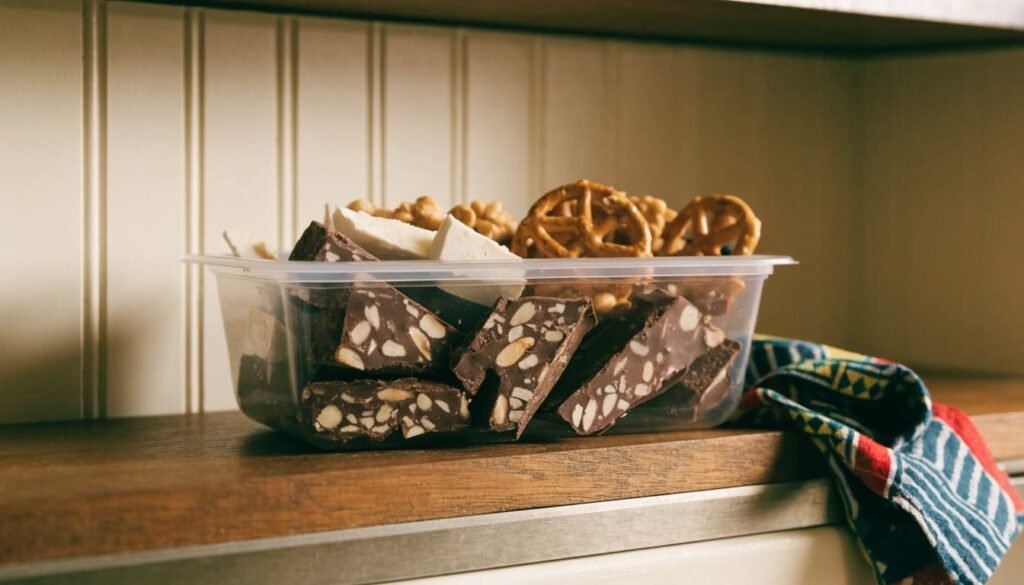
Store fully set pieces in an airtight container in a cool, dry place. Separate layers with parchment to protect the toppings, and keep peppermint candy apart from milder varieties so its aroma doesn’t spread through the assortment.
For gifts, pack the candy only after every piece is firm. Keep the filled packages away from warm appliances or sunny windows so the coating holds its shape.
Frequently Asked Questions
Does Almond Bark Contain Almonds?
Almond bark is commonly the name of a confectionery coating, and the name alone doesn’t establish whether it contains almonds. Read the ingredient list and allergen statement on the specific package. Don’t describe a finished batch as almond-free based only on the coating’s name.
Can I Melt Almond Bark in the Microwave?
Yes, a microwave is convenient for melting almond bark in a dry, microwave-safe bowl. Use short heating bursts and stir between them rather than choosing one long cooking time. The total depends on your microwave’s wattage and the amount of coating in the bowl.
Why Did My Almond Bark Turn Thick or Grainy?
Overheating can scorch the coating, while water or steam can change its texture. Use a dry bowl and utensils, gentle heat, and frequent stirring. If the mixture has scorched or smells burnt, start with fresh coating rather than adding it to your mix-ins.
Can I Make These Christmas Candies Ahead of Time?
Yes, these no-bake candies are useful for preparing before a holiday gathering. Let each batch set completely, then pack it in an airtight container in a cool, dry place. Keep different varieties separated so flavors, crumbs, and toppings don’t transfer between them.
How Do I Make These Candies Safer for Guests With Allergies?
Read labels on the coating and every mix-in; peanuts, wheat, and milk are common ingredients in these combinations. The FDA’s food allergy guidance explains packaged-food labeling and allergen cross-contact. Use clean bowls, utensils, trays, and work surfaces, and never rely on removing an allergen after mixing.
Make a Batch to Share
Choose one recipe, gather a few dry mix-ins, and line your tray before melting the coating. Gentle heat and frequent stirring give you a smooth base, while a complete set makes the finished candy easier to handle.
Start with peppermint bark if you want a simple sheet to break apart, or spoon clusters for individual portions. Once everything is firm, arrange a small platter or pack a few pieces as gifts. Simple ingredients and careful melting keep homemade holiday candy manageable.
Save the pin for later


I’m the creator of My Everyday Dish, a food blog focused on easy homemade recipes, comforting family meals, simple baking, and seasonal food ideas. I love finding practical ways to make everyday cooking less stressful and more enjoyable. Here, I share recipes with simple ingredients, clear instructions, and plenty of flavor, helping you make delicious meals and treats you’ll feel confident serving at home.
Leave a Reply