
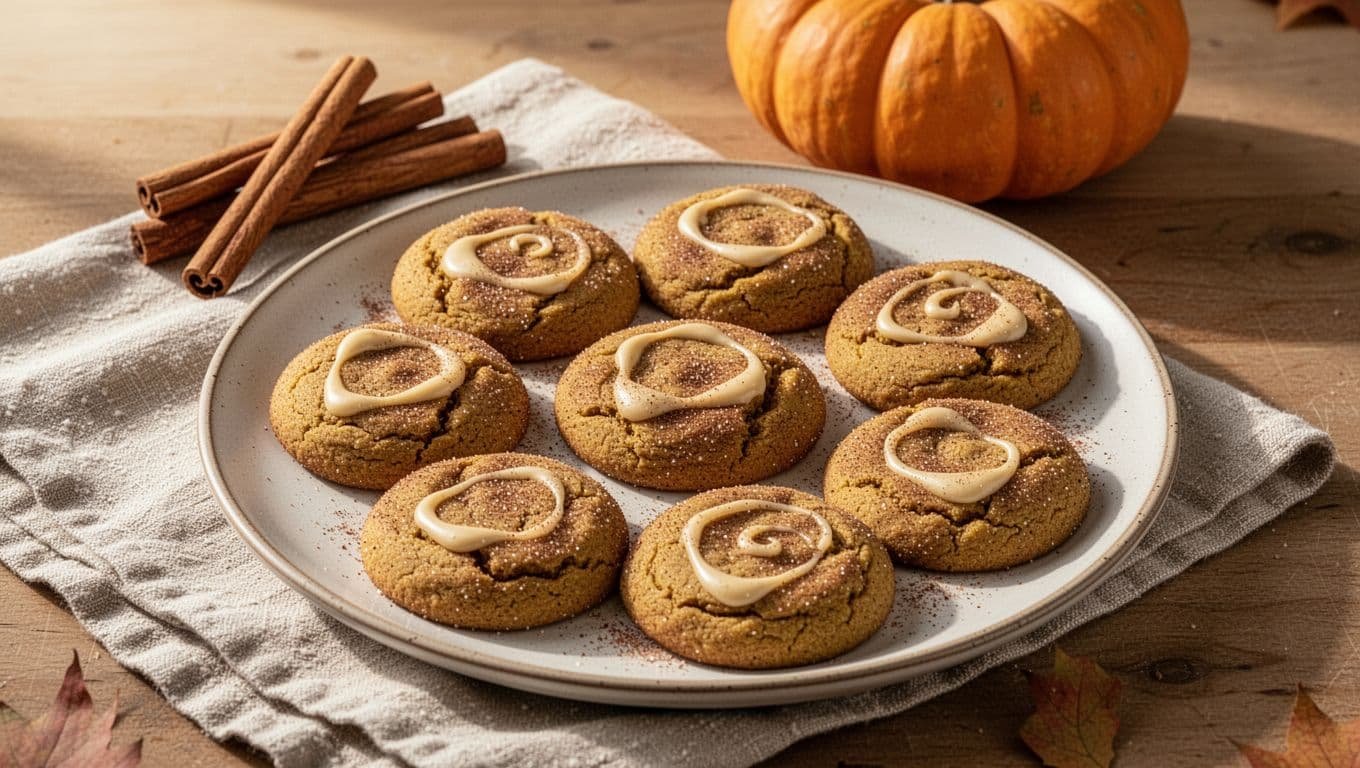
I love baking these cookies on a crisp fall afternoon, when the kitchen smells like cinnamon and the first tray comes out soft in the middle. Each cookie has a sugary, lightly crisp coating, a tender pumpkin center, and a swoop of creamy icing that makes it feel ready for a celebration.
These easy pumpkin snickerdoodle cookies with creamy icing are simple enough for a casual family treat, yet pretty enough for a holiday plate or bake sale.
With a short dough chill and a few clear baking cues, you can make a reliable batch without fuss. Gather your ingredients, then take your time with the mixing, rolling, cooling, and icing.
Easy Pumpkin Snickerdoodle Cookies With Creamy Icing
A classic snickerdoodle gets its signature flavor from cinnamon sugar, while this fall version adds pumpkin puree and pumpkin pie spice to the dough. The result is soft and gently spiced, rather than chewy or heavily browned.
The cream cheese icing adds a pleasant tang that balances the sweetness. A thin layer is enough, since the cinnamon sugar coating already brings plenty of flavor.
| Recipe detail | What to expect |
|---|---|
| Yield | About 24 cookies |
| Active prep | Allow time for mixing, scooping, coating, and icing |
| Dough chill | 30 to 45 minutes |
| Bake temperature | 350°F |
| Bake time | 10 to 12 minutes per sheet |
| Total time | Depends on batch size and cooling time |
Use plain canned pumpkin puree, not pumpkin pie filling. Pie filling includes sweeteners and spices that can throw off the dough’s moisture and flavor. Food Network Kitchen also explains the difference between pumpkin pie filling and canned pumpkin.
What You Need for Soft Pumpkin Cookies and Creamy Icing
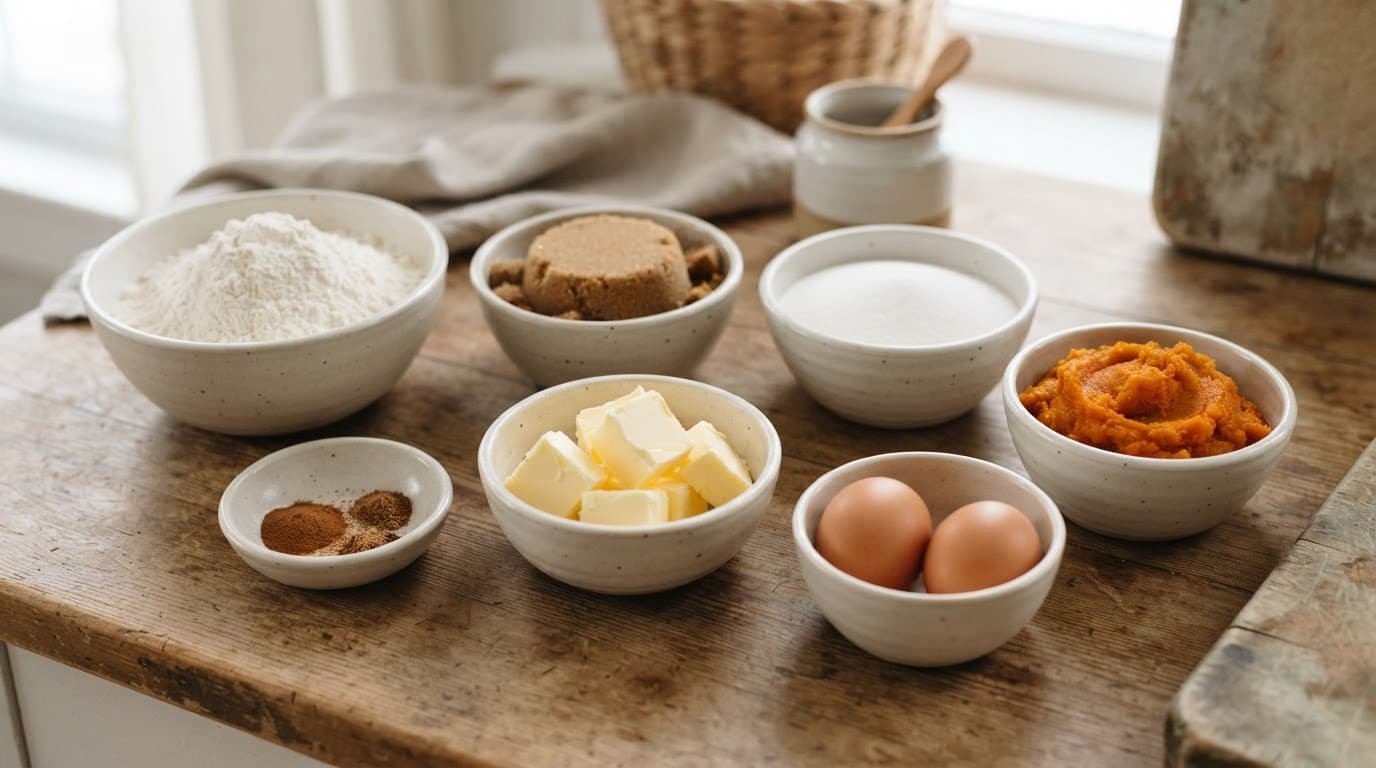
The ingredient list uses familiar baking staples. Pay closest attention to the pumpkin puree, flour measurement, and softened dairy ingredients, since they affect the final texture.
- All-purpose flour gives the dough enough structure to hold its rounded shape after chilling.
- Baking soda and salt help the cookies rise lightly and keep the sweetness in balance.
- Ground cinnamon and pumpkin pie spice bring warm flavor without making the cookies taste overly spiced.
- Unsalted butter lets you control the salt level. If you use salted butter, reduce the added salt slightly.
- Granulated sugar and brown sugar create a soft interior with a lightly crisp outer edge.
- Canned pumpkin puree adds flavor, color, and moisture. Measure it accurately, and lightly blot it with a paper towel if it appears watery.
- Egg yolk or egg and vanilla extract bind the dough and round out the pumpkin flavor.
For the cinnamon sugar coating, combine granulated sugar with cinnamon. Add a pinch of pumpkin pie spice if you want an extra autumn note.
The icing needs softened cream cheese, softened butter, powdered sugar, vanilla, and a small amount of milk or cream only if the mixture needs thinning. Keep both the cream cheese and butter soft enough to blend, but never melted.
Pumpkin dough is naturally softer than standard snickerdoodle dough. The short chill turns it into dough that is easier to scoop, roll, and bake evenly.
Key Takeaways for a Reliable Batch
Use plain pumpkin puree and keep its moisture level consistent. If the puree looks loose or glossy with excess liquid, blot it before adding it to the butter mixture.
Chill the dough before rolling, bake until the edges set, and let the cookies cool fully before icing. Those three steps protect the soft centers and help the cream cheese topping stay neat.
How to Make Pumpkin Snickerdoodle Cookies Step by Step
Heat the oven to 350°F. Line baking sheets with parchment paper, which prevents sticking and makes cleanup easier. Set aside a wire rack for cooling.
In a medium bowl, whisk together the flour, baking soda, salt, cinnamon, and pumpkin pie spice. Whisking first spreads the leavening and spices through the flour, so you do not need to overmix the finished dough.
In a larger bowl, beat the softened butter with granulated sugar and brown sugar until the mixture looks smooth and creamy. Mix in the pumpkin puree, egg yolk or egg, and vanilla until combined. The mixture may look softer than ordinary cookie dough, which is expected.
Add the dry ingredients gradually. Mix on low speed, or stir by hand, only until no streaks of dry flour remain. Stop there. Extra mixing develops gluten and can make soft cookies less tender.
Cover the bowl and chill the dough for 30 to 45 minutes. Meanwhile, stir together the granulated sugar, cinnamon, and optional pumpkin pie spice for the coating. Chilling firms the butter and pumpkin mixture, so the dough scoops more easily and spreads less in the oven.
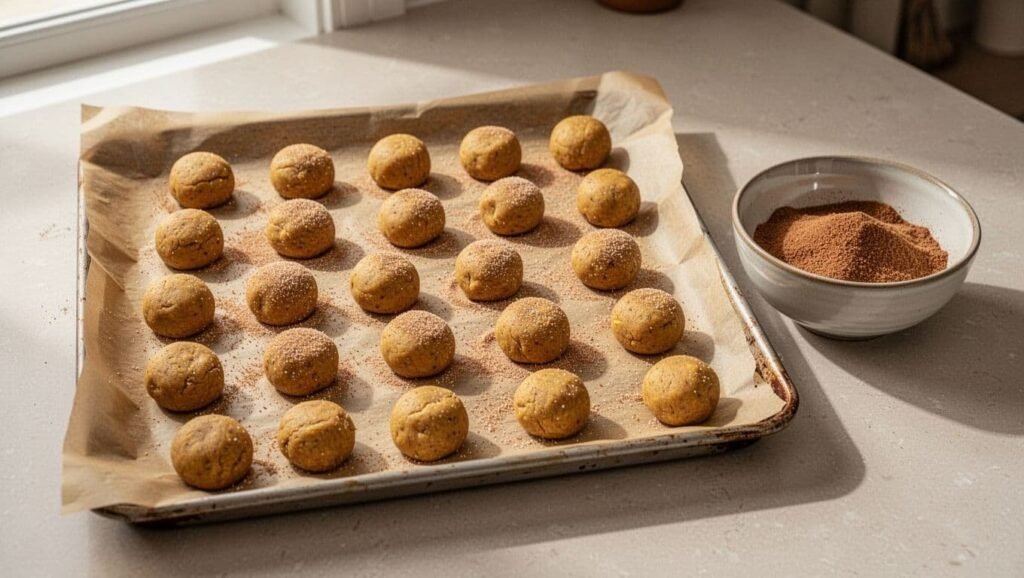
Use a cookie scoop to portion the dough into even pieces. Roll each portion gently into a ball, then coat it well in cinnamon sugar. Place the dough balls on the parchment-lined sheets with several inches of room between them.
Bake one sheet at a time when possible. The oven’s heat circulates more evenly around a single pan, which helps all the cookies bake at the same pace. Keep the remaining dough chilled between batches, especially if your kitchen is warm.
Bake for 10 to 12 minutes. Let the cookies rest on the baking sheet for several minutes after removing them from the oven, then transfer them to a wire rack. Wait until they are completely cool before adding icing.
How to Tell When the Cookies Are Done
Use the timer as a guide, but trust the cookies’ appearance and texture. The edges should look firm and lightly golden, while the tops should appear set instead of wet or shiny.
Press the center lightly with a clean fingertip. It should give slightly and spring back. Do not wait for deep browning, because pumpkin cookies can dry out quickly if they stay in the oven too long.
The centers may look a little soft when the pan first comes out. They continue to set from the pan’s residual heat, so a brief cooling period is part of the bake.
Read also: 21 Homemade Pumpkin Dessert Recipes Without Eggs
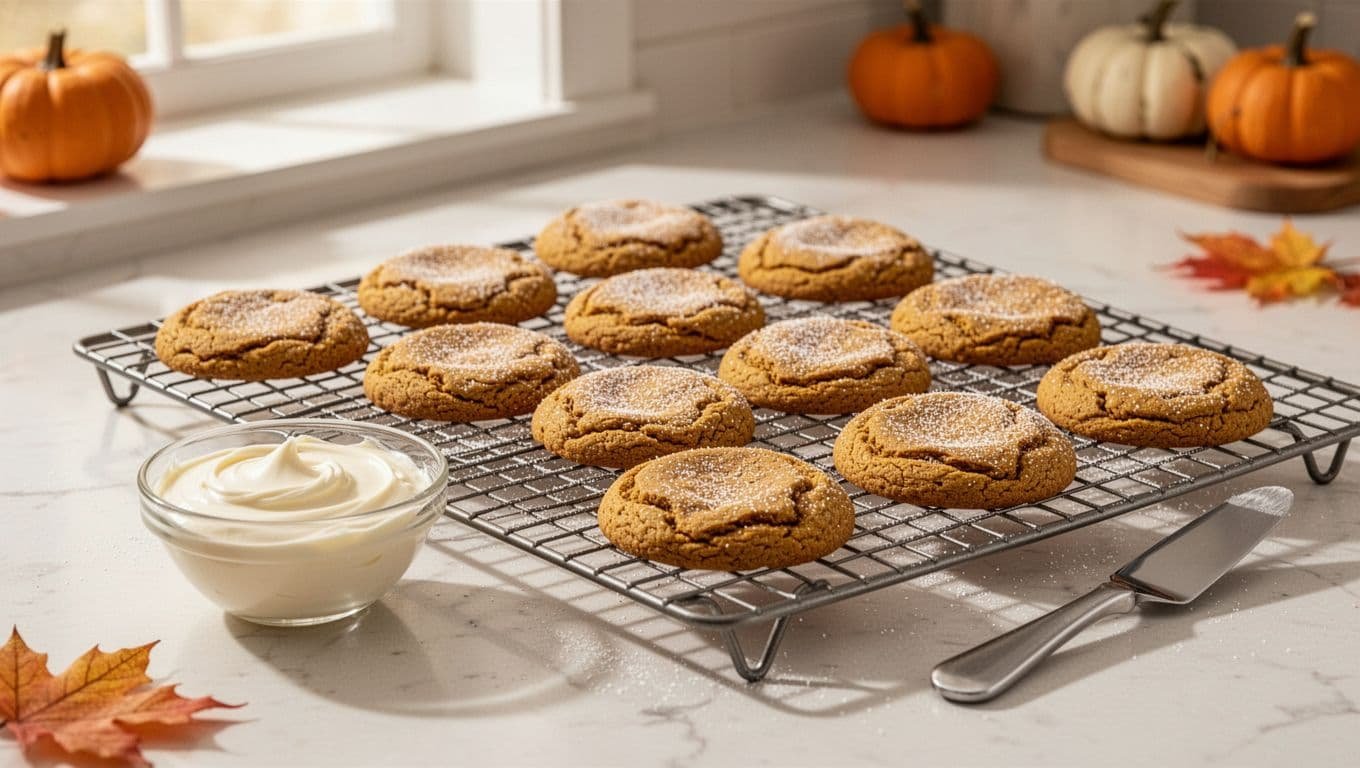
How to Get Smooth, Spreadable Cream Cheese Icing
Beat the softened cream cheese and butter together until fully smooth before adding anything else. Small lumps are much harder to remove once powdered sugar enters the bowl.
Add the powdered sugar gradually, beating after each addition. Mix in vanilla, then check the consistency. If the icing feels too thick to spread, add milk or cream one teaspoon at a time.
Use a small offset spatula for relaxed swirls, or pipe the icing through a bag for a cleaner finish. The cookies must be cool, or the icing will soften and slide across the surface.
Helpful Baking Tips, Serving Ideas, and Storage
For the most dependable texture, spoon flour into a measuring cup and level it with a straight edge. Scooping directly from the bag packs in extra flour, which can leave the cookies dry. A cookie scoop also helps every portion bake at the same rate.
Avoid overmixing the dough, and leave enough space between dough balls. For smaller cookies on a dessert tray, use smaller scoops and begin checking them a little earlier. For larger bakery-style cookies, give the dough balls more room and add baking time only as needed.
Flat cookies usually come from warm dough, watery pumpkin, warm baking sheets, or too little flour. Chill the dough longer and use a cool, parchment-lined pan for the next batch. Sticky dough needs more chilling. Runny icing usually needs more powdered sugar, while stiff icing needs a few drops of milk or cream.
Serve these cookies with coffee, hot apple cider, or a cold glass of milk. The icing is rich enough that a light sprinkle of cinnamon is all the garnish they need. For more seasonal baking ideas, browse these cozy pumpkin dessert recipes.
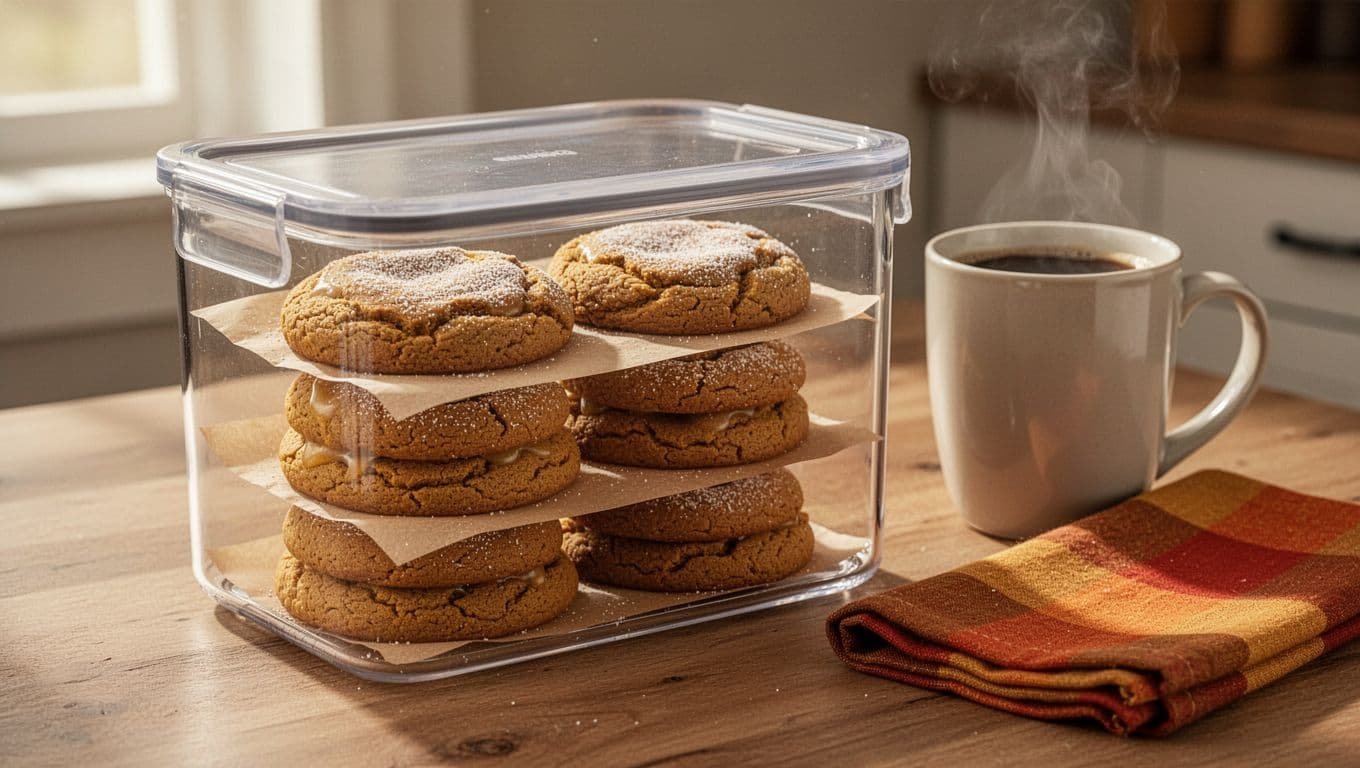
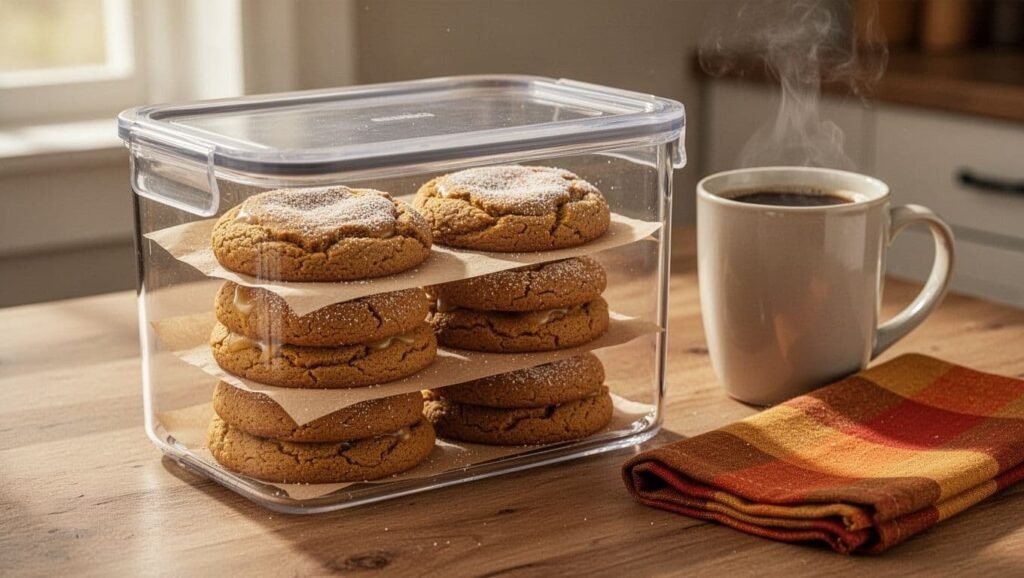
Store fully iced cookies in an airtight container in the refrigerator because of the cream cheese topping. Place parchment between layers if needed, and let the cookies sit briefly at room temperature before serving. Do not leave cream cheese-topped cookies out for more than two hours.
Plain baked cookies are the better make-ahead freezer choice. Cool them completely, place parchment between layers, and add fresh icing after thawing.
Read also: 36 Healthy Pumpkin Pancake Recipes for Fall
Frequently Asked Questions
Can I use homemade pumpkin puree for these cookies?
Homemade pumpkin puree can work if it is thick, smooth, and not watery. Canned puree gives more consistent moisture, so it is often easier for baking. If homemade puree seems loose, drain or lightly blot it before measuring.
Can I make these cookies without the icing?
Yes. The cinnamon sugar coating gives the cookies plenty of flavor, even without a topping. You can also finish cooled cookies with a simple powdered sugar glaze if you prefer something lighter than cream cheese icing.
Why did my pumpkin cookies spread too much?
Warm butter, excess moisture in the pumpkin, skipped chilling, and inaccurate flour measurement are common causes. An overly warm baking sheet can also make the dough spread before it begins to set. Chill the remaining dough longer and use a cool pan for the next batch.
Can I freeze pumpkin snickerdoodle cookies?
Freeze plain baked cookies rather than iced ones for the best appearance and texture. Cool them completely, layer them with parchment, and store them in an airtight container. Add fresh cream cheese icing after thawing.
A Sweet Reason to Bake This Fall
I keep coming back to these cookies because they feel special without requiring complicated steps. The soft pumpkin centers, cinnamon sugar coating, and creamy icing make every batch feel right at home on a fall table.
Chill the dough, watch for set edges, and cool the cookies completely before icing. Then share a plate at a gathering, bring one to a neighbor, or enjoy one with coffee on an ordinary afternoon.
Save the pin for later


I’m the creator of My Everyday Dish, a food blog focused on easy homemade recipes, comforting family meals, simple baking, and seasonal food ideas. I love finding practical ways to make everyday cooking less stressful and more enjoyable. Here, I share recipes with simple ingredients, clear instructions, and plenty of flavor, helping you make delicious meals and treats you’ll feel confident serving at home.
Leave a Reply