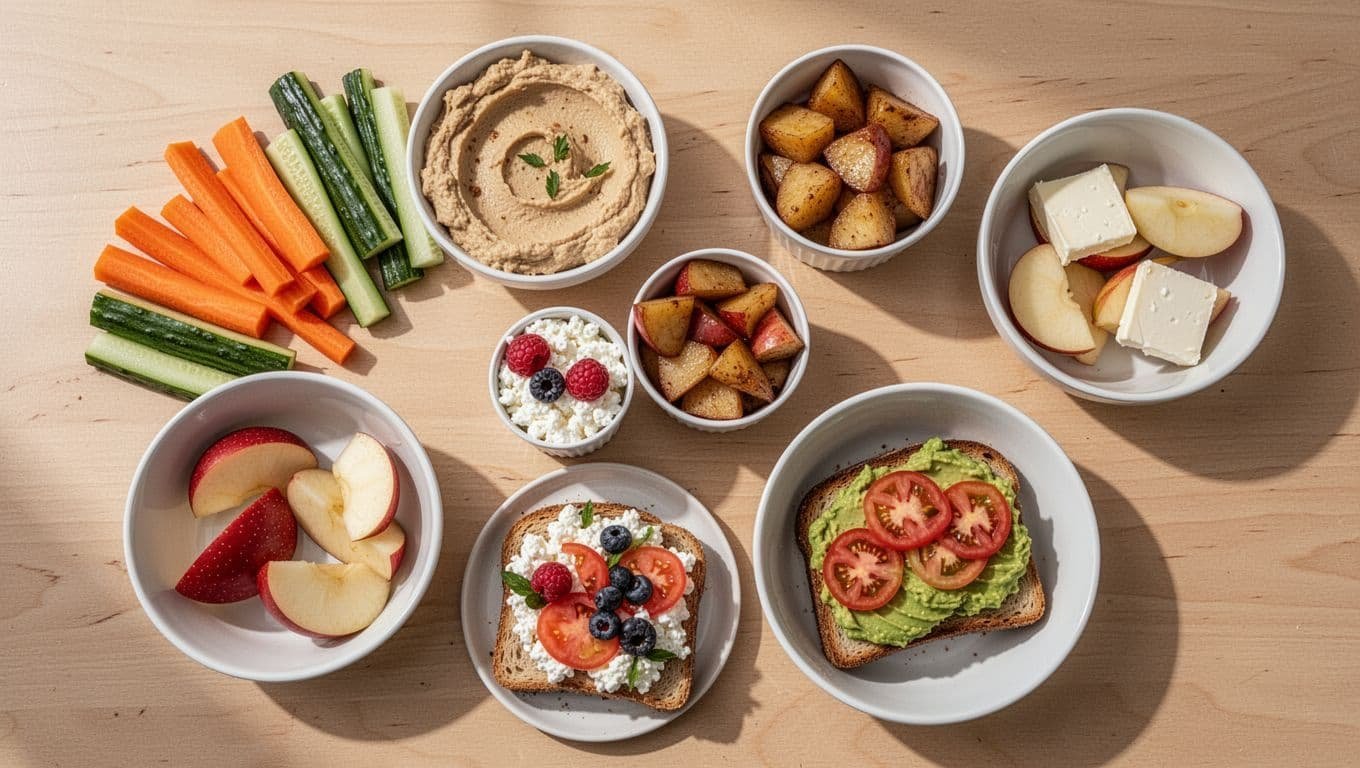
When I came home from school, my mom often had a simple snack waiting, like apple slices with peanut butter, warm toast, or a small bowl of yogurt and fruit. Over time, I learned to prepare those snacks myself, which made busy afternoons feel easier and gave me something tasty to enjoy while dinner was still a while away.
These homemade after-school snacks for kids use simple ingredients and take about 5 to 15 minutes to prepare. You’ll find a mix of fruit, vegetables, whole grains, protein, and dairy, so you can choose something that fits your child’s appetite and what you have in the kitchen.
Each idea includes simple preparation steps, plus helpful notes about common allergies, school food rules, and age-appropriate safety for younger children. Start with these easy recipes and find a few favorites your family can make again and again.
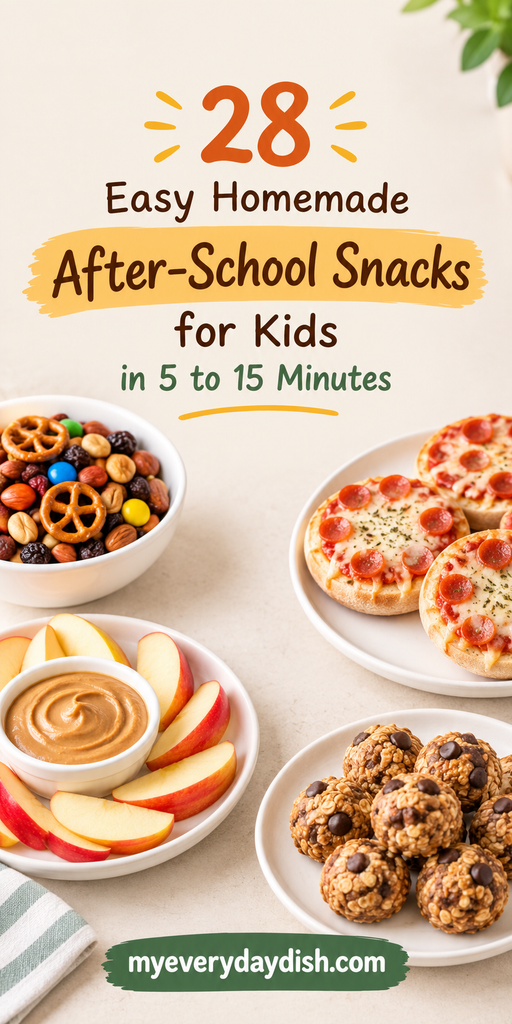
28 Easy Homemade After-School Snacks for Kids
These first seven snacks pair at least two food groups when possible, such as fruit with dairy, grains with protein, or vegetables with a creamy spread. For balanced ideas, use the USDA MyPlate food groups as a simple guide, then adjust portions and textures for your child.
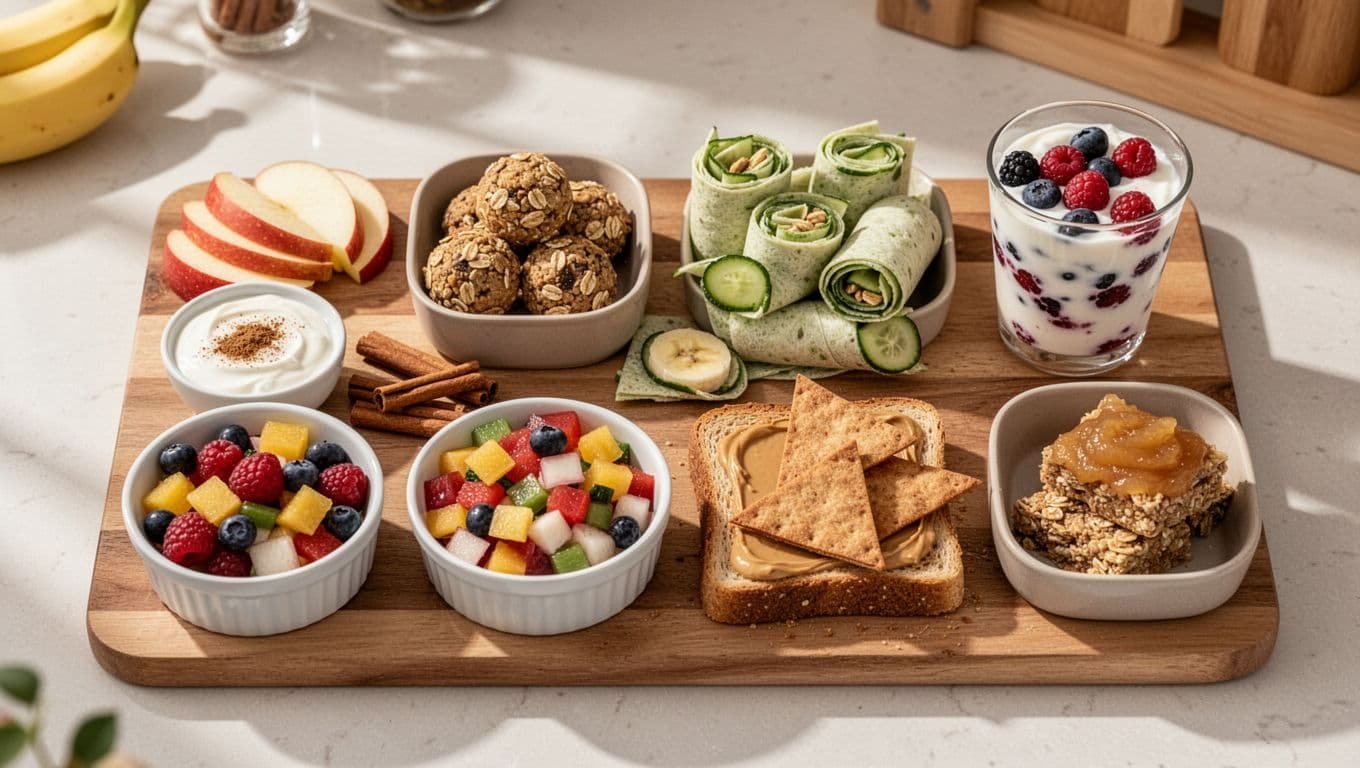
1. Apple Slices With Yogurt Cinnamon Dip
Ingredients: 1 small apple, 1/3 cup plain or vanilla yogurt, and 1/4 teaspoon cinnamon.
Directions: Stir the yogurt and cinnamon in a small bowl. Wash and slice the apple thinly, then arrange the pieces around the dip. For an allergy-aware topping, swirl in sunflower-seed butter instead of using nut butter.
Prep time: 5 minutes. Slice apples especially thinly for younger children, and serve a soft texture that matches their chewing ability.
2. Banana Oat Energy Bites
Ingredients: 1 ripe banana, 1/2 cup quick oats, and 1 tablespoon sunflower-seed butter or peanut butter, if allowed.
Directions: Mash the banana until smooth. Mix in the oats and seed or nut butter, then shape the mixture into small, soft bites. Chill for 10 minutes so they firm up slightly.
Prep time: 10 to 15 minutes. Skip added sugar because the banana provides sweetness. Make smaller, softer bites for younger children, and avoid serving sticky spoonfuls of nut butter.
Read also: 18 High Protein Chicken Bowl Recipes for Meal Prep
3. Cucumber and Cheese Roll-Ups
Ingredients: 1 small flour tortilla, 1 tablespoon cream cheese or hummus, and thin cucumber strips.
Directions: Spread the tortilla with a thin layer of cream cheese or hummus. Add cucumber strips, roll it tightly, and cut it into small pinwheels.
Prep time: 5 minutes. Use hummus for a dairy-free option. If adding cheese, grate it finely or choose a soft spread instead of large, firm chunks.
4. Homemade Berry Yogurt Parfait
Ingredients: 1/2 cup plain yogurt, 1/4 cup mashed or finely chopped berries, and 2 tablespoons low-sugar granola or soft oats.
Directions: Spoon yogurt into a small cup, add berries, and finish with granola or oats. Prepare it ahead, cover it, and refrigerate until snack time.
Prep time: 5 minutes. Replace granola with soft oats for young children, since whole nuts and hard pieces may be difficult to chew.
5. Peanut Butter Banana Toast
Ingredients: 1 slice whole-grain toast, 1 tablespoon peanut butter, and 1/2 banana.
Directions: Spread the peanut butter in a thin layer over the toast. Add thin banana slices, then cut the toast into small strips or squares.
Prep time: 5 minutes. Sunflower-seed butter is a school-friendly substitute. Never serve nut butter as a thick spoonful, especially to younger children.
6. Quick Homemade Fruit Salsa With Cinnamon Pita Chips
Ingredients: Finely chopped strawberries, apple, and mango; a squeeze of lime; and whole-wheat pita triangles.
Directions: Toss the fruit with a little lime juice. Bake pita triangles until lightly crisp, then dust them with cinnamon and serve alongside the salsa.
Prep time: 10 to 15 minutes. Adults should handle firm fruit, while older children can help with soft, age-appropriate pieces.
7. No-Bake Oat and Applesauce Bars
Ingredients: 1 cup oats, 1/2 cup unsweetened applesauce, cinnamon, and optional chopped raisins or shredded coconut.
Directions: Stir everything together, press it into a lined pan, and chill until firm. Cut the mixture into soft bars before serving.
Prep time: 10 minutes, plus chilling. Chop raisins finely or leave them out for very young children, since sticky dried fruit can be difficult to chew.
Fresh Fruit and Vegetable Snacks Kids Will Actually Eat
Prewashing produce and cutting a few ingredients after grocery shopping makes these snacks faster on busy afternoons. Keep portions small, choose textures your child can manage, and supervise younger children while they eat. For additional guidance, review the CDC’s choking safety guidance.
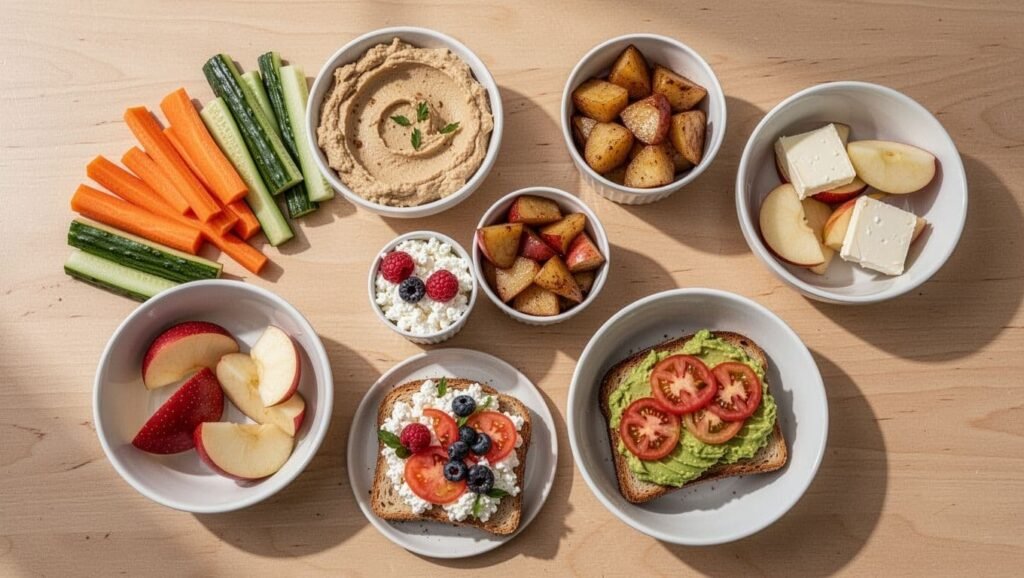
8. Carrot and Cucumber Sticks With Hummus
Ingredients: 1 small carrot, 1/2 cucumber, and 2 tablespoons hummus.
Wash the vegetables, peel the carrot, and cut both into thin, manageable strips. Spoon hummus into a small bowl, then arrange the vegetables around it for dipping. Children can help place the sticks on a plate or add small scoops of hummus.
Prep time: 5 minutes. For younger children, steam the carrot until soft or grate it instead of serving a raw stick. A smooth white-bean dip made by blending canned white beans with olive oil and lemon juice is a mild alternative.
Read also: 10 Cozy Fall Soup Recipes for Chilly Autumn Days
9. Berry and Cottage Cheese Cups
Ingredients: 1/2 cup cottage cheese and 1/4 cup soft berries.
Spoon cottage cheese into a small cup, add a layer of washed berries, and repeat once if the cup is deep enough. Mash blueberries, raspberries, or strawberries for younger children. Let your child sprinkle in the berries or make the layers.
Prep time: 5 minutes. Cottage cheese adds protein with almost no cooking. Plain yogurt works well when your child prefers a smoother texture or a less savory flavor.
10. Ants on a Log With a Safer Twist
Ingredients: Celery or cucumber, peanut butter, sunflower-seed butter, or cream cheese, plus finely chopped raisins or soft fruit.
Use celery only for children who can chew it safely. Otherwise, cut cucumber into strips. Spread a thin layer of the chosen topping, then add finely diced soft fruit or chopped raisins. Children can decorate each strip, but avoid thick globs of nut or seed butter.
Prep time: 5 minutes. Check allergy rules before serving peanut butter, and keep the pieces soft and small to reduce choking risk.
11. Warm Cinnamon Baked Apples
Ingredients: 1 apple, cinnamon, and optional plain yogurt.
Core the apple, peel it if needed, and chop it into small pieces. Sprinkle with cinnamon, then microwave in a covered bowl for 2 to 3 minutes or bake at 375°F until soft. Cool completely before serving, then add yogurt if desired. Children can sprinkle the cinnamon with help.
Prep time: 5 minutes, plus cooking. Soften hard apple pieces for younger children.
12. Fruit and Cheese Skewers Without the Skewers
Cut soft melon, strawberries, and mild cheese into small pieces, then arrange them together in a bowl. Cut whole grapes lengthwise before adding them. Children can mix the colors with a spoon.
Prep time: 5 to 10 minutes. Wooden skewers aren’t suitable for young children, so serve this snack loose and use age-appropriate pieces.
13. Avocado Toast With Tomato
Mash ripe avocado onto whole-grain toast, then add finely chopped tomato. Stir in a little lemon juice and mild seasoning if desired. Children can spread the avocado with a blunt butter knife.
Prep time: 5 minutes. Mash both ingredients for younger children, or cut the toast into soft strips. Hummus makes an easy alternative spread.
14. Homemade Applesauce and Oat Cups
Spoon unsweetened applesauce into small cups and top with soft oats, cinnamon, and finely chopped fruit. Prepare several cups ahead, cover them, and refrigerate. Children can add the oats with a spoon.
Prep time: 5 minutes. Avoid hard toppings, whole nuts, and large dried fruit pieces. Keep every layer soft enough for your child’s age and chewing ability.
Read also: 41 Healthy Halloween Food Ideas for Kids and Adults
Protein-Packed After-School Snacks for Lasting Energy
Pairing protein with fruit or whole grains can help an after-school snack feel more satisfying. These quick options use eggs, beans, yogurt, cheese, milk, and whole grains, with simple swaps for common allergies. Always check school policies and ingredient labels before packing or serving snacks.
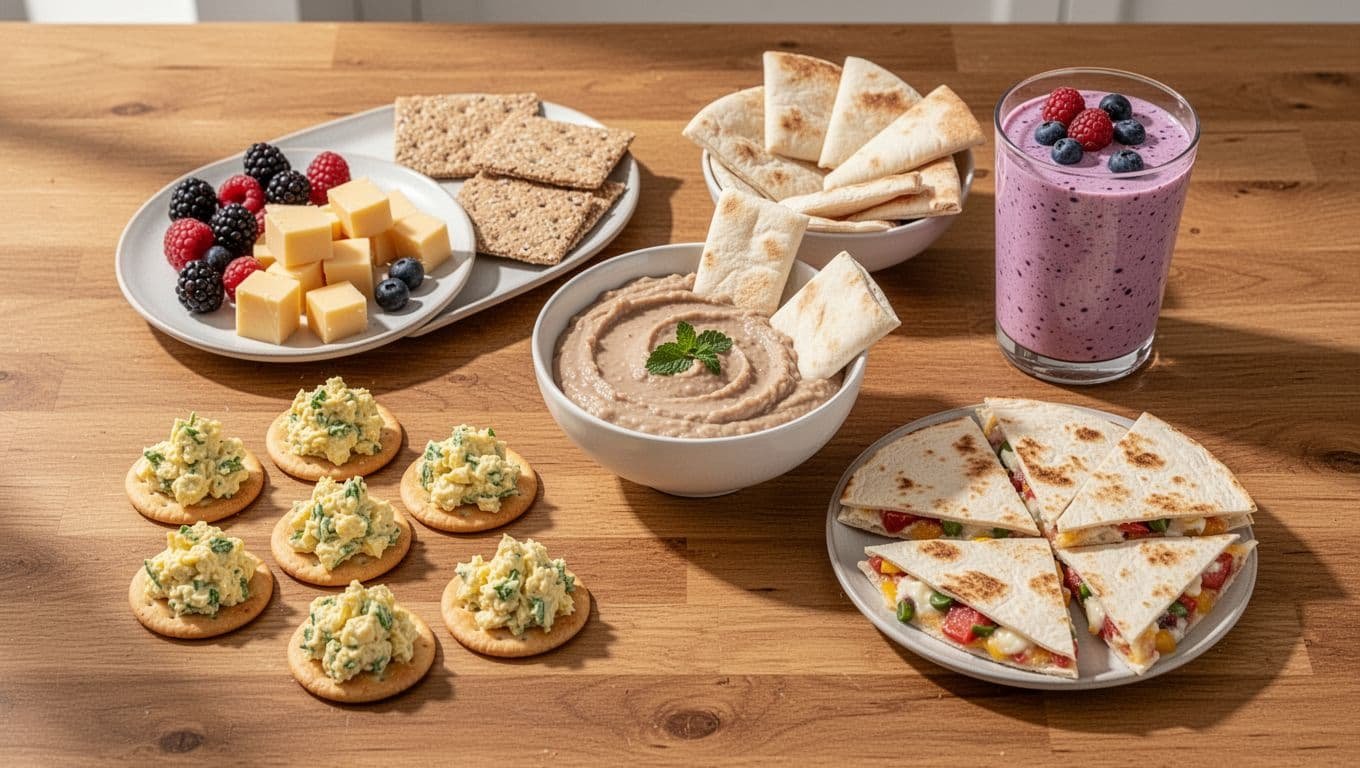
15. Mini Egg Salad Crackers
Mash one fully cooked hard-boiled egg with 1 tablespoon plain yogurt or a small amount of mayonnaise. Spoon the mixture onto whole-grain crackers just before serving. Add a little mild seasoning if your child enjoys it.
For a dairy-free version, use mayonnaise or mashed avocado instead of yogurt. Refrigerate cooked eggs within two hours, and use hard-cooked eggs within one week. Keep prepared egg salad chilled and use it within three to four days. FDA egg safety guidance offers additional storage details.
Younger children may do better with egg salad alone or on a soft piece of bread. Avoid whole, firm crackers if your child’s chewing skills are still developing.
16. Cheese and Whole-Grain Cracker Snack Box
Before school pickup, place thin slices of mild cheese, whole-grain crackers, and soft pear slices or halved berries in a small container. Portion the box in advance so it’s ready when hunger hits.
Use dairy-free cheese for a milk allergy, and check crackers for wheat, sesame, and nut ingredients. Large cheese cubes and crackers containing seeds or nuts may pose choking risks for younger children. Choose soft, thin pieces and supervise children while they eat.
17. Creamy White Bean Dip With Pita
Rinse and drain canned white beans, then blend them with olive oil, lemon juice, and mild seasoning until completely smooth. Spoon the dip into a bowl and serve it with soft whole-wheat pita pieces or cooked vegetables.
For a sesame-free option, use this bean dip instead of hummus. If wheat is a concern, serve it with gluten-free pita or soft cooked vegetables. Fully mash the beans for young children, since whole beans can be difficult to manage safely.
18. Greek Yogurt Berry Smoothie
Blend plain Greek yogurt, berries, half a banana, and milk until smooth. Use a fortified dairy-free beverage for a milk-free version, then serve the smoothie immediately without added sugar.
Add more milk to thin it, or use less liquid for a thicker spoon-fed texture. For younger children, remove berry stems and blend until no pieces remain.
19. Mini Whole-Wheat Quesadilla
Fill a small tortilla with shredded cheese and optional mashed beans. Fold it in half, then cook in a dry skillet until warm and lightly crisp. Let it cool before cutting it into manageable pieces.
Serve with mashed avocado or mild salsa. Dairy-free shredded cheese works well for a milk-free option, while a gluten-free tortilla replaces wheat. Keep the filling soft and avoid large pieces.
20. Soft Boiled Egg With Avocado Toast Soldiers
Cook an egg until both the white and yolk are fully set. Cool it safely, then slice it into small pieces. Spread mashed avocado on toast, cut the toast into thin strips, and serve the egg alongside it.
Refrigerate cooked eggs within two hours, or within one hour when temperatures exceed 90°F. Match the toast texture and egg pieces to your child’s chewing skills.
21. Homemade Trail Mix for Older Kids
Combine whole-grain cereal with soft dried fruit, then add seeds or nuts only if your child can safely eat them. This snack is for older children, not toddlers, because nuts, seeds, and some cereal pieces can create choking risks.
For a nut-free mix, use pretzels or toasted cereal instead. Check every label for peanut, tree nut, wheat, milk, sesame, and other allergens before serving.
Make-Ahead Baked and Crunchy Snacks for Busy Afternoons
Batch cooking makes busy afternoons easier. Cool baked snacks completely, then store them in covered containers. Refrigerate perishable foods within two hours, and use an insulated container with a cold source for snacks eaten away from home. Most refrigerated cooked foods keep for 3 to 4 days. See the USDA food safety basics for storage and reheating guidance.
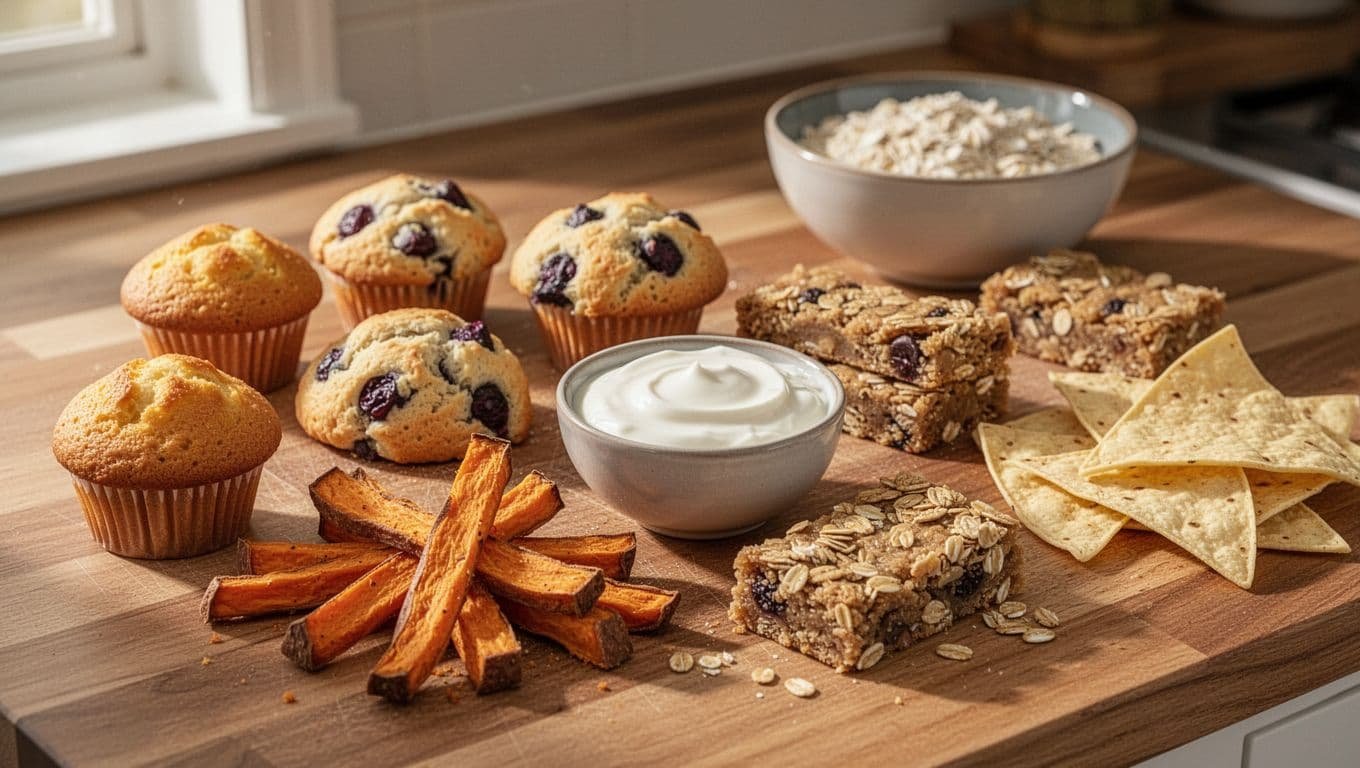
22. Banana Oat Mini Muffins
Mash 2 ripe bananas, then stir in 1 egg, 1 cup oats or whole-wheat flour, 1/2 teaspoon cinnamon, and 1 tablespoon oil. Divide the mixture among greased mini muffin cups and bake at 350°F for 12 to 15 minutes, until set. For an egg-free version, mix in 3 tablespoons unsweetened applesauce instead. Cool the muffins before storing them in an airtight container for 2 days at room temperature or up to 4 days in the refrigerator.
23. Homemade Fruit Scones
Mix 1 cup whole-wheat flour, 1 teaspoon baking powder, 1 tablespoon sugar, 2 tablespoons cold butter, and 1/3 cup milk. Fold in 1/4 cup finely chopped soft fruit, such as ripe peaches or berries. Pat the dough into a 1-inch-thick round, cut small wedges, and bake at 400°F for 12 to 15 minutes. Cool on a rack and serve with yogurt. Chop or mash fruit thoroughly for younger children so no firm pieces remain.
24. Stovetop Cinnamon Popcorn for Older Children
Pop 1/4 cup kernels in 1 tablespoon oil in a covered pot over medium heat. Shake the pot occasionally, then toss the cooled popcorn with a pinch of cinnamon. Skip heavy sugar coatings, which can create sticky clumps. Popcorn is a choking hazard for children under 4. Offer it only to older children who can chew it safely, while seated and supervised. Younger children can have soft oatmeal, mashed banana, or applesauce instead.
25. Baked Sweet Potato Fries With Yogurt Dip
Cut one sweet potato into thin, even pieces and toss with 1 teaspoon oil. Bake at 425°F for 20 to 25 minutes, turning once, until tender. Cool before serving with plain yogurt or dairy-free yogurt. For younger children, choose thicker, softer pieces, remove crisp edges, and mash the fries if needed.
26. Homemade Granola-Free Snack Bars
Stir together 1 cup oats, 1 mashed banana, 1/2 cup applesauce, cinnamon, and 2 tablespoons finely chopped dried fruit. Press the mixture into a lined pan and bake at 350°F for 20 minutes. Cool fully, then cut into soft bars. These nut-free bars can suit many school policies, but always check the school’s allergy rules. Refrigerate in a covered container for up to 4 days.
27. Baked Tortilla Pizza Wedges
Spread tomato sauce over a small whole-wheat tortilla. Add shredded cheese and finely chopped vegetables, then bake at 400°F for 8 to 10 minutes, until the cheese melts. Use dairy-free cheese when needed. Let the pizza cool several minutes before cutting it into small wedges, since hot sauce and cheese can burn the mouth.
28. Warm Cinnamon Pear Oatmeal Cups
Cook quick oats with milk or a dairy-free beverage according to the package directions. Stir in soft diced pear and cinnamon, then portion the oatmeal into small cups. Cool before serving. For make-ahead portions, refrigerate promptly in covered containers and use within 3 to 4 days. Reheat until steaming hot, stir well, check for hot spots, and cool again before serving.
How to Choose, Store, and Serve Homemade Snacks Safely
A safe after-school snack starts with the right combination of foods, portion size, and serving conditions. Use this simple formula: pair two food groups, such as fruit with yogurt, whole-grain toast with avocado, or pita with bean dip. Offer a small portion at a scheduled snack time, and make water the main drink.
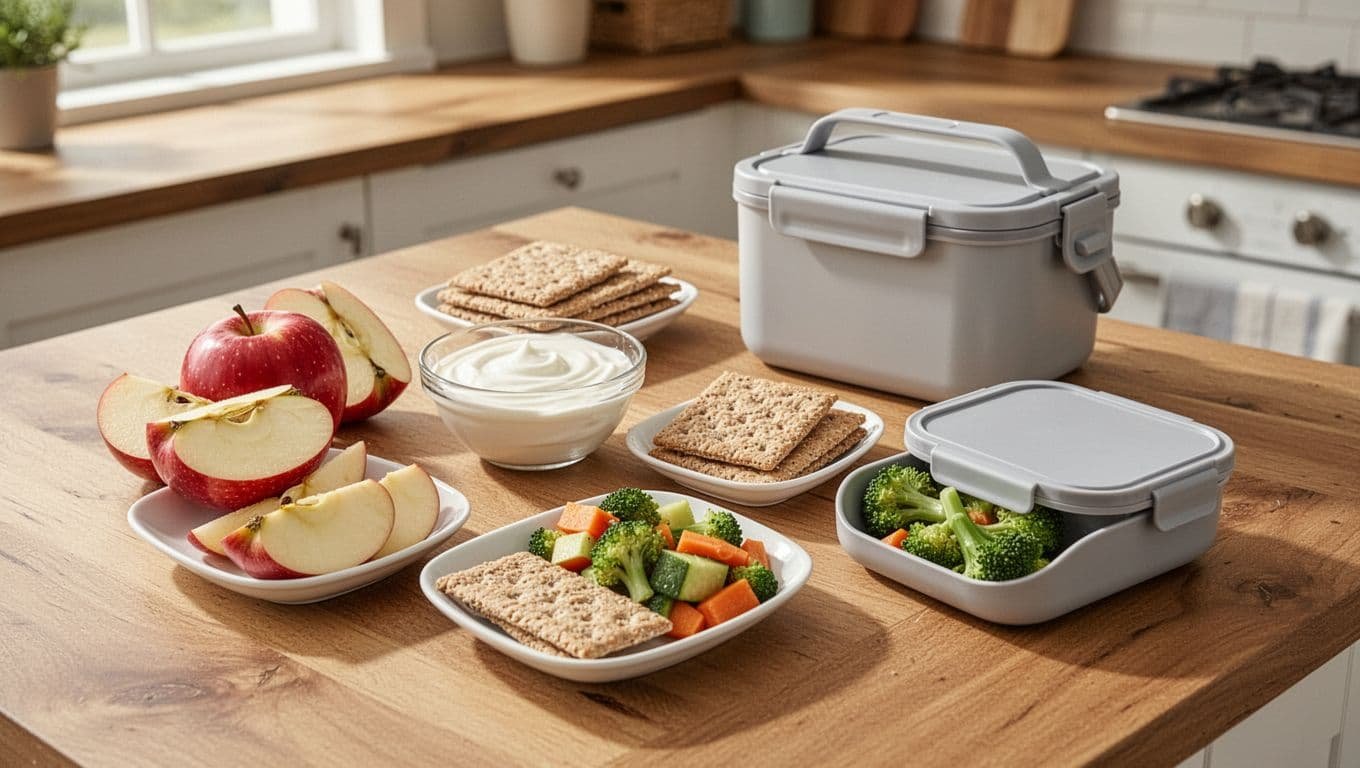
Choose Simple, Age-Appropriate Ingredients
Start with foods your child already enjoys, then add variety through color, texture, or flavor. Soft fruit, yogurt, cooked vegetables, whole-grain bread, eggs, beans, and cheese can create satisfying combinations without much preparation.
Check for major allergens before using packaged ingredients. In the US, these include milk, eggs, peanuts, tree nuts, wheat, soy, sesame, fish, and shellfish. School rules may also prohibit all nuts, so read labels for allergy statements and shared-equipment warnings.
Use sunflower-seed butter instead of peanut butter, dairy-free yogurt instead of regular yogurt, and applesauce or mashed banana in place of eggs when baking. Keep substitutions separate from allergen-containing foods to reduce cross-contact.
Store Perishable Snacks Correctly
Refrigerate homemade snacks containing eggs, dairy, yogurt, cheese, cooked vegetables, beans, or hummus within two hours. When the temperature is above 90°F, refrigerate them within one hour. Store leftovers in covered containers and keep your refrigerator at 40°F or below.
For school or park snacks, pack perishable foods in an insulated lunch bag with at least two cold sources. Keep the bag refrigerated until your child leaves, then serve the food soon after removal. The USDA’s guidance on keeping bag lunches safe provides additional storage details.
Serve Snacks Without Choking Risks
Children should sit upright, eat calmly, and stay supervised. Cut grapes and cherry tomatoes lengthwise, slice hard produce thinly, and soften raw carrots or apples when needed. Spread nut or seed butter in a thin layer instead of serving a thick spoonful.
Popcorn, whole nuts, hard candy, sticky candy, large chunks of food, and similar items may not suit young children. Match every snack’s size and texture to your child’s age, chewing skills, and ability to eat independently.
Frequently Asked Questions
These answers cover the practical details that help you prepare, store, and serve homemade after-school snacks with less guesswork.
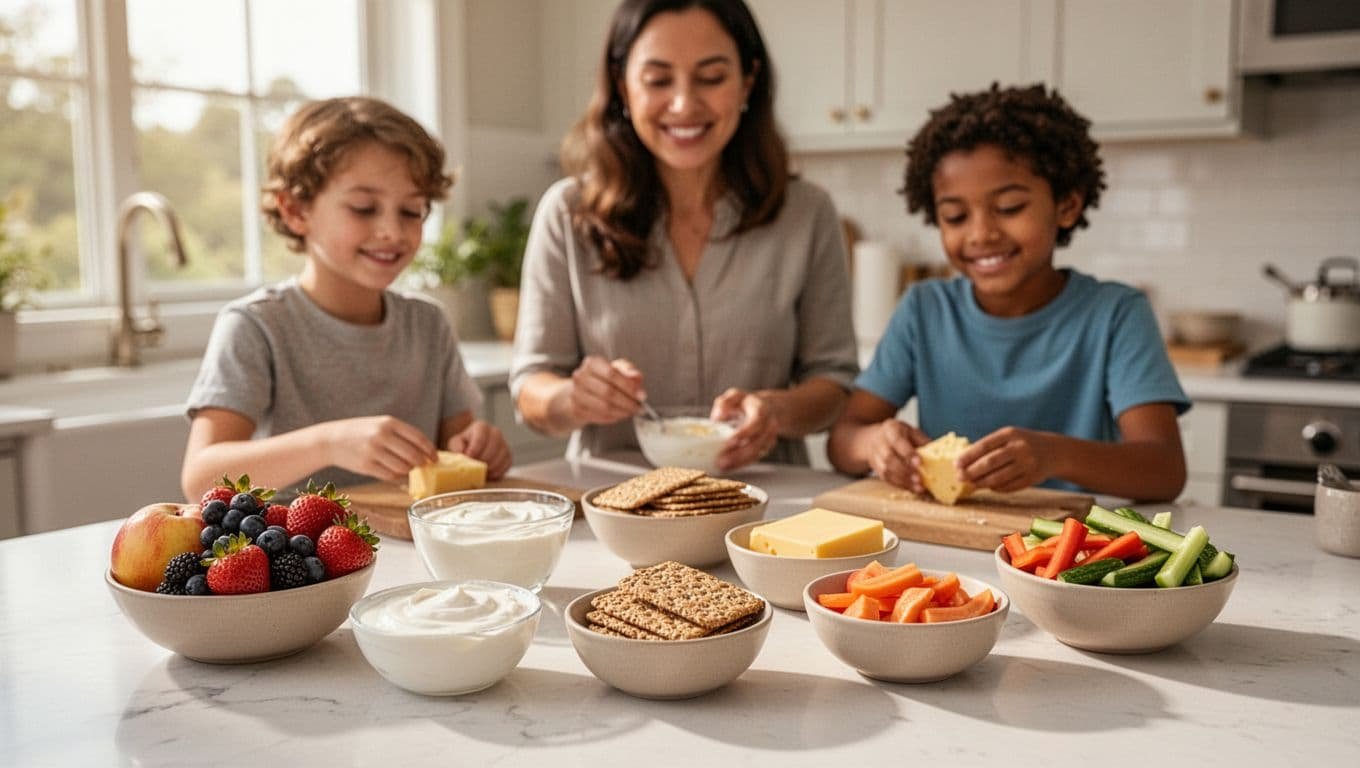
What makes a good after-school snack for kids?
A balanced snack usually combines at least two food groups, such as fruit with dairy, vegetables with protein, or whole grains with beans. Try yogurt with berries, cucumber with hummus, or whole-grain crackers with cheese.
Keep the serving filling but small enough that it doesn’t spoil dinner. A modest portion and water often satisfy afternoon hunger without turning snack time into another full meal.
How far ahead can I make these homemade snacks?
You can prepare baked items, oat bars, and washed produce ahead of time. Store them in covered containers, and refrigerate snacks that contain yogurt, cut fruit, eggs, cheese, beans, or dips.
When your child takes a snack away from home, pack it in an insulated container with a frozen gel pack. Follow the USDA’s food safety basics, especially the guidance to refrigerate perishable food within two hours, or within one hour when temperatures exceed 90°F.
What are the best nut-free substitutions for kids?
Sunflower-seed butter works well in toast, oat bites, and snack bars. Depending on the recipe, you can also use pumpkin seed butter, mashed beans, cream cheese, or yogurt.
Before packing a nut-free snack, read every ingredient label for shared equipment or cross-contact warnings. School allergy policies may restrict seeds as well as peanuts and tree nuts, so check the rules before choosing a substitute.
Which snacks are safest for toddlers?
Choose soft, mashed, grated, or cooked foods, such as yogurt, applesauce, mashed avocado, soft oatmeal, and finely chopped fruit. Children should sit upright while eating and remain supervised.
Hard, round, sticky, or crunchy foods may need to be avoided or changed. Cook firm apples, grate carrots, cut grapes into safe pieces, and spread seed or nut butter thinly. The FDA’s infant and toddler food safety guidance offers more age-based food safety information.
How can I get picky eaters to try new snacks?
Offer one familiar food beside one new food, such as a favorite cracker with a small piece of pear. Let your child wash berries, stir yogurt, or assemble snack pieces when safe.
Keep portions small and avoid pressure to taste or finish. Children often need repeated, relaxed exposure before a new food becomes familiar.
What can I serve when my child is hungry but dinner is soon?
Choose a small serving of fruit, yogurt, vegetables with dip, or a few whole-grain crackers with cheese. Add water, then keep the portion modest so your child can still enjoy dinner.
If the meal is less than 30 minutes away, a few bites may be enough to take the edge off hunger. Save larger snacks for afternoons when dinner is still several hours away.
Conclusion
Homemade after-school snacks don’t need to be complicated, expensive, or perfect. Choose a few favorites from different categories, such as fruit and yogurt, vegetables with dip, whole-grain snacks, and make-ahead baked treats. Wash produce, cook eggs or grains, and portion simple ingredients ahead of time so snack preparation feels easier on busy afternoons.
Pairing two food groups can make a small snack more satisfying, but portions should still fit your child’s appetite and dinner schedule. Check labels for allergies, follow school rules, and match each food’s texture and size to your child’s age and chewing skills. Let kids help with safe tasks, such as stirring, measuring, or arranging food. Like the snacks my mom made for me, these simple routines can give today’s families comforting food and lasting memories.
Save the pin for later

I’m the creator of My Everyday Dish, a food blog focused on easy homemade recipes, comforting family meals, simple baking, and seasonal food ideas. I love finding practical ways to make everyday cooking less stressful and more enjoyable. Here, I share recipes with simple ingredients, clear instructions, and plenty of flavor, helping you make delicious meals and treats you’ll feel confident serving at home.
Leave a Reply