My mom is a vegetarian, and I always make her lunch for work. That is how I’ve collected a lot of lunch ideas for vegetarians, especially recipes that are easy to prepare, pack, and enjoy during a busy day. Over time, I’ve learned that a satisfying meat-free lunch doesn’t need complicated ingredients or hours in the kitchen.
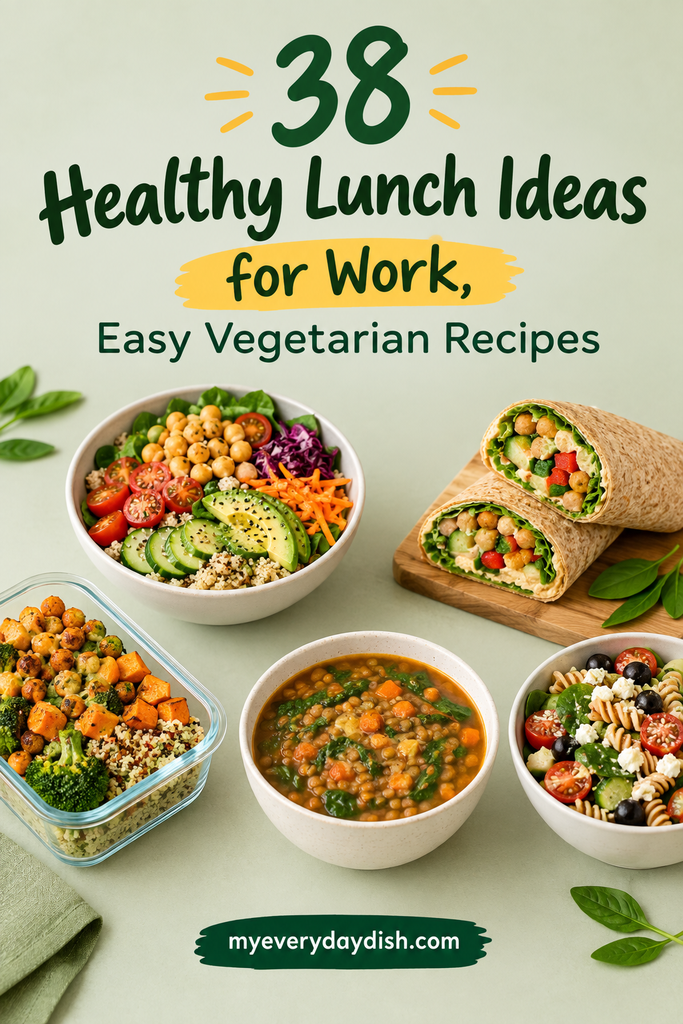
These healthy lunch ideas for work include 38 practical vegetarian recipes with simple ingredients and plenty of flavor. You’ll find meals built around colorful vegetables, plant-based protein such as beans, lentils, tofu, and peas, plus whole grains and healthy fats from ingredients like avocado, nuts, seeds, and olive oil. Many can be prepared ahead, packed in a lunch container, and adjusted to suit what you already have at home.
Whether you prefer rice bowls, hearty salads, sandwiches, wraps, or warm comfort food, there’s an option for you here. Let’s start with easy vegetarian lunches that travel well and keep midday meals interesting.
How to Build Healthy Lunch Ideas for Work That Keep You Full
A filling vegetarian lunch needs more than vegetables alone. Build your meal around protein, fiber, and satisfying flavor, then pack it in a way that keeps every ingredient fresh.
Use a Simple Lunch Formula
Start with one protein source, such as beans, lentils, tofu, edamame, hummus, Greek yogurt, nuts, or seeds. Next, add a generous portion of vegetables, whether they are raw, roasted, steamed, or sauteed.
Include a high-fiber grain or whole-grain bread to provide lasting energy. Brown rice, quinoa, farro, barley, whole-wheat pasta, and whole-grain tortillas all work well. Finish with a flavorful sauce or healthy fat, such as tahini dressing, pesto, salsa, olive oil, avocado, or a spoonful of seeds.
A reliable work lunch usually has four parts: protein, vegetables, whole grains, and a flavorful finishing touch.
This formula keeps your lunches balanced without requiring a new recipe every day. For example, combine lentils, roasted carrots, quinoa, and lemon-tahini dressing. The next day, use the same structure with tofu, cucumbers, whole-grain pita, and hummus.
Prep Components Before the Workweek
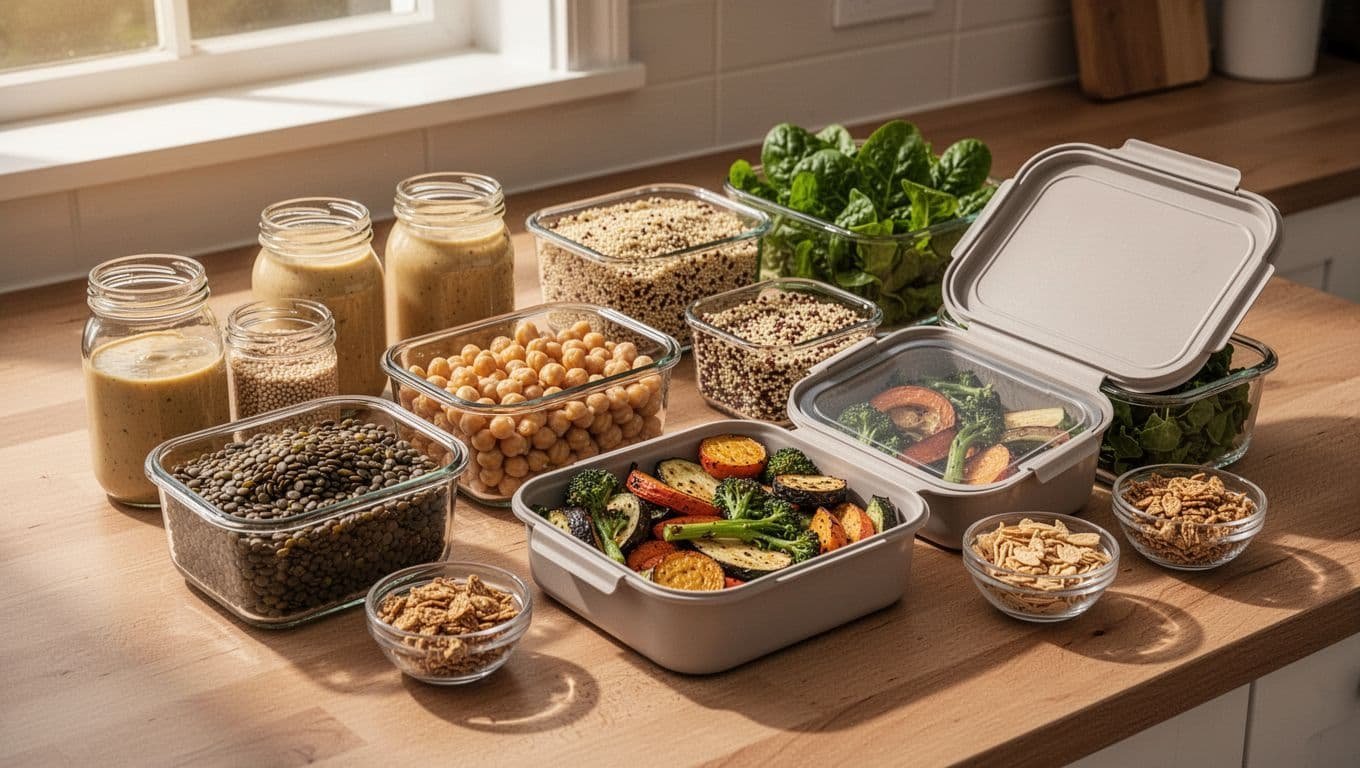
Meal prep becomes easier when you prepare ingredients instead of assembling five identical meals. Cook a batch of grains and beans, roast a sheet pan of vegetables, and wash produce before storing it. Then portion the ingredients into containers so you can mix and match lunches throughout the week.
Keep dressings, sauces, nuts, seeds, and other crunchy toppings separate until you’re ready to eat. This simple step prevents soggy salads, soft bread, and wilted vegetables.
Pack for Freshness and Food Safety
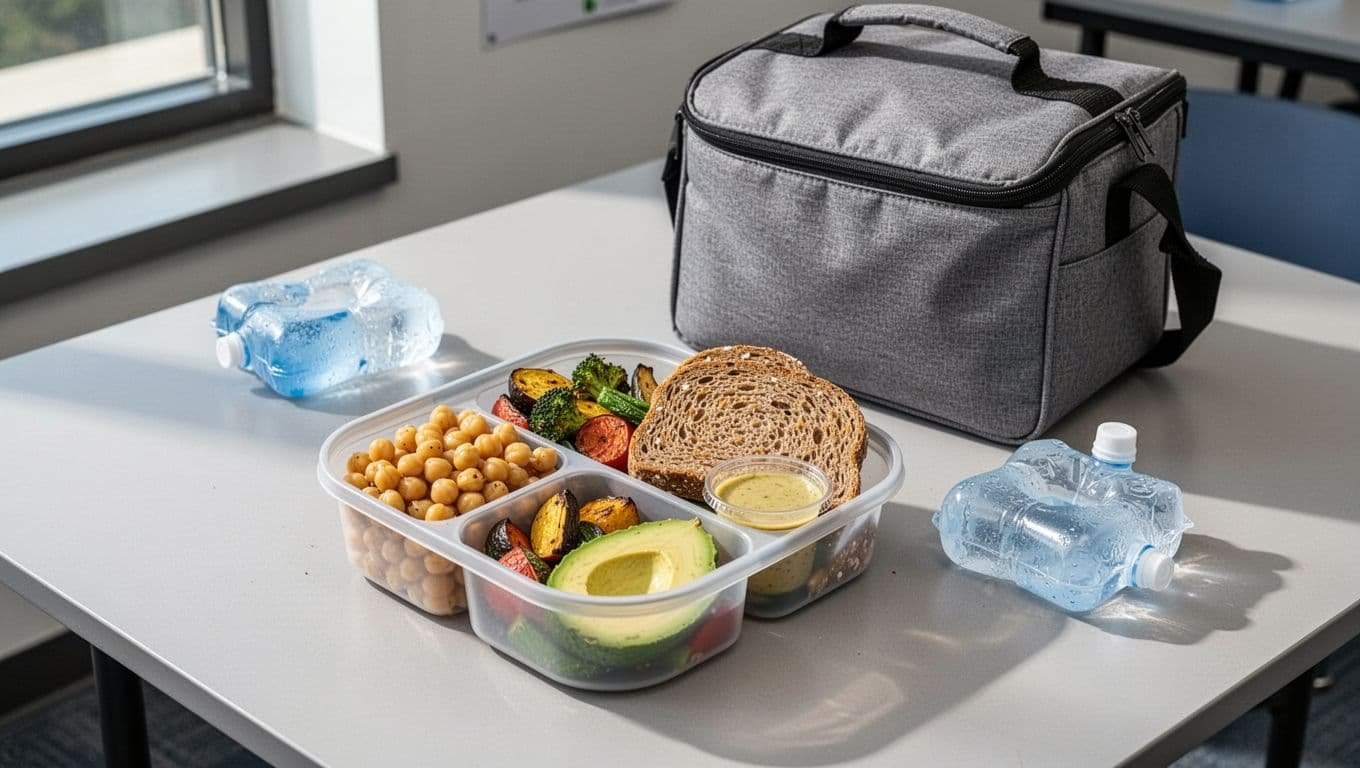
Use leak-proof containers for soups, sauces, and grain bowls. Divided containers work well when you want to keep ingredients separate, while a thermos can hold hot soup, chili, or pasta. Let hot food cool before sealing it, unless you’re packing it directly into a preheated food thermos.
Refrigerate prepared food promptly, and keep perishable lunches cold until you eat them. The USDA recommends an insulated lunch bag with at least two cold sources, such as frozen gel packs or frozen water bottles. If your workplace has a refrigerator, store the lunch there when you arrive. For more details, review the USDA’s safe food handling guidance.
Perishable food should stay at or below 40°F. If refrigeration isn’t available, place the lunch in an insulated bag with ice packs from the moment you leave home.
38 Healthy Lunch Ideas for Work, Easy Vegetarian Recipes
This main recipe collection includes short ingredient lists, simple assembly or cooking steps, and practical packing notes. Most recipes use common grocery-store ingredients, so you can prepare them during Sunday meal prep or assemble them quickly before work. Beans, lentils, tofu, eggs, nuts, seeds, and dairy all provide vegetarian protein, as recognized in the Dietary Guidelines for Americans.
Fresh Grain Bowls and Filling Salads
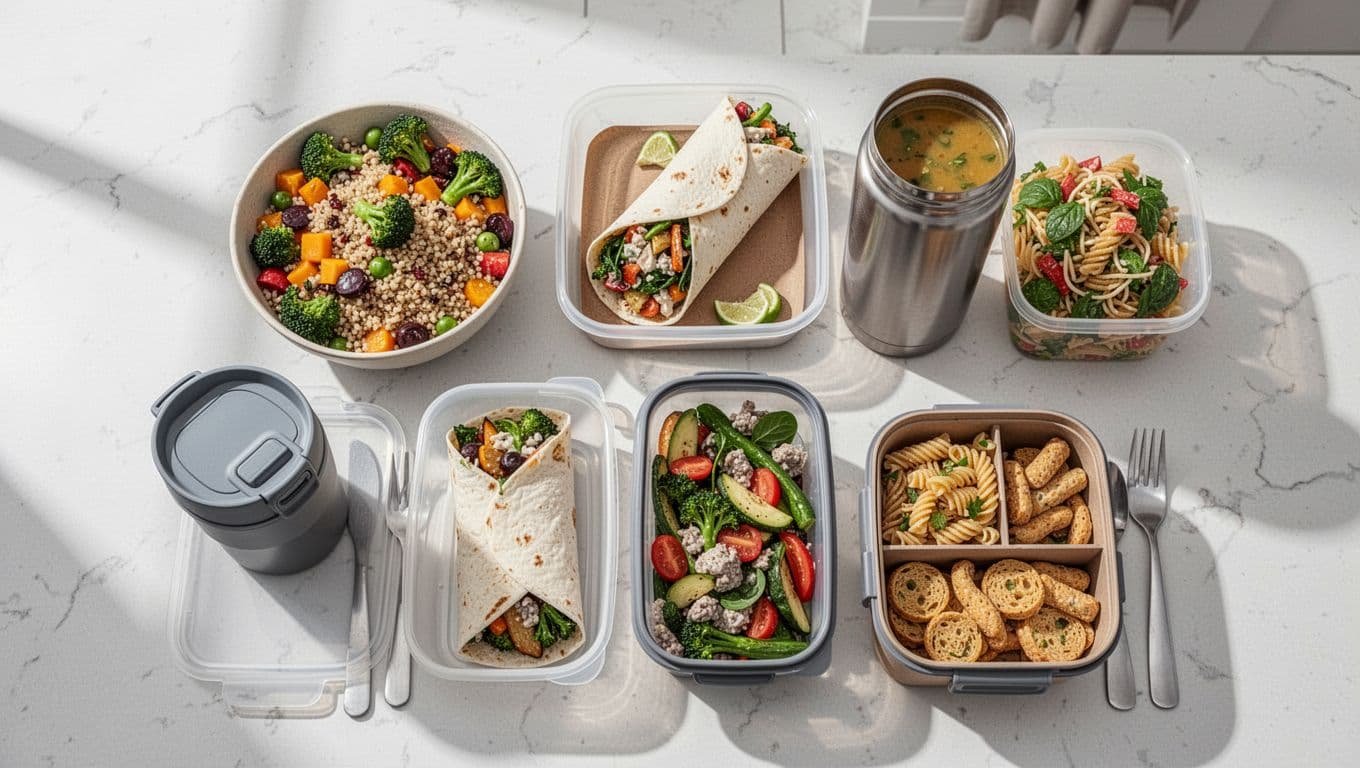
- Quinoa roasted vegetable bowl combines quinoa, chickpeas, roasted peppers, zucchini, and tahini dressing. Pack it cold and add pumpkin seeds before eating.
- Mediterranean farro bowl layers farro with white beans, cucumber, tomatoes, olives, feta, and lemon dressing. Store the dressing separately.
- Black bean quinoa salad mixes quinoa, black beans, corn, avocado, tomatoes, cilantro, and lime juice. Add avocado just before eating.
- Lentil sweet potato salad combines cooked lentils, roasted sweet potato, arugula, red onion, and mustard vinaigrette. Keep greens dry and chilled.
- Greek chickpea salad uses chickpeas, cucumber, tomatoes, olives, feta, and oregano. Pack whole-wheat pita separately so it stays firm.
- Edamame brown rice bowl pairs brown rice, shelled edamame, carrots, cabbage, and sesame dressing. Add sesame seeds at lunchtime.
- Caprese pasta salad combines whole-wheat pasta, white beans, tomatoes, mozzarella, basil, and pesto. Chill it in a leak-proof container.
- Crunchy cabbage tofu slaw mixes shredded cabbage, baked tofu, carrots, scallions, and peanut-lime dressing. Keep the dressing separate.
- Curry quinoa salad combines quinoa, chickpeas, raisins, celery, curry powder, and cashews. Add cashews before eating for crunch.
- Layered mason jar salad starts with dressing, followed by firm vegetables, then grains and beans, with delicate greens on top. Shake into a bowl at work, and add avocado, pita, croutons, or other crisp toppings just before eating.
Easy Vegetarian Wraps, Sandwiches, and Toasties
Firm tortillas and whole-grain bread travel best. To prevent sogginess, spread hummus or cream cheese edge to edge, pat wet vegetables dry, and pack extra sauces separately.
- Hummus roasted vegetable wrap: Spread hummus over a tortilla, add roasted vegetables and spinach, fold the sides inward, and roll tightly.
- Black bean avocado wrap: Mash black beans with lime, spread them on a tortilla, then add avocado, corn, lettuce, and salsa.
- Buffalo chickpea sandwich: Mash chickpeas with yogurt or vegan mayo and buffalo sauce. Add celery, lettuce, and bread, then wrap tightly.
- Chickpea gyro pita: Fill pita with seasoned chickpeas, cucumber, tomato, lettuce, and tzatziki. Keep extra sauce in a small container.
- Caprese pesto sandwich: Spread pesto on bread, add mozzarella, tomatoes, and basil, then press gently. Pat tomatoes dry first.
- White bean spinach toastie: Mash white beans with lemon and pepper, spread on bread, add spinach and cheese, then cook in a skillet until golden.
- Smashed chickpea cucumber sandwich: Mash chickpeas with mustard and yogurt, spread onto bread, and add dried cucumber slices and greens.
- Curried egg or tofu salad sandwich: Mix chopped eggs or crumbled tofu with curry powder, yogurt, celery, and mustard. Spoon onto whole-grain bread.
- Falafel pita: Stuff pita with falafel, lettuce, tomato, cucumber, and tahini. Pack tahini separately if the pita will sit for several hours.
- Veggie cream cheese bagel: Spread cream cheese over a whole-grain bagel, then add cucumber, shredded carrot, spinach, and sprouts.
Warm Thermos Lunches, Curries, and Comforting Bowls
Preheat a food thermos with boiling water for five minutes. Drain it, then add piping-hot food. Lentil soup, chili, curry, minestrone, and burrito bowls can be batch cooked, chilled, and reheated in microwave-safe containers.
- Lentil vegetable soup: Saute onion, carrot, and celery; add lentils, tomatoes, broth, and herbs; simmer until tender.
- Chickpea spinach curry: Cook onion, garlic, and curry powder, then add chickpeas, tomatoes, and coconut milk. Simmer, stir in spinach, and finish with lime.
- Black bean tortilla soup: Saute onion and peppers, add black beans, corn, tomatoes, broth, and cumin, then simmer. Top with tortilla strips at lunch.
- Vegetable chili: Cook onion, garlic, peppers, beans, tomatoes, and chili powder together until thick. Add lime and cilantro before packing.
- Tomato white bean soup: Simmer garlic, tomatoes, white beans, broth, and Italian herbs. Finish with spinach and grated Parmesan.
- Tofu vegetable stir-fry: Brown tofu, add broccoli and carrots, then stir in soy-ginger sauce. Pack with hot brown rice.
- Stuffed bell peppers: Fill halved peppers with quinoa, black beans, tomatoes, and cheese. Bake until tender, then reheat one portion.
- Sweet potato burrito bowl: Layer roasted sweet potato, black beans, rice, salsa, and cheese. Add avocado after reheating.
- Vegetable minestrone: Simmer onion, carrots, zucchini, beans, tomatoes, broth, and whole-grain pasta. Add basil after cooking.
No-Cook Lunches, Pasta Salads, and Snack Boxes
- Thai peanut noodle bowl: Toss cooked rice noodles with edamame, shredded carrots, cucumber, and peanut sauce. Keep lime wedges separate.
- Zucchini noodles with pesto: Combine zucchini ribbons, chickpeas, pesto, and cherry tomatoes. Pack crackers separately for crunch.
- Mexican street corn pasta salad: Mix pasta, corn, black beans, cilantro, lime, and yogurt or vegan mayo. Add cheese just before eating.
- Cold sesame soba noodles: Toss soba with cucumber, carrots, edamame, and sesame dressing. Keep extra vegetables separate if prepping ahead.
- Hummus snack plate: Pack hummus, whole-grain pita, carrots, cucumber, peppers, and olives in separate sections.
- Adult snack box: Add cheese, boiled eggs or edamame, fruit, nuts, and whole-grain crackers. Use tofu cubes for a vegan swap.
- Greek yogurt fruit bowl: Layer yogurt, berries, chia seeds, and granola. Keep granola separate until lunchtime, and use coconut yogurt for a dairy-free option.
- Overnight oats: Stir oats, milk, berries, chia seeds, and nut butter in a jar. Refrigerate overnight and add sliced fruit before leaving.
- No-cook Mediterranean plate: Pack hummus, olives, tomatoes, cucumber, and pita in separate compartments. Use white bean dip instead of hummus for variety.
Step-by-Step Meal Prep for Easy Vegetarian Work Lunches
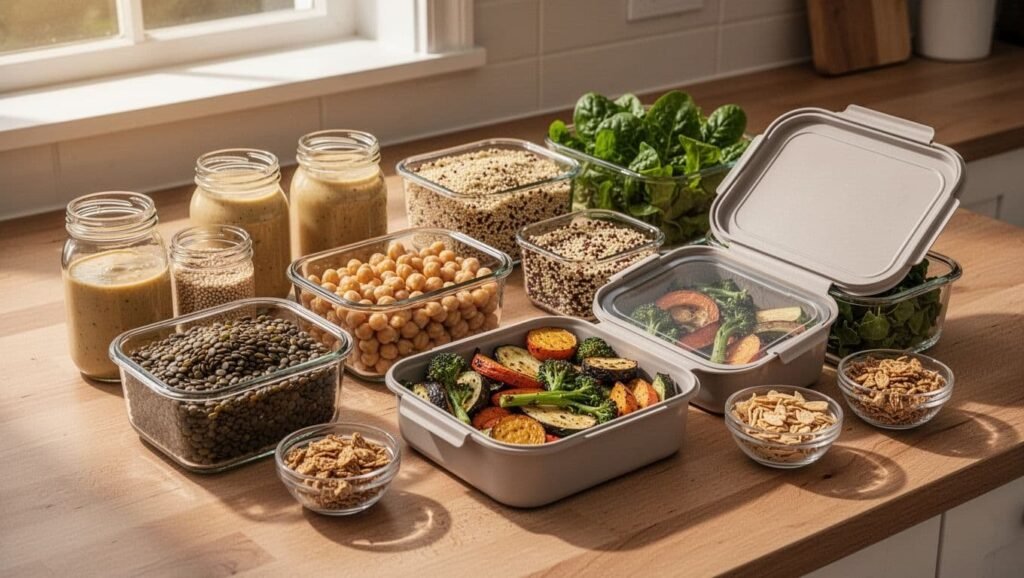
Prepare the Main Ingredients
Start with two proteins, such as lentils, chickpeas, tofu, or edamame. Then cook one or two grains, including quinoa, brown rice, farro, or whole-wheat pasta.
While those ingredients cook, roast a sheet pan of vegetables and chop a few fresh options. Use sturdy vegetables, such as carrots, broccoli, peppers, cabbage, cucumbers, or cherry tomatoes. This mix gives you both cooked and crisp ingredients for the week.
Make Sauces and Store Ingredients Well
Prepare two sauces with different flavors, such as lemon-tahini dressing and peanut sauce. If a sauce thickens in the refrigerator, stir in a teaspoon of water, lime juice, or vinegar before serving.
Keep leafy greens separate from wet ingredients so they stay crisp. Store crunchy toppings, including nuts, seeds, croutons, and tortilla strips, in small containers or bags. Toss cut avocado and apples with lemon or lime juice to slow browning.
The easiest meal prep uses shared ingredients in different combinations, rather than five identical containers.
Assemble Five Different Lunches
Use the prepared ingredients in a new format each day:
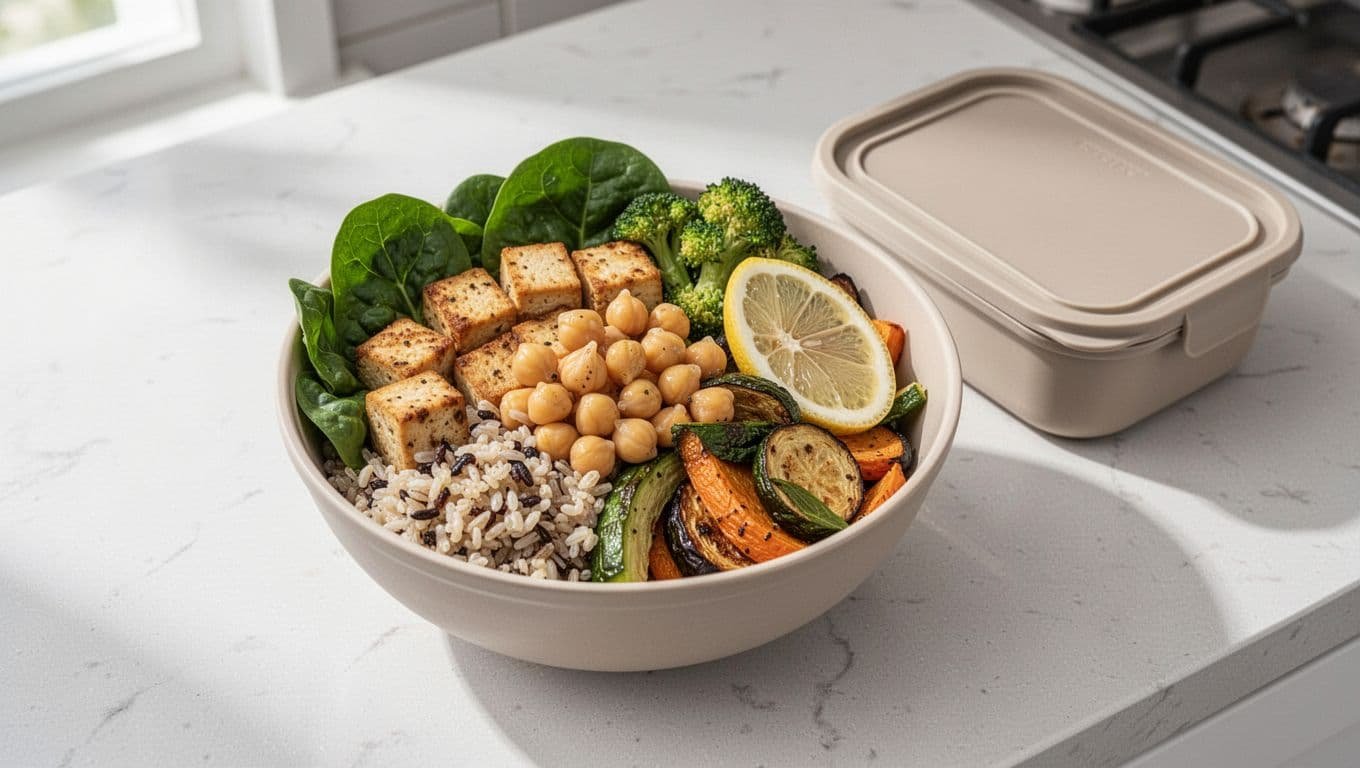
- Monday: Make a quinoa bowl with chickpeas, roasted vegetables, greens, and lemon-tahini dressing.
- Tuesday: Fill a whole-grain wrap with tofu, cabbage, carrots, and peanut sauce.
- Wednesday: Pack lentil vegetable soup in a food thermos with whole-grain crackers.
- Thursday: Toss whole-wheat pasta with edamame, tomatoes, cucumbers, and lemon dressing.
- Friday: Build a snack box with hummus, vegetables, fruit, cheese, and whole-grain crackers.
Label and Refrigerate Everything
Label each container with the meal and day, then refrigerate the food promptly. Prepared lunches should stay at 40°F or below, and the FDA’s food storage guidance offers additional safety details. Use an insulated lunch bag with cold packs when a refrigerator is unavailable, especially for lunches containing cooked grains, dairy, eggs, or cut produce.
How to Pack Vegetarian Lunches So They Taste Fresh at Work
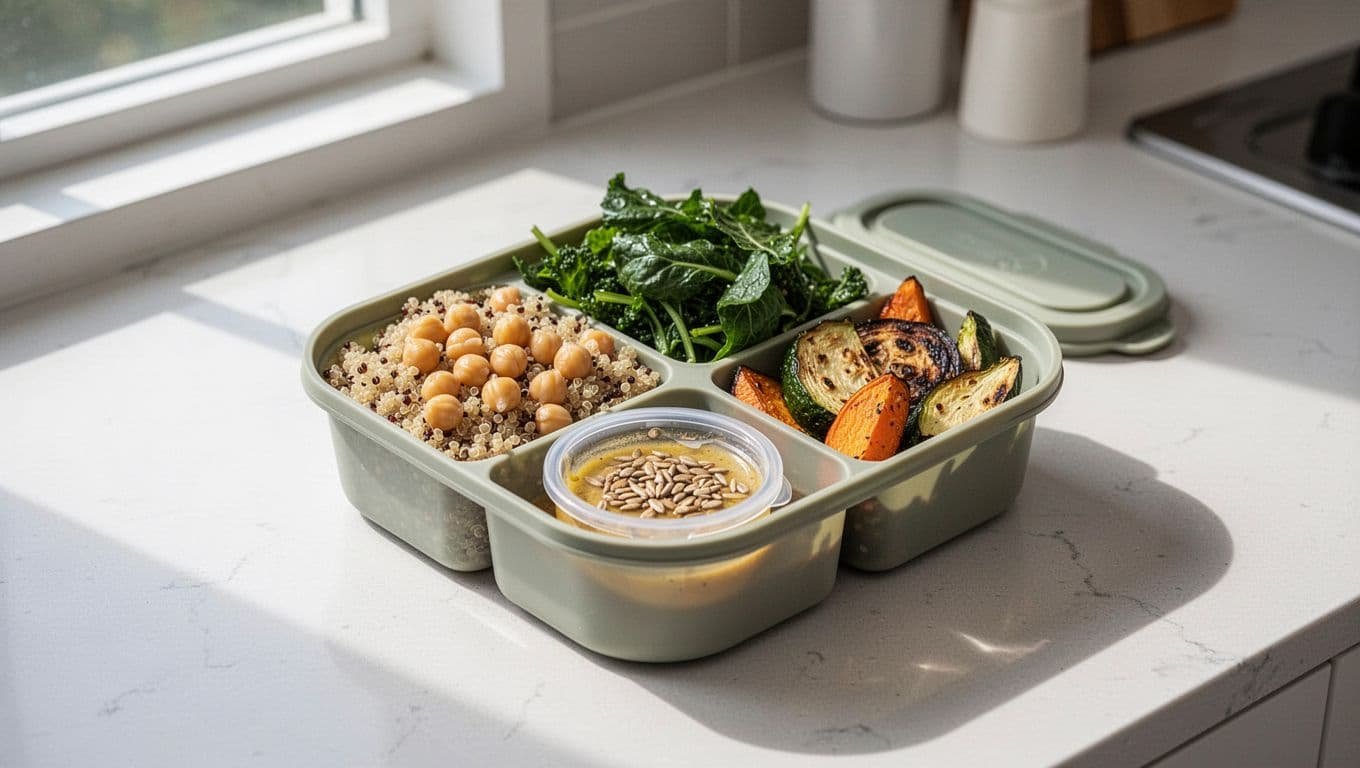
Match the Container to the Meal
Use a thermos for soup, chili, curry, or another meal you want to eat hot. Preheat it with boiling water for a few minutes, empty it, then add piping-hot food. Keep the lid closed until lunch, and reheat leftovers to 165°F before packing.
An insulated lunch bag is best for perishable foods. Add at least two frozen cold sources, placing one above and one below the food. The USDA’s bag lunch safety guidance recommends keeping cold foods below 40°F.
Choose a leak-proof container for dressings, soups, and saucy grain bowls. A divided lunch box works well for hummus plates, snack boxes, and meals with crunchy toppings that should stay separate.
Keep Fresh Ingredients Away From Moisture
Layer salads with dressing on the bottom, sturdy vegetables next, then beans or grains, and delicate greens on top. Pack seeds, nuts, croutons, and tortilla strips separately. Add the dressing just before eating if you want maximum crunch.
Keep bread away from wet fillings by patting tomatoes and cucumbers dry. You can also spread hummus or cream cheese edge to edge, which creates a barrier against moisture. Store salsa, pesto, or extra sauce in a small container instead of adding it to a wrap hours early.
Quick fixes make packed lunches taste better:
- Add lemon juice, salsa, hot sauce, herbs, or pickled onions to bland beans.
- Stir a little olive oil, pesto, or lemon juice into a dry grain bowl.
- Pack greens separately when possible if they wilt easily.
- Loosen thick tahini or peanut sauce with a teaspoon of water or lime juice.
- Sprinkle toasted seeds over lunch just before eating for extra flavor and crunch.
Mix and Match Your Lunch Components
Create new combinations from the same ingredients. Pair chickpeas with quinoa, roasted peppers, and lemon-tahini dressing; tofu with brown rice, cabbage, and peanut sauce; or lentils with farro, cucumbers, and pesto. This approach gives you more variety without preparing a completely different recipe each day.
Frequently Asked Questions
How can I get enough protein from a vegetarian work lunch?
Choose one clear protein source instead of relying on vegetables alone. Beans, lentils, chickpeas, tofu, edamame, Greek yogurt, eggs, cheese, nuts, seeds, and hummus can all strengthen a vegetarian lunch.
For example, add chickpeas to a grain salad, tofu to a noodle bowl, or eggs and cheese to a snack box. Pairing protein with whole grains, vegetables, and a healthy fat creates a more satisfying meal that can help you stay full through the afternoon.
How long can vegetarian lunches stay in the refrigerator?
Storage time depends on the ingredients, preparation method, and refrigerator temperature. As a general food-safety guide, the USDA says many cooked leftovers can stay refrigerated for three to four days at 40°F or below. You can review the USDA’s leftovers and food safety guidance for more details.
Refrigerate food promptly, preferably in shallow containers that help it cool faster. When a lunch develops an unusual smell, texture, or appearance, discard it rather than tasting it to check whether it’s safe.
Which vegetarian lunches can I freeze?
Soups, chili, curry, cooked beans, stuffed peppers, and grain-based fillings usually freeze well. Cool them promptly, portion them into airtight containers, and leave a little room for expansion before freezing. Label each container with the name and date so you can use older meals first.
Fresh salads usually taste better when you make them close to lunchtime. Avocado, crisp greens, cucumbers, and creamy dressings can become watery, soft, or separated after freezing and thawing. For better texture, freeze the cooked components and add fresh toppings after reheating.
How do I make these lunches vegan?
Most vegetarian lunches need only a few simple swaps. Replace Greek yogurt with dairy-free yogurt, use plant-based cheese, sprinkle nutritional yeast over pasta or grain bowls, and add tofu or extra beans when a recipe includes eggs or dairy.
Check packaged sauces, bread, pesto, and dressings before using them. Some contain hidden milk, whey, butter, mayonnaise, or egg, even when the main recipe looks vegan. Hummus, tahini, avocado, salsa, and olive oil are easy additions when you want flavor without animal products.
What should I pack if I do not have access to a microwave?
Choose lunches that taste good cold or at room temperature, such as wraps, sandwiches, grain salads, pasta salads, snack boxes, overnight oats, hummus plates, and chilled noodle bowls. Keep wet ingredients and crunchy toppings separate until you’re ready to eat.
A well-insulated food thermos gives you another option. Preheat it with boiling water, drain it, and fill it with hot soup, chili, or curry before leaving home. Pack perishable foods in an insulated lunch bag with cold sources until lunchtime.
A Simple Way to Plan 38 Vegetarian Work Lunches
My mom is a vegetarian, and I always make her lunch for work. That is how I have so many lunch ideas for vegetarians. The easiest way to use them is to choose meals based on your schedule, available equipment, and personal taste.
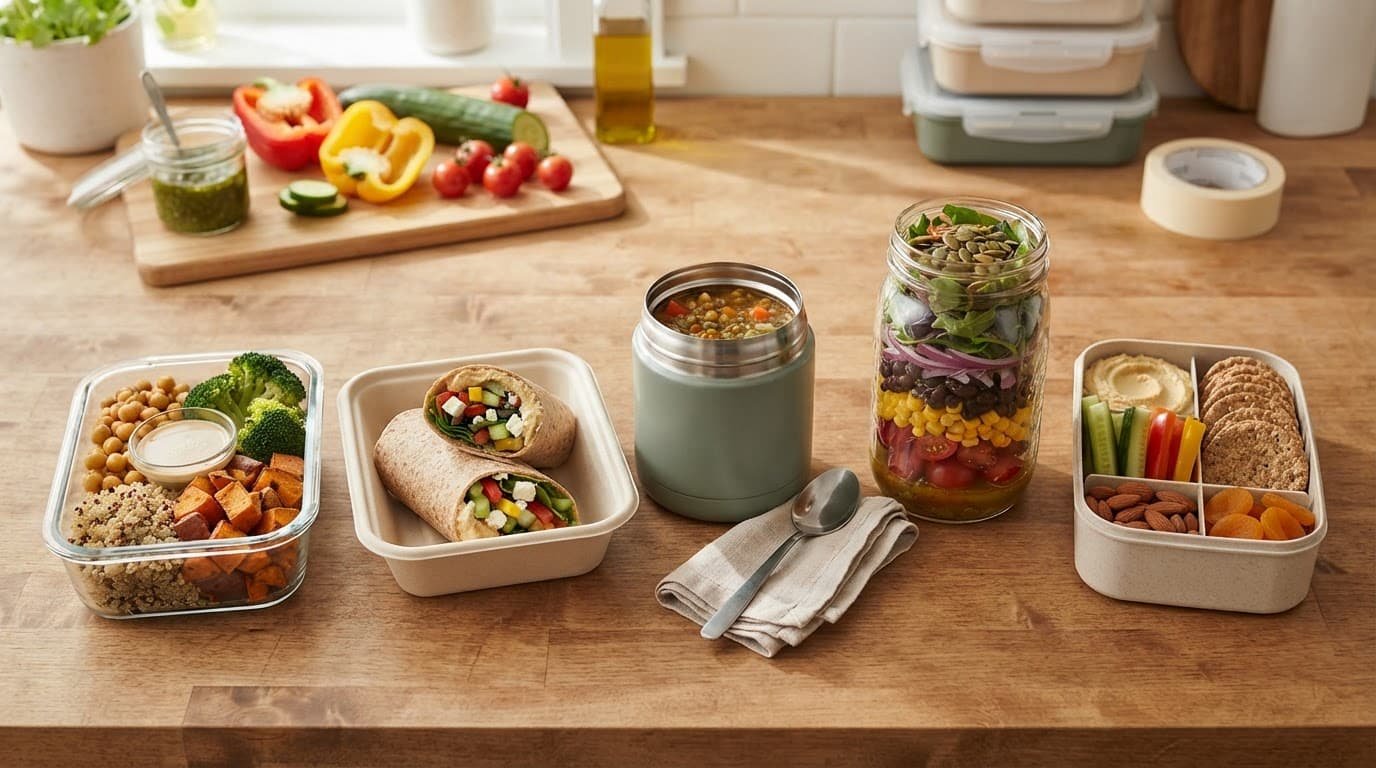
Match Lunches to Your Workday
Start by checking how much time you have in the morning. Choose a no-cook lunch when you need to leave quickly, or prepare a bowl or salad when you have a few minutes to assemble ingredients. If you have access to a microwave, warm meals become an option. Without one, choose lunches that taste good cold or pack a preheated thermos.
Your personal preferences matter, too. Use the Dietary Guidelines for Americans as a general guide, then build meals around vegetables, whole grains, beans, lentils, tofu, nuts, seeds, eggs, or dairy.
Create Variety Without Extra Work
Begin each week with one bowl, one wrap, one soup, one salad, and one no-cook lunch. Then rotate the sauces and vegetables so the same ingredients feel different each day. Lemon-tahini dressing, pesto, salsa, peanut sauce, and yogurt-based sauces can change the flavor without requiring a new recipe.
Choose sturdy vegetables for several days of meal prep, and keep dressings or crunchy toppings separate until lunchtime. Healthy lunches don’t need to be complicated, expensive, or identical every day. A simple rotation gives you enough structure to plan ahead while leaving room for leftovers and last-minute changes.
Conclusion
These recipes show that healthy work lunches can include balanced ingredients, easy prep, and portable formats without becoming repetitive.
With bowls, wraps, salads, thermos meals, and snack boxes, you can choose lunches that fit your schedule and workplace. Preparing a few grains, vegetables, beans, or sauces ahead makes each meal easier to assemble while keeping the flavors varied.
This week, choose two recipes and prepare a few ingredients in advance. I hope these vegetarian lunch ideas help you pack satisfying meals that keep you energized and interested in lunch throughout the workweek.

I’m the creator of My Everyday Dish, a food blog focused on easy homemade recipes, comforting family meals, simple baking, and seasonal food ideas. I love finding practical ways to make everyday cooking less stressful and more enjoyable. Here, I share recipes with simple ingredients, clear instructions, and plenty of flavor, helping you make delicious meals and treats you’ll feel confident serving at home.
Leave a Reply