
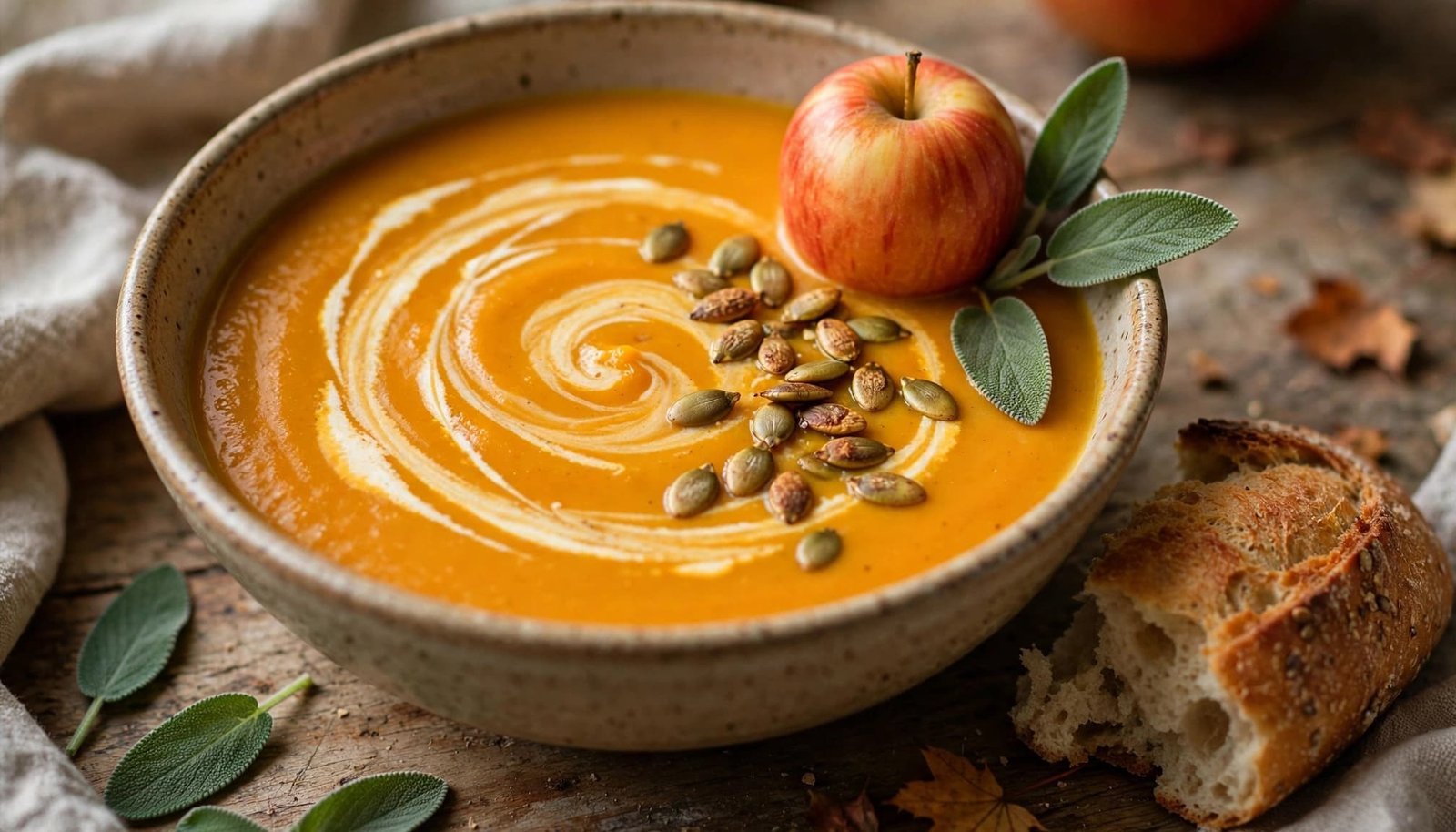
Roasted butternut squash soup gets its sweet-savory balance from a tart apple, softened onion, and fresh sage. Roasting builds rich flavor, while a short simmer and quick blend give you a smooth bowl without much hands-on cooking.
You can leave out the dairy, adjust the thickness, or make the soup ahead for a chilly evening. Start with tender roasted squash, then follow the steps below for a simple fall meal with room for your favorite toppings.
Easy Roasted Butternut Squash Soup With Apple and Fresh Sage
This soup combines roasted squash, apple, onion, broth, and sage into a creamy-textured blend. The squash provides most of the body, so milk or cream is optional.
Plan on about 4 to 6 servings and roughly an hour, with extra time for a larger squash.
| Recipe Detail | What to Expect |
|---|---|
| Prep time | About 15 minutes |
| Cook time | About 45 to 65 minutes |
| Total time | About 1 hour to 1 hour 20 minutes |
| Yield | 4 to 6 servings |
| Main equipment | Baking sheet, large soup pot, knife, spoon, immersion blender |
What You’ll Need for a Balanced, Cozy Soup
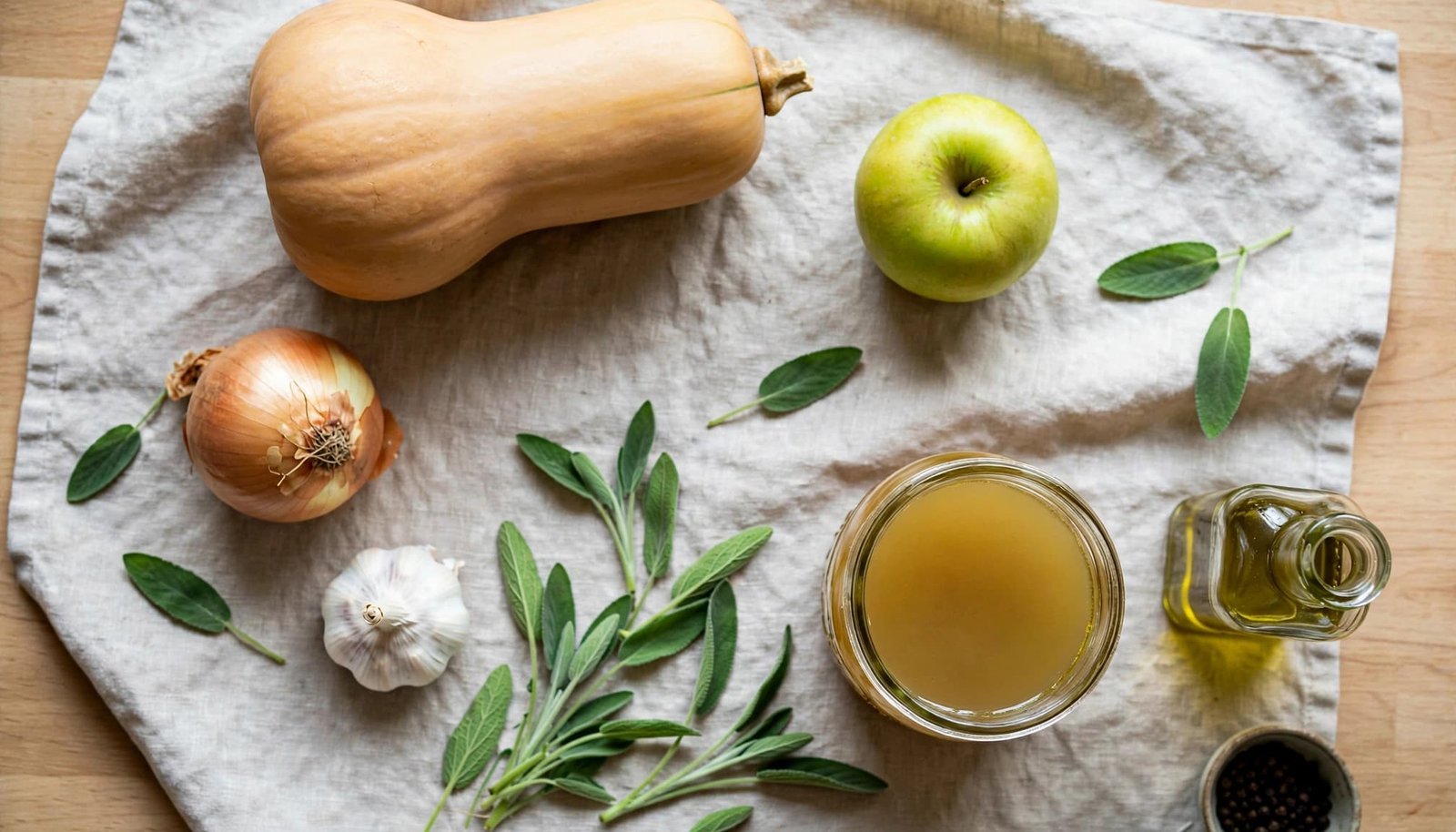
Choose a firm squash without soft spots and a tart apple, such as Granny Smith. Low-sodium broth gives you more control over the seasoning after blending.
- Use 1 butternut squash weighing about 3 to 4 pounds. Roasting it in halves saves peeling and chopping.
- Choose 1 large tart apple, peeled, cored, and chopped. Its acidity balances the squash’s sweetness.
- Chop 1 medium onion and mince 2 garlic cloves for a savory base.
- Measure 4 cups low-sodium vegetable broth, with extra available for thinning.
- Use 2 tablespoons olive oil, divided between roasting and sautéing. Butter can replace the tablespoon used in the pot.
- Chop 6 to 8 fresh sage leaves, about 1 tablespoon, for an earthy herbal flavor.
- Start with 1/2 teaspoon fine salt and 1/4 teaspoon black pepper, then adjust to taste.
- Set aside 1/2 cup milk or unsweetened coconut milk if you want a richer finish. A pinch of red pepper flakes adds gentle heat.
How to Make Roasted Butternut Squash Soup Step by Step
Start the squash first, then prepare the stovetop ingredients while it roasts. This keeps the work manageable and gives the onion and apple time to soften before everything comes together.
Read also: Easy Homemade Tortellini Soup With Chicken Broth
Prepare and Roast the Squash Until Fork-Tender
Heat the oven to 425°F and line a rimmed baking sheet with parchment. Set the squash on a stable cutting board, then carefully halve it lengthwise with a sharp knife. Scoop out the seeds and stringy flesh.
Brush the cut surfaces with 1 tablespoon olive oil and season with some of the salt and pepper. Place the halves cut-side down, leaving space between them.
Roast for about 35 to 50 minutes. Test the thickest flesh with a fork or knife; it should slide in easily without a firm center. Larger squash may need more time.
Let the halves cool until you can handle them, then scoop the flesh into a bowl. Leave the skin behind, along with any tough or heavily scorched pieces.

Soften the Onion, Apple, and Garlic
Warm the remaining tablespoon of oil or butter in a large soup pot over medium heat. Add the chopped onion and apple, then stir to coat them with the fat.
Cook for about 6 to 8 minutes, stirring occasionally, until the onion softens and the apple begins to yield. Small, evenly chopped pieces soften more readily than large chunks. If they begin browning before they’re tender, lower the heat and add a splash of water.
Stir in the minced garlic and cook for about 30 seconds, until fragrant. Keep it moving so it doesn’t scorch against the bottom.
A tart apple keeps this roasted butternut squash soup balanced. Sweeter apples also work, but the finished soup will taste sweeter.
Simmer the Soup With Broth and Fresh Sage
Add the scooped squash, chopped sage, and vegetable broth to the pot. Start with 3 cups of broth if you prefer a thicker soup, reserving the remaining cup for blending.
Break up the squash with a wooden spoon, then bring the mixture to a gentle simmer. Reduce the heat and cook for 10 to 15 minutes, stirring occasionally so the thick mixture doesn’t catch underneath.
The apple should be fully soft by the end, with no firm pieces when pressed against the pot. The sage should smell fragrant without overpowering the squash.
Keep the simmer gentle rather than boiling hard. Most ingredients are already cooked, so this stage brings their flavors together without reducing too much liquid. Add a splash of broth if the mixture becomes difficult to stir.
Read also: Creamy Fall Crockpot Potato Soup for Cozy Nights
Blend Until Smooth and Adjust the Finish
Remove the pot from the heat, then blend with an immersion blender until smooth. Keep the blade submerged to reduce splashing, and switch it off before lifting it out.
For countertop blending, follow your blender’s hot-liquid instructions and work in batches. Return the blended soup to the pot before adjusting its consistency.
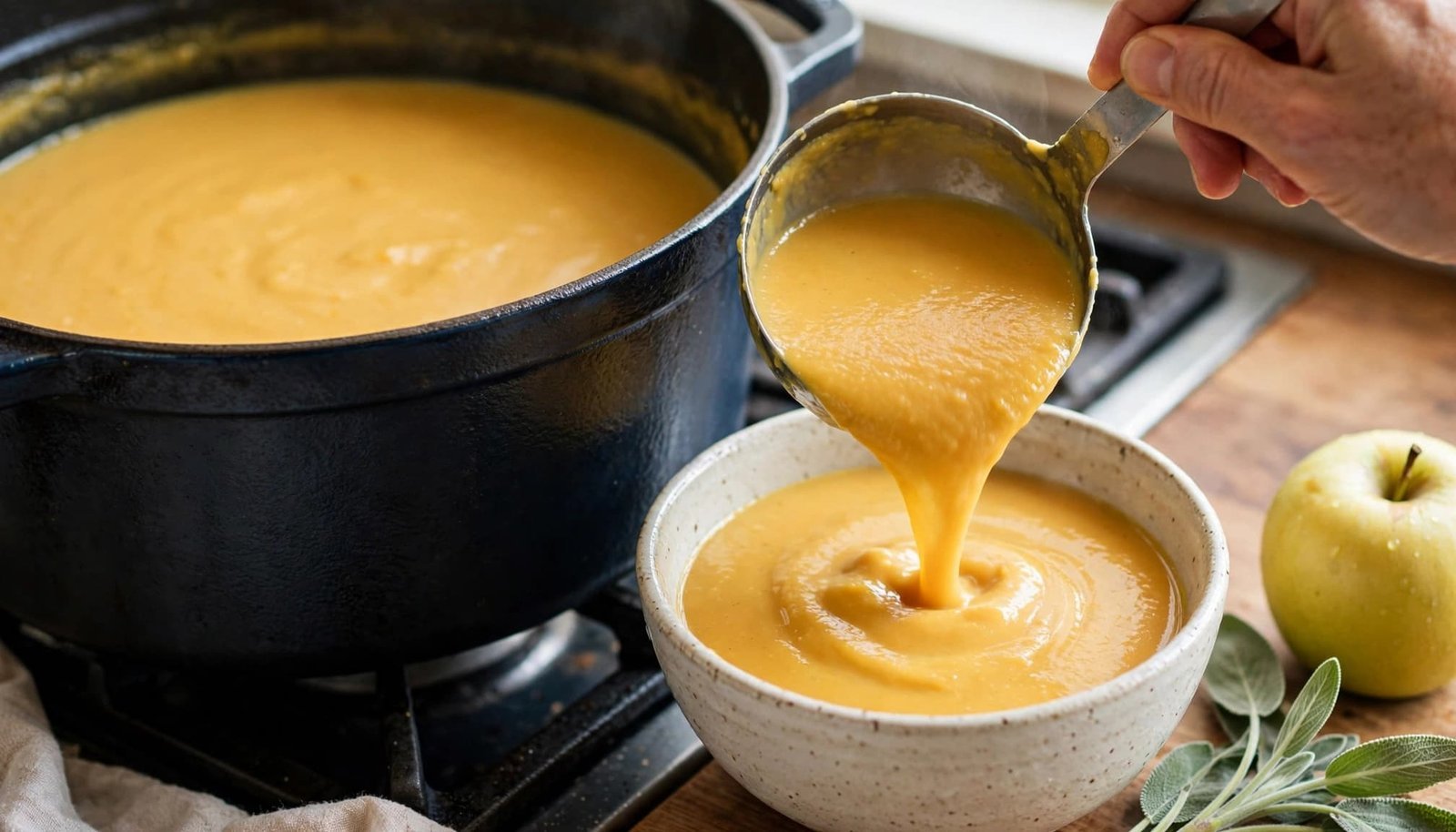
Stir in the optional milk or coconut milk, then add reserved broth as needed. Blend a little longer if you notice small apple or onion pieces; the soup should pour smoothly from a spoon.
Taste before adding more salt, pepper, or finely chopped sage. Broth varies in saltiness, so make the final adjustment after blending. Warm gently over low heat, stirring often, and avoid boiling after adding dairy.
Easy Ways to Adjust the Flavor and Texture
Vegetable broth keeps the soup vegetarian. Chicken broth is another option if that suits your meal, though its flavor can be more noticeable.
Use olive oil and unsweetened coconut milk for a dairy-free version. Coconut milk adds richness and a mild coconut flavor; regular milk gives a lighter finish. Dried sage also works in a smaller amount, as described below.
For gentle heat, add a pinch of red pepper flakes with the garlic. A little grated ginger brings a sharper warmth, while a small pinch of nutmeg adds a softer spice note. Choose one addition first so the apple and sage remain clear.
Thin an overly thick batch with broth or water, then taste again. For a richer bowl, add the optional milk gradually rather than increasing every seasoning.
If you’re planning another meatless meal, our vegetarian fall soup recipes offer more ways to use seasonal vegetables.
What to Serve With It and How to Store Leftovers
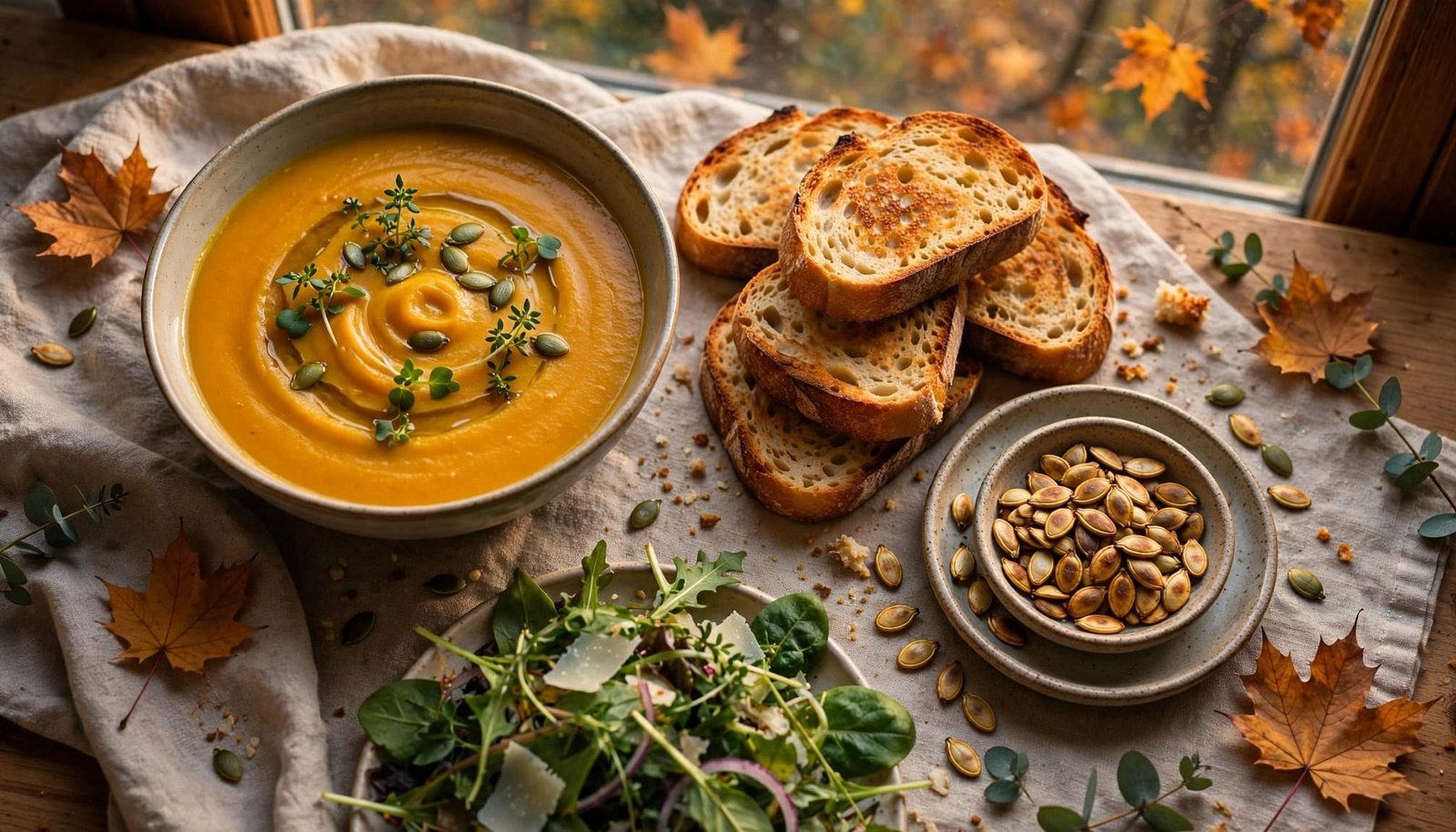
Serve this soup with crusty bread, a simple green salad, or a toasted cheese sandwich. A salad with a tangy dressing balances the squash’s sweetness, while bread makes the bowl more filling.
Top each serving with toasted pumpkin seeds for crunch. A small swirl of cream or coconut milk adds richness, and a few crisp sage leaves reinforce the herb flavor.
Divide leftovers into shallow, covered containers and refrigerate within two hours, following USDA leftover storage guidance. Keep the soup refrigerated for 3 to 4 days, or freeze for about 3 months for best quality.
The soup may thicken after chilling. Add a splash of broth or water while reheating, then stir frequently so it warms evenly.
Reheat leftovers to 165°F, as recommended in FoodSafety.gov’s reheating guidance. If you’re freezing a batch, leave out the dairy and stir it in after thawing for a smoother finish.
Frequently Asked Questions
Can I Roast the Squash in Cubes Instead of Halves?
Yes, peeled, evenly sized cubes roast faster than large halves. Roast them at 400°F for about 35 to 45 minutes, turning once and checking for tenderness. Use the texture as your stopping point rather than the timing for halved squash.
Can I Make This Soup Without Dairy?
Yes, blended squash gives the soup a creamy texture without milk or cream. Use broth alone for a lighter bowl, or add unsweetened coconut milk for more richness. Choose olive oil rather than butter for a fully dairy-free batch.
Can I Use Dried Sage Instead of Fresh?
Yes, start with about 1 teaspoon dried sage in place of the fresh leaves. Its flavor is more concentrated, so let it simmer before deciding whether to add more. Rubbed and ground sage have different textures, so add either gradually.
How Can I Make the Soup Thinner or Thicker?
Add broth a little at a time to thin the soup without overshooting your preferred consistency. To thicken it, simmer uncovered briefly after blending, before adding dairy, and stir frequently. Taste again afterward because reducing the liquid also concentrates the seasoning.
Can I Freeze Butternut Squash Soup?
Yes, freeze it in meal-sized containers for about 3 months for best quality, leaving room for expansion. Thaw it in the refrigerator before reheating. Milk or cream can separate after freezing, so add dairy after thawing when possible.
A Cozy Soup to Keep on Repeat
Roasting the squash gives this soup its rich base, while tart apple and fresh sage keep the flavor balanced. Blend until smooth, then adjust the broth and finish to suit the bowl you want.
Choose a favorite topping, serve it with bread, and save a portion for another meal. It’s a practical recipe to keep ready for a chilly day, with simple ingredients and a clear stopping point at every step.
Save the pin for later


I’m the creator of My Everyday Dish, a food blog focused on easy homemade recipes, comforting family meals, simple baking, and seasonal food ideas. I love finding practical ways to make everyday cooking less stressful and more enjoyable. Here, I share recipes with simple ingredients, clear instructions, and plenty of flavor, helping you make delicious meals and treats you’ll feel confident serving at home.
Leave a Reply