
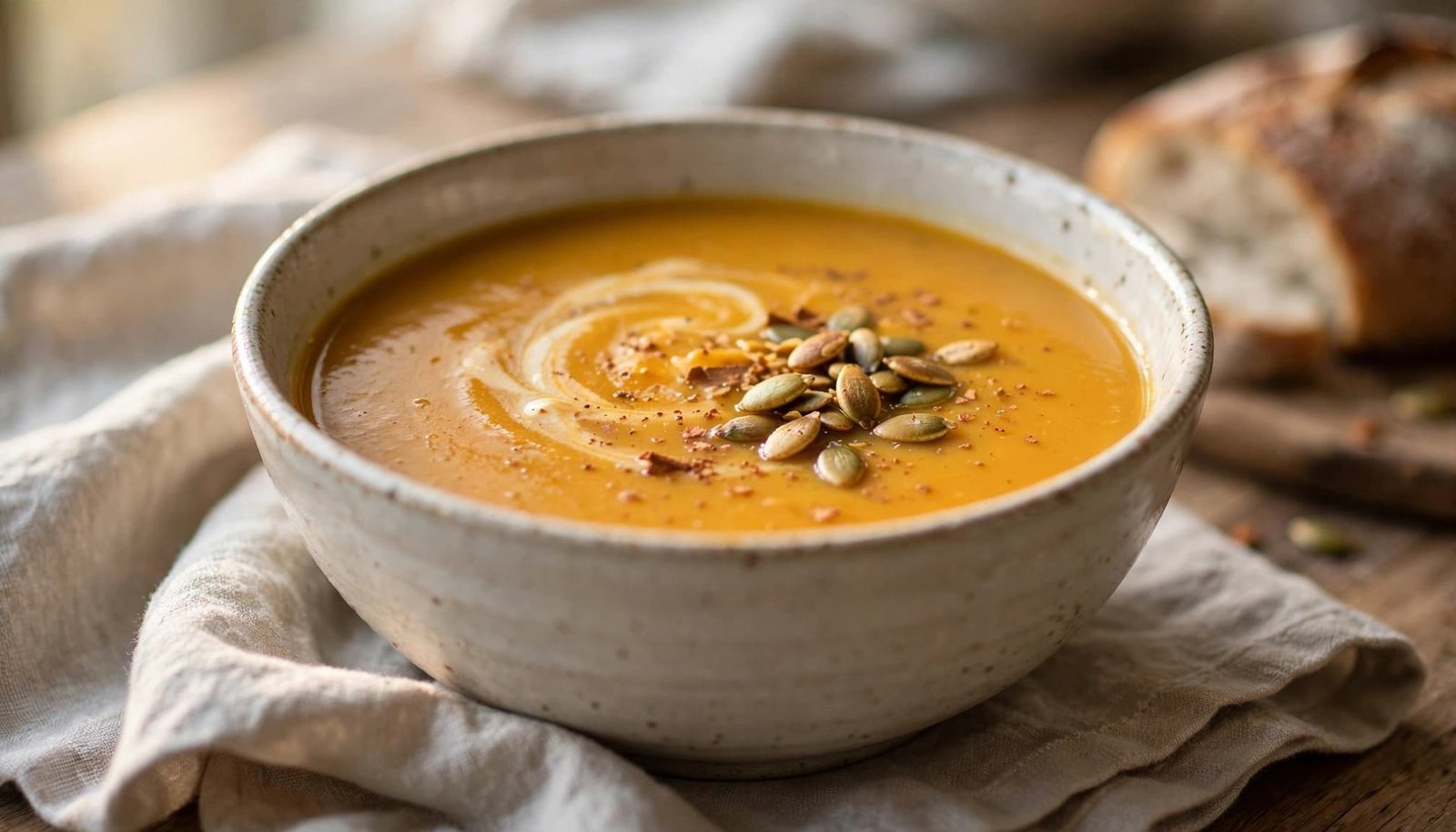
Sweet roasted squash, a little maple syrup, and gentle spices make a comforting bowl without a long ingredient list. This roasted butternut squash soup is simple to prepare, with adjustable thickness and enough savory onion and garlic to balance the sweetness.
Start with less broth for a thick soup, then add more until it pours the way you like. Keep the maple light at first, since squash varies in sweetness. The method below walks you through roasting, blending, and finishing, with clear stopping points so you can adjust the soup before serving.
Roasted Butternut Squash Soup Recipe With Maple and Warm Spices
Expect a smooth, golden soup with mild cinnamon, ginger, and nutmeg. Cream is optional because the blended squash gives the soup body on its own.
These are approximate quantities and timings; squash size and your preferred thickness affect the finished yield.
| Recipe Detail | Estimate |
|---|---|
| Yield | 4 generous or 6 smaller servings |
| Prep Time | About 20 minutes |
| Cook Time | About 40 to 55 minutes |
| Total Time | About 60 to 75 minutes |
Ingredients
- 1 medium butternut squash, using about 6 cups peeled, seeded, 1-inch cubes
- 3 tablespoons olive oil or melted butter, divided
- 1 tablespoon pure maple syrup, plus more to taste
- 1 medium yellow onion, chopped
- 2 garlic cloves, minced
- 3 cups vegetable or chicken broth, plus up to 1 cup more
- 1/2 teaspoon ground cinnamon
- 1/4 teaspoon ground ginger
- 1/8 teaspoon ground nutmeg
- 3/4 teaspoon fine salt, divided, plus more to taste
- 1/4 teaspoon black pepper
- A small pinch of cayenne, optional
- 1/4 cup heavy cream or unsweetened coconut milk, optional
Before You Start
Use low-sodium broth if you want more control over the seasoning. Measure the prepared squash rather than relying on size alone, since the seed cavity and skin affect how much flesh remains.
Keep extra broth nearby, but don’t add it all before blending. You can thin the soup easily; removing excess liquid takes longer.
Why Roasting Brings Out the Squash’s Sweet Flavor
Roasting softens the squash while moisture escapes from its surface. The exposed edges brown, which gives the finished soup a fuller flavor than squash cooked only in broth.
Maple adds another layer of sweetness, but you don’t need much. A light coating supports the squash’s flavor without making the soup taste sugary. Cinnamon, ginger, and nutmeg should stay gentle enough that you can still taste the vegetables.
Read also: 10 Homemade Broth Based Tortellini Soup Recipes
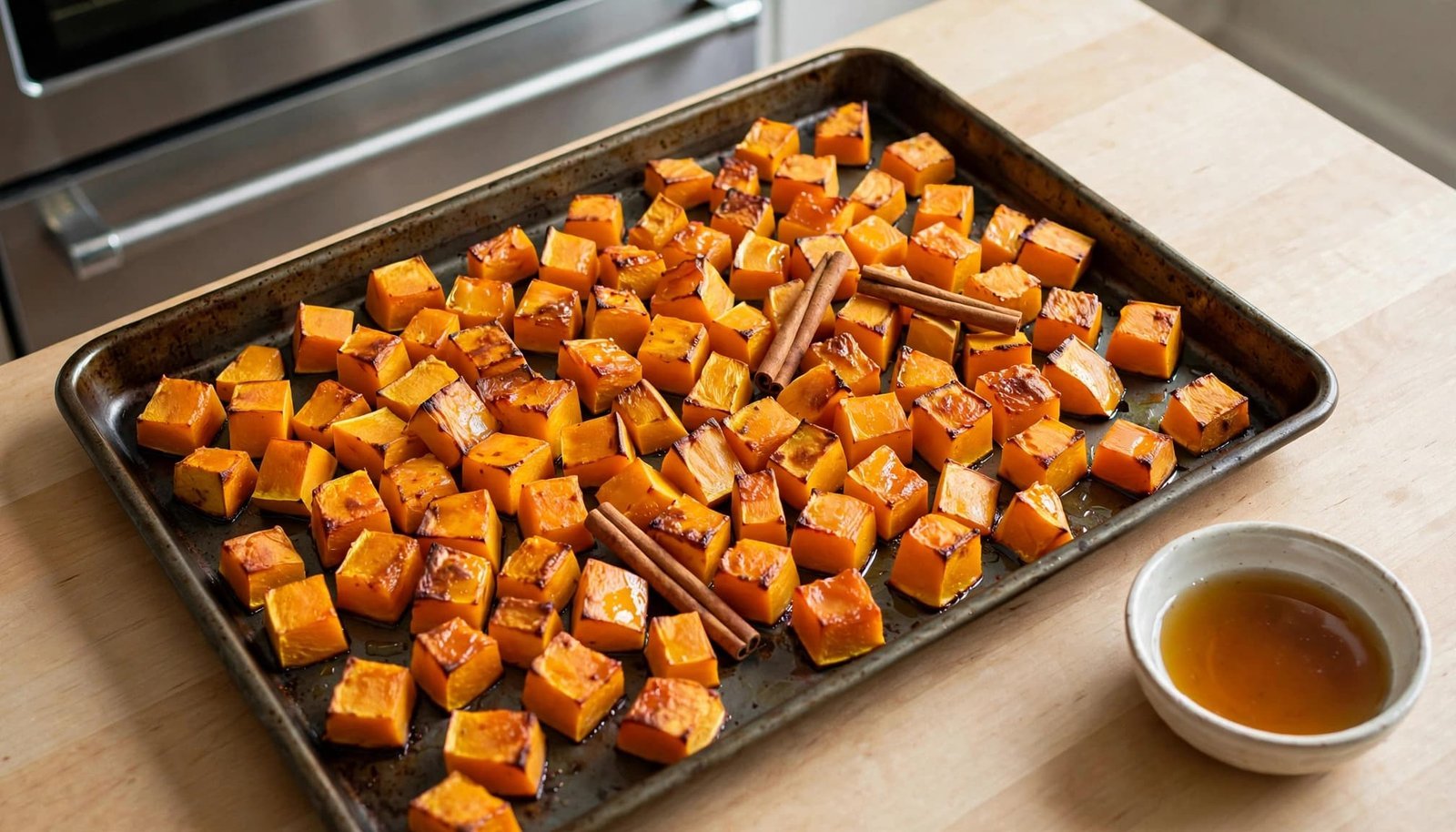
Look for browned corners and soft centers rather than an even dark color. Pale but tender squash will blend smoothly, while heavily blackened pieces can leave a bitter taste.
Browned edges add flavor, but the center still needs to yield easily to a fork before you blend.
How to Make Maple-Spiced Butternut Squash Soup Step by Step
1. Prep and Season the Squash
Heat the oven to 400°F. Wash and dry the squash, then set it on a stable cutting board. Trim the ends and separate the narrow neck from the rounded base so the pieces are easier to handle.
Peel the skin with a sturdy vegetable peeler. Halve the rounded base, scoop out the seeds, then cut the flesh into roughly 1-inch cubes. Keep the pieces similar in size so smaller ones don’t burn before larger ones soften.
Toss with 2 tablespoons oil or melted butter, maple syrup, cinnamon, ginger, nutmeg, 1/2 teaspoon salt, and pepper. Add cayenne if you want gentle heat.
2. Roast Until Tender and Lightly Browned
Spread the squash across a rimmed sheet pan in one layer. Leave space between pieces, using two pans if needed. Crowded squash releases moisture that slows browning.
Roast for about 30 to 45 minutes, turning once around the halfway point. Start checking at 30 minutes, especially if your cubes are small.
Press a fork into several larger pieces. They should feel soft through the center, with browned edges rather than blackened corners. If the maple coating darkens before the centers soften, turn the pieces and check more often. Use oven mitts when moving the hot pan.
Read also: Easy Homemade Tortellini Soup With Chicken Broth
3. Cook the Aromatics While the Squash Roasts
Warm the remaining tablespoon of oil or butter in a large soup pot over medium-low heat. Add the onion and remaining 1/4 teaspoon salt.
Cook for 7 to 10 minutes, stirring occasionally, until the onion softens and looks translucent. Reduce the heat if it starts browning quickly. Add the garlic during the final minute, then stir until fragrant.
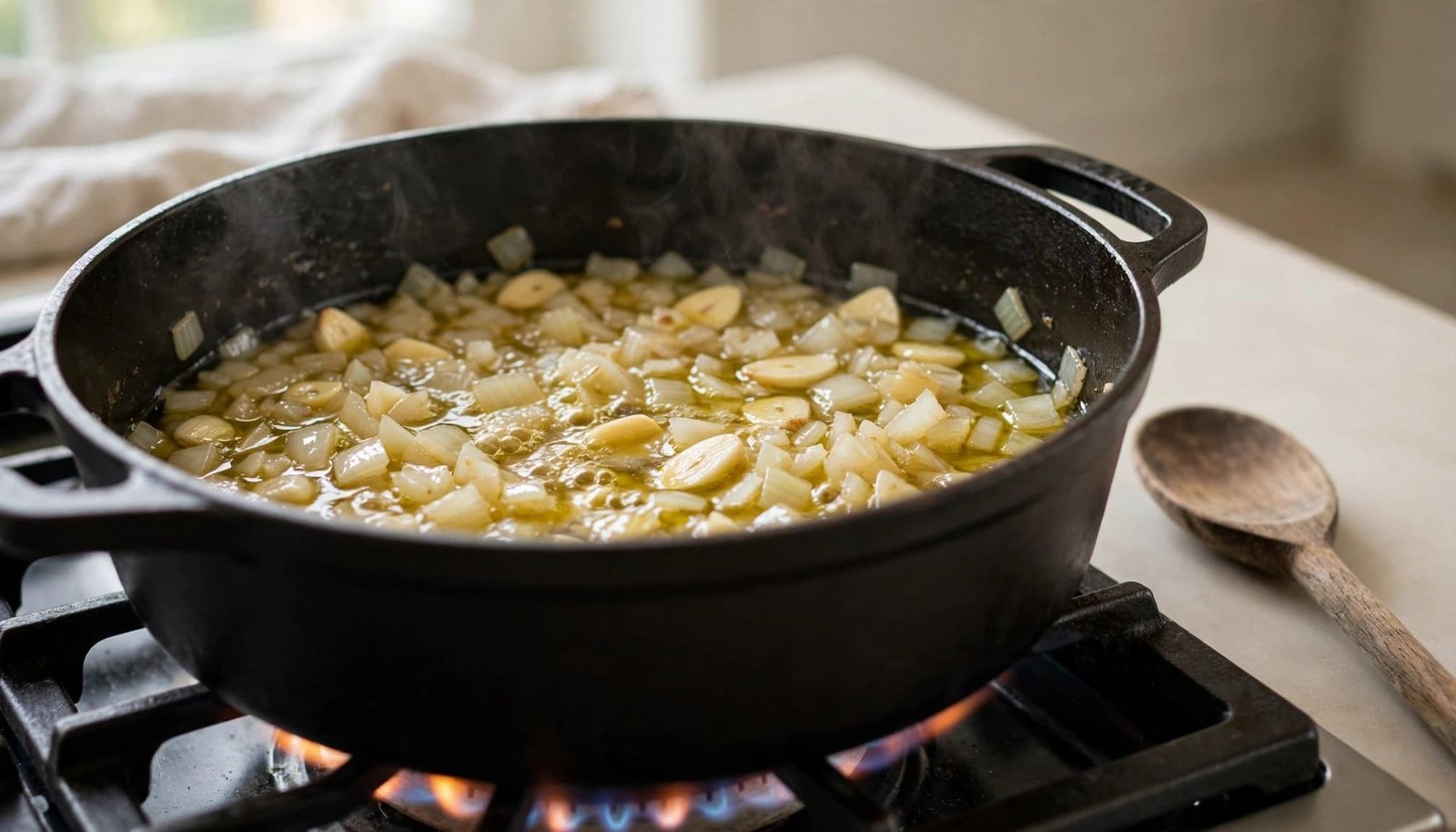
The softened onion gives the soup a savory base. Brief cooking takes the raw edge off the garlic without letting it scorch.
4. Blend With Broth and Adjust the Flavor
Carefully transfer the roasted squash to the pot and add 3 cups broth. Remove the pot from the heat, then blend with an immersion blender until smooth. Keep the blender head submerged, and stop the motor before lifting it.
For a countertop blender, let the mixture cool until lukewarm and blend in small batches. Never blend hot soup in a sealed personal blender.
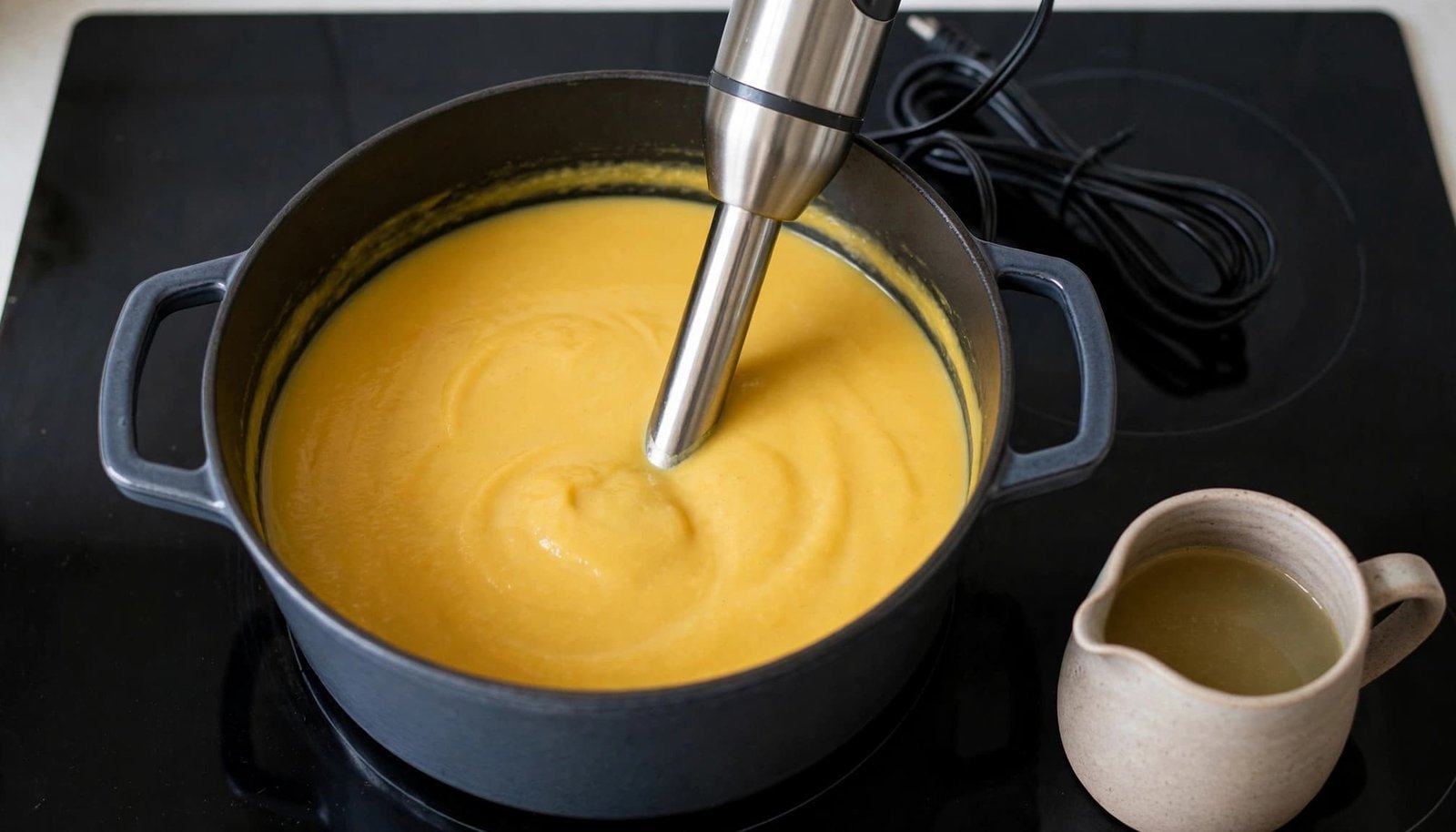
Add extra broth in 1/4-cup amounts until the texture suits you. Taste after blending before adding more maple or salt, since the broth changes both flavor and thickness.
5. Warm Gently and Finish the Soup
Return the soup to low heat and stir until evenly hot without boiling. Scrape along the bottom so the thick puree doesn’t catch.
Stir in cream or coconut milk near the end, if using. Taste again, then adjust salt, pepper, or maple in small amounts. Add extra spice by the pinch, since too much can cover the roasted flavor.
Easy Ways to Serve and Adapt the Soup
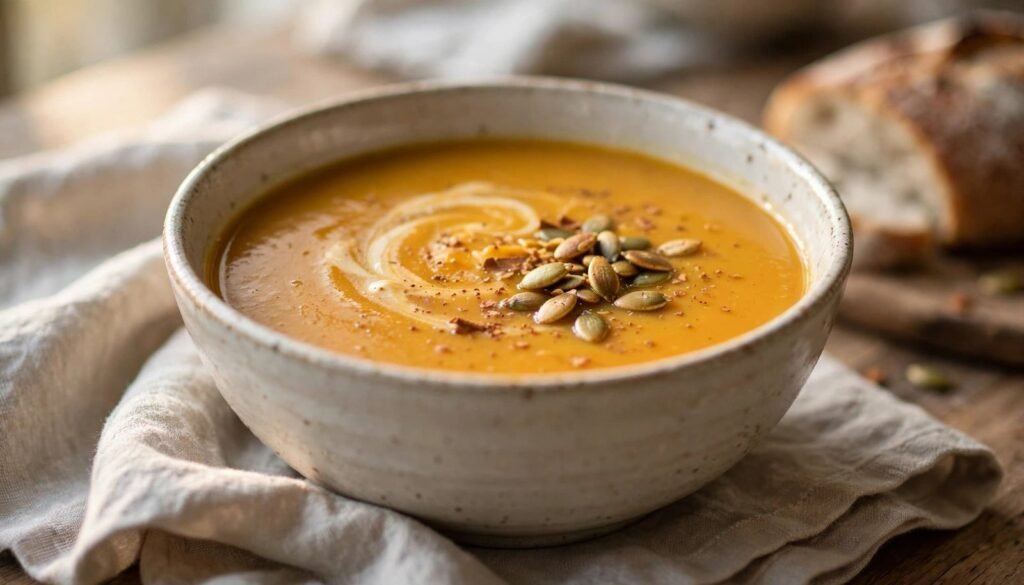
A small cream swirl adds richness, while toasted pumpkin seeds give each spoonful some crunch. Chopped parsley or a little fresh sage brings a fresh note without changing the soup’s warm-spice flavor.
Add toppings just before serving so the seeds stay crisp. A light scattering of black pepper also helps balance the maple.

Serve this roasted butternut squash soup with crusty bread for dipping or a simple green salad with a sharp vinaigrette. The salad gives you a useful contrast to the smooth soup.
For a dairy-free version, use olive oil and skip the cream or choose unsweetened coconut milk. Coconut milk adds richness and a mild coconut flavor, so start with the smaller amount. Vegetable broth keeps the whole pot meatless.
Stir in a tiny pinch of cayenne if you want more warmth, then taste before adding another. For other dinners with similar seasonal ingredients, our vegetarian fall soup recipes offer more meatless options.
How to Store, Freeze, and Reheat Leftovers
Divide leftover soup into shallow containers so it cools quickly. Refrigerate within two hours of cooking, or within one hour when the surrounding temperature is above 90°F.
Keep it covered in the refrigerator for 3 to 4 days, following USDA leftovers guidance. Don’t leave a large pot on the counter until it reaches room temperature.
Freeze cooled soup in freezer-safe containers for up to three months. Leave room at the top for expansion, and freeze individual portions if you want to thaw only what you’ll use.
When possible, freeze before adding cream, which can separate after thawing. Keep garnishes separate as well, then add them to each reheated bowl.
Thaw overnight in the refrigerator. Reheat over low to medium-low heat, stirring along the bottom and through the center. Add broth or water a little at a time if refrigeration has thickened the soup.
Heat leftovers to 165°F throughout, as recommended in USDA food safety basics. Stir well before measuring so you don’t miss a cooler pocket.
Frequently Asked Questions
Can I Roast the Squash Ahead of Time?
Yes, roasting ahead lets you finish the soup with less hands-on work later. Transfer the cooked squash to shallow containers and refrigerate within two hours, then use within 3 to 4 days. Add it to the softened aromatics and broth when you’re ready to blend.
Can I Make This Soup Without a Blender?
Mash the tender squash thoroughly with a potato masher, then gradually stir in warm broth. The soup will have a rustic texture, with small pieces of onion and squash. Cook the squash until completely tender, since firm pieces won’t mash smoothly.
How Can I Make the Soup Less Sweet?
Use less maple on the squash, or leave it out until after blending. If the finished soup tastes too sweet, add a little broth, salt, or black pepper, tasting between additions. A few drops of lemon juice can also sharpen the flavor without adding more spice.
Can I Use Frozen Butternut Squash?
Yes, plain frozen squash works, though its extra moisture can mean less browning during roasting. Spread it out well and check for tenderness rather than relying on the same cooking time. Start with slightly less broth, then adjust after blending because the squash may release more water.
Make the Texture and Seasoning Your Own
Roasting gives this soup its fuller flavor, while gradual broth additions keep the texture easy to control. Let the squash become completely tender, then blend before deciding whether the pot needs more liquid or sweetness.
Keep the maple and spices gentle at first, and make your final adjustments once everything is warm. You can leave the soup thick for dipping bread or loosen it for a lighter bowl, without changing the basic method.
Save the pin for later


I’m the creator of My Everyday Dish, a food blog focused on easy homemade recipes, comforting family meals, simple baking, and seasonal food ideas. I love finding practical ways to make everyday cooking less stressful and more enjoyable. Here, I share recipes with simple ingredients, clear instructions, and plenty of flavor, helping you make delicious meals and treats you’ll feel confident serving at home.
Leave a Reply