Packing a lunch that comes home half-eaten can make school mornings feel harder than they need to be. These kid friendly lunches for school use familiar foods, balanced ingredients, and simple packing methods that fit into real family routines.
You’ll find wraps, pasta salads, snack boxes, mini pizzas, chicken salad, and bean-based meals. Each lunch includes ingredients, clear steps, easy swaps for picky eaters, and reminders about common school allergy rules. No recipe will suit every child, but a few reliable options can take pressure off the week.
Key Takeaways
- Build lunches around a whole grain, protein, produce, and a drink or dairy option when it fits your child’s needs.
- Start with familiar foods, then add one new ingredient in a small portion.
- Pack perishable foods cold in an insulated lunch bag with cold sources.
- Choose two or three recipes first, then repeat the ones your child enjoys.
How to Build a Healthy School Lunch Kids Will Eat
A practical lunch formula is simple: pack one whole grain, one protein, at least one fruit or vegetable, and milk, yogurt, or a fortified dairy-free drink when appropriate. A whole-grain tortilla, bread, pita, pasta, or crackers gives the meal staying power. Turkey, beans, chicken, eggs, cheese, yogurt, or sunflower seed butter can supply protein.
That approach matches the broad food groups in MyPlate without turning lunch into a nutrition worksheet. USDA school meal standards also emphasize fruits, vegetables, whole grains, and protein foods in meals for students.
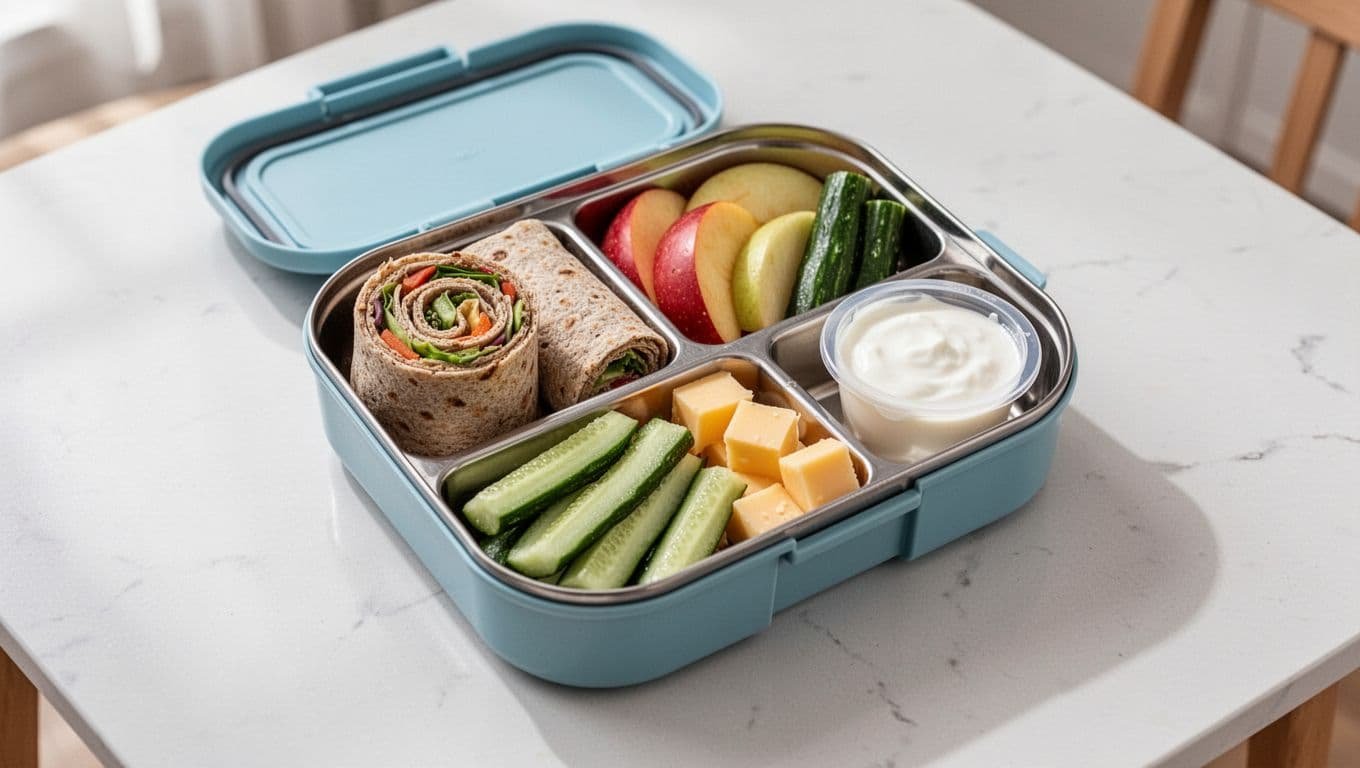
For younger children, begin with small portions, such as half a wrap, a few crackers, or a small scoop of pasta. Older children may want more. Appetite can change with age, activity, growth, and recess timing.
Familiar flavors help. Cut vegetables into thin sticks, serve fruit in bite-sized pieces, and pack a favorite dip when allowed. On the weekend, wash produce, cook chicken or pasta, and portion ingredients into containers. Before using nuts, peanut butter, sesame, dairy, or eggs, check the classroom’s allergy rules.
Read also: 20 Easy Lunch Recipes for Work and Homemade Lunchbox Ideas
10 Kid Friendly Lunches for School With Healthy Recipes
These lunch-box recipes are easy to adjust when a child dislikes one ingredient. Most combine protein, whole grains, fruit, or vegetables, while using formats kids already know.
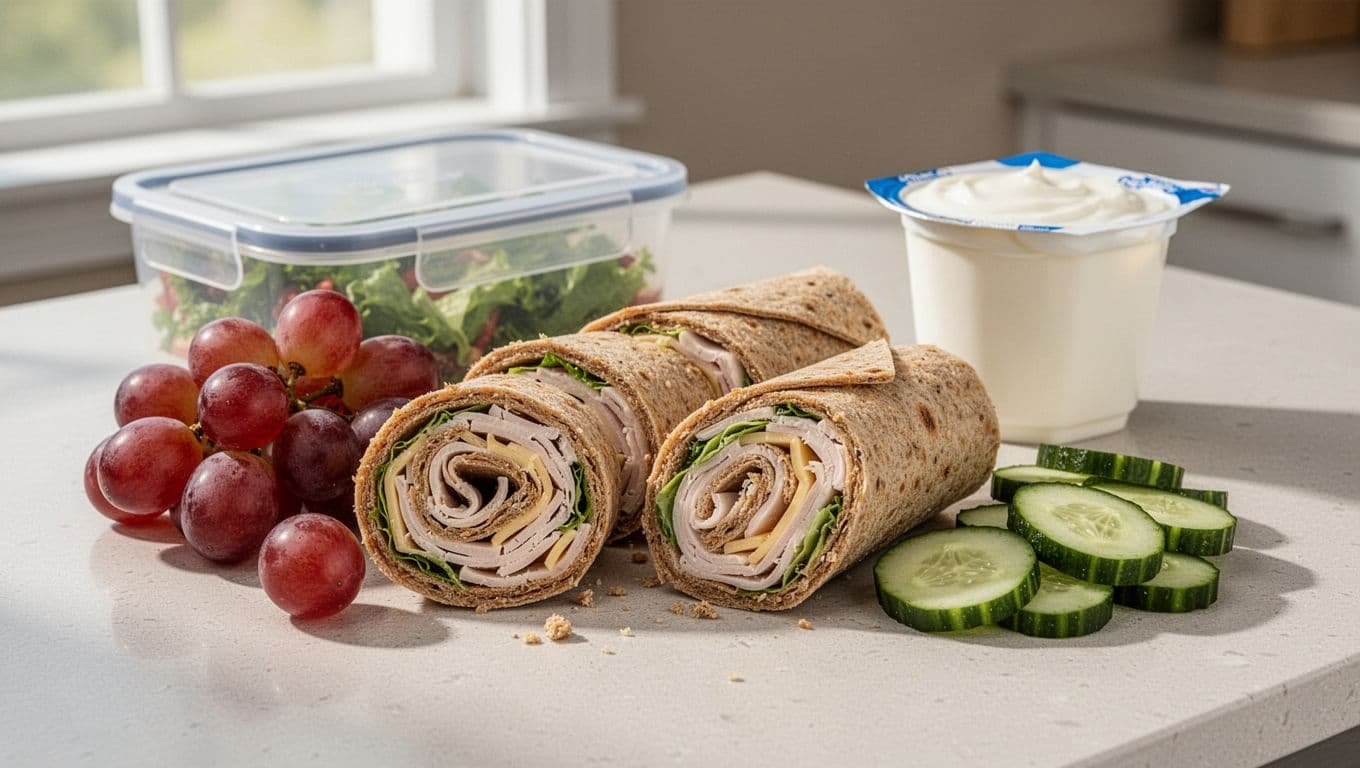
1. Turkey, Cheese, and Crunchy Veggie Wrap
Makes 1 serving. Ingredients: 1 whole-grain tortilla, 1 tablespoon cream cheese, hummus, or mustard, 2 slices low-sodium turkey, 1 cheese slice, lettuce, and thin cucumber or bell pepper strips.
- Spread the tortilla lightly, then layer on turkey, cheese, lettuce, and vegetables.
- Roll tightly, slice into pinwheels, and pack with grapes and a small yogurt.
Thin vegetables are easier for younger children to bite. Use dairy-free cheese and hummus, or replace turkey with white beans for a vegetarian lunch. Keep yogurt cold.
2. Hummus and Cucumber Rainbow Wrap
Makes 1 serving. Ingredients: 1 whole-grain tortilla, 3 tablespoons hummus, cucumber, shredded carrot, thin bell pepper strips, and spinach.
- Pat the cucumber and peppers dry, then spread hummus over the tortilla.
- Add vegetables, roll firmly, and slice or leave whole.
Serve with berries and whole-grain crackers. Mashed white beans work when sesame is restricted, but check the school’s allergy policy before packing either option.
3. Chicken and Vegetable Pasta Salad
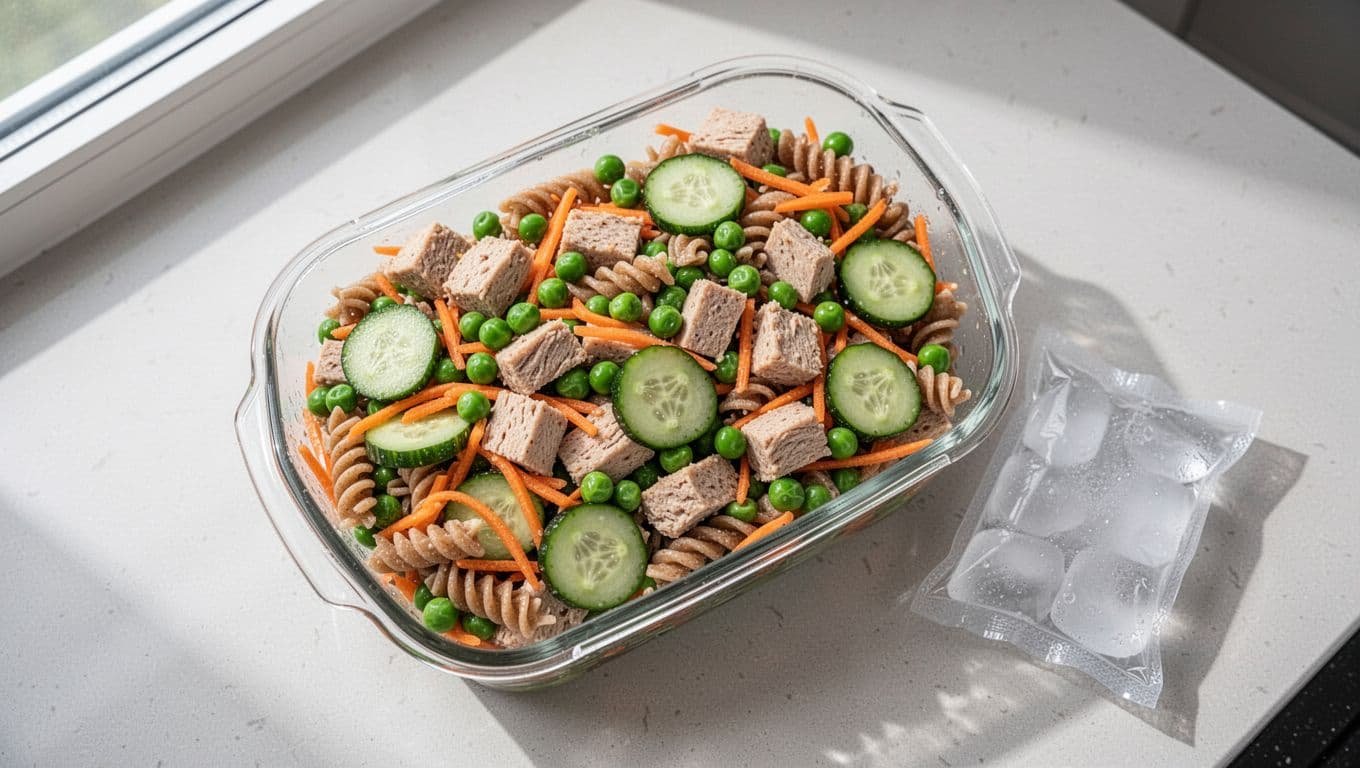
Makes 1 to 2 servings. Ingredients: 1 cup cooked whole-wheat rotini, 1/2 cup diced cooked chicken, peas, shredded carrots, cucumber, and 1 to 2 tablespoons plain yogurt or olive oil dressing.
- Cool the pasta completely, then mix it with chicken, vegetables, and dressing.
- Refrigerate overnight or pack immediately in a sealed container.
Leftover roasted chicken saves time. Use chickpeas or cubed cheese instead of chicken. Add an ice pack because this lunch contains perishable ingredients.
4. Apple and Tuna Pasta Salad
Makes 1 to 2 servings. Ingredients: 1 cup cooked whole-grain pasta, 1 pouch or small can lower-sodium tuna, 1/2 diced apple, finely chopped celery, lemon juice, and yogurt-based dressing.
- Toss apple pieces with a little lemon juice to slow browning.
- Mix with cooled pasta, tuna, celery, and dressing, then chill.
Swap tuna for chopped chicken, mashed chickpeas, or hard-boiled egg. Check whether seafood is allowed in your child’s classroom, and pack the salad cold.
5. Cheese and Fruit Snack Box
Makes 1 serving. Ingredients: whole-grain crackers, cheese cubes, grapes or berries, cucumber slices, and one hard-boiled egg or roasted chickpeas.
- Place each food in its own lunch-box compartment.
- Add several colors, but keep the portions modest enough for a child to finish.
This is a balanced lunch, not a small snack. Use dairy-free cheese and chickpeas when needed. Eggs and cheese need a cold source until lunchtime.
Read also: 18 Mediterranean Lunch Ideas for Work With Easy Sandwiches
More Easy Healthy Lunches for Busy School Mornings
The next five lunches work well with leftovers and simple prep. Some parts can be made the night before, while others come together quickly in the morning. Pack sauces separately when possible, and cool cooked foods before closing the lunch container.
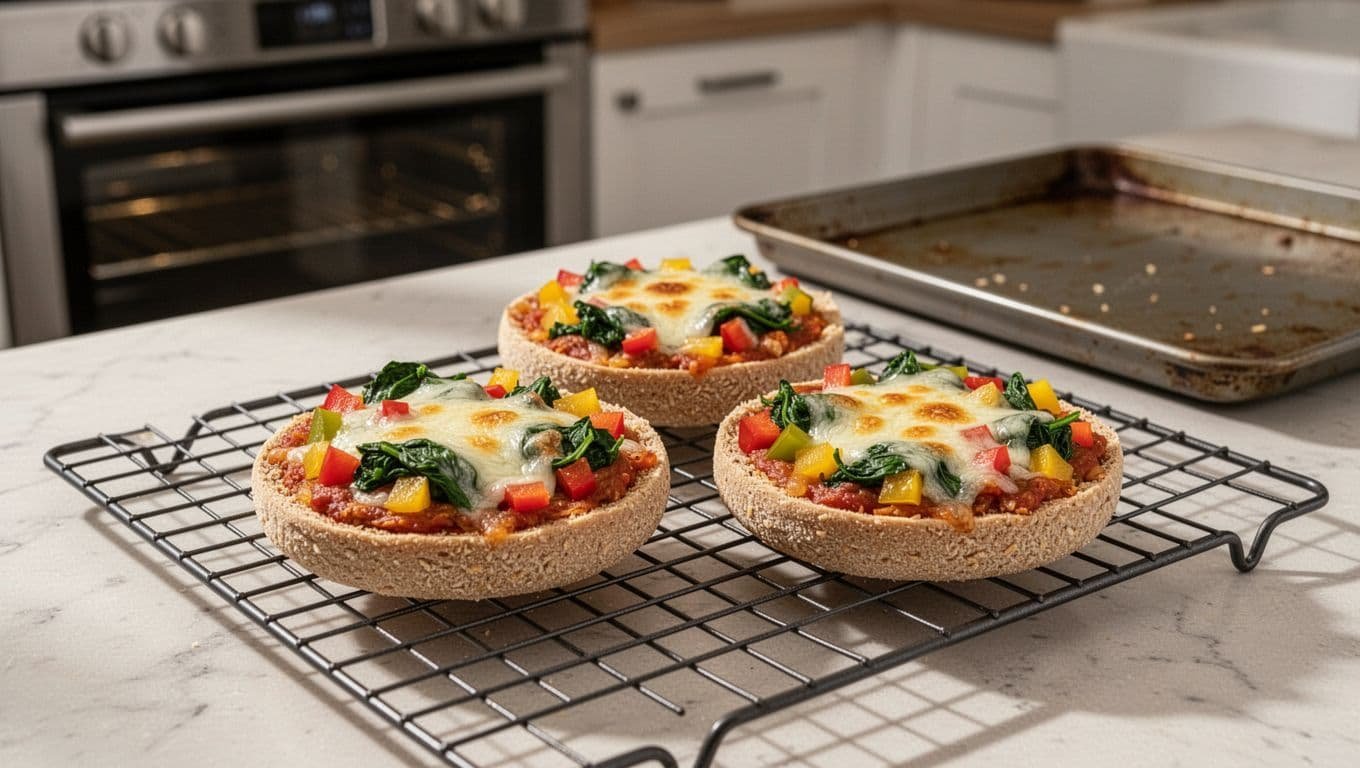
6. Mini English Muffin Vegetable Pizzas
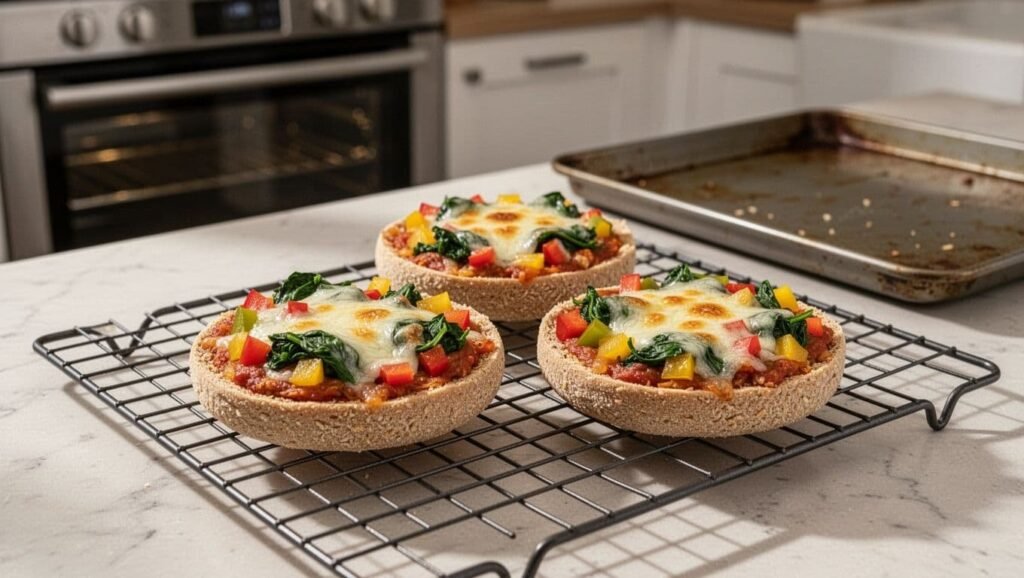
Makes 2 mini pizzas. Ingredients: 1 whole-grain English muffin, pizza sauce, shredded mozzarella, and finely chopped peppers, mushrooms, or spinach.
- Split the muffin, spread on a thin layer of lower-sodium sauce, and add cheese and vegetables.
- Bake until the cheese melts, then cool fully before packing.
Make them the night before and pair with orange slices. Dairy-free cheese works well for children who avoid milk.
7. Black Bean and Corn Quesadilla
Makes 1 serving. Ingredients: 1 whole-grain tortilla, 1/3 cup mashed black beans, 2 tablespoons corn, and a small handful of shredded cheese.
- Spread beans over half the tortilla, add corn and cheese, then fold it over.
- Cook in a dry skillet until warm and lightly crisp. Cool, then slice into wedges.
Beans offer protein and fiber. For a cheese-free version, use seasoned mashed beans and avocado. Pack salsa in a leakproof container with orange slices or cucumber sticks.
8. Creamy Yogurt Chicken Salad Sandwich
Makes 1 serving. Ingredients: 1/2 cup diced cooked chicken, 2 tablespoons plain Greek yogurt, 1 teaspoon mayonnaise, celery, diced grapes or apple, and whole-grain bread, pita, or crackers.
- Stir chicken, yogurt, mayonnaise, celery, and fruit together.
- Spoon into bread or pita, or pack it with crackers for dipping.
Mash chickpeas for a meat-free version. If sandwiches tend to get soggy, pack the filling separately and let your child assemble it at lunch. Keep the filling cold.
9. Peanut-Free Sunflower Butter and Banana Roll-Up
Makes 1 serving. Ingredients: 1 whole-grain tortilla, 1 to 2 tablespoons unsweetened sunflower seed butter, and 1 small banana.
- Spread sunflower butter across the tortilla and add banana slices.
- Roll tightly and cut into rounds.
Pair with carrots, berries, and milk or a fortified dairy-free drink. Thin apple slices can replace banana. Schools may restrict seeds as well as peanuts, so check the policy first.
10. Chickpea Salad Pita Pockets
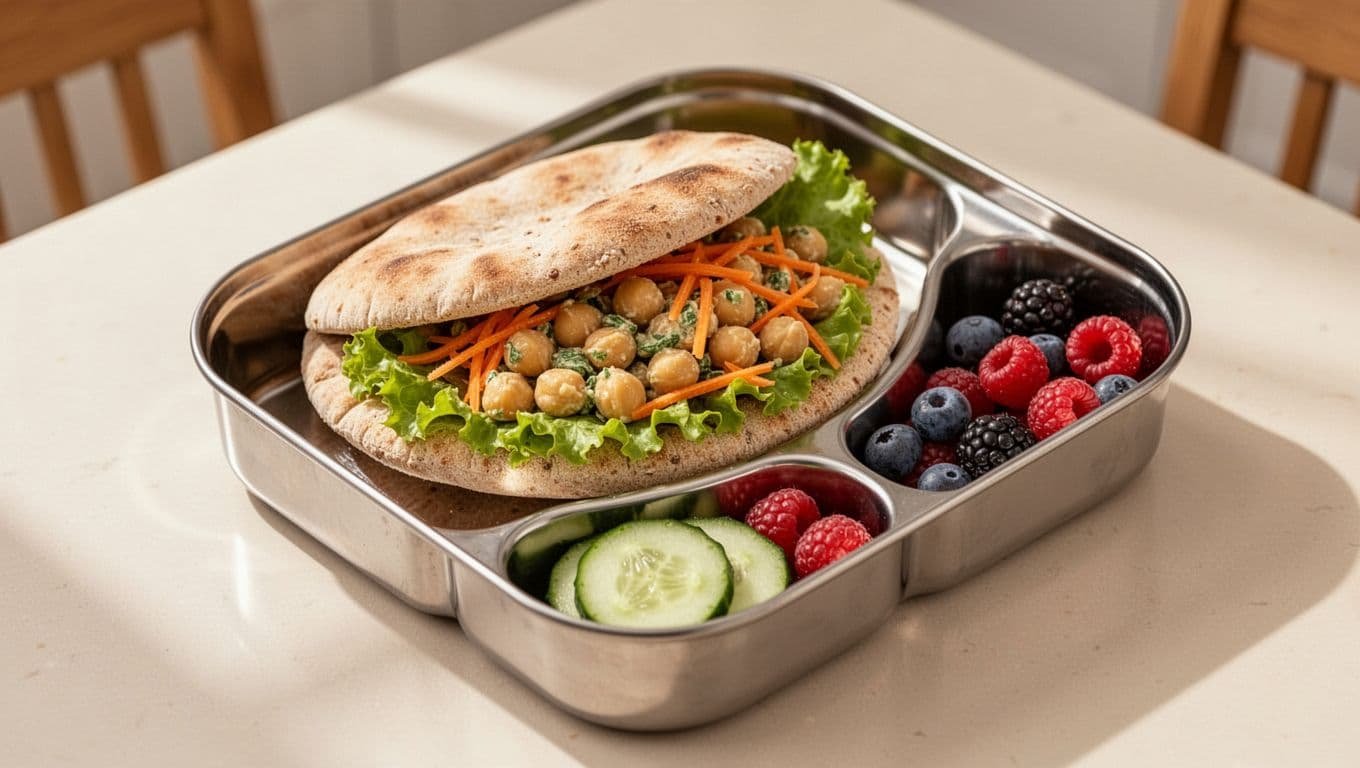
Makes 1 serving. Ingredients: 1/2 cup chickpeas, plain yogurt or hummus, lemon juice, finely chopped celery, lettuce, shredded carrots, and 1 whole-grain pita.
- Mash chickpeas with yogurt or hummus, lemon juice, celery, and mild seasoning.
- Pat lettuce dry, fill the pita with vegetables and chickpea mixture, then close gently.
Use chicken or tuna instead of chickpeas if preferred. Pack fruit and cucumber on the side. Keep the filling cold, and avoid overfilling the pita so it stays dry.
Pack, Store, and Customize School Lunches Safely
Chicken salad, yogurt, cheese, eggs, tuna, cut fruit, and cold pasta salads should travel in an insulated lunch bag. USDA recommends using at least two cold sources, such as frozen gel packs or a gel pack plus a frozen water bottle.
Wash hands before prep, clean lunch containers after every use, and keep raw foods separate from ready-to-eat ingredients. Follow storage instructions on packaged foods, and don’t pack leftovers that have been sitting out too long. The USDA defines the food-safety danger zone as 40 F to 140 F.
School allergy policies vary. Read labels for hidden milk, egg, sesame, soy, wheat, and nut ingredients. Remind children not to trade or share food, especially when allergy rules are in place.
A lunch that stays cold and contains familiar foods is more useful than an elaborate meal that feels unfamiliar or is unsafe by midday.
For picky eaters, include one dependable favorite and introduce only one new food at a time. Dips, fun shapes, and small portions can help. Ask which lunches your child wants again.
Cook grains and proteins on Sunday, wash produce ahead, and assemble cold lunches the night before. School lunch standards use weekly food-group targets, but home portions should fit your child’s appetite, activity, and schedule.
Frequently Asked Questions
How can I stop apple slices from turning brown?
Toss cut apples with a small amount of lemon juice before packing. A tight container also limits air exposure and helps the slices stay fresh-looking.
What should I pack if peanuts are not allowed?
Sunflower seed butter is a common alternative, but some schools also restrict seeds. Cheese, eggs, beans, chicken, yogurt, and roasted chickpeas offer other protein choices when permitted.
How much lunch should an elementary-age child get?
Start small and watch what comes home. Add more food when your child regularly finishes lunch, has a longer school day, or is especially active.
Can I prepare these lunches ahead?
Yes. Cook pasta, chicken, beans, and hard-boiled eggs in advance. Keep ingredients refrigerated, then assemble wraps, sandwiches, and snack boxes the night before or early that morning.
A Healthier Lunch Routine Starts Small
A healthy school lunch doesn’t need to be complicated, expensive, or perfectly balanced in every single container. Familiar foods, a few colorful produce choices, and a dependable protein can make a meaningful difference over the course of a week.
Try two or three recipes first, and let your child help choose fillings and sides. Use leftovers, prep ingredients ahead, and adjust each lunch for allergies and preferences. Simple, repeatable lunches can help kids enjoy their food while building everyday healthy habits.
Save the pin for later

I’m the creator of My Everyday Dish, a food blog focused on easy homemade recipes, comforting family meals, simple baking, and seasonal food ideas. I love finding practical ways to make everyday cooking less stressful and more enjoyable. Here, I share recipes with simple ingredients, clear instructions, and plenty of flavor, helping you make delicious meals and treats you’ll feel confident serving at home.
Leave a Reply