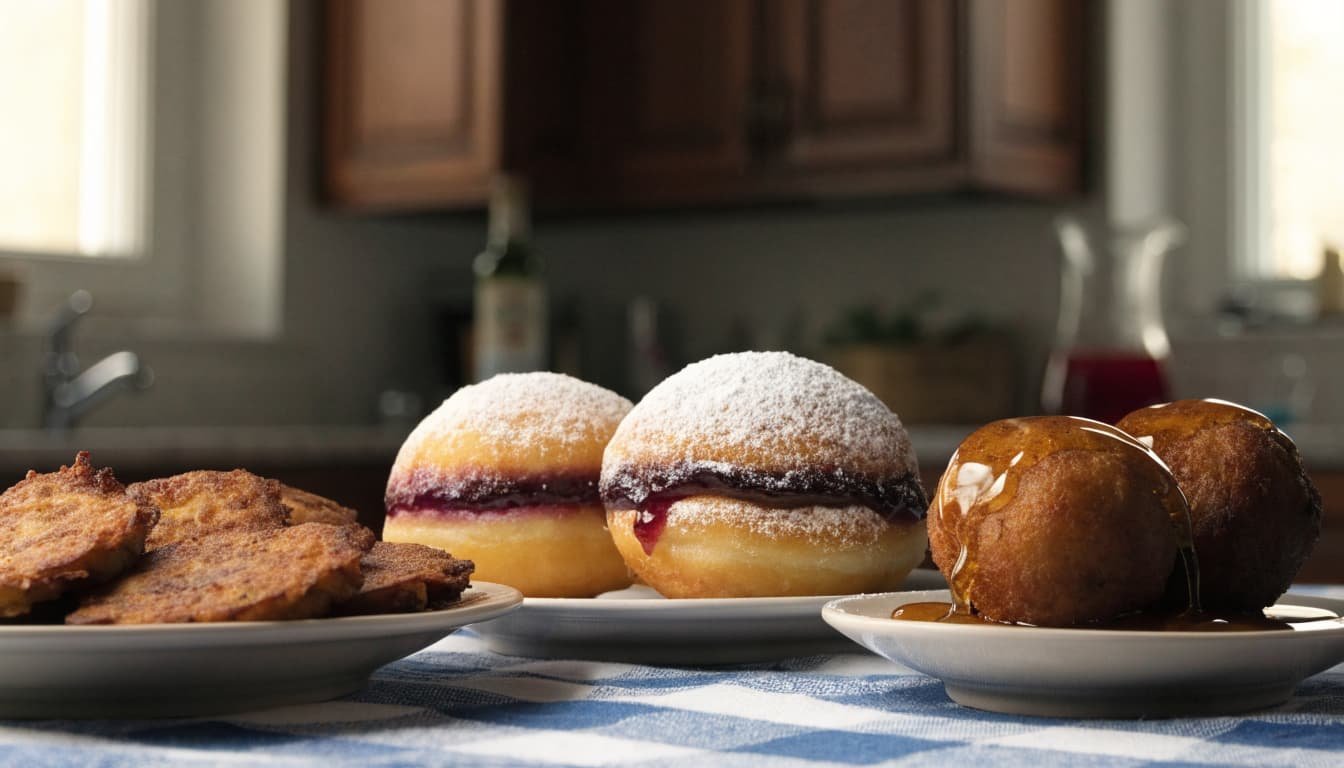
Hanukkah meals are a chance to share familiar favorites, and fried dishes connect the holiday to its tradition of oil. Latkes, sufganiyot, and regional fritters bring that custom to the table.
Food traditions vary across Ashkenazi, Sephardi, and other Jewish communities, and some festive dishes are enjoyed well beyond Hanukkah. You’ll find 12 approachable recipes with simple steps and practical cooking cues, so you can choose a few that fit your table.
Traditional Hanukkah Food Ideas for a Festive Holiday
Fried foods are familiar Hanukkah favorites because they recall the holiday’s oil tradition. Latkes and sufganiyot are widely recognized, while Sephardi communities make regional fritters such as bimuelos. Food customs vary, so these are options for your table, not dishes every family serves. The University of Rochester’s overview of Hanukkah foods explains the meaning behind these fried favorites.

1. Crispy Potato Latkes
Grate potatoes and onion, then squeeze out as much liquid as you can. Mix with egg, flour or matzo meal, salt, and pepper. The drier mixture holds together better and fries with crisp edges.
Heat a shallow layer of oil in a skillet. Add small scoops of batter and flatten them slightly, then fry until deep golden underneath. Flip and cook the other side. Drain on a wire rack or paper towels, and serve warm with applesauce or sour cream. You can also make latkes with vegetables such as zucchini or sweet potatoes.
2. Jam-Filled Sufganiyot
For a beginner-friendly dough, combine flour, yeast, sugar, warm milk, egg, butter, and salt. Knead until smooth, cover, and let rise until doubled. Roll out the dough, cut rounds, and let them rise again until puffy.
Fry a few at a time in hot oil, turning once, until golden on both sides. Let them cool slightly before filling with jam using a piping bag. Dust with powdered sugar just before serving. Custard is another popular filling, though recipes and preferences differ from one family to another.
Read also: 41 Healthy Halloween Food Ideas for Kids and Adults
3. Sweet Sephardi Bimuelos
Bimuelos are fried fritters with many regional versions, so there isn’t one fixed recipe. For a simple home version, stir flour, egg, a little water or milk, and a pinch of salt into a soft batter or dough.
Drop small spoonfuls into hot oil and fry in batches until puffed and golden. Avoid crowding the pan, since too many fritters can lower the oil temperature and leave them greasy. Drain briefly, then drizzle with honey or syrup while warm.
Regional Hanukkah Recipes and Hearty Holiday Favorites
Fried foods connect with Hanukkah’s oil tradition, while other dishes reflect regional customs or the broader Jewish holiday table. Keftes de prasa bring leeks to the menu, and brisket and kugel make familiar choices for a festive meal.
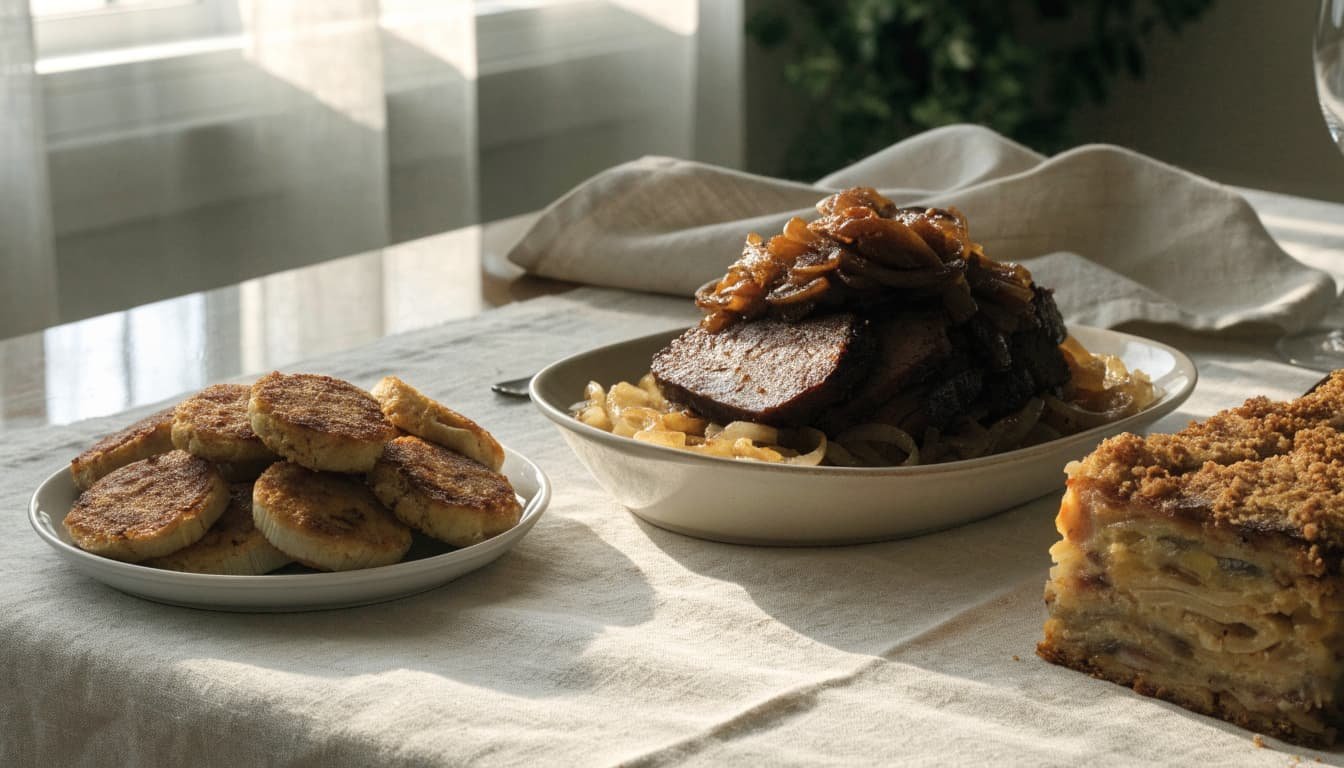
4. Keftes de Prasa, or Savory Leek Patties
Keftes de prasa, also spelled keftes de prassa, are Sephardic leek patties with recipes that vary by family and region. For an approachable version, clean and finely chop leeks, then cook them until tender. Cool and drain them well so excess moisture doesn’t make the patties fall apart.
Mix the leeks with an egg and a small amount of flour or breadcrumbs, then season with salt and pepper. Spices differ across recipes, so there isn’t one blend to use as the standard. Shape into small patties and pan-fry until browned on both sides. See one traditional Sephardic leek fritter recipe for another version.
5. Slow-Braised Holiday Brisket
Brisket is a festive main dish in many households, though it isn’t tied directly to Hanukkah’s oil miracle. Season the meat with salt and pepper, then brown it on both sides in a heavy, oven-safe pot. Add sliced onions and a modest amount of broth or wine.
Cover the pot tightly and cook in a low oven until the brisket is fork-tender. Let it rest before slicing, then cut against the grain for more tender pieces. Spoon the onions and cooking juices over the meat when serving.
6. Sweet Noodle Kugel
Cook egg noodles until just tender, then drain them well. Mix with eggs, sugar, and sour cream or cottage cheese; add raisins and cinnamon if you like. Transfer the mixture to a baking dish and bake until set in the center and lightly browned on top.
Potato kugel is another familiar variation, and noodle kugel recipes differ by household. You can adjust the raisins and cinnamon to suit your table, while keeping the custard mixture moist enough to hold the noodles together.
Read also: 18 Labor Day Food Ideas for a Relaxed Backyard Party
Comforting Soups, Breads, and Pastries for the Holiday Meal
A bowl of soup, fresh bread, and a small pastry can round out a Hanukkah meal without adding another fried dish. These foods also appear at other Jewish holidays and throughout the year, so they’re welcome choices rather than Hanukkah-only traditions.
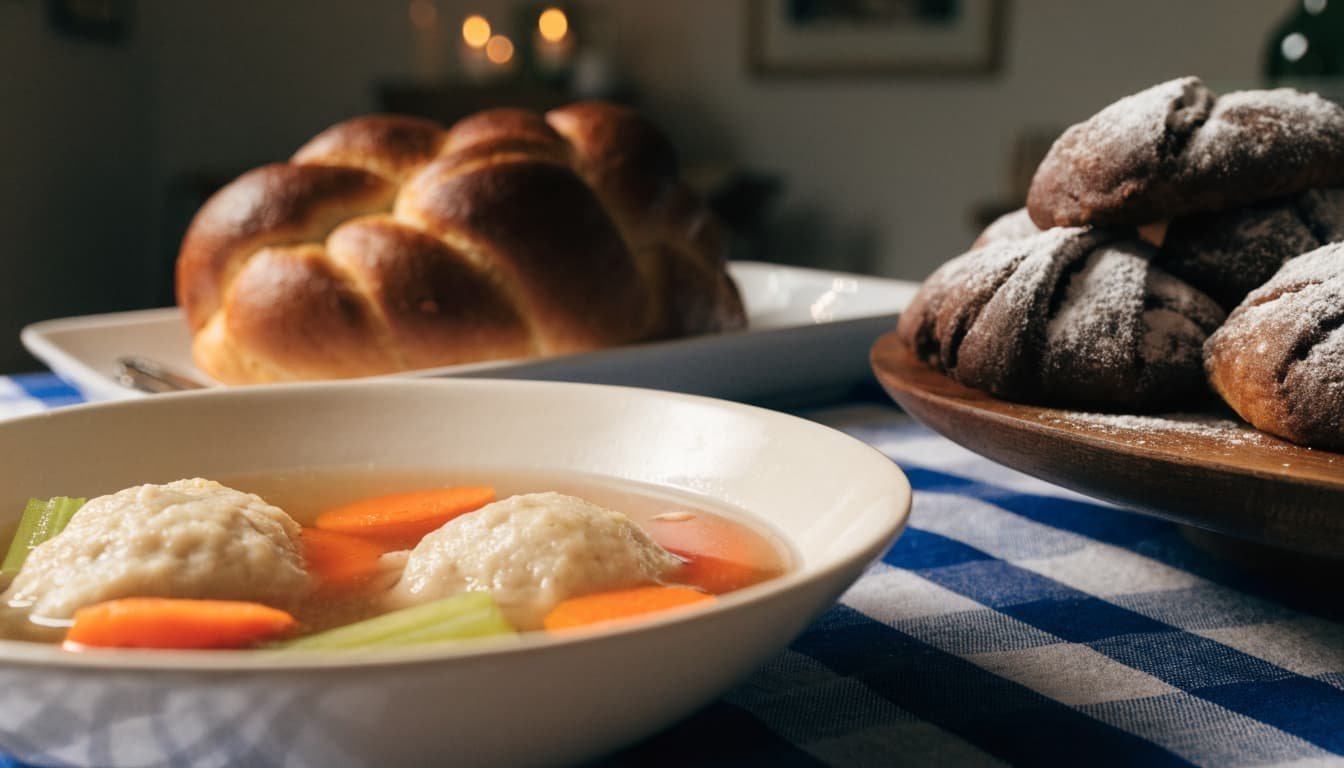
7. Matzo Ball Soup with Tender Dumplings
Matzo ball soup makes a comforting first course, though many families associate it especially with Passover. To make the dumplings, mix matzo meal with eggs, melted schmaltz or oil, salt, and a little water or broth. Cover and chill the mixture until firm enough to shape.
Roll it into balls with damp hands, then lower them into gently simmering broth. Add sliced carrots and celery if you like, and cook until the dumplings are tender all the way through. A matzo ball should feel light and cooked inside, not dense or crumbly. For another version, try this matzo ball soup recipe.
8. Braided Challah for Sharing
Challah is a Shabbat and holiday bread, not a food unique to Hanukkah. Combine flour, yeast, water, eggs, oil, and salt, then knead until the dough feels smooth and elastic.
Cover and let it rise until doubled. Divide and braid the dough, then let it rise again until puffy. Brush with egg wash and bake until deeply golden; the loaf should sound hollow when tapped on the bottom.
9. Cinnamon and Chocolate Rugelach
Rugelach adds a sweet bite after dinner, and its fillings can include cinnamon sugar, chocolate, nuts, or dried fruit. Mix flour, cream cheese, butter, and a little salt into a soft pastry dough, then chill until firm.
Roll the dough into a circle and spread a thin layer of filling over it. Cut into wedges, roll each one toward the point to form a crescent, and bake until golden at the edges. Let the pastries cool slightly so the filling sets before serving.
Dairy Dishes and a Homemade Hanukkah Treat
Dairy dishes appear in some Hanukkah food customs, but they aren’t part of every family’s holiday menu. Cheese blintzes and bourekas offer two savory options, while homemade chocolate gelt makes an easy sweet to share.
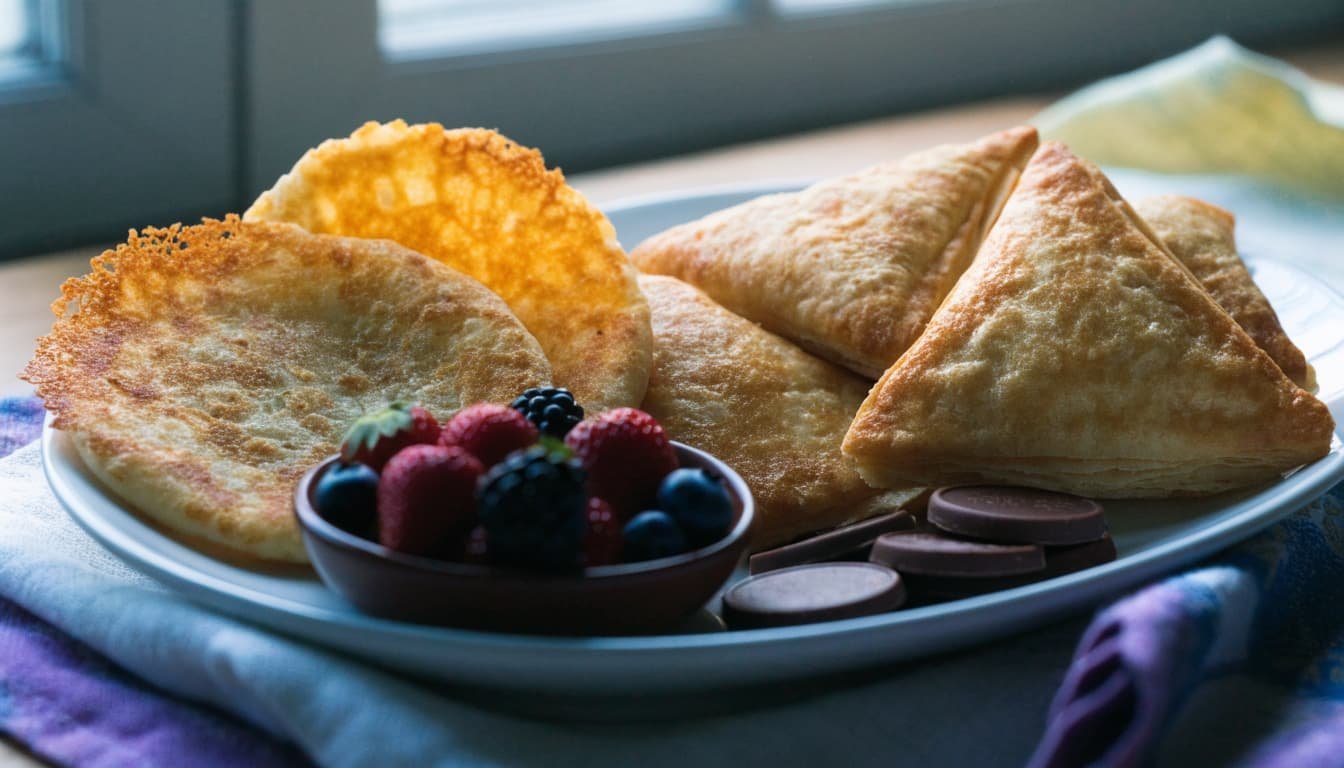
10. Cheese Blintzes with a Golden Finish
Make thin crepes in a lightly greased skillet, cooking each just until set. Stir cottage cheese or farmer cheese with an egg and a little sugar, then spoon the filling near the center of each crepe.
Fold in the sides and roll each crepe into a neat packet. Pan-fry seam-side down until golden, then turn and brown the other side. Serve warm with fruit or sour cream. Dairy customs and dishes vary among Jewish communities, so blintzes are one option, not a universal Hanukkah food.
11. Flaky Cheese Bourekas
Bourekas are found in Sephardi and other regional food traditions, though they aren’t exclusively a Hanukkah dish. For an easy version, thaw puff pastry, cut it into squares, and add a spoonful of crumbled feta or another firm cheese to each one.
Fold each square into a triangle and press the edges closed with a fork. Brush with beaten egg, then bake according to the pastry package directions until puffed and golden. Let them cool briefly so the filling can settle before serving.
12. Homemade Chocolate Gelt
Melt chopped chocolate gently in a heat-safe bowl over simmering water, or use short microwave bursts and stir between each one. Spoon it into small round molds or onto parchment in coin-sized circles. Add sprinkles or a pinch of flaky salt before chilling until firm. For more simple candy ideas, try our homemade holiday chocolate treats.
Chocolate coins are a familiar modern form of Hanukkah gelt, but gelt traditionally means money given as a gift. Hanukkah gelt’s history and meaning help explain the distinction.
Frequently Asked Questions
Hanukkah menus can be simple or varied, depending on your family and the meal you’re planning. These answers cover the oil tradition, common dishes, and a few practical serving questions.
Why are fried foods eaten during Hanukkah?
Fried foods cooked in oil recall the Hanukkah story of a small amount of oil that lasted eight days in the Temple. Latkes, sufganiyot, and regional fritters connect that tradition to the table, though plenty of Hanukkah dishes aren’t fried.
What are the most common Hanukkah foods?
Latkes and sufganiyot are widely recognized Hanukkah favorites. They’re familiar choices, but no single menu fits every household; you can choose dishes that suit your traditions and the people you’re serving.
Are Hanukkah foods the same in every Jewish community?
No. Ashkenazi, Sephardi, and other Jewish communities have distinct food traditions, shaped by regional ingredients and family customs. The ANU Museum’s look at lesser-known Hanukkah foods offers examples beyond the best-known latkes and doughnuts.
Can I prepare Hanukkah dishes ahead of time?
You can make fillings and some doughs ahead, then cover and refrigerate them until you’re ready to cook. Reheat baked or fried foods in the oven to help restore their texture; latkes are often crispest when fried close to serving time.
What can I serve with latkes?
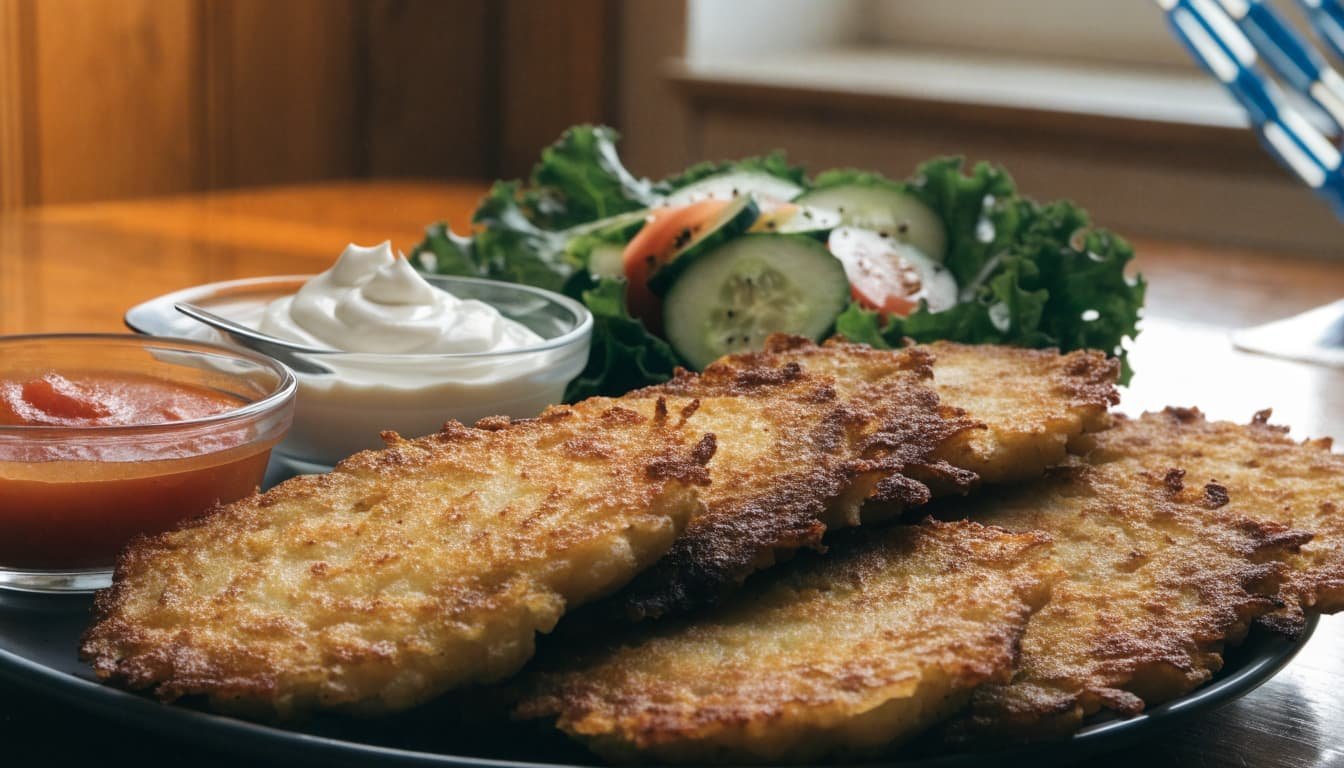
Applesauce and sour cream are familiar toppings, and a simple salad adds a fresh side. You can also serve latkes alongside soup or other meal dishes, depending on your household’s preferences.
Conclusion
You don’t need to make all 12 Hanukkah food ideas to set a festive table. Choose a few that fit your time, tastes, and family traditions, whether that means crisp latkes, a sweet treat, or a dish your family already enjoys.
Food customs vary across Jewish communities, and each recipe has its own place at the table. Enjoy the stories behind the dishes and the shared moments that come with preparing and eating them.
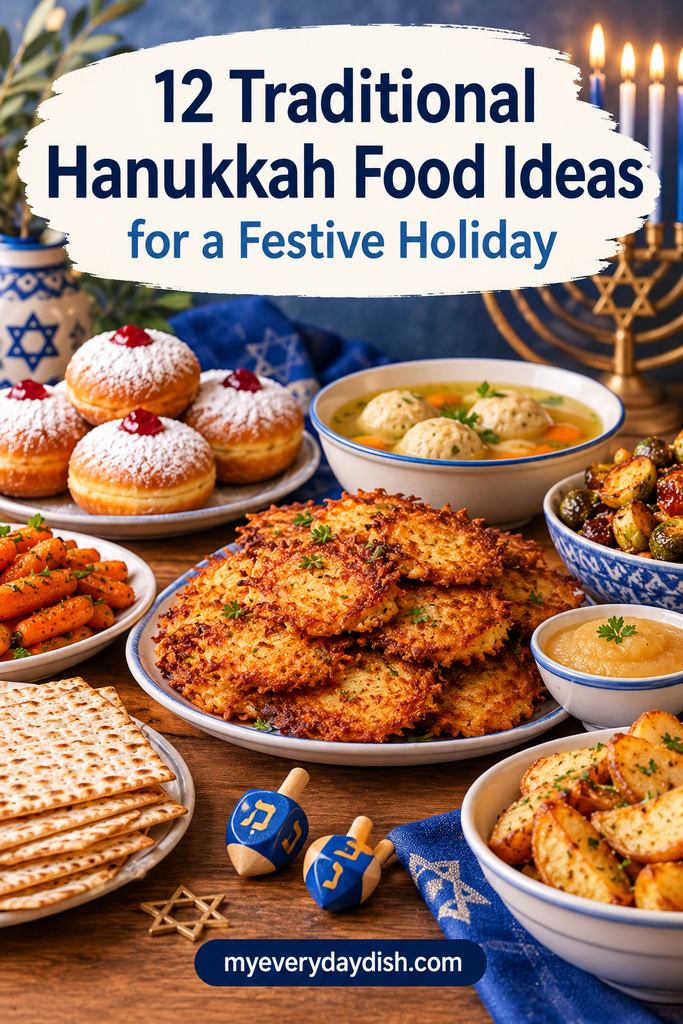
Save the pin for later

I’m the creator of My Everyday Dish, a food blog focused on easy homemade recipes, comforting family meals, simple baking, and seasonal food ideas. I love finding practical ways to make everyday cooking less stressful and more enjoyable. Here, I share recipes with simple ingredients, clear instructions, and plenty of flavor, helping you make delicious meals and treats you’ll feel confident serving at home.
Leave a Reply