
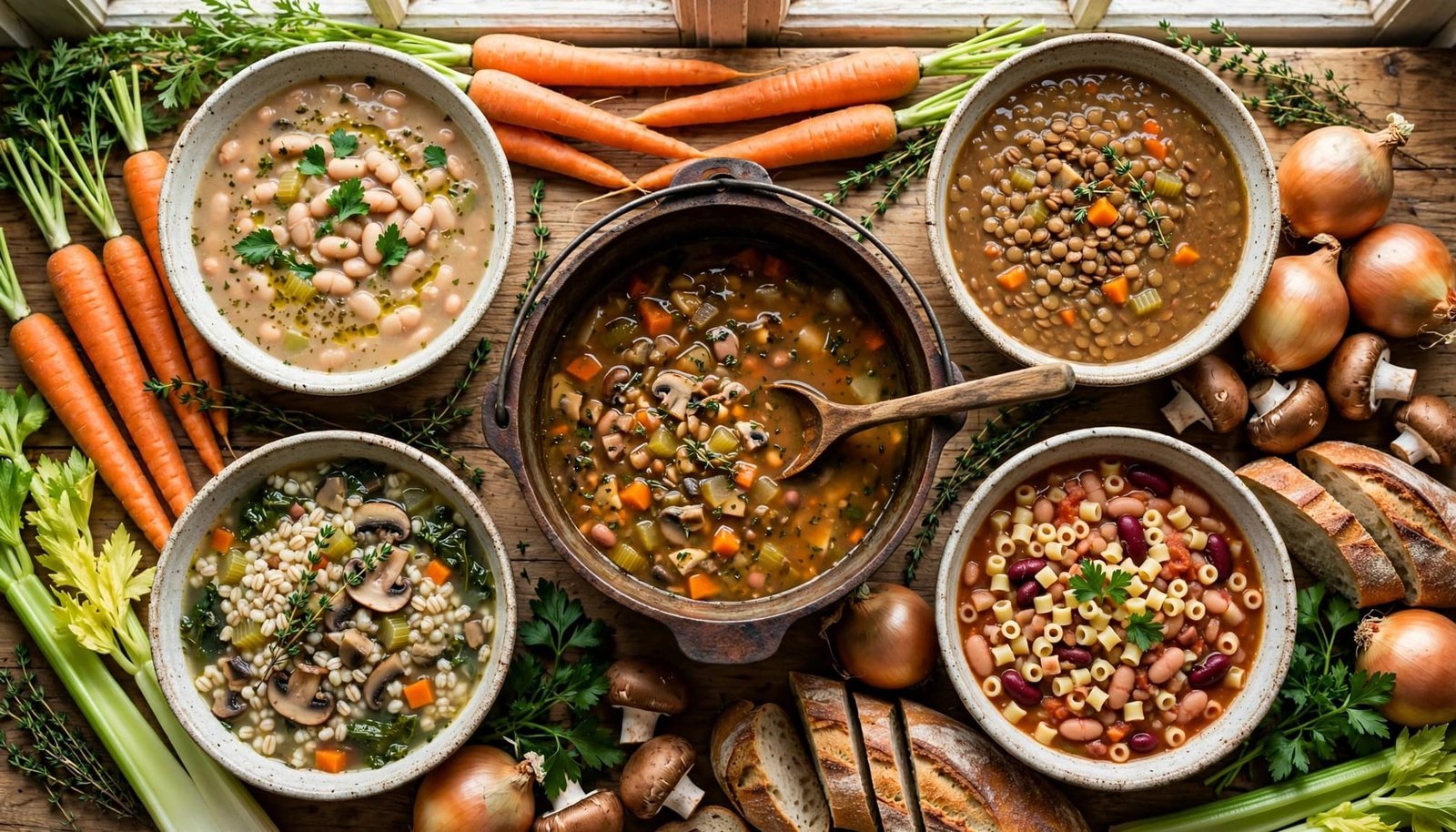
When chilly mornings arrive and colorful leaves cover the sidewalks, a simmering pot of soup can make the whole kitchen feel warmer. These broth-based fall soup recipes bring plenty of comfort and flavor without relying on heavy cream, so you can enjoy a satisfying bowl that still feels light enough for an everyday meal.
Inside, you’ll find 16 cozy ideas featuring tender chicken, savory beef, beans, lentils, mushrooms, noodles, root vegetables, squash, and seasonal herbs.
Each soup uses simple ingredients and approachable steps, with helpful swaps and practical tips for making dinner easier on busy weeknights. Beans, potatoes, lentils, rice, and blended vegetables can add body and richness while keeping the broth at the center of the dish.
Grab your favorite pot, and start with these warming soup recipes made for crisp fall days.
How to Make the Most Flavorful Broth Based Fall Soup
A flavorful broth-based fall soup starts with a strong foundation. Most recipes below follow a simple one-pot method: build flavor first, add the broth and main ingredients, then finish with quick-cooking additions and fresh seasonings.
Start With a Flavorful Soup Base
Warm a little oil in a large pot, then sauté diced onion, carrot, and celery until the vegetables soften. This classic combination adds sweetness, savory depth, and a pleasant aroma before the broth goes in. Add minced garlic during the final minute so it becomes fragrant without burning.
Fresh or dried herbs also make a noticeable difference. Add thyme, rosemary, sage, parsley stems, or a bay leaf with the broth, depending on the soup’s ingredients. A pinch of red pepper flakes can add gentle heat without overpowering delicate vegetables.
Choose the Right Broth
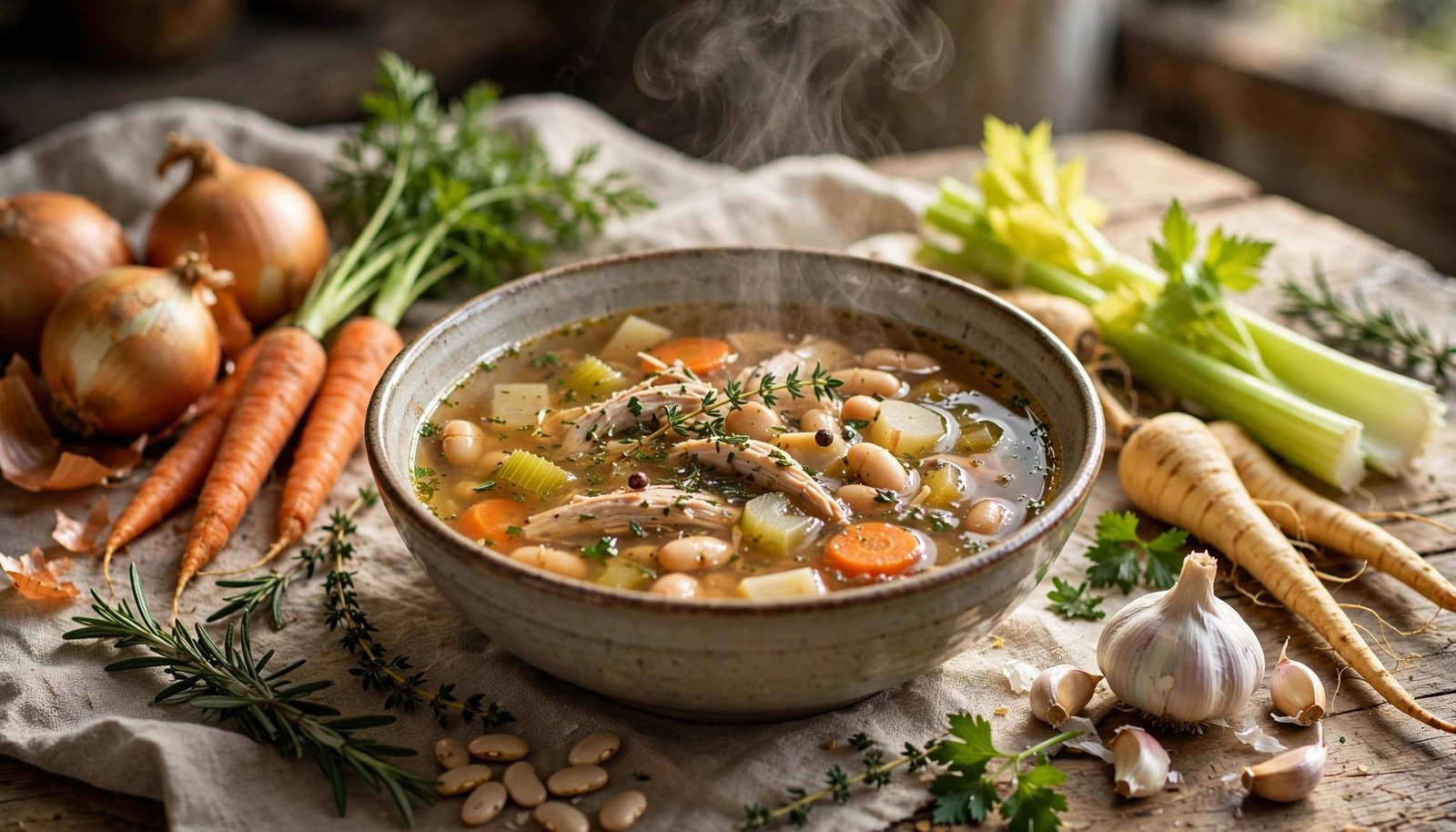
The broth sets the direction for the entire soup, so match it to the ingredients:
- Chicken broth works well with poultry, rice, noodles, beans, and mild vegetables.
- Beef broth adds richness to soups with beef, mushrooms, barley, or sturdy root vegetables.
- Vegetable broth keeps soups light and works with squash, lentils, beans, greens, and mixed vegetables.
- Mushroom broth brings an earthy flavor to vegetarian soups, especially those with barley, potatoes, or cabbage.
Read also: Homemade Tortellini Ground Beef Soup Recipe
Choose low-sodium or unsalted broth whenever possible. Soup often simmers long enough for the liquid to reduce, which can intensify saltiness. Starting with less salt gives you room to season gradually as the ingredients cook.
For a fuller soup, add ingredients that bring texture and staying power. Beans and lentils add protein and body, while barley, noodles, and rice make the broth more satisfying. Shredded chicken, potatoes, carrots, parsnips, sweet potatoes, and other root vegetables can turn a light soup into a complete meal.
Simmer Gently and Finish With Care
Once you add the broth, follow the recipe steps in order and bring the pot to a gentle simmer. A low, steady simmer helps vegetables soften and allows the flavors to blend without breaking apart tender ingredients. Avoid a vigorous boil, especially when the soup contains noodles, delicate greens, or shredded meat.
Add quick-cooking ingredients near the end. Spinach, kale, frozen peas, cooked beans, herbs, and thin noodles can become mushy if they simmer too long. Taste the soup before serving, then adjust it with salt and black pepper.
A small amount of lemon juice or vinegar can sharpen a broth that tastes flat. Add it gradually near the end, starting with a teaspoon or less. Fresh parsley, cilantro, dill, or sliced green onions can also brighten the finished bowl. Remove bay leaves and herb stems before ladling the soup into bowls.
16 Cozy Broth-Based Fall Soup Recipes for Chilly Days
These recipes are grouped by their main ingredients, starting with comforting chicken and turkey soups. Each one includes a clear cooking plan, so you can follow the order without turning dinner into a full recipe project.
1. Classic Chicken Noodle Soup With Fresh Herbs
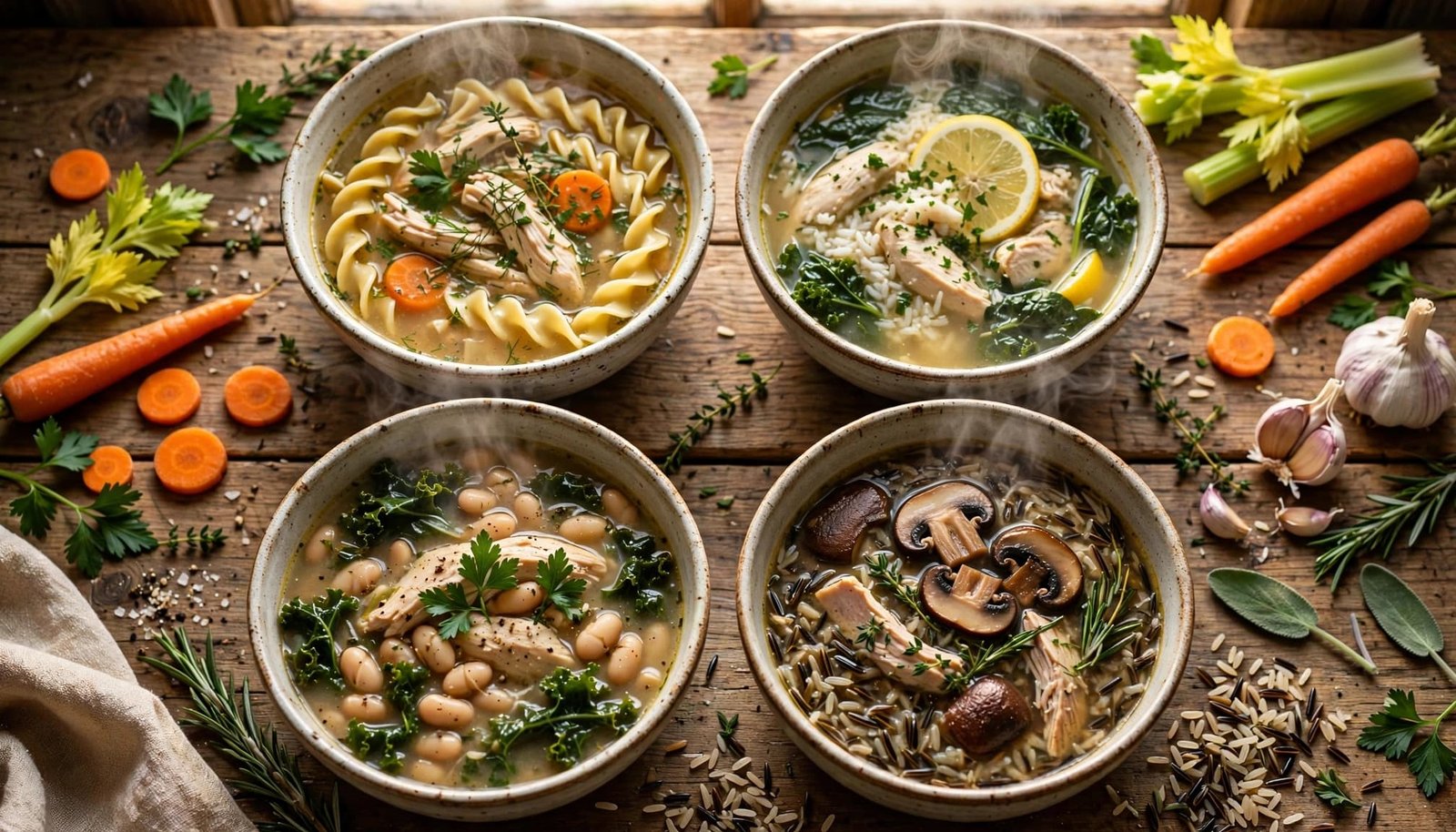
Gather chicken broth, cooked shredded chicken or raw boneless chicken, carrots, celery, onion, garlic, egg noodles, parsley, thyme, salt, and pepper. First, sauté the onion, carrots, celery, and garlic in a little oil until tender. Next, add the broth and thyme, then simmer raw chicken until it reaches 165°F. Follow the USDA safe temperature chart for poultry, then shred the chicken and return it to the pot. Add egg noodles during the final few minutes so they stay firm. Finish with parsley, salt, and pepper. Rotisserie chicken turns this into a quick 30-minute meal and helps prevent overcooked noodles.
2. Lemon Chicken and Rice Soup
Use chicken broth, chicken, onion, carrots, celery, garlic, rice, lemon juice, lemon zest, dill, and spinach or kale. First, soften the onion, carrots, celery, and garlic in oil. Add the broth and uncooked rice, then simmer until the rice is tender. Add raw chicken early enough to cook through, or stir in cooked chicken near the end. Add spinach or kale during the last few minutes. Finally, stir in lemon juice, lemon zest, and dill. The lemon brightens the broth and balances the savory ingredients. If you use cooked rice, add it late so it doesn’t absorb too much liquid.
3. Chicken, White Bean, and Kale Soup
For this hearty bowl, prepare chicken broth, cooked chicken, cannellini beans, onion, carrots, garlic, kale, rosemary, and a small amount of tomato paste. Sauté the onion, carrots, and garlic until fragrant, then stir in the tomato paste for about one minute. Add the broth, beans, and rosemary, and simmer long enough for the flavors to blend. Mash a few beans against the side of the pot to thicken the broth naturally while keeping the soup light. Stir in the cooked chicken and kale during the final few minutes, then season with salt and pepper.
4. Turkey and Wild Rice Soup
Combine turkey, turkey or chicken broth, wild rice, mushrooms, carrots, celery, onion, garlic, sage, and parsley. Begin by cooking the onion, carrots, celery, garlic, and mushrooms until the vegetables soften and the mushrooms lose their moisture. Add the broth, wild rice, and sage, then simmer until the rice is tender, usually 40 to 50 minutes. Stir in cooked turkey during the final few minutes so it stays moist. This soup is especially useful after Thanksgiving when leftover turkey fills the refrigerator. If the rice absorbs too much liquid, top up the pot with extra broth before serving.
Hearty Bean, Lentil, and Vegetable Soups for Easy Fall Meals
Beans and lentils add fiber, plant protein, and hearty texture to broth-based soup without making it feel heavy. Canned beans save time, while dried lentils cook directly in the pot with no soaking required. Rinse and drain canned beans before adding them, and stir delicate greens in near the end so they stay bright and tender.
5. Italian Sausage and White Bean Soup
Italian sausage, white beans, and tender vegetables create a satisfying soup with a savory tomato broth. Use mild sausage for a family-friendly bowl, or choose spicy sausage when you want extra heat.
Brown and crumble the sausage in a large pot, then transfer it to a plate if the pot becomes crowded. Sauté diced onion, carrots, celery, and garlic in the same pot until the vegetables soften. Add crushed tomatoes, chicken broth, Italian herbs, and the browned sausage. Simmer until the flavors blend, then stir in drained white beans and cook until hot. Add fresh spinach during the final few minutes so it wilts without turning dull. Finish each bowl with grated Parmesan and serve with crusty bread for dipping.
6. Lentil Soup With Carrots and Warm Spices
Green or brown lentils give this vegetable soup a filling texture and earthy flavor. Rinse the lentils under cool water, checking for small stones or debris, then set them aside. Lentils don’t need soaking, as USDA lentil guidance confirms.
Heat oil in a pot and cook the onion, carrots, celery, and garlic until fragrant. Stir in cumin and smoked paprika, then add diced tomatoes, rinsed lentils, and vegetable broth. Simmer until the lentils are tender, adding more broth if the soup becomes too thick. Finish with lemon juice and chopped parsley. This soup keeps well for several days, and the flavors often taste even better after resting overnight.
7. Pasta e Fagioli With Tomato Broth
Pasta e fagioli turns simple pantry ingredients into a cozy Italian-inspired meal. Choose small pasta, such as ditalini, along with cannellini or kidney beans. Both vegetable broth and chicken broth work well, depending on the flavor you want.
Start by sautéing diced onion, carrot, celery, and garlic until soft. Add crushed tomatoes, broth, rosemary, and drained beans, then simmer briefly to combine the flavors. Stir in the small pasta and cook until just tender. Remove the rosemary stem, season with salt and pepper, and finish with grated Parmesan. Since the pasta continues absorbing broth as the soup sits, add extra broth when reheating leftovers. That keeps each serving loose and spoonable instead of overly thick.
8. Hearty Vegetable and Barley Soup
Pearl barley makes this vegetable soup filling while keeping the broth light and savory. Begin by sautéing onion, celery, and sliced mushrooms in oil until the mushrooms release their moisture and begin to brown. Add vegetable broth, pearl barley, diced potatoes, diced tomatoes, and thyme.
Simmer the soup until the barley and potatoes are tender, which usually takes longer than quick-cooking vegetables. Add green beans during the final minutes so they retain some texture and color. Taste the broth and adjust the seasoning before serving. Barley gives the soup a pleasantly chewy bite, but you can use farro if you prefer a firmer, nuttier grain. Add a splash of broth to leftovers because the barley thickens the soup as it cools.
Earthy Mushroom, Beef, and Root Vegetable Soups
Mushrooms, beef, potatoes, cabbage, and root vegetables bring deep fall flavor to clear broth soups. Brown meat or mushrooms well for a richer taste, but avoid crowding the pot or they will steam instead. These recipes suit slow weekend cooking, although each can be adapted for a busy weeknight.
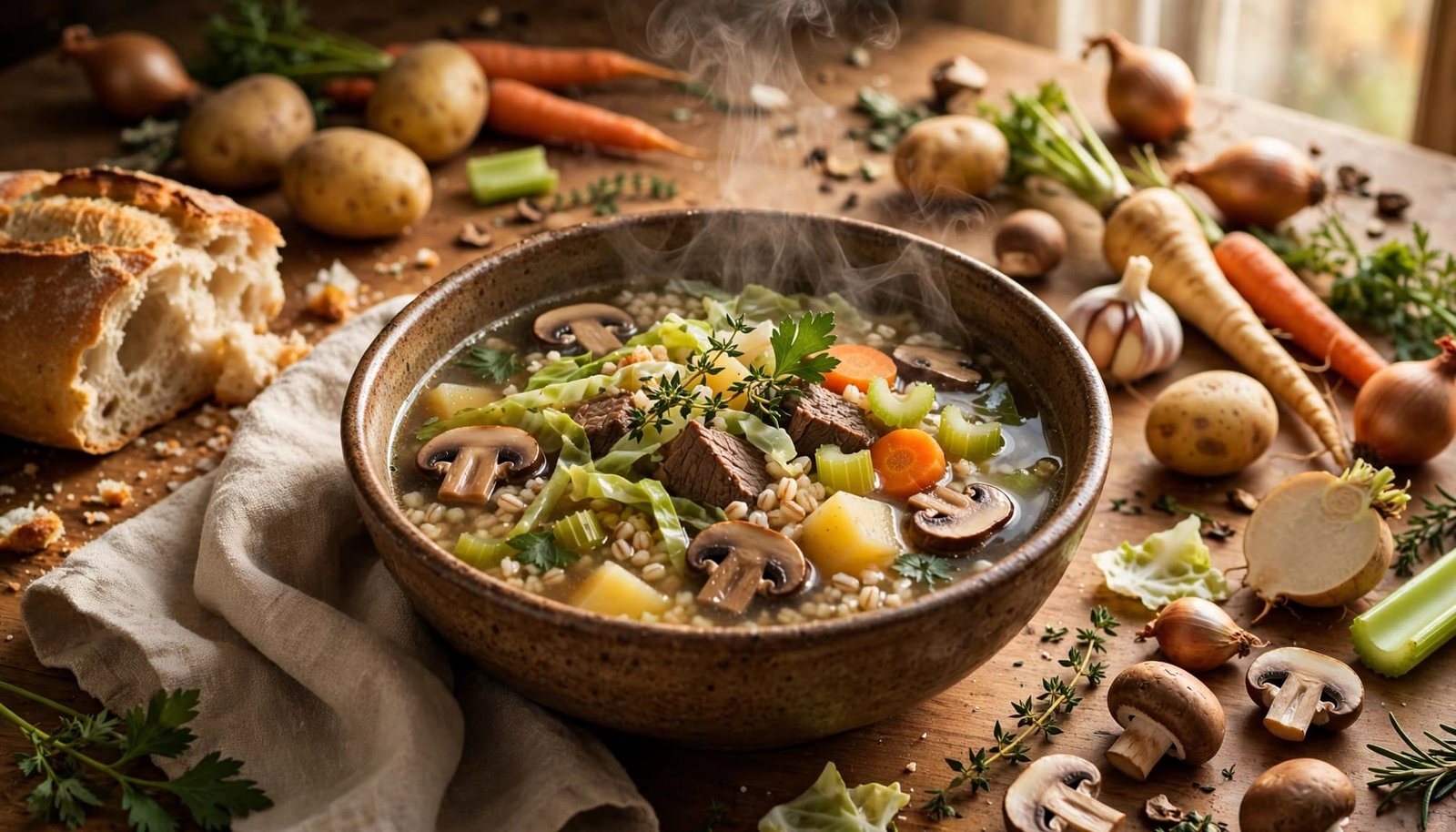
9. Mushroom and Barley Soup
Cremini mushrooms or a mixed mushroom blend give this soup an earthy flavor, while pearl barley adds a pleasantly chewy texture. Heat oil in a large pot, then brown the sliced mushrooms in batches. Let them sit undisturbed for a few minutes so they develop golden edges instead of releasing moisture into a crowded pan.
Transfer the mushrooms to a plate and sauté diced onion, carrot, celery, and garlic until tender. Add the mushrooms, pearl barley, vegetable broth, thyme, and a splash of soy sauce. Simmer until the barley is tender, usually 35 to 50 minutes, then adjust the seasoning. Browning the mushrooms keeps the broth from tasting watery and adds savory depth without cream.
10. Beef and Vegetable Soup
Use beef stew meat, beef broth, onion, garlic, carrots, potatoes, celery, green beans, tomato paste, and a bay leaf. Season the beef and brown it in batches, then set it aside. In the same pot, soften the onion, garlic, carrots, and celery. Stir in the tomato paste and cook briefly to deepen its flavor.
Add the beef, broth, and bay leaf, then bring the soup to a boil before reducing it to a gentle simmer. Once the beef begins to tenderize, add vegetables according to their cooking time, starting with potatoes and finishing with green beans. A lazy simmer keeps the beef tender. For ground beef variations, follow the USDA safe temperature chart. Leftovers often taste even better the next day.
11. French Onion Beef Soup With Toasted Cheese
Thinly slice yellow onions and cook them slowly in butter or oil until soft, golden, and caramelized. This step takes patience, but it gives the broth its signature sweetness. Add minced garlic, beef broth, thyme, and a splash of Worcestershire sauce, then scrape up any browned bits from the bottom of the pot.
Stir in shredded beef or thinly sliced steak, and simmer until hot and tender. Meanwhile, toast baguette slices and cover them with shredded Gruyère or Swiss cheese. Place the cheese-topped toast under the broiler until melted and lightly browned, then set it on each serving. If your bowls aren’t oven-safe, broil the toast separately rather than placing the bowls under direct heat.
12. Cabbage, Ground Beef, and Rice Soup
This cabbage, ground beef, and rice soup offers a lighter take on stuffed cabbage. Brown the ground beef in a large pot, then cook diced onion, carrots, celery, and garlic in the drippings. Stir in paprika, diced tomatoes, and beef broth, scraping the bottom to loosen the browned bits.
Add the rice and chopped cabbage, then simmer until both are tender. Stir in chopped parsley just before serving, and season with salt and pepper. Watch the rice closely because it absorbs broth as it cooks, especially after the soup cools. Add extra broth to leftovers or during reheating to restore a loose, spoonable consistency.
Cozy Squash, Pumpkin, and Meatless Soups for Chilly Nights
Fall squash and pumpkin bring natural sweetness, bright color, and body to broth-based soup. Blended vegetables, beans, lentils, and grains keep these bowls satisfying without relying on heavy cream. Warm spices such as ginger, cumin, curry powder, and smoked paprika also make seasonal produce taste richer.

13. Butternut Squash and White Bean Soup
This hearty vegetarian soup combines cubed butternut squash, white beans, vegetable broth, onion, garlic, sage, kale, and lemon juice. Start by sautéing the onion and garlic in olive oil until soft and fragrant. Add the squash, broth, and sage, then simmer until the squash is tender.
For a creamy texture without adding cream, blend or mash only part of the soup. An immersion blender makes this easy, but you can also mash some squash against the side of the pot with a spoon. Stir in the white beans and kale, then cook until the kale softens and the beans are hot. Finish with lemon juice to brighten the earthy broth.
14. Pumpkin, Chickpea, and Coconut Broth Soup
Pumpkin puree gives this soup a smooth texture, while chickpeas add substance and plant-based protein. Cook diced onion, garlic, and ginger in oil until tender, then stir in curry powder and cook for another minute to release its aroma.
Whisk in pumpkin puree and vegetable broth until smooth. Add chickpeas and simmer gently so the flavors combine without scorching the pumpkin. Stir in light coconut milk and spinach near the end, cooking just until the spinach wilts. Finish with lime juice for a fresh contrast.
Keep the heat low after adding the coconut milk because a hard boil can make the soup look separated. If the broth becomes too thick, add more vegetable broth until it reaches your preferred consistency.
15. Butternut Squash and Apple Soup With Lentils
A tart apple adds brightness to this soup without making it taste like dessert. Gather butternut squash, a tart apple, red lentils, vegetable broth, onion, carrots, ginger, cinnamon, and lemon juice.
Sauté the onion and carrots until they begin to soften. Add the squash, chopped apple, red lentils, ginger, cinnamon, and broth. Bring the mixture to a gentle simmer and cook until the vegetables and lentils are soft.
Blend part of the soup for a chunky texture, or blend all of it if you prefer a smoother bowl. An immersion blender works well directly in the pot. Taste before serving, then add lemon juice to sharpen the sweet squash and balance the cinnamon.
16. Green Chile Chicken and Squash Soup
This soup is a practical way to use leftover chicken. Sauté onion and garlic in a large pot, then add cubed butternut squash, chicken broth, canned green chiles, cumin, and cooked corn. Simmer until the squash is tender.
Stir in cooked chicken and white beans during the final few minutes, giving them enough time to heat without drying out the meat. Finish with fresh cilantro and lime juice. Choose mild green chiles for gentle flavor or hot chiles for more heat.
Store leftover soup promptly in the refrigerator, and follow USDA leftover safety guidance when cooling, storing, and reheating cooked chicken.
Simple Ways to Serve, Store, and Reheat Fall Soup
A good bowl of broth-based soup needs very little beside it, but the right toppings and sides can make dinner feel complete. Simple storage habits also protect the soup’s texture and flavor, especially when you prepare a large pot for several meals.
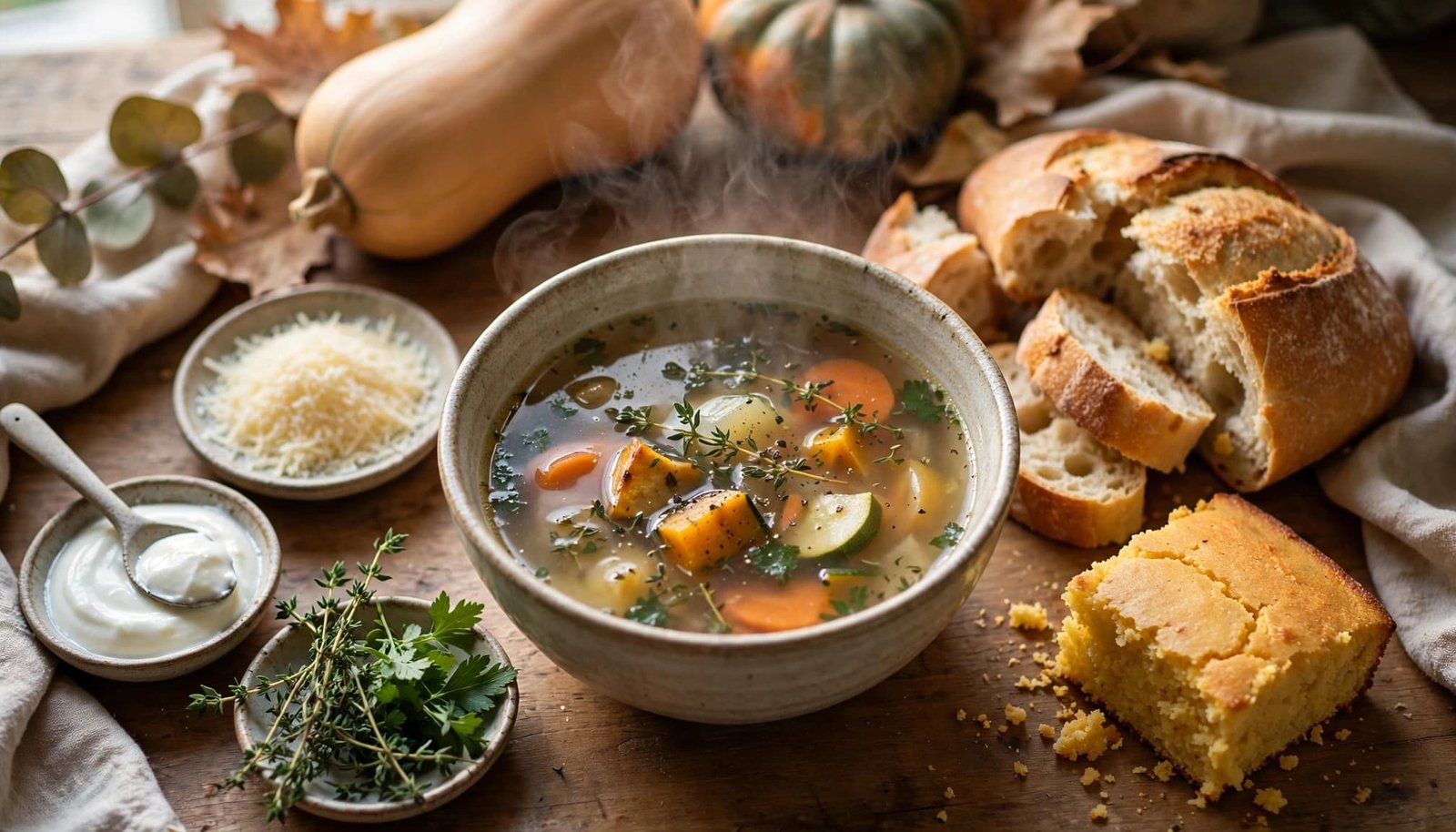
Serve Each Bowl With a Simple Finishing Touch
Crusty bread, cornbread, or crackers add a welcome contrast to a light, savory broth. A toasted cheese sandwich also pairs well with tomato-based soups, vegetable soups, and bean-filled bowls.
For fresh flavor, scatter chopped parsley, cilantro, dill, or green onions over the top. Grated Parmesan adds saltiness to Italian-style soups, while sliced avocado works well with chicken, green chile, bean, and squash soups. Add a spoonful of plain yogurt to lentil, pumpkin, or spicy vegetable soup when you want a cool, creamy contrast.
Keep toppings separate when serving a crowd. That way, everyone can adjust the bowl to suit their taste without changing the whole pot.
Cool and Store Leftover Soup Safely
Large pots of soup cool slowly, so divide leftovers into small, shallow containers rather than placing the entire pot in the refrigerator. Shallow containers help the soup lose heat more quickly. Refrigerate the containers promptly, and keep them covered once chilled.
Most cooked soups keep in the refrigerator for 3 to 4 days. If you won’t eat the leftovers within that window, freeze them in airtight, freezer-safe containers and label each container with the date. For best quality, use frozen soup within about 2 to 3 months. The USDA’s leftover food safety guidance offers additional storage and reheating details.
Soups freeze best without pasta, rice, or dairy. Noodles and grains continue absorbing broth as they sit, while dairy can separate after freezing. If possible, cook those ingredients separately and add them when you reheat the soup.
Reheat Soup on the Stovetop or in the Microwave
For stovetop reheating, pour the soup into a saucepan and warm it over medium heat. Stir often, especially when the soup contains rice, beans, barley, or a thick vegetable puree. Add extra broth if the texture has become too thick, then heat until the soup is steaming hot throughout.
In the microwave, use a microwave-safe bowl and cover it loosely to reduce splatter. Heat in short intervals, stirring between each one so the center warms evenly. Let the soup stand briefly before serving, and check that it reaches 165°F throughout if you have a food thermometer.
Make Easy Ingredient Swaps
Most of these soups can adapt to what you already have in the kitchen. Use vegetable broth instead of chicken broth, replace meat with beans, or swap kale for spinach. Barley can take the place of rice in many recipes, although it may need a longer simmer and extra broth. These simple changes keep the soup flexible without changing its cozy, fall-inspired character.
Frequently Asked Questions
A few practical questions often come up after choosing a cozy fall soup recipe. The answers below cover ingredient choices, texture, flavor adjustments, and simple ways to adapt each pot to your kitchen.
Can I use stock instead of broth in these soup recipes?
Yes, stock works well in every recipe listed here. Stock often has a fuller body because it contains more gelatin from bones and connective tissue, while broth usually has a lighter, more seasoned flavor.
If you use unsalted stock, taste the soup near the end and adjust the salt gradually. You can also combine stock with water if its flavor feels too strong or the soup reduces more than expected.
How can I keep broth-based soup from tasting bland?
Build flavor in layers instead of relying on extra salt at the end. Brown meat or mushrooms, cook the aromatics until tender, and toast tomato paste or spices briefly before adding the liquid.
A small finishing ingredient can also wake up a flat soup. Try lemon juice in chicken or lentil soup, vinegar in bean soup, or grated Parmesan in Italian-style recipes. Add these ingredients a little at a time, then taste after each addition.
What is the best way to keep noodles from getting mushy?
Cook noodles separately when you expect leftovers. Add them to each bowl just before serving, then ladle the hot soup over them. This keeps the pasta from absorbing the broth while it sits in the refrigerator.
For a one-pot meal, add noodles during the final few minutes of cooking and stop when they are just tender. Small pasta shapes continue softening in the hot broth, so slightly undercooking them helps protect their texture.
Can I make these fall soups vegetarian or vegan?
Most recipes can become vegetarian with vegetable or mushroom broth and a few simple substitutions. Replace chicken with white beans, chickpeas, lentils, mushrooms, or extra vegetables, depending on the soup’s flavor and texture.
For a vegan version, skip Parmesan, cheese-topped bread, and dairy-based toppings. Nutritional yeast, toasted seeds, fresh herbs, or a spoonful of olive oil can add richness without changing the broth’s light character.
How can I make a broth-based soup more filling?
Add one ingredient that brings protein and another that adds lasting texture. Beans, lentils, shredded chicken, turkey, beef, barley, rice, potatoes, and squash all make soup more satisfying without requiring cream.
You can also serve a smaller bowl with whole-grain bread, cornbread, or a simple salad. If the soup contains grains or pasta, check the broth as it cooks because these ingredients absorb liquid and may require an extra splash before serving.
Why does my soup taste better the next day?
Resting gives the broth time to carry the flavor of herbs, vegetables, meat, and spices through the entire pot. The change is especially noticeable in lentil, bean, beef, mushroom, and tomato-based soups.
Still, add fresh herbs, lemon juice, tender greens, and delicate noodles after reheating when possible. For food-safety details, the USDA leftovers guidance recommends reheating leftovers to 165°F.
Conclusion
A good broth-based soup can be simple, filling, affordable, and full of fall flavor. Whether you prefer classic chicken noodle or beef vegetable soup, these 16 recipes offer plenty of variety, including hearty lentil and mushroom bowls, seasonal squash soups, and zesty green chile combinations.
Start with the ingredients already in your pantry, refrigerator, or freezer, then simmer one comforting pot for dinner. Save the leftovers for an easy lunch, adding a little extra broth when rice, barley, or noodles thicken the soup. Choose one recipe to try this week, and make a warm bowl part of your cold-weather routine.
Save the pin for later


I’m the creator of My Everyday Dish, a food blog focused on easy homemade recipes, comforting family meals, simple baking, and seasonal food ideas. I love finding practical ways to make everyday cooking less stressful and more enjoyable. Here, I share recipes with simple ingredients, clear instructions, and plenty of flavor, helping you make delicious meals and treats you’ll feel confident serving at home.
Leave a Reply