

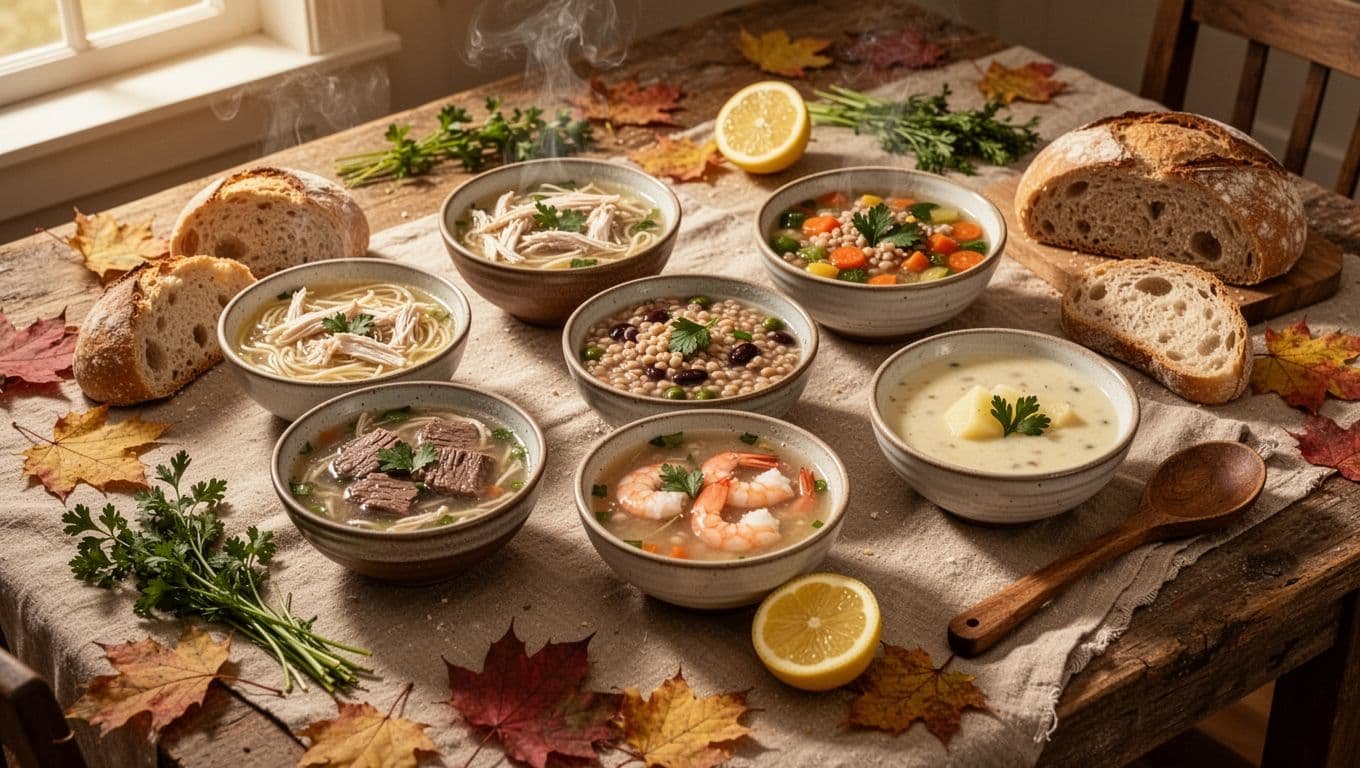
When the leaves start to change and evenings turn crisp, a hot bowl of soup can make dinner feel instantly more comforting. These cozy fall soup recipes bring that same warmth to the table with flavorful broth, hearty ingredients, and enough variety to keep your weekly menu interesting.
A broth-based soup can be filling without depending on a heavy cream base. Chicken, beef, vegetables, beans, grains, noodles, and seafood each add their own texture and flavor, while global touches such as Greek egg-lemon soup, Mexican noodle soup, Thai coconut soup, and vegetarian pho keep the lineup far from ordinary. Some recipes are light and vegetable-forward, while others make a full meal with meat, legumes, rice, barley, or noodles.
You won’t need complicated techniques or hard-to-find ingredients, either. These recipes rely on simple steps and flexible ingredients, so you can adjust them to suit what you have in the pantry or refrigerator. Start with the broth-based soups that match your mood, then find a new fall favorite to simmer next.
21 Cozy Fall Soup Recipes With a Delicious Broth Base
These fall soup recipes make it easy to choose dinner based on the ingredients you have and the comfort you want. Each idea includes a quick ingredient overview, the best broth choice, a serving suggestion, and a simple cooking method.
How to Use This Soup Collection
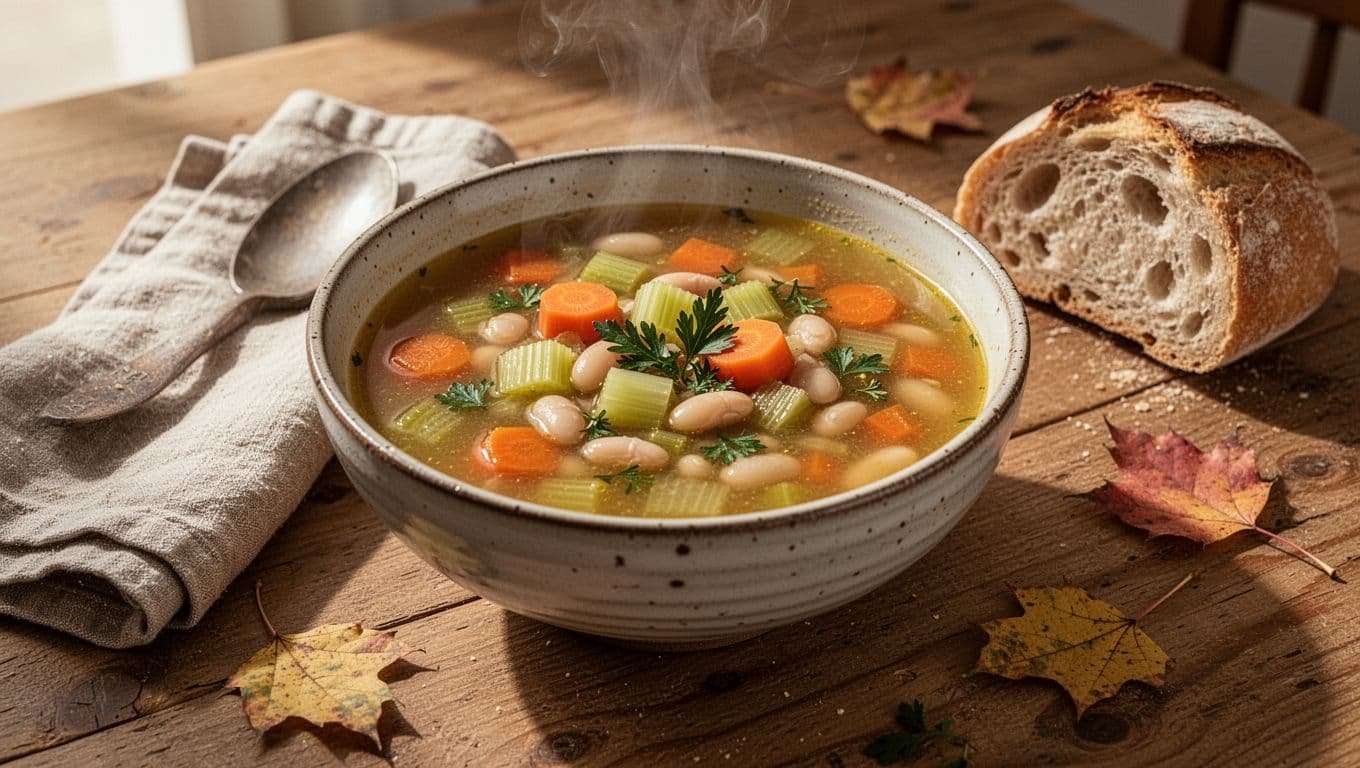
Start with the broth recommendation, then adjust vegetables, grains, herbs, or protein to suit your pantry. Most recipes begin with sauteed onion, carrot, and celery, which create a flavorful base before the broth goes into the pot.
For food safety, refrigerate leftovers within two hours in shallow containers. Enjoy them within three to four days, or freeze them for longer storage. The USDA leftover safety guidance offers more storage and reheating details.
Broth-Based Fall Soup Recipes
- Chicken noodle soup: Combine chicken, carrots, celery, noodles, and parsley with chicken broth. Simmer the vegetables, add chicken and noodles, then serve with crackers.
- Beef barley soup: Use beef chuck, barley, mushrooms, carrots, and beef broth. Brown the beef, add the remaining ingredients, and simmer until tender.
- Butternut squash soup: Cook squash, onion, garlic, and sage in vegetable broth. Blend until smooth and top with toasted pepitas.
- White bean kale soup: Simmer cannellini beans, kale, tomatoes, garlic, and rosemary in vegetable broth. Serve with Parmesan and crusty bread.
- Turkey rice soup: Add cooked turkey, rice, carrots, celery, and thyme to turkey or chicken broth. Simmer until the rice is tender.
- Italian wedding soup: Combine meatballs, escarole, carrots, and small pasta with chicken broth. Simmer gently and finish with grated Parmesan.
- Lentil vegetable soup: Cook lentils, tomatoes, carrots, celery, and cumin in vegetable broth. Simmer until the lentils soften, then serve with warm pita.
- Chicken tortilla soup: Simmer chicken, tomatoes, corn, black beans, and chili powder in chicken broth. Top each bowl with tortilla strips, avocado, and lime.
- Mushroom barley soup: Saute mushrooms, onion, and garlic, then add barley and mushroom or vegetable broth. Cook until tender and garnish with parsley.
- Greek egg-lemon soup: Stir shredded chicken and rice into chicken broth. Whisk in eggs and lemon juice off the heat, then serve immediately.
- Sausage and white bean soup: Brown Italian sausage before adding white beans, spinach, tomatoes, and chicken broth. Serve with toasted garlic bread.
- Vegetarian pho: Simmer vegetable broth with ginger, star anise, cinnamon, and mushrooms. Pour it over rice noodles and add herbs, lime, and bean sprouts.
- Thai coconut chicken soup: Simmer chicken, mushrooms, ginger, lime, and coconut milk in chicken broth. Serve over rice with cilantro.
- Potato leek soup: Cook leeks and potatoes in vegetable broth until soft. Blend part of the soup for body, then serve with chives.
- Mexican sopa de fideo: Toast thin noodles, then simmer them with tomatoes, onion, garlic, and chicken broth. Finish with lime and queso fresco.
- Beef and vegetable soup: Combine ground beef, potatoes, green beans, corn, and tomatoes with beef broth. Simmer until the vegetables are tender.
- Chickpea and spinach soup: Cook chickpeas, spinach, tomatoes, onion, and smoked paprika in vegetable broth. Add lemon juice before serving.
- Salmon chowder: Simmer potatoes, corn, salmon, dill, and onion in seafood broth. Add a splash of milk and serve with oyster crackers.
- Chicken and wild rice soup: Cook chicken, wild rice, mushrooms, carrots, and thyme in chicken broth. Let the rice soften before adding fresh parsley.
- Tomato tortellini soup: Simmer crushed tomatoes, cheese tortellini, basil, and garlic in vegetable broth. Add spinach near the end and serve hot.
- Cabbage roll soup: Brown ground beef, then simmer cabbage, rice, tomatoes, and onion in beef broth. Spoon it into bowls with sour cream.
Comforting Chicken Soups for Chilly Autumn Nights
Chicken soup becomes especially satisfying in fall, when tender meat, fresh vegetables, noodles, rice, and herbs simmer together in a flavorful broth. These recipes are simple enough for a weeknight yet comforting enough for a chilly evening, with bright lemon, earthy mushrooms, ginger, and warming spices adding variety to every bowl.
1. Classic Chicken Noodle Soup
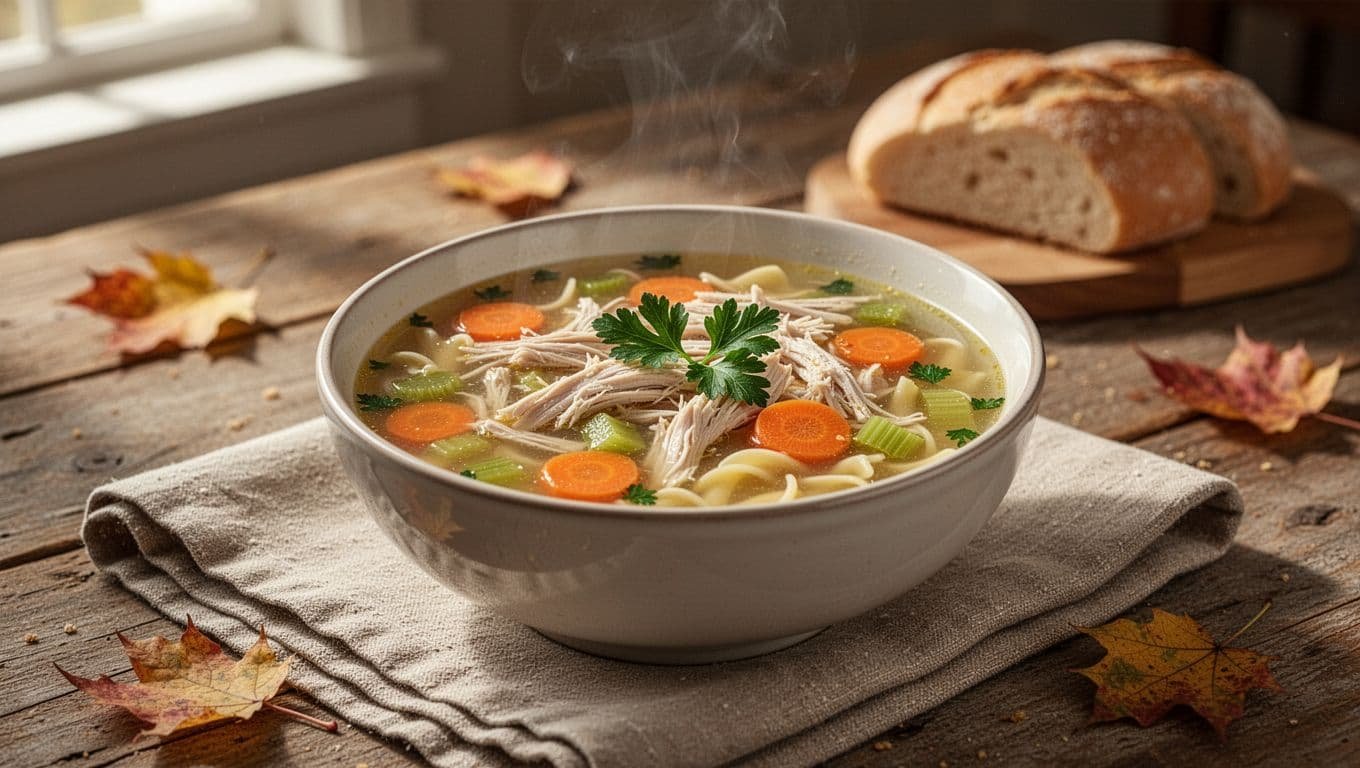
Start this familiar favorite by sautéing diced onion, carrots, celery, and garlic in a little oil until the vegetables soften. Add chicken broth and boneless chicken, then simmer until the chicken cooks through. Transfer the chicken to a plate, shred it with two forks, and return it to the pot.
Add egg noodles during the final few minutes of cooking so they stay tender instead of turning mushy. Season with salt and pepper, then finish each bowl with fresh parsley or a small squeeze of lemon juice. The lemon adds brightness without overpowering the savory broth.
2. Lemon Chicken and Rice Soup
For a lighter, brighter bowl, soften onion, carrots, celery, and garlic in a large pot. Pour in chicken broth and add rice, then simmer until the grains become tender. Stir in cooked chicken during the last few minutes, giving it enough time to warm without becoming dry.
Remove the pot from the heat before adding lemon juice and chopped dill or parsley. Lemon brightens the broth without making the soup taste sour, especially when you add it gradually and taste as you go. A little black pepper also brings the flavors into focus.
3. Chicken and Wild Rice Soup
Sauté onion, carrots, celery, and sliced mushrooms until the vegetables soften and the mushrooms release their moisture. Add chicken broth, wild rice, and thyme, then simmer until the rice is tender. Chicken thighs add extra richness, while chicken breasts create a lighter soup.
Stir in cooked or shredded chicken near the end so it stays juicy. Keep this recipe broth-based rather than creamy, allowing the earthy mushrooms and thyme to stand out. Add extra thyme or cracked black pepper before serving for a more pronounced fall flavor.
4. Ginger Garlic Chicken Soup
Warm minced ginger and garlic in oil until fragrant, then add sliced mushrooms and chicken broth. Simmer briefly until the mushrooms soften and the broth takes on the aromatics’ savory flavor. Stir in shredded chicken and chopped bok choy or spinach during the final minutes.
Season with soy sauce at the end, since its saltiness can vary by brand. Scallions add a fresh finish, while chili flakes or a few drops of sesame oil bring extra warmth. Serve this quick soup when you want something soothing with a gently spicy edge.
5. Chicken Tortilla Soup
Cook diced onion and garlic with chili powder and cumin until fragrant. Add tomatoes and chicken broth, then simmer with chicken until the flavors blend. Stir in corn and black beans near the end, since both ingredients only need time to heat through.
Finish the soup with fresh lime juice, which balances the tomatoes and spices. Top each bowl with cilantro, avocado, or baked tortilla strips for contrasting texture. If you prefer a thicker soup, mash a few black beans into the broth before serving.
Hearty Beef, Sausage, and Bean Soups With Rich Broth
Browned meat gives broth a savory foundation, while beans, grains, and root vegetables add enough substance for dinner. These soups build flavor in a clear order: sear the meat, soften the vegetables, add broth, then simmer gently. Skim excess fat when needed so each bowl stays rich without tasting greasy.
6. Beef and Barley Soup
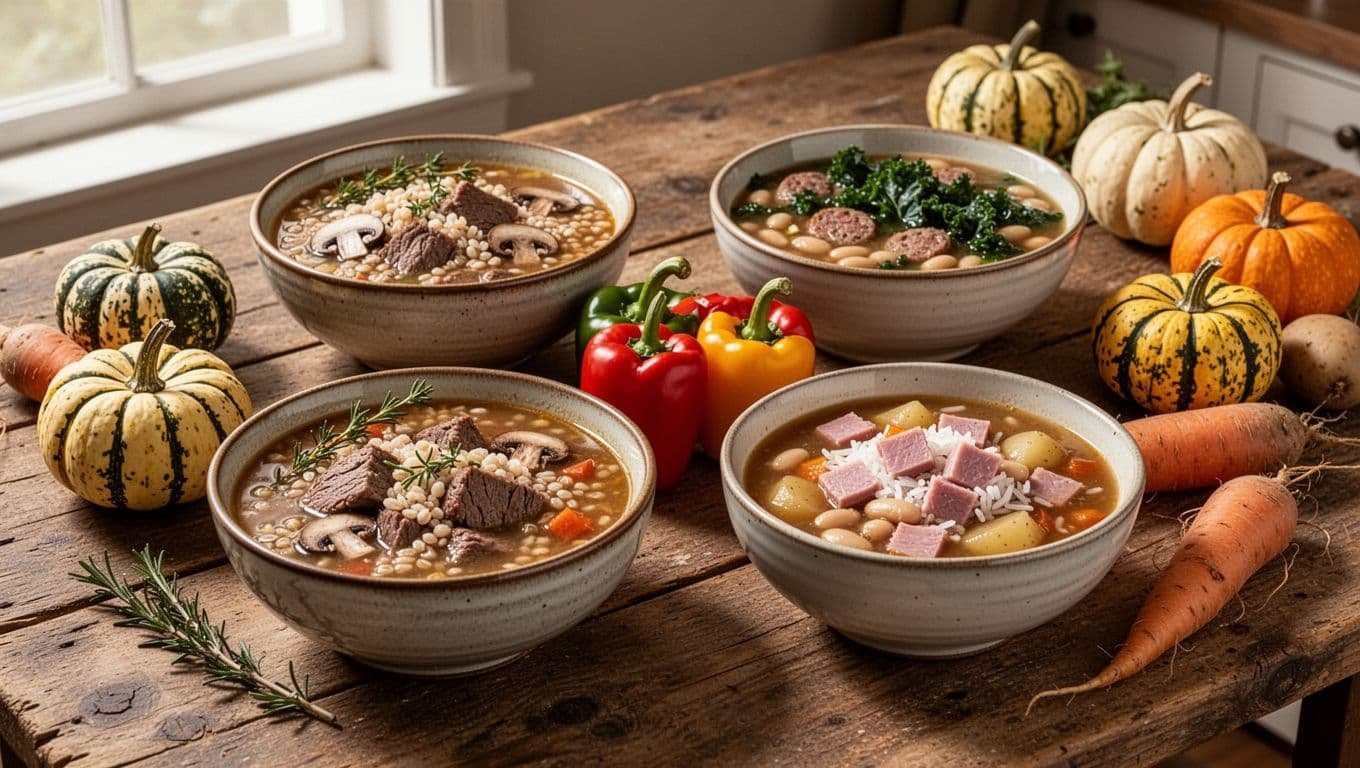
Cut beef chuck or stew meat into bite-sized pieces, then season it with salt and pepper. Heat oil in a heavy pot and brown the beef in batches. Avoid crowding the pot, because the meat needs direct contact with the hot surface to develop a dark, savory crust.
Transfer the beef to a plate. Add diced onion, carrots, celery, and mushrooms to the same pot, then cook until the vegetables soften. Stir in garlic and thyme for the final minute. Return the beef to the pot with beef broth and pearl barley.
Bring the soup to a gentle boil, reduce the heat, and cover. Simmer for about 45 minutes to an hour, or until the beef and barley are tender. Skim excess fat from the surface if needed, then adjust the salt near the end. A low simmer keeps the broth clear and the beef tender.
7. Italian Sausage and White Bean Soup
Remove Italian sausage from its casing, crumble it into a pot, and cook until browned. Turkey sausage works well as a lighter option, though it may need a little extra oil to prevent sticking. Once the sausage develops color, transfer it to a plate if the pot looks crowded.
Cook diced onion and carrots in the rendered fat until tender. Add minced garlic and Italian seasoning, then stir for about 30 seconds. Pour in chicken or vegetable broth, return the sausage to the pot, and add cannellini beans.
Simmer for about 20 minutes, allowing the broth to absorb the sausage’s seasoning. Stir in chopped kale during the final 3 to 5 minutes, just until it softens and stays green. Taste before adding salt, since both sausage and broth can vary in saltiness.
8. Stuffed Pepper Soup
Brown ground beef or turkey in a large pot, breaking it into small pieces as it cooks. Add diced bell peppers and onion, then sauté until they begin to soften. Stir in garlic, paprika, and Italian seasoning so the aromatics coat the meat and vegetables.
Add diced tomatoes, beef broth, and rice. Bring the mixture to a boil, then reduce the heat and simmer until the rice is tender and the peppers are soft. Stir occasionally so the rice doesn’t settle and stick to the bottom.
Taste the soup near the end and adjust the salt, pepper, and paprika. Keep the heat gentle after adding the rice, since a hard boil can make the broth cloudy and the grains overcook. Finish each serving with shredded cheese or fresh parsley.
9. Ham, Bean, and Potato Soup
Sauté diced onion, carrots, celery, and garlic in a large pot until the vegetables soften. Add chicken broth, peeled potatoes, and a bay leaf, then bring the soup to a gentle simmer. Cook until the potatoes are nearly tender.
Stir in navy or great northern beans and diced ham during the final minutes. Leftover roasted ham works especially well, and adding it late keeps the meat tender instead of tough. Remove the bay leaf before serving.
Taste the broth after the ham warms through, then add salt only if necessary. If the surface looks oily, skim it with a spoon. For safe storage, divide leftovers into shallow containers and refrigerate them within two hours, following FDA safe food handling guidance.
Vegetable-Forward Fall Soups That Still Feel Filling
Vegetables, beans, lentils, potatoes, and grains can make a full meal in a clear broth. Use vegetable broth instead of chicken broth for an easy vegetarian or vegan swap, then adjust seasonings to taste. These recipes focus on practical timing, satisfying texture, and flavorful fall ingredients.
10. Hearty Garden Vegetable Soup
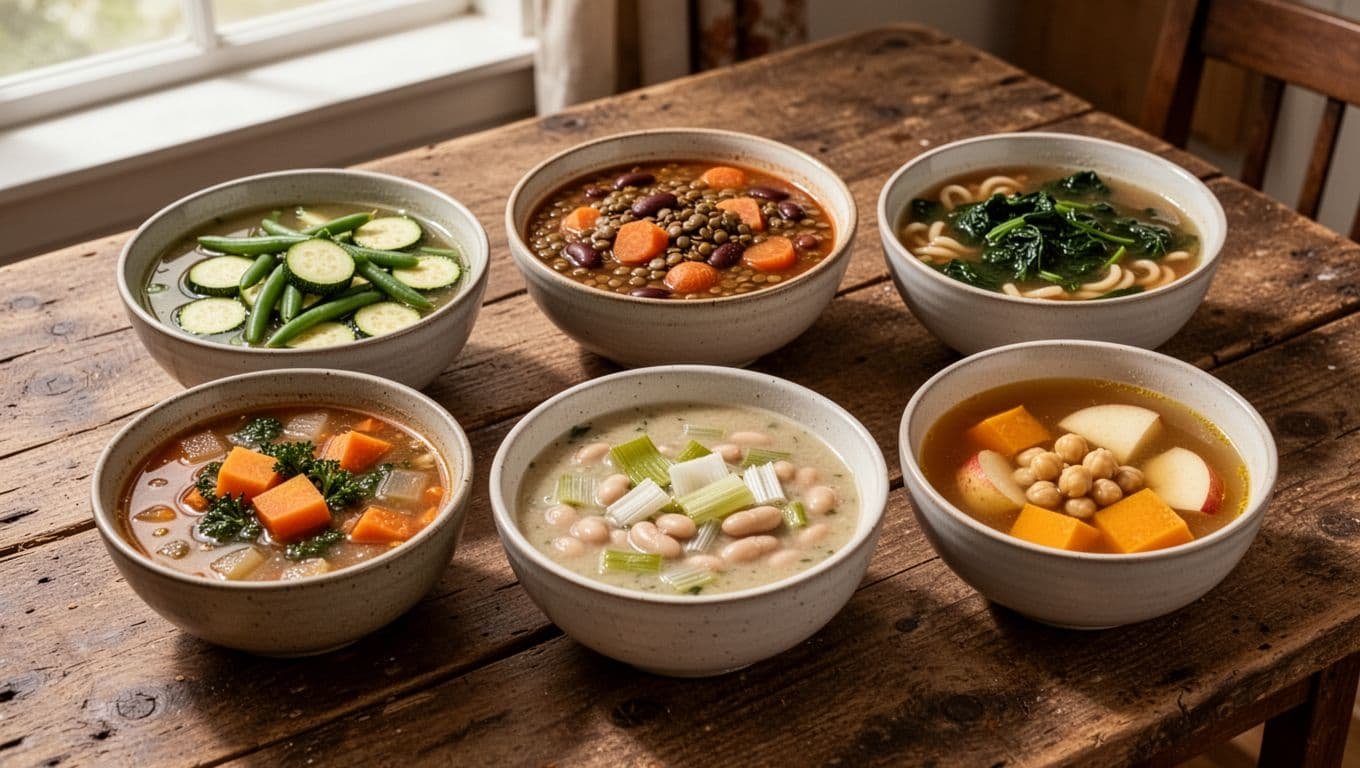
Sauté diced onion, carrots, and celery in olive oil until the aromatics soften. Add minced garlic and herbs, such as thyme or Italian seasoning, then stir for 30 seconds. Pour in vegetable broth and add potatoes and tomatoes. Simmer until the potatoes are nearly tender.
Next, add green beans and zucchini. Cook only until both vegetables are just tender, usually 8 to 10 minutes. Adding them late keeps the green beans from becoming dull and soft, while the zucchini holds its shape instead of dissolving into the broth. Season with salt and pepper before serving.
11. Lentil and Root Vegetable Soup
Rinse brown or green lentils under cool water and remove any small stones or debris. In a large pot, sauté onion, carrots, and celery until soft. Add garlic, cumin, and smoked paprika, stirring until the spices smell fragrant.
Pour in vegetable broth, then add the lentils and cubed sweet potato. Bring the soup to a boil, reduce the heat, and simmer gently for about 25 to 40 minutes. The lentils should be tender but still intact. Finish with a splash of vinegar or lemon juice to balance their earthy flavor.
12. Minestrone With Beans and Greens
Cook onion, carrots, and celery in olive oil until softened, then add garlic and tomatoes. Let the mixture simmer briefly so the tomatoes season the broth before you add vegetable or chicken broth. Stir in cannellini beans and zucchini, then cook until the vegetables are tender.
Add small pasta directly to the pot, or cook it separately if you expect leftovers. Stir in chopped kale or spinach during the final few minutes. Kale needs slightly longer to soften, while spinach wilts almost immediately. Serve with Parmesan if desired.
13. Potato, Leek, and White Bean Soup
Slice the leeks and rinse them thoroughly in a bowl of water, separating the layers to remove hidden grit. Drain well, then cook them gently with garlic in olive oil. Keep the heat low so the leeks soften without browning.
Add diced potatoes, thyme, and vegetable broth. Simmer until the potatoes are tender, then stir in white beans and cook until heated through. Fold in chopped greens at the end. Keep the soup chunky, or mash a small portion of the potatoes and beans against the side of the pot for extra body.
14. Butternut Squash and Apple Broth Soup
Sauté onion, carrot, and garlic until tender, then add cubed butternut squash, a tart apple, sage, and vegetable broth. Simmer until the squash softens and the apple begins to break down. Add white beans or chickpeas during the final minutes so they retain their texture.
Season with black pepper and a small splash of cider vinegar. The vinegar brightens the sweet squash and apple without turning the soup sour. Keep the vegetables and beans whole for a chunky, broth-based soup rather than blending it into a cream soup.
Asian-Inspired and Seafood Broth Soups Full of Flavor
Ginger, garlic, miso, soy sauce, seaweed, mushrooms, seafood, and fresh herbs can make a light broth taste deep and complex. Timing matters with delicate ingredients, too. Add eggs near the end, fish and shrimp just before serving, greens and tofu during the final minutes, and dumplings only long enough to cook through.
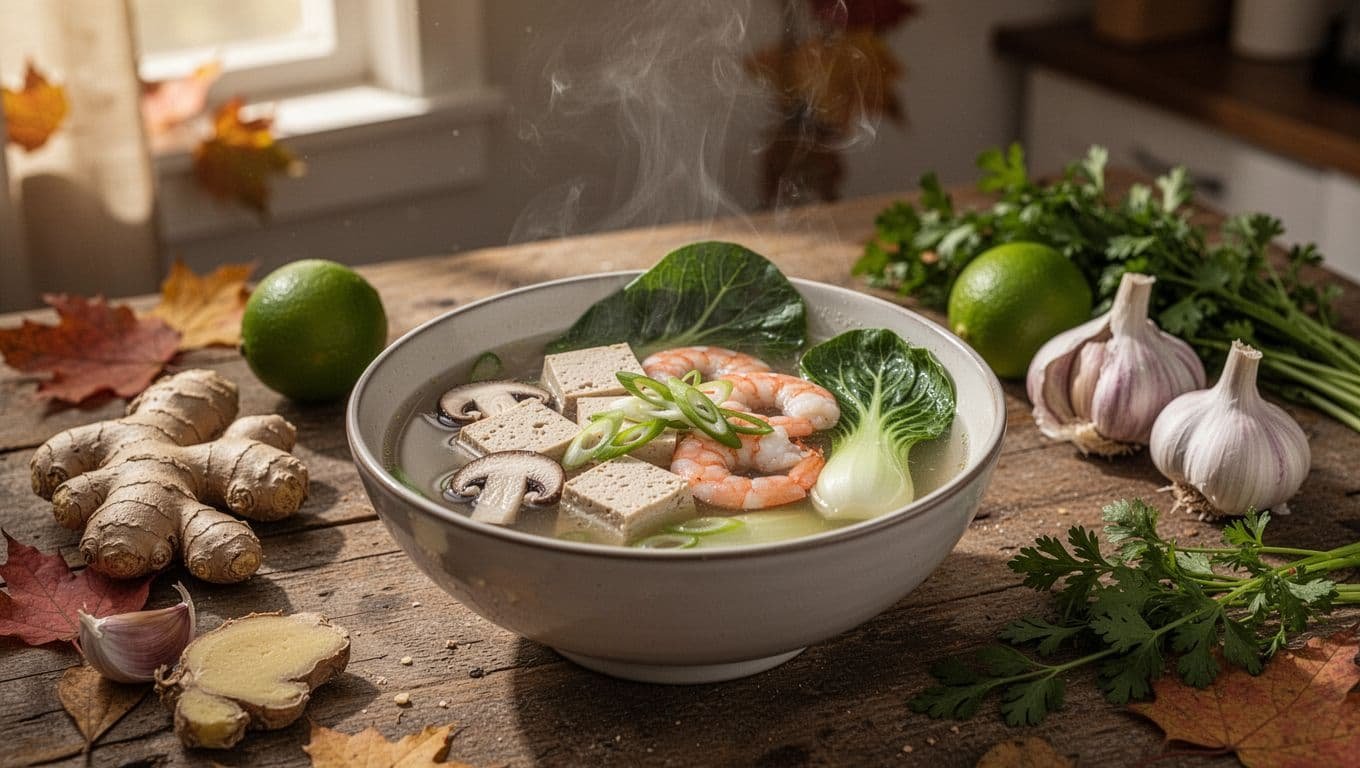
15. Miso Mushroom and Tofu Soup
Use vegetable broth or dashi as the base for this light, savory soup. Add sliced mushrooms, grated ginger, and a little garlic to the broth, then bring it to a gentle simmer. Cook until the mushrooms soften and release their earthy flavor.
Add cubed tofu and chopped bok choy during the final few minutes. Meanwhile, place white or yellow miso in a small bowl and whisk in a ladleful of warm broth until smooth. Remove the pot from the heat, stir the miso mixture back in, and add sliced scallions.
Don’t boil the soup after adding miso. High heat can dull its fresh, salty flavor, so keep the broth hot but calm until you serve it.
16. Easy Wonton Soup
Frozen wontons make this a useful weeknight meal when you want something warm without much prep. Start with chicken broth, then season it with sliced ginger, minced garlic, soy sauce, and a small splash of sesame oil if desired. Bring the broth to a gentle simmer so the aromatics have time to infuse.
Add fresh or frozen wontons and cook according to their size. They should float and feel fully hot in the center, usually after a few minutes of simmering. Add bok choy during the final minute or two, then ladle the soup into bowls and garnish with scallions.
17. Egg Drop Soup With Corn and Scallions
Combine chicken or vegetable broth with corn, sliced ginger, soy sauce, and a pinch of white pepper. Simmer until the corn is hot and the broth tastes seasoned. For a slightly thicker texture, whisk cornstarch with cold water, stir it into the pot, and cook until the broth lightly coats a spoon.
Beat the eggs in a separate bowl. Lower the soup to a gentle simmer, then slowly stream in the eggs while stirring in one direction. Thin ribbons will form as the egg cooks. Finish with sesame oil or extra white pepper, then serve immediately with scallions.
18. Ginger Garlic Shrimp and Vegetable Soup
Warm ginger and garlic in seafood or chicken broth, then add sliced mushrooms and carrots. Simmer until the vegetables begin to soften, adding snap peas or spinach near the end so they retain some color and texture. Season with soy sauce and fresh lime juice.
Add peeled shrimp only during the final few minutes. Simmer until they turn pink and opaque, then remove the pot from the heat. Shrimp cook quickly, and leaving them in hot broth too long can make them firm and rubbery. Serve with scallions, cilantro, or another fresh herb.
Quick Fall Broth Soups for Busy Weeknights
Pantry staples, leftover proteins, canned beans, quick-cooking pasta, and frozen vegetables can turn broth into dinner fast. Each soup below builds flavor in stages, so you get a satisfying meal without a long simmer or complicated prep.
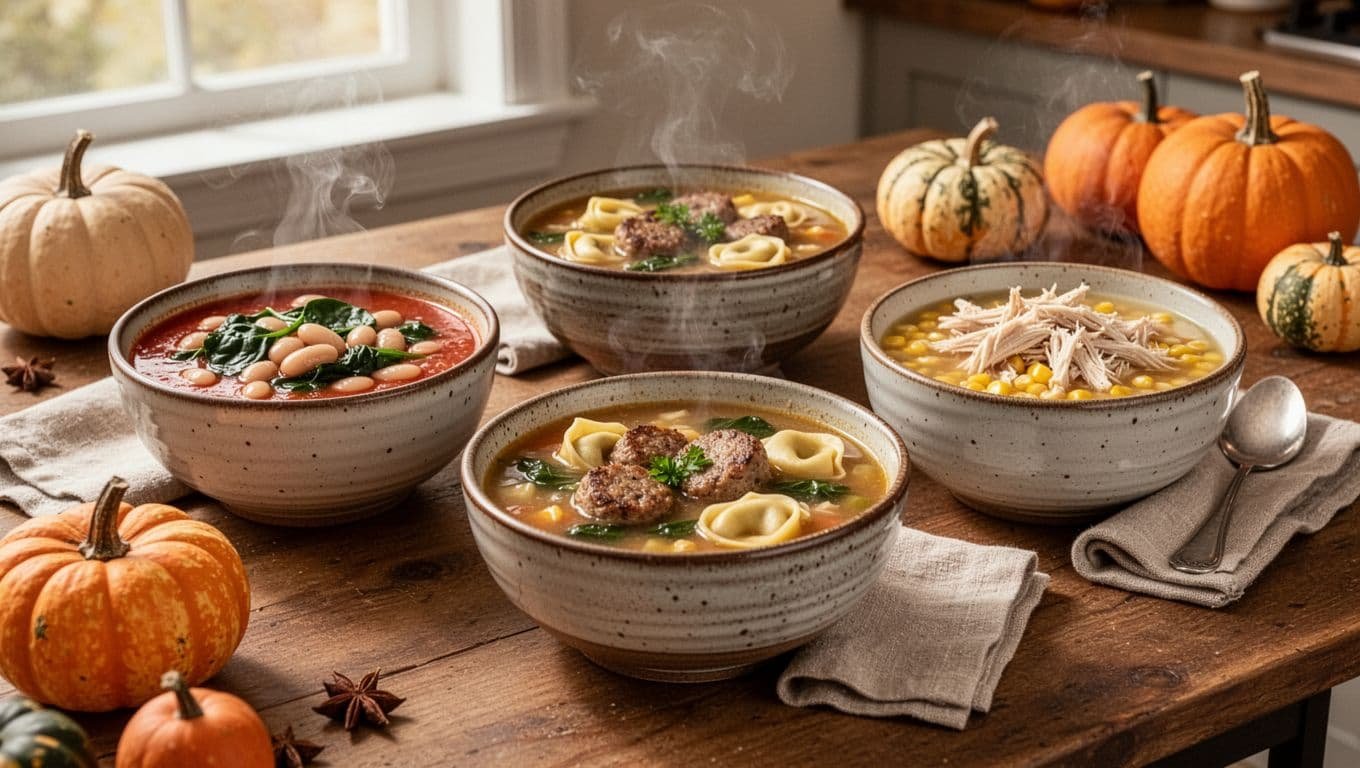
19. Tomato, White Bean, and Spinach Soup
This bright, hearty soup comes together with ingredients you can keep on hand. Use vegetable broth, canned diced tomatoes, white beans, fresh spinach, onion, garlic, and Italian seasoning. Canned cannellini or great northern beans both work well.
First, warm olive oil in a soup pot and cook diced onion until soft. Add minced garlic and Italian seasoning, then stir for about 30 seconds, just until fragrant. Pour in the tomatoes and vegetable broth, scraping the bottom of the pot to loosen any browned bits.
Drain and rinse the canned beans before adding them to the soup. Rinsing removes the canning liquid and can reduce sodium, as explained in this USDA bean rinsing research. Simmer for 10 to 15 minutes so the beans absorb the seasoned broth.
Stir in the spinach just before serving. It wilts within a minute or two, so avoid cooking it too long. Finish with black pepper and grated Parmesan, if desired. Serve with toasted bread for an easy meatless dinner.
20. Quick Sausage and Tortellini Soup
Italian sausage adds rich flavor quickly, while refrigerated or frozen cheese tortellini makes this soup filling with very little prep. Start by browning the sausage in a large pot, breaking it into small pieces as it cooks. Drain excess fat if needed, then add diced onion and cook until tender.
Stir in minced garlic and Italian seasoning for the final minute. Next, add chicken broth and canned tomatoes, then bring the mixture to a gentle simmer. Add the tortellini and cook according to the package directions, usually until the pasta is tender and the cheese filling is hot.
Fold in fresh spinach at the end. It will wilt as the hot broth rests, keeping its color and delicate texture. Taste before adding salt because sausage and broth can both contain plenty.
Tortellini continues to absorb broth as it sits, so leftovers become thicker. Add a splash of broth when reheating, and store extra soup promptly in the refrigerator.
21. Rotisserie Chicken and Corn Soup
This soup is a practical way to use leftover rotisserie chicken without serving the same meal twice. Sauté diced onion, carrots, celery, and garlic in oil until the vegetables begin to soften. Add chicken broth, then stir in noodles or rice.
Simmer until the noodles or rice are nearly tender. Add corn and shredded rotisserie chicken during the final few minutes, giving both ingredients enough time to heat through without drying out the chicken. Frozen corn works just as well as canned or fresh corn.
Season with black pepper, parsley, and a little salt if needed. The finished soup should taste fresh and savory, with tender vegetables and a light broth. For food safety, refrigerate leftovers within two hours and reheat them thoroughly before serving.
How to Build a Better Broth-Based Soup Every Time
A flavorful broth-based soup starts with the right base and improves through careful timing. Choose ingredients that complement the main flavors, then season in stages so the finished broth tastes full rather than salty.
Choose the Broth and Build Flavor
Match the broth to the main ingredient. Chicken broth works well with poultry, rice, noodles, beans, and delicate vegetables. Beef broth suits browned beef, barley, mushrooms, and root vegetables. Use vegetable broth for meatless soups, seafood broth for fish and shrimp, and mushroom broth when you want deep savory flavor without meat.
Before adding liquid, sauté onion, garlic, celery, carrots, leeks, ginger, or spices in oil. Brown beef, sausage, or chicken thighs first when the recipe benefits from richer flavor. Scrape the browned bits from the bottom of the pot as the broth goes in. If the soup tastes watery, simmer it uncovered for a few minutes to concentrate the liquid.
A bland broth usually needs more than salt. Try a small squeeze of lemon, splash of vinegar, spoonful of miso, dash of soy sauce, or grated Parmesan.
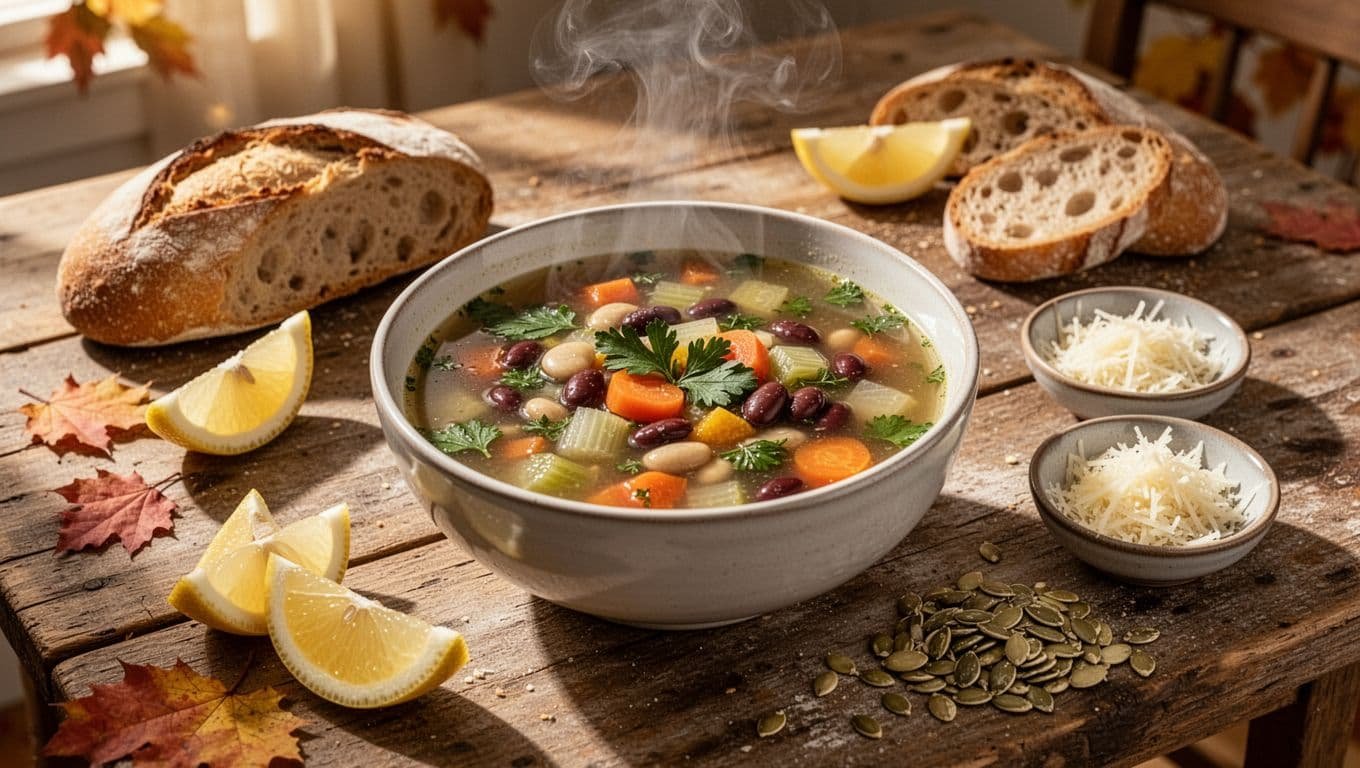
Add Ingredients in the Right Order
Add firm ingredients first, including potatoes, carrots, barley, dried lentils, and raw meat. Tender vegetables, canned beans, cooked chicken, greens, and seafood need less time, so add them later. Pasta can turn soft and absorb the broth during storage. Cook it separately when possible, or stop just before al dente and combine it with the soup when serving.
Season gradually. Add a little salt after the broth goes in, taste again after simmering, then make the final adjustment. To prevent greasy soup, drain excess fat after browning sausage or beef, and skim the surface while the soup simmers.
Vegetable broth can replace chicken broth, beans can replace meat, rice can replace pasta, and spinach can replace kale. Serve each bowl with crusty bread, crackers, cornbread, or a simple salad. Finish with grated Parmesan, fresh herbs, lemon, chili oil, or toasted seeds. For leftovers, follow USDA leftover safety guidance and refrigerate soup promptly.
How to Store, Freeze, and Reheat Fall Soup Safely
Leftover soup stays delicious when you cool it quickly and store it in manageable portions. Safe handling also protects the broth, vegetables, meat, and grains from drying out or developing an unpleasant texture.
Cool and Store Soup Promptly
Refrigerate cooked soup within 2 hours, or within 1 hour when the room temperature is above 90°F. Divide a large pot into shallow containers so the soup cools faster, then cover and refrigerate it. For more guidance, follow these food safety recommendations for leftovers.
Soup generally keeps for 3 to 4 days in the refrigerator. If you won’t eat it within that time, freeze it for 2 to 3 months. Leave a little space at the top of each freezer container because soup expands as it freezes.
Thaw and Reheat Leftovers
When possible, thaw frozen soup in the refrigerator overnight. Reheat it on the stovetop over medium-low heat, stirring occasionally. Add a splash of water or broth if the soup has thickened.
For microwave reheating, place soup in a loosely covered, microwave-safe bowl. Heat it at 50% power in 60-second intervals, stirring between intervals to distribute heat evenly. Whether you use the stove or microwave, the center should reach 165°F before serving. Reheat only the portion you plan to eat, and don’t reheat the same soup more than once. Soup left out overnight must be discarded.
Frequently Asked Questions
A few small choices can change how a broth-based soup tastes, stores, and reheats. Use these answers to adjust the recipes to your ingredients, make lighter soups more filling, and protect the texture of leftovers.
What is the best broth for fall soup?
Chicken broth pairs well with poultry, noodles, rice, and most vegetables, so it works in many everyday soups. Beef broth has a fuller flavor that suits beef, barley, mushrooms, and root vegetables.
Vegetable broth is flexible for meatless soups, including bean, lentil, squash, and potato recipes. Seafood broth works best with shrimp, fish, mussels, clams, and other shellfish because its briny flavor supports delicate seafood without overwhelming it.
How can I make broth-based soup more filling?
Add one hearty ingredient to give a light soup enough substance for a complete meal. Beans, lentils, potatoes, rice, barley, pasta, shredded meat, tofu, and dumplings all work well.
For example, white beans can turn a simple vegetable soup into dinner, while shredded chicken makes a lemon broth more satisfying. Adding one substantial ingredient is often enough, so you don’t need to crowd the pot with everything in your pantry.
Why does my soup taste bland even with broth?
Broth alone may not provide enough salt or flavor after you add water-rich vegetables, grains, or meat. Your soup may also need aromatics such as onion and garlic, fresh herbs, or a savory ingredient such as Parmesan or soy sauce.
Taste the soup near the end, then make small adjustments. Add salt first, followed by a little lemon juice or vinegar if the broth tastes flat. Fresh parsley, dill, cilantro, grated Parmesan, or a splash of soy sauce can sharpen the flavor without making the soup heavy.
Can I make these soups in a slow cooker?
Many meat, bean, and root vegetable soups adapt well to a slow cooker. Beef, chicken thighs, dried beans, lentils, carrots, and potatoes can handle the longer cooking time and develop a rich, savory broth.
Add pasta, rice, greens, seafood, and delicate herbs near the end. Otherwise, noodles and rice may become mushy, seafood can overcook, and fresh herbs may lose their flavor. Cook these ingredients separately when timing is uncertain.
How do I keep noodles from soaking up all the broth?
Cook noodles separately and add them to each bowl just before serving. This method keeps the broth clear and prevents the pasta from swelling as it sits.
You can also cook noodles directly in the soup, but add them only until tender. For leftovers, store the noodles apart from the broth, then combine them while reheating. Add extra broth if the soup thickens in the refrigerator.
Can I freeze soup with potatoes, pasta, or dairy?
Broth freezes best when it contains meat, beans, grains, and sturdy vegetables. Potatoes and pasta can become soft, mealy, or watery after thawing, while dairy may separate or turn grainy.
When possible, freeze the broth and main ingredients without pasta, potatoes, milk, or cream. Add freshly cooked versions after thawing and reheating. Store soup within the safe refrigerator window, and follow USDA freezing and food safety guidance for proper handling.
Conclusion
A flavorful broth, a few vegetables, and one filling ingredient can create a satisfying fall meal without much fuss. Start with a quick chicken noodle soup, try a hearty bean soup, or choose a more adventurous miso or seafood option when you’re ready for something different.
Most of these recipes are flexible, so you can use the vegetables, grains, noodles, beans, or leftover protein already in your kitchen. Choose your favorite recipe, gather the ingredients, and enjoy a warm bowl with family or friends.
Save the pin for later


I’m the creator of My Everyday Dish, a food blog focused on easy homemade recipes, comforting family meals, simple baking, and seasonal food ideas. I love finding practical ways to make everyday cooking less stressful and more enjoyable. Here, I share recipes with simple ingredients, clear instructions, and plenty of flavor, helping you make delicious meals and treats you’ll feel confident serving at home.
Leave a Reply