Halloween treats should fit neatly in a school bag, stay tidy on the trip to class, and give parents a quick way to check ingredients and allergy information. The right choice can make Halloween week easier, whether you’re packing a lunchbox surprise, sending treats for a classroom party, or adding something fun to an after-school snack.
This list includes 30 kid-friendly ideas, such as individually wrapped candy, shelf-stable snacks, fruit-based options, and simple homemade treats. You’ll find familiar favorites alongside easy choices that won’t need much space or preparation, but check your school’s written food policy before packing anything.
Some schools allow only commercially packaged treats, while others don’t allow shared classroom food at all. Also review classroom allergy rules, package labels, and refrigeration needs, since homemade or chilled foods may not be accepted.
With those checks in place, you can choose treats that feel festive without creating extra mess or worry. Start with these practical Halloween ideas for school bags.
30 Fun Halloween Treats for Kids to Pack in School Bags
Choose a mix of individually wrapped, shelf-stable, low-mess, and easy-to-portion treats. Always check the exact label because ingredients and manufacturing practices can change.
Treats 1 to 10: Classic Halloween Candy in Small Portions
Small portions keep candy manageable and reduce spills. Pack each piece in its wrapper or place mini candies inside a sealed snack bag.
- Skittles mini packs give kids colorful, fruity bites and fit neatly in individual school bags.
- Smarties rolls are tidy, familiar treats that work well for classroom events.
- Starburst individually wrapped pieces add chewy fruit flavor without opening a large package.
- Airheads offer bright flavors in slim, individually wrapped bars for a home-packed snack.
- Swedish Fish bring a fun gummy texture, but choose a sealed mini pouch.
- Sour Patch Kids give older children a sweet-and-sour surprise in a small package.
- Mike and Ike are easy to portion into labeled mini bags for classroom sharing.
- Dum Dums are colorful and individually wrapped, but avoid hard candy for very young children.
- Tootsie Pops feel special because they last longer, yet they also require careful age supervision.
- Halloween-shaped gummy candy adds festive appeal when packed in a sealed, labeled portion.
Commonly described nut-free candies still need an ingredient and allergy-label check. The FDA’s food allergy guidance explains how major allergens appear on packaged food labels.
Read also: Halloween Treats for Kids to Bring to a School Party
Treats 11 to 20: Packaged Snacks That Add More Variety
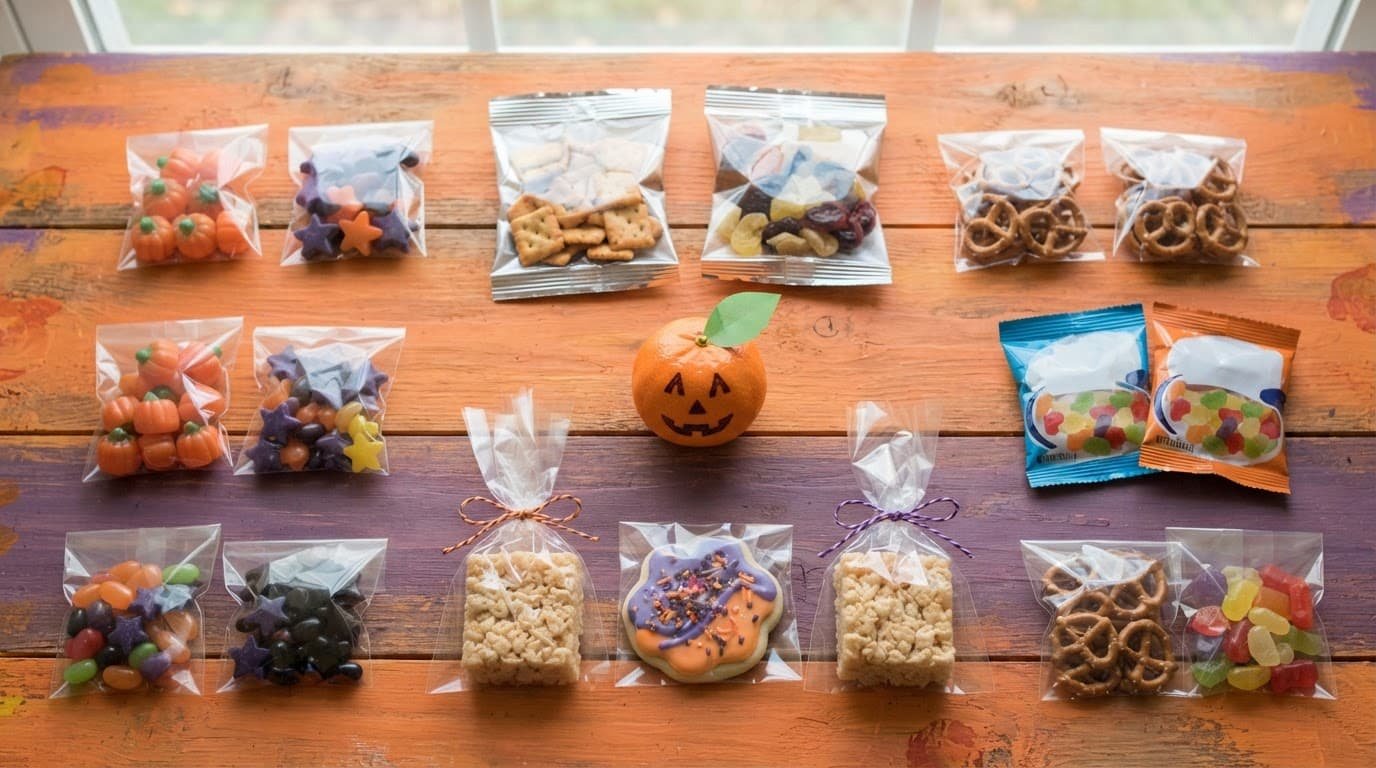
Sealed bags and pouches usually resist crushing better than loose snacks, while printed labels make classroom sharing easier.
- Halloween popcorn bags provide a salty snack for classroom events, if the package stays sealed.
- Plain or lightly seasoned potato chips offer familiar crunch in a small, low-mess bag.
- Pretzel snack packs are portable and satisfying for an individual school bag.
- Halloween-shaped cheese crackers add seasonal fun without relying on candy.
- Single-serve cereal cups or bags make a quick, crunchy snack from home.
- Rice cake or corn puff snack packs stay light and easy to portion.
- Fruit snack pouches are colorful, chewy, and convenient for younger students.
- Shelf-stable applesauce pouches provide a soft fruit option without refrigeration.
- Mini graham cracker packs bring a lightly sweet crunch to lunchboxes.
- Individually wrapped crispy rice treats feel festive and travel well in a school bag.
Check every package for wheat, milk, soy, sesame, peanuts, and tree nuts, along with your school’s allergy rules.
Read also: 35 Easy Halloween Witch Finger Foods Everyone Will Love
Treats 21 to 30: Simple Homemade and Fresh-Looking Halloween Ideas
These ideas look festive with little preparation, but homemade food may not meet classroom packaging rules.
- Clementine pumpkins need only a small celery stem and an individual bag; pack them from home.
- Banana ghosts can use simple chocolate-chip eyes, but they need an ice pack.
- Apple monster bites pair apple slices with sunflower seed butter when permitted; refrigerate them.
- Pretzel broomsticks combine pretzel sticks and cheese, so pack them cold and securely.
- Individually wrapped Halloween cereal bars are practical when commercially packaged and labeled.
- Homemade snack mix fits sealed bags, but schools may reject it without a printed label.
- Halloween popcorn balls need food-safe wrap and careful packing because they can crumble.
- Small bags of boo bark add chocolate fun, yet require allergy checks and possible refrigeration.
- Rice cereal Frankenstein treats travel best when individually wrapped in food-safe paper or plastic.
- Candy-corn fruit cups or layered fruit pouches look festive, but keep them chilled with an ice pack.
Use sealed, food-safe wrapping, and choose commercially packaged options when your school requires intact ingredient labels.
How to Choose School-Friendly Halloween Treats
Fun packaging matters, but practical standards matter more. Before buying ingredients or making treats, check the school’s written food policy. Some schools require commercially packaged food with intact ingredient labels, while others don’t allow shared treats, homemade snacks, or goody bags at all.
Read also: 15 Superhero Sugar Cookie Ideas for Birthday Fun
Check Labels and Allergy Rules
Commercially packaged, individually labeled treats are often the simplest choice for classroom sharing. Teachers and families can review the ingredient list, allergen statement, and package condition without guessing what went into the food.
Look for the nine major allergens recognized by the FDA: milk, eggs, fish, crustacean shellfish, tree nuts, peanuts, wheat, soy, and sesame. The FDA’s food allergy guidance explains how packaged foods identify major allergens on labels.
A product marketed as nut-free may still contain milk, soy, wheat, or sesame. It may also come from a facility that handles peanuts or tree nuts. Read the full label each time, including any cross-contact warning such as “may contain” or “processed on shared equipment.” If the package is missing, damaged, or unclear, choose another treat.
A nut-free label doesn’t mean a treat is free from every allergen, so check the complete ingredient panel.
Match the Treat to the Child and School Bag
Room-temperature treats work best when they can sit safely in a school bag for the expected travel and classroom time. Choose sealed items that won’t melt, leak, crumble, or leave sticky residue on books and folders. Chocolate, frosting, soft cheese, and cut fruit need more care.
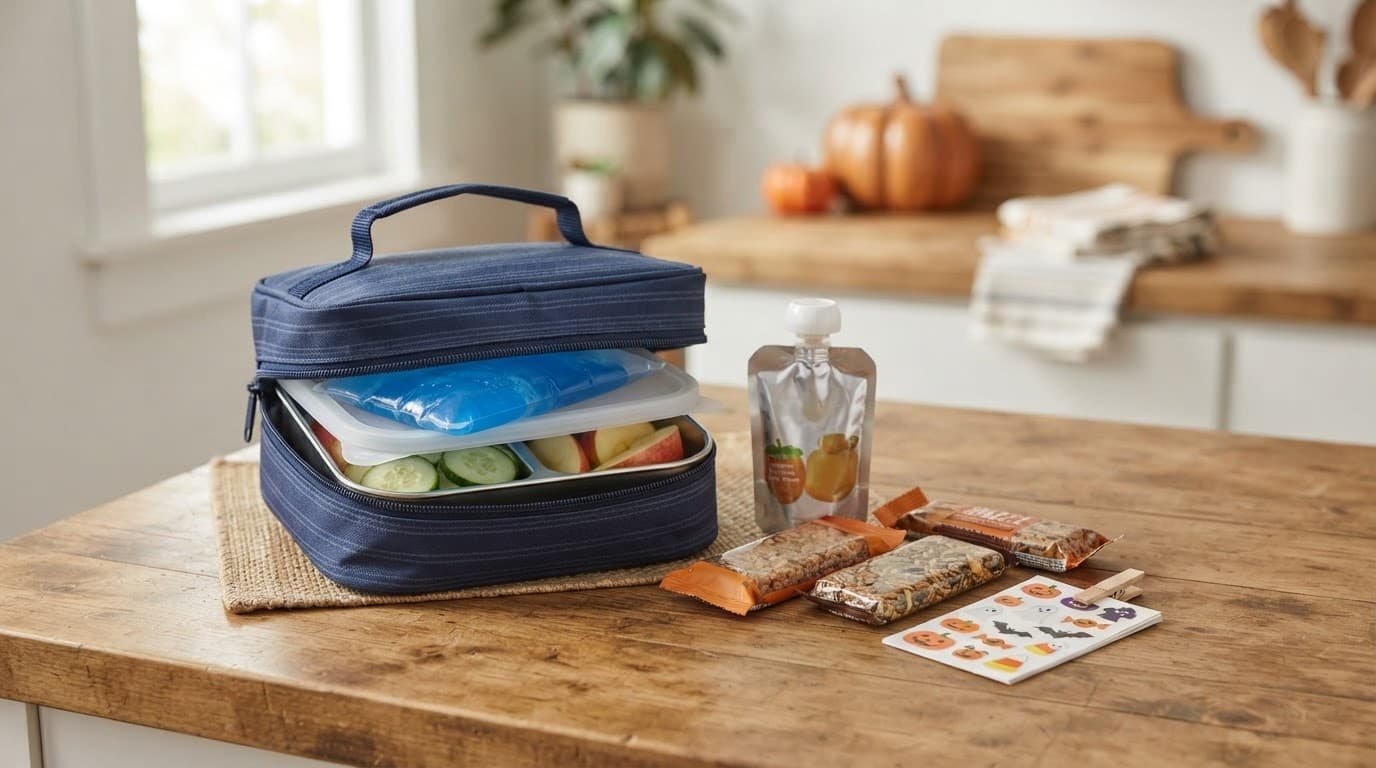
When the school permits perishable foods, pack them in an insulated lunch bag with a frozen gel pack. Keep cold foods at 40°F or below, and follow the school’s instructions for storage and serving.
Age matters, too. Avoid hard lollipops, sticky candy, gummies, popcorn, whole nuts, and large chewy pieces for young children or groups with uncertain supervision. Even familiar treats can become choking concerns when children eat quickly.
If food rules are strict, pack a non-food surprise instead. Stickers, pencils, bookmarks, or temporary tattoos can make a Halloween school bag feel special without creating allergy or storage problems.
Make Halloween Treats Easy to Pack, Carry, and Share
A little packing care keeps Halloween treats intact and prevents candy from finding its way onto notebooks or clothing. Choose one small packaged treat or a modest snack serving instead of filling a bag with an oversized assortment. The goal is a fun surprise that fits comfortably in a school bag and stays easy for a child to manage.
Pack Treats in Small, Secure Portions
Keep candy in its original wrapper whenever possible. For homemade snacks or larger packages, use small sealed bags or leakproof snack containers. Add a label with the child’s name when several children will bring similar treats.
Place the food in a separate lunch pouch or front compartment rather than beside books and clothes. Put crushable snacks on top, where folders and notebooks won’t press against them. Avoid treats with loose powder, thick icing, sticky coatings, or runny fillings because they can create a mess before lunchtime.
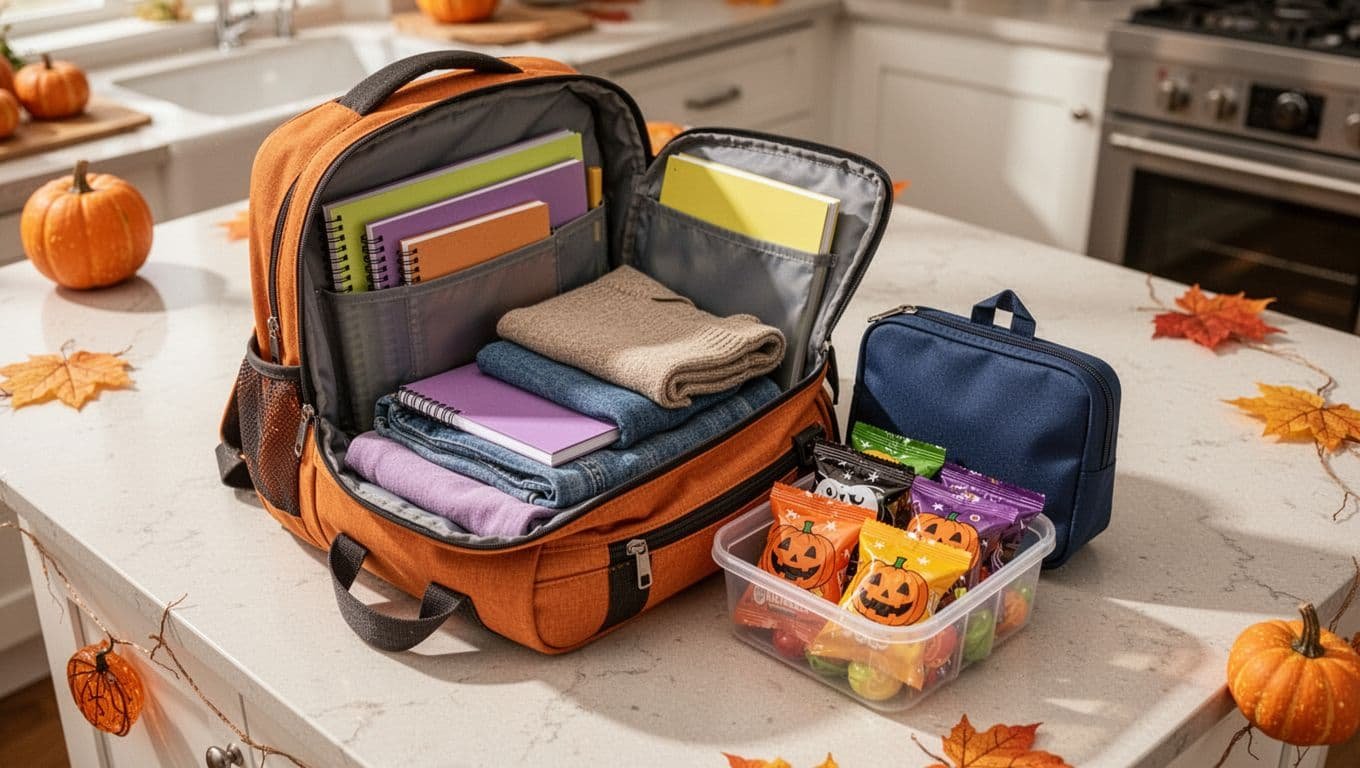
Keep Homemade and Chilled Treats Safe
Prepare homemade items the night before, then refrigerate them in sealed containers. Pack cold foods just before your child leaves home, using an insulated lunch bag and at least two cold sources. USDA guidance recommends keeping perishable foods at or below 40°F, and USDA lunch-packing guidance explains how to keep them cold during the school day.
Choose shelf-stable treats when refrigeration isn’t practical. If a snack includes fruit, dairy, cheese, or other perishable ingredients, tell your child to place it in the classroom or school refrigerator when one is available. Discard perishable food left at room temperature for more than two hours, or one hour above 90°F.
Set Clear Sharing Rules
Remind children not to trade food, even when another treat looks appealing. Classroom sharing should happen only when the teacher and school policy allow it. Individually labeled packages make approved sharing easier because adults can check the ingredients before distributing anything.
Frequently Asked Questions
Packing Halloween treats for school often raises a few practical questions, especially when children have different tastes, allergies, and school routines. These answers can help you choose a portion that feels festive without overloading a lunch bag or creating extra work at home.
How many Halloween treats should I pack for one child?
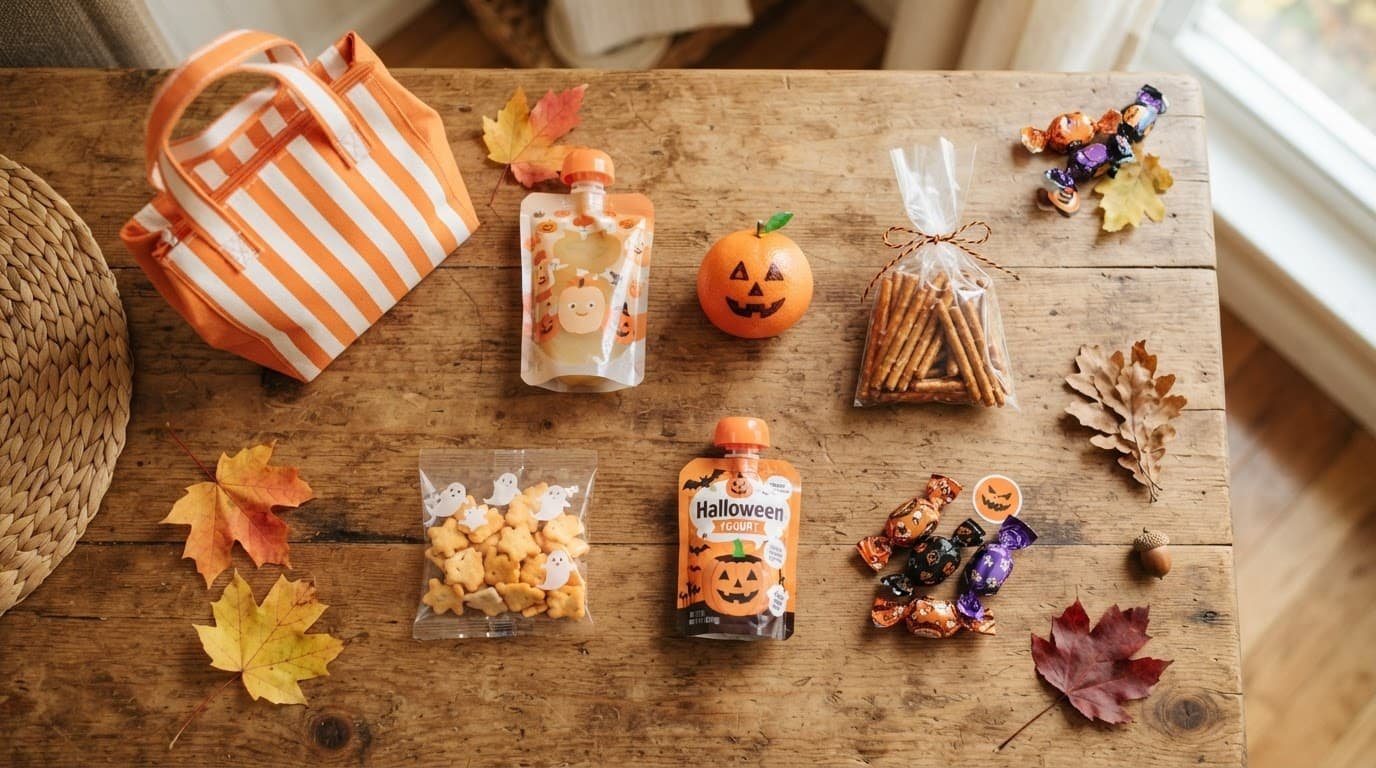
One small treat is usually enough for a school bag or lunchbox surprise. If your child is bringing treats for a class event, follow the teacher’s requested quantity instead of sending a large assortment.
A single snack-size package also makes portion control easier. Choose one item that fits the occasion, then save extra candy for home.
Can I pack treats the night before?
You can pack sealed, shelf-stable treats the night before as long as they won’t melt, leak, or get crushed. Place them in a separate pouch so candy wrappers and crumbs don’t mix with school supplies.
Wait until morning to add chilled fruit, cheese, yogurt, or other perishable foods. USDA recommends using an insulated lunch bag with cold sources to keep perishable foods below 40°F. Its school lunch food-safety guidance offers more packing details.
What should I do if my child brings home unopened candy?
Store unopened, labeled candy in a cool, dry place and let your child choose a small amount at a time. Discard anything with a torn wrapper, pinhole, strange appearance, or missing packaging.
You can also sort the treats into a few groups, such as candy for occasional use, snacks for later, and items your child shouldn’t eat because of an allergy or age-related safety concern.
Are Halloween treats appropriate for a school breakfast?
Most candy is better suited to a snack or classroom celebration than breakfast. A small fruit pouch, cereal bar, whole clementine, or packaged cracker may fit better with a morning meal.
If your child wants something festive, add Halloween color or a fun napkin rather than relying on extra sugar. The treat can still feel special without replacing a balanced breakfast.
How can I make a treat feel festive without adding more candy?
Use a seasonal lunchbox note, Halloween napkin, or reusable container with a pumpkin color. You can also pack a clementine, fruit pouch, or snack bar and add a small non-food surprise at home.
Stickers, pencils, and bookmarks work well when food rules are strict. They also give children a fun keepsake after the snack is gone.
What should I do with leftover Halloween treats?
Keep a smaller selection available and store the rest out of sight in a sealed container. You can portion candy into occasional treats, use wrapped pieces for future lunchbox surprises, or donate unopened items when local programs accept them.
Perishable homemade treats should not sit around for several days. Follow the USDA’s safe bag-lunch storage times before saving anything that needs refrigeration.
Conclusion
A memorable Halloween school-bag treat doesn’t need to be expensive, elaborate, or oversized. One small, clearly labeled option can feel special when it matches the school’s rules, your child’s age, and any known allergies.
Before packing, check the current ingredient and “Contains” statements, and use an insulated lunch bag or ice pack for foods that need to stay cold. When classroom food rules are strict, a sticker, pencil, bookmark, or another non-food surprise can be just as welcome. A small, thoughtful treat is often all it takes to make Halloween morning feel special.
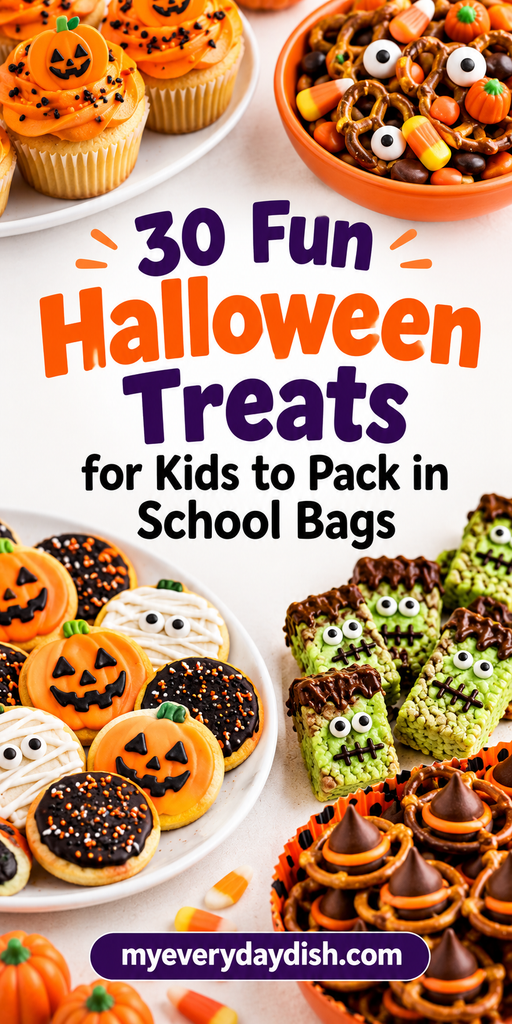
Save the pin for later

I’m the creator of My Everyday Dish, a food blog focused on easy homemade recipes, comforting family meals, simple baking, and seasonal food ideas. I love finding practical ways to make everyday cooking less stressful and more enjoyable. Here, I share recipes with simple ingredients, clear instructions, and plenty of flavor, helping you make delicious meals and treats you’ll feel confident serving at home.
Leave a Reply