
A satisfying weeknight dinner doesn’t need an expensive cut of meat or a long ingredient list. Healthy and easy Korean beef bowls with ground beef bring together savory beef, rice, crisp vegetables, and a glossy sauce in about 30 minutes.
This Korean-inspired recipe uses soy sauce, garlic, ginger, toasted sesame oil, and a little sweetness for big flavor with everyday groceries. Make it mild or spicy, choose the base that suits you, and use whatever fresh toppings are in the fridge.
Key Takeaways
- One pound of lean ground beef makes four filling bowls when paired with rice and vegetables.
- Brown the beef well, then simmer it briefly in the sauce until the liquid clings to the meat.
- Low-sodium soy sauce, extra vegetables, and a modest amount of sweetener can lighten the final bowl.
- Keep crunchy toppings separate for meal prep so they stay fresh.
- Adjust the heat with gochujang or red pepper flakes, a little at a time.
Healthy and Easy Korean Beef Bowls With Ground Beef
These bowls are Korean-inspired, not a claim of traditional Korean cooking. They borrow familiar flavor pairings, then put them into a fast skillet meal that works on busy nights and holds up well for lunches.
The basic method is simple: brown the beef, drain excess grease, add a balanced sauce, and finish each bowl with vegetables. That mix of warm, savory meat and cold, crisp toppings makes the meal feel substantial without requiring much prep.
What You Need for the Beef, Sauce, and Bowl
For four servings, start with 1 pound 90 to 93 percent lean ground beef and about 3 cups cooked rice. White rice is quick and fluffy, while brown rice adds a chewier bite.
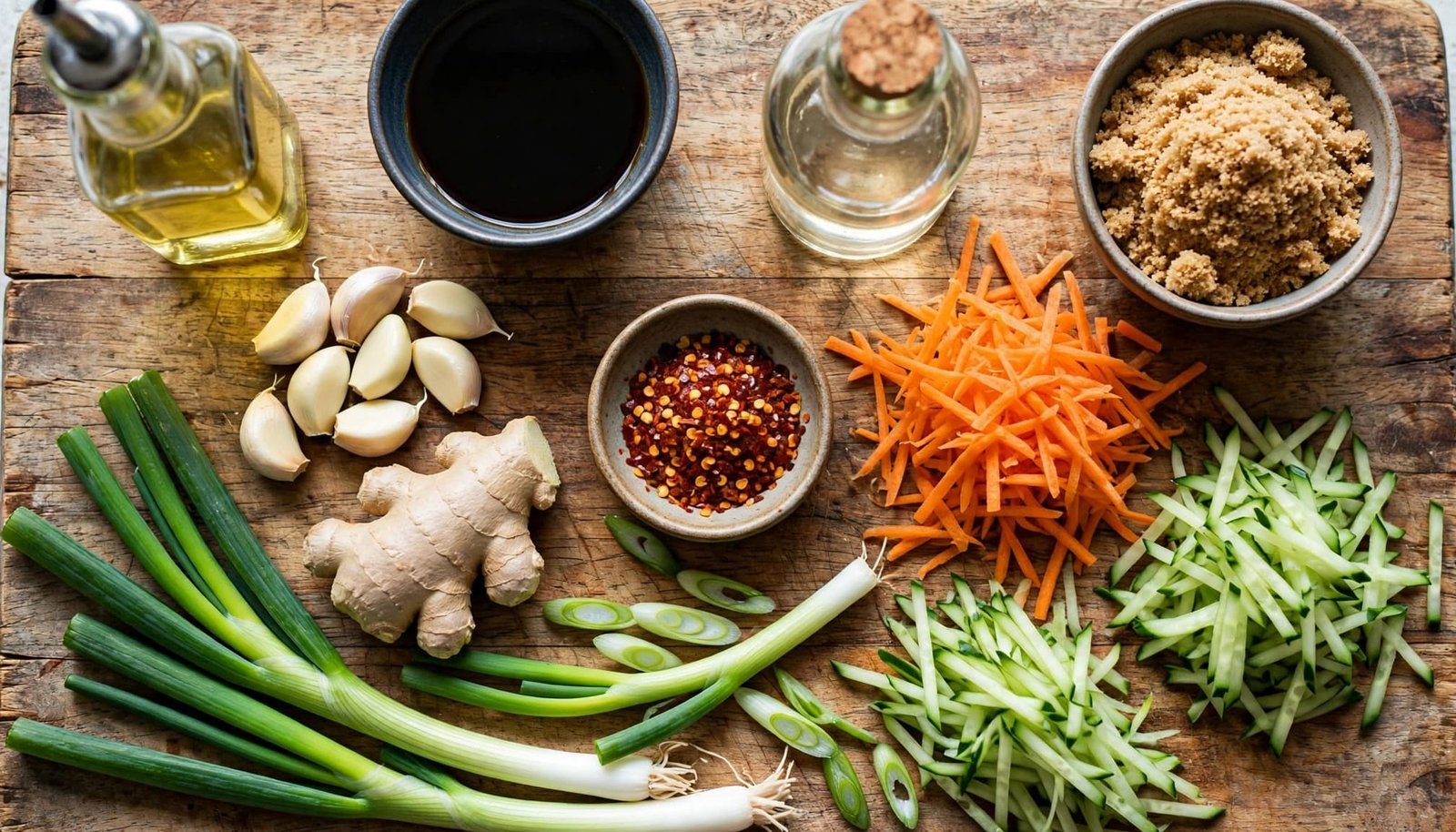
Mix 1/4 cup low-sodium soy sauce, 1 tablespoon rice vinegar, 2 teaspoons toasted sesame oil, and 1 to 1 1/2 tablespoons brown sugar or honey. The soy sauce brings salt and savoriness, vinegar adds brightness, sesame oil adds a toasted finish, and the sweetener rounds out the sauce.
You’ll also need 3 minced garlic cloves and 2 teaspoons grated fresh ginger. Add 1 to 2 teaspoons gochujang or red pepper flakes if you want heat. Coconut aminos can replace soy sauce, though the finished flavor will be milder and slightly sweeter.
Finish with sliced green onions and sesame seeds. Shredded carrots, cucumber, cabbage, broccoli, and shelled edamame are all good choices for color, crunch, and texture.
Read also: 15 Healthy Canned Chicken Recipes for Quick Lunches

How to Keep the Bowl Healthy Without Losing Flavor
Choose lean beef, but don’t expect it to be dry. The sauce adds moisture, and draining visible fat after browning keeps the skillet from feeling heavy.
Use low-sodium soy sauce, then taste the sauce before it hits the pan. You can cut the sugar or honey to 1 tablespoon, especially if you use naturally sweet carrots or a sweeter coconut aminos substitute.
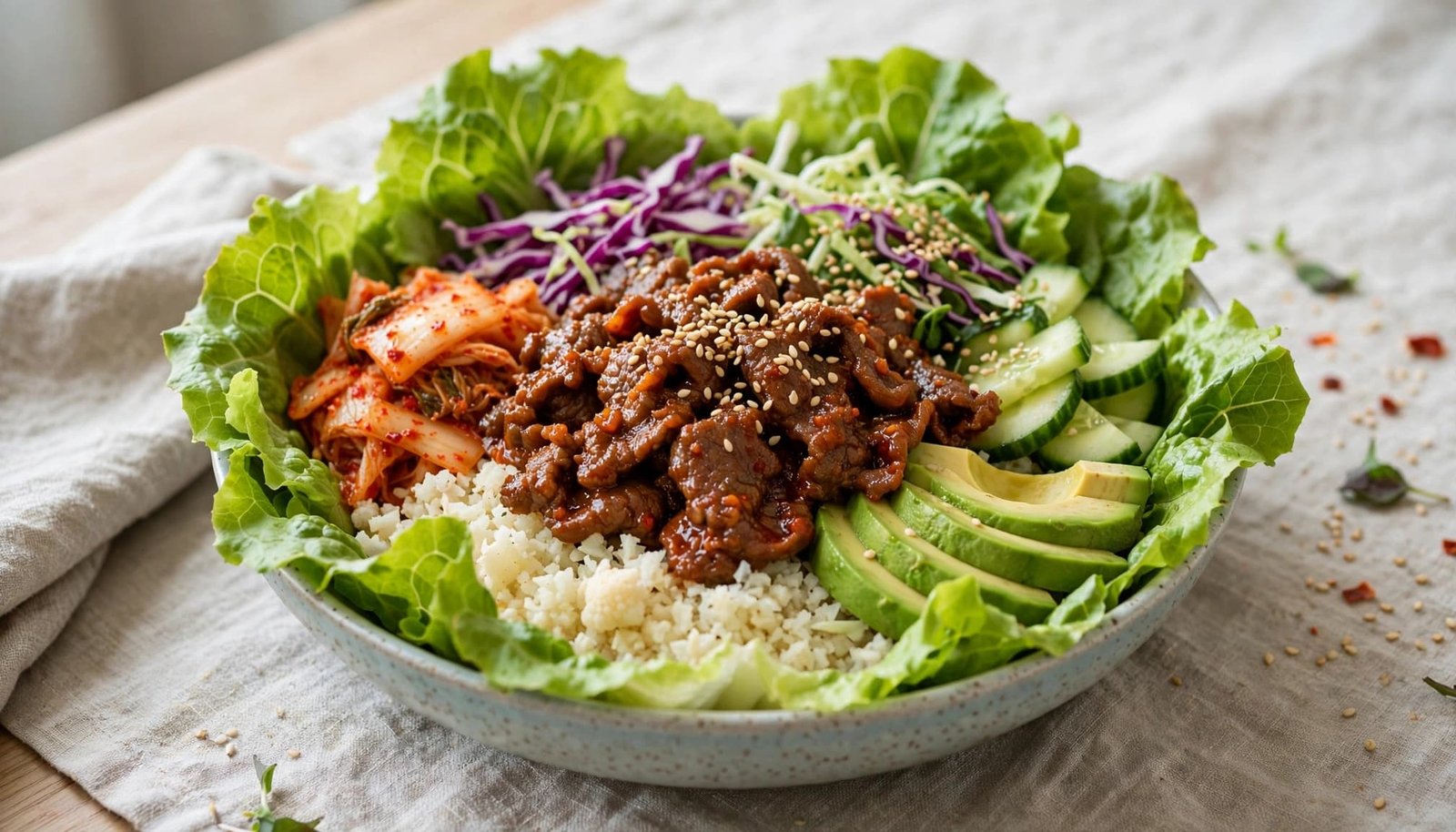
White rice gives a classic soft base. Brown rice has more chew, while cauliflower rice and lettuce cups make a lighter, lower-carb option. Toppings such as kimchi, avocado, fried eggs, and spicy mayo add plenty of flavor, although their portions can raise sodium or calories.
Cold vegetables are more than a garnish here. They balance the salty, rich beef and keep every bite from tasting too heavy.
How to Make Korean Ground Beef Bowls Step by Step
Have the rice and toppings ready before the skillet heats up. Ground beef cooks quickly, so the sauce can reduce before you have time to slice vegetables.
Prepare the Rice, Vegetables, and Quick Sauce
- Cook rice or prepare your chosen base first. Keep it covered and warm while you make the beef.
- Wash and cut the vegetables. Slice cucumbers, shred carrots or cabbage, and thinly slice the green onions. Set crunchy toppings aside rather than adding them to the hot skillet.
- In a small bowl, whisk together soy sauce, rice vinegar, sesame oil, brown sugar or honey, garlic, ginger, and optional gochujang. Taste the sauce now. Add red pepper flakes for more heat, use less sweetener for a sharper flavor, or stir in 1 tablespoon water for a lower-sodium option.
Brown the Beef and Build the Savory Sauce
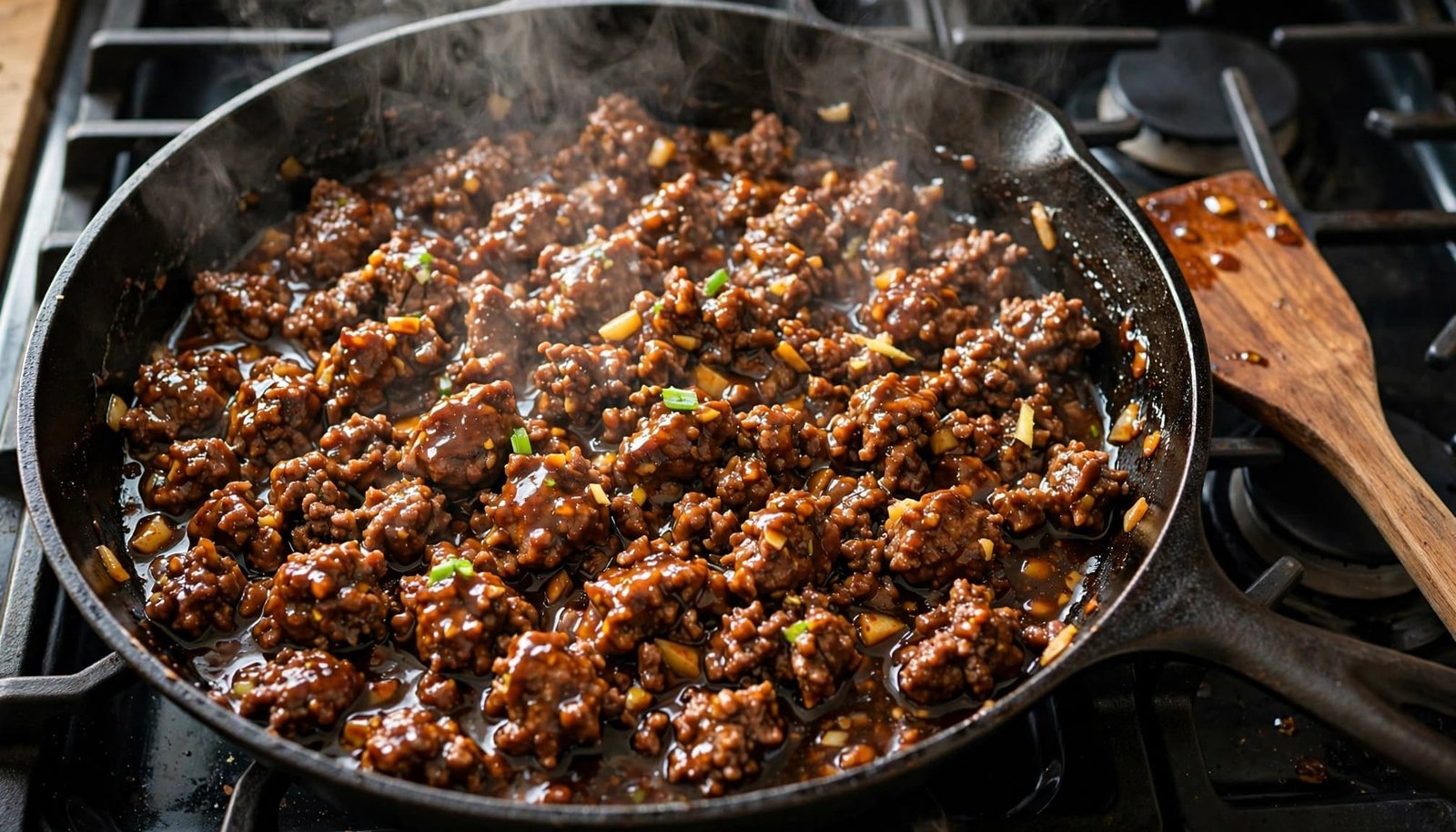
- Heat a large skillet over medium-high heat. Add the ground beef and break it into small pieces with a spoon or spatula. Cook for 5 to 7 minutes, stirring occasionally, until it is browned and no longer pink.
Avoid crowding a small pan because trapped moisture makes the meat steam instead of brown. If the beef releases a lot of fat, carefully drain it before adding the sauce.
- Add the garlic and ginger if you kept them separate from the sauce. Stir for about 30 seconds, just until fragrant. Pour in the sauce and stir until every piece of beef is coated.
- Simmer uncovered for 2 to 5 minutes. The liquid should reduce into a glossy coating rather than pool at the bottom of the skillet. Ground beef should reach 160°F, according to the USDA’s ground-beef food safety guidance. A thermometer is the most reliable way to check.
Assemble the Bowls and Add Fresh Toppings
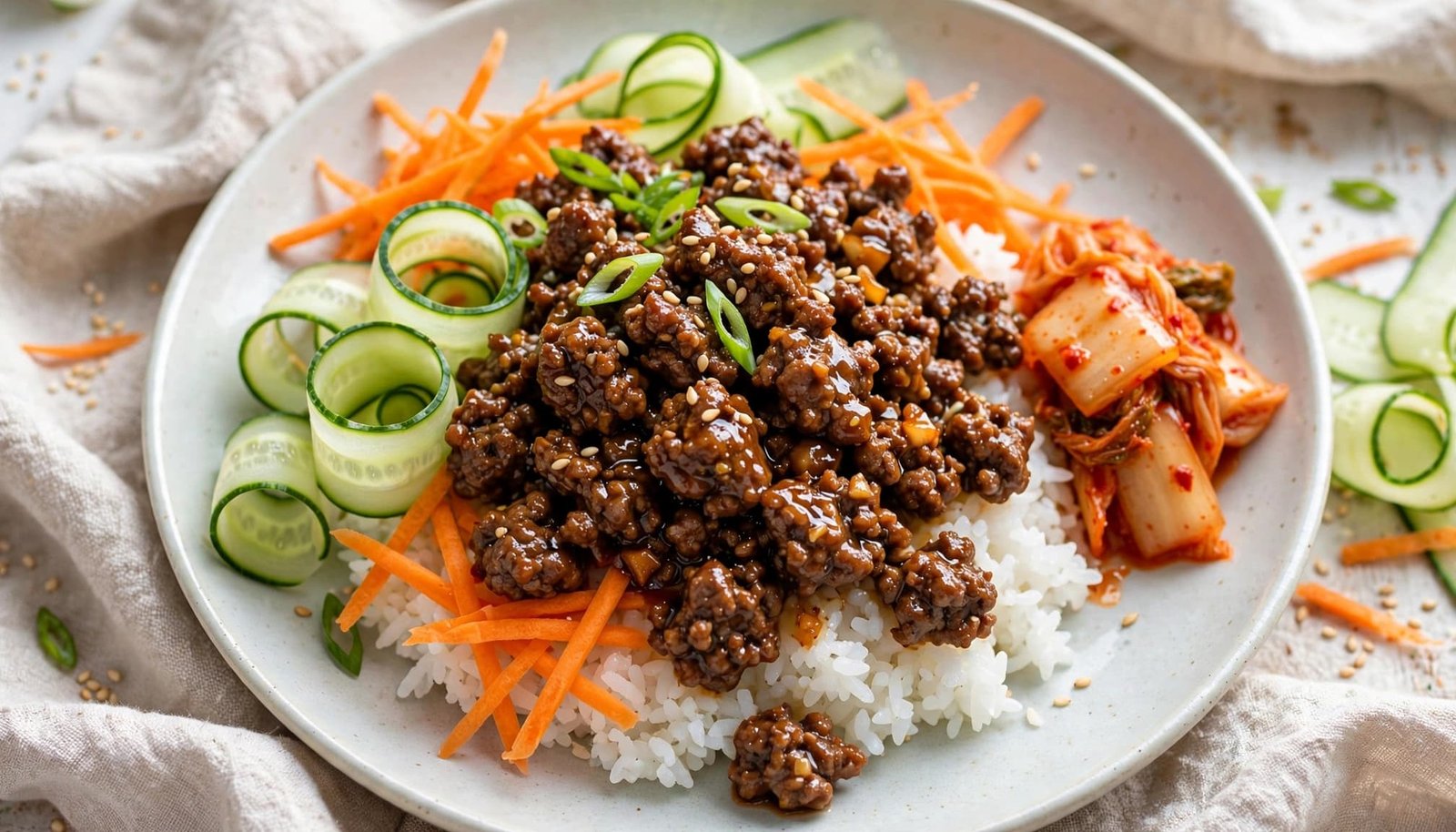
- Divide the rice among four bowls. Spoon the saucy beef over one side, then add cucumber, carrots, cabbage, broccoli, or edamame around it.
- Sprinkle on green onions and sesame seeds. Kimchi, cilantro, avocado, and a fried egg also work well. Fresh toppings add crunch and a cool contrast to the warm beef.
For an optional spicy topping, stir a small spoonful of gochujang into mayonnaise. Drizzle it lightly over the bowl, since both ingredients can make the meal richer and saltier.
Easy Variations, Meal Prep, and Serving Ideas
Certified gluten-free tamari is an easy soy sauce substitute for a gluten-free bowl. For more heat, add gochujang to the sauce or finish the bowl with red pepper flakes. Start small because the spice becomes more noticeable after the sauce reduces.
Steamed broccoli, snap peas, mushrooms, and shredded cabbage stretch the beef while adding volume. Stir tender vegetables into the skillet near the end, or serve them separately if you prefer sharper texture.
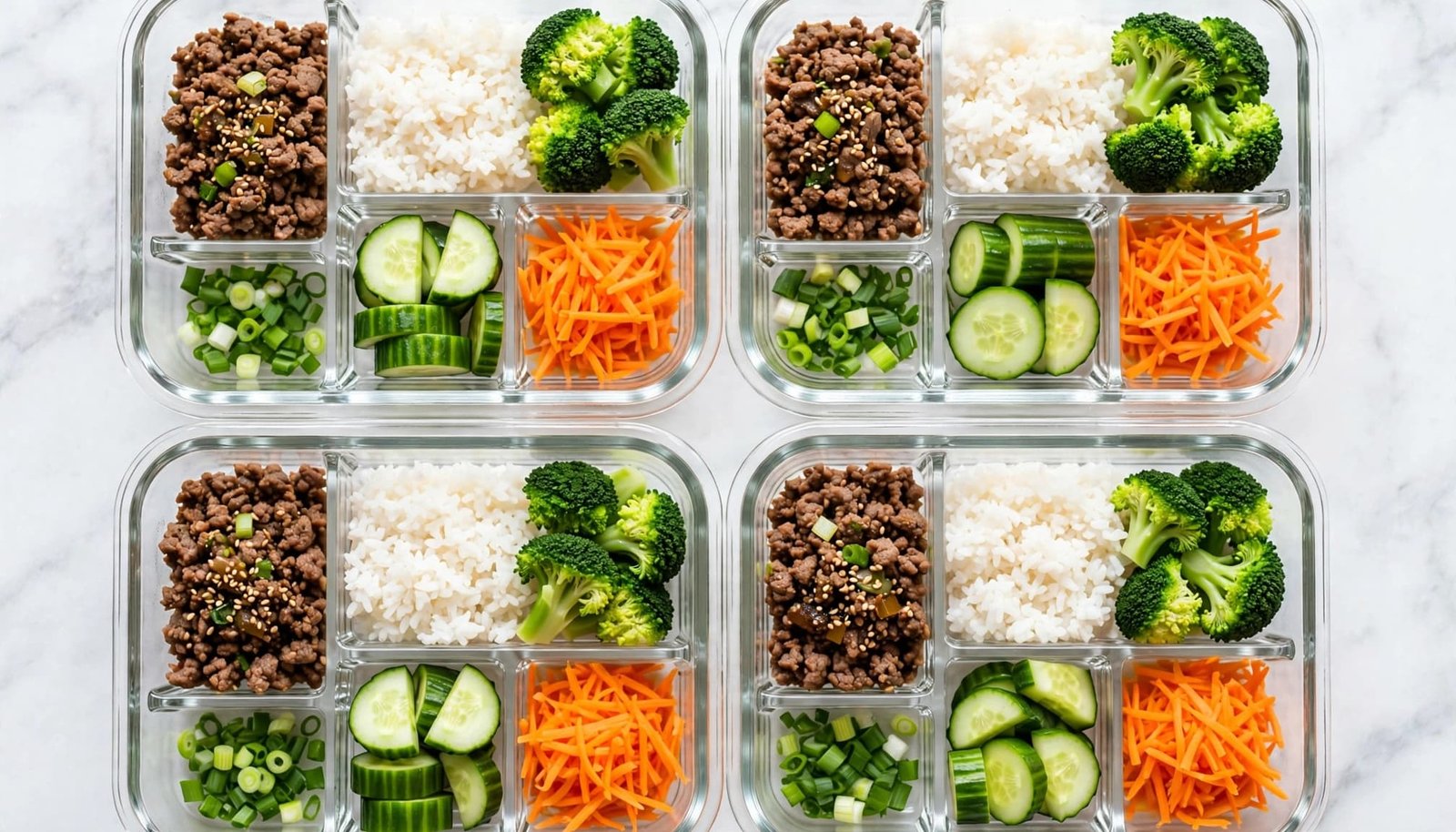
For meal prep, let the cooked rice and beef cool before dividing them into airtight containers. Refrigerate promptly, and keep cucumber, herbs, and other crisp toppings in separate containers when possible. Cooked beef and rice keep for 3 to 4 days in the refrigerator.
Reheat the beef and rice until hot, then add fresh vegetables after warming. The USDA’s safe temperature chart lists 165°F for reheated leftovers. Freeze the cooked beef separately for up to 2 to 3 months for the best texture, then thaw it in the refrigerator before reheating.
Pick a Base That Fits Your Dinner
Rice works because it absorbs the sauce and makes the bowl feel comforting. However, this beef also pairs well with cauliflower rice, shredded cabbage, quinoa, lettuce cups, or roasted sweet potatoes.
Cauliflower rice and lettuce cups keep the meal lighter, while quinoa brings a nuttier flavor. Roasted sweet potatoes add sweetness that works especially well with spicy gochujang.
Use a base that gives you enough volume for a full meal, then add a protein-rich topping such as edamame or a fried egg if needed. The mix of hot beef, a sturdy base, and chilled vegetables is what makes these Korean beef bowls satisfying.
Frequently Asked Questions
Can I use ground turkey or ground chicken instead of beef?
Yes. Ground turkey and chicken work well, though both have a milder flavor and can be leaner than beef. Add a small extra drizzle of sesame oil or a splash of sauce if the meat tastes dry. Cook ground poultry to 165°F.
How can I make Korean beef bowls less salty?
Use low-sodium soy sauce and reduce the amount slightly, then add water or unsalted broth to loosen the sauce. More rice and vegetables also spread the sauce across the bowl. Keep in mind that kimchi, gochujang, and packaged toppings can add substantial sodium.
Can I make these bowls without rice?
Cauliflower rice, cabbage, quinoa, lettuce cups, and roasted sweet potatoes all work. Cabbage and lettuce keep the meal crisp, while quinoa and sweet potatoes make it more filling. Add extra vegetables and edamame or an egg if you want more staying power.
Why did my sauce turn watery?
A crowded skillet, too much added liquid, or too little simmering can leave the sauce thin. Use a wide pan and simmer uncovered for another minute or two. Don’t cook it too long, or the beef can dry out.
Can I prepare the beef ahead of time?
Yes, refrigerate cooked beef in a sealed container for 3 to 4 days. You can also freeze it for up to 2 to 3 months for the best quality. Thaw it in the refrigerator, then reheat it until hot with a small splash of water if the sauce has thickened.
A Flexible Weeknight Bowl You’ll Make Again
Healthy and easy Korean beef bowls with ground beef make smart use of a fast-cooking, budget-friendly staple. The savory sauce needs only a few pantry ingredients, while the base and toppings can change with your mood or grocery list.
Pair the beef with rice or vegetables, then add something crisp and fresh for contrast. Once you make the sauce, you’ll have an easy template for countless quick dinners.
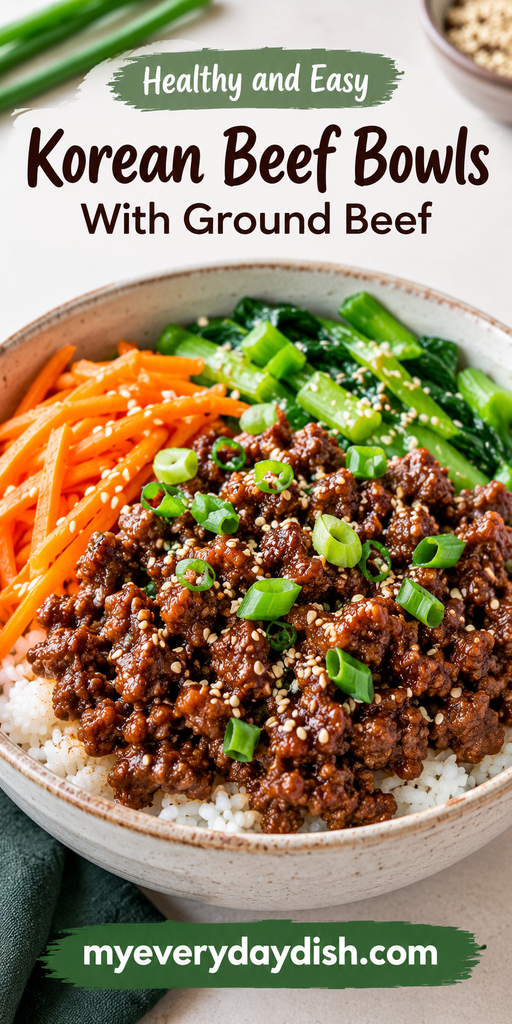
Save the pin for later

I’m the creator of My Everyday Dish, a food blog focused on easy homemade recipes, comforting family meals, simple baking, and seasonal food ideas. I love finding practical ways to make everyday cooking less stressful and more enjoyable. Here, I share recipes with simple ingredients, clear instructions, and plenty of flavor, helping you make delicious meals and treats you’ll feel confident serving at home.
Leave a Reply