
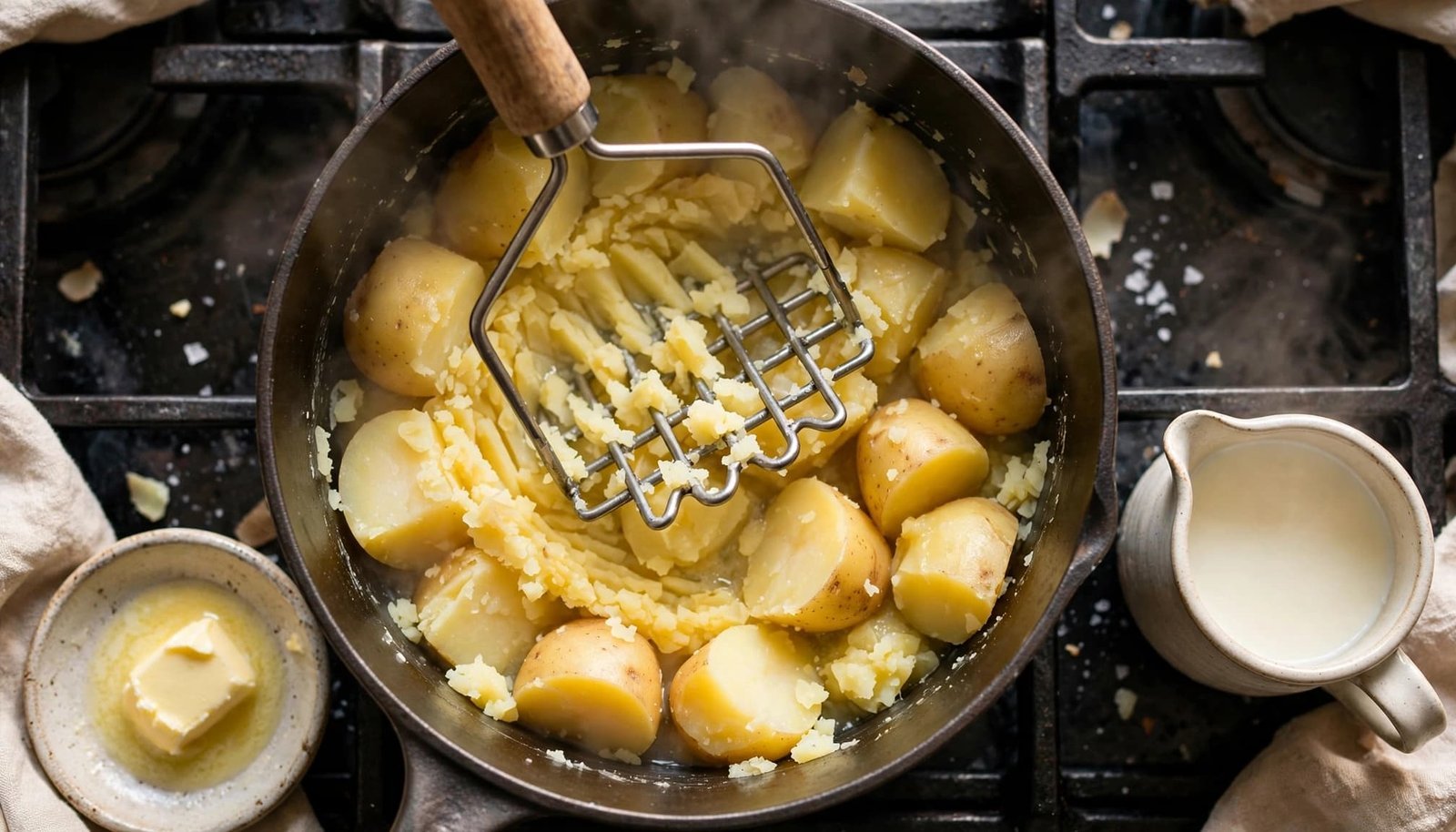
A bowl of mashed potatoes doesn’t need perfect smoothness to feel special. This easy mashed russet potatoes with skin recipe gives you creamy potatoes with a rustic texture, and you won’t need to peel every potato first.
Leaving the skin on cuts prep time, adds a little bite, and gives the finished dish a homemade look. With a few simple ingredients and the right stovetop method, you can avoid watery, gluey, or bland potatoes at dinner.
Start with clean potatoes, warm dairy, and a gentle hand with the masher.
Key Takeaways
- Scrub russet potatoes well, then remove any eyes, green patches, or damaged areas.
- Cut the potatoes into even pieces so they soften at the same rate.
- Start them in cold, salted water and drain them thoroughly after cooking.
- Add butter first, then warm milk or cream gradually while mashing.
- A potato masher keeps the texture creamy but pleasantly rustic.
Easy Mashed Russet Potatoes With Skin Recipe
Russets work well for skin-on mashed potatoes because their interiors mash into a light, soft base. The thin bits of skin keep every spoonful from becoming completely uniform, which is exactly the appeal here.
Choose firm russet potatoes with clean, fairly thin skins. Avoid potatoes with soft spots, deep cuts, green areas, or long sprouts. For more guidance on what to discard before cooking, see this overview of when potatoes have gone bad.
The skin adds more than texture. According to Potato Goodness nutrition information, one medium skin-on potato provides fiber, potassium, vitamin C, and vitamin B6. The butter and dairy in this recipe make it richer, of course, but keeping the skin is still a practical choice.
Basic ingredients
- 3 pounds russet potatoes, about 4 medium potatoes
- 6 tablespoons unsalted butter
- 3/4 cup whole milk, half-and-half, or cream, warmed
- 1 tablespoon kosher salt for the cooking water
- 1 teaspoon kosher salt for the mash, plus more to taste
- 1/2 teaspoon freshly ground black pepper
Optional additions: roasted garlic, chopped chives, sour cream, grated cheddar, Parmesan, parsley, or browned butter.
This recipe makes about 6 side-dish servings. Plan for 15 minutes of prep time, 15 to 20 minutes of cook time, and about 35 minutes total.
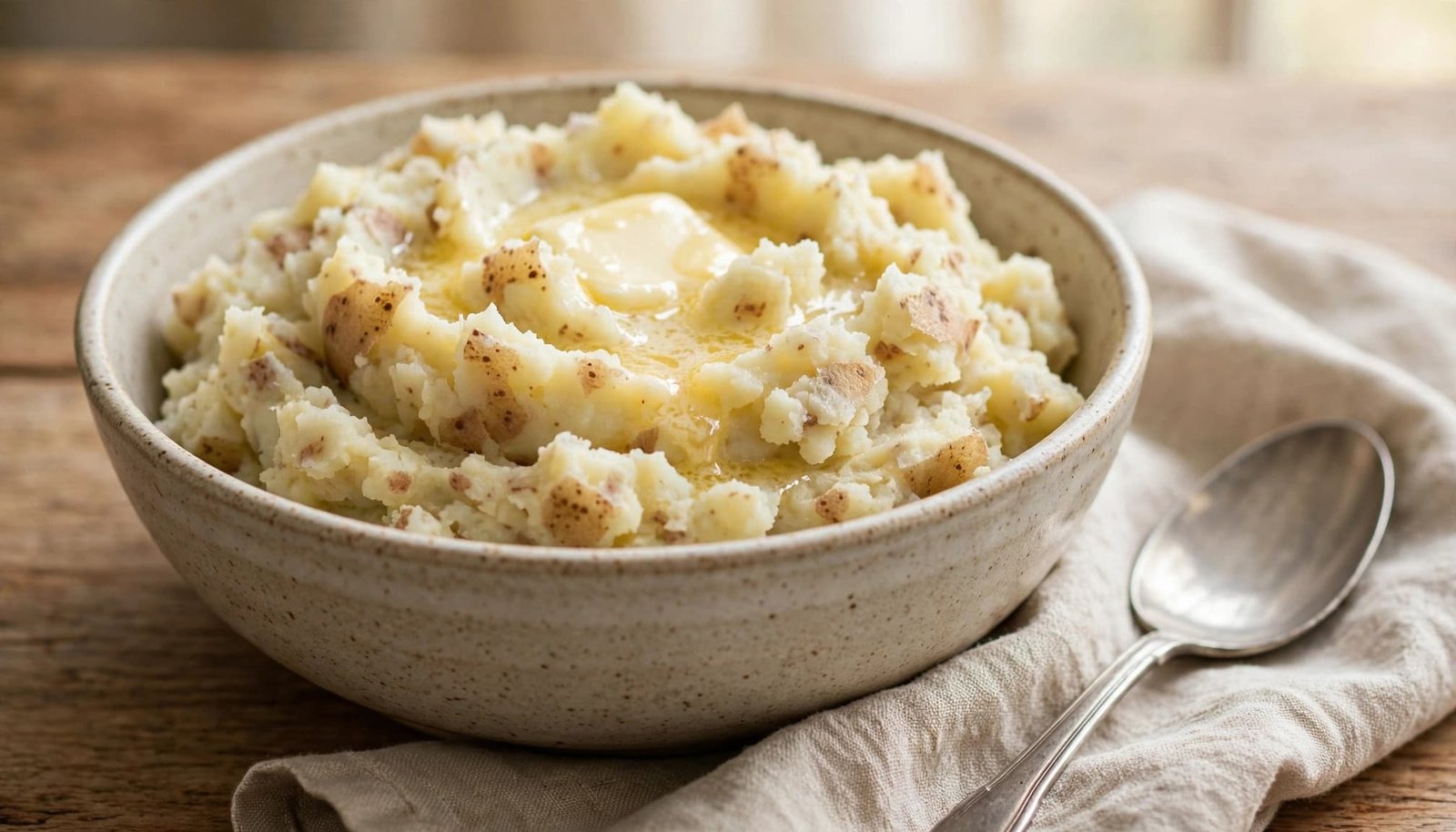
How to Make Mashed Russet Potatoes With the Skin On
The method is simple, but a few small choices matter. Even cuts, dry potatoes, warm dairy, and gentle mashing give you a creamy bowl with visible flecks of skin.
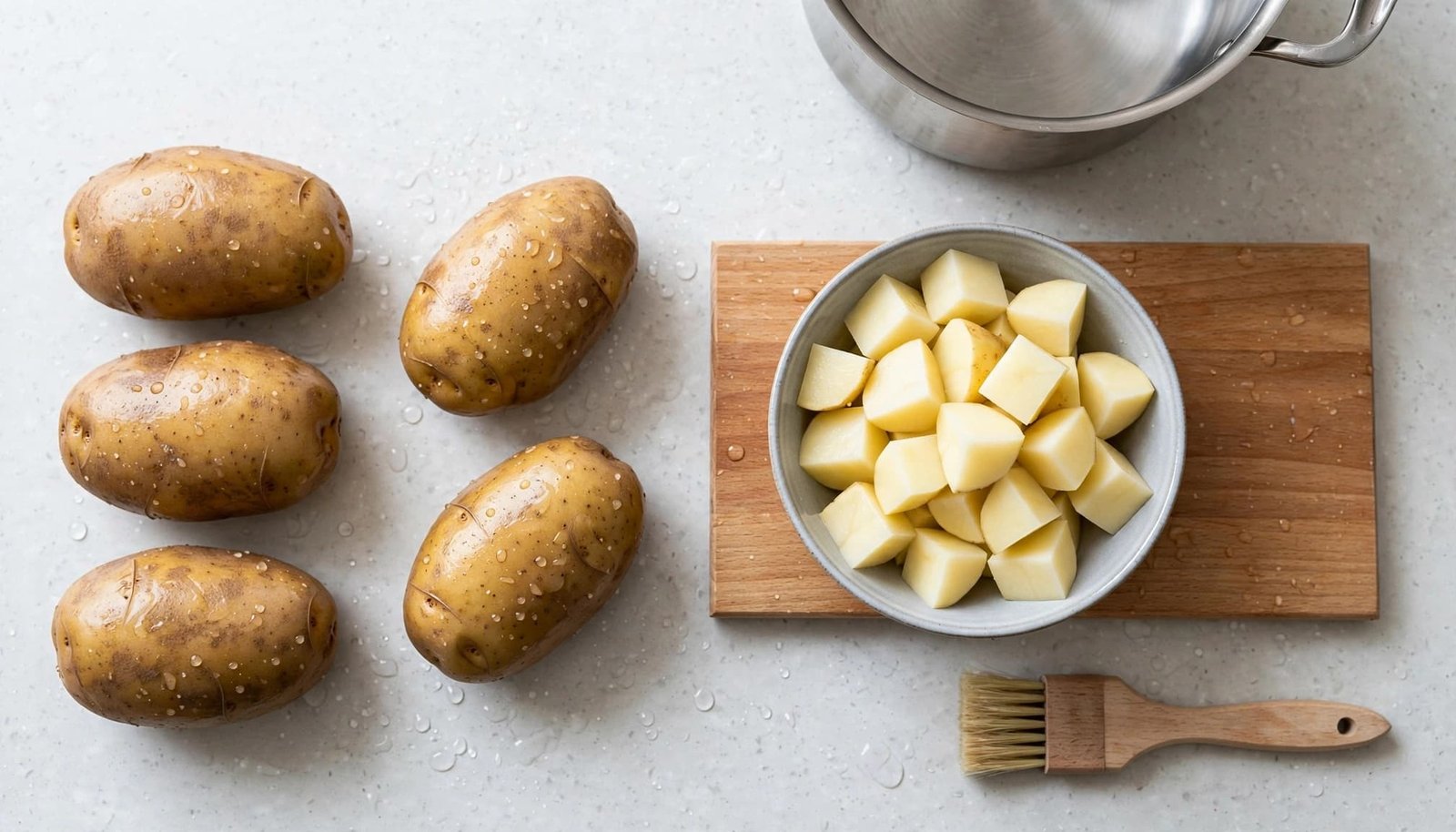
Prepare and Boil the Potatoes Evenly
Rinse each potato under cool running water and scrub the skin with a vegetable brush. Trim away eyes, bruises, dark spots, and any rough areas that won’t soften pleasantly during cooking.
Cut large potatoes into similar 1 1/2-inch chunks. Uniform pieces cook at the same pace, so you won’t have some pieces falling apart while others stay firm in the center.
Place the chunks in a large pot and cover them with cold water by about 1 inch. Add the tablespoon of salt, then bring the pot to a steady simmer over medium-high heat. Starting in cold water helps the centers and outsides cook more evenly.
Cook for 15 to 20 minutes, depending on the size of your pieces. A fork should slide through the center with little resistance, but the chunks shouldn’t be crumbling into the water. If they cook too long, they absorb excess water and can turn loose after mashing.
Mash While the Potatoes Are Hot
Drain the potatoes well in a colander, then return them to the warm, empty pot. Set the pot over low heat for one to two minutes, shaking it gently once or twice. This brief steam-off step removes surface moisture and helps the potatoes take in butter and dairy instead of becoming watery.
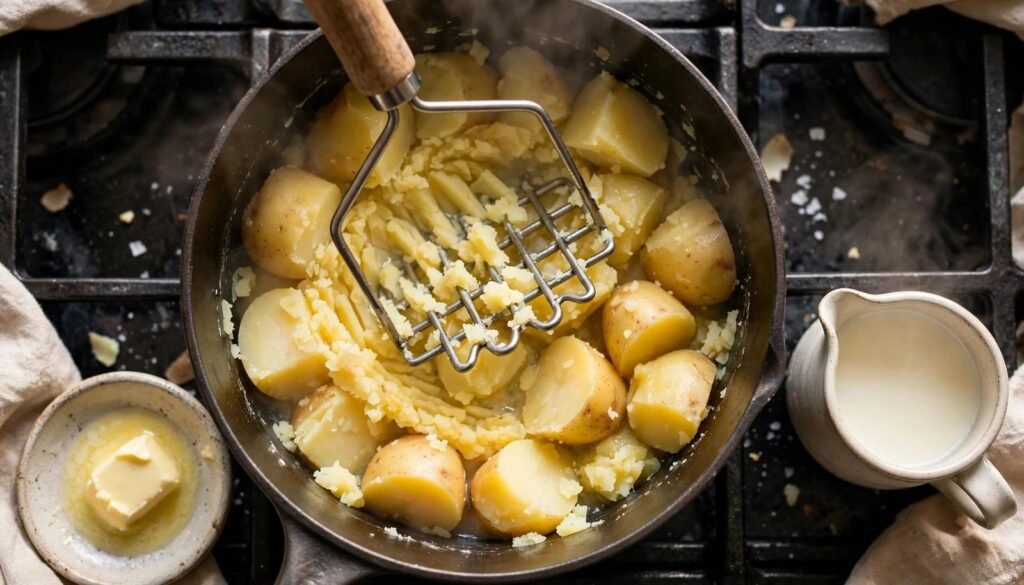
Turn off the heat and add the butter first. Mash until the butter melts through the hot potatoes. Next, pour in about half the warm milk or cream and mash gently. Add more dairy in small splashes until the potatoes are soft and creamy.
Use a sturdy potato masher rather than a food processor, blender, or electric mixer. Fast blades and aggressive mixing release too much starch, which can leave mashed potatoes sticky and gluey. A masher leaves small pieces of skin and a few soft lumps, giving this dish its rustic character.
Stop as soon as the texture looks right. The potatoes should hold a soft mound on a spoon, not run across the plate.
Season, Taste, and Serve Right Away
Add the teaspoon of salt and black pepper, then taste before transferring the potatoes to a serving bowl. Potatoes need enough seasoning to bring out their mild flavor, so add another pinch of salt if they taste flat.
Finish with an extra pat of butter, chopped chives, parsley, or a light drizzle of olive oil. Serve the potatoes hot with roasted chicken, meatloaf, steak, pork chops, green vegetables, or a holiday meal.
Read also: 12 Easy Fall Soup Recipes With Ground Beef
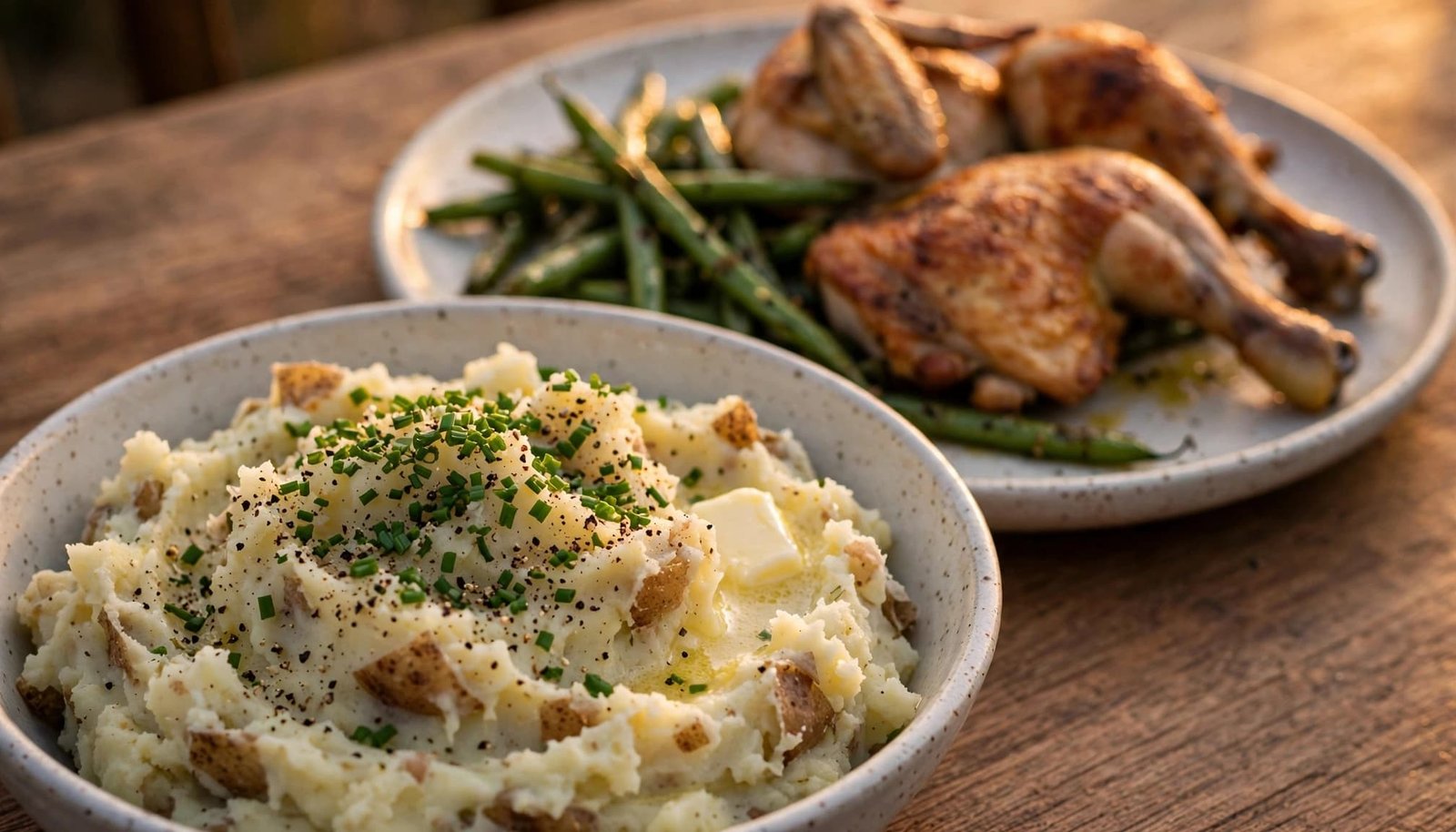
Make Rustic Skin-On Mashed Potatoes Creamy Every Time
Skin-on mashed potatoes should look rustic. Thick skins and larger chunks will create a more noticeable texture, while smaller pieces of thin-skinned russets blend into the mash. Adjust your cuts to match the texture you want at the table.
Common Mistakes That Make Mashed Potatoes Heavy or Watery
Uneven potato pieces cook poorly, so cut them to a similar size before they hit the pot. If some chunks are undercooked, they’ll stay firm while the smaller pieces overcook and absorb water.
Cold milk can cool the potatoes too quickly and makes it harder to blend everything smoothly. Warm it in a small saucepan or microwave-safe measuring cup before adding it.
If the mash feels too thick, stir in warm milk or cream one tablespoon at a time. For potatoes that seem thin, return the pot to low heat and stir gently until a little moisture evaporates. Over-salted potatoes improve with more unseasoned mashed potato or a small splash of dairy. If the flavor is dull, add salt gradually rather than piling on more pepper.
A little extra butter can improve richness, but it can’t fix potatoes that were overmixed into a gummy paste.
Easy Ways to Change the Flavor
For garlic mashed potatoes, mash in 4 to 6 cloves of roasted garlic with the butter. Add fresh chives, parsley, or thyme near the end so their flavor stays bright.
Stir in 1/3 cup sour cream for a tangy version, or fold in 1/2 cup grated cheddar or Parmesan while the potatoes are still hot. Browned butter adds a nutty flavor, especially with black pepper and chives.
Add strong ingredients a little at a time. You should still taste the potato beneath the cheese, garlic, or herbs.
Read also: Twice Baked Mashed Potatoes Recipe With Cheese
Serving, Storing, and Reheating Leftovers
These mashed russet potatoes with skin are best served immediately. If dinner runs late, keep them in a covered serving bowl over gentle heat for a short time. Stir in a splash of warm milk if the top begins to dry.
Cool leftovers promptly, refrigerate them in a covered container, and use them within three days. Michigan State University Extension’s guidance on potato food safety is a helpful reminder to handle cooked and raw potatoes carefully.
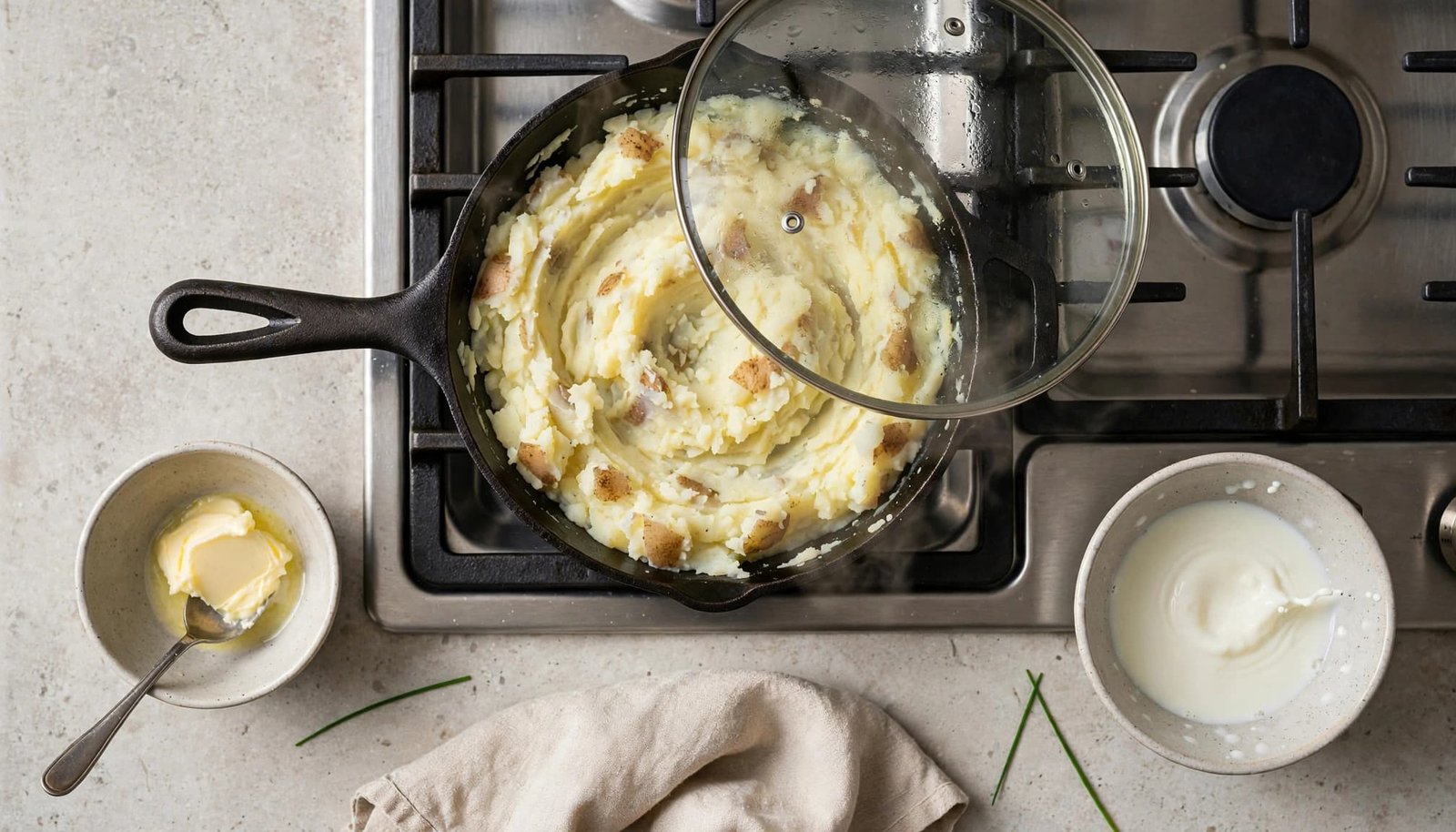
Reheat leftovers over low heat in a saucepan or covered skillet with butter and a splash of milk, cream, or broth. High heat dries the potatoes and can make them gummy. Freezing is possible, but the texture may change after thawing.
Frequently Asked Questions
Can I make these mashed potatoes ahead of time?
You can make them a few hours ahead for a meal. Keep them covered and warm over gentle heat, then stir in a little warm milk before serving. For longer storage, refrigerate leftovers rather than holding them warm.
Should I peel some of the potatoes?
You can peel one or two potatoes if you want a smoother mash with fewer visible skin pieces. Keeping most of the skins on still gives you the easy prep and rustic look that make this recipe useful.
Can I use Yukon Gold potatoes instead?
Yes, although the result will taste and feel different. Yukon Gold potatoes make a naturally richer, denser mash, while russets give this recipe a softer, lighter texture.
What can I use instead of dairy?
Use a good olive oil and warm unsalted vegetable broth for a dairy-free version. Unsweetened, unflavored oat milk can also work, though add it gradually so the potatoes don’t become loose.
Why did my mashed potatoes turn gray?
Potatoes can darken when cut surfaces sit exposed to air for too long. Cut them shortly before cooking and keep the pieces submerged in cold water until they go into the pot. The USDA SNAP-Ed potato resources offer more practical potato cooking ideas.
A Comforting Side Dish With Less Prep
Skin-on mashed potatoes are easy enough for a weeknight and comforting enough for a special meal. Scrub the skins well, cut the potatoes evenly, start with cold salted water, drain them thoroughly, and use warm dairy.
Mash gently, then stop before the potatoes turn pasty. Try the basic version first, then make it your own with garlic, herbs, cheese, or sour cream. Serve a warm spoonful beside your favorite main dish and enjoy the simple, homemade texture.
Save the pin for later

I’m the creator of My Everyday Dish, a food blog focused on easy homemade recipes, comforting family meals, simple baking, and seasonal food ideas. I love finding practical ways to make everyday cooking less stressful and more enjoyable. Here, I share recipes with simple ingredients, clear instructions, and plenty of flavor, helping you make delicious meals and treats you’ll feel confident serving at home.
Leave a Reply