
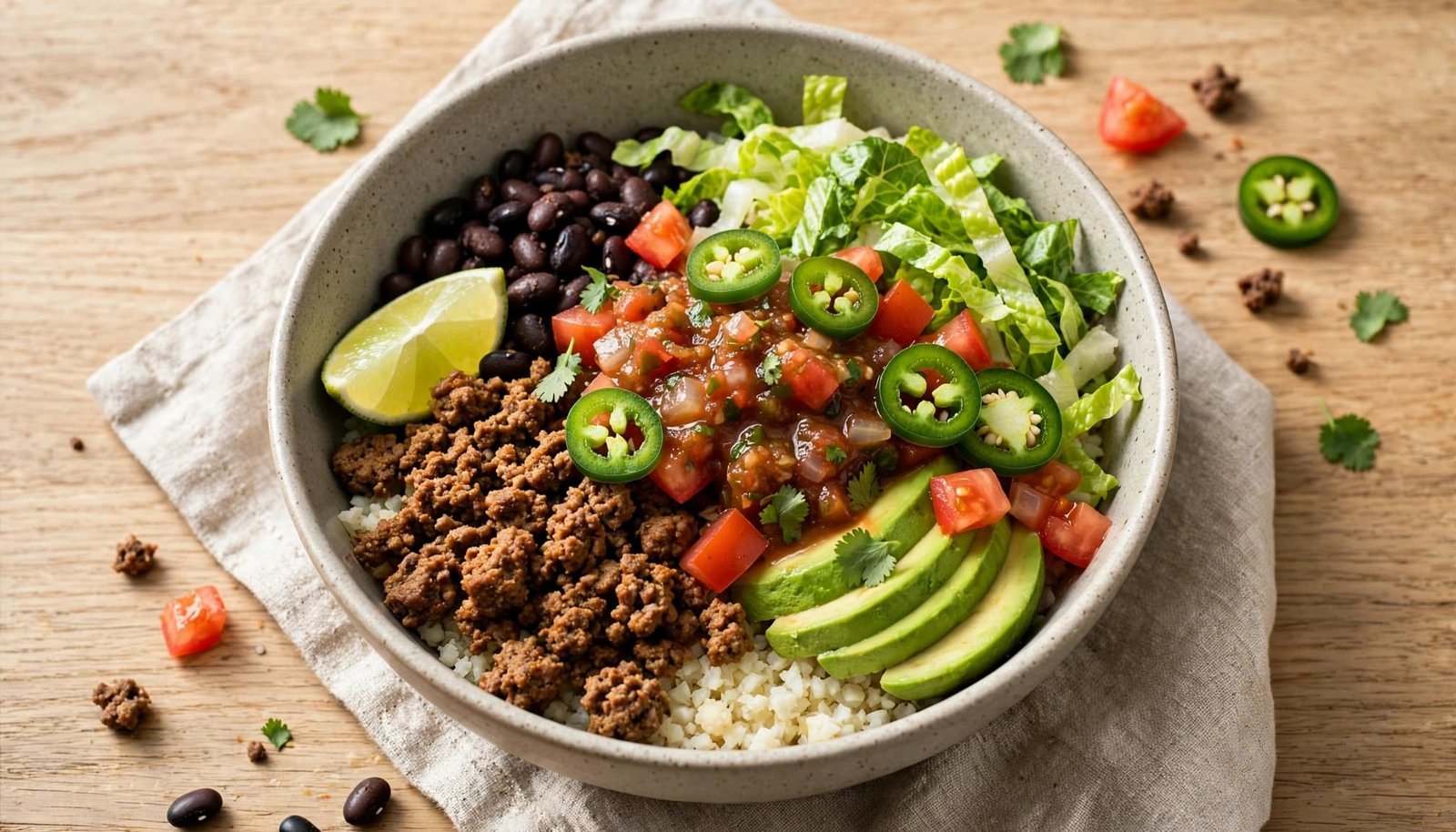
A taco bowl can be fast, filling, and far easier than planning several separate dinner dishes. These high protein taco bowls pair seasoned ground beef with black beans, rice, and fresh toppings for a meal that works for lunch, dinner, or a few days of meal prep.
Everything comes together with one skillet and a little chopping. You can change the base, toppings, and heat level without changing the basic method. Start with the ingredient amounts below, then make the bowls your own.
Easy Ground Beef Taco Bowls for a High Protein Meal
This recipe makes 4 bowls and takes about 30 minutes, including rice cooking time if you don’t have cooked rice ready. It combines lean ground beef, taco seasoning, rice, black beans, corn, vegetables, salsa, avocado, lime, and an optional Greek yogurt crema.
The beef and beans make these bowls substantial without complicated cooking. Depending on the beef, bean portion, and toppings, each bowl can provide roughly 30 to 40 grams of protein. Exact nutrition will vary with brands and serving sizes.
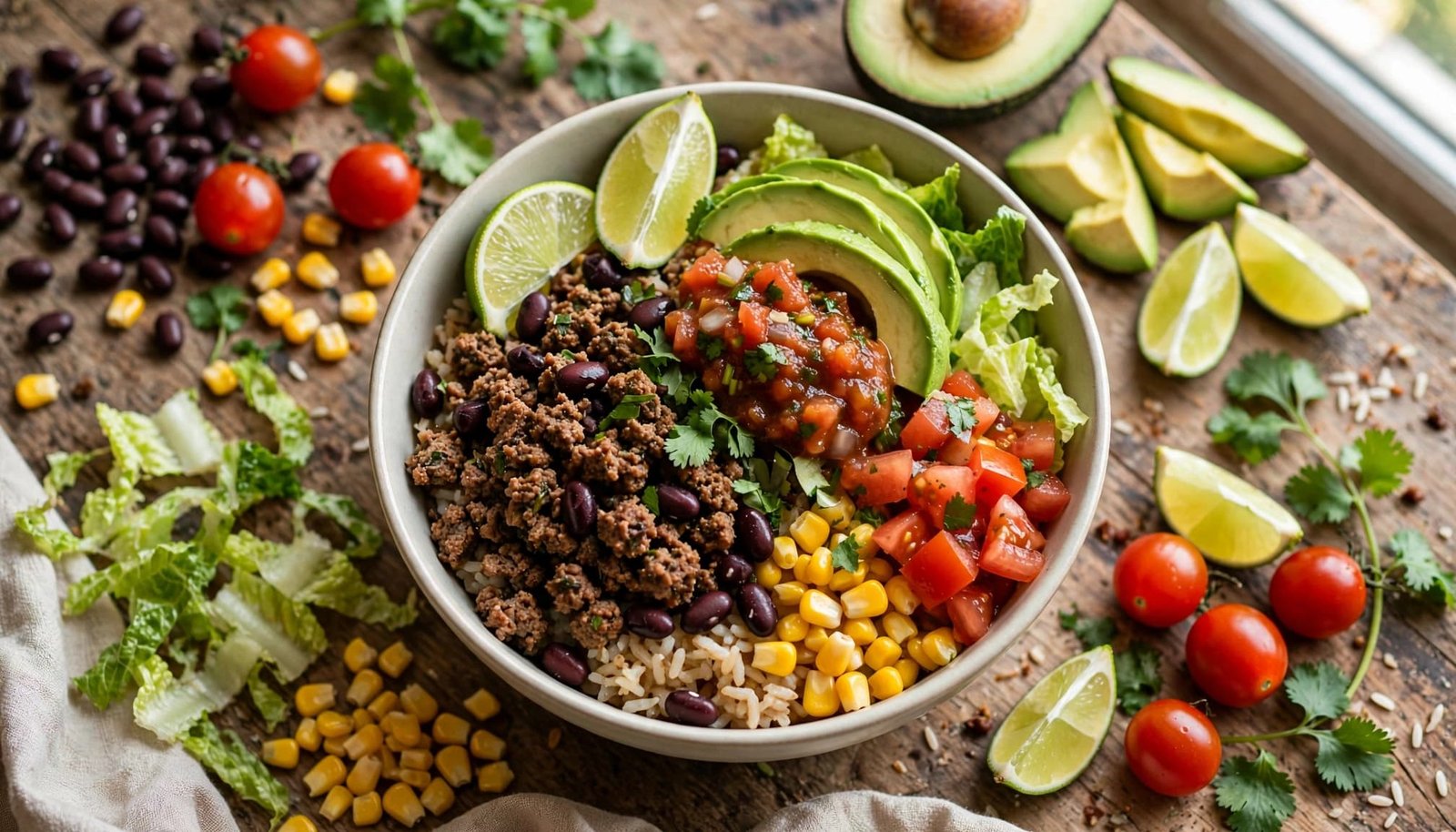
What You Need for the Beef and Bowl Base
For four servings, gather:
- 1 pound 90% to 93% lean ground beef
- 1 packet taco seasoning, or about 2 tablespoons
- 1/3 cup water
- 3 cups cooked rice
- 1 can black beans, drained and rinsed
- 1 cup corn, thawed if frozen
A diced onion and bell pepper add sweetness and texture. You can also stir in 1 tablespoon tomato paste, a squeeze of lime juice, or chopped cilantro after cooking.
White rice is fast and familiar, while brown rice adds a nuttier bite. Quinoa, cauliflower rice, and roasted sweet potatoes also make good bases. Lean beef keeps the meal high in protein while leaving less grease in the skillet.
Read also: Healthy and Easy Korean Beef Bowls With Ground Beef
Fresh Toppings That Add Flavor and Nutrients
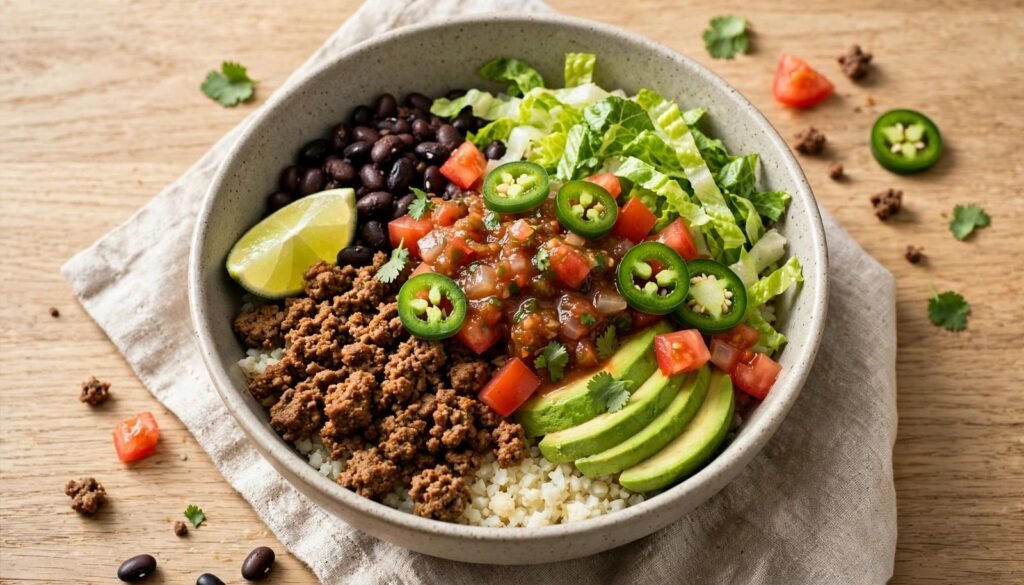
Keep the topping selection practical. Shredded romaine, diced tomatoes, salsa, avocado, lime wedges, cilantro, pickled jalapeños, and a small handful of shredded cheese give each bowl contrast without overcrowding it.
Black beans add more protein and fiber. Greek yogurt or cottage cheese can replace sour cream, while cheese adds a smaller protein boost and a savory finish. Corn, lettuce, and tomatoes bring crispness, so the warm beef doesn’t make the bowl feel heavy.
How to Build a High-Protein Taco Bowl That Keeps You Full
The most satisfying high protein taco bowls have five parts: protein, fiber-rich carbohydrates, vegetables, healthy fat, and sauce. Beef carries the savory flavor, while beans make the bowl more filling than rice and toppings alone.
For one bowl, start with about 4 ounces of cooked beef, 1/2 cup black beans, and 3/4 cup cooked rice. Add at least 1 cup of vegetables, then finish with avocado and salsa. Those portions give you a sturdy lunch or dinner without turning the bowl into a huge pile of rice.
Choose the Right Beef and Protein Boosters
Ground beef labeled 90% or 93% lean is a simple choice for lighter bowls. Higher-fat beef has a richer flavor, but it can leave enough fat behind that draining the skillet makes sense.
When you want more protein, increase the beans or add pinto beans, lentils, Greek yogurt, cottage cheese, or a boiled egg. Use a food thermometer rather than judging the beef by color. The USDA safe minimum temperature chart lists 160°F for ground meats.
Balance the Bowl Without Making It Heavy
Rice doesn’t need to disappear for the bowl to feel balanced. Use a moderate portion, then make room for beans, lettuce, tomatoes, and salsa. Avocado adds richness, while lime juice makes every bite taste brighter.
For a lower-carbohydrate option, use cauliflower rice or extra greens. Quinoa and sweet potatoes also fit well when you want a different base. Stir together plain Greek yogurt, lime juice, a pinch of salt, and a splash of water for a quick crema that adds protein without a heavy sour cream layer.
Read also: Easy Air Fryer Stuffed Bell Peppers With Ground Beef
A bowl with beef, beans, and vegetables stays filling longer than one built mostly on rice and cheese.
Step-by-Step: Make the Ground Beef Taco Bowls in One Skillet
A little preparation keeps dinner moving. Cook the rice ahead if possible, drain and rinse the beans, and chop lettuce, tomatoes, avocado, and other toppings before heating the skillet.
Prepare the Beef Mixture for Maximum Flavor
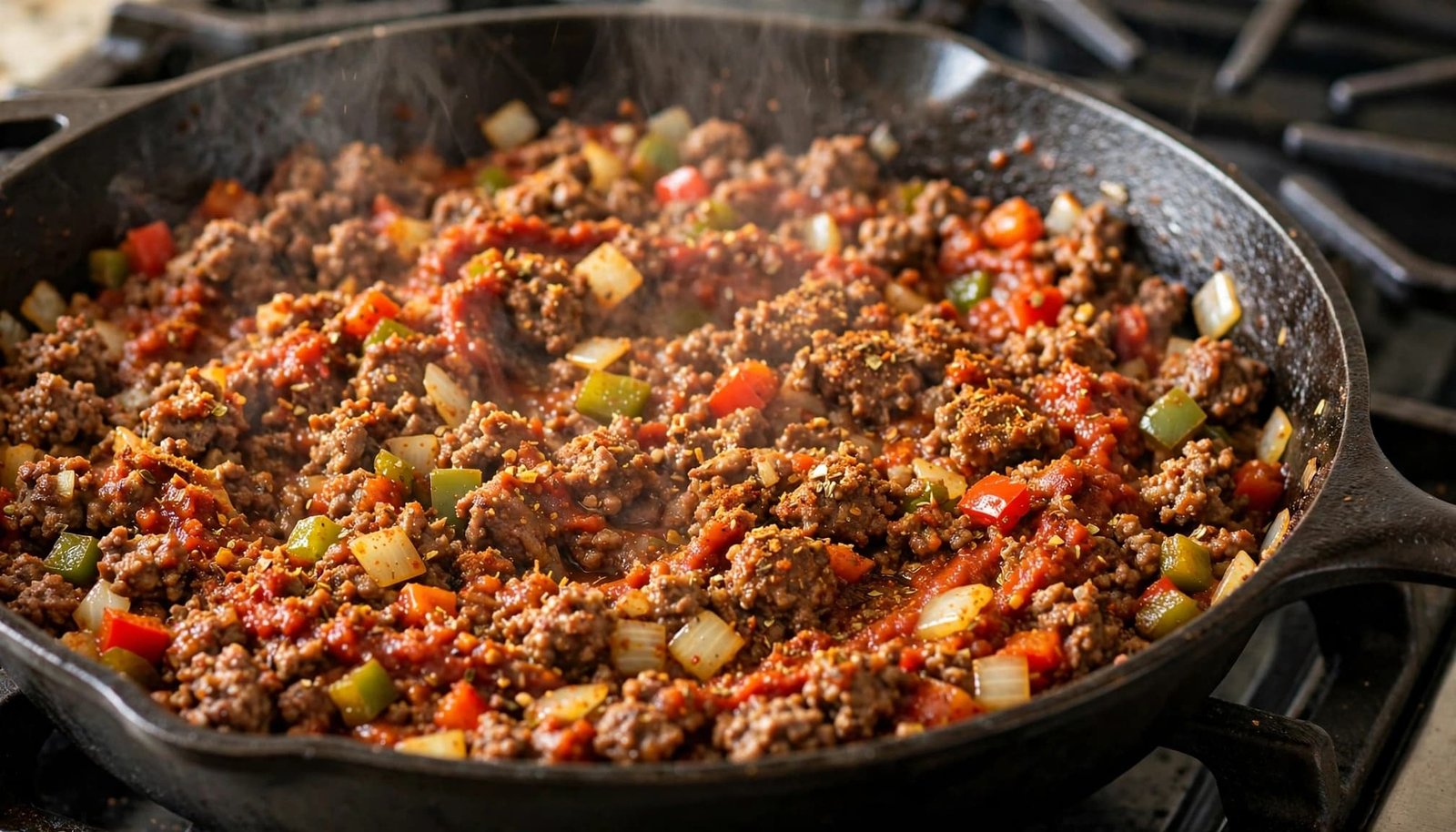
- Heat a large skillet over medium-high heat. Add the ground beef and break it into small crumbles with a spoon or spatula.
- Cook until the beef is browned and no longer pink. If using onion or bell pepper, add it after the beef starts to brown and cook until softened.
- Drain excess grease if the pan has more than a thin coating. This is more likely with higher-fat beef.
- Stir in taco seasoning, 1 tablespoon tomato paste if using, and 1/3 cup water. Tomato paste gives the mixture a richer taste and helps the seasoned sauce cling to the beef.
- Simmer for 2 to 3 minutes, stirring often, until the liquid coats the meat. Check the thickest part of the beef mixture with a thermometer. The USDA’s ground beef safety guidance calls for 160°F.
- Warm the black beans and corn in a small saucepan, microwave-safe bowl, or briefly in the skillet after the beef finishes. Keep them separate if you prefer more defined layers in each bowl.
Assemble and Serve the Bowls
Spoon rice into four bowls first. Add seasoned beef, black beans, and corn, then pile on romaine, tomatoes, avocado, and other fresh vegetables.
Mixing warm ingredients with cool toppings gives the bowls better texture. Finish with salsa, lime, cilantro, jalapeños, shredded cheese, or Greek yogurt crema. Taste before adding salt, since taco seasoning and salsa can already be salty.
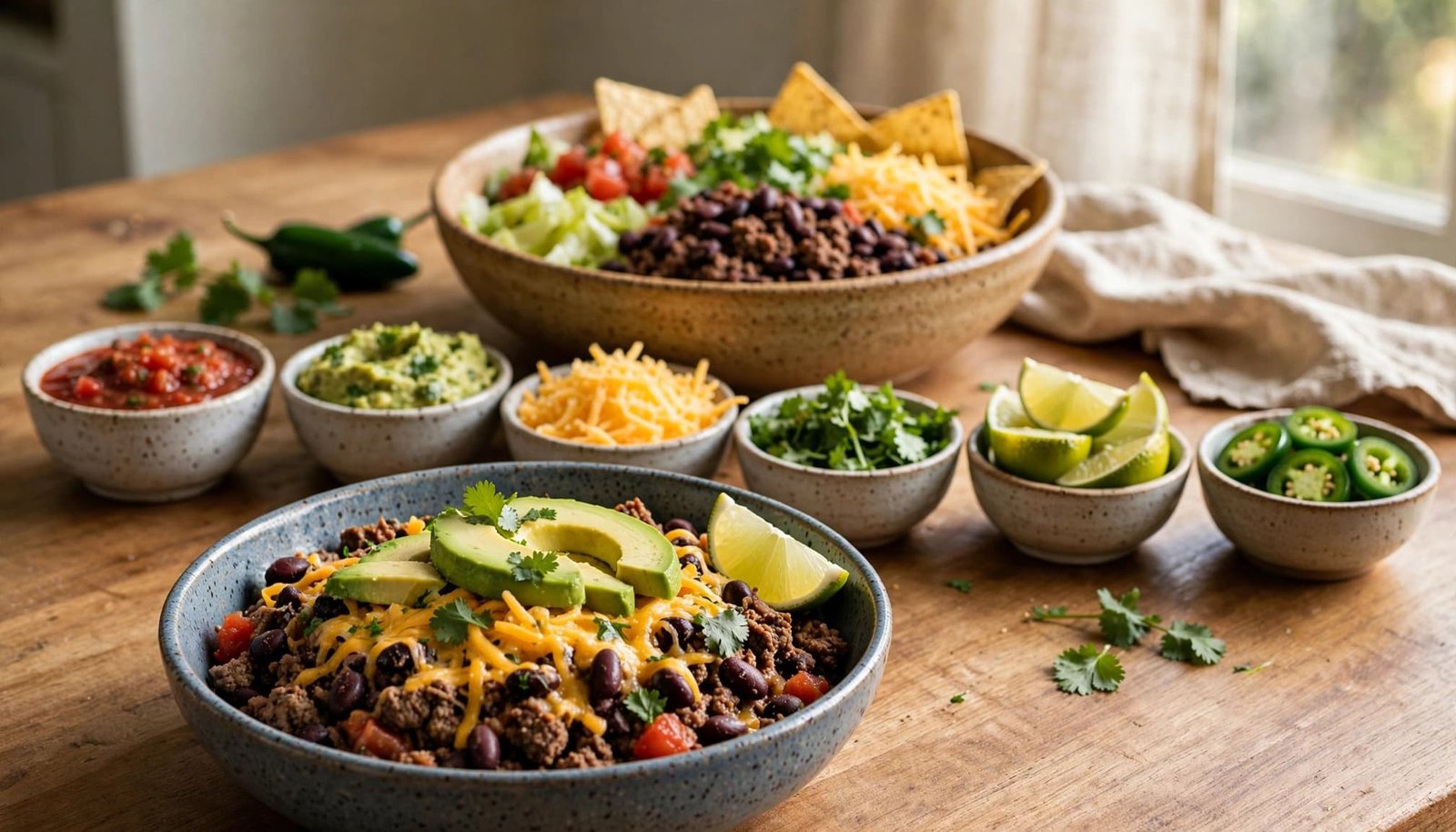
If you’re serving a group, place toppings in small bowls and let everyone build their own. That approach also makes it easy to keep a mild bowl separate from a spicy one.
Make-Ahead, Storage, and Easy Taco Bowl Variations
Cooked beef, rice, beans, and corn hold up well for meal prep. Store them in separate airtight containers when possible, especially if you want the rice fluffy and the beans distinct.
Refrigerate cooked food within two hours. The USDA’s leftovers and food-safety guidance also recommends reheating leftovers to 165°F. Use refrigerated cooked components within 3 to 4 days for the best quality and safe storage practices.
Simple Swaps for Different Diets and Preferences
Use cauliflower rice or extra greens for a lower-carbohydrate bowl. Quinoa adds another protein-containing grain, while pinto beans offer a softer texture and slightly different flavor.
For dairy-free bowls, skip cheese and Greek yogurt. Avocado, salsa, and a lime-based dressing keep the bowl creamy and bright. Add chipotle peppers, hot sauce, cayenne, or jalapeños for more heat.
A milder taco seasoning works better for family meals. Put hot sauce and sliced jalapeños on the table so each person can decide how much spice to add.
How to Pack the Bowls for Meal Prep
Divide rice, beef, beans, and corn among four containers. Keep lettuce, avocado, salsa, and crema in separate small containers, then add them after reheating.
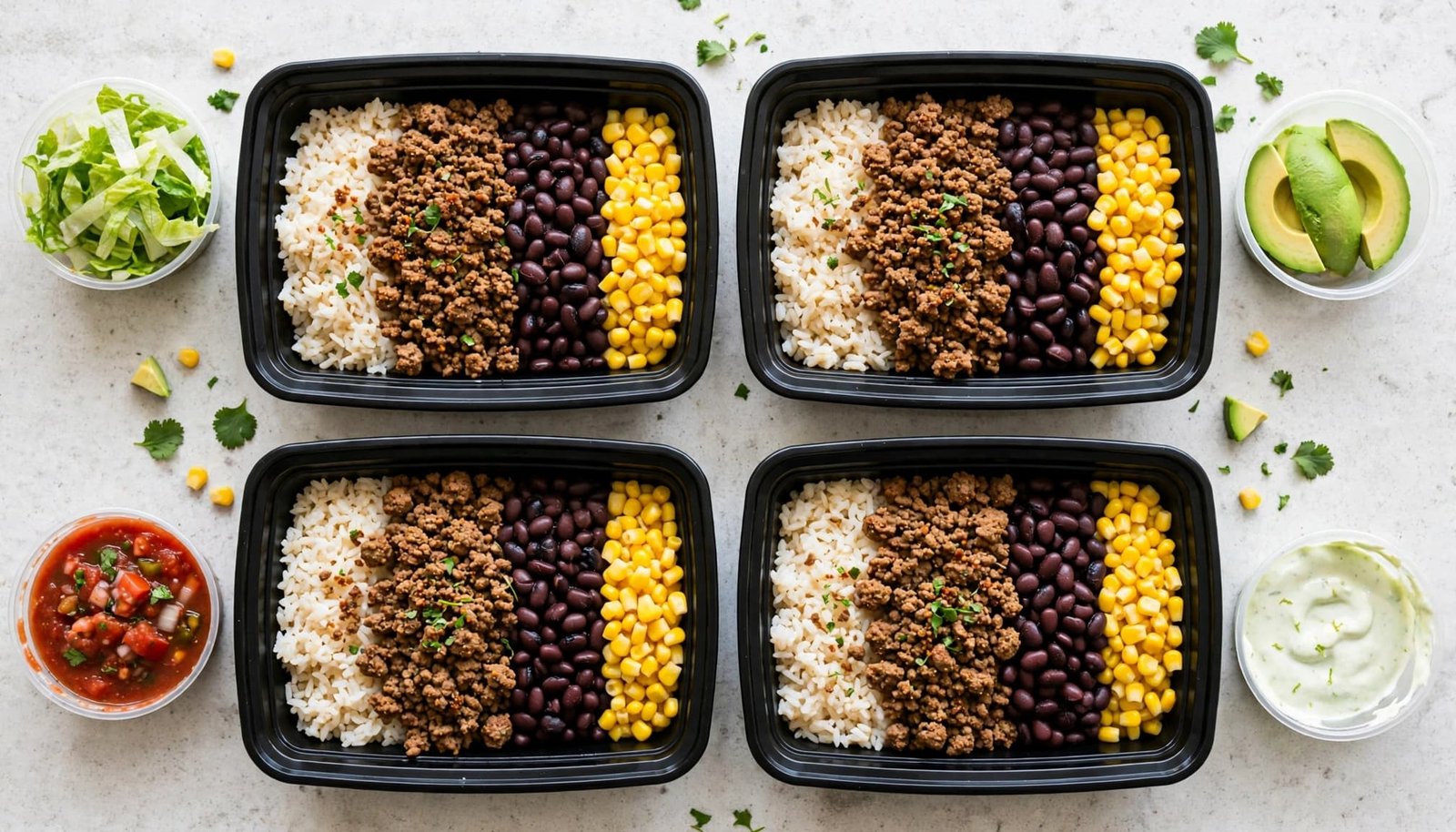
Add lime to avocado shortly before eating to slow browning. Pack tortilla chips or toasted pepitas separately so they stay crisp. You can eat the bowl cold as a salad-style lunch or reheat the beef, rice, beans, and corn for a warm meal.
Key Takeaways
Ground beef taco bowls are easy to adapt because the basic formula stays the same. Use lean seasoned beef and beans for protein, choose a base that fits your appetite, and add vegetables for volume and crunch.
Keep salsa, lettuce, avocado, and crema apart from hot ingredients until serving. That one step makes leftovers taste much closer to a freshly made bowl.
Frequently Asked Questions
Can I use leftover rice for taco bowls?
Yes. Cold leftover rice is especially convenient because it shortens prep time. Reheat it with a small splash of water and cover it so the grains don’t dry out.
Can I make these taco bowls without dairy?
Yes, dairy is optional. Skip cheese and Greek yogurt, then use avocado, salsa, cilantro, and lime for flavor and creaminess.
How can I make the bowls less spicy?
Choose a mild taco seasoning and use a mild salsa. Keep jalapeños, hot sauce, chipotle peppers, and cayenne on the side so people can add heat to their own bowl.
Should taco bowls be served hot or cold?
Either works. Warm beef, beans, corn, and rice make a cozy dinner, while chilled ingredients create a satisfying salad-style lunch. Add fresh toppings after reheating for the best texture.
Can I freeze the cooked beef mixture?
You can freeze the cooked beef mixture after it cools, preferably without lettuce, avocado, salsa, or crema. Thaw it in the refrigerator, then reheat it until hot before serving with freshly prepared toppings.
A Flexible Meal You’ll Keep Making
These high protein taco bowls bring together seasoned beef, beans, rice, vegetables, and bright toppings in one dependable meal. The formula works because every layer has a job, whether it adds protein, fiber, crunch, or richness.
Change the grain, skip dairy, add heat, or use extra greens as needed. Keep crisp toppings separate until you’re ready to eat, and each bowl will stay fresh from the first serving through the last meal-prep lunch.
Save the pin for later

I’m the creator of My Everyday Dish, a food blog focused on easy homemade recipes, comforting family meals, simple baking, and seasonal food ideas. I love finding practical ways to make everyday cooking less stressful and more enjoyable. Here, I share recipes with simple ingredients, clear instructions, and plenty of flavor, helping you make delicious meals and treats you’ll feel confident serving at home.
Leave a Reply