
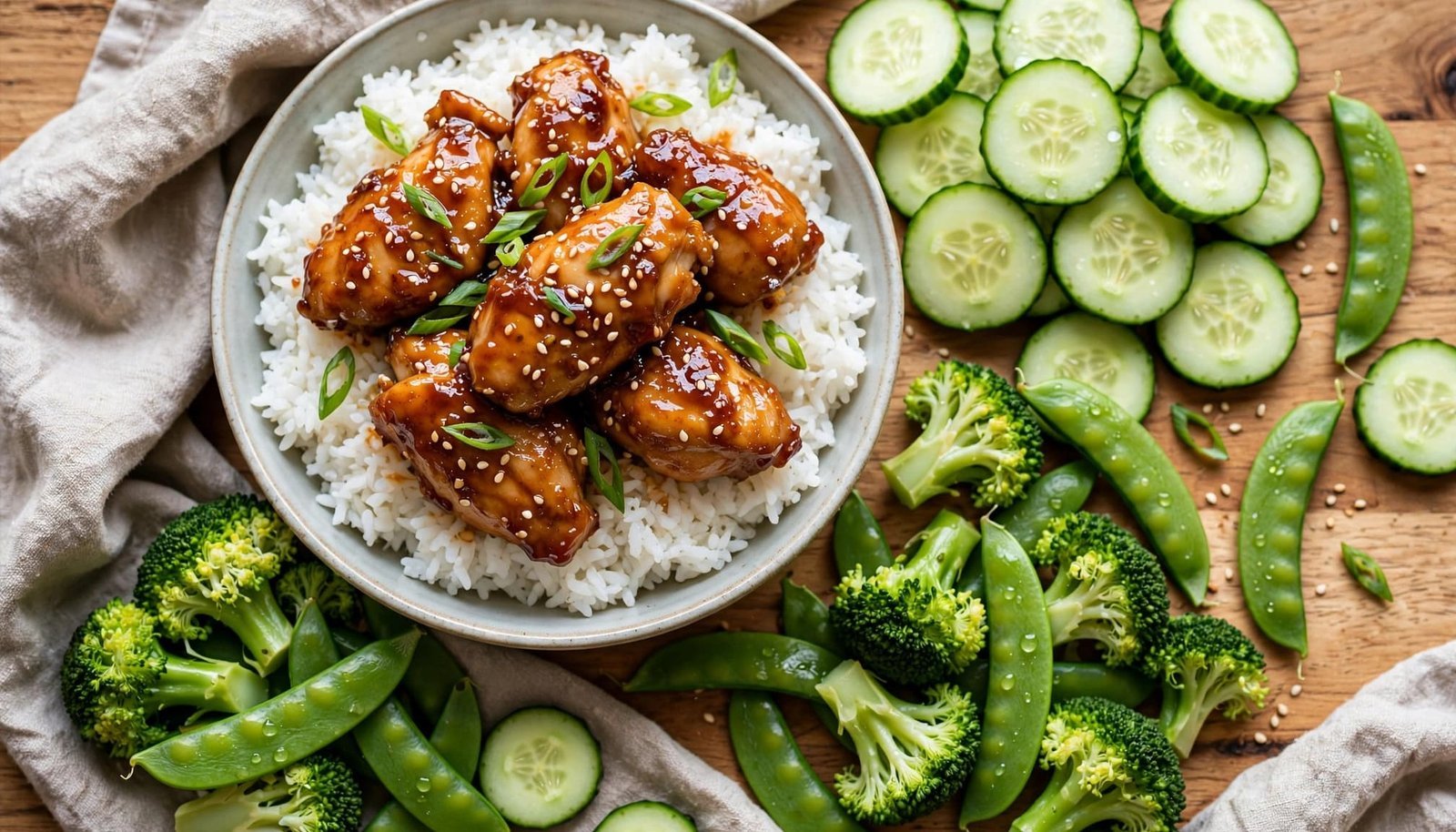
This easy Korean chicken recipe without gochujang gives you tender chicken and a savory-sweet glaze in about 30 minutes. Soy sauce, garlic, ginger, honey, and sesame oil build the flavor, while optional chili flakes let you choose the heat.
It’s a Korean-inspired dinner, rather than a traditional recipe, with familiar ingredients and one skillet for the chicken and sauce. Serve it with rice and vegetables for a family-friendly meal. Start by measuring the sauce ingredients, since the glaze comes together quickly once the chicken is cooked.
Easy Korean Chicken Recipe Without Gochujang for Dinner
This recipe makes 4 servings and takes about 30 minutes, though cooking several batches may add a few minutes. You’ll brown the chicken first, then coat it in sauce. A cornstarch slurry thickens the liquid without a long simmer, so the chicken doesn’t need to keep cooking while the glaze reduces.
Gather the chicken, sauce ingredients, and optional toppings
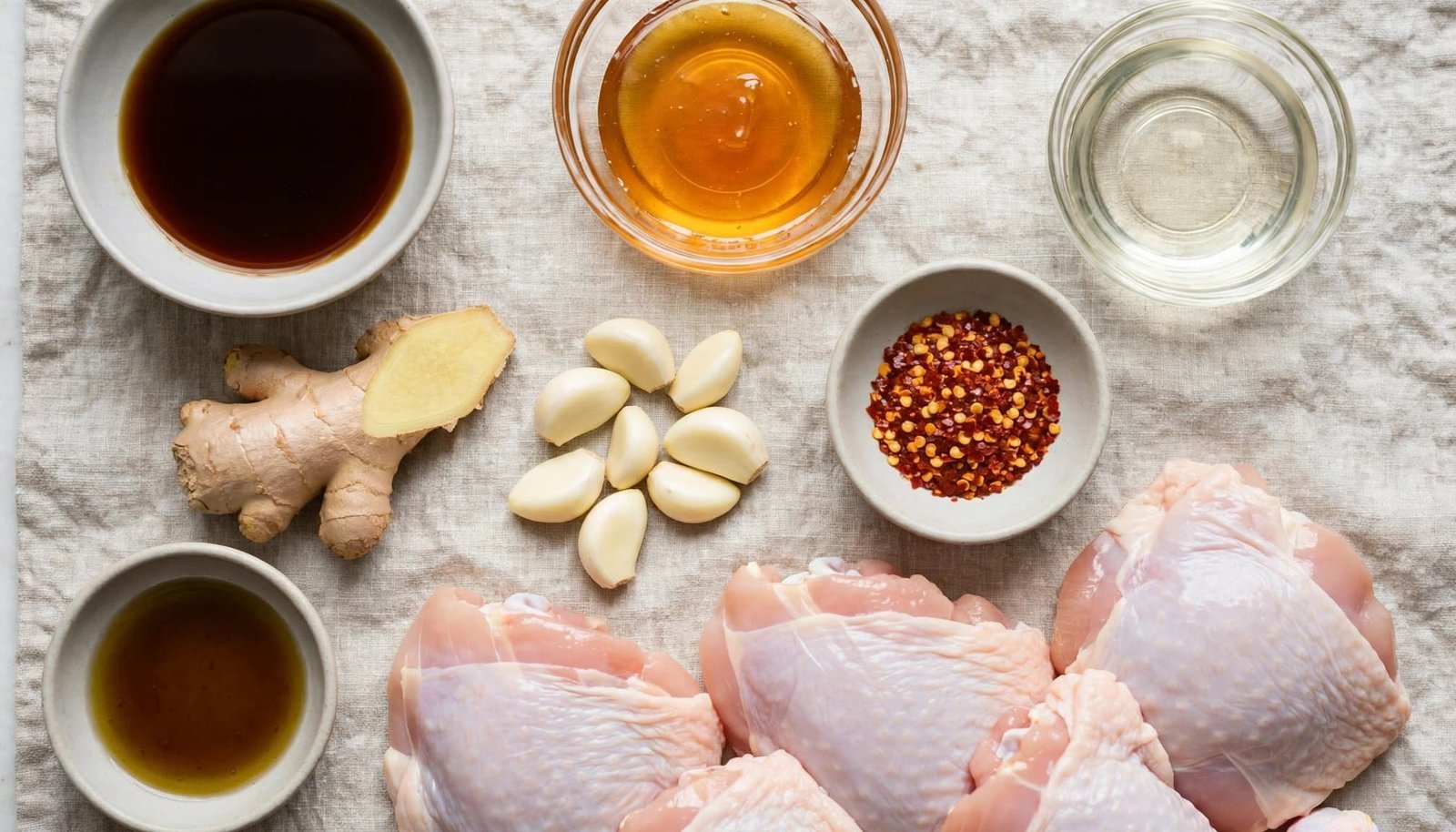
Have these ingredients ready before heating the skillet:
- 1½ pounds boneless, skinless chicken thighs, cut into bite-size pieces
- ¼ cup low-sodium soy sauce
- 2 tablespoons honey
- 1 tablespoon rice vinegar
- 1 tablespoon toasted sesame oil
- 3 garlic cloves, minced
- 1 tablespoon grated fresh ginger
- 1 tablespoon neutral cooking oil, such as canola or avocado oil
- 1 tablespoon cornstarch mixed with 1 tablespoon cold water
- ¼ teaspoon red pepper flakes, optional
- Sliced green onions and sesame seeds, optional garnishes
Low-sodium soy sauce adds savory depth while giving you more control over salt. Honey supplies sweetness and helps the sauce form a glaze. Rice vinegar brightens the mixture, which keeps the finished chicken from tasting too sweet.
Garlic and ginger add aroma, while toasted sesame oil gives the sauce a nutty finish. Keep that oil in the sauce mixture; use the neutral oil for browning the chicken over higher heat.
Mix the cornstarch with cold water in a separate small bowl. This slurry should look smooth before it reaches the skillet. Adding dry cornstarch directly to hot sauce can leave lumps that are difficult to stir out.
Use a large skillet, ideally about 12 inches wide, plus a mixing bowl, tongs, and a food thermometer. Set out a clean plate if you’ll cook in batches. Start your rice before the chicken, especially if you’re using brown rice, which needs longer.
Read also: Quick Asian Rotisserie Chicken Stir Fry for an Easy Dinner
Cook the chicken and build the glossy skillet sauce
- Pat the chicken dry with paper towels, then cut it into similar pieces, about 1 inch across. Dry surfaces brown more readily. Keep raw chicken and its cutting board separate from garnishes and other ready-to-eat ingredients.
- Whisk the soy sauce, honey, rice vinegar, toasted sesame oil, garlic, and ginger in a bowl. Add the optional red pepper flakes if you want heat. Stir until the honey is blended rather than sitting at the bottom.
- Heat the neutral oil in your skillet over medium-high heat. Add the chicken in a single layer with some space between pieces. Cook in batches if necessary, rather than piling all the chicken into a smaller pan.
- Cook for about 8 to 12 minutes, turning as needed, until browned and cooked through. Check several thick pieces with a thermometer. The USDA safe temperature chart specifies 165°F for poultry; browning alone doesn’t establish doneness.
- Transfer cooked batches to the clean plate while you finish the remaining chicken. Return everything to the skillet, then lower the heat to medium-low. Pour in the sauce and simmer gently for about 2 minutes, stirring to distribute the garlic and ginger.
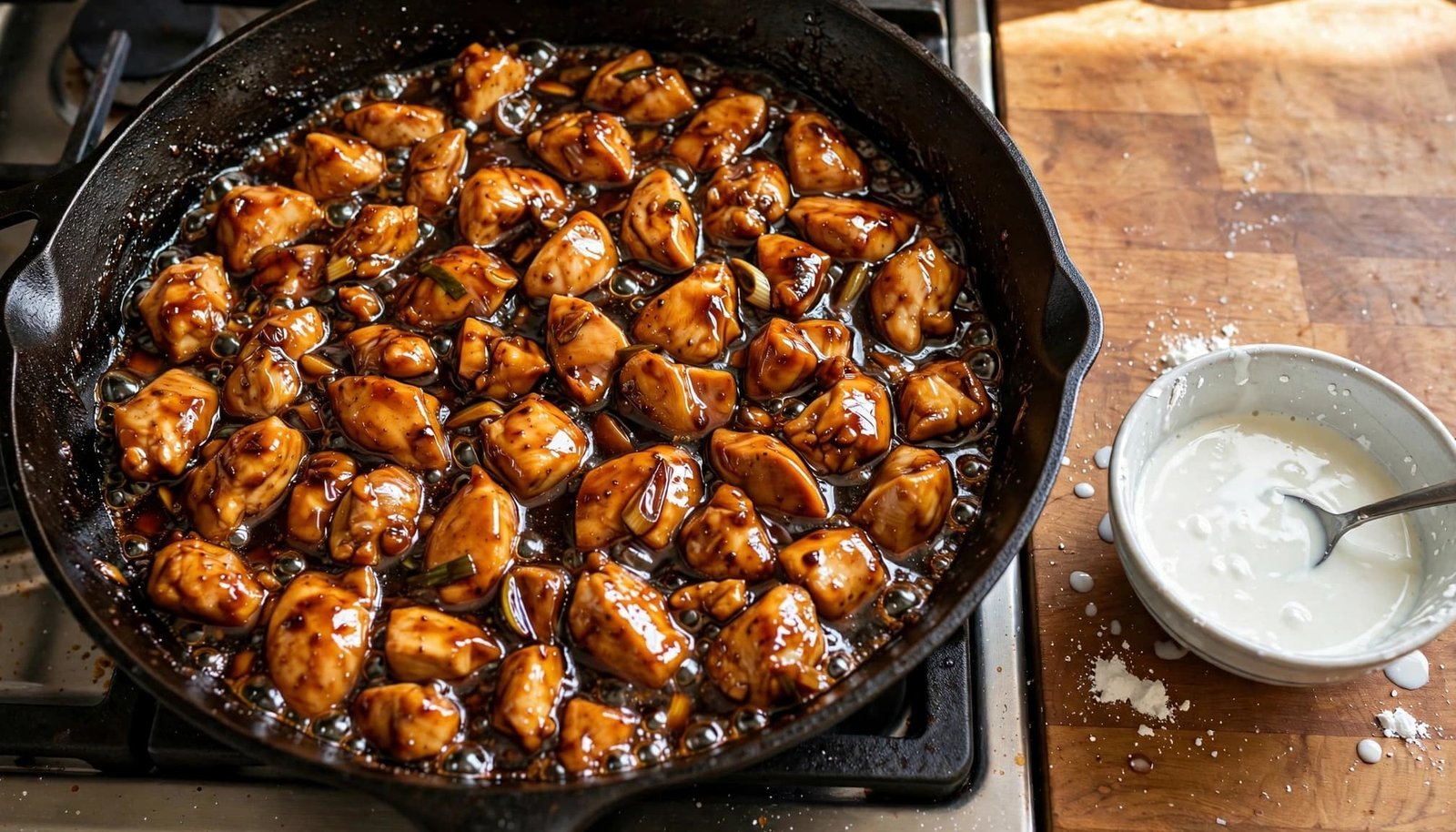
- Stir the cornstarch slurry again, since it settles as it stands. Pour it into the simmering sauce while stirring. Cook for about 1 minute, until the glaze thickens and coats the chicken rather than pooling like a thin broth.
- Remove the skillet from the heat. Add sliced green onions and sesame seeds if you want them, then serve promptly. The sauce continues to thicken as it stands, so spoon it over the chicken and rice while it’s warm.
The finished glaze should cling to each piece but still be easy to spoon. If it becomes sticky or stiff, stir in water, 1 tablespoon at a time.
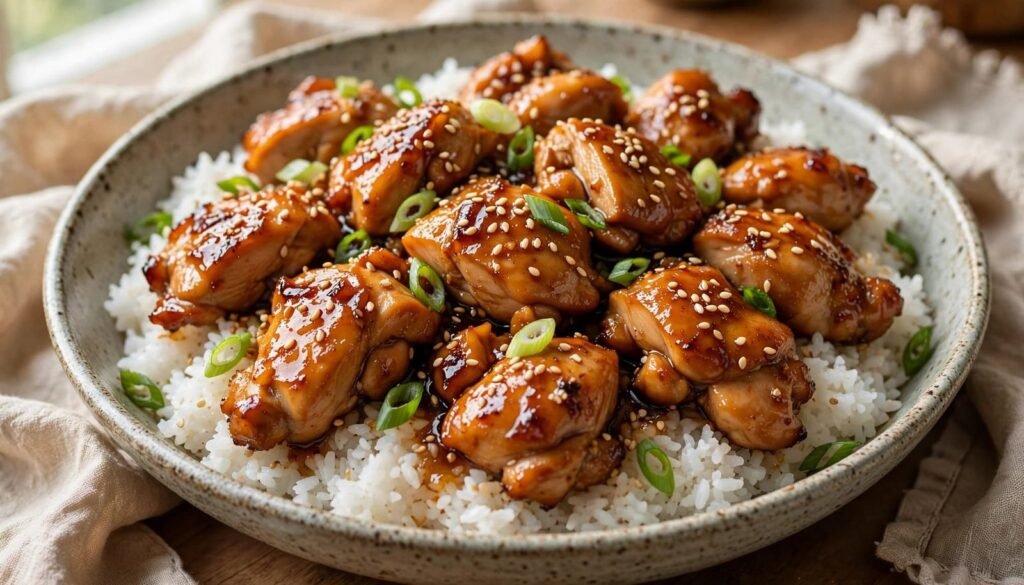
How to adjust the sauce when you are cooking without gochujang
This sauce balances salty, sweet, tangy, and aromatic ingredients. It doesn’t reproduce gochujang’s fermented flavor or thick chili-paste texture, but it gives the chicken a coating without needing that ingredient.
Make it milder, sweeter, or spicier to suit your table
Leave out the chili flakes for a mild glaze, or start with a small pinch. Different flakes vary in heat, so don’t assume they’re an exact substitute for Korean gochugaru.
Taste the sauce before it touches the chicken. Add honey ½ teaspoon at a time for more sweetness, or a small splash of rice vinegar if it tastes too sweet. Make modest changes, since the flavor becomes more concentrated during cooking.
Choose a chicken cut and pantry swaps that work
Boneless thighs stay tender and suit this quick skillet method. Breast meat also works, but it has less room for extra cooking once it reaches temperature.
Fresh ginger gives the sauce a brighter flavor. If powdered ginger is what you have, start with ½ teaspoon instead of the tablespoon of fresh ginger. Its flavor is warmer and less fresh, so expect a different result.
Serve the chicken with easy sides for a complete dinner
Keep the sides simple so the chicken remains the main cooking task. A grain and a crisp vegetable give you a complete plate without another sauce.
Pair it with rice and crisp vegetables
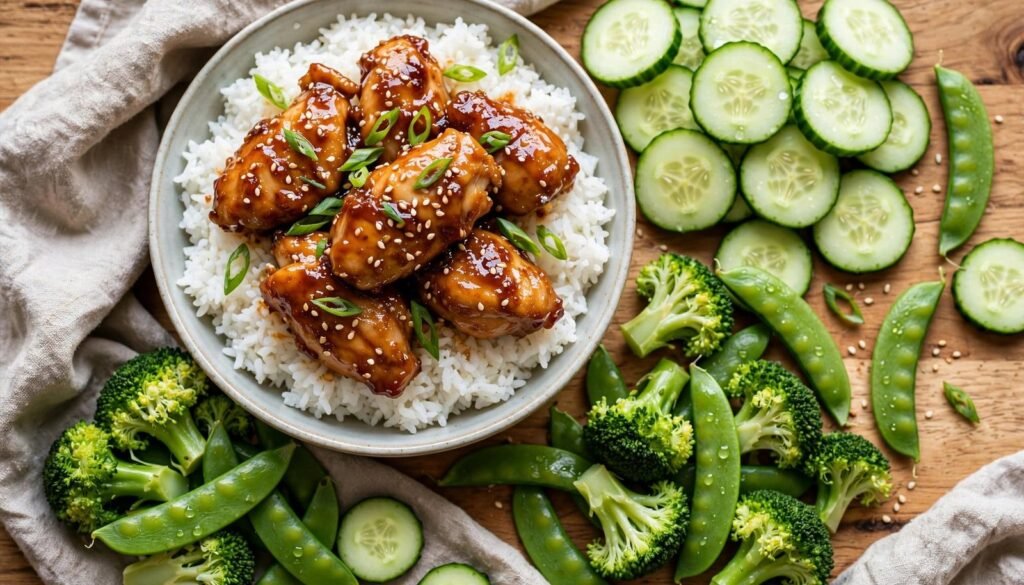
Steamed white or brown rice catches the glaze. Cook it separately while you prepare the chicken, following the timing for your chosen rice.
Add steamed broccoli, briefly sautéed snap peas, or sliced cucumber. Keep lightly cooked vegetables separate until serving so they don’t release water into the thickened sauce. Their freshness balances the sweet-savory coating.
Turn leftovers into bowls or wraps
Serve reheated chicken over rice with vegetables, or tuck it into lettuce leaves. Add cucumber after reheating so it stays crisp, as we suggest in our make-ahead chicken and rice bowls.
Spoon leftover cooked glaze over the rice. Never add uncooked sauce that touched raw chicken unless you’ve brought it to a rolling boil first.
Cook it safely, store leftovers, and avoid common skillet mistakes
A few small habits help this Korean chicken recipe without gochujang cook evenly. Give the pieces room to brown, then use gentler heat once the honey sauce enters the skillet.
Keep the chicken tender and the glaze from burning
Cut similar-sized pieces so smaller ones don’t overcook while larger ones finish. Crowding traps moisture around the chicken, which encourages steaming instead of browning. Work in batches when the pan looks full.
Lower the heat before adding the sauce, particularly if the skillet is smoking. Honey can scorch against an overheated surface before the garlic and ginger have time to cook.
If the glaze thickens too much, add a small splash of water. Stir over low heat until it coats the chicken loosely again.
Use a thermometer and chill leftovers promptly
Check the thickest pieces for 165°F, inserting the probe from the side when needed to reach the center. Don’t judge safety by the color of the meat or sauce.
Following USDA leftovers safety guidance, refrigerate leftovers within two hours in shallow containers. Keep them at 40°F or below, use within four days, and reheat to 165°F throughout.
Keep the sauce separate from raw chicken during preparation. Any sauce that touches raw poultry must reach a rolling boil before you serve it.
Frequently Asked Questions
Can I make this Korean chicken without any chili?
Yes, leave out the optional red pepper flakes. Garlic, ginger, soy sauce, honey, and sesame oil still give the chicken a full sweet-savory flavor.
Can I use chicken breast instead of thighs?
Yes, use the same weight of boneless, skinless breast and cut it into even pieces. Check for 165°F and stop cooking once it reaches that temperature, since breast meat dries out more easily.
Can I prepare the sauce ahead of time?
Whisk the sauce ingredients together and refrigerate them in a covered container the day before cooking. Keep the raw chicken separate and stir the sauce again before using it. Mix the cornstarch slurry separately near the end of cooking.
Can I make this recipe gluten-free?
Use gluten-free soy sauce or tamari labeled gluten-free in place of regular soy sauce. Check the labels on the remaining ingredients too, including any seasoning or sauce you substitute.
A Simple Skillet Dinner With Flexible Heat
This Korean chicken recipe without gochujang uses a short skillet method and a savory-sweet sauce made with familiar ingredients. Brown the chicken first, then lower the heat before adding the glaze so it coats without scorching.
Keep the chili flakes optional, and adjust them to your table’s comfort level. Serve with rice and crisp vegetables for a manageable weeknight dinner with little extra preparation.
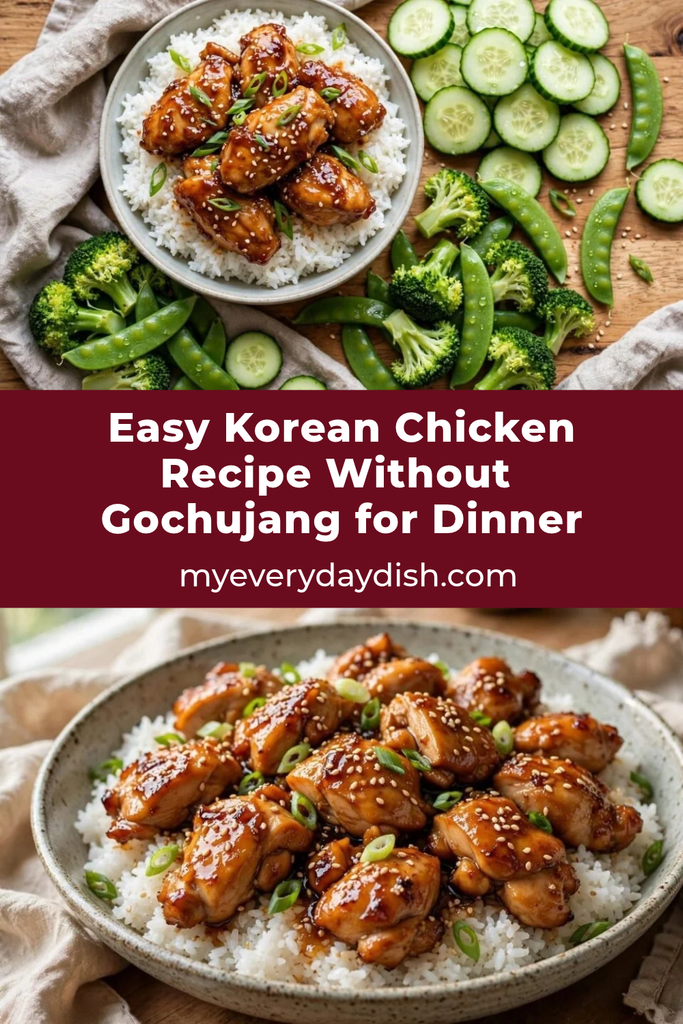
Save the pin for later

I’m the creator of My Everyday Dish, a food blog focused on easy homemade recipes, comforting family meals, simple baking, and seasonal food ideas. I love finding practical ways to make everyday cooking less stressful and more enjoyable. Here, I share recipes with simple ingredients, clear instructions, and plenty of flavor, helping you make delicious meals and treats you’ll feel confident serving at home.
Leave a Reply