
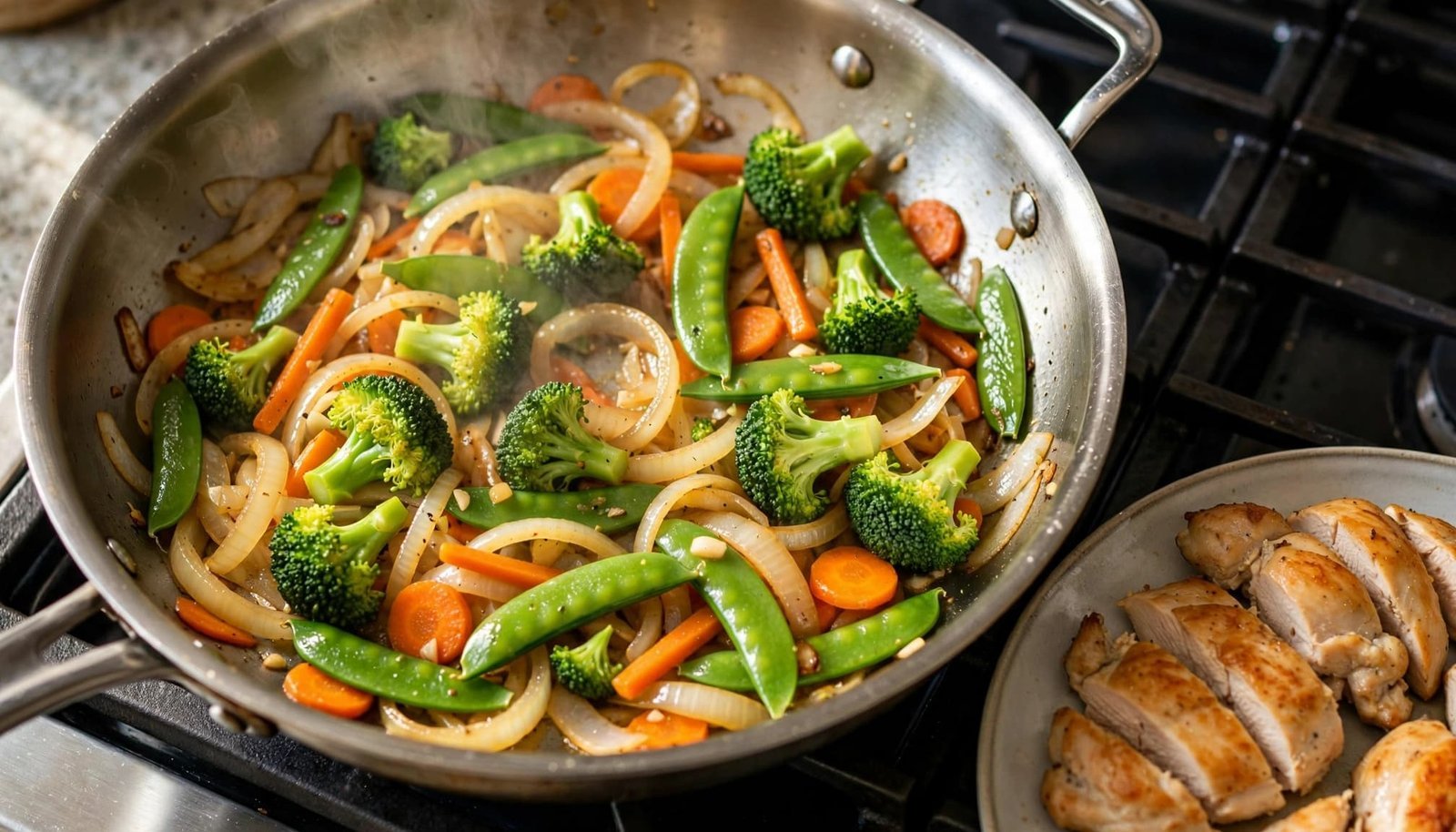
A quick Asian rotisserie chicken stir fry turns store-bought chicken into a warm, family-friendly dinner with little prep. Using cooked chicken leaves you more time for crisp vegetables and a savory-sweet sauce that coats each bite.
You can use frozen vegetables for convenience or slice what you already have, then serve everything over rice. Keep the chicken for the final few minutes so it warms through without spending too long in the pan.
Quick Asian Rotisserie Chicken Stir Fry for an Easy Dinner
This recipe makes about 4 servings and takes an estimated 20 minutes with prepared chicken and quick-cooking vegetables. Your timing will vary with the pan, stove, and vegetable choice. Rice that needs longer to cook should go on first, or you can use precooked rice.
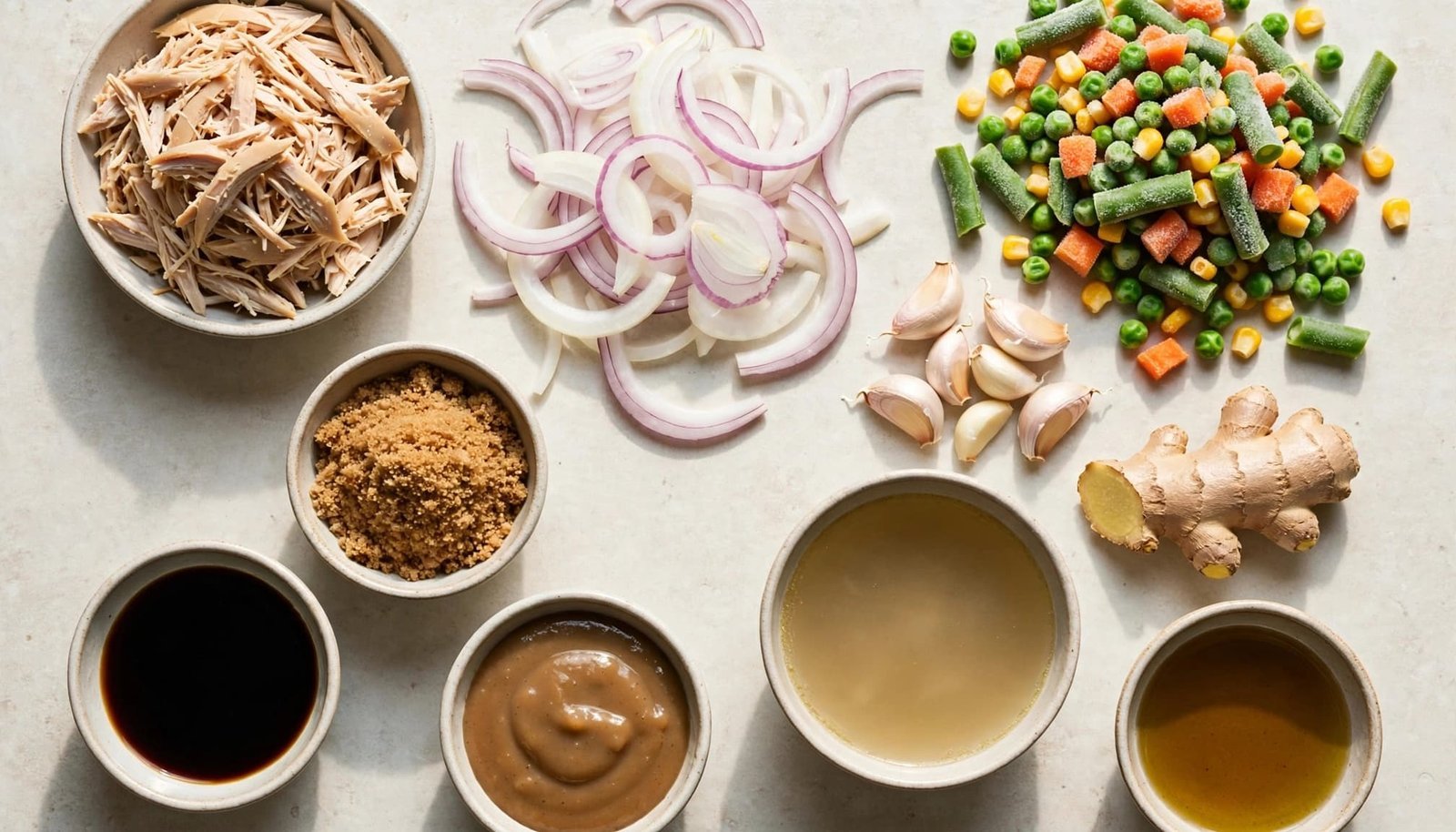
Sauce Ingredients
- 1½ tablespoons reduced-sodium soy sauce
- 1 tablespoon toasted sesame oil
- 1 tablespoon oyster sauce
- ¾ cup chicken broth
- 1 tablespoon brown sugar
- 2 teaspoons cornstarch
Stir-Fry Ingredients
- 2 cups thinly sliced or shredded rotisserie chicken
- Sliced onion
- Frozen stir-fry vegetables or sugar snap peas
- Minced garlic
- Grated or minced ginger
- Neutral cooking oil, for the pan
- Cooked rice, for serving
- Green onion, sesame seeds, and Sriracha, optional toppings
Remove the chicken bones and any skin you don’t want before measuring the meat. Keep the pieces small enough to warm quickly, but avoid shredding them so finely that they disappear into the sauce.
Choose a plain or lightly seasoned rotisserie chicken when possible. Strong barbecue or lemon seasoning will change the finished flavor, even with the same sauce.
Have everything ready before heating the skillet. Once the vegetables begin cooking, the remaining steps move quickly.
How to Make Rotisserie Chicken Stir Fry Step by Step
Use a large skillet or wok with enough room to turn the vegetables without spilling them.
Prepare the Rice, Vegetables, and Sauce
- Cook the rice according to its package directions. Start it before the stir-fry if it needs more time, then keep it covered while you finish the chicken.
- Slice the onion, measure the vegetables, and prepare the garlic and ginger. Separate any frozen vegetables stuck together so they cook more evenly.
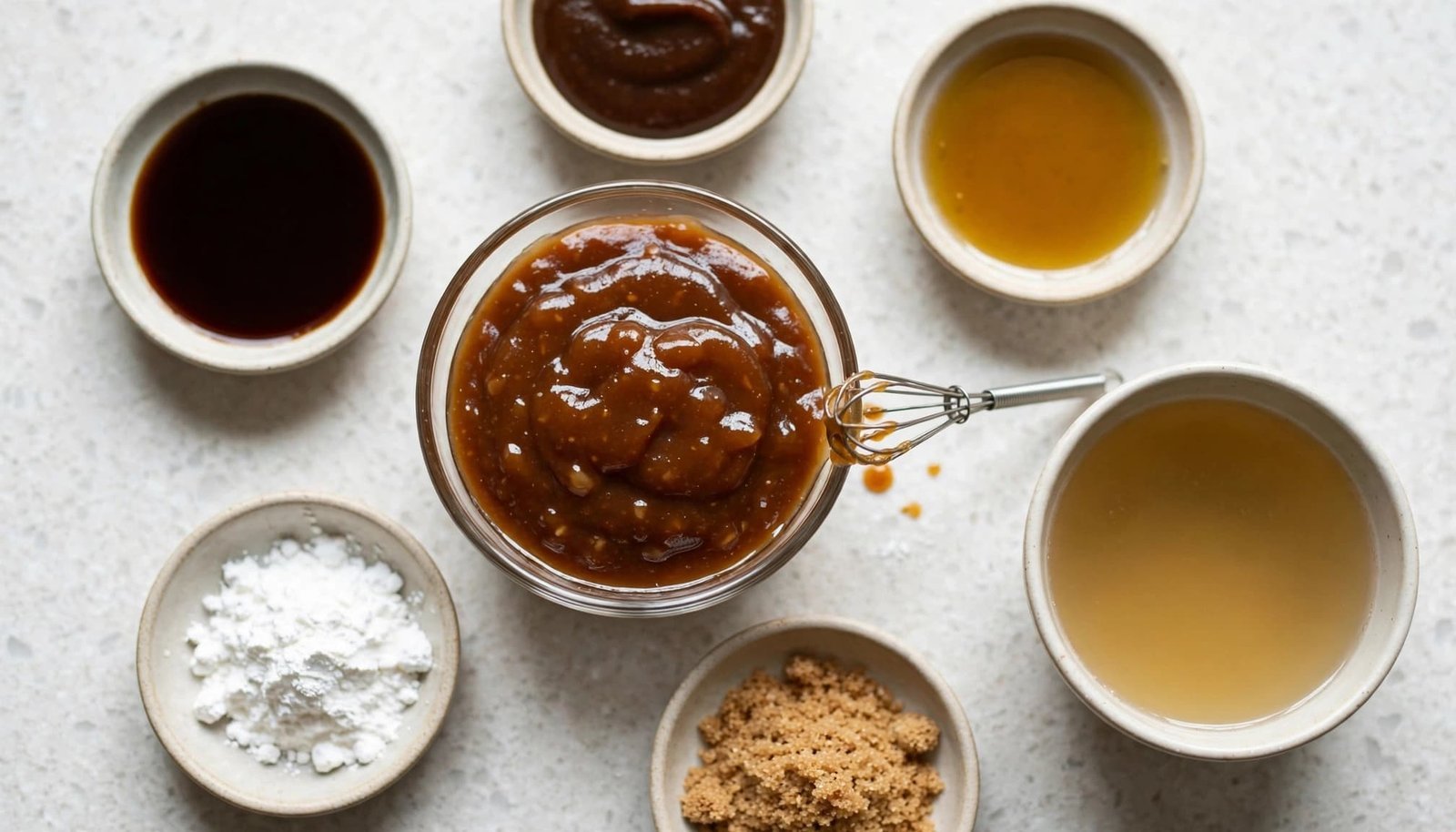
- Whisk the cornstarch into the soy sauce until smooth. Add the sesame oil, oyster sauce, broth, and brown sugar, then whisk again. Mixing the cornstarch with liquid first prevents dry lumps.
Stir-Fry the Vegetables, Then Add Chicken and Sauce
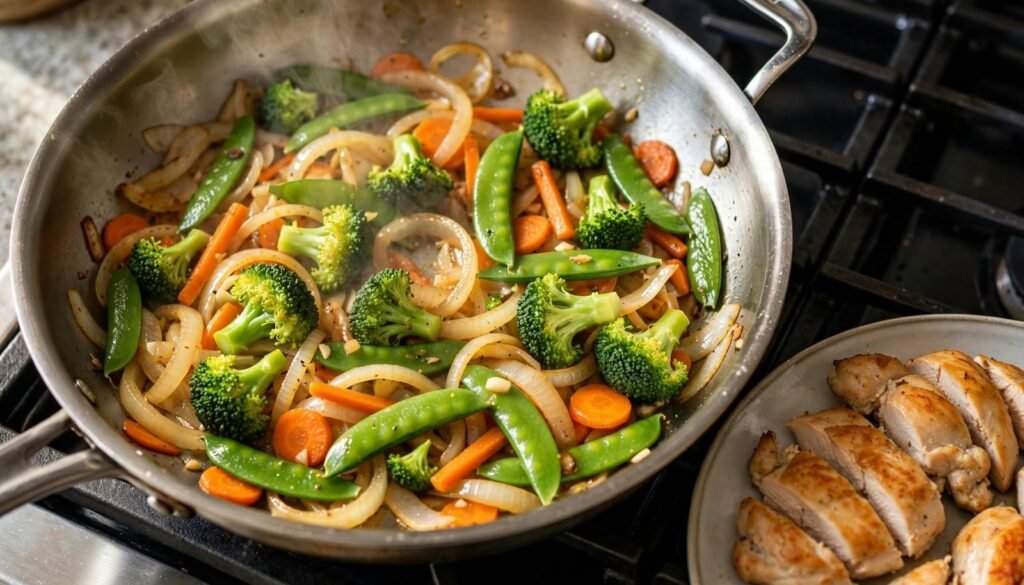
- Lightly oil the skillet and heat it over medium-high heat. Add the onion and cook for about 2 minutes, stirring until it begins to soften.
- Add the vegetables. Follow the package directions for frozen blends, often about 6 to 7 minutes. Stir frequently and let excess moisture evaporate. Add garlic and ginger near the end, then stir until fragrant without letting either brown heavily.
- Whisk the sauce again, then add it with the chicken. Toss until the sauce bubbles, thickens, and coats the ingredients, often about 2 minutes. Continue heating until the chicken reaches 165°F, checked with a food thermometer.
Spoon the stir-fry over rice and add your preferred toppings. The finished vegetables should be tender enough to bite easily while still holding their shape.
Read also: Easy Homemade Tortellini Soup With Chicken Broth
Make the Sauce and Stir-Fry Come Together
The sauce should coat the chicken and vegetables without becoming thick enough to feel sticky. Pan moisture and cooking time both affect that texture.
Balance Salty, Savory, Sweet, and Toasted Flavors
Soy sauce and oyster sauce supply the salty, savory base. Broth gives the sauce enough liquid to spread through the pan, while brown sugar softens the saltiness with a little sweetness.
Toasted sesame oil adds aroma, and cornstarch helps the sauce cling once it heats. Keep the measured sesame oil in the sauce rather than using it to fry the onion.
Taste before adding extra soy sauce. Rotisserie chicken, broth, and oyster sauce already contribute salt, even when your soy sauce is reduced-sodium.
Keep the Vegetables Crisp-Tender and the Chicken Juicy
Cut vegetables into similar-sized pieces so smaller ones don’t soften before larger pieces cook through. Keep the pan hot enough for a steady sizzle, without letting the onion or garlic scorch.
If the vegetables form a deep pile, cook them in batches. A crowded pan holds steam and released water, which can dilute the sauce before it thickens.
Add the chicken near the end because it’s already cooked. Heat it thoroughly in the bubbling sauce, then serve rather than leaving the skillet over the heat.
If the sauce becomes thicker than you want, stir in a small splash of broth. Add it gradually so the coating doesn’t become thin.
Easy Swaps and Serving Ideas for This Chicken Stir Fry
Keep the same cooking order when changing ingredients, but allow the vegetables to guide your timing. A different blend can release more water or need longer to soften.
Use the Vegetables and Rice You Already Have
Bell peppers, broccoli florets, snap peas, and thinly sliced carrots all work here. Cut firm vegetables small enough to cook quickly, and give carrots or thicker broccoli pieces a head start.
Frozen stir-fry blends save chopping time, though they may soften more than fresh vegetables. Cook them according to their package directions and let excess liquid evaporate before adding the sauce.
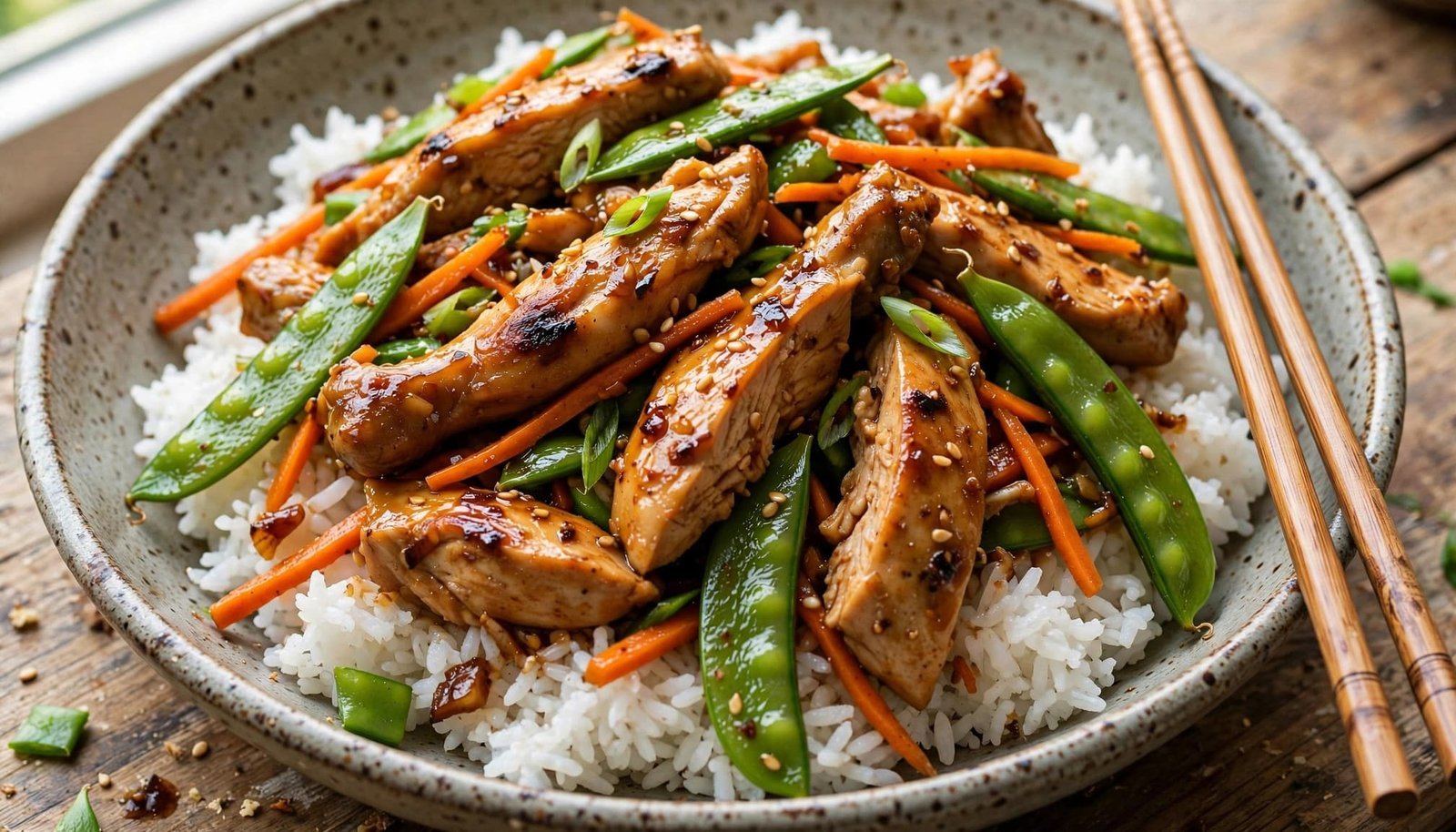
White rice gives this Asian rotisserie chicken stir fry a mild base. We also pair chicken stir-fry with brown rice in our healthy family dinner recipes; precooked brown rice keeps that option quick.
Cooked noodles are another choice if you want a change. Drain them well before serving so extra water doesn’t thin the sauce.
Adjust the Heat and Finish With Simple Toppings
Keep Sriracha or red pepper flakes at the table when serving children or anyone who prefers mild food. Each person can add heat without changing the whole skillet.
Sliced green onion adds a fresh onion flavor, while sesame seeds give a little crunch. Add either after cooking so the finish stays distinct.
Start with a small amount of hot sauce and taste before adding more. Some chili sauces also contribute salt or sweetness, which changes the balance of the finished bowl.
Store and Reheat Leftovers Safely
Refrigerate leftover stir-fry within 2 hours, or within 1 hour when the room or outdoor temperature is above 90°F. Divide it into shallow containers rather than leaving the whole batch in a deep pan to cool.
Keep the refrigerator at 40°F or below, and use refrigerated cooked chicken within 3 to 4 days. If the rotisserie chicken was already refrigerated before making this meal, count that earlier storage time too.

Reheat only the portion you plan to eat. Add a small splash of broth to a skillet, stir in the leftovers, and heat while turning the chicken and vegetables.
The USDA’s leftover food safety guidance recommends reheating leftovers to 165°F. Check with a food thermometer rather than judging by steam alone.
For microwave reheating, cover the food and stir partway through. Check several places afterward because the center and edges may heat differently. The vegetables will usually be softer after reheating, even when the chicken remains moist.
Frequently Asked Questions
Can I Use Fresh Vegetables Instead of Frozen?
Yes, fresh vegetables work well and let you choose the mix your household prefers. Cut them into small, similar-sized pieces, then adjust cooking time according to their firmness and size. Thin carrots need less time than thick chunks.
Can I Make the Stir-Fry Without Oyster Sauce?
Use a vegetarian mushroom-based sauce, or replace the oyster sauce with a smaller amount of extra soy sauce. Mushroom-based sauces vary, and soy sauce makes the mixture saltier without the same body. Taste before adding more seasoning.
Can I Prepare the Sauce Ahead of Time?
Yes, mix the sauce ahead and keep it covered in the refrigerator until you’re ready to cook. Whisk it thoroughly before pouring it into the skillet because cornstarch settles at the bottom. Scrape the bowl so the thickener goes into the pan.
How Do I Keep the Sauce From Turning Watery?
Let most of the liquid released by the vegetables evaporate before adding the sauce. Cook in batches if the pan is crowded, and whisk the sauce again before using it. Give it time to bubble and thicken before serving.
Can I Freeze Leftover Chicken Stir-Fry?
Yes, freeze it in a sealed freezer-safe container once it’s portioned for storage. The vegetables may soften after thawing, so expect a different texture than the first night. Thaw in the refrigerator, then reheat until the dish reaches 165°F.
A Quick Dinner With Less Prep
Rotisserie chicken makes a flavorful stir-fry manageable on a busy night, especially when the vegetables and sauce are ready before cooking. Add the chicken near the end, then serve it over rice once it’s thoroughly heated.
Keep the vegetables flexible and offer toppings at the table. A simple sauce and a few careful cooking steps give you dinner without much preparation.
Save the pin for later

I’m the creator of My Everyday Dish, a food blog focused on easy homemade recipes, comforting family meals, simple baking, and seasonal food ideas. I love finding practical ways to make everyday cooking less stressful and more enjoyable. Here, I share recipes with simple ingredients, clear instructions, and plenty of flavor, helping you make delicious meals and treats you’ll feel confident serving at home.
Leave a Reply