
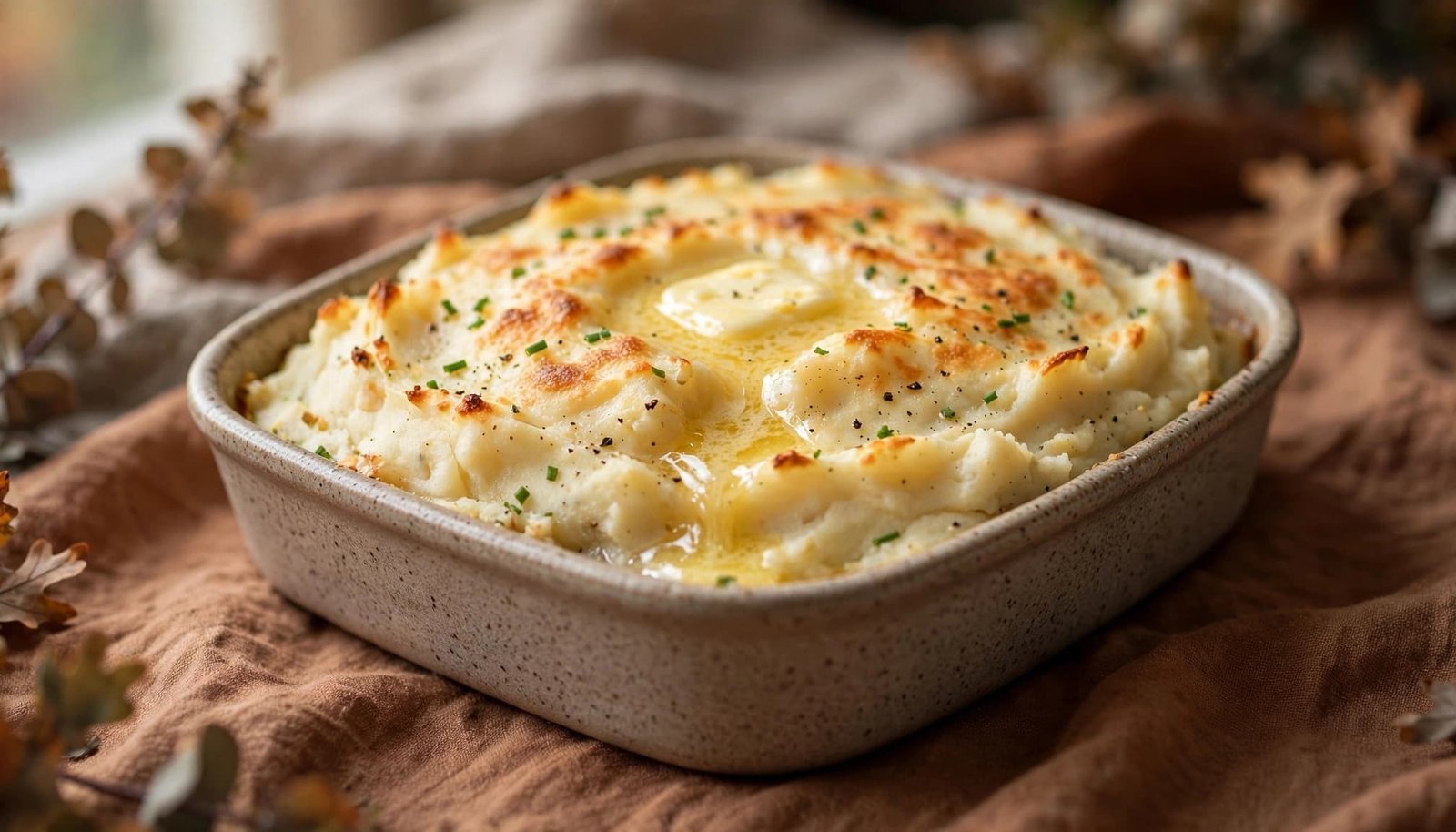
I like a Thanksgiving plan that leaves room for a favorite side, even with a busy oven and a full kitchen. This oven baked mashed potatoes recipe starts with boiled potatoes, then turns them into a creamy casserole you can bake before serving.
You mash the tender potatoes with butter and warm dairy, then heat them in a buttered dish until hot throughout. The make-ahead option keeps the peeling and mashing out of the final dinner rush. Start with starchy russets, then follow the steps below for a soft, creamy mash.
Easy Oven Baked Mashed Potatoes Recipe for Thanksgiving Dinner
This casserole uses familiar ingredients: potatoes, butter, milk or cream, salt, and pepper. Baking heats the prepared mash through and gives you one dish to bring to the table.
The potato base follows our mashed russet potatoes recipe, which makes about six servings. Holiday portions can be smaller when you’re serving several sides.
What you’ll need for a creamy casserole
- 3 pounds russet potatoes.
- 6 tablespoons unsalted butter, plus a little for greasing.
- 1 to 1 1/4 cups whole milk, half-and-half, or heavy cream.
- Salt for the cooking water and final seasoning.
- Freshly ground black pepper, to taste.
- Optional sour cream, softened cream cheese, or chopped herbs.
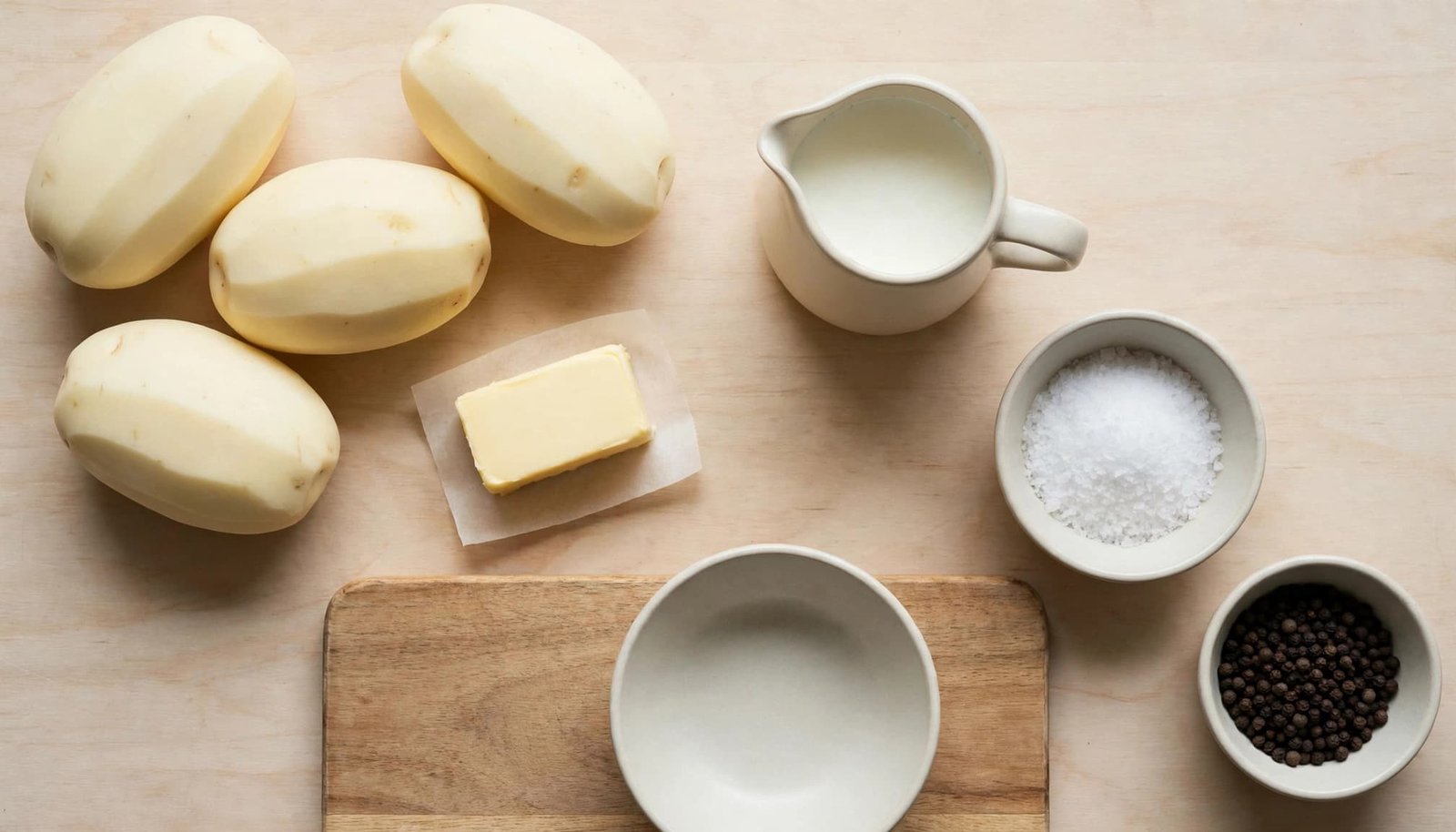
Russets are starchy and mash easily. Butter adds richness, while warm dairy helps you adjust the consistency without cooling the potatoes.
Keep the optional additions separate until you’ve tasted the plain mash. Sour cream adds tang, while cream cheese makes the mixture richer.
Get the casserole and oven ready
Butter a 2-quart casserole dish, including the corners and sides. Heat the oven to 350°F before baking the prepared potatoes.
Keep foil nearby so you can cover the casserole and hold in moisture. Baking time depends on the potatoes’ starting temperature and the depth of the dish; a chilled casserole takes longer than a warm one.
How to make oven-baked mashed potatoes, step by step
Use a large pot, a colander, and a hand masher. Have the butter and dairy ready before draining so the potatoes stay warm during mashing.
Boil the potatoes until fork-tender
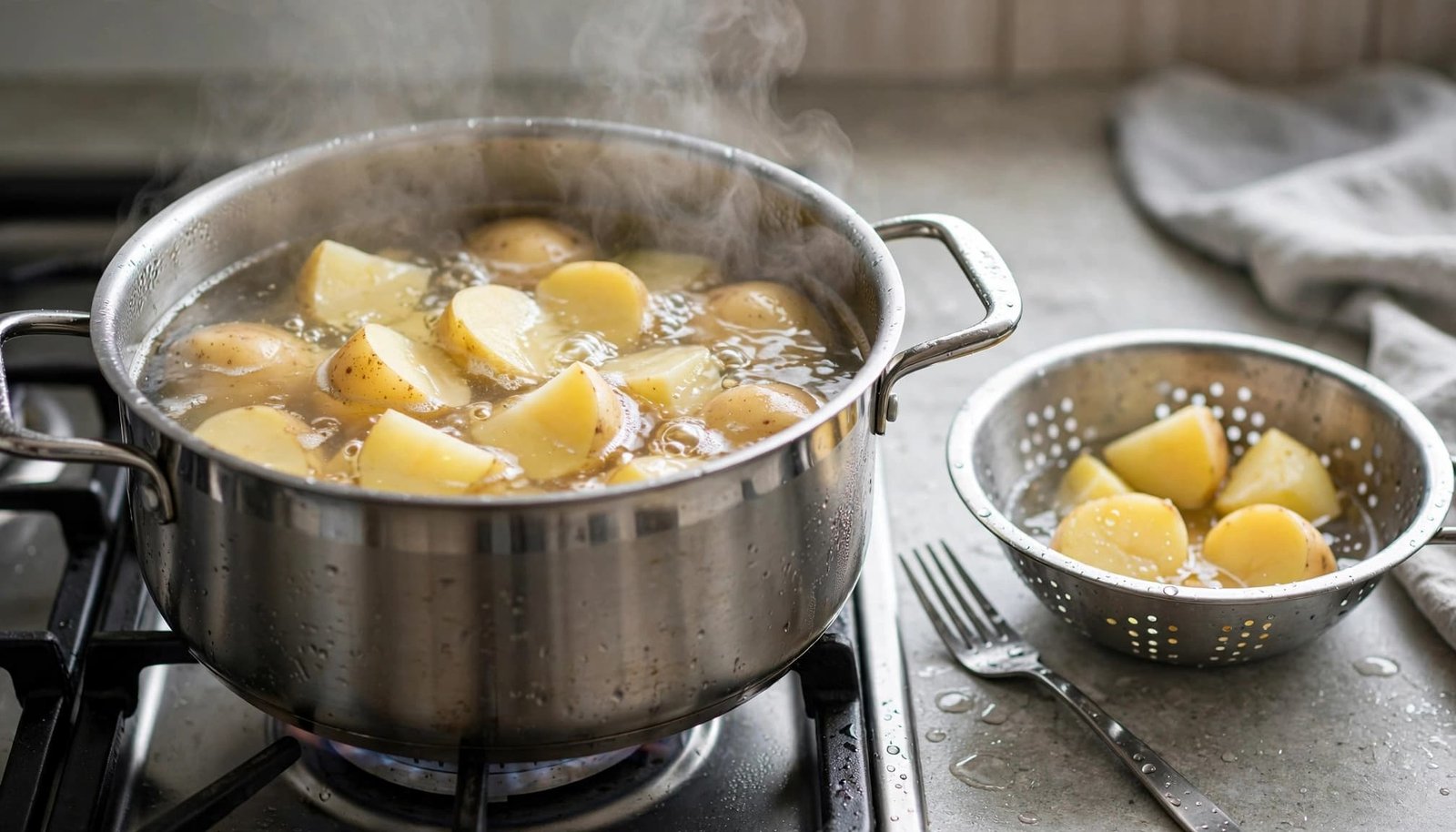
- Scrub and peel the potatoes, then cut them into even 1-inch chunks. Put them in a pot and cover with cold water by about 1 inch. Add salt.
- Bring to a boil, then reduce the heat to maintain a steady simmer. Cook for about 15 to 25 minutes, until a fork slides into the center easily.
- Drain thoroughly, then return the potatoes to the warm pot for 1 to 2 minutes. Let excess moisture evaporate before mashing.
Mash with warm butter and dairy
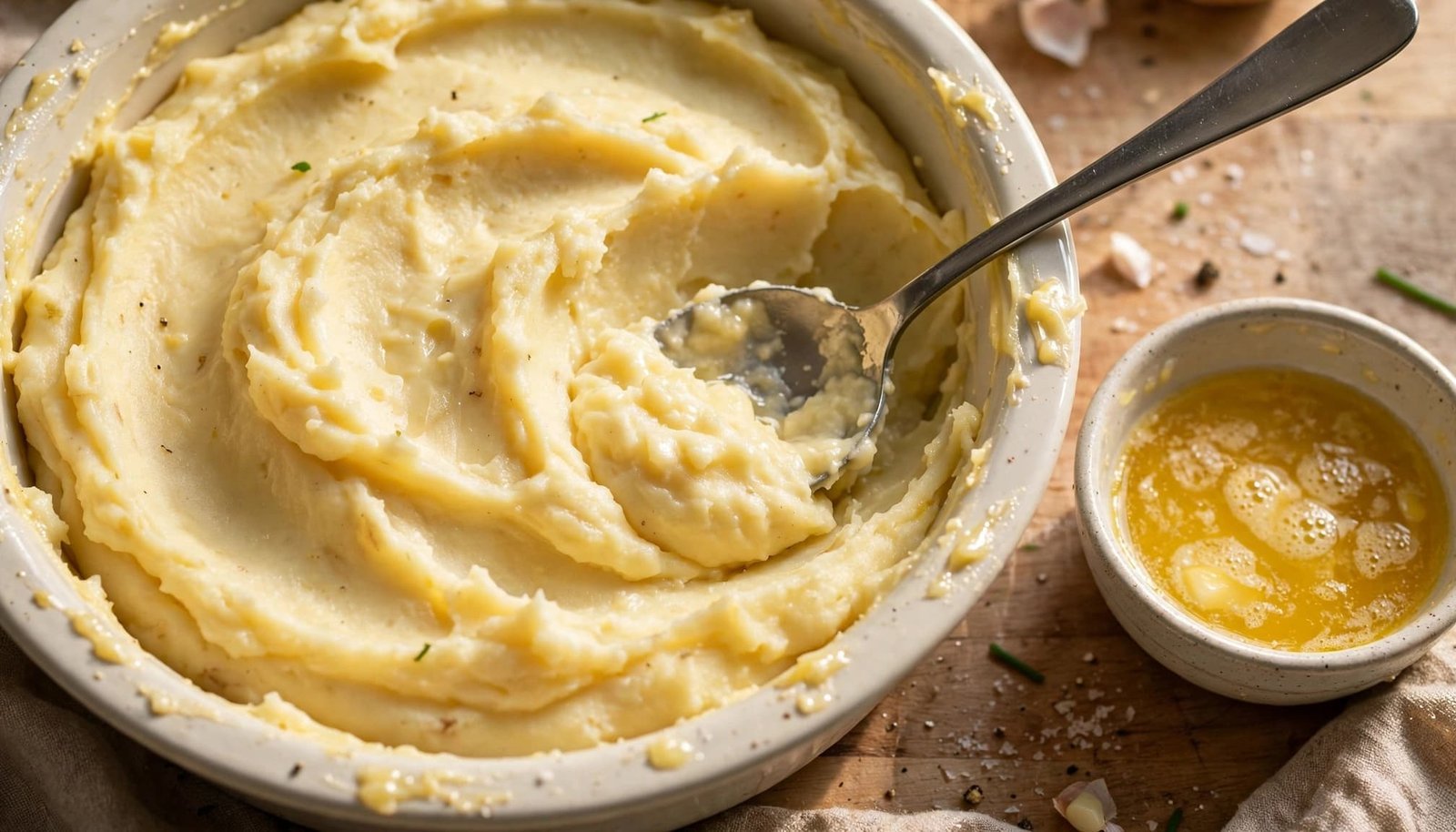
- Melt the butter and warm the milk or cream separately. Mash the drained potatoes, then fold in the butter.
- Add 1 cup of warm dairy in stages. Use the remaining 1/4 cup as needed, stopping when the potatoes are soft and spoonable. Season with salt and pepper, then taste. Fold in any optional additions gently.
Fill the dish and bake until hot
- Spoon the mash into the prepared casserole and smooth the top without packing it down. Add a little butter or a small splash of dairy over the surface.
- Cover and bake at 350°F until hot throughout. Open the center with a serving spoon to check it; hot edges alone don’t mean the middle is ready.
Stop mashing once the texture is smooth enough for you. Continued mixing won’t improve already-soft potatoes.
Read also: Twice Baked Mashed Potatoes Recipe With Cheese
Simple ways to keep mashed potatoes fluffy and flavorful
Thorough draining gives you more control over the finished texture. Water left in the pot thins the mash before you’ve added any flavorful dairy.
Season in layers and taste before baking
Salt the cooking water, then taste again after adding butter and dairy. Potatoes need seasoning throughout, especially when gravy will be served separately.
Add roasted garlic or chopped chives if you want more flavor. A modest spoonful of sour cream adds tang without changing the dish into a heavily seasoned casserole.
Keep additions restrained when the potatoes will share a plate with stuffing and gravy. You can always offer extra herbs and pepper at the table.
Fix potatoes that seem dry or too thick
Stir in warm milk or cream a tablespoon at a time if the mash looks stiff. Fold gently after each addition, then pause before adding more.
For this oven baked mashed potatoes recipe, the mixture should spread easily without looking loose or watery. A soft mash has more room to firm up during baking.
Add dairy gradually before baking. You can loosen a thick mash, but extra liquid is harder to remove once mixed in.
If the surface dries in the oven, add a little butter or dairy and replace the cover. Let it warm through before stirring.
Read also: Creamy Mashed Potatoes Recipe With Heavy Cream
Make-ahead and reheating tips for Thanksgiving day
Preparing the potatoes ahead moves the hands-on work to a quieter part of the holiday. Keep the casserole refrigerated until you’re ready to bake it.
Prepare the casserole a day ahead
Make and mash the potatoes, then transfer them to the buttered dish. Cover and refrigerate overnight rather than leaving the casserole on the counter while other preparations continue.
Follow USDA leftovers and food safety guidance: refrigerate cooked food within two hours. Divide a large batch into shallow containers if needed so it can cool promptly.
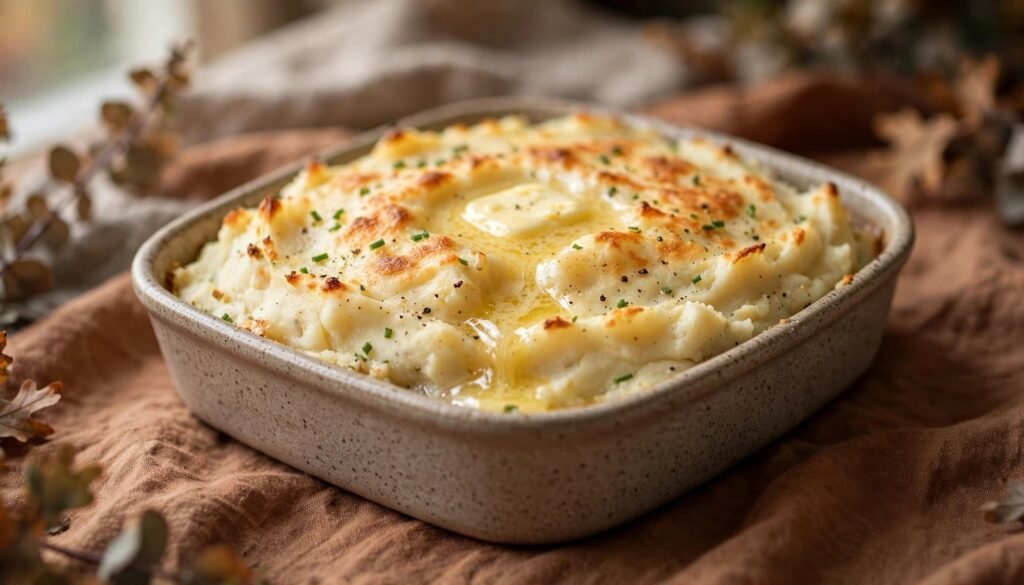
Before baking, add a little warm milk or melted butter if the chilled potatoes look firm. Use a baking dish suitable for moving between refrigerator and oven.
Reheat gently without drying the potatoes
Cover the casserole during reheating to hold in moisture. Give refrigerated potatoes more oven time than a freshly prepared, warm batch.
Reheat chilled cooked potatoes to 165°F throughout, checking the center and several other spots with a food thermometer. Continue heating if any area remains below that temperature.
Fluff gently before serving if the texture allows. Add a small splash of warm dairy if needed, then taste for seasoning again.
An overnight prep plan is about convenience and quality. It doesn’t replace prompt refrigeration or thorough reheating.
Serve these mashed potatoes with your Thanksgiving meal
Bring the casserole to the table on a heatproof trivet and use a broad serving spoon. The potatoes pair well with roast turkey, ham, roasted vegetables, and gravy.
Finish with easy toppings and serving ideas
Add a pat of butter, chopped chives, or a little black pepper near the end. These optional toppings add flavor without changing the basic recipe.
Serve gravy in a separate jug so guests can choose how much they want. Mushroom gravy is another option, especially alongside a vegetable-centered plate.
If you’re rounding out the meal, our easy Thanksgiving side dish recipes include familiar vegetables, stuffing, and gravy ideas.

Fit the casserole into a busy oven schedule
Use 350°F as the baking temperature for this casserole. If other dishes need a different temperature, plan a separate baking slot rather than assuming their timing will work for the potatoes.
Have the casserole assembled before dinner preparations become crowded. Making it ahead reduces peeling and mashing on Thanksgiving day, although you’ll still need oven space to heat it.
Frequently Asked Questions
Can I make these potatoes without a hand masher?
Yes. A potato ricer or food mill can break down the cooked potatoes before you add butter and dairy. Fold the additions in gently rather than continuing to work the potatoes once they’re smooth.
Can I double the recipe for a larger gathering?
Double the ingredients, then divide the potatoes between two similar casserole dishes. Keeping the depth close to the original makes heating more manageable than using one deep dish. Allow enough oven space around both casseroles, and assess each one separately.
How long can I keep leftover mashed potatoes?
USDA guidance allows three to four days refrigerated for properly handled cooked leftovers. Store the potatoes promptly in covered containers. Keep that storage window separate from the overnight preparation plan for this holiday casserole.
Can I reheat one serving instead of the whole casserole?
Yes. Put a portion in a microwave-safe dish, add a small splash of milk, and cover with a microwave-safe lid. Heat in short intervals, stirring between them, until the potatoes reach 165°F throughout. Reheating only what you need avoids repeatedly warming the entire batch.
A Creamy Side With Less Last-Minute Work
This oven baked mashed potatoes recipe puts a familiar Thanksgiving favorite into a casserole you can prepare before the dinner rush. Drain well, add warm dairy gradually, and stop mashing when the potatoes are soft.
Use the overnight option when it helps your schedule, then allow enough time for thorough reheating. Finish with butter, herbs, or gravy, keeping the toppings as simple as you like.
The small adjustments matter most: a little extra dairy when needed and a hot center before serving.
Save the pin for later

I’m the creator of My Everyday Dish, a food blog focused on easy homemade recipes, comforting family meals, simple baking, and seasonal food ideas. I love finding practical ways to make everyday cooking less stressful and more enjoyable. Here, I share recipes with simple ingredients, clear instructions, and plenty of flavor, helping you make delicious meals and treats you’ll feel confident serving at home.
Leave a Reply