
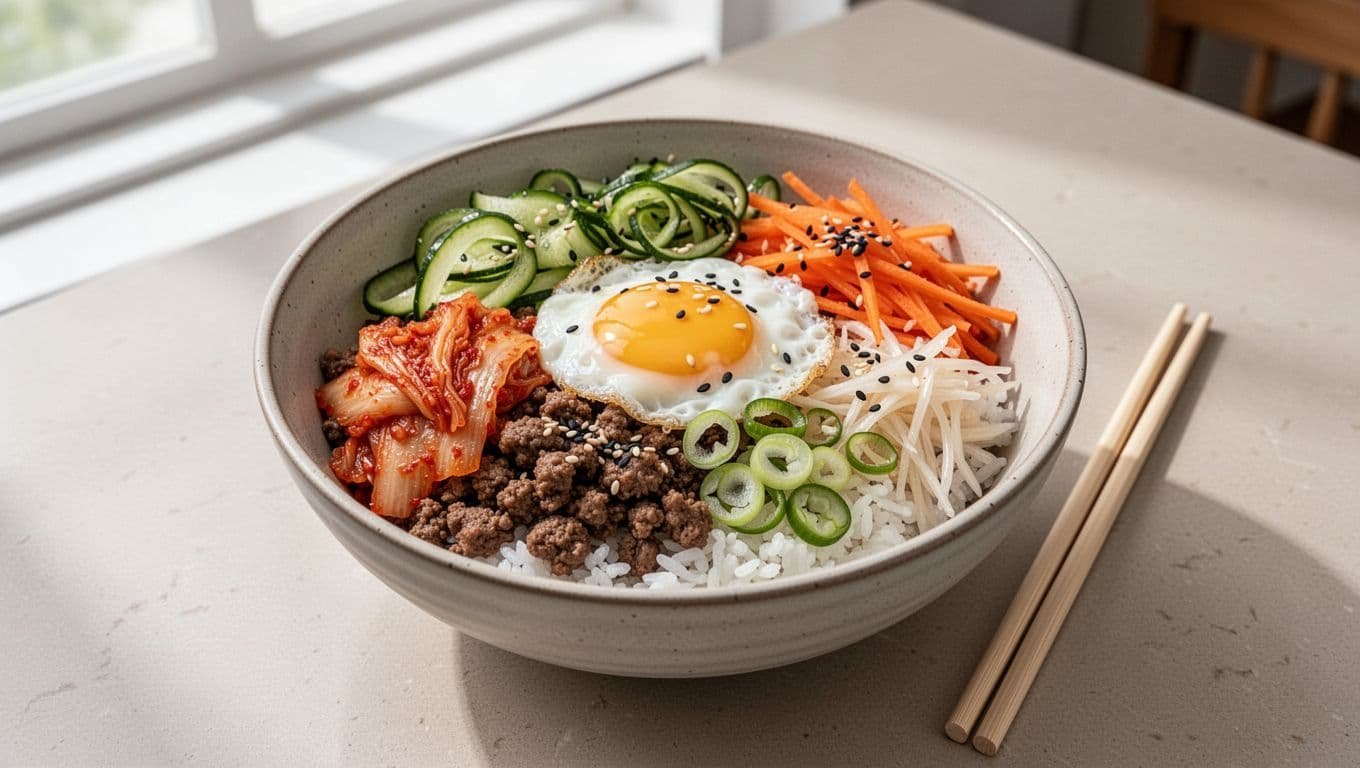
Sweet, savory, spicy, and tangy flavors come together fast in these Korean Inspired Ground Beef and Kimchi Bowls. Warm, saucy beef meets cool cucumber, crisp carrots, and punchy kimchi for a dinner that feels far more interesting than its short ingredient list.
Everything cooks in one skillet, and you can spoon it over white rice, brown rice, or cauliflower rice. Expect a flexible 30-minute meal with plenty of contrast in every bite. Start by stirring together a quick sauce, brown the beef, then layer your favorite toppings into each bowl.
Homemade Korean Inspired Ground Beef and Kimchi Bowls: What You Need
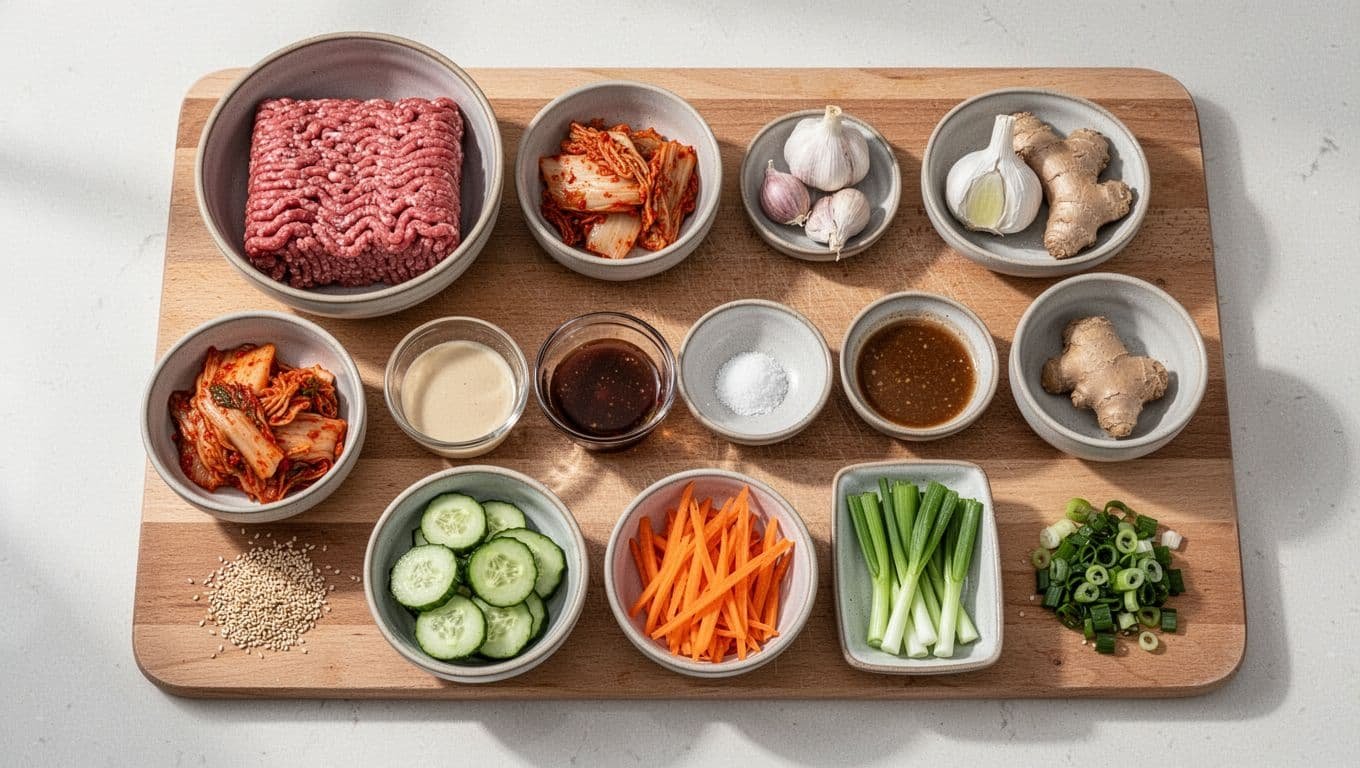
Build the bowls around ground beef, cooked rice, and cabbage kimchi. White rice is soft and familiar, while brown rice adds a chewier bite. Choose ground beef with the fat level you prefer, then drain only the excess after browning.
The sauce needs garlic, fresh ginger, soy sauce or coconut aminos, toasted sesame oil, rice vinegar, brown sugar or honey, and gochujang. Soy sauce brings salt and depth. A small amount of sweetener rounds out kimchi’s sharp fermented flavor, while vinegar gives the beef a brighter finish. Gochujang adds fermented chile heat and a subtle sweetness.
Fresh toppings add balance
Cucumber, shredded carrot, green onions, sesame seeds, cilantro, avocado, and a fried egg all work well here. The vegetables cool the beef, while sesame seeds add a light nutty crunch.
Kimchi brands differ widely in saltiness, sourness, and heat. Taste yours before seasoning the skillet further. Since both soy sauce and kimchi are salty, it is easy to oversalt the finished bowl.
Simple swaps for the beef, rice, and kimchi
Lean or regular ground beef both work. Lean beef may need a small extra drizzle of sesame oil so the sauce stays glossy. Ground turkey and ground chicken also make good substitutes, although their milder flavor benefits from a careful taste after simmering.
Cauliflower rice, quinoa, farro, or sturdy lettuce leaves can replace regular rice. Store-bought cabbage kimchi is the simplest choice, and mild kimchi is a smart option for anyone sensitive to spice. For a gluten-free bowl, use certified gluten-free tamari instead of regular soy sauce. Check kimchi labels too, especially if you avoid fish sauce or other animal-based ingredients.
How to Make These Korean Inspired Beef and Kimchi Bowls Step by Step
The cooking method is simple, but the order matters. Have the rice, vegetables, and toppings ready before the beef hits the pan, since the sauce thickens quickly once added.
Brown the beef and simmer the sauce
- Cook rice or prepare your chosen base first. Keep it warm while you make the beef.
- In a small bowl, whisk soy sauce or coconut aminos, toasted sesame oil, rice vinegar, brown sugar or honey, garlic, ginger, and gochujang. Stir until the sweetener dissolves and the sauce looks even.
- Heat a large skillet with a small amount of oil over medium-high heat. Add the ground beef and season lightly. Break it into small crumbles with a spoon as it cooks.
- Cook for about 5 to 7 minutes, until the beef is fully browned with no pink remaining. Look for browned edges and small bits sticking lightly to the skillet. Drain excess fat if the pan has a large pool of it.
- Pour in the sauce and lower the heat slightly. Stir often for about 3 to 4 minutes. The liquid should bubble, reduce, and coat the crumbles instead of pooling at the bottom of the pan.
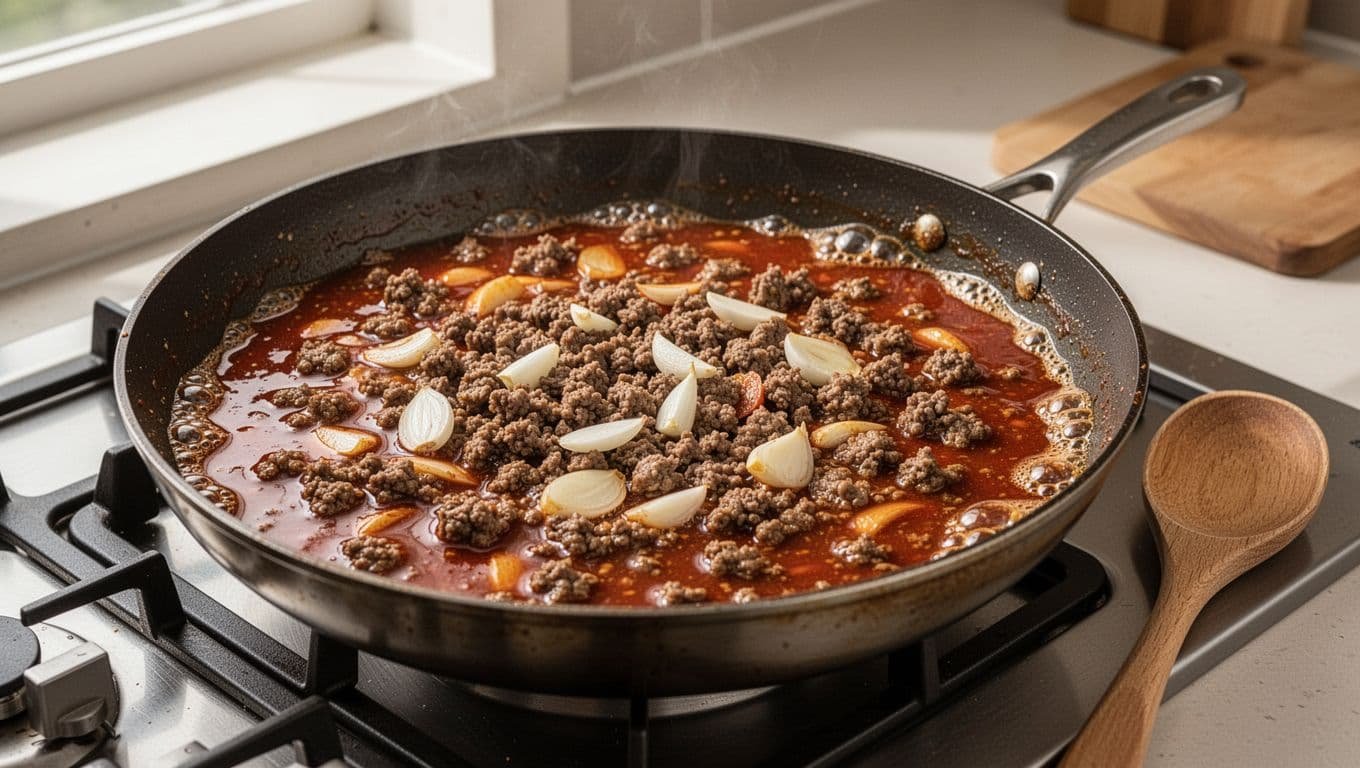
Keep the beef fully cooked before you start assembling. If the sauce turns sticky before it coats the meat evenly, take the skillet off the heat and stir in a small splash of water.
Warm the kimchi or keep it crisp
For a softer, slightly caramelized flavor, move the beef to a bowl and warm the kimchi briefly in the same skillet. The residual sauce gives it a savory edge. Cook only until warmed through, since long cooking dulls its bright flavor.
Cold kimchi gives the bowl a sharper fermented bite and a firmer texture. Either version works, so choose based on the contrast you want with the warm beef.
How to build each bowl for the best texture
Start with a layer of warm rice or cauliflower rice. Add the saucy beef next, then tuck the kimchi beside it instead of mixing everything together. Arrange cucumber and shredded carrot over the remaining space, then finish with green onions and sesame seeds.
That order keeps the base warm while the vegetables stay cool and crisp. A fried egg adds a rich yolk that mingles with the sauce. Avocado, cilantro, or a drizzle of gochujang mayo are good finishing touches when you want a fuller bowl.
Easy Ways to Customize and Serve Your Beef and Kimchi Bowls
These Korean Inspired Ground Beef and Kimchi Bowls adapt well to different spice preferences and whatever produce is in your refrigerator. Keep the core of beef, rice, and kimchi, then change the extras as needed.
Adjust heat and add vegetables
For a milder bowl, use less gochujang, choose mild kimchi, and add extra rice and cucumber. Those ingredients soften the heat without making the dish bland. A spoonful of plain avocado also helps calm the chile flavor.
If you want more heat, stir extra gochujang into the sauce or add chile flakes at the table. Spicy mayo works well as a finishing drizzle. Add vegetables such as shredded cabbage, peas, edamame, sauteed spinach, extra carrots, or roasted broccoli for more color and volume.
Keep hot beef and cool vegetables in separate sections of the bowl. Mixing them too soon softens the cucumber and hides the texture that makes the meal satisfying.
Store components separately for meal prep
For make-ahead lunches, pack beef, rice, vegetables, and kimchi in separate containers when possible. Reheat the beef and rice, then add cold toppings afterward. Kimchi reheated with the beef will taste softer and lose some of its crunch.
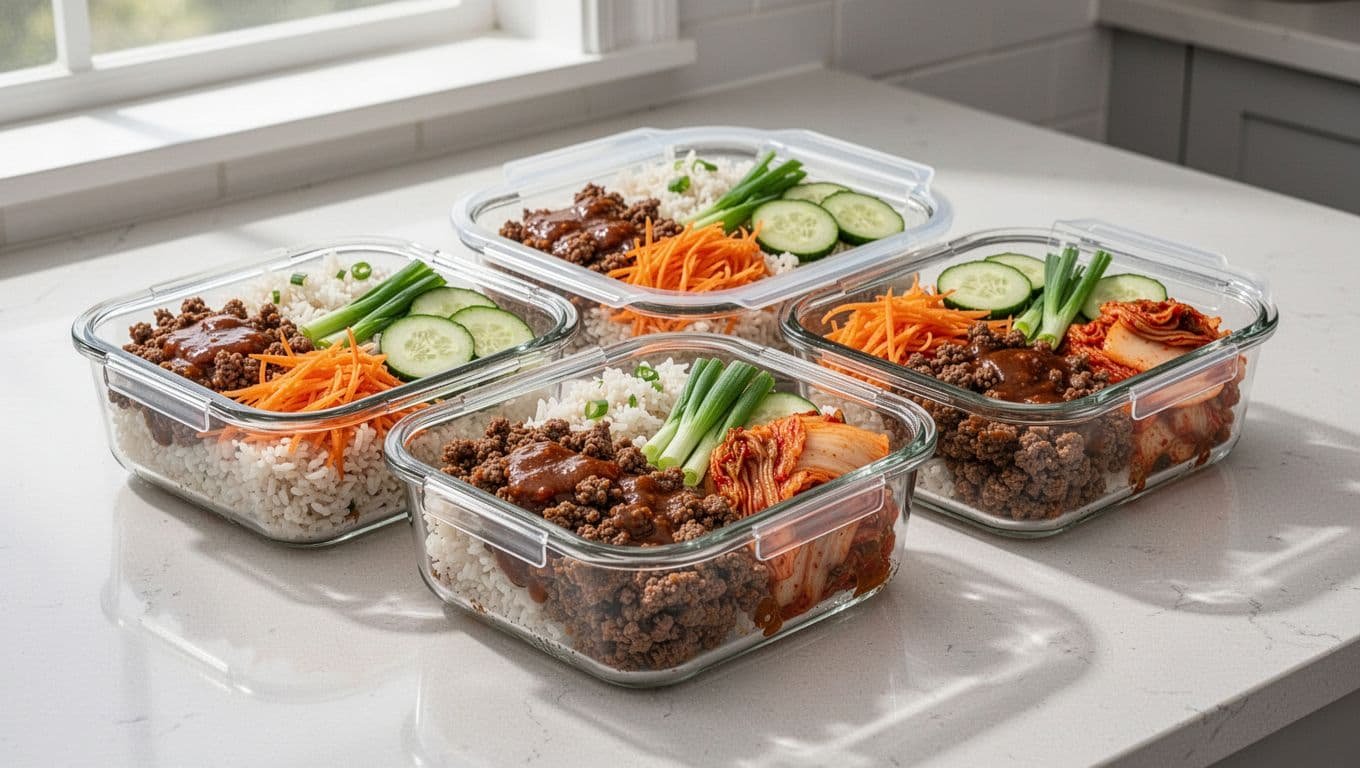
Refrigerate leftovers promptly. The USDA advises putting leftovers in the refrigerator within two hours of cooking, or within one hour when the temperature is above 90 F. Enjoy properly stored cooked ground beef within 3 to 4 days.
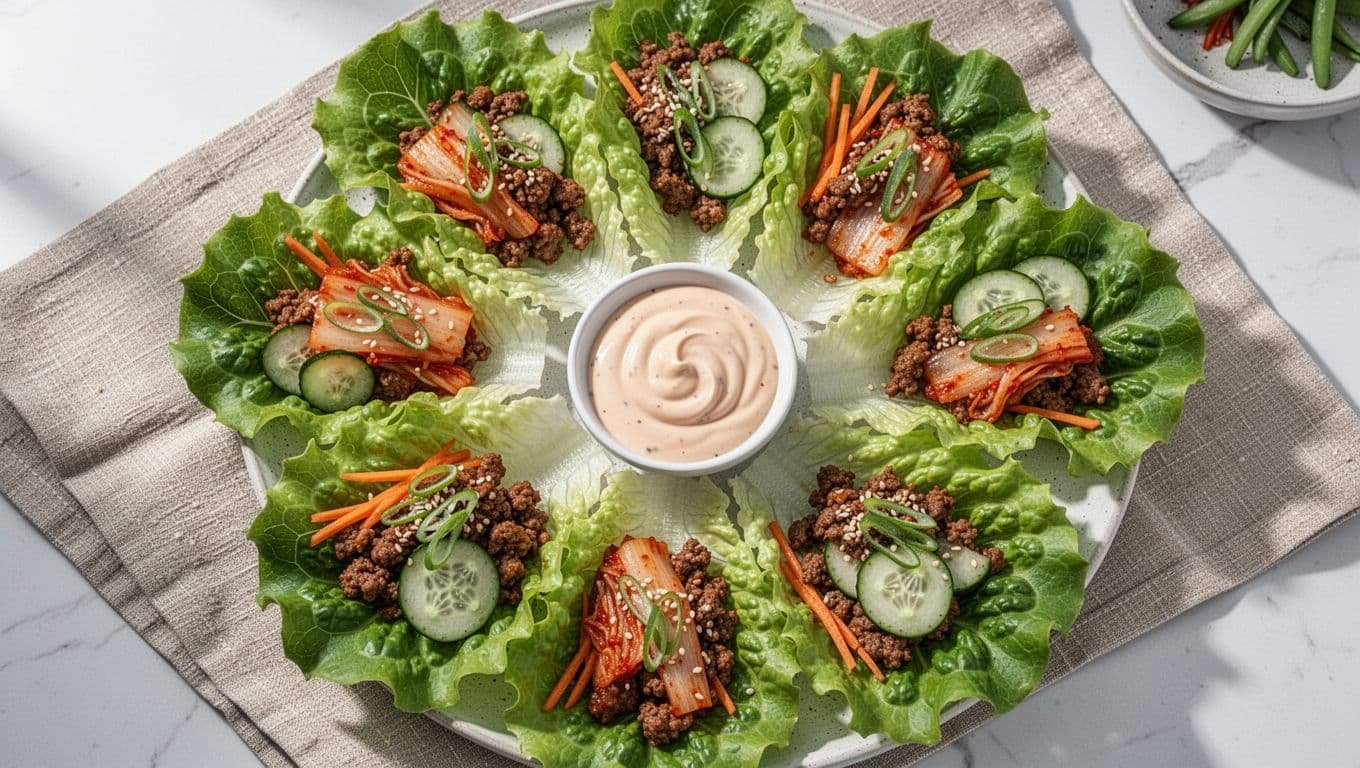
Lettuce wraps make an easy rice-free dinner, while a bed of chopped greens turns leftovers into a quick lunch salad.
Common mistakes that can make the bowls less flavorful
Avoid crowding the skillet. Too much beef in a small pan releases steam, so the meat turns gray instead of developing browned flavor. Use a large skillet and let the beef sit briefly before breaking it apart.
Too much sauce can make the bowl watery, especially if the beef releases liquid. Simmer until the sauce clings to the crumbles. On the other hand, don’t cook it too long, because the sweetener can stick and burn.
Taste before adding more salt. Kimchi and soy sauce already bring plenty of seasoning. Also, keep fresh toppings separate until serving, since cucumber and carrots quickly lose their crispness beside hot beef.
Key Takeaways
- Brown the beef in a roomy skillet, then simmer it only until the sauce clings to each crumble.
- Taste the kimchi and sauce before adding salt, extra gochujang, or chile flakes.
- Build contrast with warm rice, saucy beef, cold vegetables, and either crisp or lightly warmed kimchi.
- Pack meal-prep ingredients separately so fresh toppings stay crisp through the week.
Frequently Asked Questions
Can I use cauliflower rice instead of regular rice?
Yes. Cauliflower rice keeps the bowl lighter while still giving the beef and kimchi a warm base. Saute it briefly with a little sesame oil and salt, then serve it right away so it does not become watery.
Can I make the bowls ahead for lunch?
Yes, and separate containers give the best results. Store the beef and rice together if you like, but keep kimchi, cucumber, carrots, and herbs cold until you are ready to eat. The USDA’s ground beef storage guidance supports refrigerating cooked beef promptly and using it within 3 to 4 days.
What can I use if I don’t have gochujang?
Another chile sauce can add heat, although the flavor will be different. Start with a small amount, taste the sauce, then add more if needed. A little extra honey or brown sugar may help balance a sauce that tastes sharper than gochujang.
Do I need to cook the kimchi?
No. Cold kimchi brings a tangier flavor and firmer bite. Warming it in the skillet is optional and gives it a softer, more savory character.
Can I make this without rice?
Absolutely. Spoon the beef and kimchi into lettuce cups, pile it over chopped greens, or use quinoa or farro. The toppings still provide plenty of texture, even without a traditional grain base.
A Fast Bowl With Big Flavor
These bowls work because they are fast, flexible, and filling. Start with the basic mix of saucy ground beef, rice, and kimchi, then adjust the heat and toppings for your household.
Taste both the sauce and kimchi before adding more salt or spice. That small step keeps the sweet, savory, spicy, and tangy elements in balance. Make these Korean-inspired bowls for an easy weeknight dinner, or pack the components ahead for a satisfying lunch.
Save the pin for later

I’m the creator of My Everyday Dish, a food blog focused on easy homemade recipes, comforting family meals, simple baking, and seasonal food ideas. I love finding practical ways to make everyday cooking less stressful and more enjoyable. Here, I share recipes with simple ingredients, clear instructions, and plenty of flavor, helping you make delicious meals and treats you’ll feel confident serving at home.
Leave a Reply