
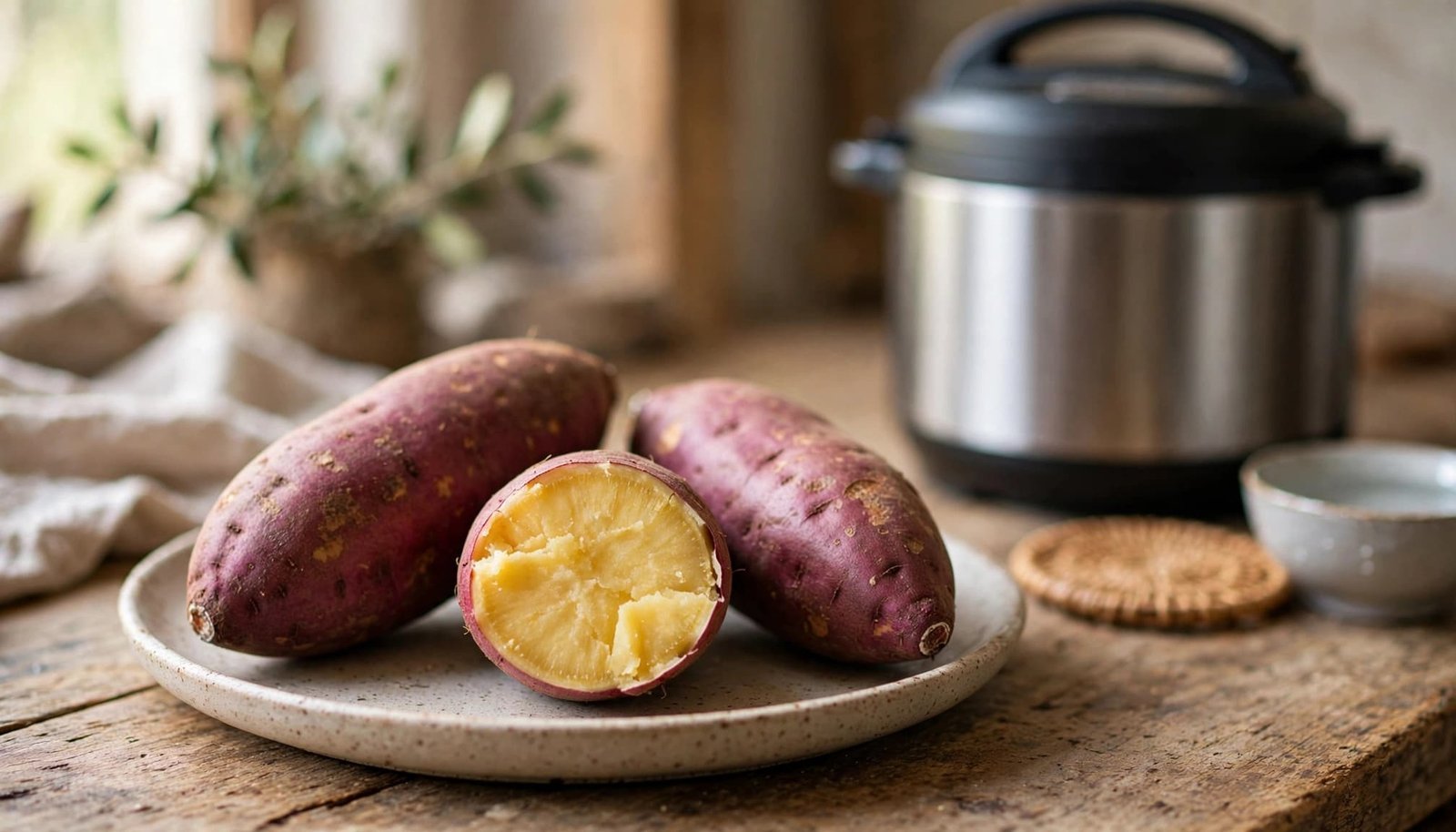
Japanese sweet potatoes have purple or reddish skin and a dense, creamy center that tastes lightly sweet and chestnut-like. They make an easy snack or side dish, especially when you want something more substantial than a fluffy orange sweet potato.
Learning how to cook Japanese sweet potatoes in the Instant Pot takes very little hands-on work. Scrub the potatoes, set them over water on a trivet, cook at high pressure, and let the pressure release naturally. The only real variable is potato size.
Key Takeaways
- Cook Japanese sweet potatoes whole so their centers stay moist and creamy.
- Put the potatoes on a trivet or steamer basket rather than directly in the water.
- Use high pressure, then give the potatoes at least 10 minutes of natural release before checking the thickest one.
How to Cook Japanese Sweet Potatoes in the Instant Pot
This method works with whole Japanese sweet potatoes, also sold as satsumaimo or murasaki sweet potatoes. Their shape and thickness affect the cooking time more than the number of potatoes in the pot.
Here is the basic setup before you begin:
| Recipe detail | Recommendation |
|---|---|
| Potatoes | Whole Japanese sweet potatoes |
| Pressure setting | High pressure |
| Release | Natural release for at least 10 minutes |
| Rack | Trivet or steamer basket |
| Water for some 6-quart recipes | 1 cup |
| Water for some 8-quart recipes | 1 1/2 cups |
The water amounts above appear in many home recipes, but check your model before cooking. Instant Pot’s own minimum-liquid guidance lists 1 1/2 cups for a 6-quart cooker and 2 cups for an 8-quart cooker. Using the manufacturer’s stated minimum is the safer choice if your manual calls for it.
Choose and prepare the potatoes for even cooking
Look for firm potatoes with smooth, unbroken skin. Skip any with soft spots, deep cuts, mold, or shriveled ends. Choose potatoes that are close in size so they finish at about the same time.
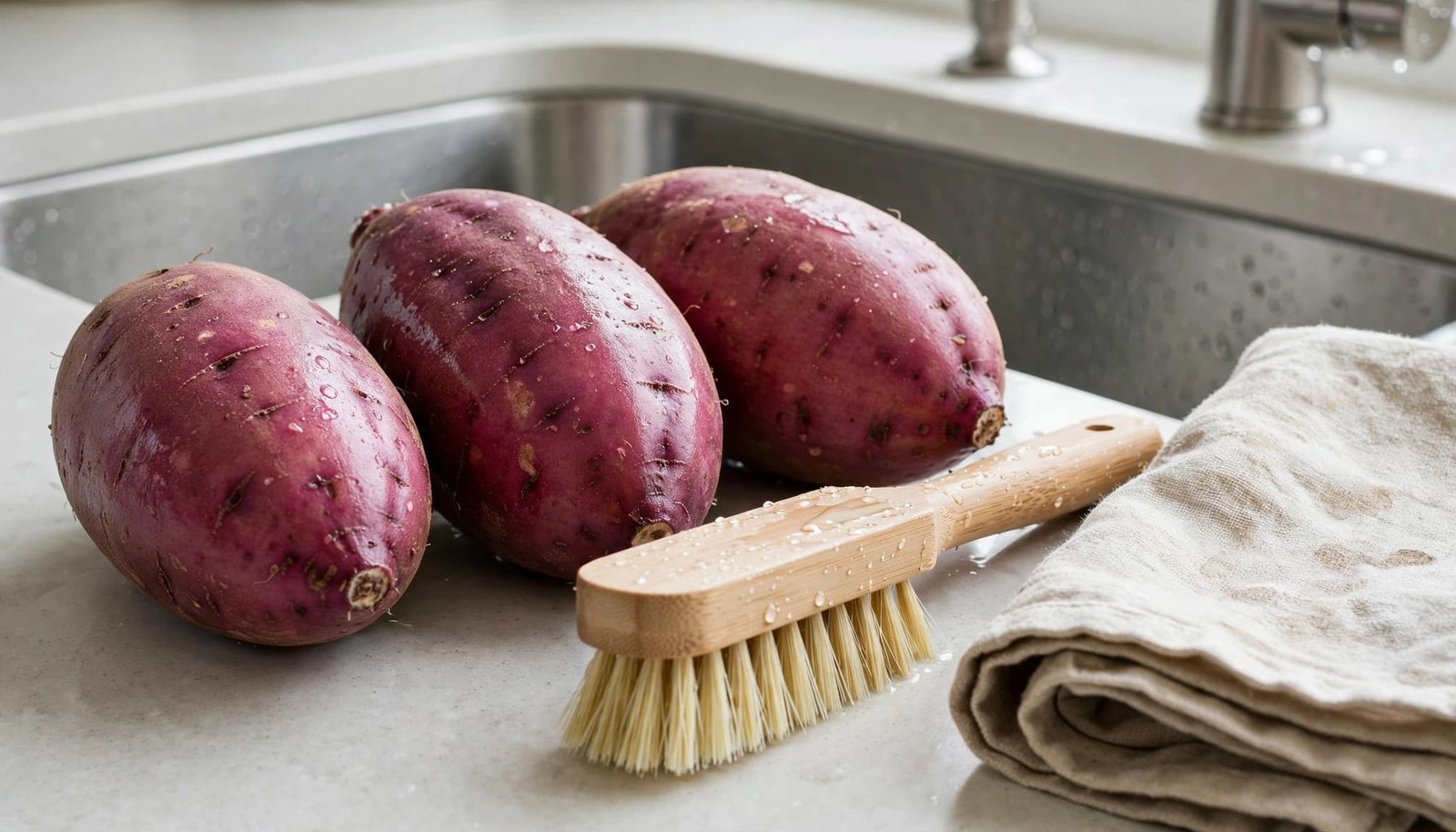
Rinse the potatoes under cool running water and scrub away dirt with a vegetable brush. Leave the skin on because it helps the potatoes hold their shape and moisture. Pat them dry after washing.
Piercing the skin a few times with a fork is optional. It can give steam another exit point, although whole sweet potatoes usually cook well without it. Don’t peel or cut them before pressure cooking. Whole potatoes develop the moist, dense interior that makes this variety so satisfying.
For another useful visual of the basic whole-potato approach, see this recipe for Instant Pot steamed Japanese sweet potatoes.
Set up the Instant Pot with water and a trivet
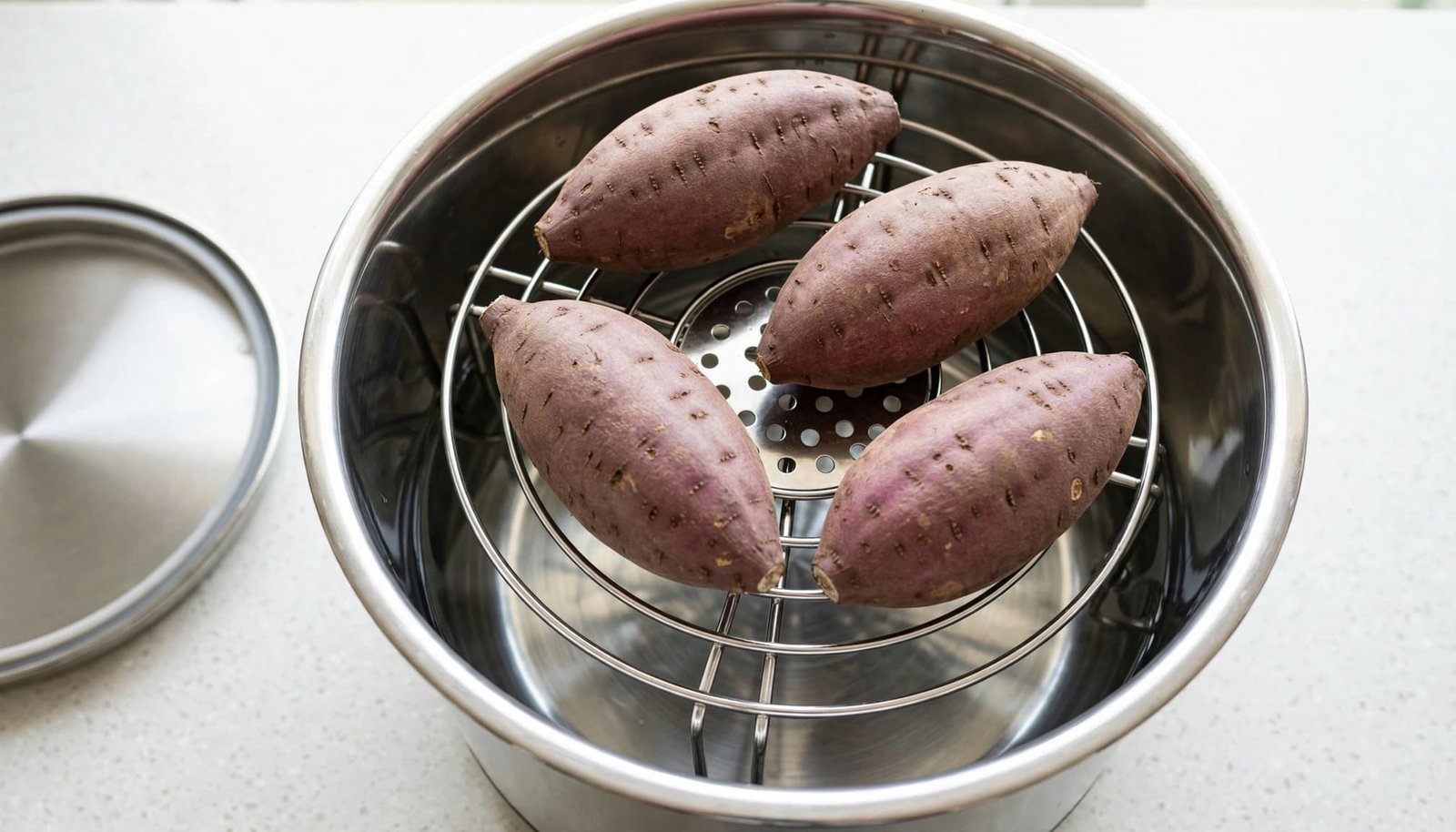
Pour water into the inner pot first. If your cooker manual lists a minimum amount, follow that amount for your model. Then place the trivet or a steamer basket inside the pot.
Set the whole potatoes on the trivet so they sit above the water. They should steam rather than simmer. If potatoes sit directly in the liquid, their skins can become waterlogged and the centers may taste less concentrated.
When cooking mixed sizes, set the larger potatoes closer to the bottom of the trivet and place smaller ones above them. Leave small gaps for steam to move around the potatoes.
A trivet does more than keep the potatoes tidy. It separates them from the water, which helps preserve their naturally rich, dry-creamy texture.
Lock the lid, turn the valve to Sealing if your model requires it, and select Pressure Cook or Manual on high pressure. Start timing only after the cooker reaches pressure.
Use the right pressure-cooking time for each size
These times are for whole potatoes cooked at high pressure. Start near the lower end when potatoes are slender, then add time for thick or unusually large ones.
| Potato size | Approximate weight | High-pressure time |
|---|---|---|
| Small | 6 to 8 ounces | 10 to 12 minutes |
| Medium | 8 to 12 ounces | 15 to 17 minutes |
| Large | 12 ounces or more | 20 to 25 minutes |
A full pot of small potatoes can finish sooner than two oversized potatoes. Width matters most because the heat must reach the center. If one potato is much thicker than the rest, either cook it separately or plan to give it extra time.
Timing guides vary by recipe and potato shape. For comparison, this Instant Pot sweet potato timing guide also uses size-based cooking times and a natural release. Treat the first batch as a baseline, then write down the timing that works for potatoes from your usual grocery store.
Read also: Easy Mashed Russet Potatoes Recipe for Thanksgiving
Let the pressure release naturally, then test for doneness
After the cooking cycle ends, let the pressure release naturally for at least 10 minutes. Then carefully release any remaining pressure according to your appliance instructions. Open the lid away from your face to avoid the hot steam.
Test the thickest potato with a fork or thin knife. The utensil should slide through the center with little resistance. If the middle still feels firm, replace the lid and cook at high pressure for 2 more minutes. Allow another short natural release before checking again.
Let the cooked potatoes rest for a few minutes on a plate. That brief cooling period makes them easier to handle and gives the center time to settle into a creamier texture. A similar method for Instant Pot Okinawan sweet potatoes uses a longer natural release, which can also help with thicker potatoes.
Get the Best Texture and Flavor From Instant Pot Japanese Sweet Potatoes
Properly cooked Japanese sweet potatoes are dense, starchy, creamy, and naturally sweet. They won’t have the airy, fluffy feel of many orange sweet potatoes, and that texture is part of their appeal.
Serve them warm, creamy, or chilled
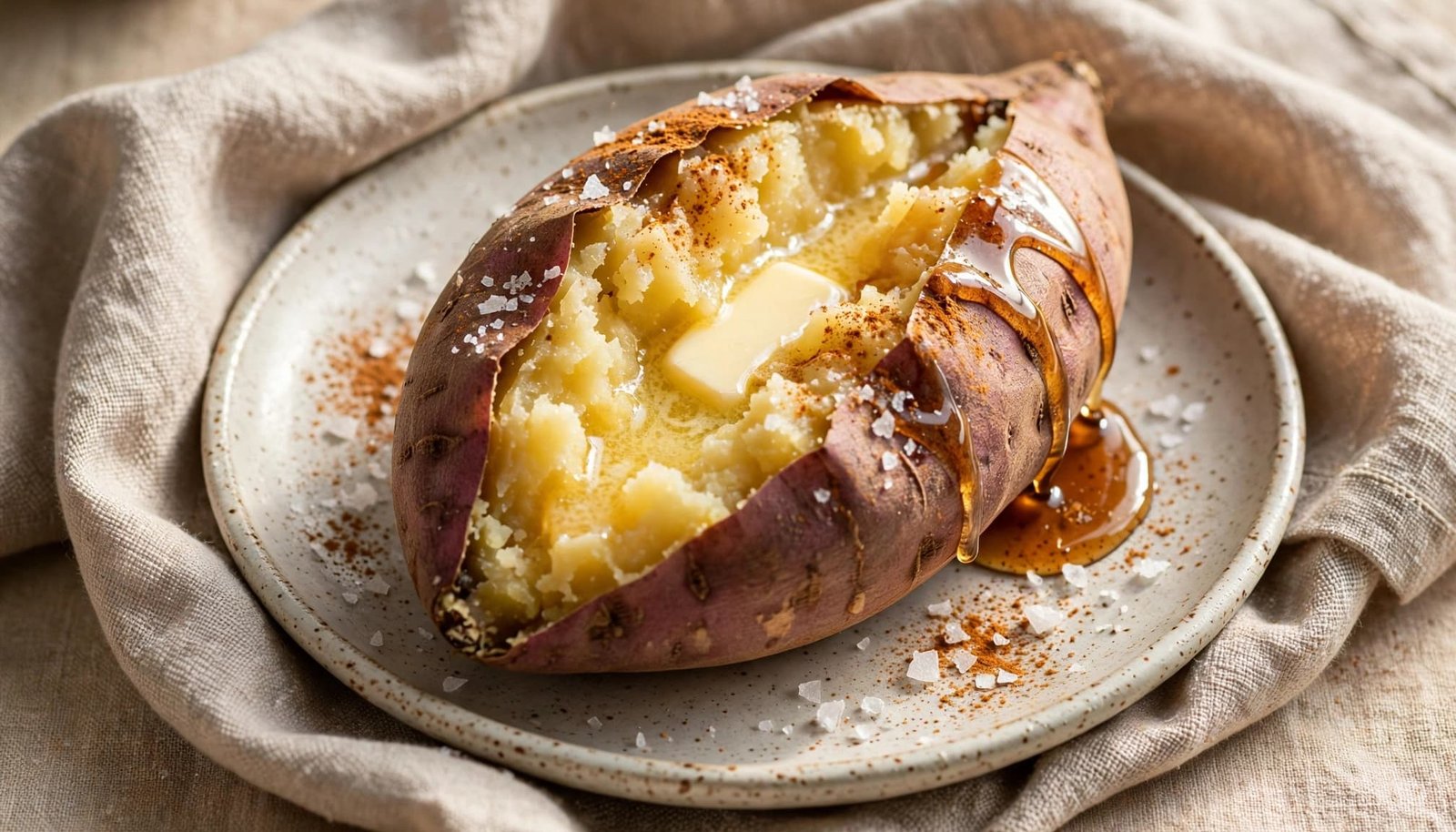
Split a warm potato down the middle and fluff the center with a fork. Butter and flaky salt make a simple finish. Cinnamon, maple syrup, or honey work well when you want a sweeter snack.
For a savory plate, add olive oil, sesame seeds, sliced scallions, or miso butter. The scrubbed skin is edible and softens during cooking, although you can peel it away if you prefer.
Once chilled, the potatoes become firmer and easier to cube. Add them to grain bowls, green salads, or a simple mashed sweet potato side. This Okinawan sweet potato recipe offers another pressure-cooker variation when you want to try a purple-fleshed potato.
Read also: Easy Healthy Burger Bowls Recipe With Sweet Potatoes
Avoid the mistakes that lead to watery or undercooked potatoes
Too little water may keep an electric pressure cooker from reaching pressure. Follow your model’s liquid requirements, even if another recipe uses less water. On the other hand, too much water isn’t the issue if the potatoes stay elevated above it.
Skipping the trivet lets potatoes sit in water, which can leave their skins soggy. A quick release can also make the texture less even, especially in larger potatoes. Give the cooker time to release pressure naturally.
Very large potatoes often need another 2 to 5 minutes. Mixed-size batches can cook unevenly, so check the largest potato first. Japanese sweet potatoes stay naturally dense even when fully cooked, so judge doneness by whether a knife reaches the center easily.
Store leftovers and reheat them without drying them out
Cool leftover potatoes, then refrigerate them in an airtight container for up to 5 days. Keep them whole when possible because cut pieces dry out more quickly.
Reheat a whole potato in the microwave under a damp paper towel. You can also warm cut pieces in a covered skillet or oven-safe dish with a small splash of water. The cover traps moisture while the potato heats through.
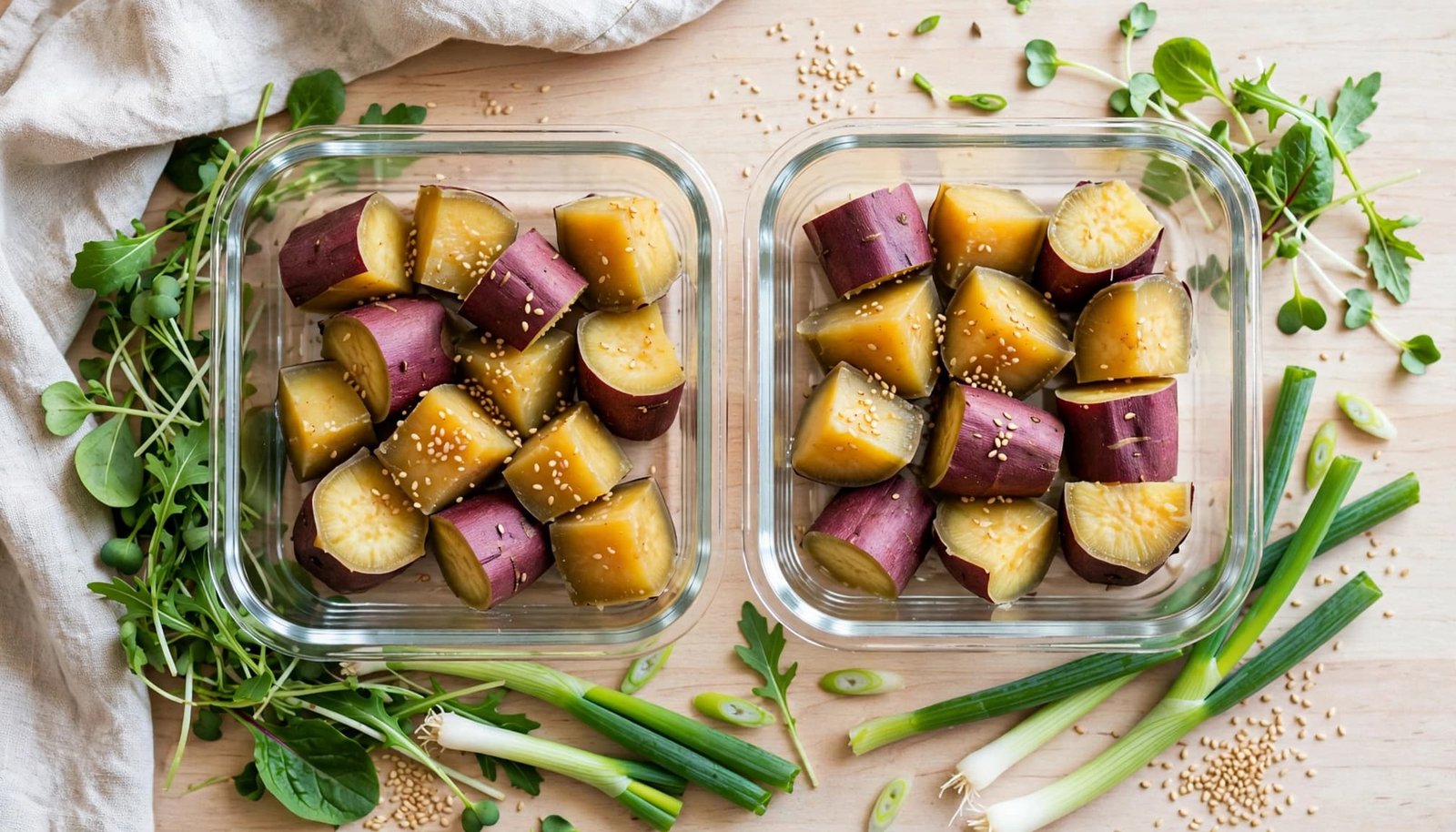
Use leftovers in breakfast bowls with eggs, soups, salads, mash, or a quick snack with butter and salt. Cold slices are also good with tahini, yogurt, or a spoonful of nut butter.
Frequently Asked Questions
Can I cook orange sweet potatoes with this method?
Yes, orange sweet potatoes cook well on a trivet in an electric pressure cooker. Their flesh becomes softer and fluffier than Japanese sweet potatoes, so they may feel done sooner. Check them with a fork instead of relying on appearance.
Are Japanese sweet potatoes the same as Okinawan sweet potatoes?
They are often grouped together in recipes, but they aren’t always the same potato. Japanese sweet potatoes commonly have purple-red skin with pale yellow or cream-colored flesh. Okinawan sweet potatoes are known for their purple interior.
Should I add salt to the cooking water?
Plain water works best because the potatoes cook inside their skins. Salt in the water won’t season the center much. Add flaky salt, miso butter, or other toppings after cooking for more noticeable flavor.
Can I brown the potatoes after pressure cooking?
Yes. Pressure cooking softens the potato but doesn’t brown the skin or caramelize the surface. For a roasted finish, place cooked potatoes under the broiler or in a hot oven until the skins crisp lightly.
Can I use another electric pressure cooker?
You can use the same general method in another electric pressure cooker with a trivet and high-pressure setting. However, check its manual for minimum liquid and release instructions. Pot size and heating performance can change the timing slightly.
A Reliable Way to Cook Japanese Sweet Potatoes
The dependable formula is simple: scrub whole potatoes, add the proper amount of water to the inner pot, set the potatoes on a trivet, cook at high pressure, and allow a natural release. Choose the timing by potato size, then test the thickest one before serving.
After one batch, you’ll know whether the potatoes you buy need a few more minutes or less time. Serve them warm with butter and salt, pack them for lunch, or keep a few chilled potatoes ready for easy meal prep.
Save the pin for later

I’m the creator of My Everyday Dish, a food blog focused on easy homemade recipes, comforting family meals, simple baking, and seasonal food ideas. I love finding practical ways to make everyday cooking less stressful and more enjoyable. Here, I share recipes with simple ingredients, clear instructions, and plenty of flavor, helping you make delicious meals and treats you’ll feel confident serving at home.
Leave a Reply