
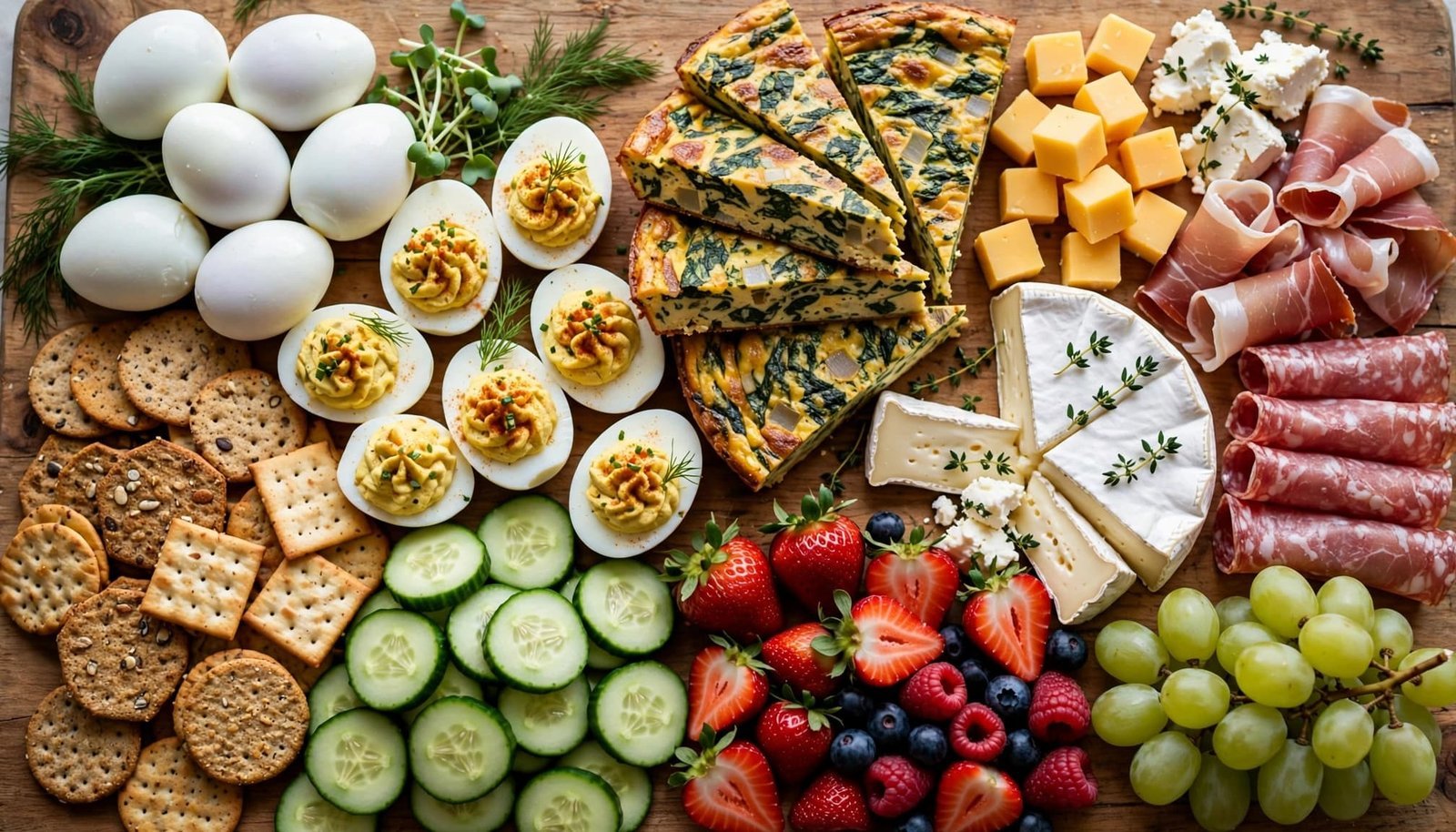
Build a brunch charcuterie board with eggs by arranging two egg styles beside cheese, sliced meats, bread, and fresh produce. Guests can choose what they like, while the eggs make the spread filling enough for a relaxed meal. A generous board doesn’t need a long shopping list, and familiar foods are easier to prepare and replenish.
Start with flexible portions, cook and chill the egg dishes ahead, then arrange the food in small batches shortly before serving. Plan the shopping and serving space first so you can keep cold foods chilled, offer hot foods separately, and spend less time rebuilding the spread once guests arrive.
What to Buy for a Brunch Charcuterie Board With Eggs
For 8 to 10 adults, use this shopping plan as a starting point when the board is the main meal. Reduce quantities when you’re also serving another substantial dish.
| Food | Suggested Amount for 8 to 10 Adults |
|---|---|
| Eggs | 16 to 20 total, divided among your egg dishes |
| Cheese | 12 to 16 ounces, using two varieties |
| Cured meats | 8 to 12 ounces of sliced ham or salami |
| Bread and crackers | One baguette and one box of crackers |
| Fruit and vegetables | About 4 to 6 cups combined |
These are planning estimates, not fixed serving sizes. Keep extra bread and whole fruit available for guests with larger appetites.
Choose Eggs and Other Filling Foods
Choose hard-cooked eggs and a vegetable frittata, or pair deviled eggs with small quiche slices. Two styles keep preparation manageable; add a third only if it fits your schedule.
Count the eggs in frittata or quiche toward your total rather than adding them on top. Pair them with cheddar, a mild cheese, and one or two meats so guests have familiar combinations.
Read also: Classic Deviled Egg Salad Sandwich Recipe
Add Fresh, Crunchy, and Sweet Bites
Use grapes, berries, cucumber slices, and cherry tomatoes for contrast with the richer foods. Washed whole fruit needs little preparation, while sliced apples give guests another crisp option.
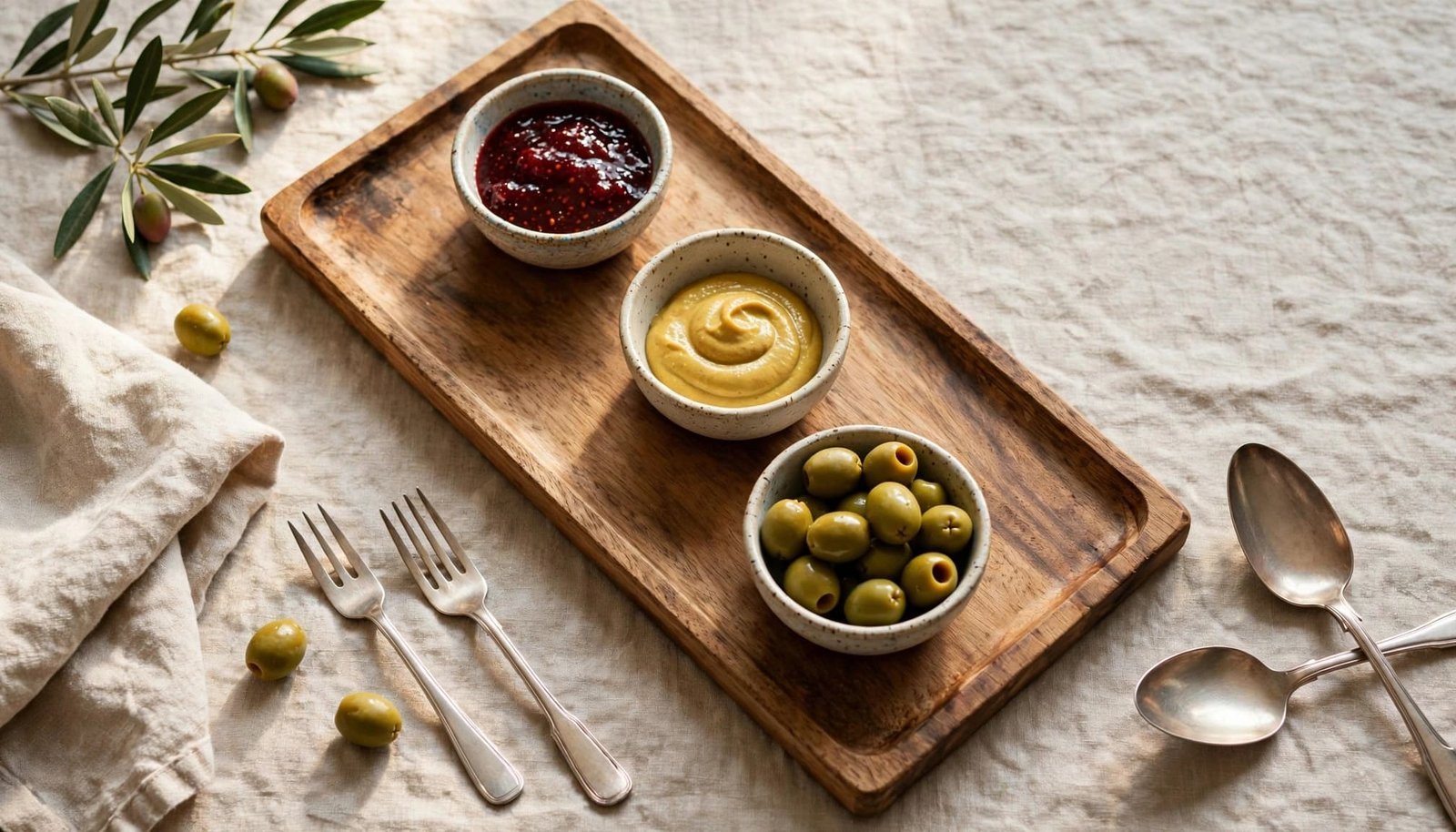
Add small bowls of olives, jam, and mustard if you want. Keep cut produce chilled until serving, and dry washed fruit so water doesn’t collect around the bread.
How to Make a Brunch Charcuterie Board With Eggs for a Crowd
Prepare the cooked foods first, then set up the serving space while everything chills. Keep the final assembly close to mealtime so the food spends less time at room temperature.
Cook and Prepare the Eggs
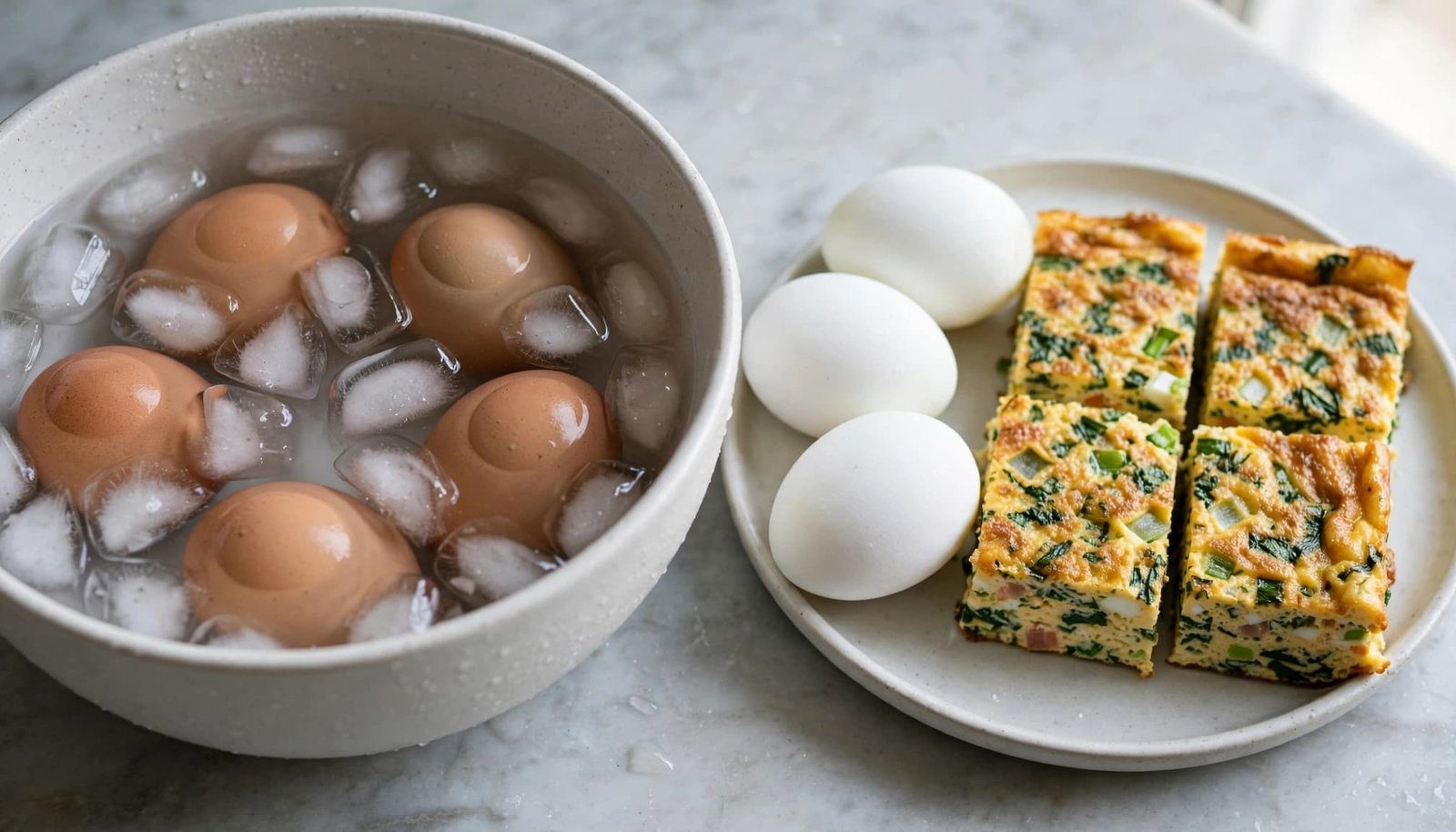
Cook hard-cooked eggs until the whites and yolks are firm, following the FDA’s egg safety guidance. Cool them promptly in ice water, then refrigerate them rather than leaving the bowl on the counter.
Peel the eggs once cooled, then leave them whole or halve them for easier serving. For a filled option, use our easy homemade deviled eggs and keep the prepared eggs covered in the refrigerator.
Cook frittata or quiche thoroughly, then refrigerate promptly if preparing ahead. Cut chilled portions into small squares or narrow wedges that guests can lift with a serving spatula. Avoid pieces so thin that they crumble when moved.
Set Up the Board Before Adding Food
Choose a clean, food-safe board, rimmed tray, or several platters that fit your table. Leave space nearby for plates and napkins so guests don’t have to reach across the food.
Place small bowls first for mustard, jam, and olives. Set them near the edges where their spoons are easy to reach, then reserve larger spaces for the egg dishes.
Set out serving tools before retrieving food from the refrigerator. If you’re serving hot quiche or frittata, prepare a separate heat-safe dish and suitable warmer. A wooden board alone won’t keep a hot egg dish at a safe temperature.
Arrange the Eggs, Meats, Cheeses, and Sides
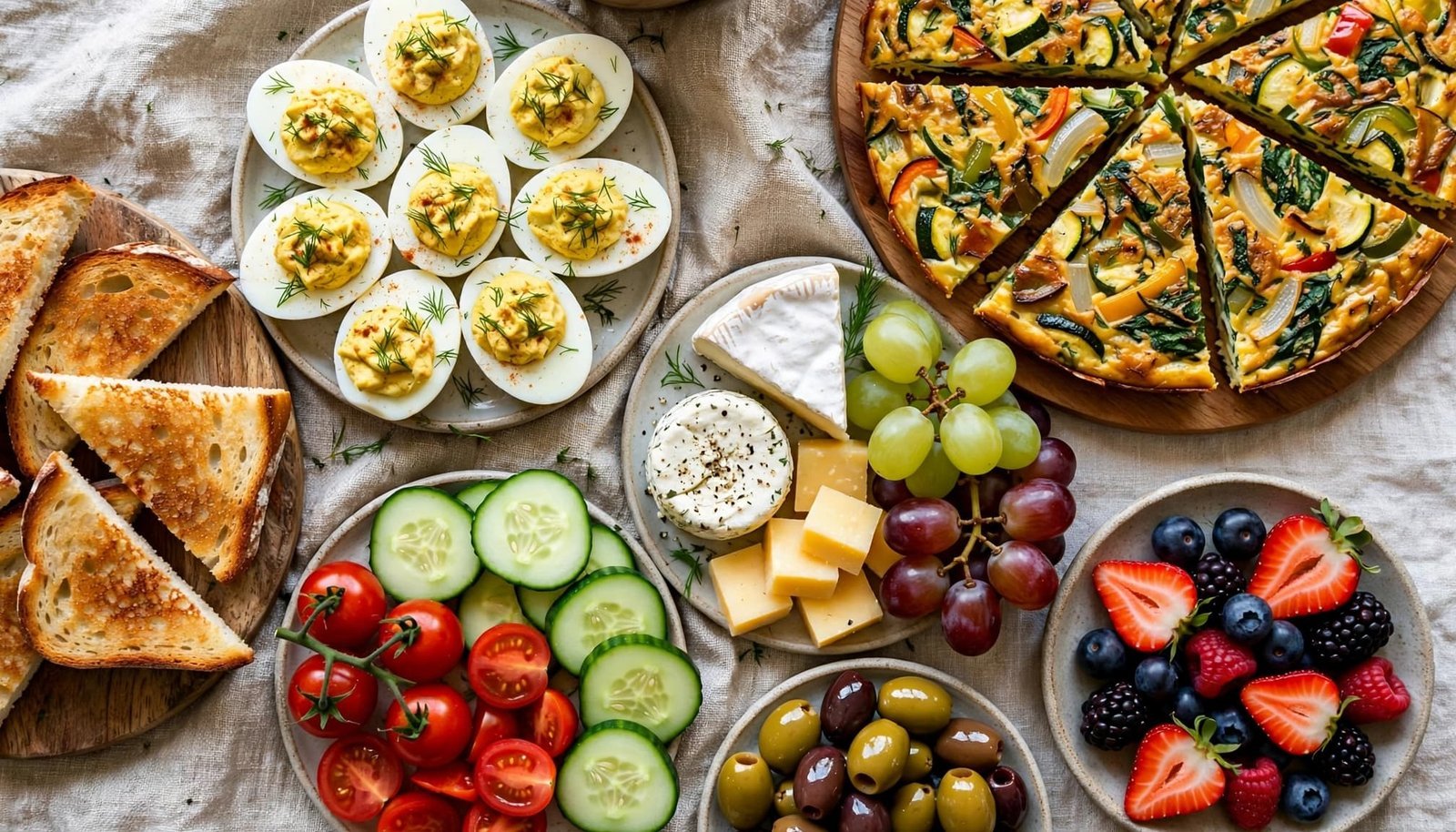
Place chilled egg dishes in separate sections, preferably on small removable plates. Keep deviled eggs in a single layer so their filling stays intact when guests serve themselves.
Fold ham loosely or fan salami slices beside the cheese. Slice one cheese and cube the other, keeping pieces small enough for crackers or bread.
Fill remaining spaces with clusters of fruit and vegetables, then add bread and crackers near the end. Keep wet olives and condiments in bowls, away from anything crisp. Leave gaps around serving handles rather than filling every inch.
Group similar foods together so guests can find what they want without searching across the board. Put out part of each perishable food, then hold the rest in the refrigerator. Smaller portions are easier to replace without disturbing the entire arrangement.
Finish With Simple Garnishes and Serving Tools
Sprinkle deviled eggs with paprika or chopped chives, then add cracked pepper to plain eggs if you want. Keep garnishes light enough that guests can still recognize each food.
Offer flaky salt in a small bowl rather than salting everything heavily. Cured meats and cheese already bring plenty of salt, and guests can season plain eggs to taste.
Add separate tongs, forks, or spoons for the meats, eggs, and condiments. Label unfamiliar cheeses, quiche fillings, and anything containing meat. Keep vegetarian portions apart from meat, with their own utensils.
Set a small spatula beside sliced egg dishes, then bring out the first chilled batch when guests are ready to eat.
Make the Board Ahead Without Losing Freshness
Prepare components ahead, but leave the finished brunch charcuterie board with eggs until shortly before serving. Covered containers take less refrigerator space and protect food better than an uncovered board.
Prep Components the Day Before
Cook the eggs and baked egg dishes, then cool and refrigerate them promptly. Wash whole fruit, dry it well, and portion condiments into covered bowls.
Slice cheese and arrange meats in separate covered containers. Keep cooked eggs and cut fruit refrigerated, and wait until serving to add bread and crackers.
For deviled eggs, store the whites and filling separately, then fill them shortly before brunch. Keep any extra herbs dry and covered so they’re ready for the final garnish.
Serve in Small Batches and Keep Food Safe
Follow the FDA’s buffet food-safety guidance: keep cold perishables at 40°F or below and hot foods at 140°F or above. Reheat refrigerated egg dishes to 165°F before serving them hot.
Discard perishables left at room temperature beyond 2 hours, or beyond 1 hour when temperatures exceed 90°F. Count preparation and serving time together.
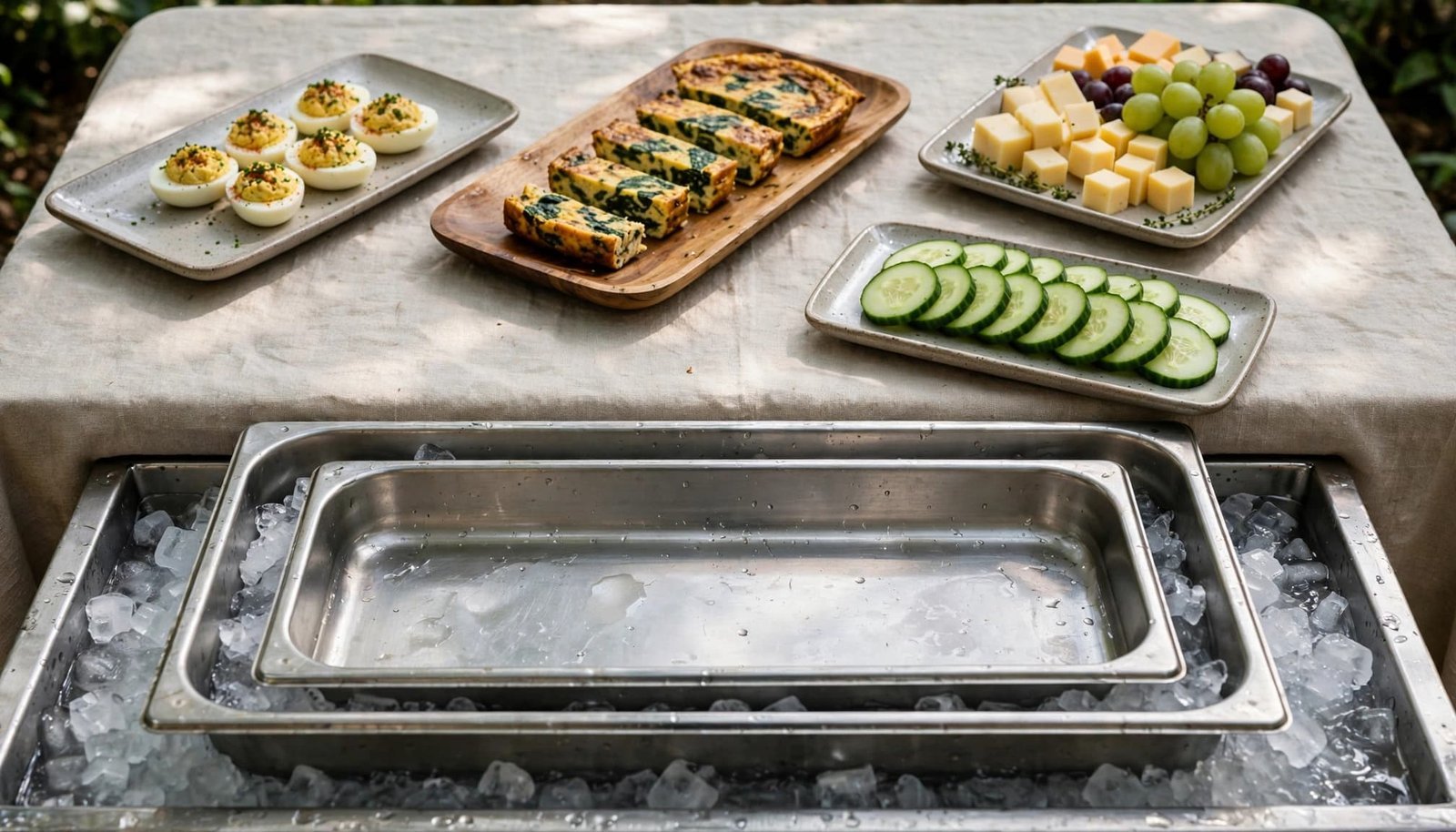
For longer service, nest cold platters over ice and use a thermometer to check food temperatures. Keep backup portions refrigerated, then replace small platters as needed.
Adding chilled food to an older platter doesn’t restart its room-temperature clock. Swap platters instead.
Note when each platter goes out, and use clean utensils for replacements. A warmer’s setting alone doesn’t tell you whether the food is hot enough.
Frequently Asked Questions
How Many Eggs Should I Plan per Person?
About 2 eggs per adult is a useful starting estimate for a substantial brunch board. Count eggs used in baked dishes toward that amount, and plan fewer when other filling dishes are served.
Can I Make a Brunch Board Without Meat?
Yes, meat is optional, and eggs already give the board a filling center. Add more cheese, vegetables, olives, or nuts, with separate utensils for nuts when allergies are a concern. A vegetable frittata gives guests another substantial choice without adding sliced meat.
Can I Serve Both Hot and Cold Eggs on One Board?
You can offer both in the same spread, but they need separate temperature control. Keep hot eggs in suitable hot-holding equipment and chilled eggs on a separate platter over ice when needed. Don’t place hot quiche against chilled deviled eggs.
What Can I Use if I Don’t Have a Large Board?
Use several trays, dinner plates, or serving platters instead of crowding everything together. Group the eggs, meats and cheeses, and fresh produce on separate dishes. Arrange them along the table so guests can move through the spread without reaching over one another.
A Brunch Board That’s Easy to Share
A crowd-friendly brunch board works best with a few well-chosen egg dishes and enough fresh, filling sides to give guests choices. Prepare the components ahead, then leave the final arrangement until everyone is nearly ready to eat.
Keep backup portions chilled and replace small platters rather than building one oversized display. Once the food is arranged and the serving tools are ready, you can sit down with your guests instead of spending brunch tending a crowded board. Simple choices leave you less to manage during the meal.
Save the pin for later


I’m the creator of My Everyday Dish, a food blog focused on easy homemade recipes, comforting family meals, simple baking, and seasonal food ideas. I love finding practical ways to make everyday cooking less stressful and more enjoyable. Here, I share recipes with simple ingredients, clear instructions, and plenty of flavor, helping you make delicious meals and treats you’ll feel confident serving at home.
Leave a Reply