

Crispy potato latke recipes rely on two simple habits: squeeze the shreds dry, then fry them in hot oil. You get crisp edges and tender centers without a long ingredient list or special equipment.
Our potato-and-onion version uses russets, a flour binder, and small batches that are manageable in a home kitchen. Removing moisture makes the biggest difference, both for browning and for reducing splattering around the skillet. Start with the recipe below, then choose your toppings and a serving plan that keeps the last batch as welcoming as the first.
Easy Crispy Potato Latke Recipes for a Traditional Hanukkah Celebration
This recipe makes about three dozen small latkes, with fewer if you shape larger rounds. Russets work well because their starch helps the mixture hold together while the edges brown.
Flour and matzo meal both appear in traditional latke recipes. This version uses flour, so there’s no need to buy a separate binder.
Set out these ingredients before you begin:
- 2 large russet potatoes, about 1 pound
- 1 large onion, about 8 ounces
- 2 large eggs
- 1/2 cup all-purpose flour
- 1 teaspoon fine salt, plus a little for finishing
- 1 teaspoon baking powder
- 1/2 teaspoon black pepper
- Neutral frying oil, enough for about 1/4 inch in your skillet
Gather and prep the potatoes, onion, and binder
Scrub and quarter the potatoes, removing any damaged spots. Peel and quarter the onion, then grate both with a box grater or a food processor’s shredding attachment.
If you’re using the processor blade instead, pulse briefly rather than making a smooth puree. Hand-grating one potato and processing the other gives you a mix of finer pieces and longer shreds.
Measure the dry ingredients into a small bowl and beat the eggs separately. Set out a towel, mixing bowl, spatula, and draining rack before heating the oil.
Read also: 21 Vegetarian Thanksgiving Recipes Packed With Protein
Squeeze the mixture dry and make the batter
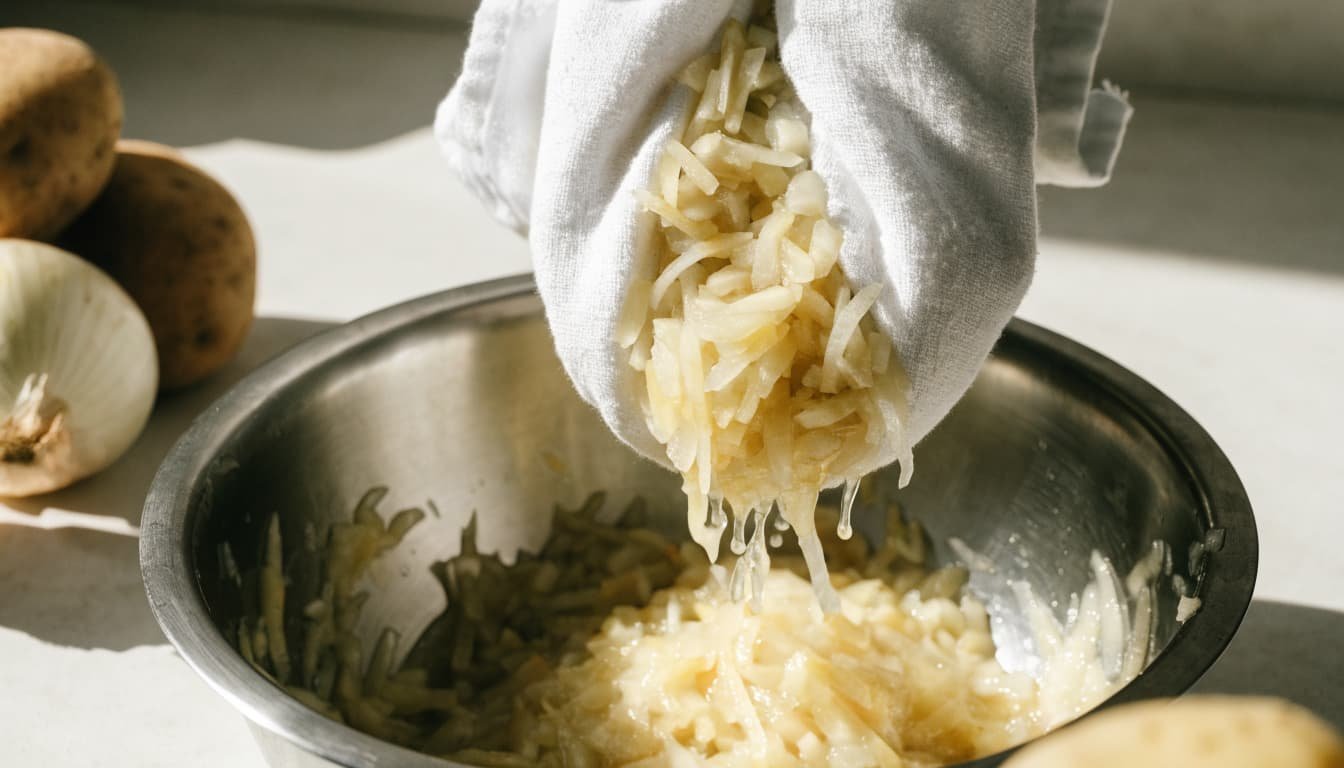
- Transfer the grated potato and onion to a clean kitchen towel or several layers of cheesecloth. Gather the corners, then squeeze firmly over a bowl until liquid stops running freely.
- Open the towel and move the drained shreds into a mixing bowl. Add the eggs, flour, salt, baking powder, and pepper, then mix until everything is evenly coated.
Work in smaller towelfuls if the whole batch is difficult to squeeze. The mixture should feel damp and hold together when pressed, without a puddle forming underneath it.
Keep the batter near the stove once it’s mixed. Potatoes continue releasing moisture as they sit, so prompt frying gives you a more consistent texture.
Fry the latkes in small, even batches
- Heat about 1/4 inch of oil in a heavy skillet over medium-high heat. Add a small bit of batter; it should sizzle immediately.
- Drop in heaping tablespoons and flatten them into thin rounds. Leave space between each latke so you can turn it without disturbing its neighbors.
- Fry for about 4 to 5 minutes per side, adjusting the heat as needed. Look for crisp brown edges and a rich golden surface before turning.
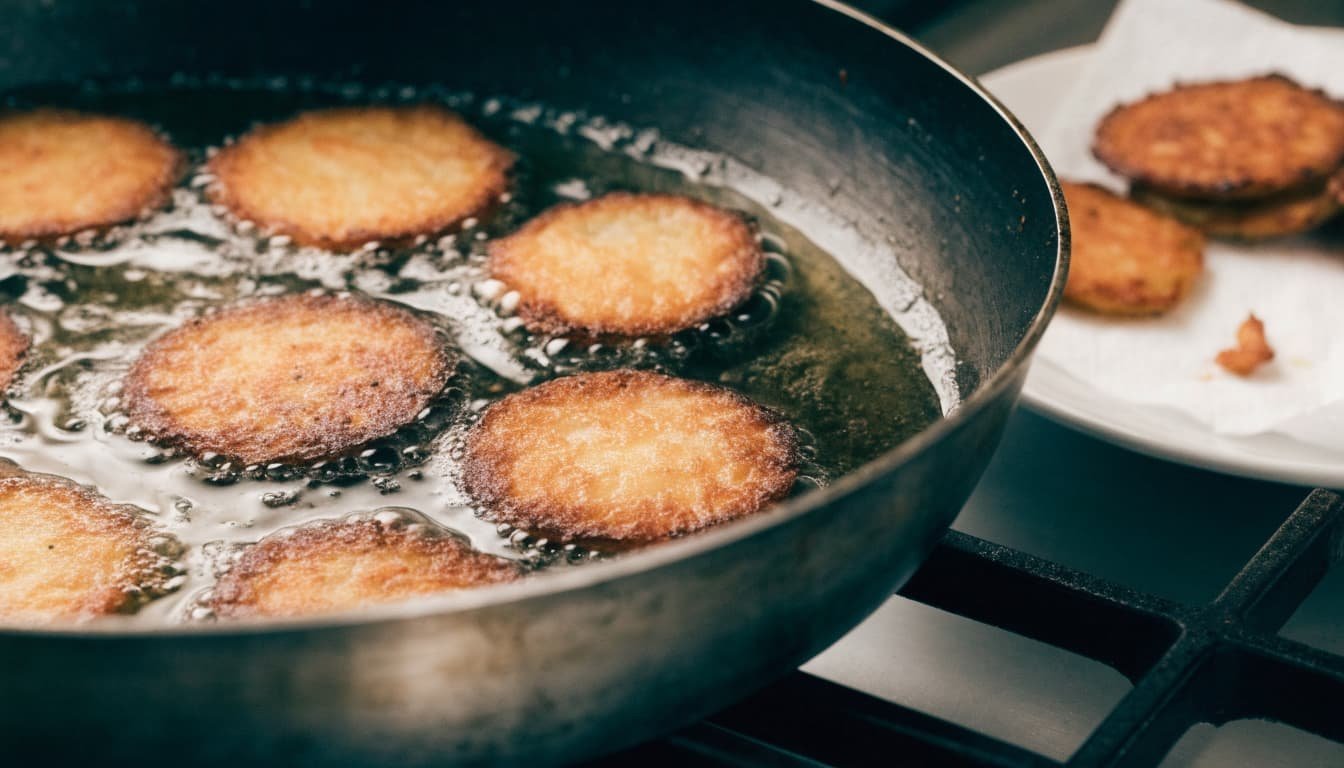
Lift each latke with a thin spatula, then drain briefly on paper towels before moving it to a rack. Sprinkle lightly with salt while hot. Cut into the first one to check that the center is tender before cooking the remaining batches.
Read also: 15 Homemade Hanukkah Donut Recipes With Delicious Fillings
Simple tricks for latkes that stay crisp
A heavy skillet holds heat better than a thin pan, but it still needs a pause between batches. Wait until a small shred sizzles again before adding more batter. If you’ve topped up the oil, let it heat before continuing.
Watch how quickly the surface colors. Rapid browning with a firm, raw center means the heat is too high or the rounds are too thick. Flatten the next batch more evenly and lower the burner slightly.
Greasy latkes often come from oil that has cooled after too much batter was added. Cook fewer at once rather than raising the heat sharply, which can scorch the next batch.
Keep finished latkes in one layer. Stacking traps steam between them, so even well-browned surfaces soften.
Check the mixing bowl near the end. If liquid has collected underneath the batter, spoon it off before shaping more rounds. Don’t keep adding flour to absorb it, since too much binder makes the centers heavy.
Use the first latke to judge thickness and seasoning. That small adjustment is easier than correcting a full skillet.
Serve classic latkes with Hanukkah favorites
Applesauce brings gentle sweetness, while sour cream adds a cool, tangy contrast to the fried potatoes. Offer both in separate bowls so guests can choose without softening the whole platter.

Bring latkes to the table in smaller batches rather than waiting for every one to finish. Keep toppings on the side, with separate spoons, and let people add them just before eating.
Oil-fried foods are part of many Hanukkah meals. The Smithsonian’s account of Hanukkah latkes and family traditions connects the oil used for frying with the holiday’s miracle-of-the-oil story.
Pair the latkes with roasted vegetables, a cucumber salad, or your family’s holiday main dish. If your household separates meat and dairy, serve applesauce alongside a meat meal and reserve sour cream for a dairy meal.
A little chopped dill is enough if you want a fresh garnish. Keep the toppings modest so the potato and onion remain easy to taste.
Try easy latke variations without losing the crunch
The potato-and-onion mixture above is the traditional recipe here. Once you’re comfortable with it, small additions let you change the flavor without changing the whole method.
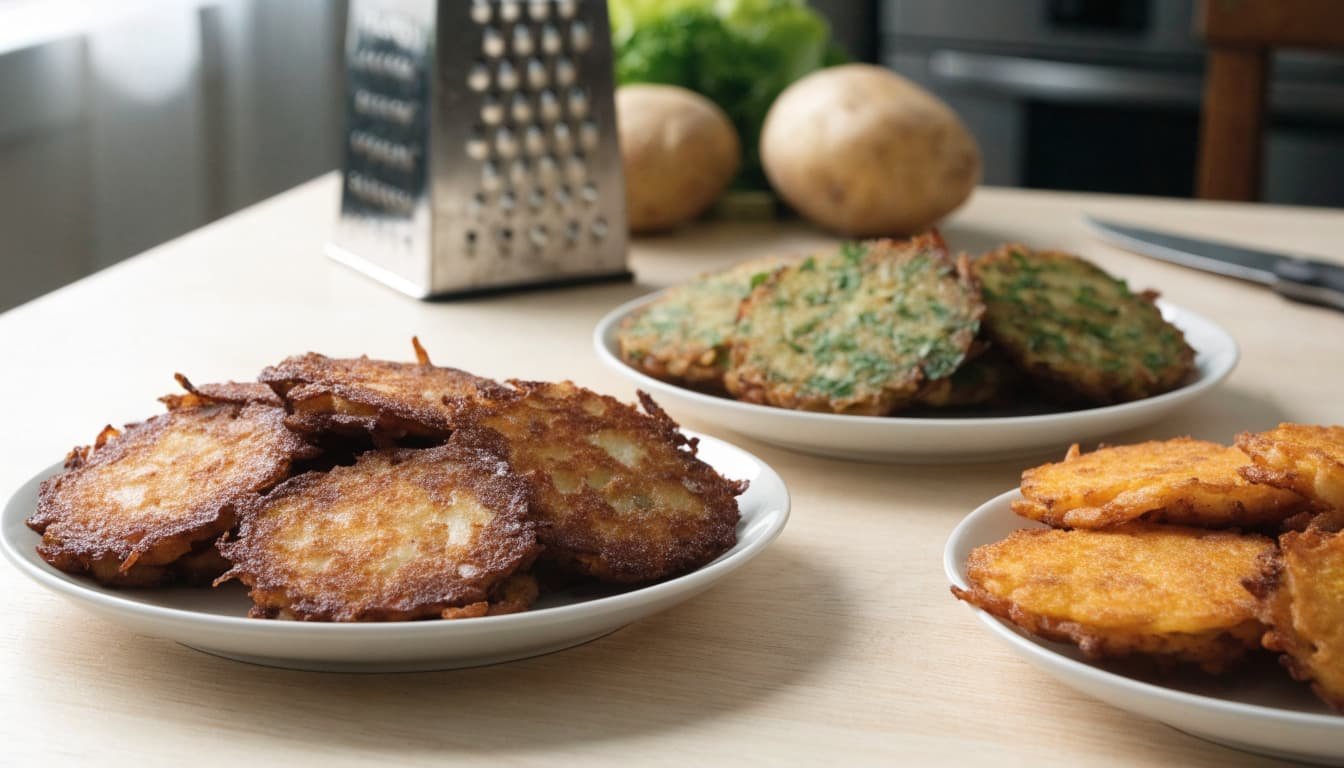
Replace a small portion of the potato with grated sweet potato for a sweeter center. Grated zucchini also works, but squeeze it separately before adding it because it releases plenty of water.
Chopped parsley, dill, or a small pinch of paprika gives you a restrained flavor change. Add a little at first, then taste a cooked sample before increasing the seasoning.
Crispy potato latke recipes need a batter that holds its shape, even when vegetables change. Fry one test latke after any addition, then judge its firmness and browning before filling the skillet.
If you’d rather skip frying for another meal, our skin-on mashed potatoes use the same potato variety with a softer result.
Make-ahead, storage, and reheating for a busy celebration
Cooked latkes are easier to prepare ahead than raw batter. Keep them warm in a low oven on a rack over a baking sheet while you finish frying, leaving space around each one.
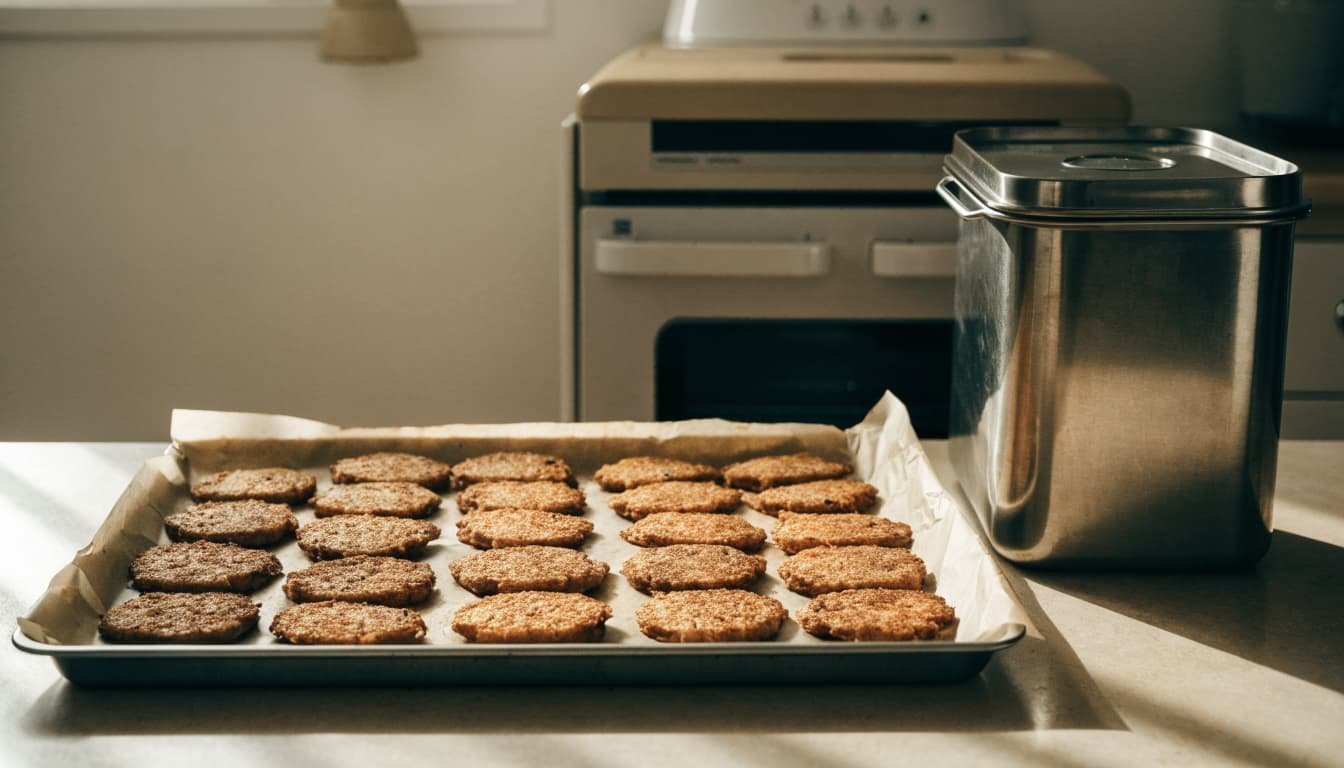
Refrigerate leftovers promptly in a covered container. Reheat them uncovered in one layer on a baking sheet until the centers are hot and the edges have firmed.
For longer storage, freeze cooled latkes in a single layer, then transfer them to a freezer container. Separating layers with parchment makes it easier to remove only what you need.
Reheat frozen latkes in a 375°F oven until heated through, turning them if one side browns faster. Larger or thicker rounds need more time than small ones.
The oven restores more surface crispness than the microwave. Reheated latkes may be slightly softer than freshly fried ones, but keeping them uncovered helps moisture escape.
Frequently Asked Questions
Can I make latke batter ahead of time?
Grated potato can discolor and release liquid, so mix and fry the batter close to serving time. Measure the dry ingredients and set out your equipment earlier, then wait to grate and combine the vegetables until you’re ready to cook.
Why are my potato latkes falling apart?
Excess moisture, too little binder, or an early flip can cause latkes to break. Before adding more egg or flour, let the first side form a firm crust. If the uncooked mixture looks watery, drain it, squeeze the loose shreds again, then fry a small test latke.
Can I use matzo meal instead of flour?
Matzo meal is a common binder, but it absorbs moisture differently from flour. Add it gradually until the mixture holds together rather than replacing the flour with the same volume automatically. Cook a sample before committing the rest of the batter.
What oil is best for frying potato latkes?
Canola or safflower oil gives you a neutral flavor and suits shallow frying. Heat it until a small bit of batter sizzles on contact, then adjust the burner as batches cook. Rendered chicken fat, called schmaltz, is another traditional-tasting option for households that use it.
Bring crisp, hot latkes to the table
Dry shreds, steady heat, and uncrowded batches give you the best chance of crisp edges with tender centers. Keep finished latkes in one layer, then bring them to the table while they’re hot.
Set out applesauce and sour cream where they fit your meal, and let everyone choose their topping. Start with one test latke, make any small adjustment, and carry those same habits through the remaining batches. It’s a manageable way to make this familiar potato dish part of your Hanukkah celebration.
Save the pin for later


I’m the creator of My Everyday Dish, a food blog focused on easy homemade recipes, comforting family meals, simple baking, and seasonal food ideas. I love finding practical ways to make everyday cooking less stressful and more enjoyable. Here, I share recipes with simple ingredients, clear instructions, and plenty of flavor, helping you make delicious meals and treats you’ll feel confident serving at home.
Leave a Reply