
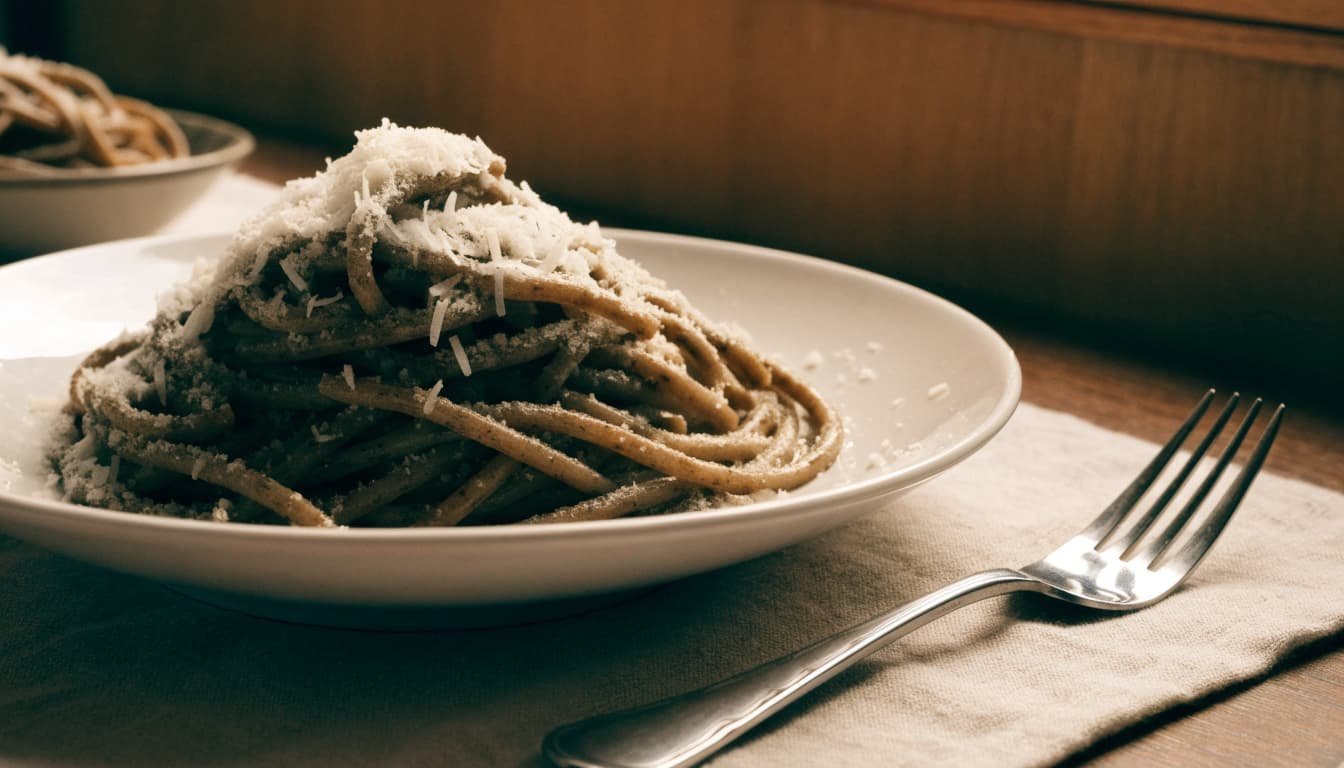
Fresh homemade whole wheat spaghetti noodles have a nutty flavor and need only a few everyday ingredients. Mix a firm dough, let it rest, then roll and cut it with a pasta machine or a rolling pin and knife.
Whole wheat dough feels denser than white-flour dough, so gradual hydration makes it easier to handle. You can also blend the flours for softer noodles without losing that wheat flavor.
Start with the formula below, allow time for resting, and have your sauce ready before the quick cooking step.
How to Make Fresh Homemade Whole Wheat Spaghetti Noodles
This recipe makes about 4 servings. Allow roughly 45 minutes for mixing, kneading, rolling, and cutting, plus at least 30 minutes for resting. Hand-rolling may take longer while you get used to the dough.
Gather these ingredients:
- 1¾ cups whole wheat flour, plus a little extra for dusting.
- 2 large eggs.
- A pinch of salt.
- 2 teaspoons olive oil.
- Water as needed, added a little at a time.
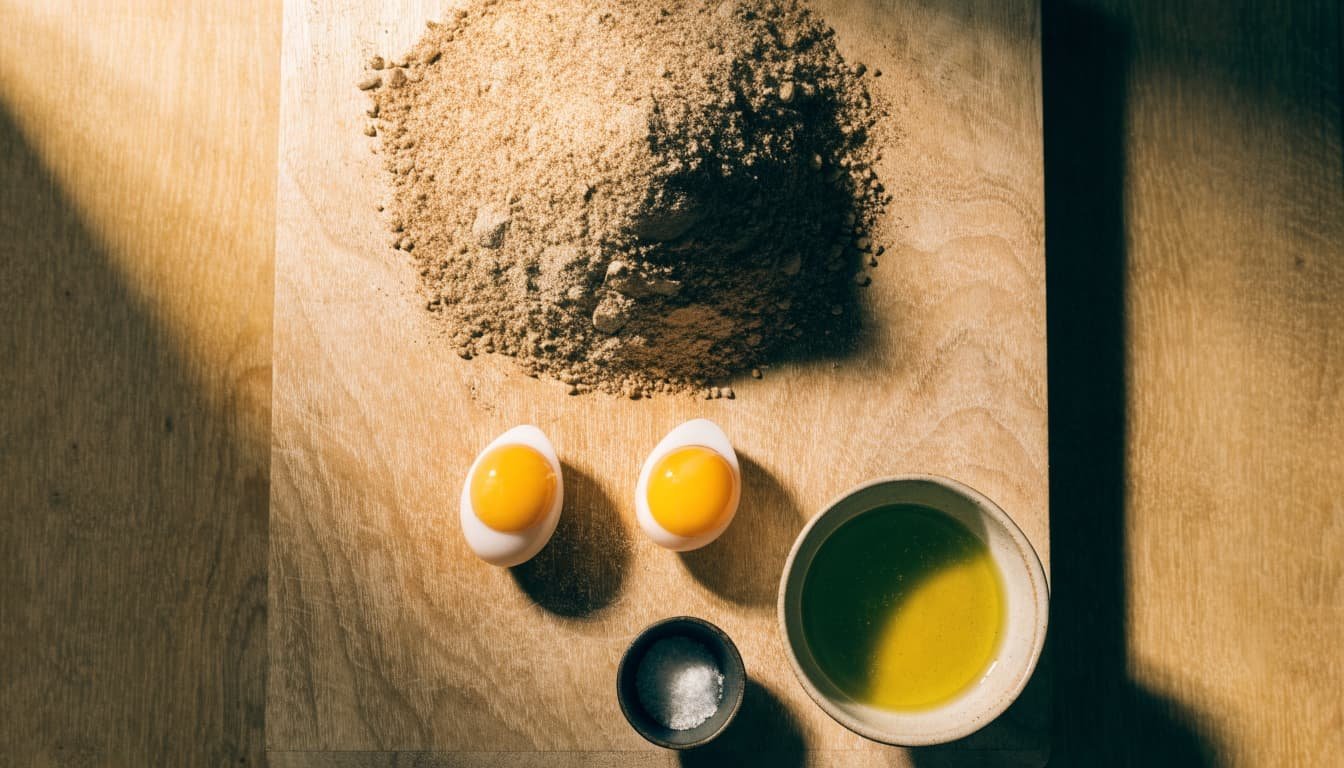
Whole wheat flour absorbs more liquid and makes a denser dough than all-purpose flour. Don’t add a fixed amount of water at the start, since egg size and flour measurement change how much you’ll need.
For softer noodles that are easier to roll, replace half the whole wheat flour with all-purpose flour. Keep the total flour at 1¾ cups, using equal parts of each.
You’ll also need a mixing bowl, fork, clean work surface, and somewhere to lay the cut strands. A large bowl gives you more room to mix without spilling flour.
Mix and knead the dough until it feels smooth and firm
Measure and Bring the Dough Together
Stir the flour in its container, spoon it into your measuring cup, then level the top. Avoid packing it down, which can leave you with more flour than the eggs can moisten.
Combine the flour and salt in a large bowl. Make a wide well in the center, then add the eggs and olive oil.
Beat the eggs and oil with a fork, gradually drawing flour inward from the edges. Keep mixing until the center thickens and you have a shaggy mixture.
Use your hands to gather the dough, pressing loose crumbs into the moist portions. If dry crumbs won’t come together, add water a few drops at a time.
Knead Until Firm and Pliable
Move the dough onto a clean surface. Press it forward with the heel of your hand, fold it back, then turn and repeat.
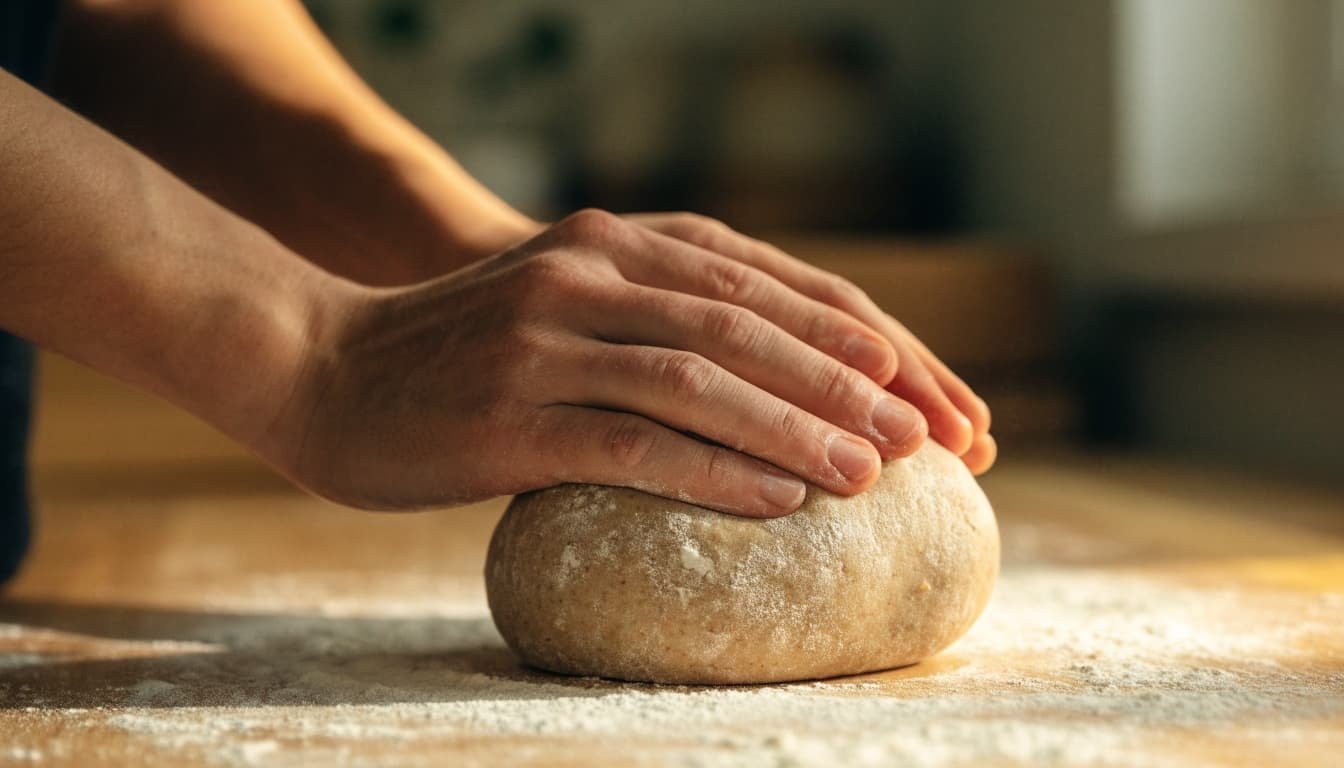
Knead until the dough is cohesive and smoother, with no loose flour remaining. It should feel firm and pliable, not wet or crumbly.
Dust in a little flour if it sticks to your hands or the counter. Add it sparingly, since excess flour makes rolling harder.
Whole wheat dough may stay slightly textured and less elastic than white-flour dough, even when it’s ready to rest.
Judge the dough by how it holds together rather than by a precise kneading time.
Read also: Easy Homemade Tortellini Soup With Chicken Broth
Rest, roll, and cut the dough into spaghetti
Rest Before Rolling
Wrap the dough tightly or place it in a covered container so the surface doesn’t dry out. Let it rest for at least 30 minutes before rolling.
The rest gives the flour time to absorb moisture and makes the dough easier to stretch. Divide it into four portions afterward, then work with one portion at a time.
Keep the remaining pieces covered while you roll. If a portion repeatedly springs back, cover it and let it relax briefly before continuing. Forcing it thinner can cause tears along the edges.
Roll Thinly and Separate the Strands
Flatten one portion enough to fit through your pasta machine’s widest setting. Pass it through, then move through progressively narrower settings, supporting the sheet without pulling it.
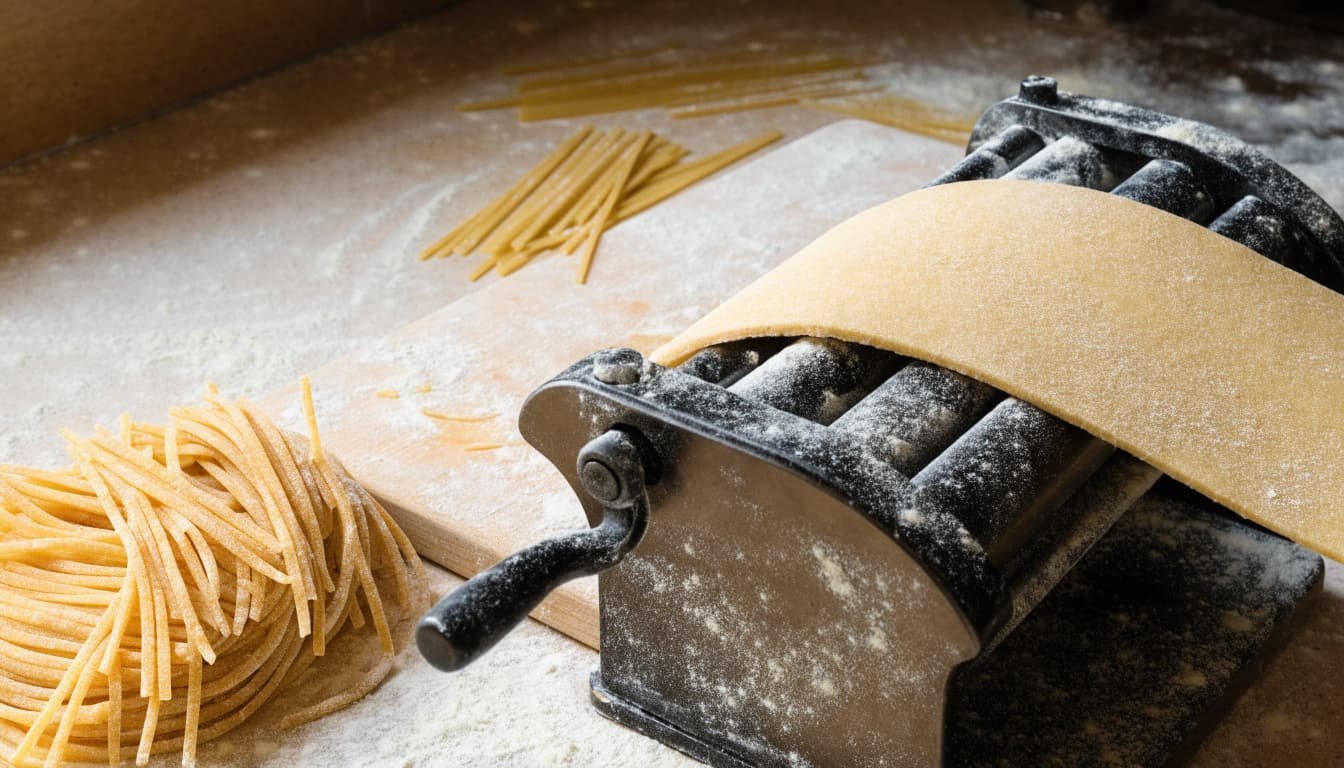
Aim for a thin, even sheet suitable for spaghetti. Use the machine maker’s spaghetti thickness guidance when available, since numbered settings aren’t consistent across machines.
For hand-rolling, lightly flour the counter and rolling pin. Roll outward from the center, lifting and turning the dough so it doesn’t stick. Check the middle as well as the edges for thick patches.
Feed the sheet through a spaghetti cutter, or carefully slice narrow strips with a sharp knife. Hand-cut noodles will be flatter and less uniform, which is fine for a homemade batch.
Toss the strands lightly with flour, then separate them before forming loose nests. Keep the nests airy rather than packing them tightly, so the noodles don’t stick together before cooking.
Read also: Easy Homemade Christmas Potpourri in a Jar Recipe
Cook fresh whole wheat spaghetti and serve it while tender
Bring a large pot of water to a full boil, then salt it. Have your sauce warmed and your serving bowls ready, since fresh noodles cook much faster than dried pasta.
Add the spaghetti and stir gently to separate the strands. Start tasting after 1 minute; most freshly cut noodles cook in about 1 to 2 minutes.
Thickness and surface dryness affect the timing. Homemade whole wheat spaghetti noodles should be tender with a slight bite, without a stiff or floury center. If the strands are thicker, keep tasting until they reach that point.
Before draining, scoop out a little pasta water. Drain promptly, then toss the noodles with your sauce, adding small splashes of the reserved water if needed.
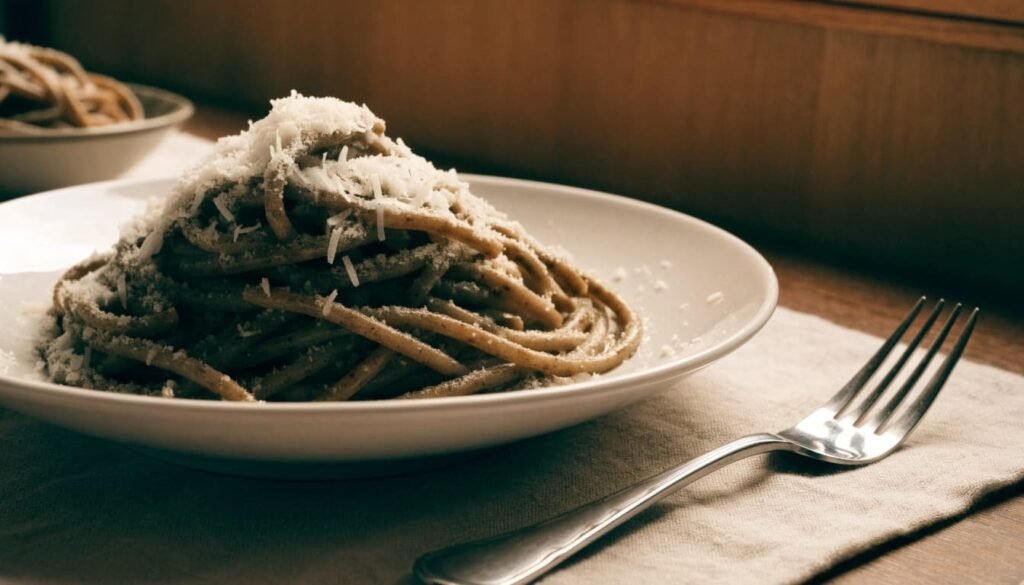
Olive oil and Parmesan let the wheat flavor come through. Tomato sauce or pesto works well, too; add enough to coat the strands without weighing them down.
For a fuller meal, pair the noodles with the turkey meatballs in our healthy family dinner recipes. Prepare the meatballs and sauce first, then cook the pasta near the end so everything reaches the table warm.
Store leftovers safely and fix common pasta problems
Dry, cracking dough needs a few drops of water worked through it. Sticky dough needs a light dusting of flour, followed by more kneading before you decide whether to add anything else.
If cut noodles clump, separate them gently and dust them lightly with flour before cooking. Pressing sticky strands into tight nests makes them harder to loosen without breaking.
For the best texture, cook the noodles shortly after cutting. If you’re saving uncooked pasta, cover it and refrigerate it for no more than one day.
Keep the refrigerator at 40°F or below, consistent with USDA’s refrigerated food guidance. Don’t leave egg-based pasta on the counter for extended storage.
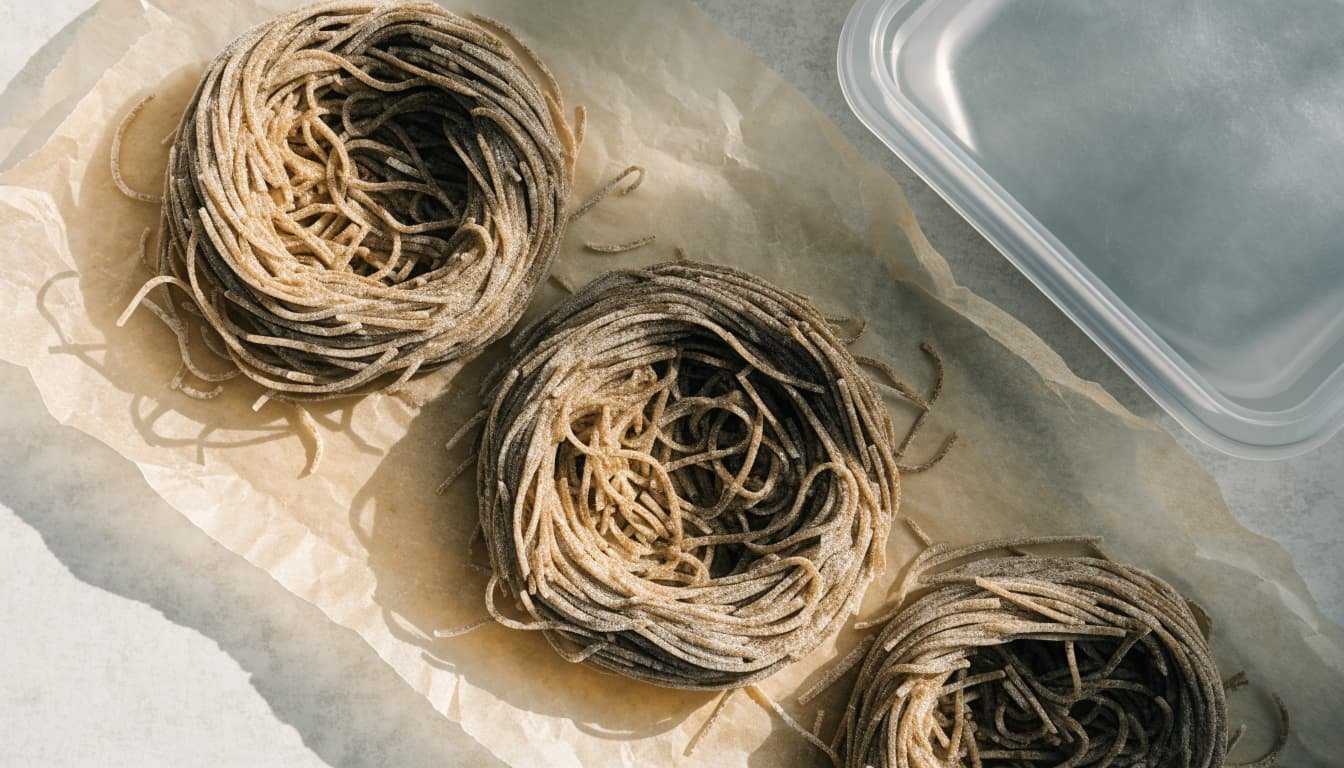
For longer storage, arrange lightly floured portions on a lined tray and freeze until firm. Transfer them to a freezer container or bag without crushing the nests.
Cook frozen portions directly in boiling water, separating them gently as they soften. Begin tasting early, then continue until the centers are tender.
Leaving noodles out for an hour may dry the surface, but it doesn’t make them shelf-stable. Keep this fresh egg pasta refrigerated or frozen rather than storing it in the pantry.
Frequently Asked Questions
Can I make whole wheat spaghetti without a pasta machine?
Yes, a rolling pin and sharp knife work well for a small batch. Roll the dough as evenly and thinly as possible, then cut narrow strips. Working with smaller portions makes it easier to avoid a thick center.
Can I use only whole wheat flour?
Yes, the recipe works with all whole wheat flour. Expect a denser, less elastic dough and a more noticeable wheat flavor. If you want softer noodles, use equal parts whole wheat and all-purpose flour while keeping the total flour unchanged.
Can I make the dough ahead of time?
Cover the dough tightly and refrigerate it, then use it within one day. If it feels too firm to roll straight from the refrigerator, let it sit briefly at room temperature. Keep it covered during that time so the surface stays supple.
How do I know when fresh spaghetti is done?
Taste a strand after about one minute, then continue cooking until it’s tender with a slight bite. Thicker strands need longer than thin ones. Use the texture of the center rather than the timer alone to decide when to drain.
Can I save cooked spaghetti for another meal?
Yes, refrigerate cooked spaghetti within two hours and use it within three to four days. Divide warm pasta into shallow containers for faster cooling, following USDA’s leftover storage guidance. Reheat a small portion with a splash of water or sauce so the strands loosen without drying out.
Bring Fresh Whole Wheat Spaghetti to the Table
Fresh whole wheat spaghetti needs a few everyday ingredients and some hands-on time. Let the dough rest, roll it evenly, and taste early once the noodles reach boiling water.
You can keep the full wheat flavor or use a flour blend for a softer result. Try a batch with your favorite sauce, keeping it ready before you cook the noodles so you can serve them while they’re tender.
Save the pin for later

I’m the creator of My Everyday Dish, a food blog focused on easy homemade recipes, comforting family meals, simple baking, and seasonal food ideas. I love finding practical ways to make everyday cooking less stressful and more enjoyable. Here, I share recipes with simple ingredients, clear instructions, and plenty of flavor, helping you make delicious meals and treats you’ll feel confident serving at home.
Leave a Reply