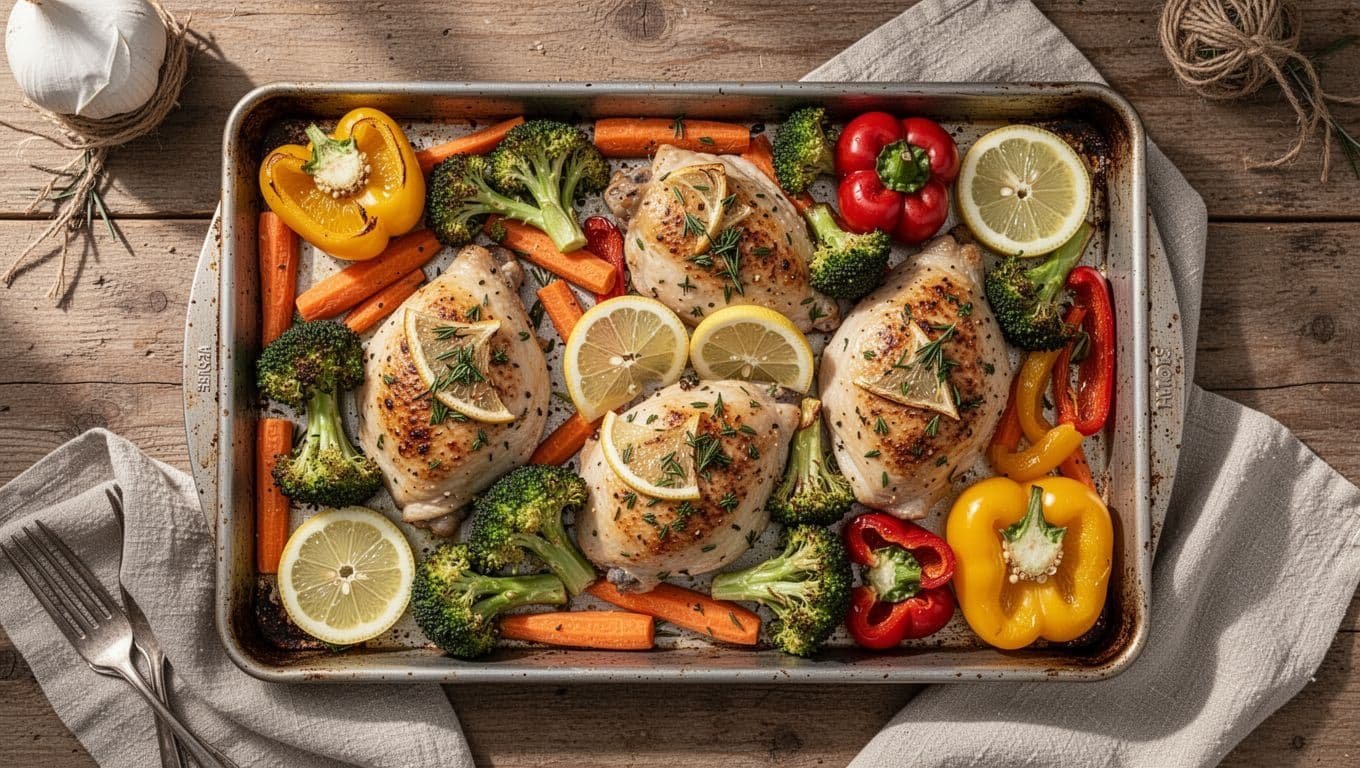
Feeding a family healthy meals can be tough when dishes need to be simple, filling, and appealing to different tastes. This roundup brings together 15 healthy family dinner recipes and easy clean eating lunch ideas built around lean protein, vegetables, whole grains, beans, and healthy fats, without hard-to-find ingredients.
Each recipe includes practical ingredients, clear step-by-step directions, simple swaps, and storage advice, so planning meals feels more manageable. Start with these balanced dinner and lunch ideas to make your weekly menu easier to organize.
Healthy Family Dinner Recipes for Busy Weeknights
These dinner recipes are grouped by simple cooking methods, budget-friendly ingredients, and balanced combinations of protein, vegetables, whole grains, and healthy fats. Each recipe serves about four people unless stated otherwise. Adjust the spice level, vegetables, and portion sizes to suit your family.
Clean eating doesn’t require strict rules, perfect meals, or expensive groceries. These recipes focus on practical ingredients and flexible preparation, so you can make healthy choices without adding stress to your day.
1. One-Pan Lemon Chicken With Roasted Vegetables
This sheet-pan dinner combines lean protein with several colorful vegetables. Chicken provides protein, while broccoli, carrots, and bell peppers add fiber, vitamins, and satisfying texture.
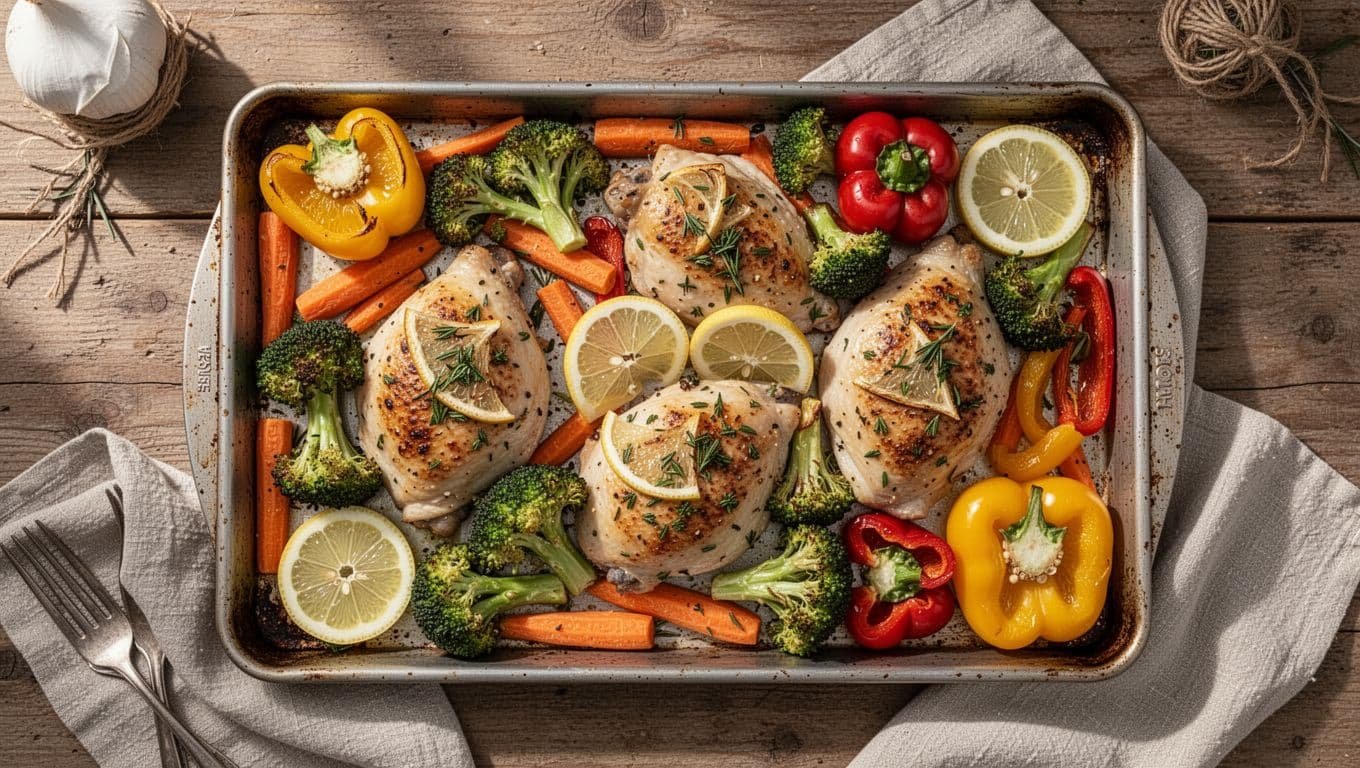
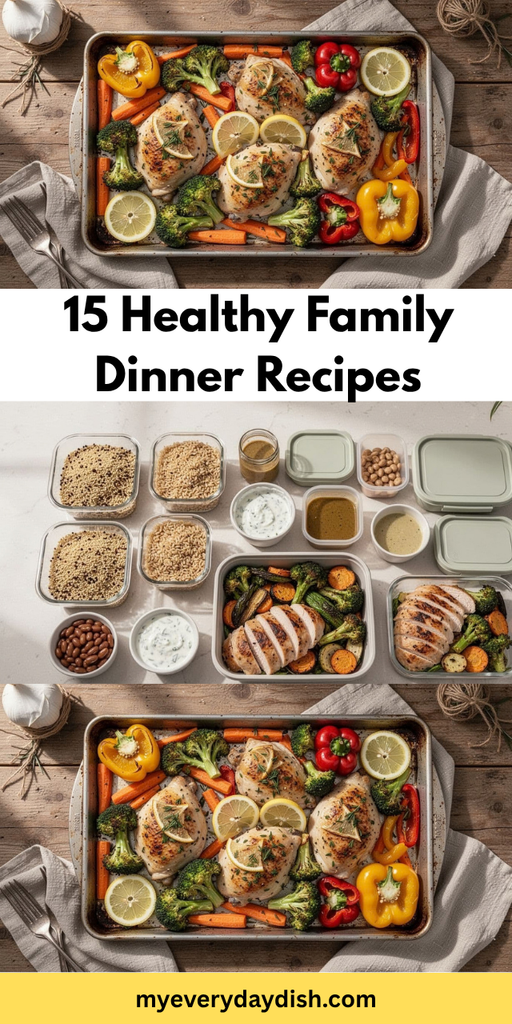
Heat the oven to 425°F. Place chicken breasts or thighs, broccoli florets, sliced carrots, and bell peppers on a large sheet pan. Toss everything with olive oil, lemon juice, minced garlic, dried oregano, and black pepper.
Arrange the chicken in the center and spread the vegetables around it. Roast until the vegetables are tender and the chicken reaches 165°F in the thickest part. The USDA safe temperature chart provides additional food safety guidance. Finish with fresh lemon juice before serving.
Boneless chicken thighs stay juicy, while zucchini or green beans work well in place of any vegetable. Refrigerate leftovers in airtight containers and use them for an easy lunch with brown rice, greens, or a whole-grain wrap.
2. Turkey and Black Bean Taco Bowls
Taco bowls let everyone choose their own toppings, which makes this meal easier for families with different preferences. Lean ground turkey supplies protein, and black beans add fiber and help stretch the recipe.
Start by cooking brown rice according to the package directions. Meanwhile, brown lean ground turkey in a skillet over medium heat, breaking it into small pieces. Stir in mild taco seasoning and a splash of water, then simmer until the seasoning coats the meat.
Warm the black beans in a separate saucepan. Set out the turkey, rice, beans, corn, diced tomatoes, shredded lettuce, and sliced avocado in separate bowls. Children can build their own portions and skip ingredients they don’t enjoy.
For a lower-cost version, use extra black beans and less turkey. Store rice, turkey, and beans together, but keep lettuce, tomatoes, avocado, and other fresh toppings in separate containers. Add the toppings just before eating to preserve their texture.
3. Baked Salmon With Sweet Potatoes and Green Beans
Salmon, sweet potatoes, and green beans create a balanced meal with protein, complex carbohydrates, vegetables, and healthy fats. The key is to start the potatoes first, since salmon cooks more quickly.
Heat the oven to 425°F. Toss cubed sweet potatoes with olive oil, minced garlic, and black pepper, then roast them on a sheet pan for 20 minutes. Turn the potatoes, add salmon fillets and trimmed green beans, and season everything with lemon juice, olive oil, and herbs.
Return the pan to the oven and bake until the salmon flakes easily. Fish should reach 145°F, according to FoodSafety.gov’s cooking temperature guide. Serve with fresh lemon wedges.
Cod or another firm fish can replace salmon. Before serving younger children, inspect the fish carefully and remove any bones with clean tweezers or your fingers.
4. Healthy Chicken and Vegetable Stir-Fry
A chicken stir-fry cooks quickly and makes it easy to use vegetables already in your refrigerator. Serve it over brown rice for a filling dinner with protein, fiber, and steady energy.
Whisk together reduced-sodium soy sauce, rice vinegar, minced garlic, grated ginger, and a small amount of honey. To keep added sugar low, use only a teaspoon of honey or leave it out entirely.
Slice chicken into thin, evenly sized pieces. Cook it in a lightly oiled skillet or wok in batches, then transfer it to a plate. Next, stir-fry broccoli, snap peas, carrots, and bell peppers until crisp-tender. Cut the vegetables into small pieces so they cook quickly and are easier for children to eat.
Return the chicken to the pan, pour in the sauce, and toss until everything is hot. Frozen vegetables work well when fresh produce is limited. Thaw them first and drain excess water to prevent the sauce from becoming thin.
5. Lentil and Vegetable Pasta
Lentils add affordable plant protein and fiber to this comforting pasta dinner. They also make a small amount of meat unnecessary, helping you build a satisfying meal from pantry staples.
Cook whole-wheat pasta according to the package directions. While it cooks, soften diced onions and carrots in olive oil. Add crushed tomatoes, Italian herbs, garlic, and black pepper, then simmer until the vegetables become tender.
Stir in canned or cooked lentils and simmer for several minutes. Add spinach near the end, cooking just until it wilts. Drain the pasta and toss it with the lentil and vegetable sauce.
Use gluten-free pasta if needed, and check that the canned lentils and other packaged ingredients meet your dietary requirements. Freeze extra sauce in single-meal containers for quick lunches or another family dinner.
More Family-Friendly Healthy Dinners With Simple Ingredients
These five healthy family dinner recipes add variety without requiring complicated techniques. Each one uses familiar ingredients, flexible substitutions, and simple serving ideas that work for busy weeknights.
6. Turkey Meatballs With Whole-Wheat Spaghetti
Lean ground turkey, whole-wheat spaghetti, and marinara sauce create a lighter version of a family pasta favorite. Oats or breadcrumbs help hold the meatballs together, while spinach or a side salad adds vegetables.
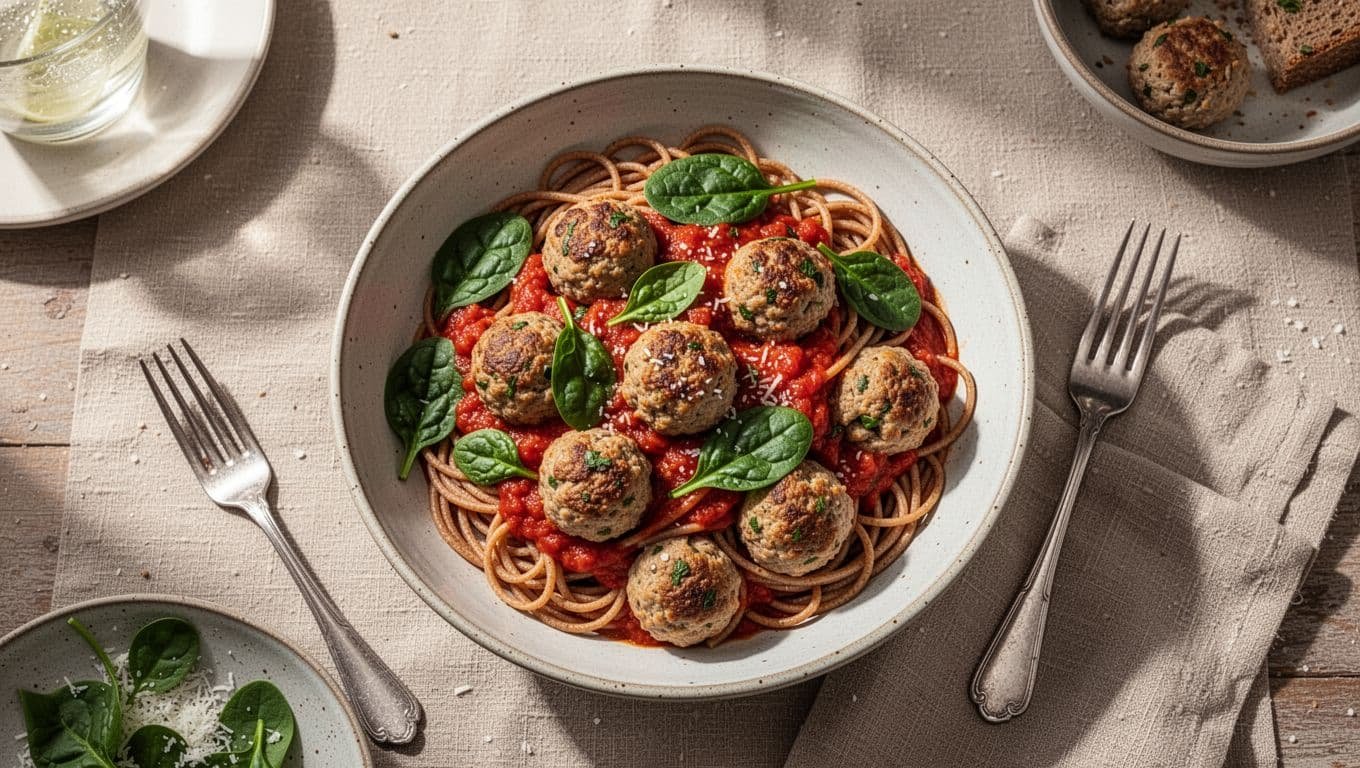
Combine lean ground turkey, quick oats or breadcrumbs, one egg, minced garlic, Italian seasoning, and black pepper in a bowl. Mix with clean hands or a fork just until the ingredients come together. Avoid overworking the meat, or the meatballs may become dense.
Shape the mixture into meatballs about 1 1/2 inches wide. For younger children, make smaller meatballs so they cook quickly and are easier to cut. Place them on a lined baking sheet and bake at 400°F until they reach 165°F in the center.
While the meatballs bake, warm the marinara sauce in a saucepan. Cook whole-wheat spaghetti according to the package directions, then drain it well. Toss the pasta with some sauce and serve the meatballs on top with wilted spinach or a simple side salad.
Ground chicken can replace the turkey, and gluten-free breadcrumbs work in place of oats or regular breadcrumbs. Cool extra cooked meatballs before freezing them in a single layer, then transfer them to a freezer container for future meals.
Read also: 18 Quick and Easy Work Lunch Sandwich Ideas
7. Sheet-Pan Chicken Fajitas
Sheet-pan chicken fajitas bring colorful vegetables and lean protein together on one pan. Serve them with whole-wheat tortillas or lettuce wraps, then let each person add preferred toppings.
Slice boneless, skinless chicken breasts or thighs into evenly sized strips. Cut the onions and bell peppers into similar-width slices so the ingredients finish cooking at the same time. Spread everything across a large sheet pan.
Whisk olive oil, lime juice, mild chili powder, cumin, garlic powder, and black pepper in a small bowl. Pour the mixture over the chicken and vegetables, then toss until each piece is lightly coated. Roast at 425°F, stirring once halfway through, until the chicken reaches 165°F and the peppers are tender.
Serve the fajita filling in warm whole-wheat tortillas or crisp lettuce leaves. Set out plain Greek yogurt, diced avocado, mild salsa, and fresh cilantro for toppings. For children, reserve a portion before adding extra chili powder, or season their serving with only cumin, garlic, and a little lime juice.
Use sliced turkey or firm tofu instead of chicken. You can also replace bell peppers with zucchini, mushrooms, or thinly sliced carrots.
8. Slow Cooker White Chicken Chili
White chicken chili is easy to assemble in the morning and ready by dinnertime. Chicken, white beans, corn, tomatoes, and broth make a filling meal, while mild green chiles add flavor without making the dish too hot.
Place diced onion in the bottom of a slow cooker. Add boneless, skinless chicken breasts or thighs, white beans, corn, diced tomatoes, mild green chiles, low-sodium chicken broth, cumin, garlic powder, and black pepper. Keep the chicken mostly covered by the liquid as it cooks.
Cover and cook on low until the chicken is tender and reaches 165°F, usually about 6 to 7 hours, or cook on high for about 3 to 4 hours. Transfer the chicken to a plate, shred it with two forks, and stir it back into the chili. Taste before adding salt, since the broth and canned ingredients may already contain sodium.
Top each bowl with avocado, chopped cilantro, a spoonful of plain Greek yogurt, or a small amount of shredded cheese. Serve with whole-grain crackers or cornbread for extra texture.
For stovetop cooking, simmer the ingredients in a large covered pot until the chicken is cooked through, then shred it and return it to the pot. Pinto beans can replace white beans, and leftover cooked chicken can replace raw chicken. Cool leftovers in shallow containers and refrigerate them promptly, following USDA leftover food safety guidance.
9. Stuffed Bell Peppers With Quinoa and Turkey
Stuffed bell peppers turn a simple turkey and quinoa filling into a colorful family dinner. The peppers soften as they bake, while black beans and quinoa add fiber and plant-based protein to the meal.
Cook quinoa according to the package directions. Meanwhile, slice the tops from bell peppers and remove the seeds and membranes. Arrange the peppers upright in a baking dish with a small amount of water in the bottom.
Brown lean ground turkey with diced onion in a skillet. Stir in cooked quinoa, black beans, diced tomatoes, garlic, cumin, and black pepper. Spoon the filling into the peppers, cover the dish with foil, and bake at 375°F until the peppers are tender.
Remove the foil during the final few minutes and sprinkle a small amount of shredded cheese over each pepper. Continue baking until the cheese melts. Serve with a green salad, sliced fruit, or extra black beans on the side.
For a vegetarian variation, leave out the turkey and add extra black beans, diced mushrooms, or both. Brown rice can replace quinoa if that’s what you have available.
You can prepare the filling up to three days ahead and store it in the refrigerator. When you’re ready to cook, fill the peppers and bake until the center is hot. This approach shortens dinner preparation without sacrificing flavor.
Read also: 18 Mediterranean Lunch Ideas for Work With Easy Sandwiches
10. Chickpea and Vegetable Curry With Brown Rice
A mild chickpea curry is a useful meatless dinner because it combines pantry staples with several vegetables. Chickpeas provide substance, while cauliflower, peas, spinach, and tomatoes bring color and texture.
Start brown rice according to the package directions. In a large skillet or Dutch oven, soften diced onion in olive oil. Add minced garlic and cook briefly, then stir in mild curry powder, ground cumin, and a small pinch of turmeric. Cook the spices for about 30 seconds to bring out their flavor without burning them.
Add cauliflower florets, chickpeas, diced tomatoes, and light coconut milk. Stir well, cover, and simmer until the cauliflower is tender. Add peas during the final few minutes, then fold in spinach and cook until it wilts.
Serve the curry over brown rice with fresh cilantro and a spoonful of plain yogurt. To keep the meal mild for children, use a gentle curry powder, skip cayenne, and offer lime wedges separately. If you prefer not to use coconut milk, serve the curry with plain yogurt stirred into individual bowls instead of cooking the yogurt in the sauce.
Frozen cauliflower or peas can replace fresh vegetables. Store the curry and rice in separate airtight containers so the rice doesn’t absorb too much sauce. Refrigerate both promptly, then reheat portions until steaming hot.
Easy Clean Eating Lunch Ideas for Home, Work, and School
These portable lunch recipes combine protein, fiber, vegetables, and whole-food ingredients in simple formats. Prepare grains, cooked proteins, chopped vegetables, and dressings ahead of time, then assemble lunches in reusable containers throughout the week. Keep perishable foods chilled in an insulated lunch bag with cold packs, since bacteria multiply quickly between 40°F and 140°F, the food safety danger zone. Follow the USDA’s packed lunch safety guidance when packing meals for work or school.
11. Greek Chicken and Quinoa Salad Bowls
Greek chicken and quinoa salad bowls are filling enough for lunch but still taste fresh after refrigeration. Cook quinoa according to the package directions, or reheat previously cooked quinoa in the microwave with a tablespoon of water. Let it cool before adding it to the container so trapped steam doesn’t wilt the greens.
While the quinoa cools, chop cucumber and tomatoes, rinse the chickpeas, and slice the cooked chicken. Whisk olive oil, fresh lemon juice, dried oregano, minced garlic, and black pepper in a small bowl. Taste the dressing and add a small amount of salt if needed.
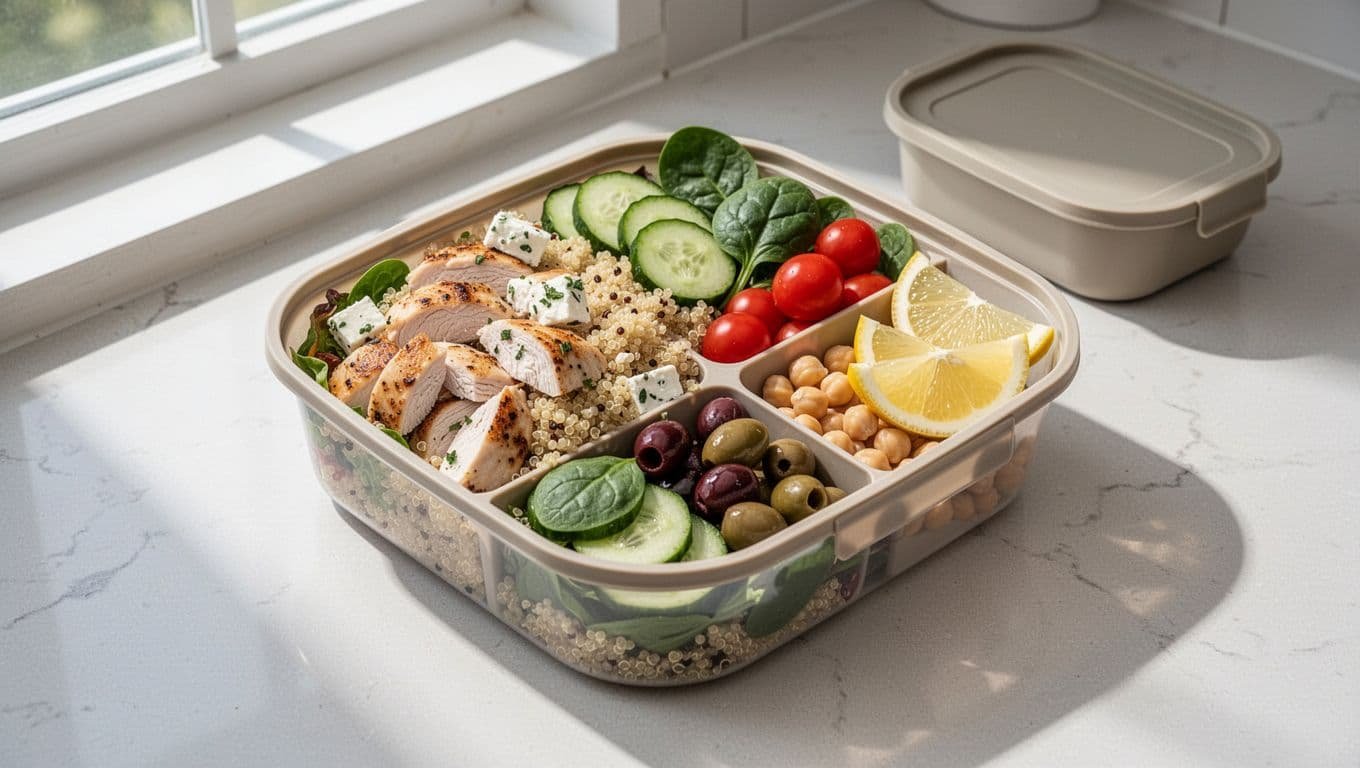
Layer the ingredients in a reusable container, starting with quinoa and chicken. Add chickpeas, cucumber, tomatoes, olives, and spinach, then pack the dressing in a separate leakproof cup. For a vegetarian bowl, replace the chicken with extra chickpeas and crumbled feta.
Keep the spinach and dressing separate until lunchtime. Store the greens in a dry container, and let all cooked ingredients cool completely before sealing. Refrigerate the bowls and use them within three to four days.
12. Tuna and White Bean Lettuce Wraps
Tuna and white bean lettuce wraps offer protein and fiber without requiring cooking. Drain the tuna and white beans well, then rinse the beans under cool water. Pat them dry to prevent excess liquid from softening the filling.
Add the tuna and beans to a bowl with finely chopped celery, red onion, lemon juice, plain Greek yogurt, chopped parsley, and black pepper. Stir gently so the beans remain mostly intact. Taste the mixture before adding salt, since canned tuna may already contain plenty.
Spoon the filling into crisp lettuce leaves just before eating. Romaine, butter lettuce, or sturdy green-leaf lettuce works well. You can also serve the mixture in a whole-grain wrap for easier packing.
For a different option, use canned salmon in place of tuna. Mashed chickpeas also create a vegetarian filling, especially when mixed with extra lemon juice, celery, and herbs.
Pack the filling in a sealed container and place dry lettuce leaves in a separate bag or container lined with a paper towel. Assemble the wraps at lunchtime to prevent sogginess. Keep the tuna mixture cold with an ice pack, and refrigerate leftovers promptly.
13. Hummus and Roasted Vegetable Whole-Grain Wraps
These vegetable wraps use hummus for plant protein and healthy fats, while roasted vegetables add flavor without a heavy sauce. Heat the oven to 425°F, then toss sliced zucchini, bell peppers, and carrots with olive oil and black pepper. Roast them on a sheet pan until tender and lightly browned, turning them once halfway through.
Cool the vegetables before assembling the wrap. Spread hummus across a whole-grain tortilla, leaving a one-inch border around the edges. Add spinach, roasted vegetables, and optional feta, then fold in the sides and roll the tortilla tightly from the bottom.
Wrap each serving in parchment or place it seam-side down in a reusable container. Avoid adding hot vegetables, excess hummus, or watery produce, since moisture can weaken the tortilla. A thin layer of hummus works better than a thick one for packed lunches.
For a no-cook version, use store-bought roasted vegetables or add raw bell pepper strips, shredded carrots, cucumber, and baby spinach. If the wrap needs more protein, include edamame, white beans, or sliced leftover chicken.
14. Apple, Turkey, and Cheddar Lunch Box
An apple, turkey, and cheddar lunch box makes portioning easy because every ingredient stays separate. Start with sliced turkey, cheddar cubes or slices, apple wedges, whole-grain crackers, carrot sticks, and a small serving of nuts or seeds.
To limit browning, stir one teaspoon of lemon juice into one cup of cold water. Dip the apple wedges briefly, then pat them dry before placing them in the container. The light citrus coating helps the fruit stay more appealing during the school or workday.
Assemble the lunch in separate sections of a divided reusable box. Place the turkey and cheddar together, keep the crackers away from moist foods, and add carrots beside the fruit. A small handful of nuts or seeds adds texture, but use a modest portion so the box stays balanced.
For nut-free school lunches, choose pumpkin seeds if permitted, sunflower seed butter, roasted chickpeas, or extra whole-grain crackers. You can also replace processed deli turkey with sliced leftover roasted chicken. Keep the lunch chilled with an ice pack, particularly when it contains turkey or cheese.
Read also: 18 Meatless Lunch Ideas for Work With Vegetarian Sandwiches
15. Easy Edamame and Brown Rice Power Salad
This brown rice power salad is a useful make-ahead lunch because it holds its texture for several days. Cook brown rice according to the package directions, then spread it on a shallow plate to cool quickly. If you’re using leftover rice, reheat it until steaming, then cool it before combining it with the vegetables.
Steam shelled edamame according to the package directions and drain it well. Shred the cabbage, dice the cucumber, grate or julienne the carrots, and slice the scallions. For the dressing, whisk lime juice, a small amount of sesame oil, low-sodium tamari or soy sauce, and grated ginger.
Combine the cooled rice, edamame, cabbage, cucumber, carrots, and scallions in a large bowl. Add the dressing a little at a time and toss gently. For more protein, add cubed baked tofu or shredded cooked chicken.
Choose reduced-sodium tamari, dilute regular soy sauce with lime juice, or use coconut aminos for a lower-sodium option. Store the salad in airtight containers for up to four days, keeping extra dressing separate when possible. Add a cold pack when transporting it, and don’t leave the salad at room temperature for extended periods.
How to Make These Healthy Meals Easier to Plan and Prepare
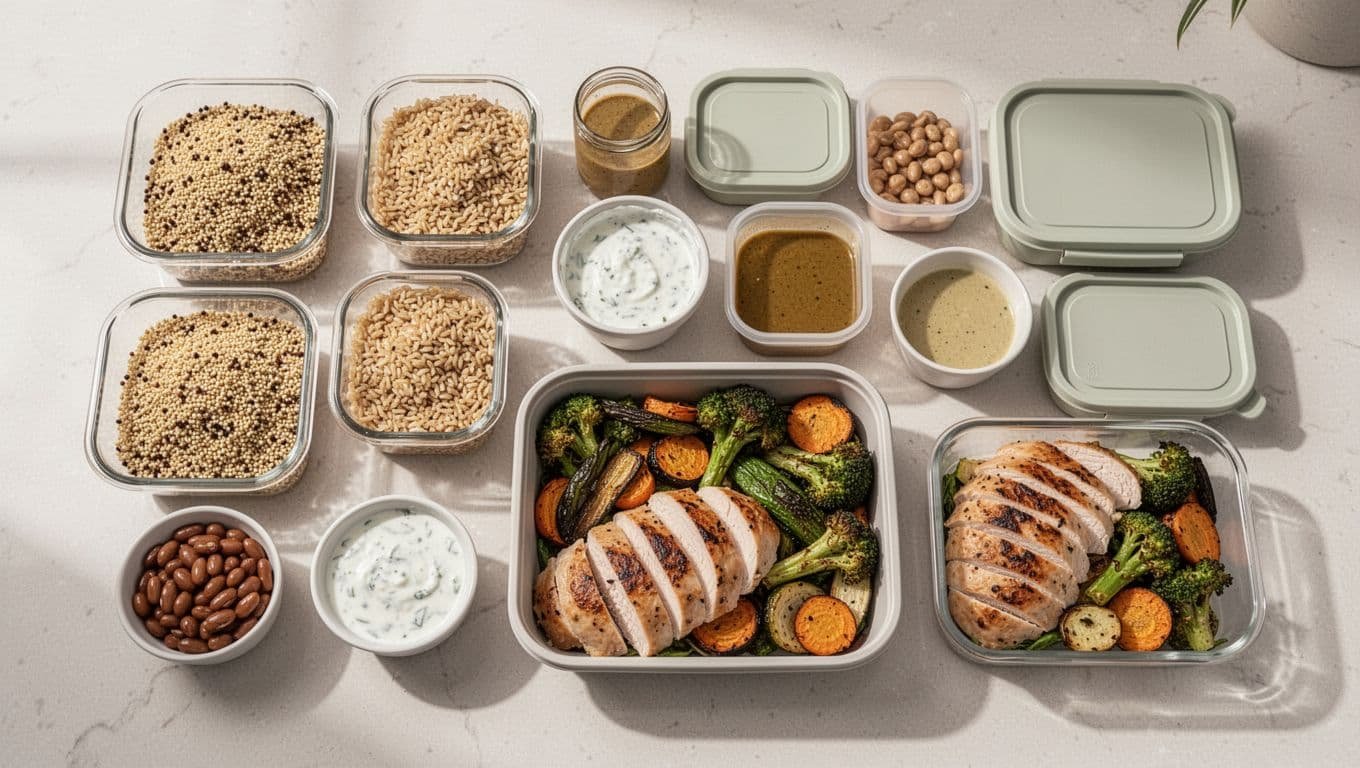
A simple prep routine can turn several healthy family dinners into easy lunches with little extra work. Cook a few flexible ingredients at once, then combine them in different ways throughout the week.
Smart Ingredient Swaps for Picky Eaters and Dietary Needs
Keep the main meal flexible so everyone can eat comfortably. Swap chicken for turkey, beans for meat, quinoa for brown rice, or plain Greek yogurt for mayonnaise. Lettuce cups can replace tortillas when you want a lighter, gluten-free option.
For vegetarian meals, use lentils, chickpeas, black beans, tofu, or extra vegetables in place of meat. Choose certified gluten-free grains, pasta, tortillas, broth, and seasonings when needed. Dairy-free diners can use unsweetened dairy-free yogurt or avocado instead of Greek yogurt and cheese. For nut-free lunches, choose pumpkin seeds, sunflower seeds, or roasted chickpeas, if permitted.
Serve sauces, dressings, cheese, and spicy toppings on the side. That approach lets children control their portions and keeps wraps, greens, and grain bowls from becoming soggy. Always check ingredient labels for hidden dairy, wheat, soy, sesame, or nuts, especially when cooking for someone with a food allergy.
Safe Storage, Reheating, and Lunch Packing
After cooking, divide leftovers into shallow airtight containers so they cool quickly. Refrigerate perishable food within two hours, and use refrigerated leftovers within three to four days. Follow the USDA’s leftover food safety guidance for storage and reheating recommendations.
Reheat cooked food until it’s steaming hot throughout. Store roasted chicken, cooked grains, and vegetables separately when possible, then combine them into wraps or grain bowls during the week. Pack crisp toppings, greens, dressings, and sauces in separate containers to protect their texture.
For work or school, use an insulated lunch bag with an ice pack. Wash produce before chopping, cook a batch of grains, roast several vegetables, and portion protein into meal-sized containers. A roasted chicken dinner can become a wrap the next day, then a grain bowl with vegetables later in the week. Each meal stays balanced when you include protein, vegetables or fruit, whole grains, and a small serving of healthy fat.
Frequently Asked Questions
These answers address common questions that come up when you plan healthy family dinners and pack clean eating lunches. Use them to adjust the recipes to your household, schedule, and budget.
What does clean eating mean for family meals?
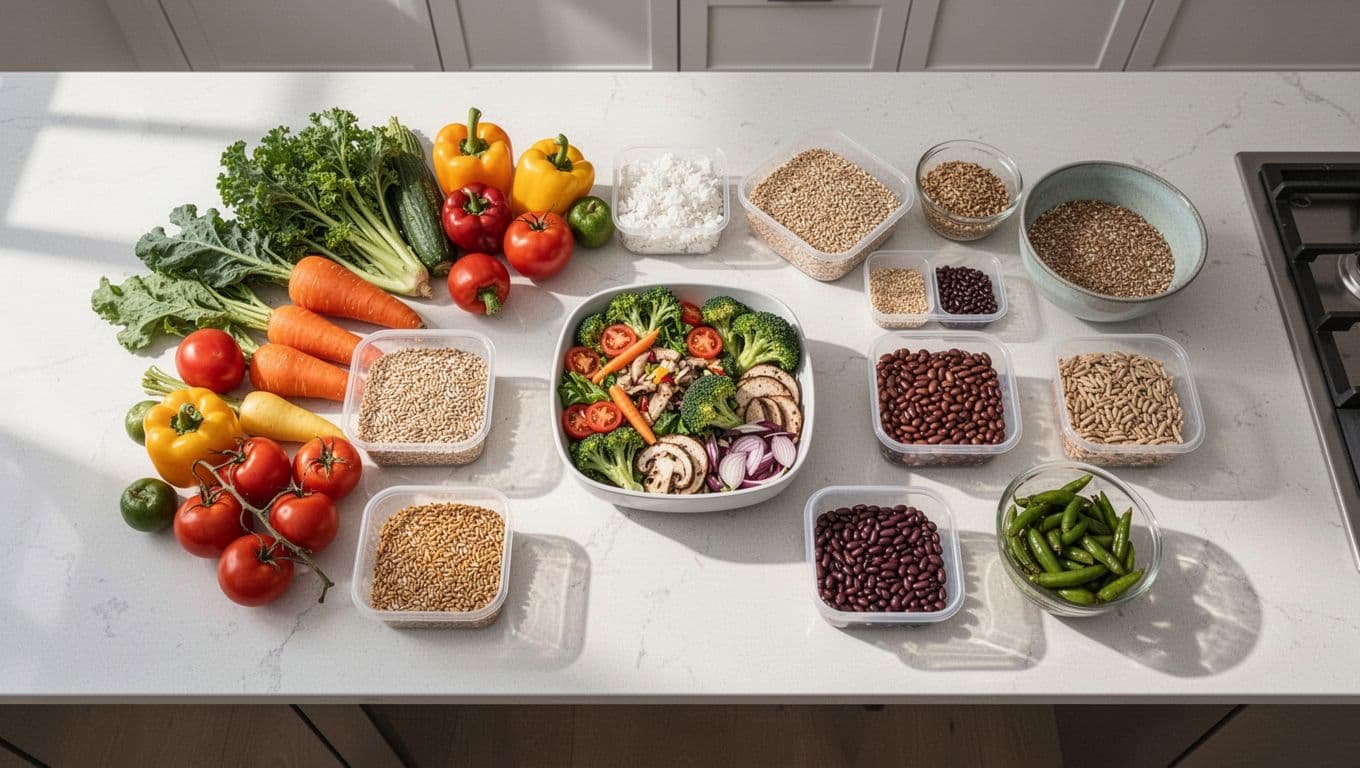
Clean eating means building meals around minimally processed ingredients, such as vegetables, fruit, beans, whole grains, eggs, fish, poultry, and nuts. You don’t need to avoid every packaged food, since items like canned beans, frozen vegetables, and plain yogurt can fit into a practical healthy eating plan.
How can I make these recipes serve a larger family?
Increase the protein, vegetables, and grains based on how many people you’re feeding. For example, add another chicken breast, an extra can of beans, or more brown rice instead of simply doubling every seasoning. Cook grains and roasted vegetables in larger batches, then use the extras for lunches.
How can I keep healthy family meals affordable?
Choose budget-friendly staples such as lentils, beans, brown rice, oats, eggs, frozen vegetables, and canned fish. Plan meals around ingredients you already have, and use leftover chicken, grains, or roasted vegetables in wraps and salads. Buying seasonal produce and larger packages can also lower the cost per serving.
What should I do if my child refuses vegetables?
Serve a small portion of the vegetable beside a familiar food without pressuring your child to finish it. You can also offer the same vegetable in different forms, such as roasted carrots, raw carrot sticks, or finely chopped carrots mixed into sauce. Keep sauces and toppings separate so children can build a plate they feel comfortable eating.
Can I prepare these meals on the weekend?
Yes, weekend preparation can shorten weeknight cooking. Wash and chop produce, cook a grain, prepare a sauce, and portion cooked protein into containers, but wait to cut delicate fruit or dress salads until closer to serving. Keep prepared food cold and follow the USDA’s food safety basics when cooling and storing it.
How do I add variety without planning completely different meals?
Use one main ingredient in several formats during the week. Leftover chicken can become a grain bowl, wrap, or salad, while cooked beans can fill tacos, peppers, or a soup. Changing the sauce, grain, or vegetable helps the meals feel different without creating extra cooking tasks.
Conclusion
Healthy family cooking can be simple, flexible, and affordable. Choose a few dinners and lunches from this list, prepare shared ingredients ahead of time, and adjust flavors to suit your household.
Small habits, such as adding more vegetables, choosing whole grains, and packing balanced leftovers, can make clean eating easier without strict rules. With a practical plan, everyday meals become easier to prepare and enjoy.
Save the pin for later

I’m the creator of My Everyday Dish, a food blog focused on easy homemade recipes, comforting family meals, simple baking, and seasonal food ideas. I love finding practical ways to make everyday cooking less stressful and more enjoyable. Here, I share recipes with simple ingredients, clear instructions, and plenty of flavor, helping you make delicious meals and treats you’ll feel confident serving at home.
Leave a Reply