
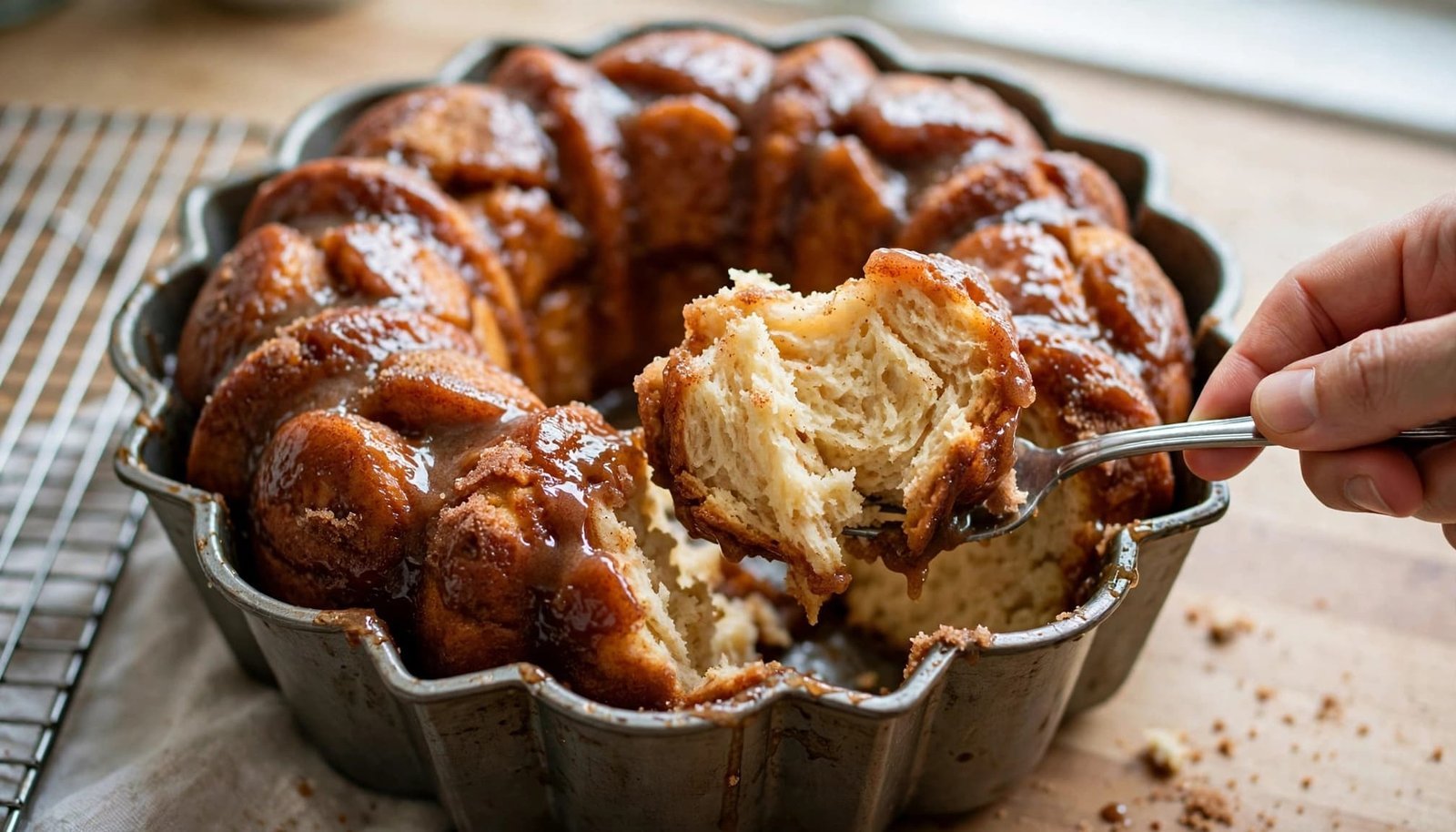
This homemade monkey bread recipe without yeast starts with refrigerated biscuit dough, so you can skip mixing dough and waiting for it to rise.
You make it at home by cutting and coating the biscuits, then baking them with a brown sugar sauce. Expect a tender biscuit-style center and a sticky cinnamon coating, rather than the stretchy texture of yeast bread. Start with the ingredients below, then leave a little time for the bread to rest before turning it out.
Soft and Gooey Homemade Monkey Bread Recipe Without Yeast
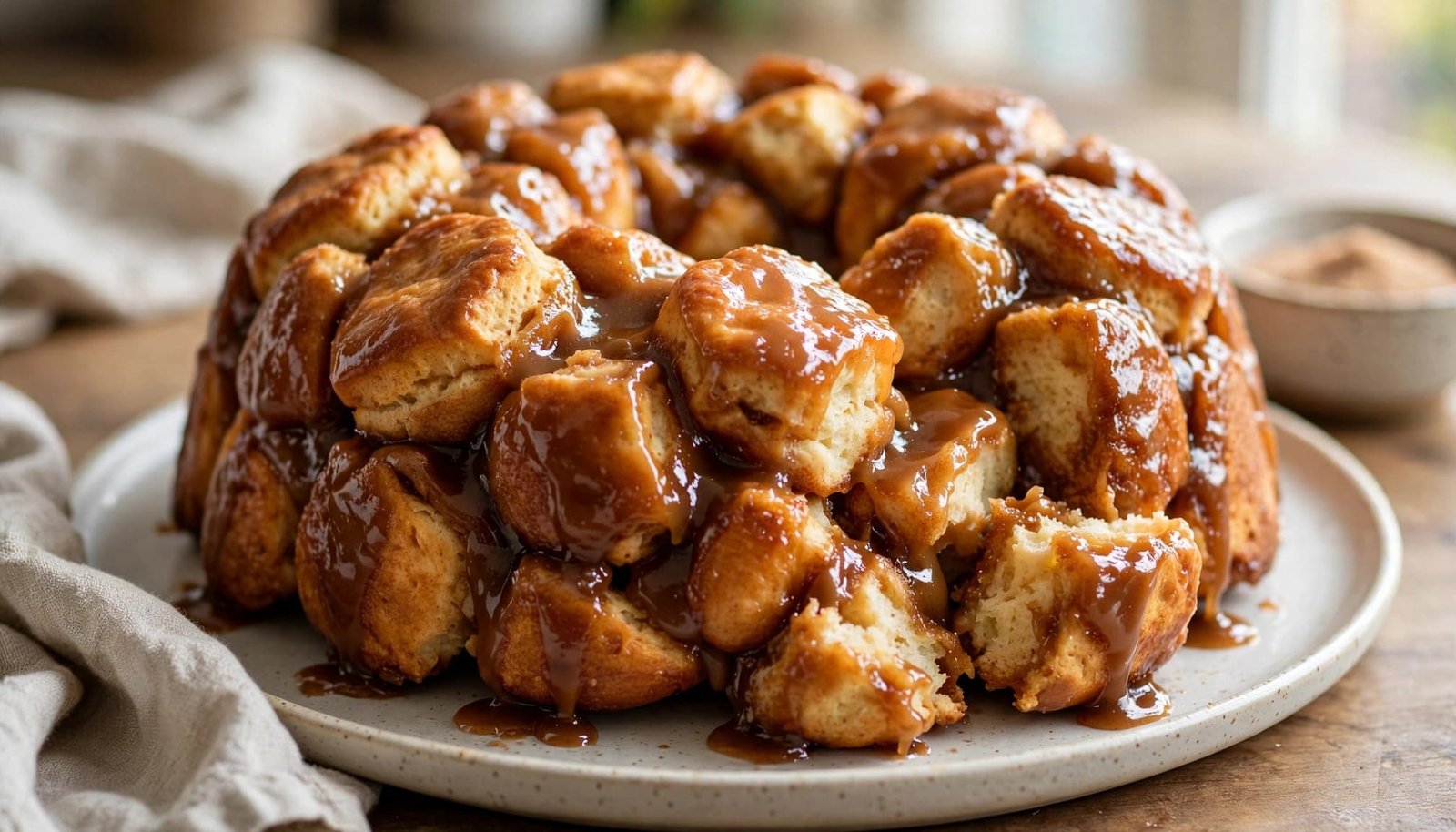
Yield: About 12 servings Prep time: 20 minutes Bake time: 35 to 45 minutes Rest time: 10 minutes Total time: 65 to 75 minutes
Gather these ingredients before opening the biscuit cans:
- Three 16-ounce cans refrigerated buttermilk biscuit dough.
- 1 cup granulated sugar.
- 3 tablespoons ground cinnamon.
- 3/4 cup unsalted butter, melted.
- 1/2 cup packed light brown sugar.
- Optional: 1 teaspoon vanilla extract and a pinch of salt.
Use a generously greased 10-inch Bundt pan or 12-cup fluted tube pan. Have a rimmed baking sheet and a serving plate with a raised edge ready. Heat the oven to 350°F.
The biscuit dough already contains leavening, so you don’t need yeast, extra baking powder, or rising time. Keep it refrigerated until you’re ready to cut it; cooler dough is easier to separate and coat without sticking together.
The granulated sugar and cinnamon coat each piece, while butter and brown sugar form the sauce. Stir the optional vanilla and salt into that sauce if you want a slightly fuller flavor.
This is homemade monkey bread assembled with a refrigerated-dough shortcut, rather than dough mixed from scratch. Biscuit brands and pan shapes can change the baking time, so treat the timing as a starting point. The finished bread should have soft, cooked centers beneath its sticky coating.
How to Make No-Yeast Monkey Bread Step by Step
- Heat the oven to 350°F. Grease the pan thoroughly, including its center tube and grooves. Set it on a rimmed baking sheet to catch drips.
Cut and Coat the Biscuit Dough Evenly
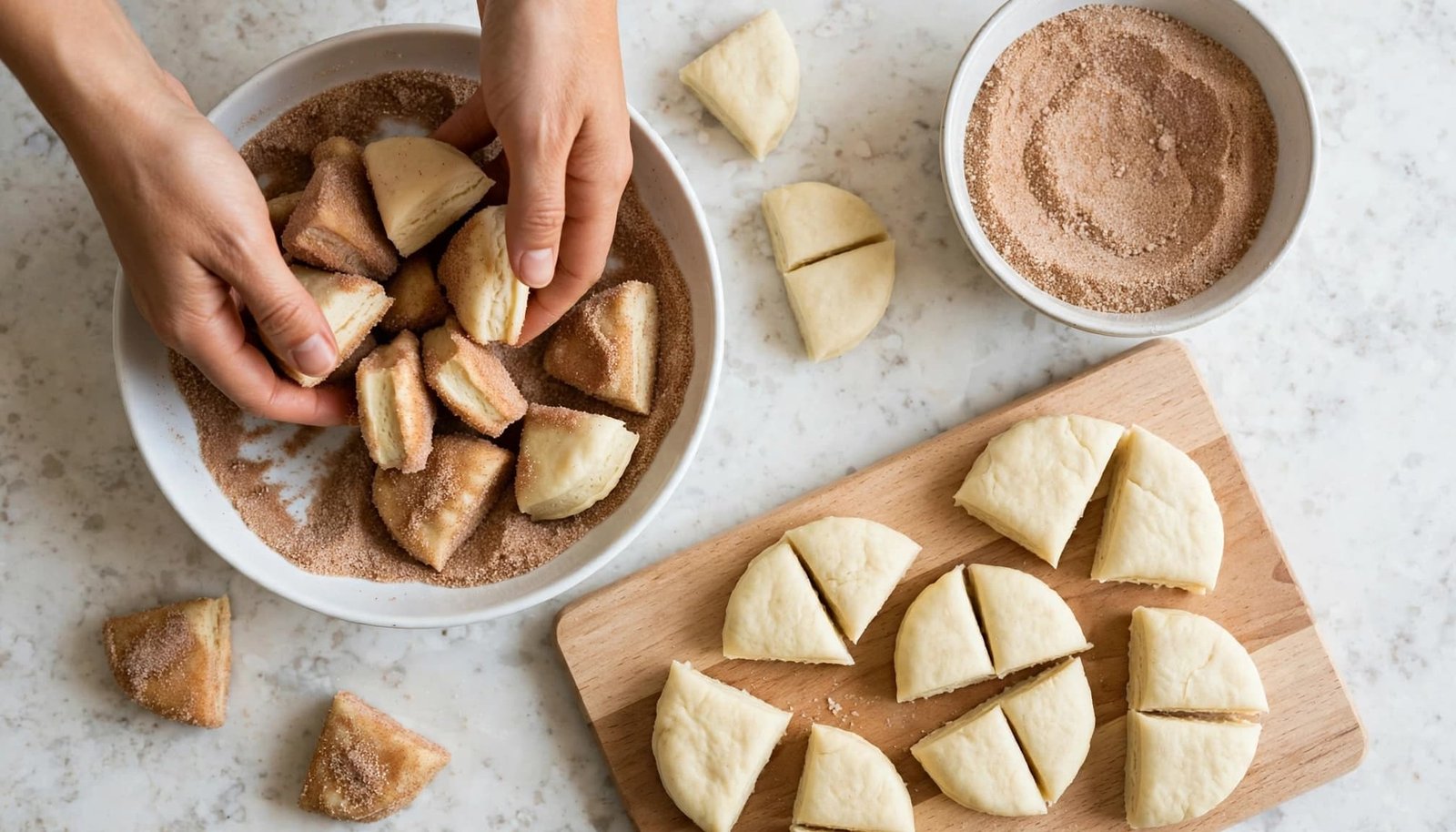
- Mix the granulated sugar and cinnamon in a bowl. Separate the biscuits, then cut each into four similar-sized pieces. Toss them in the cinnamon sugar in small batches, separating any pieces that stick together. Even portions bake more evenly.
Layer the Pieces and Add the Gooey Sauce
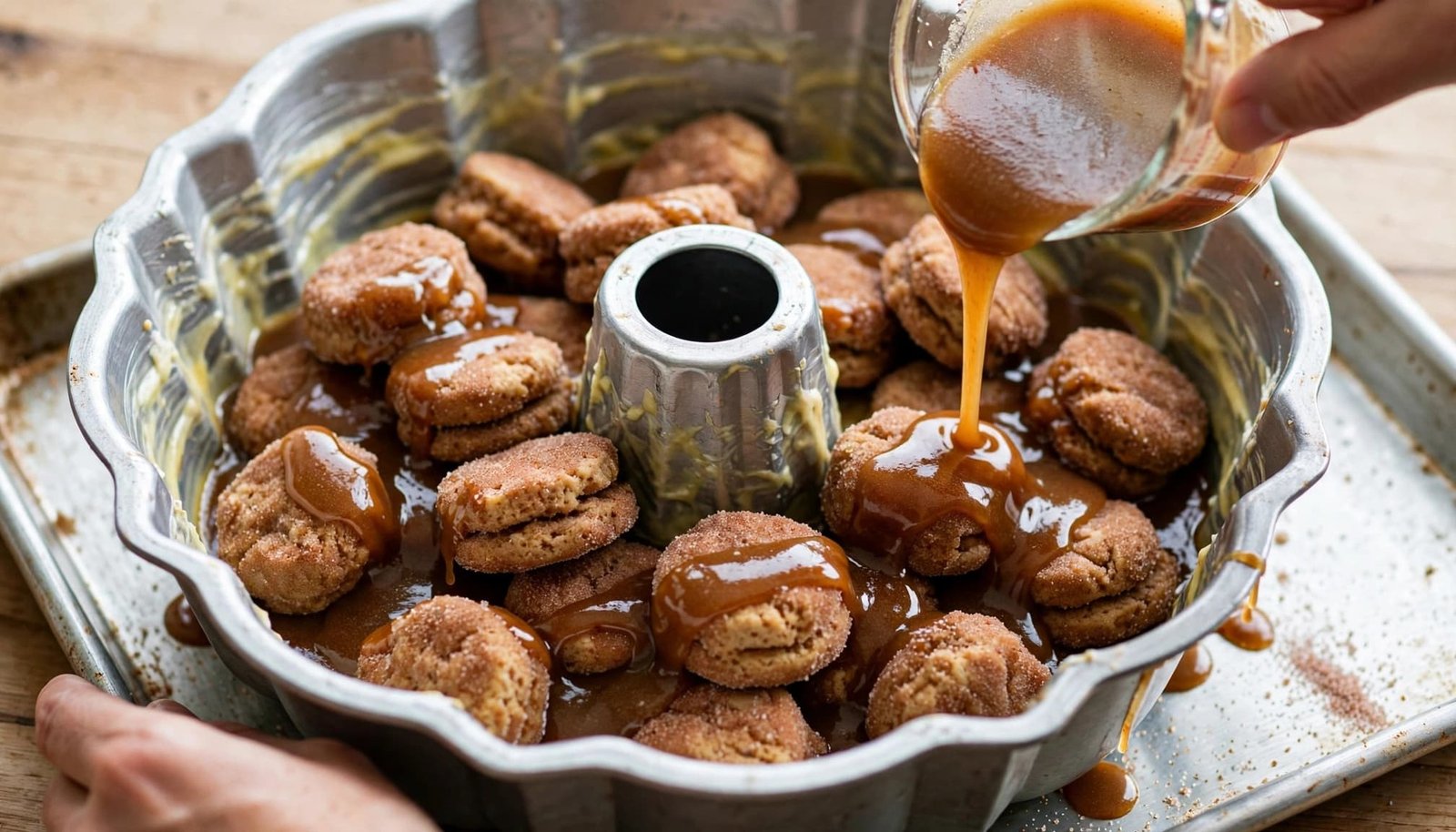
- Arrange the coated pieces loosely and evenly in the pan without pressing them down. Stir the melted butter and brown sugar together, adding vanilla and salt if using. Pour the mixture slowly around the pan so it reaches several areas.
Bake Until the Center Is Cooked Through
- Bake for about 35 to 45 minutes. Near the end, pull apart a piece in the thickest area with a fork. It should have a cooked interior without wet dough. An instant-read thermometer should register at least 190°F in the dough, consistent with Pillsbury’s monkey bread doneness guidance. Avoid touching the pan with the probe.
Rest Before Turning Out the Bread
- Rest the bread in its pan for about 10 minutes. This helps it hold together while the sauce settles. Wearing oven mitts, place a serving plate over the pan, hold both firmly, then invert them together. Lift the pan carefully because the sauce remains hot.
Read also: Deliciously Moist Banana Zucchini Bread Recipe
Simple Tips for Tender, Gooey Monkey Bread
Small handling choices affect how easily the pieces rise and separate. For this homemade monkey bread recipe without yeast, gentle assembly matters more than shaping each piece neatly.
Give the Pieces Room to Puff
Grease every groove, even when you’re using a nonstick pan. The sugar coating becomes sticky during baking, and an ungreased patch can hold the bread in place during release.
Distribute the dough around the center tube instead of building a tall pile on one side. Don’t squeeze pieces into gaps or flatten the layers. Loose placement leaves room for the biscuits to expand.
Handle the pieces briefly rather than kneading or rolling them smooth. Their cut edges don’t need to look tidy because the coating covers them as they bake.
If you prefer mixing dough yourself, our sweet potato cinnamon roll bites offer another quick biscuit-style bake without a long yeast rise.
Separate Sticky Sauce From Raw Dough
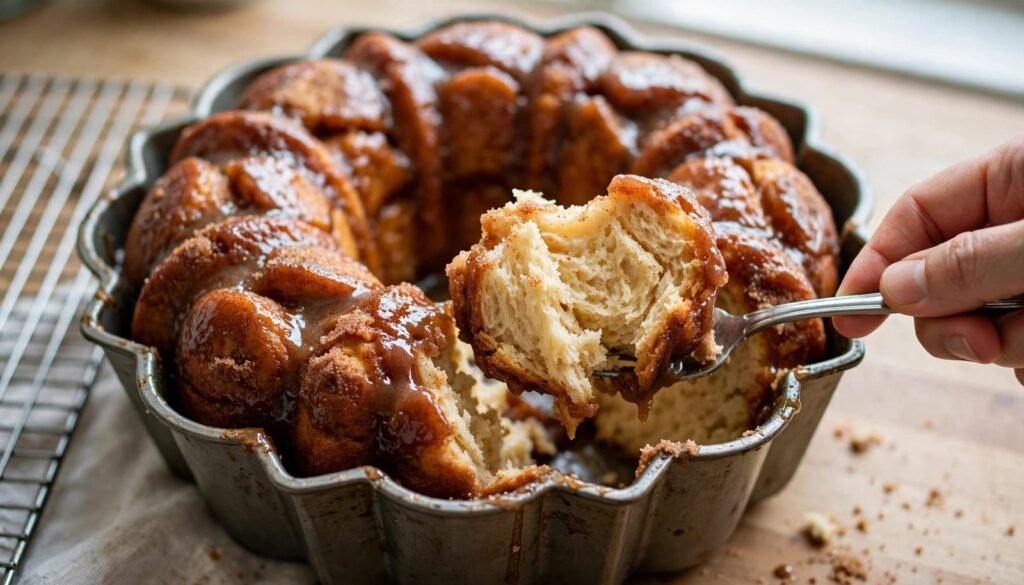
The sauce should coat the pieces and collect between them. A glossy surface is expected, but the inside of a biscuit piece should look cooked and feel tender rather than pasty.
Browned outer pieces can hide an underbaked middle. Check dough in the thickest part before removing the pan.
If the top browns before the center finishes, cover it loosely with foil and continue baking. Check again rather than removing the bread because the timer has ended.
Don’t add more butter to compensate for dough that looks dry before baking. The measured sauce spreads as it heats, and extra butter can leave a greasy pool beneath the finished bread.
Read also: Easy Banana Zucchini Carrot Bread With Fresh Bananas and Veggies
Serving, Storing, and Reheating Leftovers
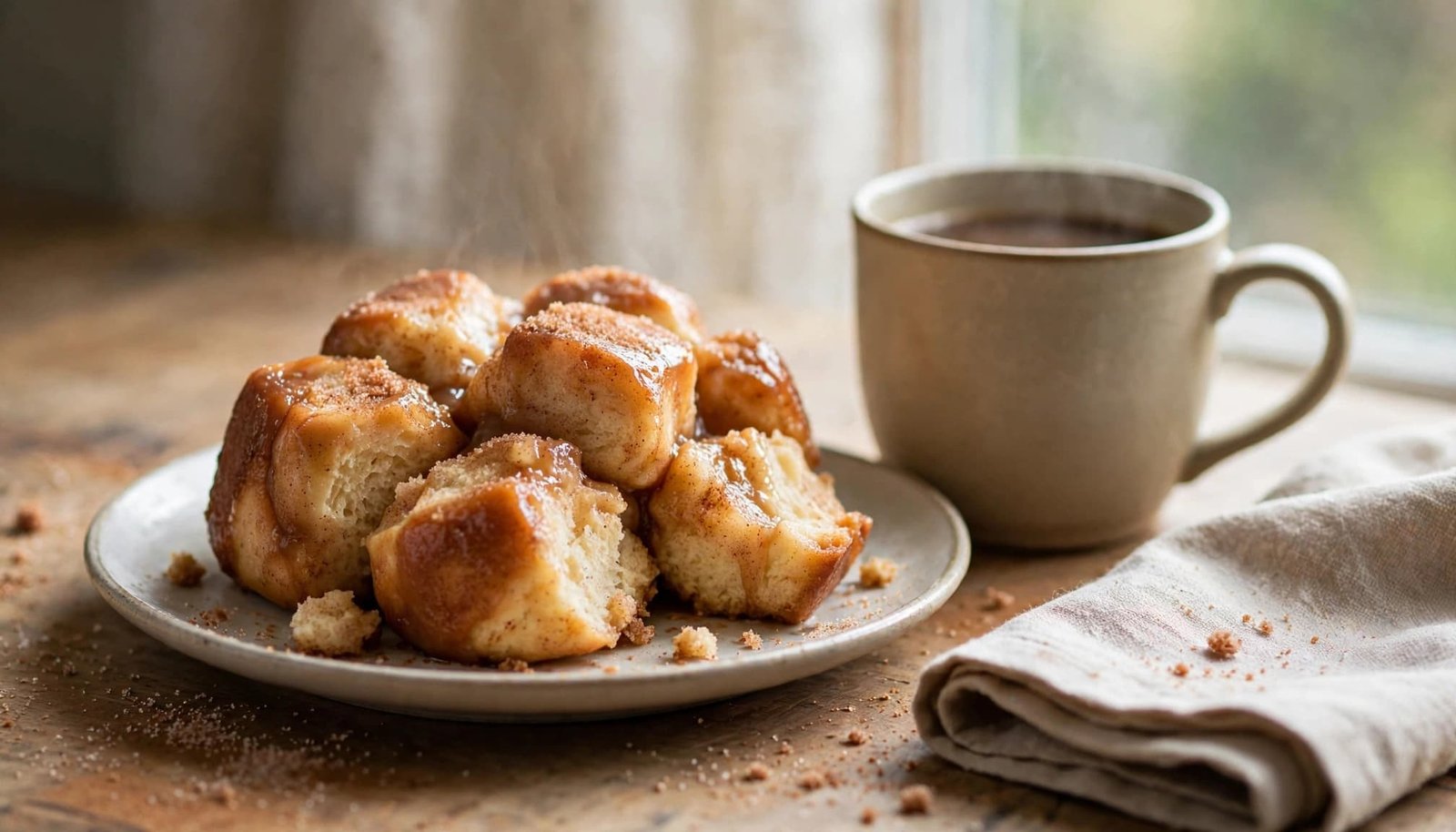
Serve Warm With Simple Extras
Serve the bread warm for breakfast, brunch, or dessert, once the sauce is comfortable to eat. Set it on a plate with a raised edge so any loose sauce stays contained.
Let everyone pull off pieces, or use a serving spoon to lift small portions. The bread separates more easily while warm, before the coating firms as it cools.
Keep toppings light because the cinnamon sugar and brown sugar sauce already provide plenty of sweetness. Add a thin powdered sugar icing or a scattering of chopped toasted pecans if you want.
For brunch, pair small portions with eggs and fresh fruit. For dessert, serve it on its own or with a little plain yogurt for a less sweet accompaniment.
Store Covered and Reheat Gently
Cool leftovers before placing them in an airtight container. Store the plain, uniced bread at room temperature for up to 2 days, or refrigerate it for up to 5 days.
Separate it into portions before storing if you expect to warm only a little at once. The coating becomes firmer when cold, so the bread may feel less tender straight from the refrigerator.
Warm small portions briefly in the microwave, checking often. Stop once the bread is warm and the coating has softened; prolonged heating can toughen the biscuit pieces.
Warm a larger portion in a covered oven-safe dish in a low oven, around 300°F, until heated through. Reheat only what you plan to serve so the remaining pieces don’t go through repeated warming and cooling.
Frequently Asked Questions
Can I Make Monkey Bread Without a Bundt Pan?
A deep, fixed-bottom tube pan is the closest substitute because heat can reach the dough around the center opening. Another oven-safe pan may work, but divide the dough between pans if needed rather than crowding it into one. The shape and baking time will change, so check the thickest area for cooked dough.
Can I Prepare the Monkey Bread Ahead of Time?
Assemble it shortly before baking for the best rise and texture. You can measure the cinnamon sugar and brown sugar ahead, grease the pan, and leave the biscuit cans refrigerated until needed. If you must chill an assembled pan, follow the biscuit dough package’s storage guidance rather than assuming every brand handles an overnight rest the same way.
Why Is the Middle of My Monkey Bread Still Doughy?
The center usually needs more baking time, especially when the pieces are uneven or the pan is too full. Return the bread to the oven while it’s still in the pan, covering the top loosely with foil if it’s already brown. Pull apart a center piece again before turning it out; a browned surface alone doesn’t establish doneness.
Can I Use Another Kind of Biscuit Dough?
Yes, but refrigerated biscuits vary in size, thickness, and texture. Choose a similar total amount, about 48 ounces, rather than assuming every brand’s can contains the same quantity. Flaky-layer biscuits may separate differently, while larger biscuits may need smaller cuts; either change can affect the finished texture and baking time.
A Warm Treat Without the Rising Time
Refrigerated biscuit dough keeps this monkey bread approachable, while cinnamon sugar and buttery sauce give it a soft, sticky finish. Loose layering and a fully baked center make the difference between tender pieces and a doughy middle.
Give the bread its short rest, then turn it onto a plate while the coating is still warm. Serve it soon after, when the cinnamon-sugar pieces pull apart easily and the sauce is soft between the layers.
Save the pin for later

I’m the creator of My Everyday Dish, a food blog focused on easy homemade recipes, comforting family meals, simple baking, and seasonal food ideas. I love finding practical ways to make everyday cooking less stressful and more enjoyable. Here, I share recipes with simple ingredients, clear instructions, and plenty of flavor, helping you make delicious meals and treats you’ll feel confident serving at home.
Leave a Reply