
Want a healthy work lunch without spending your morning cooking or relying on takeout? A little planning can give you a satisfying meal that travels well, tastes fresh, and keeps your afternoon on track.
This collection features 30 healthy lunch ideas for work that you can make ahead, pack cold, or reheat at the office. You’ll find practical options such as crisp salads, filling wraps, balanced grain bowls, comforting soups, easy sandwiches, and snack-style lunch boxes for days when you prefer variety over a traditional meal. Most can be adjusted to fit the ingredients you already have at home.
A simple formula makes lunch easier to build: pair a source of protein with vegetables or fruit, add a filling grain or starch, and include an optional calcium-rich food such as yogurt or cheese. Each idea uses simple ingredients and includes easy step-by-step instructions, so you can prep lunch without turning your kitchen into a second job. Start with these flexible recipes and find a few favorites to rotate through the workweek.
30 Healthy Lunch Ideas for Work That Are Easy to Make
These lunches combine protein, produce, whole grains, and healthy fats, so they keep you satisfied without demanding complicated prep. Make several components on Sunday, then mix them into fresh combinations throughout the week.
Fresh Salads and Grain Bowls for a Filling Midday Meal
Fiber from beans, vegetables, and whole grains supports fullness, while protein helps your lunch last through the afternoon. Cool cooked grains and noodles quickly, refrigerate them, and pack them cold.
- Chicken quinoa salad: Combine cooked quinoa, chicken, cucumber, tomatoes, parsley, and lemon vinaigrette. Pack dressing separately; serve cold.
- Tuna and white bean salad: Mix tuna, white beans, celery, red onion, and olive oil with lemon. Spoon over greens and chill.
- Mediterranean chickpea bowl: Layer chickpeas, hummus, cucumber, tomatoes, greens, and whole-grain pita. Keep hummus separate if preferred.
- Turkey, avocado, and brown rice bowl: Add brown rice, turkey, avocado, corn, and salsa to a container. Serve cold or at room temperature briefly.
- Lentil and roasted vegetable salad: Toss cooked lentils with roasted carrots, peppers, spinach, and balsamic dressing. Refrigerate before packing.
- Edamame soba noodle salad: Combine cooled soba noodles, edamame, shredded carrots, cabbage, and low-sodium soy-ginger sauce.
Wraps, Pitas, and Sandwiches That Pack Well
Build sandwiches in layers to protect the bread. Spread hummus, yogurt, avocado, or cheese between the bread and wetter ingredients, then wrap tightly.
- Turkey and hummus wrap: Spread hummus on whole-wheat tortilla, add turkey, spinach, cucumber, and peppers, then roll. Eat cold.
- Chicken Caesar yogurt wrap: Mix chicken with Greek yogurt, lemon, Parmesan, and romaine. Wrap and chill, or use dairy-free yogurt.
- Egg salad sandwich: Combine chopped eggs, yogurt, celery, and pepper; add lettuce to whole-grain bread. Lower sodium with herbs instead of extra salt.
- Black bean and avocado pita: Fill pita with mashed beans, avocado, tomato, lettuce, and lime. Wrap separately to prevent sogginess.
- Salmon salad cucumber sandwich: Mix canned salmon with yogurt, cucumber, dill, and lemon; layer on whole-grain bread. Serve cold.
- Caprese chicken panini: Layer chicken, mozzarella, tomato, and basil on whole-grain bread. Toast in a toaster oven or microwave before eating.
Warm Soups and Make-Ahead Comfort Food
Prepare soup in batches, portion it into leakproof containers, and cool it in shallow containers before refrigerating promptly. Reheat until steaming hot, ideally to 165°F, before eating. For more inspiration, browse these make-ahead soup recipes.
- Chicken vegetable soup: Simmer chicken, carrots, celery, onion, and broth; add spinach at the end. Reheat at work.
- Lentil tomato soup: Simmer lentils, tomatoes, carrots, onion, garlic, and broth until tender. Portion cold, then reheat.
- Turkey chili: Cook ground turkey, beans, tomatoes, peppers, and chili powder together. Pack toppings separately.
- Vegetable minestrone: Simmer broth, beans, zucchini, carrots, tomatoes, and whole-wheat pasta. Add pasta late.
- Sweet potato black bean soup: Blend cooked sweet potatoes with broth, beans, cumin, and lime. Reheat thoroughly.
- Chicken tortilla soup: Simmer chicken, tomatoes, corn, beans, and broth; add baked tortilla strips after reheating.
Easy Pasta, Rice, and Noodle Lunches
Batch-cook grains, rice, and pasta, but refrigerate them promptly. Rice should not remain at room temperature for long. Use lemon, salsa, yogurt, pesto, or low-sodium soy sauce for simple flavor.
- Whole-wheat chicken pasta salad: Toss cooled pasta, chicken, broccoli, tomatoes, and vinaigrette. Add greens before serving.
- Brown rice burrito bowl: Layer rice, beans, chicken, corn, salsa, and avocado. Add avocado just before eating.
- Pesto white-bean pasta: Combine pasta, white beans, spinach, and pesto. Use olive oil and basil instead of salty pesto.
- Teriyaki tofu bowl: Bake tofu, add brown rice and steamed broccoli, then drizzle low-sodium teriyaki sauce.
- Greek orzo salad: Mix cooled orzo, chickpeas, cucumber, tomato, olives, and feta. Pack dressing separately.
- Peanut chicken rice noodles: Toss noodles with chicken, carrots, cabbage, and thinned peanut butter sauce. Add lime before eating.
No-Cook Lunch Boxes and Quick Leftover Makeovers
Pack foods in separate compartments to preserve texture. Batch-cooked chicken, beans, or vegetables can become new lunches with a different sauce, wrap, or topping; these easy slow cooker recipes can help.
- Yogurt berry oat box: Pack Greek yogurt, berries, oats, and walnuts; layer just before eating.
- Cottage cheese veggie box: Add cottage cheese, peppers, carrots, whole-grain crackers, and pumpkin seeds.
- Hummus pita egg box: Pack hummus, pita wedges, boiled egg, cucumbers, and grapes.
- Roasted chicken box: Add leftover chicken, roasted vegetables, quinoa, and tahini sauce.
- Salmon sweet potato box: Combine canned salmon, roasted sweet potato, greens, and avocado.
- Mediterranean tuna box: Pack tuna, cucumber, tomatoes, olives, whole-grain crackers, and lemon. Keep wet ingredients separate.
For food-safety guidance, follow USDA leftovers guidance, including prompt refrigeration and thorough reheating.
How to Build a Healthy Work Lunch in Five Simple Steps
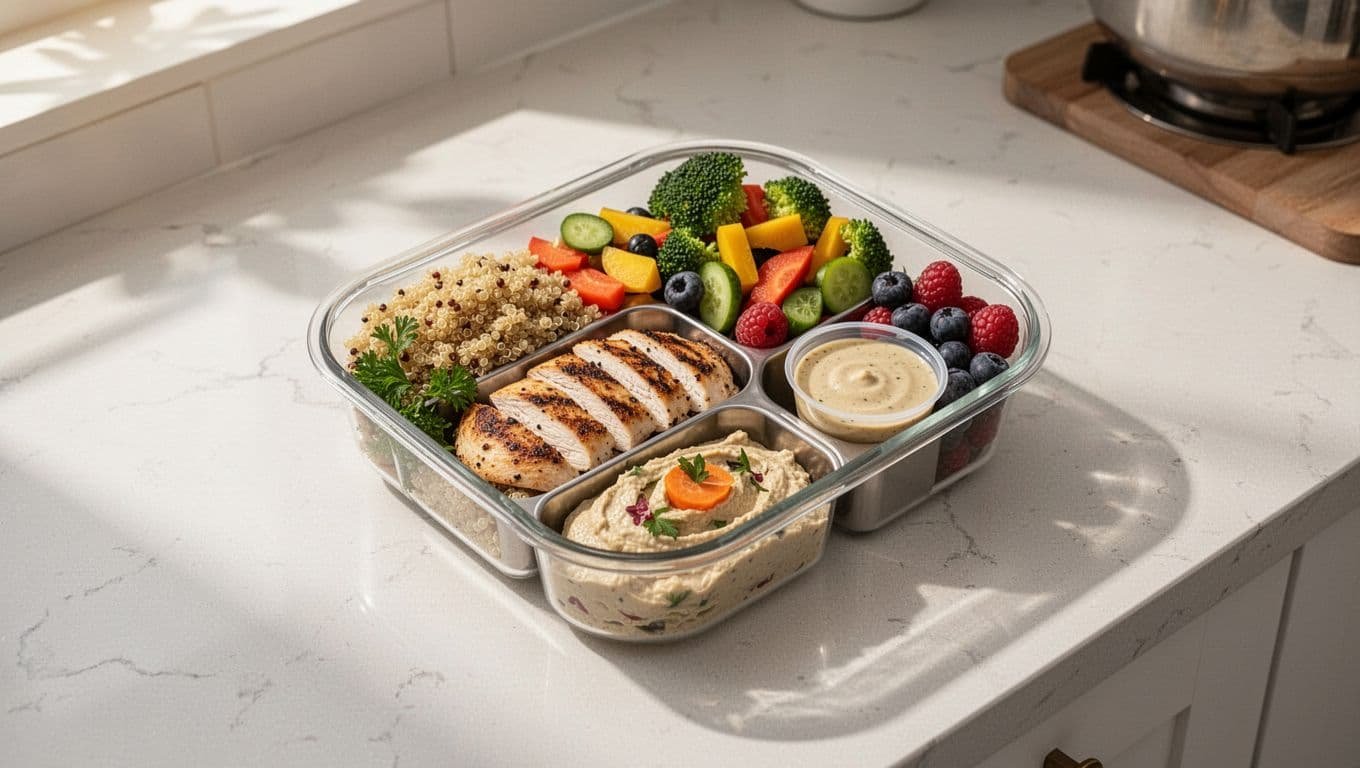
A healthy work lunch doesn’t need a complicated recipe. Start with a simple structure, then adjust the ingredients to match your schedule, appetite, and dietary needs. The USDA’s MyPlate meal guide recommends filling about half your meal with fruits and vegetables, then dividing the rest between protein and grains.
1. Choose a protein
Begin with a protein that is easy to prepare, store, and eat at work. Chicken, eggs, tuna, beans, lentils, tofu, Greek yogurt, and cottage cheese all work well. Protein adds staying power, so your lunch is less likely to leave you hungry an hour later.
Use leftovers when possible. Yesterday’s roasted chicken can fill a wrap, while cooked lentils can become a salad or grain bowl.
2. Add vegetables and fruit
Include at least one or two vegetables, such as cucumbers, carrots, spinach, broccoli, tomatoes, peppers, or roasted sweet potatoes. Add fruit when it fits the meal, whether that’s an apple beside a sandwich, berries with yogurt, or grapes in a lunch box.
Fresh produce adds color, texture, fiber, and natural sweetness without requiring a separate recipe.
3. Choose a filling base
Add a satisfying base to give the meal enough substance. Good choices include oats, whole-grain bread, brown rice, quinoa, potatoes, whole-wheat pasta, or whole-grain crackers.
For an easy container guide, fill about half the space with vegetables and fruit, one quarter with protein, and one quarter with grains or another starchy food. Adjust the portions to your hunger, but keep calorie-dense toppings smaller.
4. Add flavor and healthy fats
A simple sauce can make the same ingredients taste completely different. Try herbs, salsa, hummus, lemon juice, yogurt dressing, or a small amount of avocado, nuts, or olive oil.
Pack wet ingredients separately when possible. This keeps bread crisp, greens fresh, and grain bowls from becoming soggy.
5. Portion, pack, and label the meal
Divide the food into a leakproof container, then add an ice pack for perishable foods such as meat, eggs, yogurt, cheese, and tuna. Label leftovers with the date so you use older meals first, and refrigerate them promptly.
You can adapt this formula easily:
- Choose beans, lentils, tofu, or eggs for a vegetarian lunch.
- Use rice, potatoes, quinoa, or gluten-free crackers instead of wheat.
- Skip dairy and add hummus, avocado, tahini, or fortified dairy-free yogurt.
- For a lower-carb meal, increase nonstarchy vegetables and choose a smaller portion of grains or potatoes.
Meal Prep and Packing Tips That Keep Lunches Fresh
A simple prep routine can make healthy work lunches easier all week. Choose two proteins, two grains, and several washed vegetables at the start of the week, then combine them in different ways. Chicken and beans can fill wraps, bowls, or salads, while quinoa and brown rice provide two flexible bases.
Prepare ingredients in batches, but keep them separate until you’re ready to pack. Roast vegetables on one sheet pan, cook both grains, and portion proteins into containers after they cool. Use shallow containers to help hot foods cool faster before refrigeration. This keeps your prep organized and makes it easier to create a different lunch each day.
Pack Each Ingredient for Better Texture
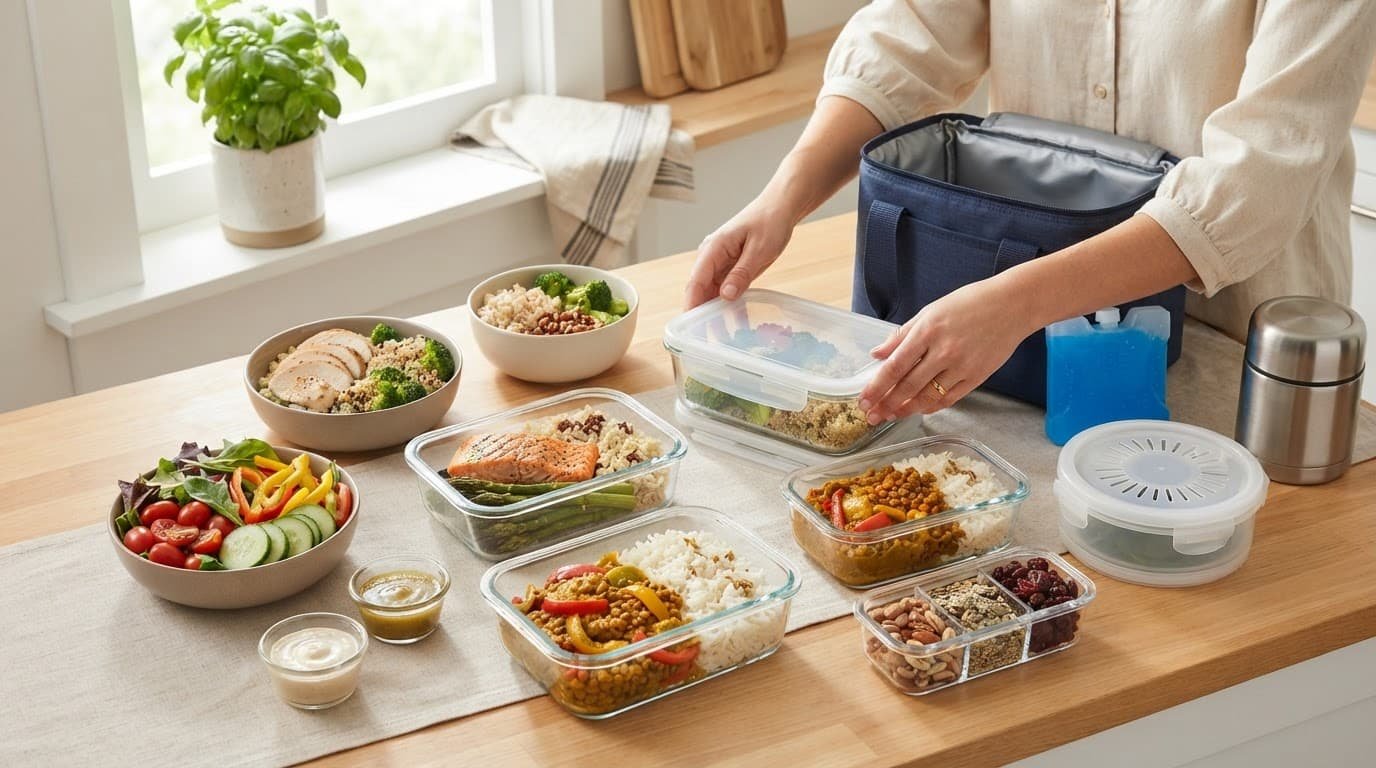
Sauces, dressings, and salsa can make greens wilt and bread turn soggy. Store them in small leakproof cups, then add them just before eating. Keep crunchy toppings, such as nuts, seeds, crackers, and tortilla strips, apart from moist foods so they stay crisp.
A reliable lunch setup includes:
- Leakproof containers for salads, bowls, and leftovers.
- An insulated lunch bag with ice packs for perishable foods.
- A microwave-safe container for meals you plan to reheat.
- A thermos for soup, chili, or other hot lunches.
Prep Lunch the Night Before
Packing after dinner removes one more task from your morning. Assemble the meal, add the ice pack if needed, and store everything in the refrigerator until you leave. Check that the container seals tightly before placing it in your bag.
Most cooked leftovers keep for 3 to 4 days when refrigerated at 40°F or below. The USDA’s food-safety guidance recommends prompt refrigeration and careful storage, but use your judgment if food cooled slowly, sat out too long, or changed in smell, color, or texture. If you won’t eat a portion within that window, freeze it instead.
How to Store and Reheat Work Lunches Safely
Safe storage keeps healthy work lunches fresh and helps prevent foodborne illness. Perishable foods, including meat, eggs, dairy, cooked grains, rice, and cut vegetables, should stay at 40°F or below until you’re ready to eat.
Keep Cold Foods Cold
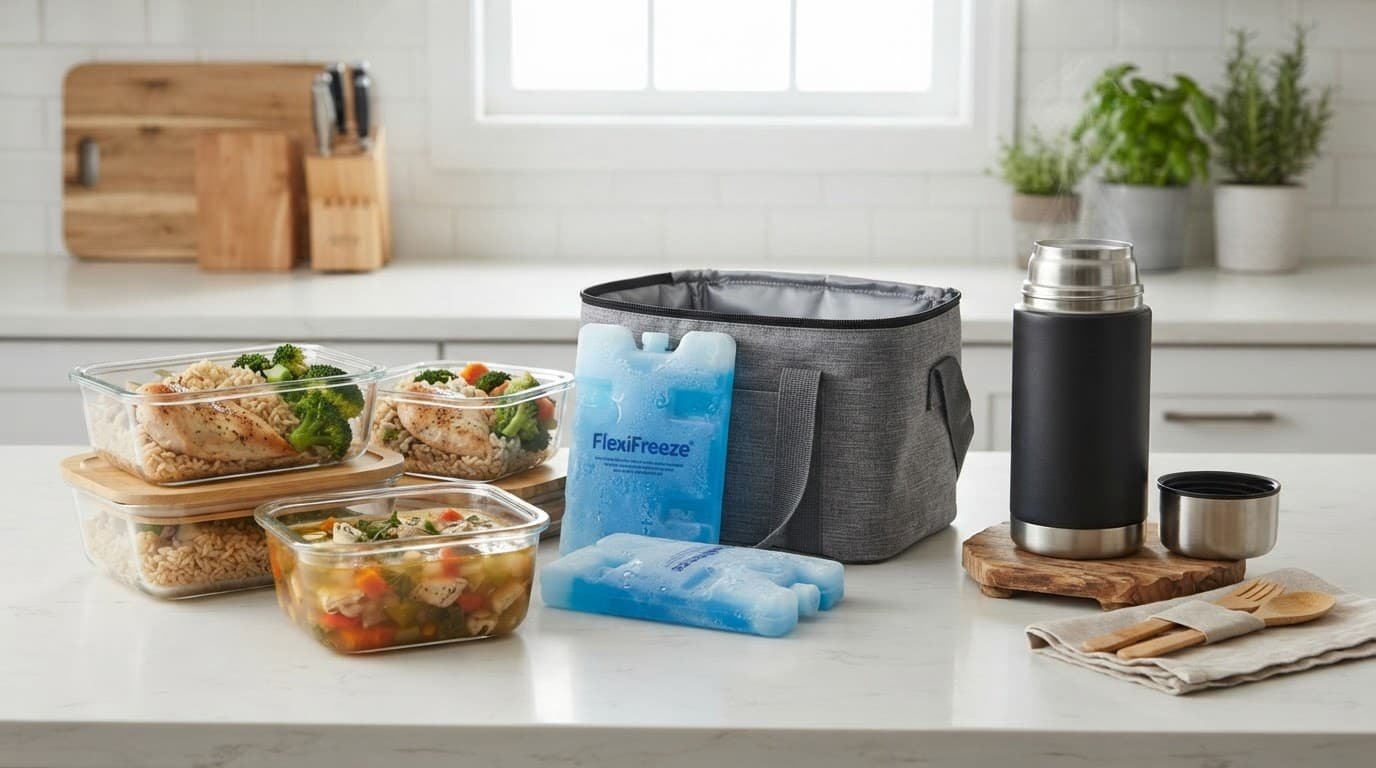
Pack refrigerated foods in an insulated lunch bag with frozen gel packs or a frozen water bottle. Use enough cold sources to keep the food below 40°F, especially if your commute is long or your office refrigerator is unavailable.
The food safety danger zone runs from 40°F to 140°F. Perishable food should not remain in that range for more than 2 hours, or more than 1 hour when the temperature is above 90°F. If your lunch sits in a warm car, discard meat, eggs, yogurt, tuna, and other perishable items once that limit passes. See the USDA’s guidance on the food safety danger zone for more detail.
Refrigerate leftovers promptly after cooking. Cool large batches in shallow containers so heat escapes faster, and keep raw ingredients separate from cooked foods during preparation and storage. Cooked rice also needs quick cooling and cold storage because it can become unsafe when it sits at room temperature.
Reheat Hot Lunches Thoroughly
For soup, chili, casseroles, and rice bowls, use a microwave-safe container with a loose-fitting lid. Stir food partway through microwaving, if possible, so the center heats evenly. Reheat until the food is steaming hot throughout, ideally reaching 165°F on a food thermometer. The USDA’s leftovers and reheating guidance recommends this temperature.
If you prefer a thermos, preheat it with boiling water, empty it, then add the piping-hot food. Keep the thermos closed until lunch, and don’t mix cold toppings into hot food until you’re ready to eat.
Frequently Asked Questions
Healthy work lunches become easier when you have a few reliable answers for prep, storage, and packing. These quick tips can help you choose meals that fit your schedule without sacrificing flavor, texture, or food safety.
What is the easiest healthy lunch to pack for work?
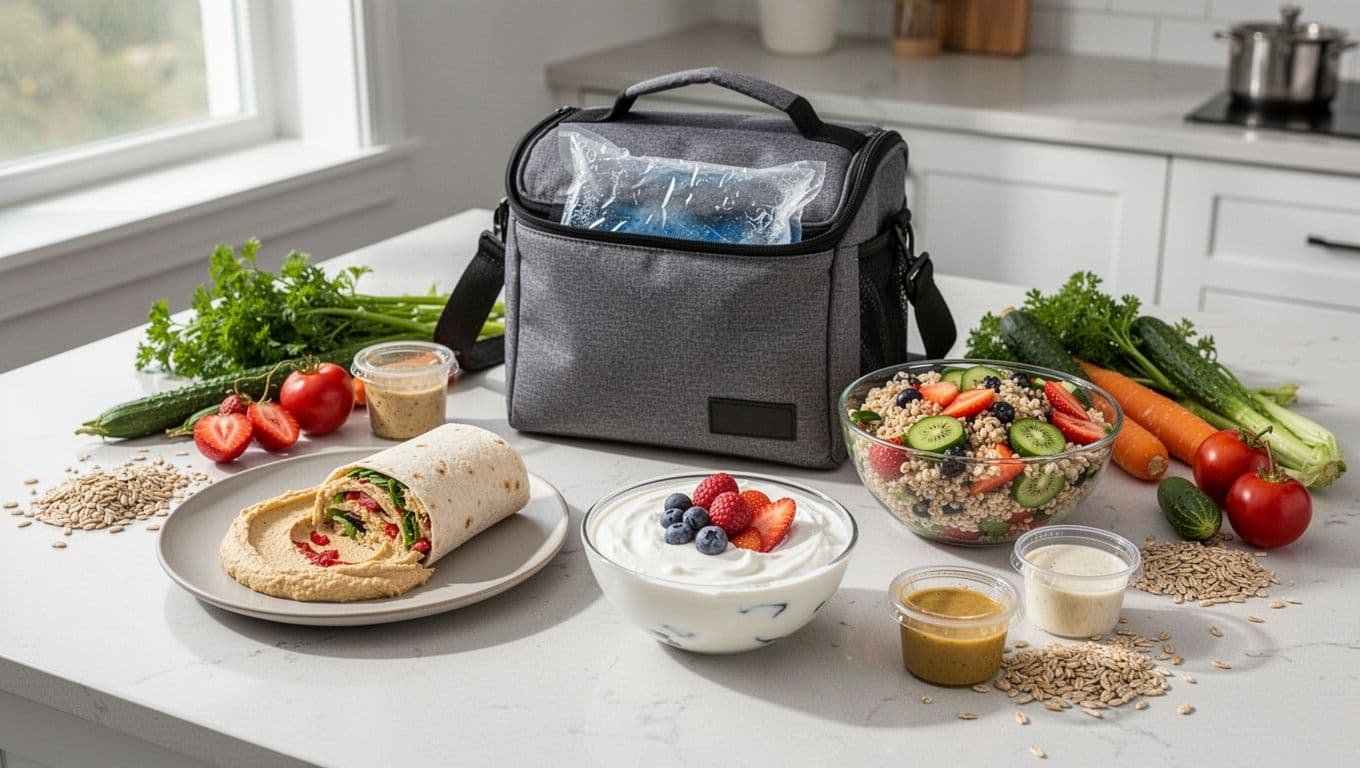
A no-cook lunch box is one of the simplest choices. Add hummus, whole-grain crackers, sliced vegetables, fruit, cheese, and a boiled egg, then store each item in a separate compartment. You can also assemble a hummus wrap, yogurt bowl, or leftover grain bowl the night before, which keeps your morning routine quick.
How many days can I meal prep these lunches ahead of time?
Most cooked lunches are best eaten within 3 to 4 days when refrigerated at 40°F or below. The USDA leftovers guidance recommends freezing portions that you won’t eat during that window. For a longer workweek, prepare fresh vegetables, sauces, and grains separately, then assemble meals as needed.
How can I keep a packed lunch cold without a refrigerator?
Use an insulated lunch bag with at least one frozen ice pack, and keep the bag closed until lunchtime. For perishable foods such as meat, eggs, yogurt, and tuna, the USDA recommends using two cold sources when possible, then storing the bag away from direct sunlight, heaters, and hot cars.
Perishable food should not stay above safe cold temperatures for more than two hours, or one hour when the temperature exceeds 90°F. When food has remained warm beyond those limits, discard it rather than tasting it to check for safety. See the USDA’s guide to keeping bag lunches safe.
What healthy lunch can I make without a microwave?
Cold salads, wraps, pita pockets, pasta salads, tuna and bean boxes, yogurt bowls, and grain bowls all work well without reheating. Use cooked chicken, beans, lentils, tofu, tuna, or eggs for protein, then add vegetables and a whole-grain base.
Pack dressing, salsa, nuts, seeds, and crunchy toppings separately. Add them just before eating so greens stay crisp, bread holds its texture, and grain bowls don’t become soggy.
How do I make healthy work lunches more filling?
Build lunch around a reliable protein source, such as chicken, beans, lentils, tofu, eggs, tuna, Greek yogurt, or cottage cheese. Then add high-fiber vegetables or fruit and a whole grain or starchy food, such as quinoa, brown rice, potatoes, oats, or whole-grain bread.
A moderate portion of healthy fat can improve flavor and satisfaction. Try avocado, nuts, seeds, hummus, or olive oil, while keeping calorie-dense toppings balanced with the rest of the meal.
Conclusion
A healthy work lunch doesn’t require complicated recipes or expensive ingredients. Choose one protein, one satisfying base, colorful produce, and a flavorful sauce, then prepare several portions at once. This simple formula gives you flexible meals that are easy to pack, customize, and enjoy throughout the week.
For cold lunches, use an insulated lunch bag with an ice pack. Refrigerate leftovers promptly, keep them for 3 to 4 days, and reheat warm meals to 165°F. Start with two or three ideas from this list instead of trying all 30 at once. With a few reliable ingredients and a little planning, you can find your favorite combination and make weekday lunches easier.
Save the pin for later

I’m the creator of My Everyday Dish, a food blog focused on easy homemade recipes, comforting family meals, simple baking, and seasonal food ideas. I love finding practical ways to make everyday cooking less stressful and more enjoyable. Here, I share recipes with simple ingredients, clear instructions, and plenty of flavor, helping you make delicious meals and treats you’ll feel confident serving at home.
Leave a Reply