A long shift calls for more than a quick snack. You need a lunch that keeps you full, travels well, survives a bumpy commute, and still tastes good when your break comes later than planned.
These 38 easy and filling lunch ideas for blue collar workers focus on practical ingredients, including protein, hearty carbohydrates, simple prep, and minimal mess. You’ll find sandwiches, wraps, bowls, salads, thermos meals, and no-fridge options that fit different budgets, schedules, and worksite conditions. For lunches with meat, dairy, eggs, or other perishables, pack them with proper cold storage, while hot meals belong in a preheated insulated container.
Mix and match the ingredients based on what you have available, then adjust portions to suit the demands of your workday. Start with these portable lunch ideas and find a few dependable favorites for your next shift.
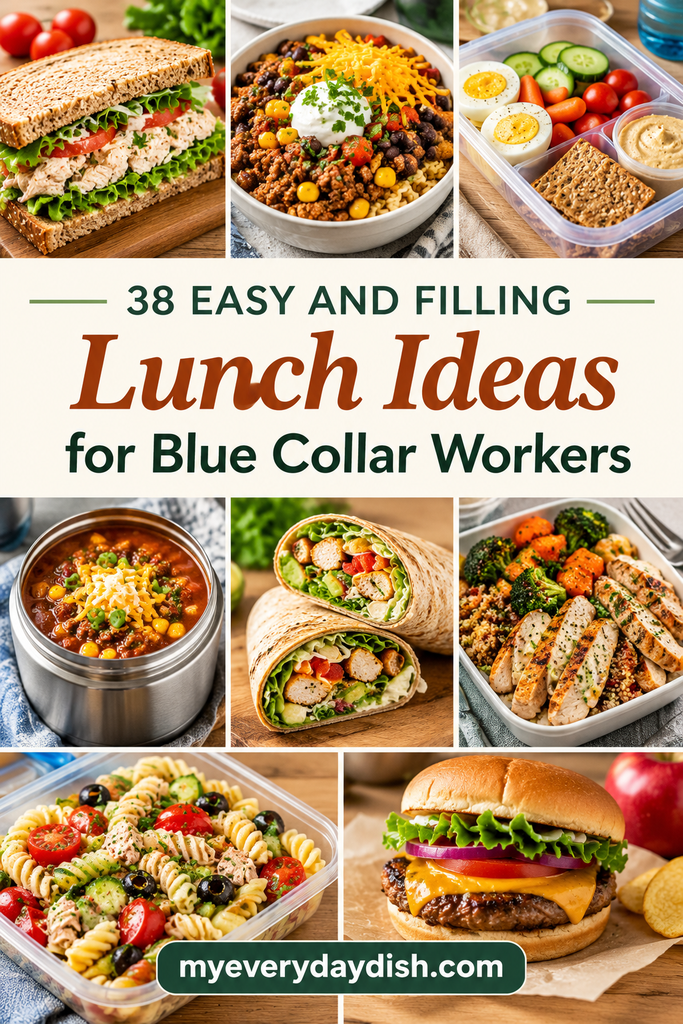
38 Easy and Filling Lunch Ideas for Blue Collar Workers, Grouped for Real Workdays
Every lunch should be portable, satisfying, and simple enough for a busy workday. The ideas below use sturdy ingredients, practical packing methods, and flavors that hold up when your break comes hours after you leave home.
Portable Sandwiches and Wraps That Hold Up Well
These options travel best when you use firm bread or tortillas, wrap them tightly in foil, and keep wet ingredients separate when possible.
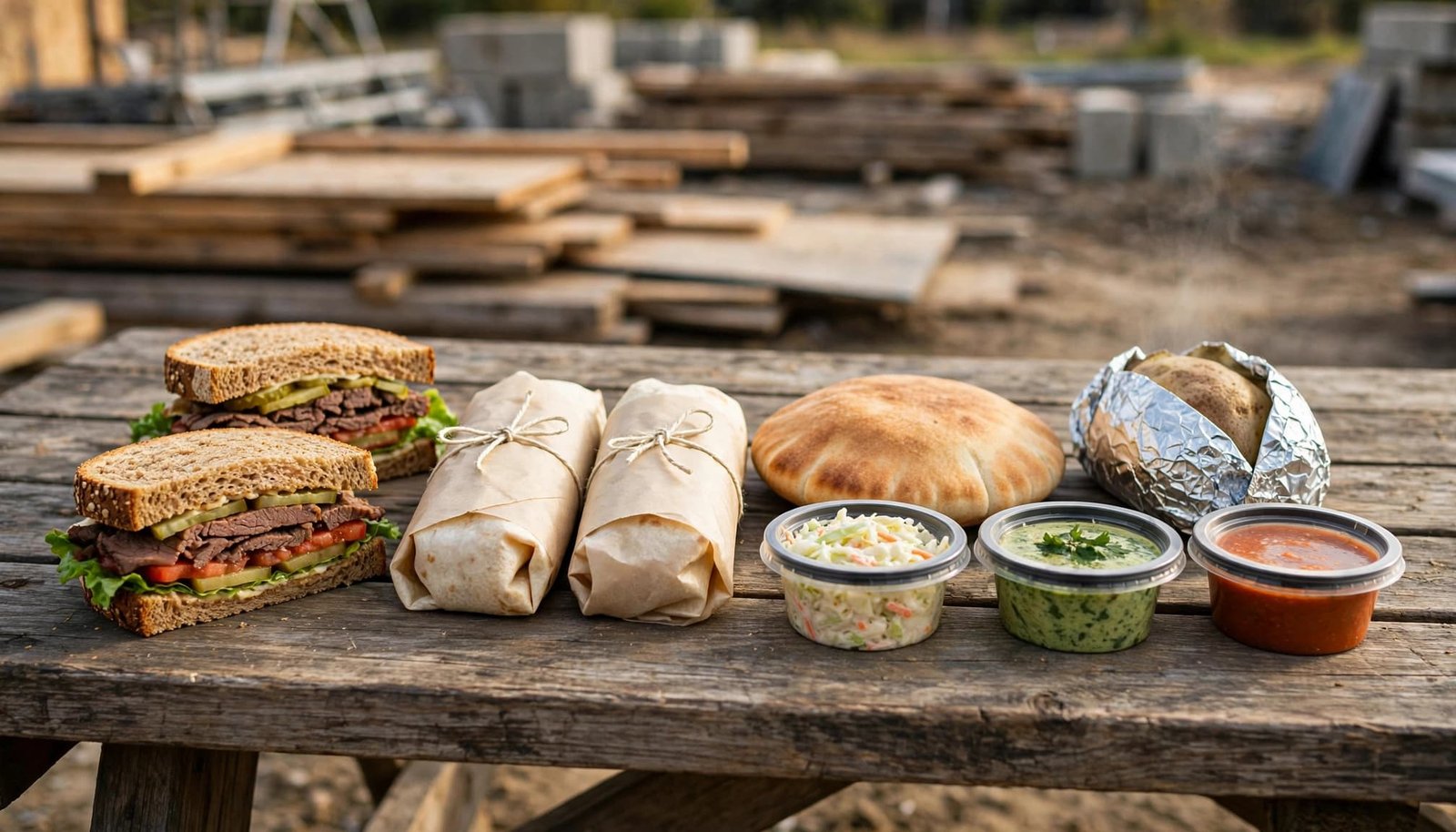
- Turkey, cheddar, and spinach wrap with mustard: Layer sliced turkey, cheddar, spinach, and mustard in a tortilla, then roll it tightly. Spread mustard lightly to prevent the wrap from becoming soggy.
- Chicken bacon ranch tortilla wrap: Combine chopped chicken, bacon, lettuce, and cheese in a tortilla. Pack ranch dressing separately if the wrap may sit for several hours.
- Italian sub: Fill a sturdy roll with ham, salami, provolone, lettuce, and peppers. Add oil and vinegar sparingly, or carry them in a small container.
- Peanut butter, banana, and honey sandwich: Spread peanut butter on sturdy bread, add banana slices, and drizzle with honey. Assemble it close to departure so the bread stays firm.
- Roast beef and horseradish sandwich: Use dense wheat or sourdough bread with roast beef, horseradish, and a slice of cheese. Wrap it in foil to protect it in a tool bag or cooler.
- BBQ chicken sandwich: Pile shredded chicken onto a sturdy bun with barbecue sauce. Pack slaw separately and add it just before eating for better texture.
- Tuna and cucumber pita: Fill a pita with tuna salad and cucumber slices, then seal it in a container or bag. Keep tuna cold with frozen gel packs, since USDA guidance lists tuna salad among foods that require refrigeration. See the USDA bag lunch safety guidance.
- Ham, egg, and cheese English muffin: Make it with a toasted English muffin, sliced ham, egg, and cheese. Eat it cold, or keep it hot in a preheated insulated container.
- Hummus, roasted vegetable, and feta wrap: Spread hummus over a tortilla, add roasted vegetables and feta, then roll it in foil. Let the vegetables cool first so steam doesn’t soften the tortilla.
- Meatball sub: Place meatballs and a modest amount of sauce inside a hoagie roll. Pack extra sauce separately to reduce leaks and keep the bread from falling apart.
Read also: 30 Healthy Lunch Ideas for Pregnancy With Easy Recipes
Hearty Handheld Lunches for Quick Breaks
Handheld meals work well when you have only a few minutes to eat. Use foil, parchment, or leakproof containers, and keep sauces away from the bread until lunchtime.
- Cheeseburger sliders with pickles: Make small burgers with cheese and pack pickles separately. Add them at the last minute so the buns stay dry.
- Chicken quesadilla wedges: Fill a tortilla with chicken and cheese, cook until crisp, and cut it into wedges. Carry salsa in a separate container to prevent sogginess.
- Sausage, peppers, and onions on a hoagie roll: Tuck cooked sausage, peppers, and onions into a firm roll. Drain excess oil before packing, then wrap the sandwich snugly in foil.
- Loaded baked potato: Wrap a baked potato in foil and pack chili, cheese, or beans separately when practical. Add the toppings during your break, or keep the assembled potato hot in an insulated container.
High-Protein Lunch Bowls and Salads That Keep You Full
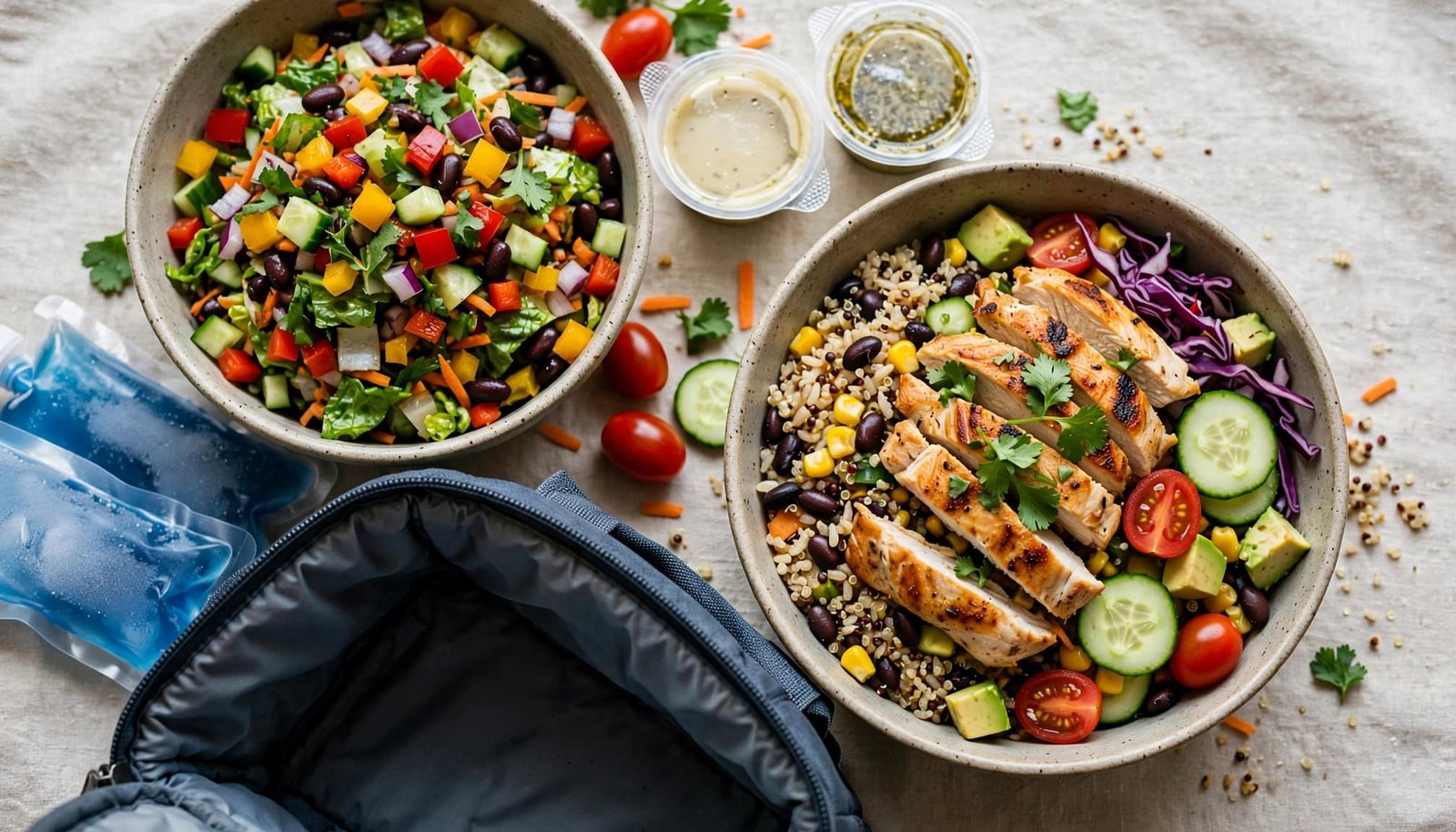
Bowls and salads can keep you going through a long shift when they combine protein, a hearty base, vegetables, and a flavorful dressing. Rice, pasta, quinoa, and beans add lasting energy, while chicken, beef, tuna, eggs, and cheese help the meal hold you over until dinner.
Pack dressing separately when possible. An insulated lunch bag with cold sources keeps meat, eggs, dairy, and other perishable ingredients at a safe temperature. USDA recommends using an insulated bag with at least two cold sources for packed lunches. See the USDA bag lunch safety guidance. For more adaptable meal ideas, browse the Everyday Dish recipe collection.
Rice, Grain, and Pasta Bowls for Long Workdays
These meals are easy to portion into sturdy containers and can use leftovers from dinner.
- Chicken fajita rice bowl with peppers, onions, and beans: Add sliced chicken, cooked rice, sauteed peppers, onions, and black or pinto beans. A little salsa or lime juice brings the ingredients together without making the bowl heavy.
- Taco beef bowl with rice, corn, salsa, and shredded cheese: Season ground beef with taco spices, then layer it over rice with corn, salsa, and cheese. Keep sour cream separate so it stays cold and doesn’t make the rice watery.
- Teriyaki chicken and broccoli bowl: Combine cooked chicken, rice, and roasted or steamed broccoli with teriyaki sauce. Pack extra sauce separately if you prefer a firmer texture at lunchtime.
- Greek chicken quinoa bowl with cucumber, tomato, olives, and feta: Quinoa gives the bowl a hearty base, while chicken and feta add protein. Add cucumbers and tomatoes after the quinoa cools, then pack Greek dressing in a leakproof cup.
- Tuna pasta salad with peas and a light dressing: Toss pasta, tuna, peas, and chopped vegetables with a light vinaigrette or yogurt-based dressing. Chill the salad thoroughly before packing, and keep it cold throughout the workday.
- Southwest black bean and corn pasta salad: Mix pasta with black beans, corn, bell pepper, and a chili-lime dressing. The beans add fiber and protein, while the pasta provides the carbohydrates needed for a physically demanding shift.
Read also: 100 Mess-Free Lunch Ideas for Eating While Driving
Crunchy Salads With Protein and Staying Power
A practical work salad needs sturdy ingredients that won’t wilt quickly. Use a leakproof container, chill meat, eggs, dairy, and dressing, and keep the dressing separate until you’re ready to eat.
- Cobb salad with chicken, egg, bacon, and avocado: Pack chopped romaine with chicken, hard-boiled egg, bacon, and avocado. Add dressing separately, and use a firm avocado so it holds up in the container.
- Greek tuna salad with chickpeas, tomatoes, cucumbers, and olives: Tuna and chickpeas create a filling protein base. Tomatoes, cucumbers, and olives add crunch and salt without requiring much prep.
- Buffalo chicken salad with carrots, celery, and ranch or yogurt dressing: Toss chopped chicken with buffalo sauce, then add carrots and celery over greens. Carry ranch or yogurt dressing in a sealed cup to prevent soggy lettuce.
- Turkey, apple, and cheddar chopped salad with nuts or seeds: Combine turkey, cheddar, crisp apple, greens, and nuts or seeds for a satisfying mix of protein, crunch, and sweetness. Keep the apple separate if you want it extra crisp.
Hot Thermos Lunches for Cold Mornings and Delayed Breaks
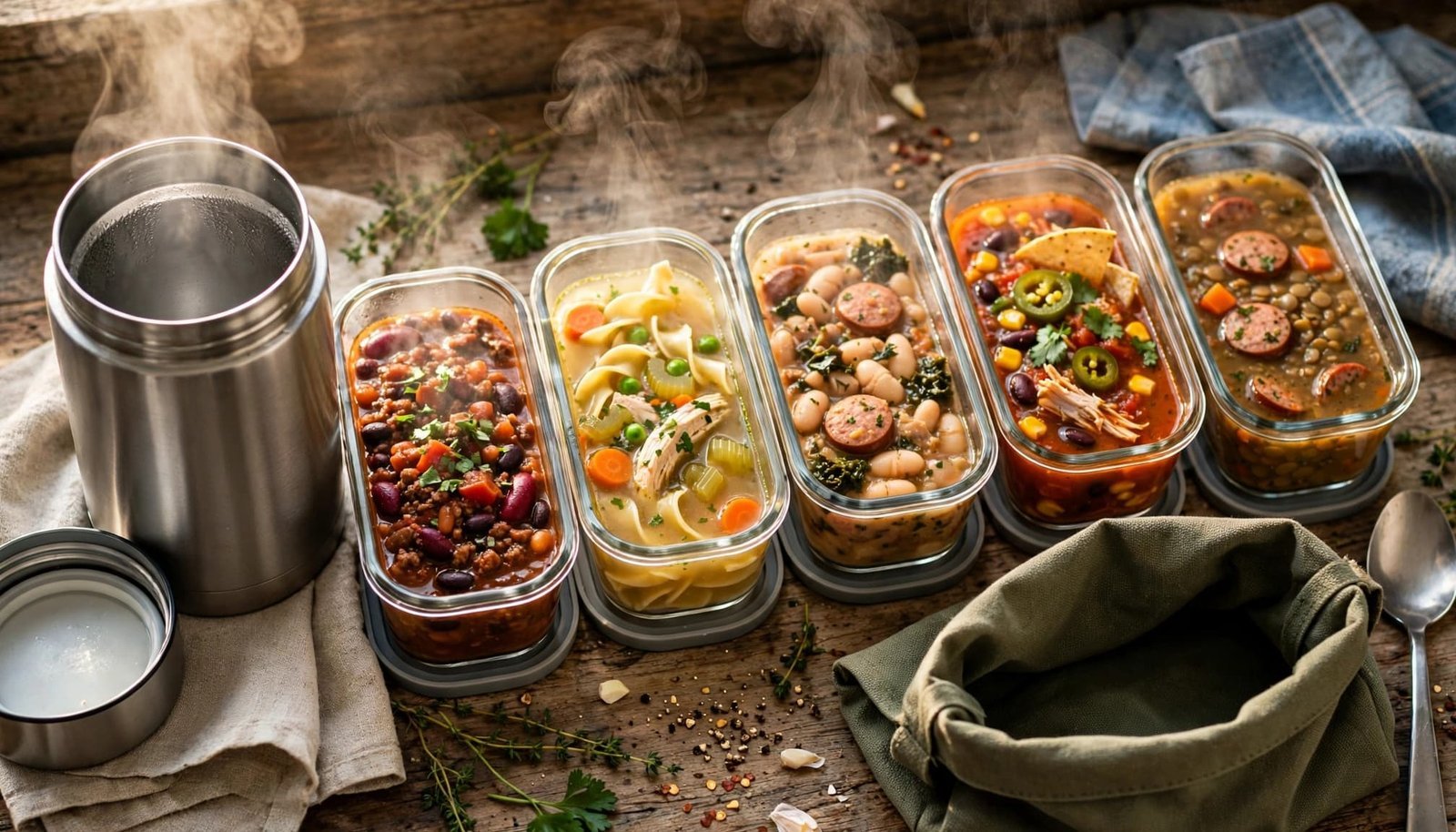
A hot thermos lunch can make a cold morning and a late break much easier. Before filling your insulated food thermos, pour in boiling water, close the lid, and let it sit for several minutes. Empty it, add piping-hot food, then seal it and keep it closed until lunch.
Hot food should stay at 140°F or above until you eat it. The USDA food safety basics recommend refrigerating leftovers within two hours, using shallow containers so large batches cool faster. Wash the thermos, lid, and gasket after every use, especially after packing meat, dairy, or broth-based foods.
Soups, Chilis, and Stews With Plenty of Protein
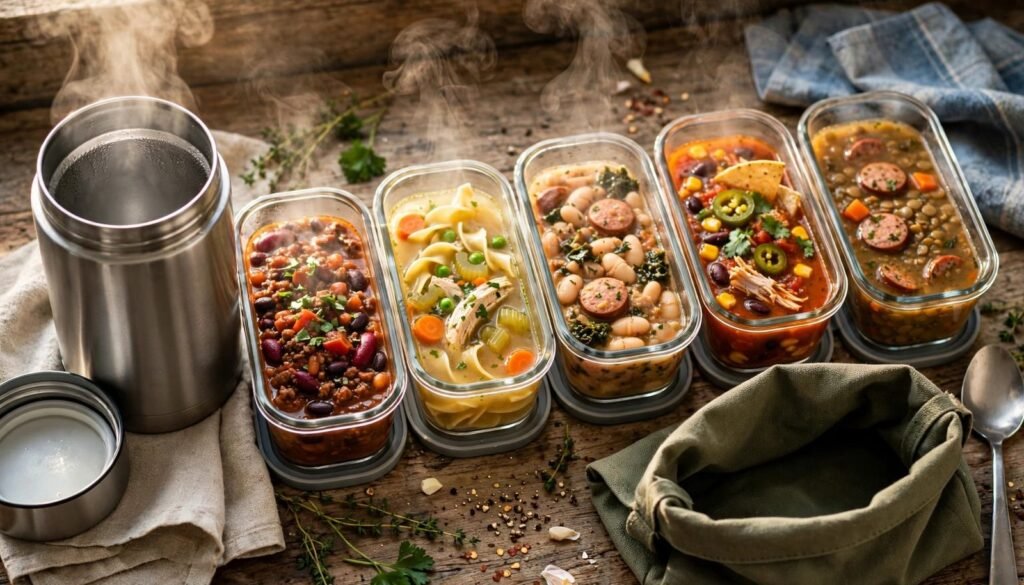
Thick soups, bean dishes, and stews travel better than thin broths. They also reheat well, so you can cook once and cover several workdays.
- Beef and bean chili with cornbread or crackers: Brown ground beef with onions, then simmer it with beans, tomatoes, and chili seasoning. Pack cornbread or crackers separately so they stay crisp.
- Chicken noodle soup with extra vegetables: Add carrots, celery, peas, or green beans to chicken noodle soup for more substance. Use sturdy noodles and avoid overcooking them before packing.
- Sausage and white bean stew: Simmer sliced sausage with white beans, potatoes, carrots, and broth until the mixture thickens. The beans and sausage provide enough protein to carry you through a physical shift.
- Turkey taco soup with corn and black beans: Combine ground turkey, corn, black beans, tomatoes, broth, and taco seasoning. Add shredded cheese or tortilla strips only if you can pack them separately.
- Lentil soup with sliced sausage or shredded chicken: Lentils make a filling base, while sausage or chicken adds extra protein. Keep the soup fairly thick, since watery meals can spill more easily and may cool faster.
Cook a large batch on your day off, then divide leftovers into shallow containers. Refrigerate them within two hours, and keep portions for several workdays in the refrigerator or freezer. Reheat each serving until it is steaming before transferring it to the preheated thermos.
Warm Comfort Foods That Pack in an Insulated Container
These meals feel more substantial than soup, but they still fit neatly into a wide-mouth thermos. Fill the container only about three-quarters full, leaving room for the lid and preventing pressure or spills. Pack fruit or a simple vegetable side, such as an apple, orange, baby carrots, or snap peas.
- Beef and vegetable stew with crusty bread: Pack tender beef, potatoes, carrots, and gravy together. Keep the bread outside the thermos so it doesn’t become soggy.
- Chicken, broccoli, and rice casserole: Use a thick casserole with enough sauce to prevent dryness. Portion it while hot, but don’t compress it tightly into the container.
- Macaroni and cheese with pulled chicken or chopped ham: Stir in chicken or ham for more protein and lasting fullness. A small side of fruit adds freshness to this rich lunch.
Affordable No-Fridge and Make-Ahead Lunches for Tough Schedules
When your job site has no refrigerator, lunch planning starts with food safety. Use an insulated lunch bag with ice packs whenever your meal contains meat, eggs, dairy, cut fruit, or other perishables. USDA recommends keeping cold foods in an insulated bag with at least two cold sources, such as gel packs or a frozen water bottle. See the USDA bag lunch safety guidance.
For days when reliable cold storage isn’t possible, choose unopened shelf-stable foods instead. Peanut butter, canned fish, beans, whole-grain crackers, tortillas, and whole fruit are affordable staples that can wait safely until lunch.
Shelf-Stable Lunches for Jobs Without a Fridge
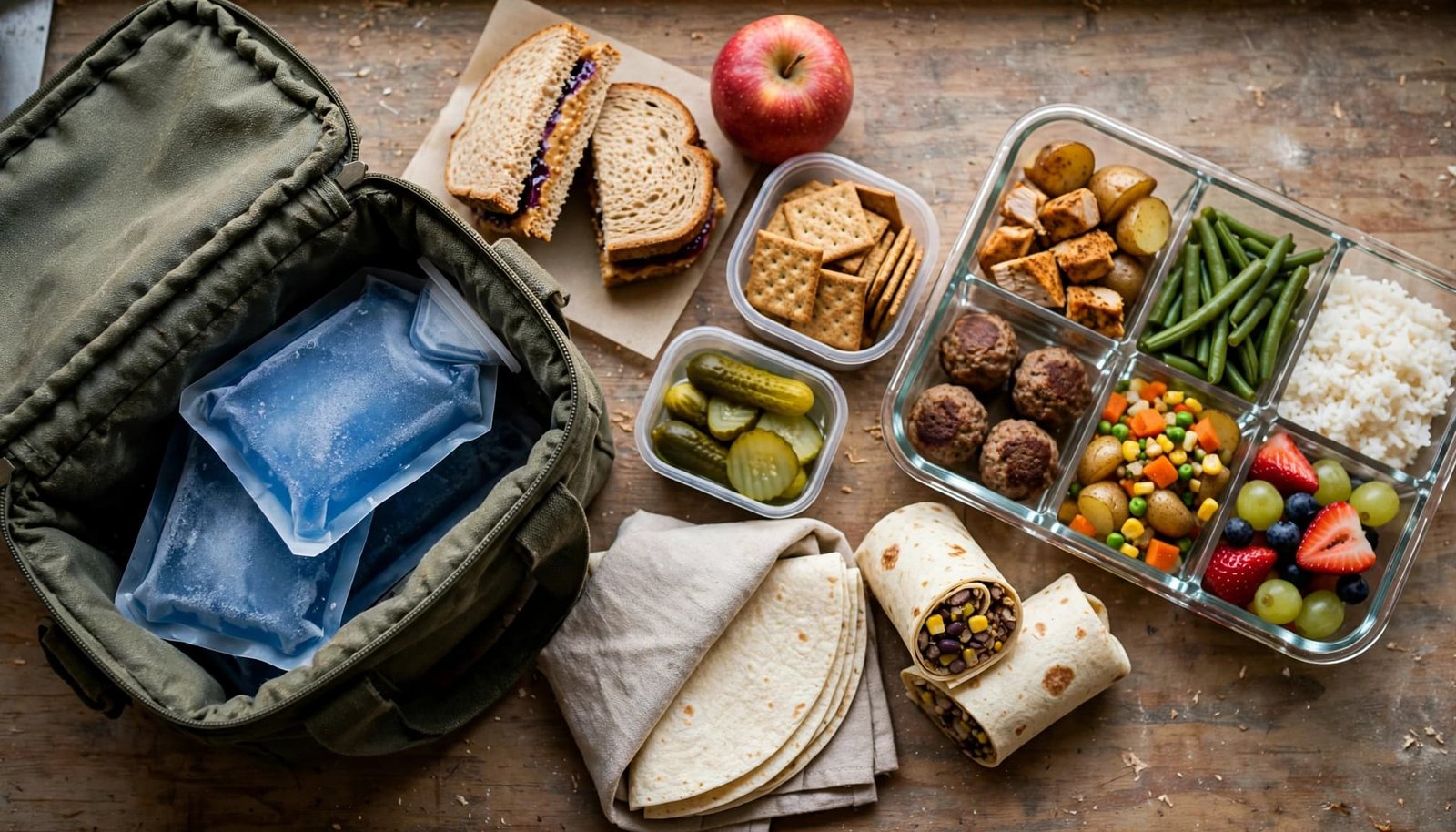
These lunches work well in a tool bag, truck, or locker when you cannot keep food cold. Check package directions before packing, since some products require refrigeration after opening.
- Peanut butter and jelly sandwich with an apple: Use sturdy whole-grain bread and enough peanut butter to add protein and staying power. Pack the apple whole, since cut fruit spoils faster without cold storage.
- Tuna pouch with whole-grain crackers, pickles, and a piece of fruit: Keep the tuna pouch sealed until you’re ready to eat. Add crackers for carbohydrates, pickles for a salty crunch, and an orange, banana, or other whole fruit. Once opened, tuna needs refrigeration if you don’t finish it.
- Bean and corn tortilla roll-ups with single-serve toppings: Choose shelf-stable tortillas and pair them with unopened bean packets, corn cups, salsa packets, or hot sauce. Assemble the roll-ups during your break so the tortillas don’t soften in your bag. Check each label, because some toppings belong in the refrigerator.
A frozen water bottle can add cold storage when possible, while also giving you a drink later in the shift. Keep it beside perishable food inside the insulated bag, rather than relying on a regular paper bag.
Budget-Friendly Meal Prep Lunches to Make in Batches
Batch cooking lowers the cost per lunch and gives you dependable meals for several shifts. Cook once, refrigerate food in shallow containers, portion only what you’ll eat, and pack each serving cold right before leaving.
- Baked chicken, roasted potatoes, and green beans: Season the ingredients simply, then divide them into containers after they cool. Swap chicken thighs for breasts when prices favor thighs, or replace green beans with frozen mixed vegetables.
- Turkey meatballs with rice and roasted vegetables: Bake a large batch of meatballs and serve them with rice and whatever vegetables are on sale. Leftover pasta, couscous, or mashed potatoes can replace the rice without changing the basic meal.
- Egg, potato, and cheese breakfast-for-lunch boxes with fruit: Pack cooked eggs, roasted potatoes, cheese, and whole fruit in separate sections. Use leftover breakfast potatoes, add cooked sausage when available, or skip cheese if the meal needs to cost less.
Refrigerate cooked food within two hours and use shallow containers to help it cool faster. If your worksite has no refrigerator, carry these make-ahead lunches in an insulated bag with cold packs and eat them during the same shift.
How to Pack Work Lunches So They Stay Safe and Easy to Eat
A safe work lunch starts with temperature control, then gets easier with sturdy packaging and simple cleanup. Cold perishable foods should stay at 40°F or below, while hot meals should remain at 140°F or above until you eat them. These basic habits protect your food during long shifts, hot commutes, and delayed breaks.
Keep Cold Foods Cold
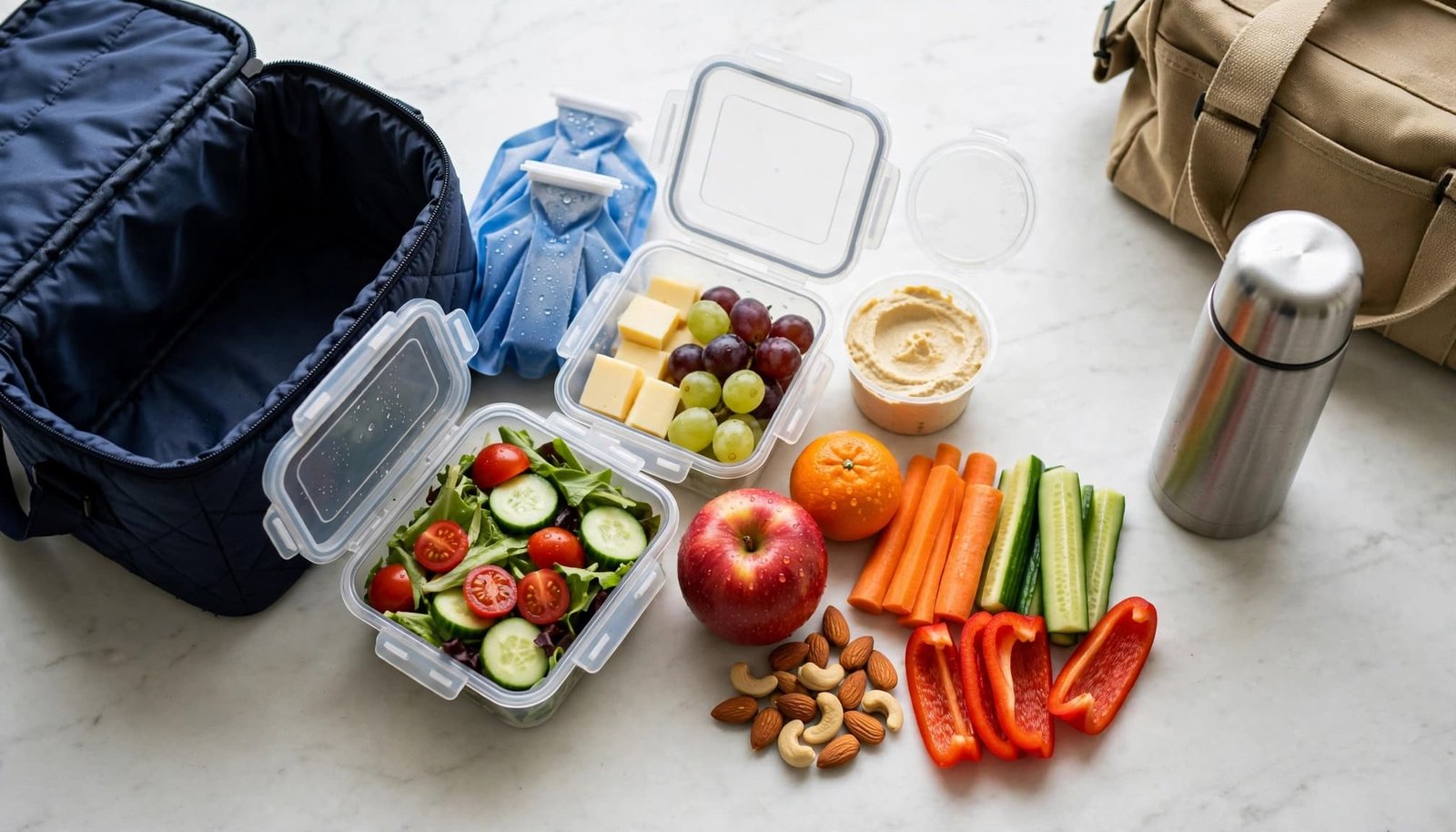
Pack sandwiches, meat, eggs, dairy, tuna salad, and cut fruit in an insulated lunch bag with at least two ice sources. Ideally, place one frozen pack above the food and another below it. Frozen water bottles or gel packs work well, and you can drink the water later.
Chill cooked food fully before packing it. A warm container can raise the temperature inside the lunch bag and shorten the safe storage time. Keep the bag out of direct sunlight, and don’t leave it in a hot car or vehicle trunk.
Perishable food should not sit warm for more than two hours, or more than one hour when temperatures exceed 90°F. If food has stayed warm longer than that, discard it. Don’t rely on smell or appearance alone, because unsafe food may look and smell normal. The USDA bag lunch safety guidance covers these temperature and timing rules.
Pack Hot Meals and Clean Up Properly
For soup, chili, or stew, preheat your food thermos with boiling water for several minutes. Empty it, add piping-hot food, and keep the sealed thermos at 140°F or above until lunchtime.
Use leakproof containers, separate sauce cups, and sturdy wraps to prevent spills. Simple sides, such as whole fruit, nuts, or vegetables, add nutrition without creating extra mess. Wash your hands before preparing lunch, keep raw ingredients away from ready-to-eat foods, and wash containers, lids, thermoses, and lunch bags daily with hot, soapy water.
Frequently Asked Questions
A demanding shift can make lunch planning feel harder than cooking itself. These answers cover the practical details that often decide whether a meal stays safe, filling, and enjoyable until your break.
Can I prepare my work lunch the night before?
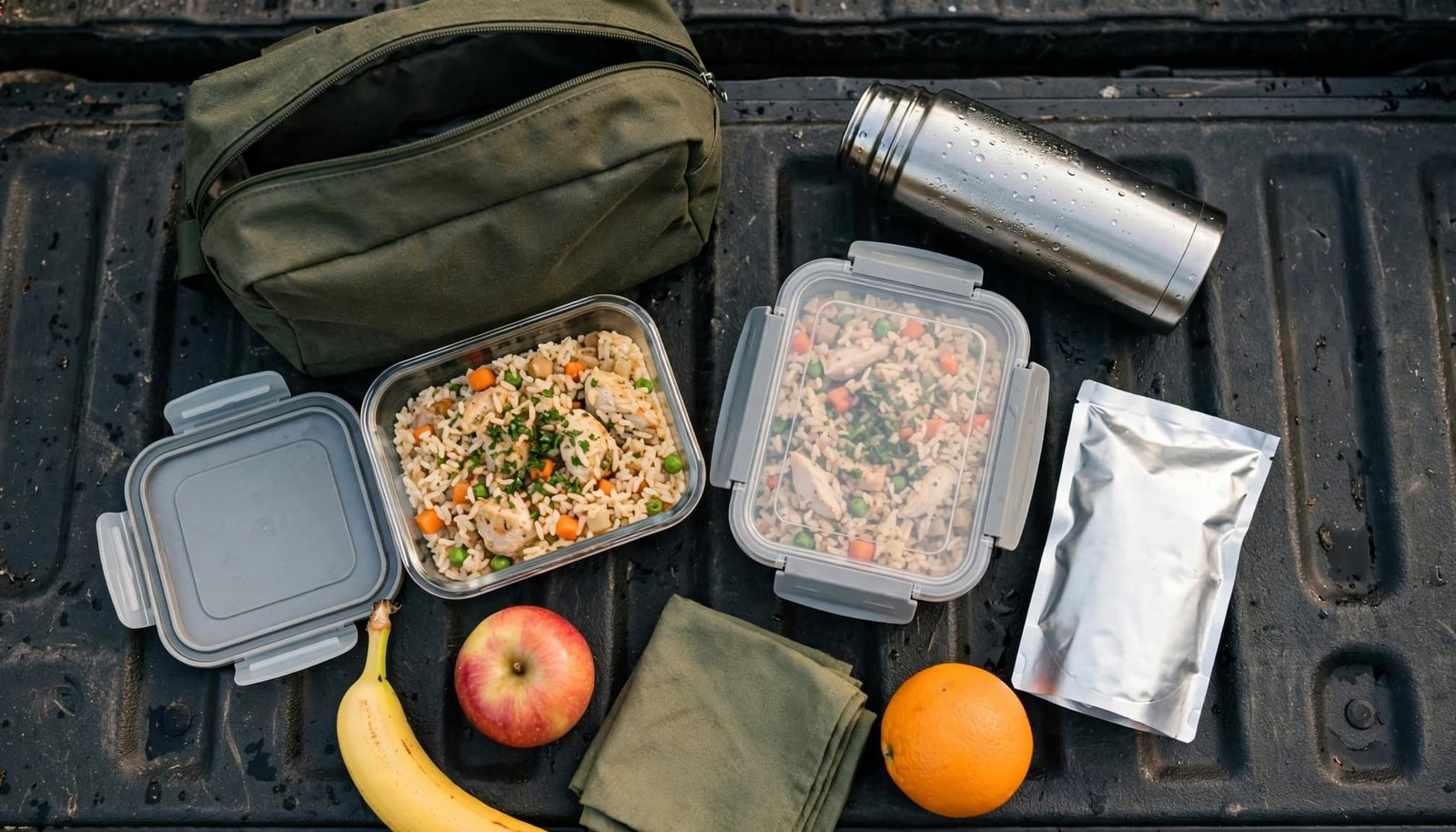
Yes, you can cook, portion, and chill lunch the night before. Store perishable food in the refrigerator at 40°F or below, then pack the lunch bag with frozen cold sources right before leaving. USDA recommends packing lunch bags just before departure so food spends less time warming up.
How long do refrigerated leftovers last for work lunches?
Most cooked leftovers stay safe in the refrigerator for three to four days when you chill them promptly and keep the refrigerator at 40°F or below. Label containers with the cooking date, especially when preparing several meals at once. The USDA leftovers guidance explains how to cool, store, and reheat them safely.
What should I do if I need to microwave lunch at work?
Use a microwave-safe container and loosen the lid so steam can escape. Cover the food, rotate it during heating, and let it stand briefly before checking the center. USDA recommends reheating leftovers to 165°F, so stir thick meals such as rice bowls, pasta, and chili before testing them.
How can I keep lunch filling without making it too expensive?
Build each meal around one affordable protein and one hearty base. Beans, eggs, peanut butter, canned tuna, chicken thighs, rice, potatoes, and pasta can stretch across several lunches without feeling repetitive. Add flavor with salsa, hot sauce, pickles, seasoning blends, or a small amount of shredded cheese instead of buying costly prepared meals.
What lunch works best when my break time changes every day?
Choose foods that hold their texture and flavor for several hours. A thermos of chili, stew, or pasta stays more dependable than a sandwich with wet vegetables, while a sealed peanut butter sandwich or tuna pouch works when refrigeration is uncertain. Pack sauces, crunchy toppings, and fruit separately so you can adjust the meal when your break arrives late.
What if I forget an ice pack or leave lunch in a hot truck?
Don’t guess based on smell or appearance. Perishable food that sits above 40°F for more than two hours, or more than one hour when temperatures exceed 90°F, should be discarded. The USDA bag lunch safety guidance recommends using at least two cold sources, which makes a frozen water bottle and gel pack a useful backup combination.
Conclusion
A good work lunch doesn’t need to be fancy. It needs enough protein and energy to support a demanding shift, safe packing for the time it will travel, and flavors you won’t mind eating again.
The best options also match your break, whether you have time to heat a thermos meal or need a quick handheld lunch.
Choose two or three lunches you can prepare easily, then rotate the flavors through the week. Start with one cold option, one hot thermos meal, and one shelf-stable backup. That small rotation can make busy mornings easier while keeping your lunch filling, practical, and worth looking forward to.
Save the pin for later

I’m the creator of My Everyday Dish, a food blog focused on easy homemade recipes, comforting family meals, simple baking, and seasonal food ideas. I love finding practical ways to make everyday cooking less stressful and more enjoyable. Here, I share recipes with simple ingredients, clear instructions, and plenty of flavor, helping you make delicious meals and treats you’ll feel confident serving at home.
Leave a Reply