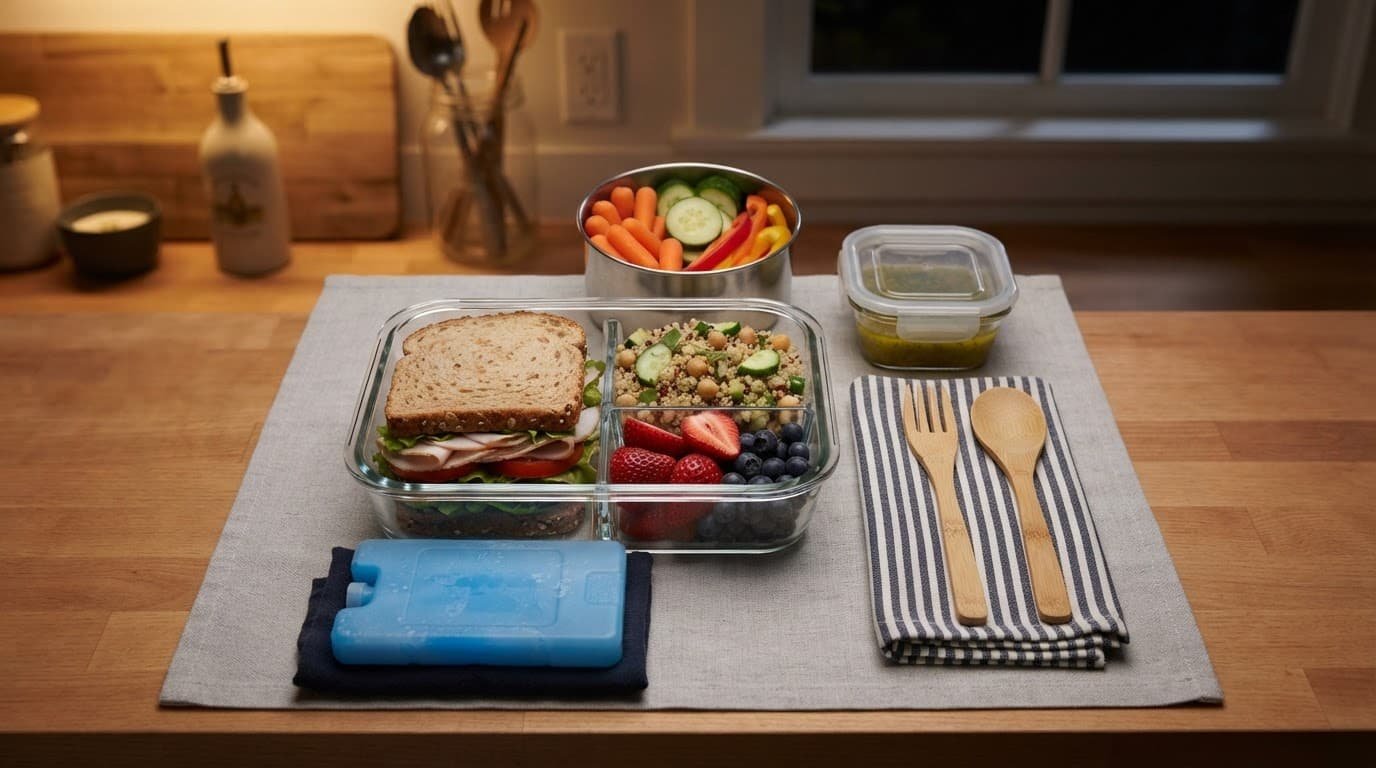
These easy lunch recipes for work give you 20 simple homemade lunchbox ideas made with familiar ingredients, so you can prepare satisfying meals without spending your lunch break in a restaurant line.
You’ll find sandwiches, wraps, salads, rice dishes, soups, leftovers, and snack boxes that travel well and can be prepared ahead.
Along with each idea, you’ll get practical guidance for step-by-step preparation, storage, and safe packing, including how to keep perishable foods cold in an insulated lunch bag. Start with these easy recipes and find a few dependable favorites for your weekly lunch routine.
20 Easy Lunch Recipes for Work and Homemade Lunchbox Ideas
These homemade lunchbox ideas keep weekday meals simple, portable, and varied. Each recipe includes the main ingredients, a quick preparation method, make-ahead advice, and the best way to pack it for work.
Sandwiches and Wraps
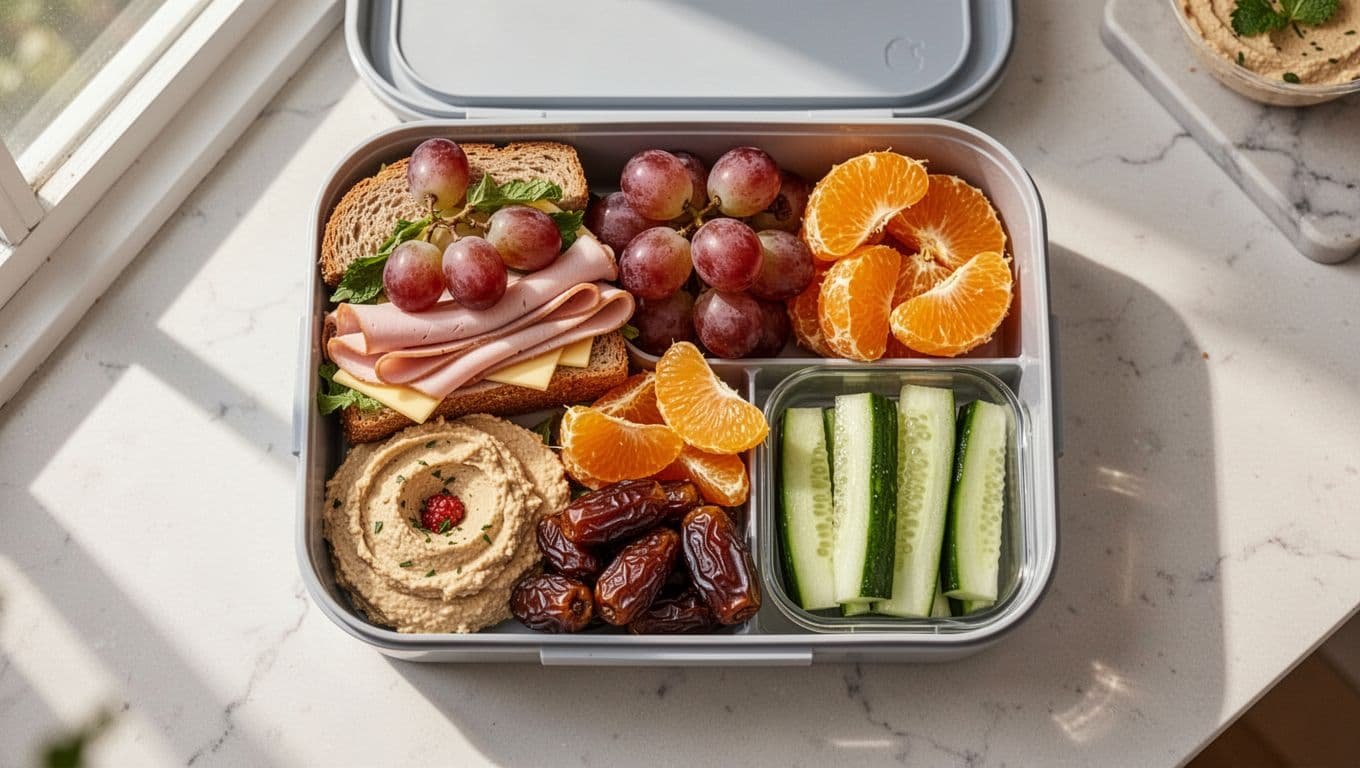
- Turkey and cheese sandwich: Layer whole-wheat bread with turkey, cheddar, lettuce, and mustard. Assemble the night before, but place lettuce between the bread and meat to reduce sogginess. Pack cold with grapes or sliced vegetables.
- Chicken salad wrap: Mix cooked chicken with Greek yogurt, celery, grapes, and a little Dijon mustard. Spoon it into a tortilla with spinach, roll tightly, and refrigerate overnight. Pack cold with an ice pack.
- Hummus and vegetable pita: Fill a pita with hummus, cucumber, shredded carrots, roasted peppers, and feta. Prepare the vegetables ahead and assemble in the morning for the best texture. Pack cold.
- Tuna cucumber sandwich: Combine tuna with mayonnaise, lemon juice, and chopped celery, then spoon it onto bread with cucumber slices. Make the filling up to two days ahead and assemble before leaving. Pack cold.
- Peanut butter banana roll-up: Spread peanut butter over a whole-wheat tortilla, add a banana, and roll it tightly. Prepare it the night before, then wrap it in parchment. Pack at room temperature if using shelf-stable ingredients.
Read also: 100 Mess-Free Lunch Ideas for Eating While Driving
Salads and Grain Bowls
- Greek pasta salad: Toss cooked pasta with tomatoes, cucumber, olives, feta, and Italian dressing. Make it one day ahead so the flavors combine. Pack cold with an ice pack.
- Chicken Caesar salad: Pack chopped romaine, cooked chicken, Parmesan, and croutons in separate sections. Add Caesar dressing at lunchtime to keep the lettuce crisp. Pack cold.
- Chickpea quinoa bowl: Combine cooked quinoa, chickpeas, spinach, roasted vegetables, and lemon-tahini dressing. Prepare the entire bowl up to three days ahead. Pack cold or at room temperature for a short commute.
- Sesame soba noodle bowl: Toss chilled soba noodles with shredded cabbage, carrots, edamame, and sesame dressing. Store the dressing separately if preparing ahead. Pack cold.
- Taco rice bowl: Layer cooked rice with black beans, corn, salsa, shredded cheese, and avocado. Add avocado just before leaving, or replace it with lime-dressed cabbage. Pack cold or warm in a heat-safe container.
Keep wet ingredients separate whenever possible. A small container of dressing can protect an entire salad from turning limp.
Warm Lunches for a Thermos
- Tomato soup and crackers: Warm tomato soup on the stove, then pour it into a preheated food thermos. Pack crackers separately so they stay crisp. Make the soup up to four days ahead and reheat thoroughly.
- Chicken noodle soup: Simmer cooked chicken, noodles, carrots, celery, and broth until hot. Prepare it ahead, but cook noodles separately if you dislike soft pasta. Pack hot in a thermos.
- Chili with cornbread: Combine ground beef or turkey, beans, tomatoes, onions, and chili seasoning. Refrigerate for several days or freeze individual portions. Reheat until steaming and pack hot.
- Teriyaki chicken rice: Toss cooked chicken and broccoli with teriyaki sauce, then serve over rice. Prepare portions ahead and reheat in the morning. Pack hot in a thermos.
- Macaroni and cheese: Stir cooked macaroni into a cheddar sauce and add peas or broccoli if desired. Make it ahead, adding a splash of milk when reheating. Pack hot.
Snack Boxes and Shelf-Stable Lunches
- Hummus snack box: Add hummus, pita wedges, carrots, cucumbers, olives, and a hard-boiled egg. Prepare the box the night before and keep it cold with an ice pack.
- Cheese and cracker box: Pack whole-grain crackers, sliced cheese, grapes, nuts, and turkey slices. Use shelf-stable ingredients if you won’t have refrigeration, or pack cold when including meat and cheese.
- Bean and corn salsa cups: Mix black beans, corn, tomatoes, lime juice, and cilantro. Pack with tortilla chips separately to prevent sogginess. Keep cold with an ice pack.
- Overnight oats: Stir oats with milk, yogurt, chia seeds, berries, and cinnamon in a sealed jar. Refrigerate overnight and pack cold. Add nuts in the morning for crunch.
- No-cook peanut noodle jar: Layer cooked noodles, shredded carrots, edamame, and peanut sauce in a jar. Refrigerate overnight, then shake before eating. Pack cold.
For lunches containing meat, dairy, eggs, or yogurt, use an insulated lunch bag and at least two frozen cold sources. USDA guidance recommends keeping cold foods at 40°F or below and discarding perishables left out for more than two hours, or one hour above 90°F. See the USDA’s advice on keeping bag lunches safe.
Read also: 60 Quick and Easy Lunch Ideas for Working From Home
How to Make and Pack Work Lunches the Night Before
A short meal-prep routine can make homemade work lunches easier all week. Choose two or three recipes on the weekend, then prepare shared ingredients instead of making five completely different meals.
Set Up Your Lunches in Advance
Start by cooking one protein or grain, such as chicken, quinoa, rice, or pasta. While it cooks, wash produce and chop vegetables for salads, wraps, snack boxes, or grain bowls. You can also boil eggs, portion nuts, prepare soup, and mix sandwich fillings ahead of time.
Store each ingredient in a separate airtight container so you can combine meals throughout the week. Cooked grains, soups, boiled eggs, chopped vegetables, and sandwich fillings usually work well as make-ahead items. Sandwiches can also be assembled the night before, especially when you keep wet ingredients away from the bread.
Some ingredients should wait until morning:
- Slice avocado shortly before packing to reduce browning.
- Add crunchy toppings, croutons, and crackers at lunchtime.
- Pack salad dressing, salsa, and sauces in small separate containers.
- Add bananas or other easily bruised fruit after the main meal is packed.
This approach gives you variety without creating extra work each evening. For example, cooked chicken can fill a wrap one day, top a salad the next, and pair with rice later in the week.
Follow a Simple Morning Packing Order
The night before, place the empty lunch bag and containers in one spot. In the morning, add the main meal first, then separate any dressing, sauce, or other wet ingredient. Include fruit, vegetables, or a small snack, followed by utensils, a napkin, and a drink.
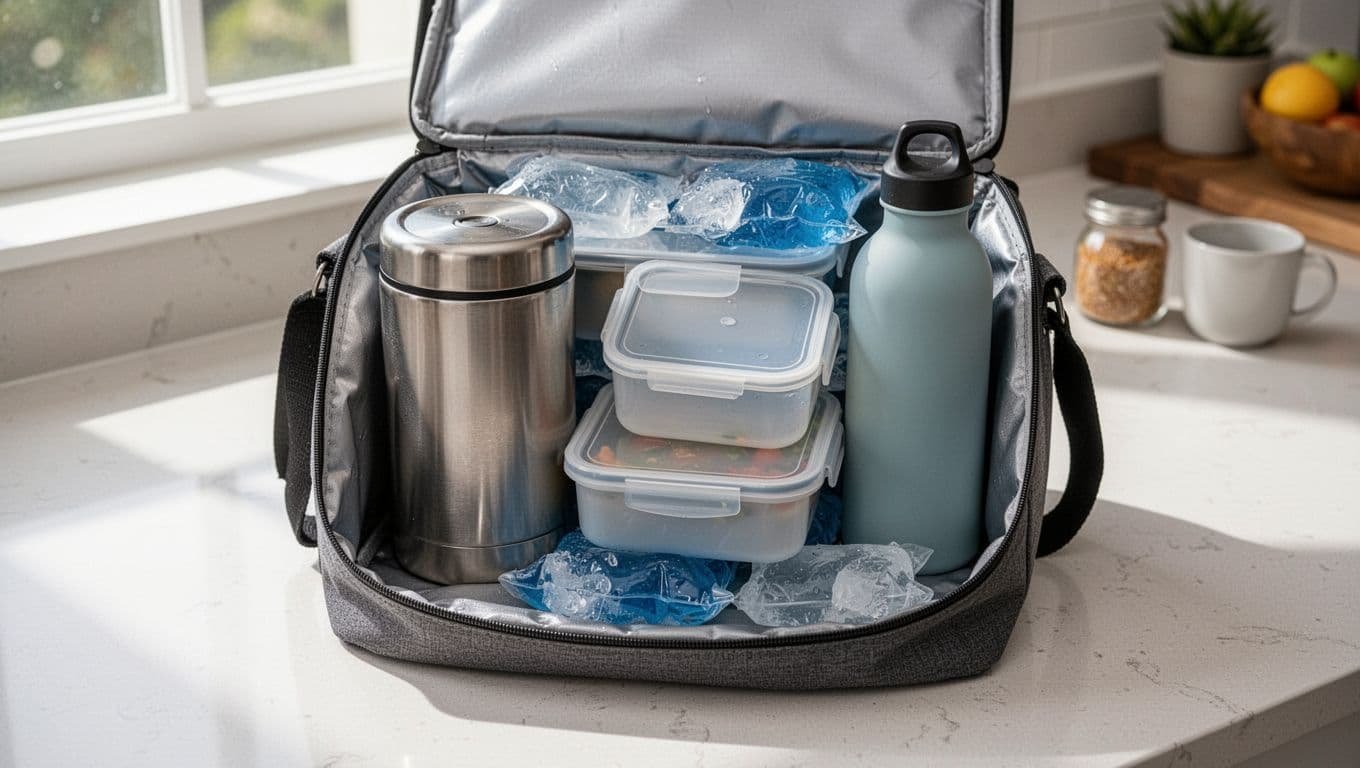
Keep meat, dairy, eggs, yogurt, and other perishable foods in an insulated lunch bag. Place cold packs around the food, with one underneath and another on top when possible. An ice pack can keep lunch cold for about four to six hours in a properly insulated bag. For more detailed safety guidance, follow the USDA’s recommendations for keeping bag lunches safe.
For hot lunches, fill the thermos with boiling water, close it, and let it sit for several minutes. Empty the water, add fully heated soup, chili, pasta, or rice, and close the thermos right away. This preheating step helps the food stay hot until lunchtime.
Lunchbox Food Safety Rules for Cold, Hot, and Leftover Meals
Safe lunch packing starts with temperature control. Cold perishable foods must stay at or below 40°F (4°C), while hot meals should remain at or above 140°F (60°C). Between those temperatures, bacteria can grow quickly.
Keep Cold Foods Cold
Use an insulated lunch bag for meals containing meat, cheese, eggs, yogurt, cooked grains, or leftovers. Pack at least two cold sources, such as frozen gel packs or frozen water bottles. Place one below the food and another above it so the container stays cold from both sides.
Keep the lunch bag in a refrigerator or another cool place until you’re ready to leave. Never leave it in a hot car or on a sunny windowsill. The USDA explains the 40°F to 140°F food safety danger zone, where bacteria can multiply rapidly.
Perishable food shouldn’t sit at room temperature for more than two hours, or more than one hour when the temperature is above 90°F (32.2°C). If your lunch has stayed warm for too long, throw it away. Smell and appearance can’t reliably show whether food is safe.
Pack Hot Meals and Leftovers Carefully
For soup, chili, rice, pasta, or other hot leftovers, reheat the food thoroughly before packing it in a preheated food thermos. Fill the thermos with boiling water for several minutes, empty it, then add the steaming food and close the lid immediately. Keep the container closed until lunchtime.
Refrigerate leftovers promptly in shallow containers rather than leaving a large pot on the counter. When reheating, make sure the food is hot throughout before transferring it to the thermos.
Keep Hands and Containers Clean
Wash your hands with soap and running water for at least 20 seconds before preparing or packing lunch. Use clean containers, utensils, and work surfaces each day. Keep equipment used for raw meat separate from items that touch ready-to-eat foods, then wash it thoroughly with hot, soapy water.
After eating, empty the lunch bag and wipe its interior with hot, soapy water. Let it air-dry completely, and wash reusable drink bottles and food containers before using them again. These small habits help keep tomorrow’s lunch as safe as today’s.
Frequently Asked Questions
These common questions can help you choose, prepare, and pack easy lunches with fewer surprises. Use the answers below when you need to adjust a recipe for your schedule, storage space, or available ingredients.
Can I freeze sandwiches for work lunches?
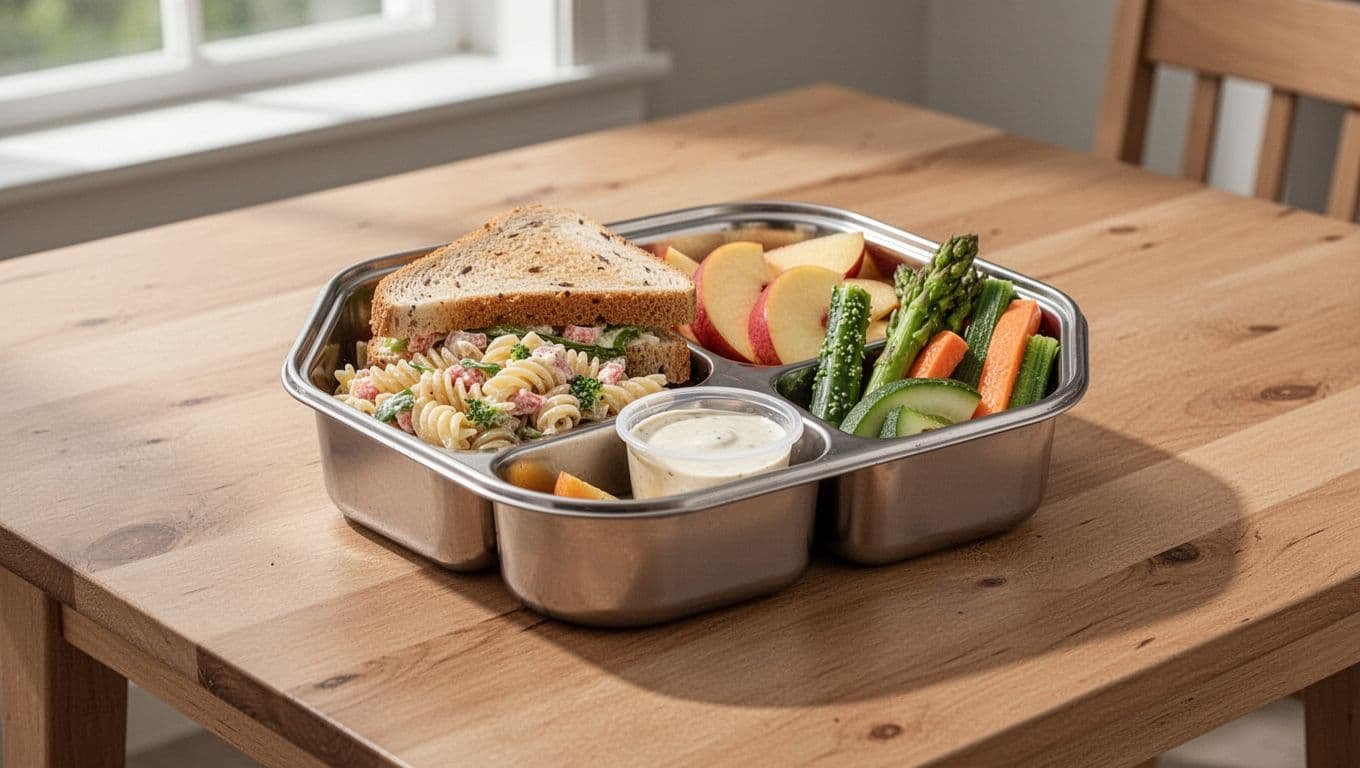
Yes, freezing sandwiches can help them stay cold during your commute and may save time during busy weeks. For the best texture, avoid freezing sandwiches with mayonnaise, lettuce, or tomatoes because these ingredients can become watery or limp after thawing.
Instead, freeze bread with cooked meat, cheese, or peanut butter, then add fresh vegetables and condiments after thawing. Wrap each sandwich tightly, label it with the date, and place it in the refrigerator the night before so it can thaw safely.
How long can I keep homemade lunches in the refrigerator?
Most cooked leftovers and prepared lunch fillings should be eaten within three to four days when stored at 40°F or below. This includes cooked chicken, chili, soup, pasta dishes, grain bowls, and chicken or tuna salad.
Store food in shallow, covered containers so it cools faster after cooking. If you won’t eat a portion within four days, freeze it instead. The FoodSafety.gov cold food storage chart offers storage times for common foods.
What is the best way to reheat a leftover lunch?
Reheat soups, rice dishes, pasta, casseroles, and cooked meat until the center reaches 165°F. A food thermometer gives you a more reliable answer than steam or a hot surface, especially when heating a thick portion.
For microwave meals, cover the container loosely, stir halfway through, and let the food stand briefly before checking the temperature. If you’re using a thermos, heat the food fully at home and transfer it immediately into a preheated container.
How can I keep sandwiches from getting soggy?
Moisture is usually the reason a packed sandwich loses its texture. Spread condiments between meat or cheese layers instead of directly on the bread, and place dry greens between the bread and wetter fillings.
You can also pack tomatoes, pickles, and sauces separately, then add them at lunchtime. Toasting the bread lightly helps, but let it cool completely before assembling the sandwich so trapped steam doesn’t create more moisture.
What should I pack when I don’t have access to a refrigerator?
Choose shelf-stable foods, or use an insulated lunch bag with enough cold sources to keep perishable items chilled. Peanut butter roll-ups, whole fruit, crackers, nuts, dried fruit, and unopened shelf-stable packages are practical choices.
Avoid packing meat, cheese, yogurt, eggs, or cooked leftovers without reliable temperature control. Perishable food should not remain at room temperature for more than two hours, or one hour when temperatures exceed 90°F.
How do I keep homemade lunches interesting all week?
Use the same prepared ingredients in different formats rather than repeating one complete meal. For example, cooked chicken can become a wrap, salad topping, or rice bowl, while roasted vegetables can fill a pita or accompany soup.
Change the texture and flavor with small additions, such as a new dressing, crunchy seeds, fresh herbs, or a different grain. Packing one familiar main dish with a different fruit or snack can also make a simple lunch feel less repetitive.
Conclusion
A good work lunch doesn’t need to be complicated. Choose one cold recipe, one hot thermos meal, and one leftover-based option to create an easy weekly rotation.
Prepare a few ingredients ahead, keep perishable foods at safe temperatures, and pack sauces or crunchy toppings separately for better texture. Try one recipe today, then adjust the ingredients to suit your household and make the lunch your own.
Save the pin for later

I’m the creator of My Everyday Dish, a food blog focused on easy homemade recipes, comforting family meals, simple baking, and seasonal food ideas. I love finding practical ways to make everyday cooking less stressful and more enjoyable. Here, I share recipes with simple ingredients, clear instructions, and plenty of flavor, helping you make delicious meals and treats you’ll feel confident serving at home.
Leave a Reply