
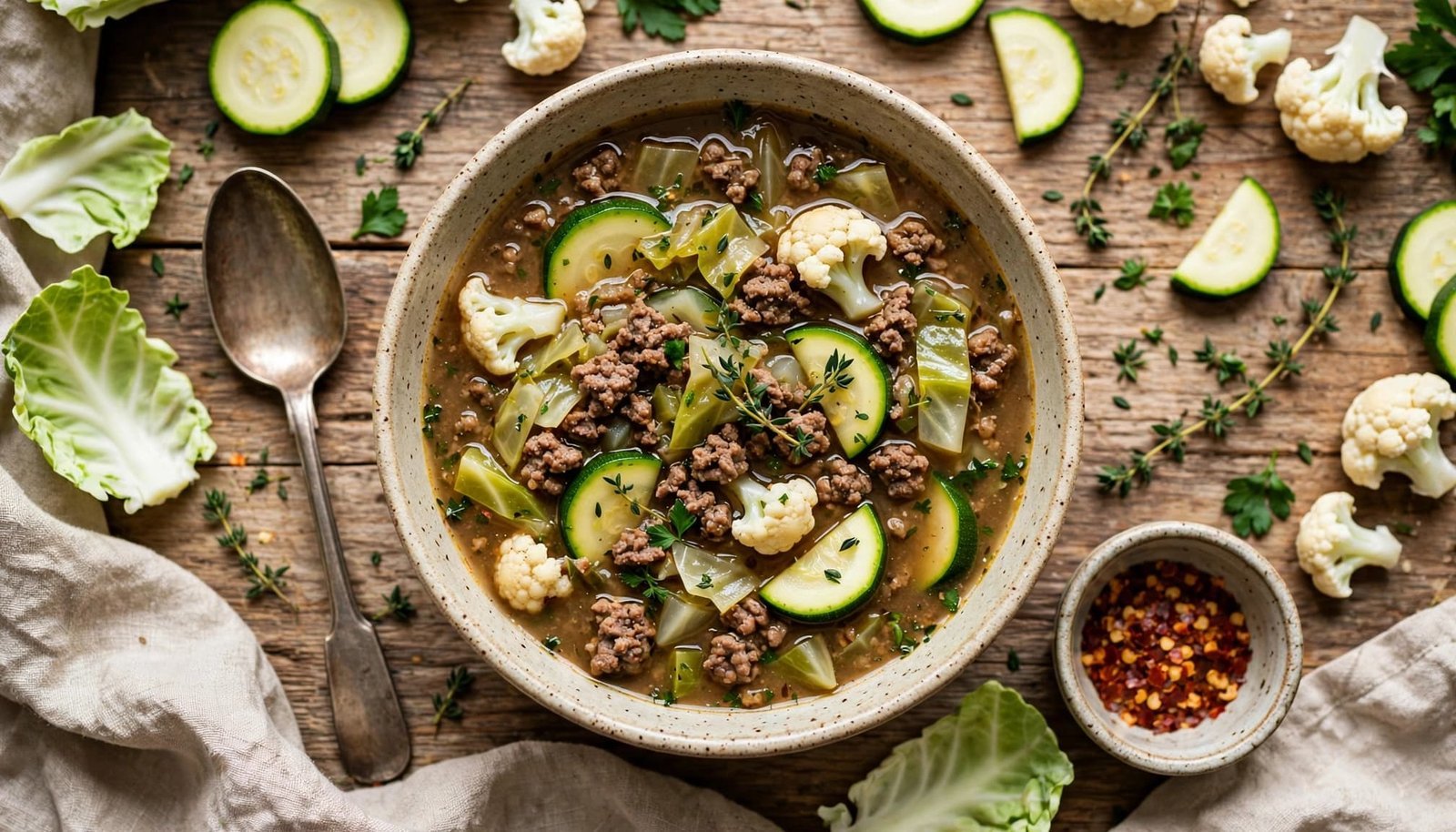
A warm bowl of soup can be filling without potatoes, noodles, rice, or corn. These low-carb soup recipes with ground beef combine savory beef with vegetables such as cauliflower, cabbage, zucchini, green beans, celery, and kale for hearty meals with plenty of texture and flavor.
Ground beef adds protein and a rich, satisfying base, while simple seasonings and everyday ingredients keep each recipe practical for home cooks. You’ll find familiar favorites with taco, cheeseburger, Italian, cabbage, tomato, and creamy flavors, plus options that come together in one pot for easier cleanup.
Whether you need a quick weeknight dinner or a cozy meal to prepare ahead, these soups make it easier to keep carbohydrates lower without sacrificing comfort. Start with the first recipe and find a new favorite for your soup rotation.
11 Delicious Low-Carb Soup Recipes With Ground Beef
These low-carb ground beef soups combine familiar flavors with vegetables, broth, and creamy finishes. Each recipe makes about 4 to 6 servings. Brown the beef fully, season each soup to taste, and use a thermometer to confirm ground beef reaches 160°F, as recommended by the USDA safe temperature chart.
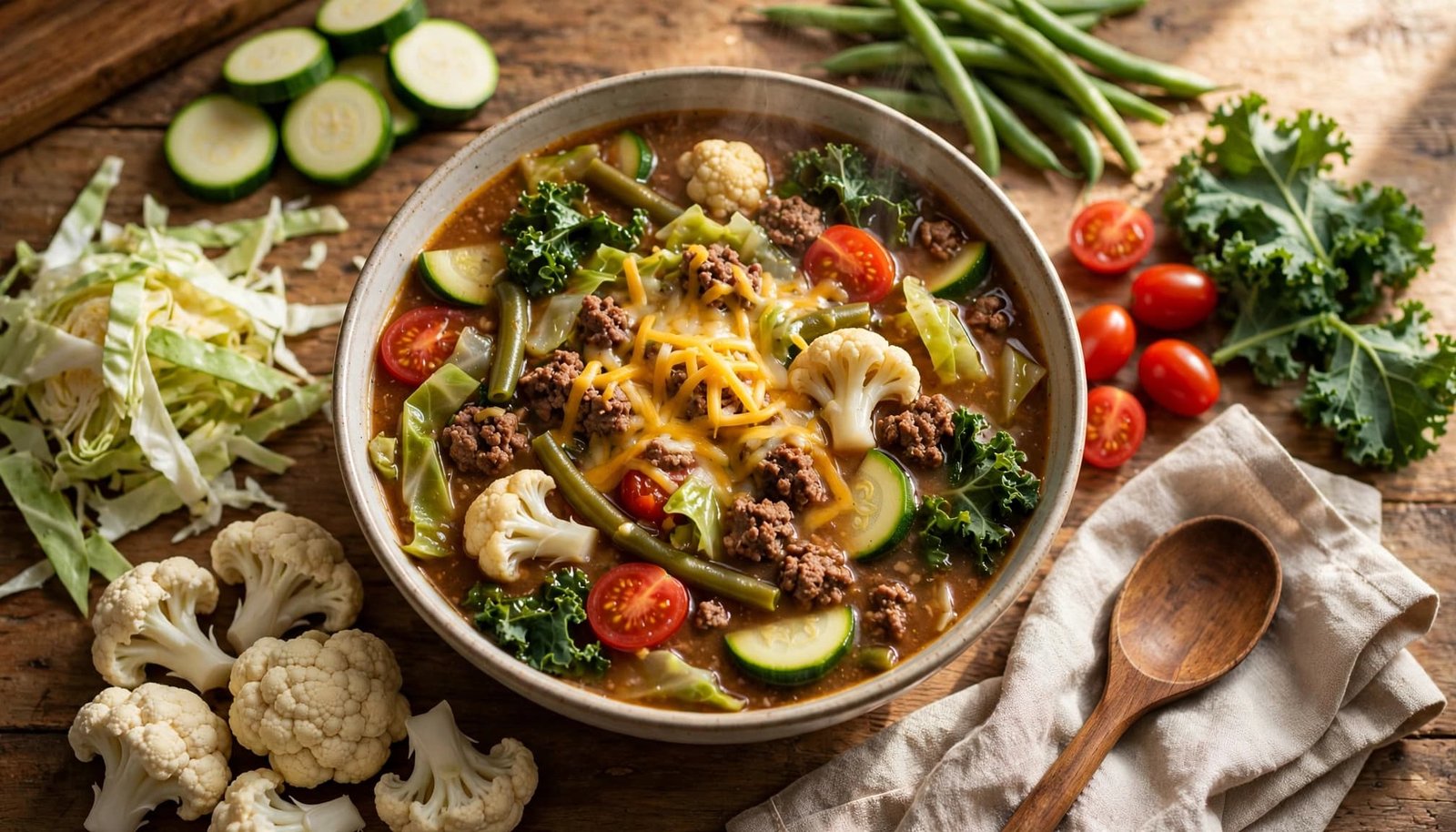
1. Classic Low Carb Hamburger and Vegetable Soup
This hearty soup combines beef, Italian herbs, and tender vegetables.
- Brown and crumble ground beef with onion and garlic; drain excess grease if needed.
- Add celery, green beans, diced tomatoes, beef broth, and Italian seasoning.
- Simmer until the vegetables are tender, then season to taste.
- Top with shredded cheddar or parsley. Replace some green beans with cauliflower for fewer carbohydrates.
Read also: Creamy Fall Crockpot Potato Soup for Cozy Nights
2. Creamy Low Carb Cheeseburger Soup
Cream cheese and cheddar give this family-friendly soup a rich cheeseburger flavor.
- Brown ground beef with onion and celery, then add beef broth and cauliflower.
- Simmer until the cauliflower is tender.
- Stir in full-fat or reduced-fat cream cheese and shredded cheddar over low heat.
- Add pickles, bacon, or green onions. Keep the soup below a boil to prevent curdling.
3. Keto Taco Soup With Ground Beef
Tomatoes, green chilies, and taco seasoning create a bold, savory bowl.
- Brown beef with onion and garlic, then drain excess grease.
- Stir in taco seasoning, diced tomatoes with green chilies, and beef broth.
- Simmer for 15 to 20 minutes and season to taste.
- Stir in cream cheese for a creamy version. Check seasoning labels for added sugar or starch, and skip tortilla strips. Add avocado, sour cream, cheese, cilantro, or jalapeño.
4. Italian Ground Beef, Tomato, and Green Bean Soup
Oregano and thyme brighten this simple tomato-based soup.
- Brown ground beef with onion and garlic.
- Add petite diced tomatoes, beef broth, green beans, oregano, and thyme.
- Simmer until the beans are tender but not mushy.
- Adjust the seasoning before serving. You can adapt it for an Instant Pot by following its model-specific instructions. For more meal ideas, browse these easy ground beef dinner ideas.
5. Tuscan Beef and Vegetable Soup With Kale
Garlic, tomatoes, Parmesan, and red pepper give this soup an Italian-inspired flavor.
- Brown ground beef with garlic and Italian seasoning.
- Add zucchini, tomatoes, broth, and crushed red pepper.
- Simmer briefly, then stir in kale near the end so it stays bright and tender.
- Finish with Parmesan and optional lemon juice. Add more or less pepper to control the heat.
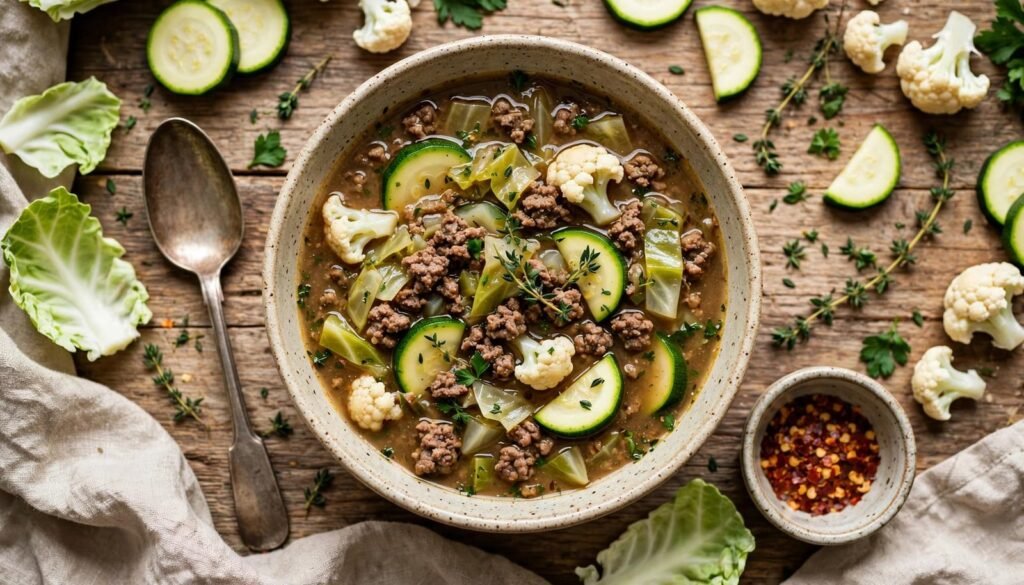
6. Low Carb Cabbage Soup With Ground Beef
Cabbage makes this beef soup filling while keeping the texture tender.
- Brown ground beef with celery and garlic; drain excess fat for a cleaner broth.
- Add bite-size sliced cabbage, diced tomatoes, beef stock, oregano, and thyme.
- Simmer until the cabbage softens.
- Stir in cauliflower rice for extra body, then season to taste.
7. Creamy Beef and Cauliflower Soup
This comforting soup can stay chunky or become thick and smooth.
- Brown ground beef with onion and garlic in one pot.
- Cook cauliflower separately in beef broth until tender.
- Combine the beef and cauliflower, then stir in cream cheese and Parmesan.
- Leave the florets chunky, or blend part of the soup for a thicker base. Don’t boil after adding cheese.
8. Low Carb Beef and Sauerkraut Soup
Sauerkraut adds tangy flavor with very few carbohydrates.
- Brown ground beef with onion and garlic.
- Add sauerkraut, canned tomatoes, stock, Worcestershire sauce, bay leaf, and sage.
- Simmer to blend the flavors, then remove the bay leaf.
- Season to taste and add sour cream. Rinse the sauerkraut lightly first for a milder flavor.
Read also: 17 Easy Healthy High-Protein Fall Soup Recipes
9. Nacho Beef Soup With Cheese and Green Chilies
This fast, creamy soup tastes like nachos in a bowl.
- Brown ground beef, then add beef broth and diced tomatoes with green chilies.
- Stir in cumin, smoked paprika, or hot sauce if desired.
- Add cream cheese or neufchâtel, followed gradually by shredded cheddar.
- Stir until smooth, add jalapeño if desired, and serve soon because the cheese broth thickens as it cools.
10. Low Carb Beef Minestrone With Zucchini and Cauliflower
This tomato-rich minestrone replaces pasta and beans with vegetables.
- Brown beef with onion and garlic.
- Add broth, diced tomatoes, tomato paste, Italian herbs, celery, and cauliflower.
- Simmer until the cauliflower begins to soften, then add green beans and zucchini.
- Cook until tender but intact, using tomato paste sparingly because it contains concentrated carbohydrates. Finish with Parmesan.
11. One-Pot Creamy Beef Tomato Soup
Cream or cream cheese turns this simple tomato soup into a cozy final course.
- Brown ground beef with onion and garlic, then drain excess grease.
- Add crushed or diced tomatoes and beef broth; simmer until flavorful.
- Stir in cream or cream cheese over low heat.
- Finish with black pepper, basil, Parmesan, or chili flakes. Freeze the soup before adding dairy, then stir cream into each reheated portion for a smoother texture.
How to Keep Ground Beef Soup Filling and Low in Carbs
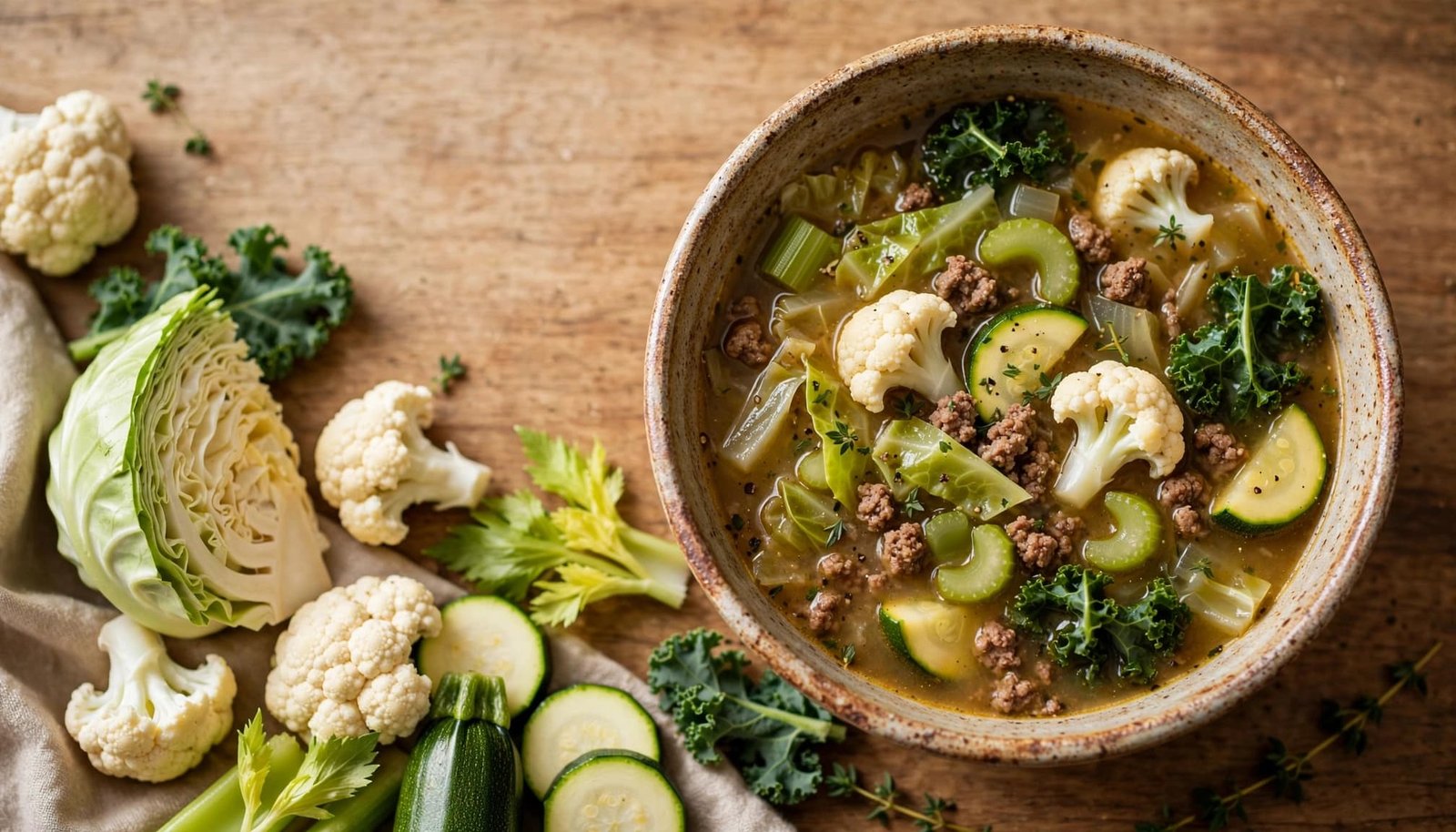
A satisfying low-carb soup needs enough protein, fat, fiber, and texture to keep you full. Ground beef provides the protein base, while non-starchy vegetables add volume without relying on potatoes, noodles, rice, corn, or regular beans.
Choose the Right Ground Beef
The best beef depends on your flavor and fat preferences. 80/20 ground beef has more fat, so it creates a richer broth and softer texture. It works well in cheeseburger, taco, and creamy soups. However, you may need to drain the pot after browning.
For a lighter soup, choose 90/10 or leaner beef. It produces less grease but can taste slightly less rich, especially in broth-based recipes. An 85/15 blend offers a practical middle ground. Compare nutrition details for different blends with USDA FoodData Central.
Brown the beef fully, breaking it into small pieces as it cooks. If a layer of grease collects, carefully drain it before adding the broth and vegetables. You can also spoon off excess fat after the soup simmers. Keep some of the rendered fat when you want a fuller beef flavor.
Build Volume With Low-Carb Vegetables
Vegetables make soup feel substantial without adding pasta or grains. Good choices include:
- Cabbage, which softens into tender, filling ribbons.
- Cauliflower, including florets or cauliflower rice for extra body.
- Zucchini, which cooks quickly and adds moisture.
- Kale, which holds its texture better than delicate greens.
- Green beans and celery for color, fiber, and a firm bite.
- Sauerkraut for tangy flavor and a lighter vegetable option.
Potatoes, noodles, rice, corn, and regular beans can raise the carbohydrate count quickly. Replace them with cauliflower, cabbage, zucchini, or extra celery. Add quick-cooking vegetables near the end so they stay firm instead of disappearing into the broth.
Check Labels and Portions
Canned tomatoes, broth, taco seasoning, Worcestershire sauce, and shredded cheese can contain added sugar or starch. Read the Nutrition Facts panel, compare total carbohydrates, and choose unsweetened products when available. Seasonings labeled as blends may include flour, sugar, or starch.
Divide the finished soup into four to six portions, depending on your appetite and the rest of the meal. Nutrition values vary with the beef blend, broth, cheese, cream, toppings, and serving size, so calculate the recipe using the exact ingredients you choose.
Cooking, Storing, and Serving Tips for Better Low-Carb Soup
Small cooking choices can make low-carb ground beef soup taste richer and hold its texture better. Brown the beef first, add vegetables according to their cooking time, and handle leftovers promptly for safer meal prep.
Brown the Beef Before Adding Broth
Heat the pot first, then add the ground beef and break it into small pieces. Let it cook undisturbed for a minute or two between stirs so the meat develops browned spots. This browning creates deeper savory flavor than simmering raw beef directly in broth.
Add onion, celery, and garlic after the beef has browned. Drain some fat if the surface looks greasy, especially when using 80/20 beef in a tomato or broth-based soup. Keep a little behind for flavor, or drain nearly all of it when you plan to add cream, cheese, or another rich topping.
Add Vegetables in Stages
Vegetables soften at different speeds, so adding everything at once can leave some pieces mushy while others remain firm. Start with cabbage, celery, cauliflower, or green beans. After the broth reaches a simmer, cook the soup for about 20 to 30 minutes on the stovetop.
Add zucchini, kale, spinach, or cauliflower rice later. These ingredients need less time and taste better when they retain some texture. Longer simmering can deepen the broth’s flavor, but check the pot often so delicate vegetables don’t fall apart.
Add quick-cooking vegetables near the end. You will get a fresher flavor and a better bite in every bowl.
Cool and Store Soup Safely
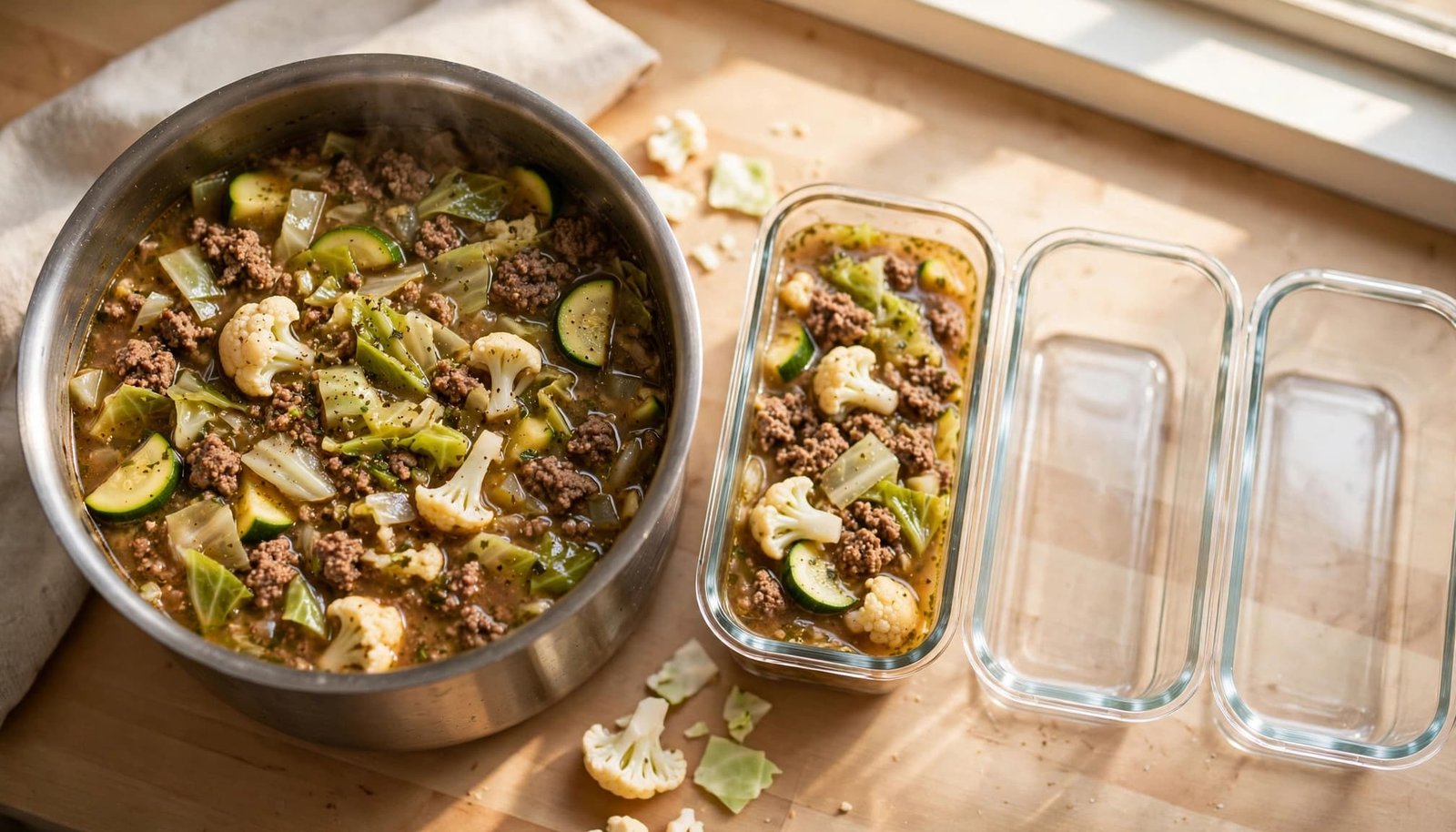
Divide hot soup into shallow, airtight containers instead of leaving a large batch in the stockpot. Refrigerate it within two hours, or within one hour when the room temperature exceeds 90°F. Keep the refrigerator at 40°F or below, and eat refrigerated soup within 3 to 4 days. The USDA food safety guidance also recommends reheating leftovers to 165°F.
Freeze broth-based soups in individual portions for easier meals later. Leave a little space at the top because liquid expands as it freezes. Cream and cheese soups can separate or become grainy after freezing, so freeze the base without dairy when possible. Stir in cream cheese, shredded cheese, or cream after reheating gently.
Finish Each Bowl With Fresh Toppings
Toppings add contrast without requiring high-carb ingredients. Try avocado, sour cream, shredded cheddar, Parmesan, chopped herbs, hot sauce, or sliced green onions. Add them just before serving so creamy, crisp, and fresh elements remain distinct.
Frequently Asked Questions
These answers cover common ingredient swaps, texture problems, and serving decisions that can come up when making low-carb ground beef soup.
Can I use frozen vegetables in ground beef soup?
Yes, frozen cauliflower, green beans, spinach, and zucchini work well in these recipes. Add firmer vegetables earlier, then stir in spinach or other delicate vegetables during the final few minutes. Frozen vegetables may release extra water, so simmer the soup uncovered if the broth tastes too thin.
How can I thicken low-carb soup without flour?
Blend part of the cooked cauliflower directly into the broth, or add cream cheese over low heat. Shredded cheddar and Parmesan also add body, but stir them in gradually to prevent clumps. For a broth-based soup, simply simmering it uncovered for a few minutes can concentrate the liquid without adding carbohydrates.
What should I do if my soup tastes too salty?
First, dilute the soup with unsalted beef broth or water. You can also add more cooked vegetables, ground beef, or cream to spread out the salt across additional servings. Avoid adding potatoes just to fix seasoning, since cauliflower or zucchini keeps the soup lower in carbohydrates.
Can I make these soups dairy-free?
Most of them can be adapted with a few simple changes. Leave out cream cheese, cheddar, Parmesan, and sour cream, then add extra broth, blended cauliflower, or unsweetened coconut cream for richness. Check packaged broth and dairy-free products carefully, since some contain added sugar or starch.
Why did my cheese soup become grainy?
High heat often causes cheese and cream to separate, especially after the soup reaches a boil. Lower the heat before adding dairy, shred cheese from a block when possible, and stir it in a small handful at a time. If the soup has already separated, blending a portion with an immersion blender may improve the texture, although it may not become completely smooth.
Can I add cooked ground beef instead of raw beef?
Yes, leftover cooked ground beef works well in any of these soups. Add it after the broth and vegetables begin simmering, then cook until the meat is hot throughout. When starting with raw ground beef, cook it to 160°F, the temperature listed in the USDA ground beef safety guidance.
Conclusion
These low-carb soup recipes with ground beef prove that a comforting meal can be hearty, simple, and lower in carbohydrates without sacrificing flavor. Choose a tomato-based soup for a classic bowl, taco soup for bold spice, a creamy recipe for extra richness, cabbage soup for a lighter vegetable-forward meal, or an Italian-style soup with herbs and Parmesan.
You can adjust the vegetables, spice level, toppings, and dairy to match your preferences and dietary needs. Cauliflower, zucchini, cabbage, kale, and green beans add texture while keeping the recipes satisfying. Ground beef also makes these soups practical for busy nights and make-ahead meals.
Try one recipe for an easy weeknight dinner, or prepare a batch to portion and enjoy throughout the week.
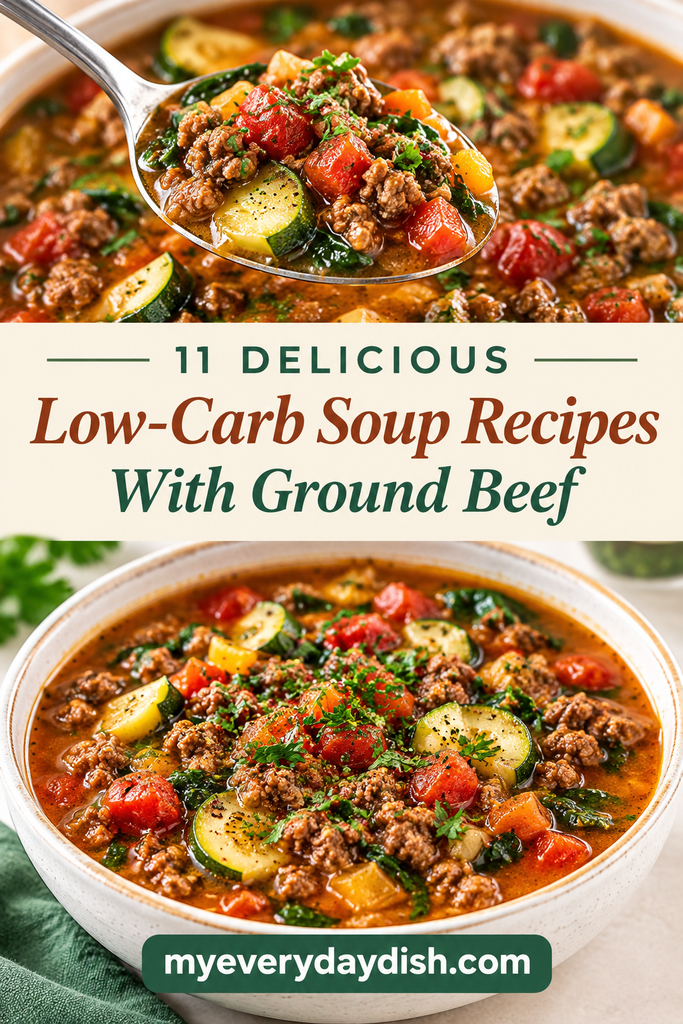
Save the pin for later

I’m the creator of My Everyday Dish, a food blog focused on easy homemade recipes, comforting family meals, simple baking, and seasonal food ideas. I love finding practical ways to make everyday cooking less stressful and more enjoyable. Here, I share recipes with simple ingredients, clear instructions, and plenty of flavor, helping you make delicious meals and treats you’ll feel confident serving at home.
Leave a Reply