
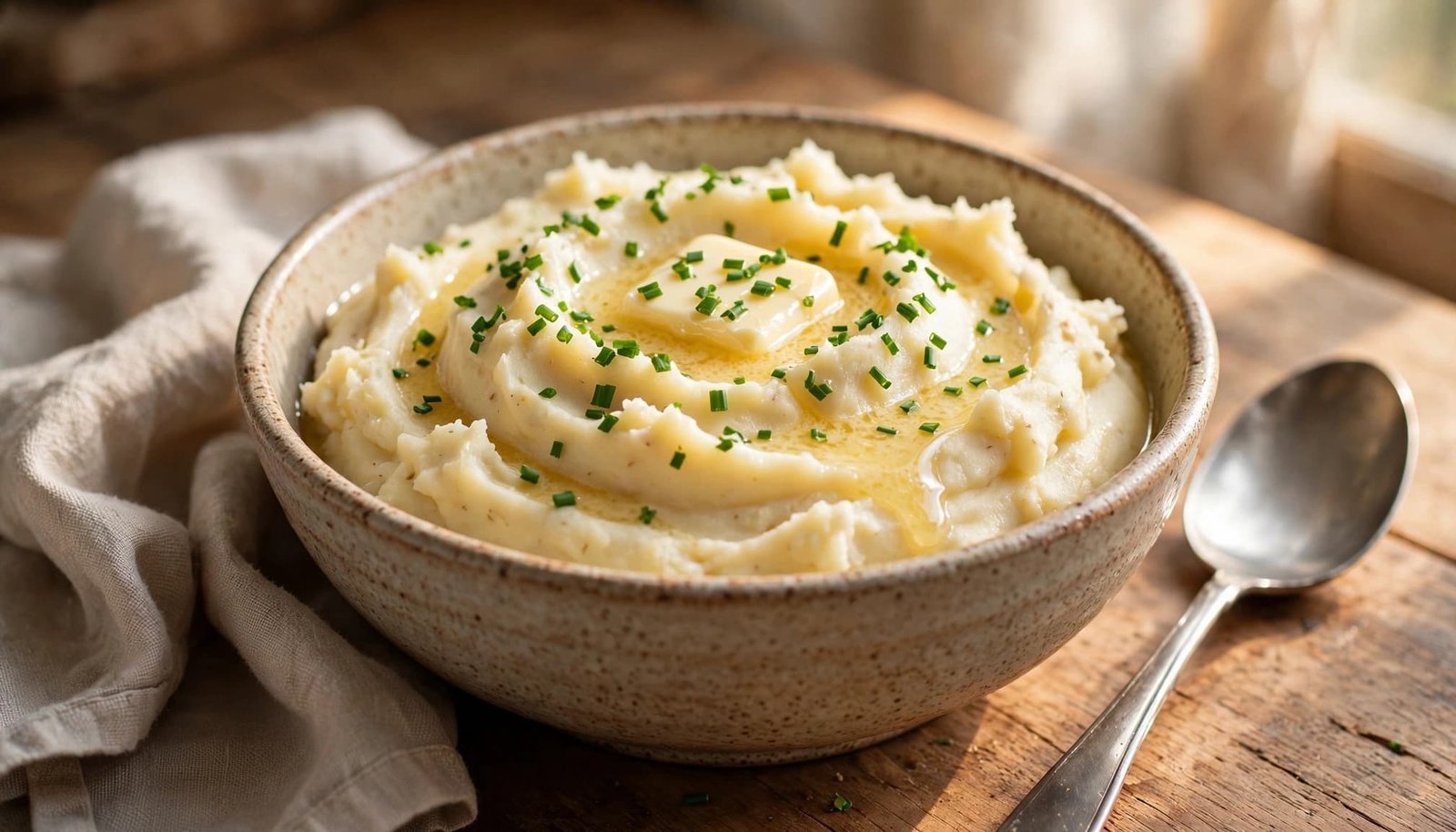
A bowl of rich mashed potatoes can make an ordinary dinner feel complete. This creamy mashed potatoes recipe with heavy cream keeps the process simple while giving you a smooth, buttery side dish with plenty of flavor.
The details matter more than extra ingredients. Choose the right potatoes, warm the dairy, drain well, and mash gently. You’ll get dependable results for holiday dinners, roasted meats, or a quick weeknight plate.
What You Need for Creamy Mashed Potatoes With Heavy Cream
This recipe makes about 6 servings. Heavy cream gives the potatoes a fuller texture and rich flavor, but you can control the final consistency by adding it a little at a time.
- 2 pounds Yukon Gold potatoes, russet potatoes, or a combination
- 1/2 to 1 cup heavy cream
- 5 tablespoons unsalted butter, cut into pieces
- Kosher salt, for the cooking water and final seasoning
- Freshly ground black pepper or white pepper, to taste
Yukon Gold potatoes make a naturally buttery, dense, creamy mash. Russets are starchier, so they create a lighter, fluffier result and absorb more dairy. A half-and-half blend offers a nice middle ground, with the richness of Yukon Golds and the soft lift of russets.
The University of Arkansas Cooperative Extension guide to potato types describes russets as high-starch and fluffy, while Yukon Golds have a creamier, more moist texture. Either works well here, so choose based on the kind of mash you enjoy.
Roasted garlic, snipped chives, cream cheese, or a small pinch of nutmeg can add another layer of flavor. Still, the basic combination of potatoes, butter, cream, salt, and pepper needs no help.
Creamy Mashed Potatoes Recipe With Heavy Cream, Step by Step
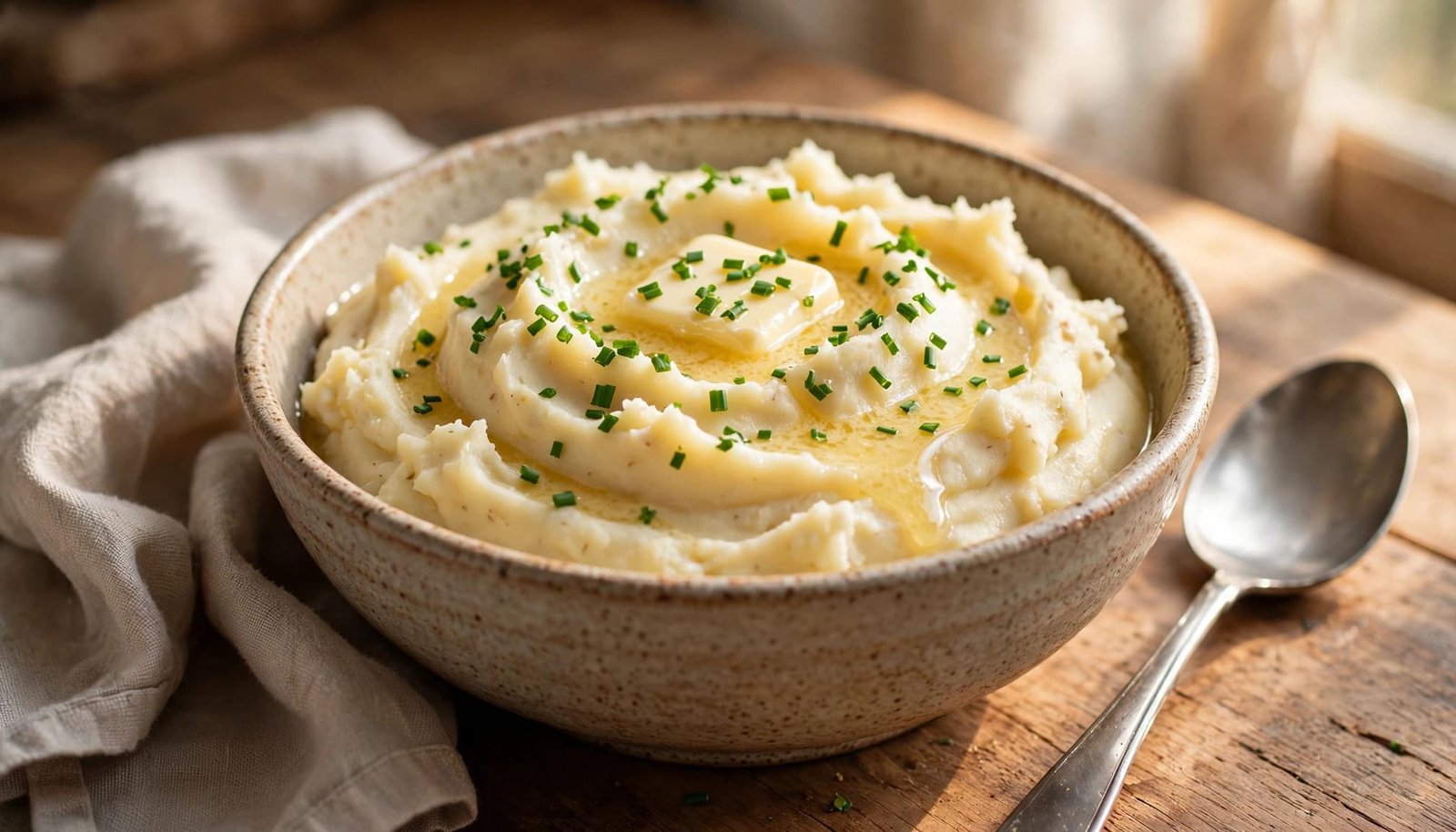
Start with potatoes that are similar in size. Even pieces cook at the same rate, which makes mashing easier and prevents firm chunks in the finished bowl.
Read also: Easy Mashed Russet Potatoes Recipe for Thanksgiving
Prep and cook the potatoes
- Peel the potatoes, if you prefer a completely smooth mash. Yukon Gold skins are thin, so you can leave some on for a more rustic side dish. Cut the potatoes into 1 1/2-inch chunks.
- Put the potato pieces in a large pot and cover them with cold water by about 1 inch. Starting in cold water helps the centers cook at the same pace as the outsides.
- Salt the water generously. The potatoes absorb seasoning while they cook, so this step builds flavor that surface seasoning alone can’t match.
- Bring the pot to a boil over medium-high heat. Once it boils, lower the heat enough to keep a steady simmer. A violent boil can break apart the edges before the centers become tender.
- Cook for about 15 to 20 minutes. Timing varies with the size and potato type. Test a piece with a paring knife or fork. It should slide through with almost no resistance, but the potato shouldn’t be falling apart in the water.
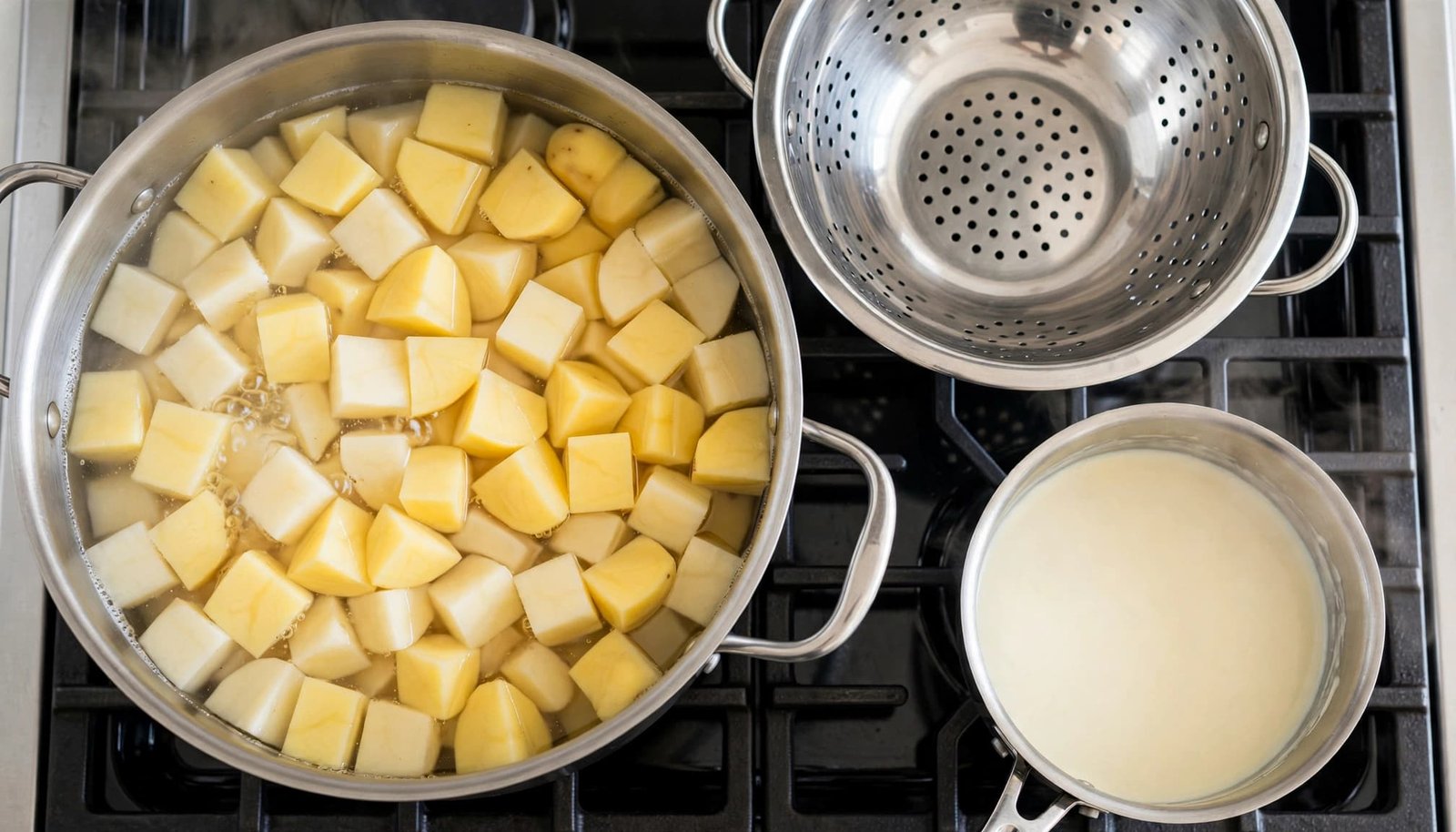
- Drain the potatoes thoroughly in a colander. Then return them to the warm, empty pot over low heat for 30 to 60 seconds. Shake the pot gently once or twice. This brief drying step lets excess moisture evaporate, so the cream enriches the potatoes instead of making them loose.
Warm the dairy and mash gently
- While the potatoes cook, combine 1/2 cup heavy cream and the butter in a small saucepan. Warm them over low heat until the butter melts and the cream is hot, but don’t let it boil. Keep the remaining cream nearby in case you want a softer mash.
- Take the potatoes off the heat. Mash them with a potato masher until most lumps disappear. For an extra-smooth texture, press the potatoes through a ricer before adding the dairy.
- Pour in the warm butter and cream mixture gradually. Fold and mash between additions, stopping when the potatoes look creamy and hold soft peaks. Add more warm cream, a tablespoon or two at a time, if they seem too thick.
- Season with kosher salt and black or white pepper. Taste before adding more salt, especially if you used a generous amount in the cooking water.
- Spoon the potatoes into a warm serving bowl. Add a final pat of butter or chives if you like, then serve while hot.
A hand masher keeps the texture tender and homey. Avoid using a blender, food processor, or electric mixer. Their fast blades and repeated agitation can turn cooked potato starch gummy.
Add cream until the potatoes are as soft as you want them, then stop. The mash will loosen slightly while it rests in the warm pot.
How to Keep Heavy Cream Mashed Potatoes Smooth and Flavorful
Smooth mashed potatoes come from controlling moisture and handling the cooked potatoes lightly. Once potatoes are tender, their starch can turn gluey if you beat them too hard.
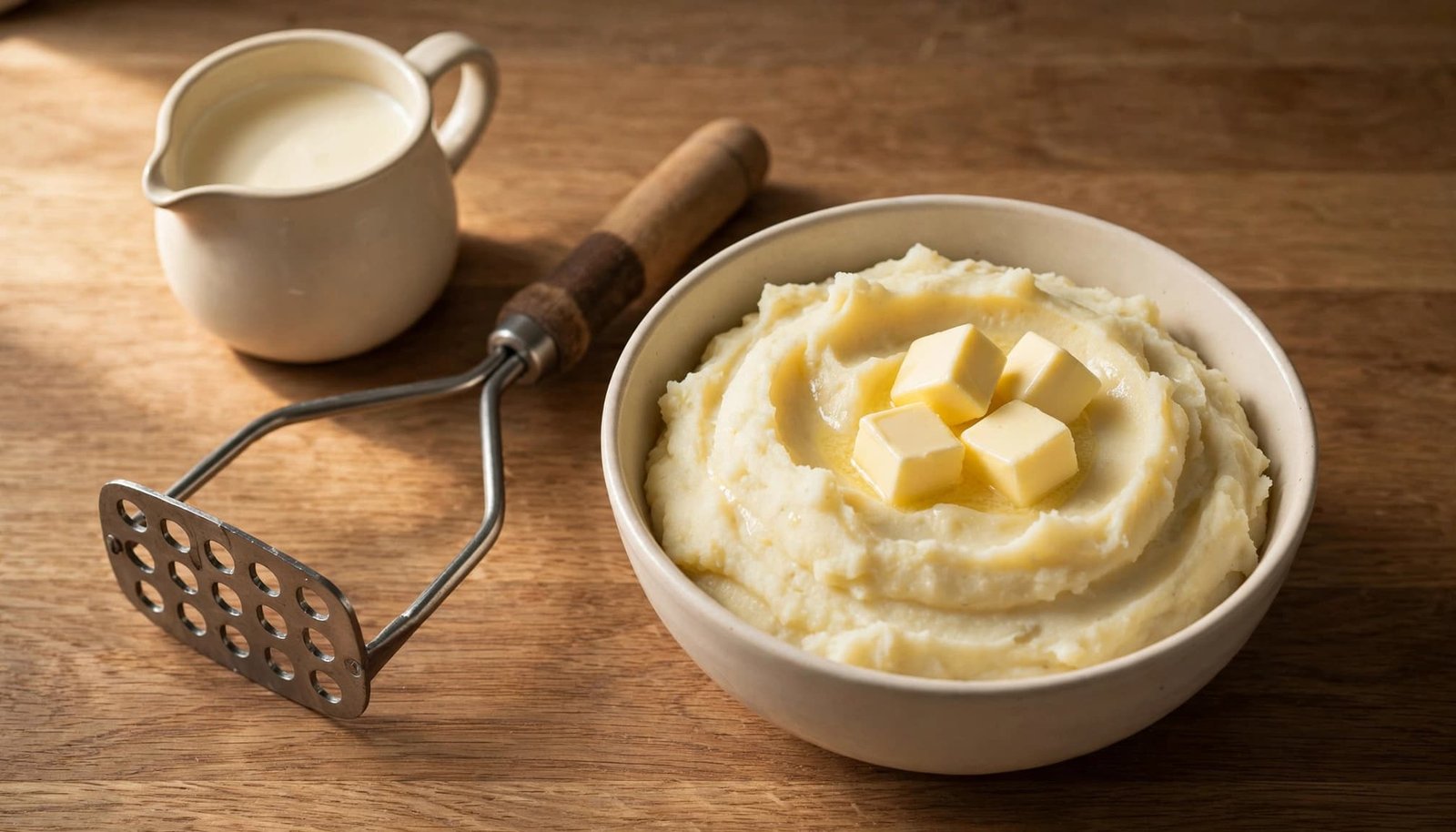
Use warm cream and measured additions
Cold cream cools the potatoes quickly and doesn’t blend in as easily. Warm heavy cream and melted butter absorb smoothly, helping the mash stay hot and plush.
Don’t boil the cream. High heat can form a skin and reduce the cream, which makes it harder to judge how much liquid the potatoes need. Warm it only until steaming and the butter has melted.
Add the dairy in stages. A potato mixture that seems stiff can become soupy after one large pour of cream. Gradual additions give you control, especially when using Yukon Golds, which usually need less liquid than russets.
Prevent common texture problems
Uneven potato pieces cook unevenly. Some will be firm while others collapse, and you’ll be tempted to overmix to fix the lumps. Cut them into similar chunks before they go into the pot.
Drain thoroughly, then let the potatoes dry briefly in the hot pot. Water clinging to the pieces dilutes the butter and heavy cream. If your potatoes still turn watery, stir them over low heat for another minute or two before adding more dairy.
Yukon Golds produce a smooth, rich, slightly denser mash. Russets make a drier, airier mash with a fluffier spoonful. A mix of both gives you creamy body without a heavy texture.
Read also: How to Cook Japanese Sweet Potatoes in an Instant Pot
Make-Ahead and Reheating Tips
You can make this creamy mashed potatoes recipe with heavy cream up to 3 days before serving. Cool the potatoes, transfer them to a covered baking dish, and refrigerate them promptly.
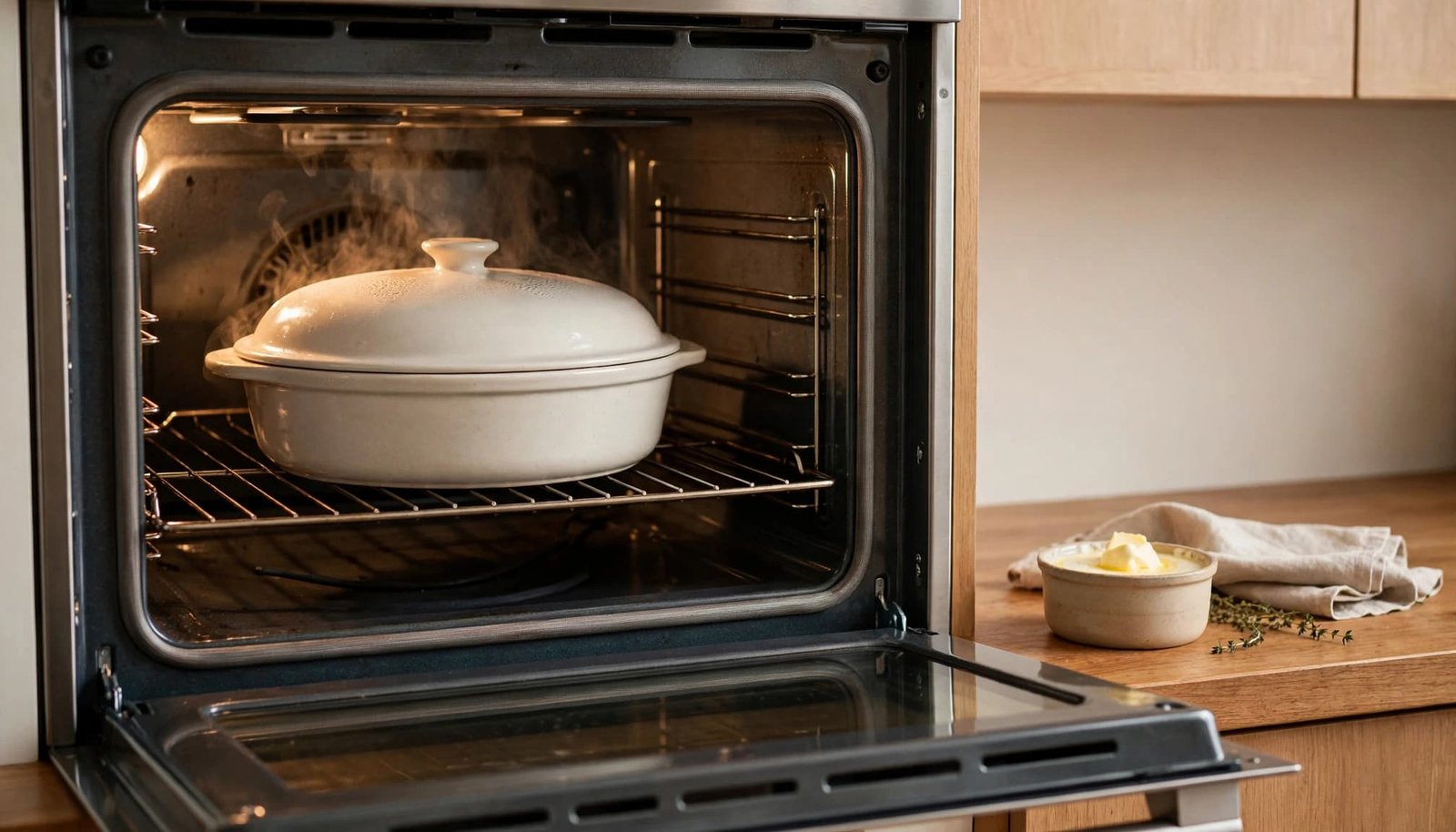
For oven reheating, dot the top with extra butter and add a small splash of cream. Cover the dish and warm at 350°F for 25 to 30 minutes, stirring once halfway through if practical. If the potatoes seem thick, fold in another splash of warm cream before serving.
For the stovetop, place the potatoes in a heavy pot over low heat. Cover loosely and stir often with a silicone spatula, adding cream a little at a time. Low heat protects the texture and prevents the bottom from scorching.
The USDA advises refrigerating cooked leftovers within 2 hours, or within 1 hour when the temperature is above 90°F. Reheat leftovers to 165°F before serving, as outlined in its safe handling guidance for cooked foods.
Key Takeaways for Serving
Heavy cream gives mashed potatoes a rich finish, but the potato variety and your mixing method decide whether they feel dense or airy. Yukon Golds suit a silky, buttery side, while russets bring more fluff.
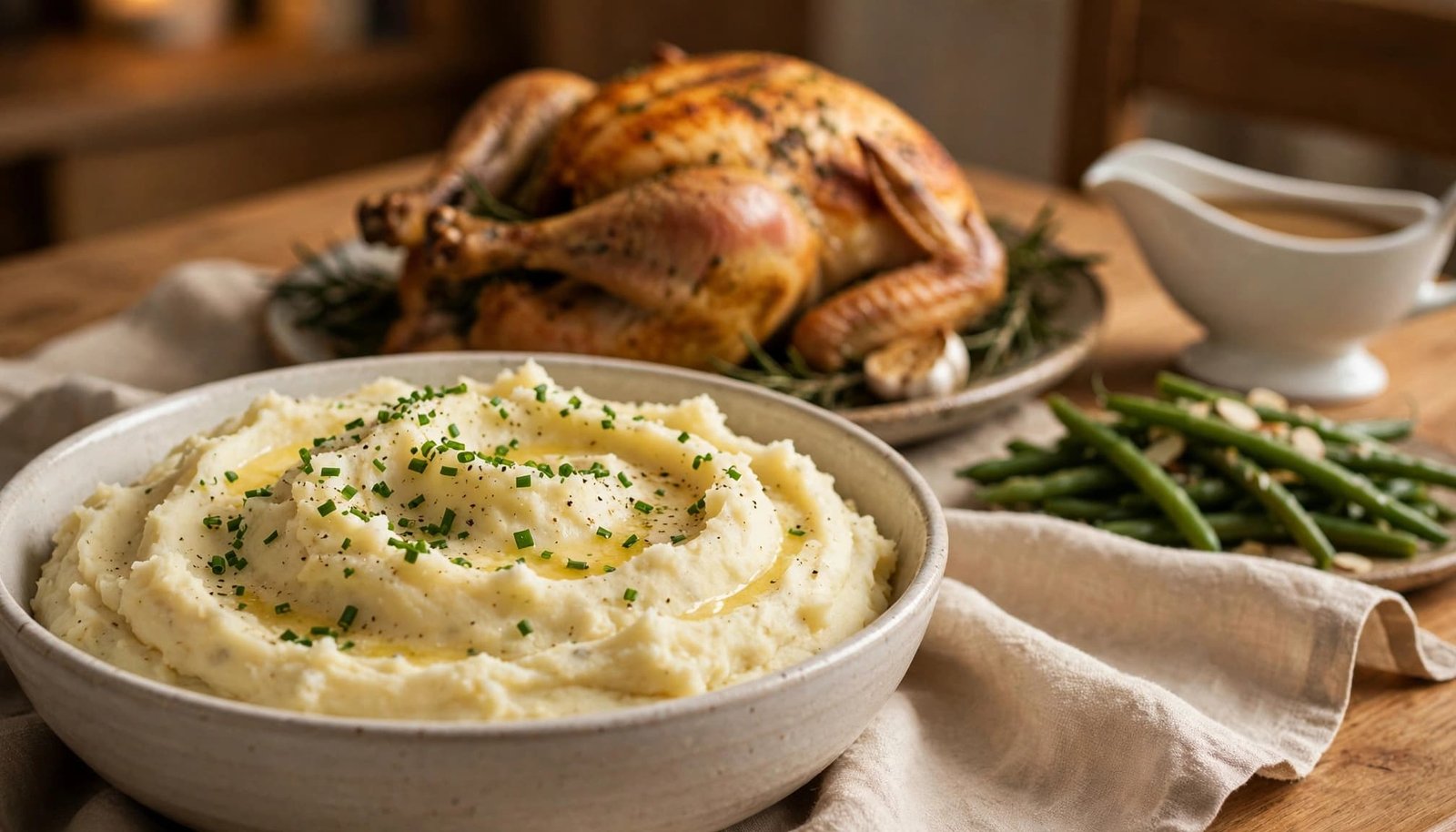
For a casual dinner, serve them with roast chicken, meatloaf, pork chops, or pan gravy. Their mild flavor also works well beside green beans, roasted carrots, or a crisp salad.
Keep a little warm cream at the table if the potatoes sit for more than a few minutes. A quick fold before serving brings back their soft, spoonable texture.
Frequently Asked Questions
Can I use only Yukon Gold potatoes?
Yes. Yukon Gold potatoes make especially rich, creamy mashed potatoes because their flesh has more moisture and a naturally buttery flavor. Start with 1/2 cup of heavy cream, then add more only if the mash needs it.
Can I make these mashed potatoes without a potato masher?
A sturdy fork works for a rustic texture, though it takes more effort. A potato ricer makes very smooth potatoes with minimal mixing. Avoid food processors and blenders because they can make the potatoes sticky.
How can I fix mashed potatoes that are too thick?
Warm a few tablespoons of heavy cream with a little butter, then fold it in gradually. Keep the heat low if the potatoes have cooled. Continue only until they reach your preferred texture, since too much cream can make them loose.
Can I freeze mashed potatoes made with heavy cream?
Yes, although the texture may be less fluffy after thawing. Cool them completely, pack them in an airtight freezer-safe container, and thaw them in the refrigerator before reheating slowly with a little extra cream and butter.
Why did my mashed potatoes turn gummy?
Overmixing is the usual cause. Potatoes release starch as you mash them, and vigorous mixing makes that starch sticky. Mash only until the lumps are gone, then fold in the warm dairy gently.
A Rich Side Dish Without the Fuss
Great mashed potatoes rely on simple habits: starchy potatoes, well-salted cooking water, thorough draining, warm heavy cream, and gentle mixing. Those steps create a soft, rich mash without complicated techniques or unnecessary additions.
Adjust the cream, butter, salt, and pepper until the texture tastes right to you. Then bring this comforting side dish to holiday meals, serve it with roasted meats, or make it part of an easy weeknight dinner.
Save the pin for later


I’m the creator of My Everyday Dish, a food blog focused on easy homemade recipes, comforting family meals, simple baking, and seasonal food ideas. I love finding practical ways to make everyday cooking less stressful and more enjoyable. Here, I share recipes with simple ingredients, clear instructions, and plenty of flavor, helping you make delicious meals and treats you’ll feel confident serving at home.
Leave a Reply