
Sweet potatoes, known as shakarkandi or ranga aloo, bring natural sweetness and a soft, creamy texture to Indian desserts. They pair beautifully with ghee, milk, jaggery, coconut, cardamom, and roasted nuts, so you can create rich sweets without relying on complicated ingredients.
This collection features classic preparations such as halwa, kheer, and payasam, along with traditional-style barfi, laddoo, modak, and gulab jamun adaptations. Each recipe includes a clear method, serving ideas, and practical texture tips to help you get consistent results in your home kitchen. Start with these comforting sweet potato desserts and find your new favorite.
14 Traditional Indian Sweet Potato Dessert Recipes for Every Occasion
Before making any of these desserts, cook the sweet potatoes until completely tender. You can boil, steam, pressure-cook, or roast them, then cool, peel, and mash or grate the flesh. Drain excess water well before combining it with ghee, milk, jaggery, or sugar. Moisture control matters because watery sweet potatoes produce loose halwa and soft shaped sweets.
The finished mixture should look glossy, become thick, and pull away from the sides of the pan. Some shaped sweets later in this collection are traditional-style adaptations that use familiar Indian dessert techniques with sweet potato.
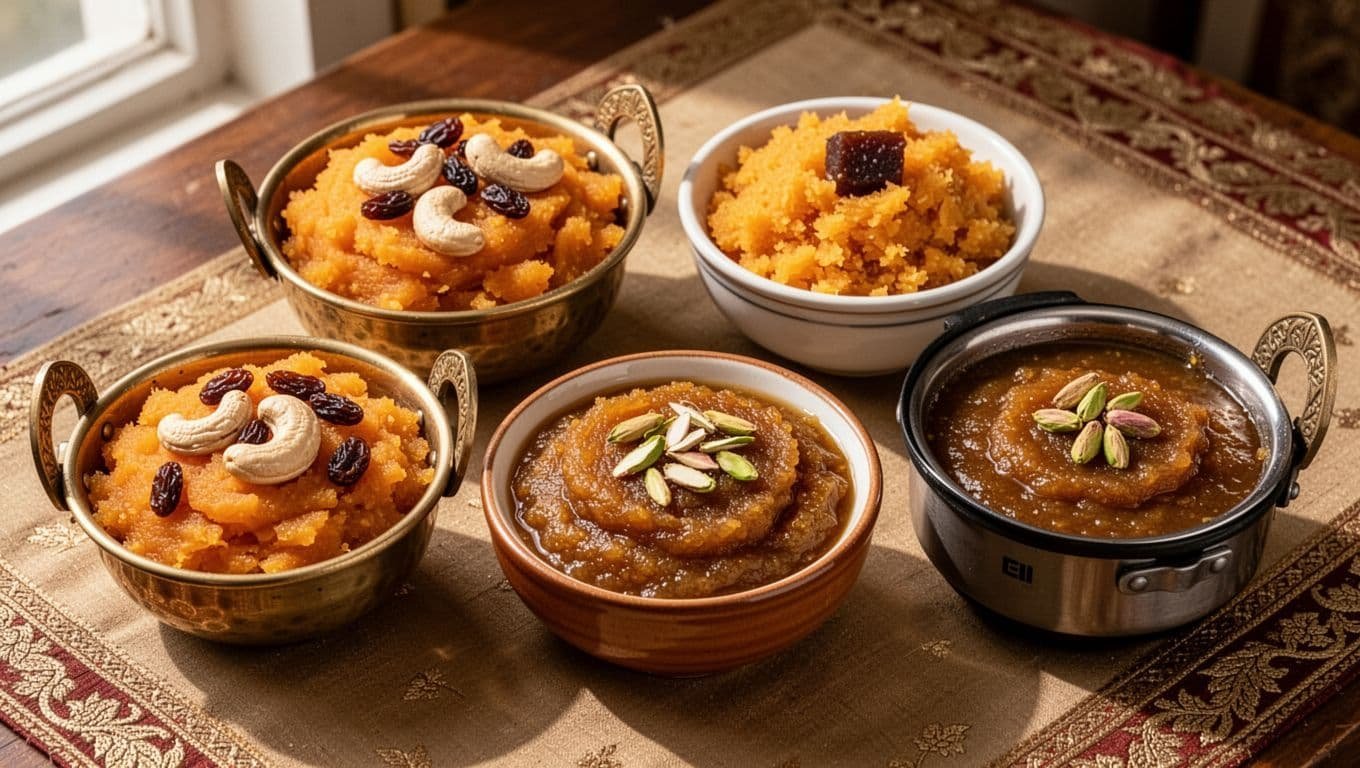
1. Shakarkandi Halwa with Ghee and Cardamom
This classic North Indian sweet potato halwa is rich, fragrant, and easy to prepare.
Ingredients
- 2 large sweet potatoes
- 2 tablespoons ghee
- 1/2 cup milk
- 1/3 cup sugar
- 1/2 teaspoon ground cardamom
- 2 tablespoons chopped cashews
- 1 tablespoon raisins
Method
- Pressure-cook the sweet potatoes until fork-tender, or boil them until completely soft. Drain, cool, peel, and mash until smooth.
- Heat the ghee in a heavy pan. Fry the cashews and raisins until the cashews turn lightly golden and the raisins swell. Transfer them to a plate.
- Add the mashed sweet potato to the remaining ghee. Saute for 3 to 4 minutes, stirring often.
- Pour in the milk and cook until the mixture softens. Stir in the sugar and cardamom.
- Continue cooking until the halwa becomes thick and glossy and begins pulling away from the pan. Fold in the fried nuts and raisins.
Serve it warm in small bowls. To prevent watery halwa, drain the cooked potatoes thoroughly and keep stirring until the milk and excess moisture evaporate.
Read also: Easy Homemade Mashed Potatoes Without Milk
2. Sakkaraivalli Kizhangu Halwa from South India
Tamil-style sakkaraivalli kizhangu halwa has a softer, smoother texture when you grate the cooked sweet potatoes instead of simply mashing them.
Ingredients
- 2 medium sweet potatoes
- 2 tablespoons ghee
- 1/2 cup milk
- 1/3 cup sugar
- 1/2 teaspoon cardamom
- 2 tablespoons fried cashews
Cook the sweet potatoes until soft. Cool them enough to handle, then peel and grate or mash the flesh. Heat the ghee in a wide pan and cook the grated sweet potato for several minutes, stirring so it absorbs the ghee.
Add the milk and sugar, then reduce the heat. Cook slowly, stirring often, until the mixture loses excess moisture and develops a smooth, thick consistency. Finish with cardamom and fried cashews. Slow cooking helps remove water without scorching the halwa.
Serve this South Indian sweet potato dessert warm during festivals or after a family meal. A wide pan makes evaporation easier and shortens the cooking time.
3. Jaggery Shakarkandi Halwa with Pistachios
Jaggery gives this version a deeper, more caramel-like flavor than white sugar.
Boil the sweet potatoes until tender, then drain, peel, and grate or mash them. Melt 1/2 cup grated jaggery with 2 tablespoons water. Strain the syrup if it contains impurities, then set it aside.
Heat 2 tablespoons ghee in a pan and cook the sweet potato for several minutes. Once the mash softens and absorbs the ghee, add the jaggery syrup. Stir in 1/2 teaspoon cardamom, a pinch of salt, and optional saffron soaked in warm milk.
Cook until the halwa turns glossy, thick, and leaves the sides of the pan. Garnish with chopped pistachios and serve warm. Adding jaggery after the sweet potato softens keeps the mixture smooth.
4. Instant Pot Sweet Potato Halwa
For a faster method, cook whole sweet potatoes in an Instant Pot with water for about 10 minutes at high pressure, adjusting the timing for their size. Let the pressure release safely according to your appliance instructions, then drain the cooking liquid.
Peel and mash the sweet potatoes. Select the saute setting, add 2 tablespoons ghee, and cook the mash for 3 to 4 minutes. Stir in 1/3 cup sugar or brown sugar, 1/2 teaspoon cardamom, raisins, and chopped nuts.
Use short saute intervals with frequent stirring to prevent sticking. Even though the sweet potatoes cook quickly, continue reducing the halwa until it becomes thick, glossy, and pulls away from the pan. Serve warm.
Creamy Indian Sweet Potato Kheer and Halwa Variations
Halwa is thick and spoonable, while kheer and payasam contain more milk or liquid and have a softer texture. The recipes below move from rich, firm halwa to creamy desserts that work warm or chilled.
When using jaggery with dairy, let the milk mixture cool slightly before adding it. Very hot milk can split when combined with jaggery, especially if the milk has simmered for a long time.
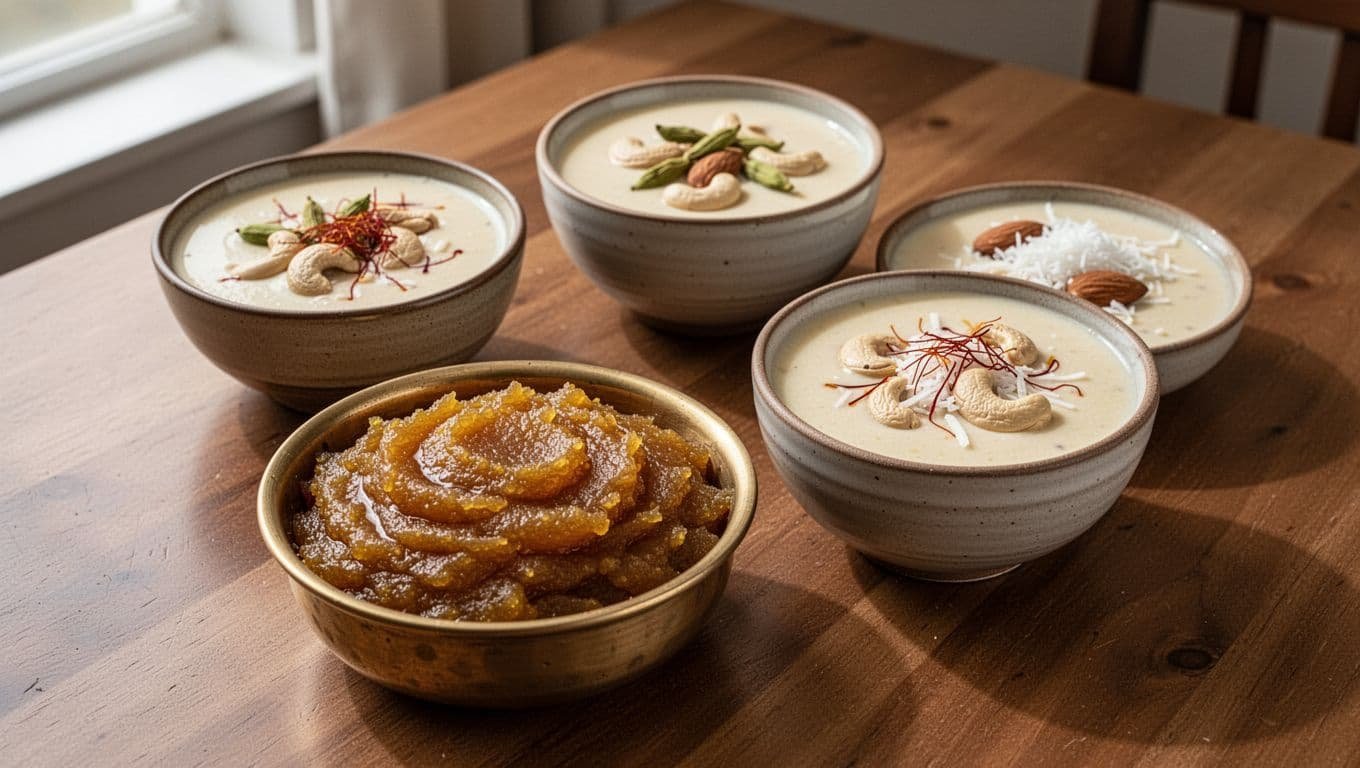
5. Sweet Potato Halwa with Khoya or Mawa
Khoya, also called mawa, gives sweet potato halwa extra milk richness and a firmer, more fudge-like texture.
Ingredients
- 2 cooked and mashed sweet potatoes
- 2 tablespoons ghee
- 1 cup crumbled khoya or mawa
- 1/3 cup sugar
- 1/2 teaspoon cardamom
- A pinch of saffron soaked in 1 tablespoon warm milk
- 2 tablespoons chopped almonds
Method
- Cook the sweet potatoes until completely tender. Cool, peel, and mash them until smooth.
- Heat a wide pan over low heat. Add the crumbled khoya and lightly roast it until fragrant and just beginning to turn golden. Transfer it to a bowl.
- Add the ghee to the same pan. Fry the chopped almonds until lightly golden, then remove them.
- Add the mashed sweet potato to the remaining ghee. Saute for several minutes so the mash absorbs the fat and loses excess moisture.
- Stir in the sugar, cardamom, and saffron milk. Cook until the sugar dissolves and the mixture becomes glossy.
- Fold in the roasted khoya and cook, stirring often, until the halwa becomes dense and leaves the sides of the pan. Add the almonds before serving.
Store leftovers in a covered container in the refrigerator and use them within a few days. Because khoya makes this version rich, serve small portions while warm.
Read also: Easy Mashed Russet Potatoes Recipe for Thanksgiving
6. Almond Milk and Coconut Sweet Potato Halwa
This dairy-free sweet potato halwa uses coconut for body and flavor instead of milk solids. Use coconut oil for a fully dairy-free dessert, or choose ghee if dairy isn’t a concern.
Ingredients
- 2 cooked and mashed sweet potatoes
- 1 cup unsweetened almond milk
- 1/3 cup shredded coconut
- 2 tablespoons coconut oil or ghee
- 1/3 cup brown sugar or grated jaggery
- 1/2 teaspoon cardamom
- A pinch of saffron
Method
- Pour the almond milk into a small saucepan and simmer it gently until it reduces slightly. Keep it warm.
- Heat the coconut oil or ghee in a heavy pan. Add the mashed sweet potato and cook for 3 to 4 minutes.
- Stir in the shredded coconut, sweetener, cardamom, and saffron.
- Pour in the warm almond milk and stir continuously over medium-low heat.
- Cook until the mixture thickens, looks glossy, and pulls away from the pan.
Check the almond milk package before adding sweetener. Some brands contain added sugar, so you may need less brown sugar or jaggery than expected.
7. Ratnapuri Gadda Payasam, a Sweet Potato Kheer
Ratnapuri gadda is a Telugu-style name used for sweet potato, also known as chilakada dumpa in Telugu cooking. Household versions vary, so the dessert may use grated or mashed sweet potato and either sugar or jaggery.
Ingredients
- 2 cooked sweet potatoes, grated or mashed
- 3 cups milk
- 1/3 cup sugar or jaggery
- 1/2 teaspoon cardamom
- 1 tablespoon ghee
- 2 tablespoons cashews and raisins
Method
- Add the grated or mashed sweet potato and milk to a saucepan. Simmer gently until the milk reduces and the sweet potato softens further.
- Stir in the sugar while the mixture is hot. If using jaggery, turn off the heat and let the kheer cool slightly before adding it.
- Season with cardamom and check the consistency. It should be thinner than halwa but thick enough to coat a spoon.
- Heat the ghee in a small pan. Fry the cashews and raisins until golden and plump, then stir them into the payasam.
- Add warm milk, a few tablespoons at a time, if the kheer becomes too thick. Serve it warm or chilled. For comparison, traditional pal payasam methods also rely on slow milk reduction for a creamy finish.
8. Sweet Potato Payasam with Moong Dal and Jaggery
Split moong dal adds gentle nuttiness and body to this festive payasam. It fits Pongal-style celebrations and other family festivals.
Ingredients
- 1/2 cup split moong dal
- 2 cooked sweet potatoes
- 1/2 cup jaggery
- 1/2 cup water
- 2 cups milk
- 1/2 teaspoon cardamom
- 1 tablespoon ghee
- 2 tablespoons cashews
Method
- Rinse the moong dal. Cook it with the sweet potatoes until both are completely soft.
- Mash the dal and sweet potatoes together, leaving a little texture if you prefer.
- Simmer the jaggery with the water until dissolved. Strain the syrup to remove any impurities.
- Combine the jaggery water with the sweet potato and dal mixture. Cook for several minutes until it thickens slightly.
- Fry the cashews in ghee until golden, then stir them into the payasam with the cardamom.
- Remove the pan from the heat and let the mixture cool slightly. Add the milk gradually, stirring well to reduce the chance of curdling. Serve warm or lightly chilled.
Festive Sweet Potato Sweets with Nuts and Milk Solids
Reducing moisture turns cooked sweet potato into a base that can hold its shape. Nut powder, milk solids, and roasted flour add structure, while ghee keeps the texture smooth and rich.
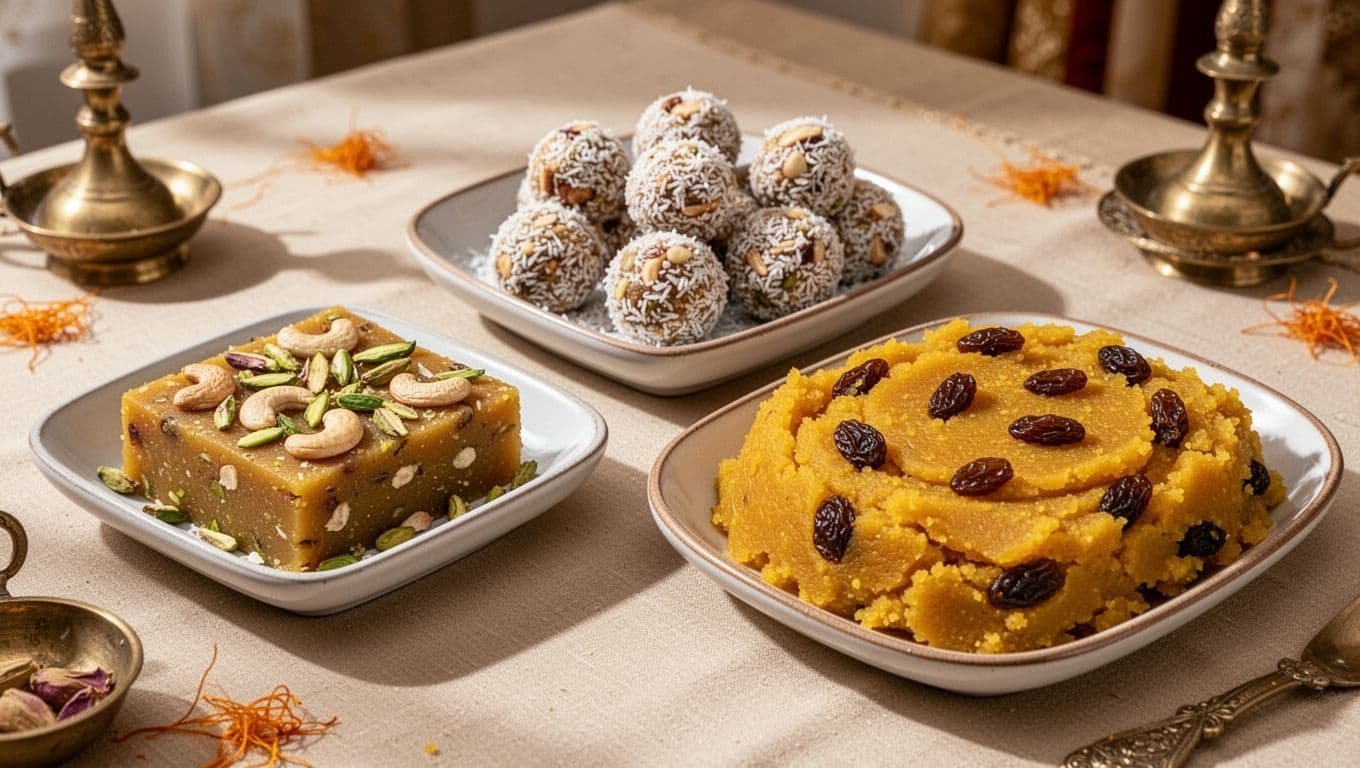
9. Sweet Potato Barfi with Cardamom and Cashews
This traditional-style sweet potato barfi uses milk powder or khoya for a firm, fudge-like texture.
Ingredients
- 2 cups cooked, peeled, and mashed sweet potato
- 2 tablespoons ghee
- 1 cup milk powder or crumbled khoya
- 1/2 cup sugar
- 1/2 teaspoon ground cardamom
- 1/4 cup cashew powder
- 2 tablespoons chopped pistachios
- Optional saffron and edible silver leaf
Method
- Line a small square tray with parchment paper and lightly grease it with ghee.
- Heat the ghee in a heavy pan over medium-low heat. Add the mashed sweet potato and cook for 5 to 7 minutes, stirring often.
- Add the milk powder or khoya, sugar, cardamom, and cashew powder. Stir continuously as the sugar melts and the mixture thickens.
- Cook until the mixture becomes glossy and pulls away from the sides of the pan. It should gather into a soft mass rather than spread like a loose halwa.
- Transfer it to the lined tray. Press and spread it evenly with a greased spatula, then sprinkle the pistachios over the top.
- Let it cool until firm. For a final texture check, cool a small portion until it is safe to handle, then press it between your fingers. It should feel soft but hold together without sticking heavily.
- Cut into squares or diamonds. Add saffron strands or a little edible silver leaf before serving, if desired.
For more guidance on working with milk powder and khoya, see this instant khoya cooking method.
10. Sweet Potato Laddoo with Coconut and Nuts
These traditional-style sweet potato laddoos combine coconut, roasted nuts, and cardamom. The mixture must be fairly dry, or the balls will flatten and lose their shape.
Ingredients
- 2 cups cooked and mashed sweet potato
- 1/2 cup desiccated coconut
- 1/2 cup roasted almond or cashew powder
- 1/2 cup powdered sugar or grated jaggery
- 2 tablespoons ghee
- 1/2 teaspoon cardamom
Method
- Add the mashed sweet potato to a wide, dry pan. Cook over medium-low heat until steam stops rising and the mash becomes thick.
- In a separate pan, roast the coconut for 2 to 3 minutes. Remove it before it browns. Roast the nut powder briefly until fragrant.
- Add the coconut, nut powder, ghee, sweetener, and cardamom to the sweet potato.
- Stir over low heat until the mixture thickens and leaves the pan. If it looks wet, continue cooking because excess moisture prevents proper shaping.
- Spread the mixture on a plate and let it cool until comfortable to handle.
- Grease your palms lightly, then shape small portions into smooth balls. Roll them in extra coconut or chopped nuts if you like.
Store the laddoos in an airtight container in the refrigerator for up to four days. Let them sit at room temperature briefly before serving.
11. Sweet Potato Besan Halwa with Raisins
This version has a firmer, flour-based texture than sweet potato-only halwa. Roasted besan gives it a nutty flavor and helps the cooked sweet potato set more firmly.
Ingredients
- 2 cups cooked and mashed sweet potato
- 1/2 cup besan
- 3 tablespoons ghee
- 1/2 cup sugar
- 1/4 cup milk or water
- 1/2 teaspoon cardamom
- 2 tablespoons raisins
Method
- Dry-roast the besan in a heavy pan over low heat. Stir constantly until it smells nutty and loses its raw flour aroma.
- Cook the sweet potato separately in 1 tablespoon ghee until it becomes thick and fairly dry.
- Add the remaining ghee and roasted besan to the sweet potato. Mix thoroughly so no flour pockets remain.
- Stir in the sugar and milk or water a little at a time. Keep stirring to prevent lumps.
- Add the cardamom and raisins. Cook until the halwa turns glossy, thick, and firm enough to pull cleanly from the pan.
- Serve warm, or press it into a greased dish and cool it for a sliceable texture. Constant stirring prevents both lumps and a raw besan taste.
Festive Sweet Potato Modak, Gulab Jamun, and Spiced Dessert Ideas
Sweet potato works as a soft binder in shaped sweets, but its moisture level determines whether the dough holds or collapses. Drain cooked sweet potatoes well, then cook the mash until it feels thick enough to shape. These traditional-style adaptations are ideal for festive meals, especially when you want familiar Indian flavors with a seasonal ingredient.
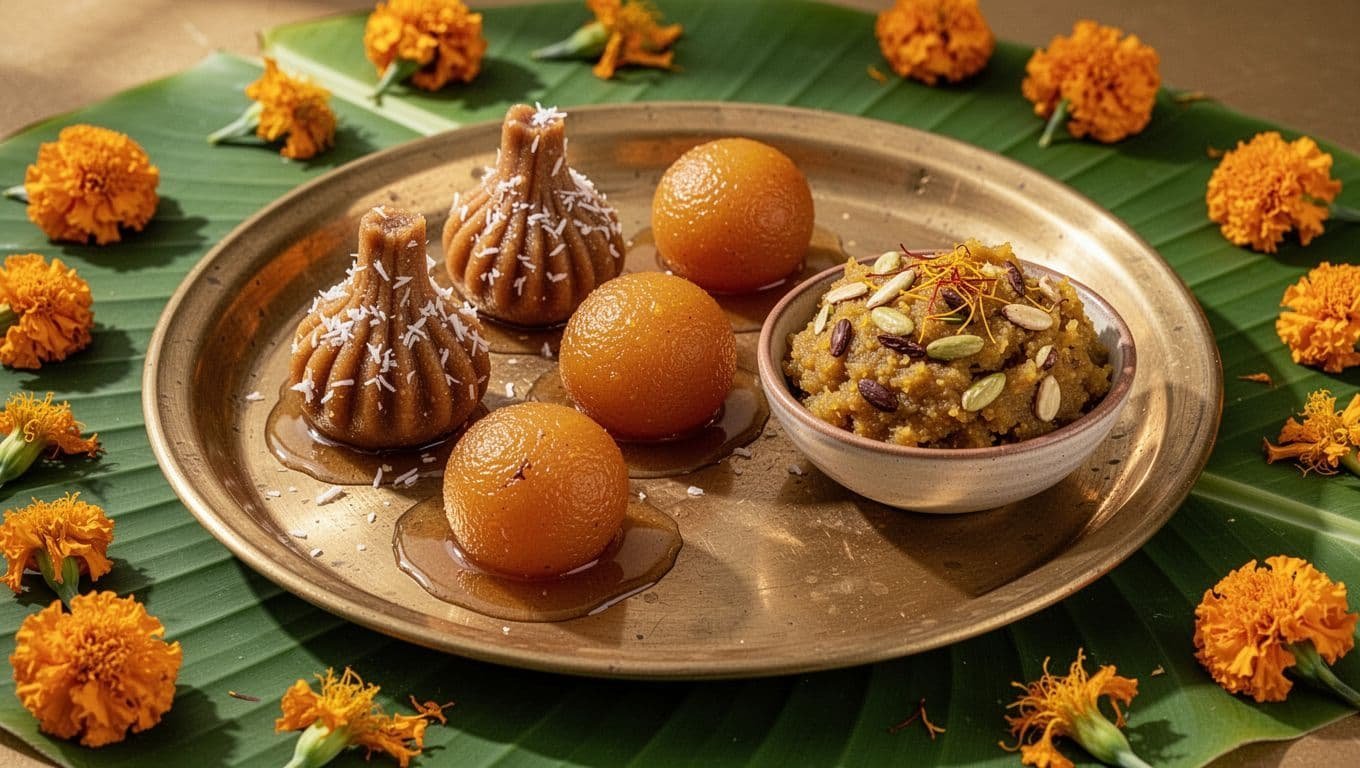
12. Sweet Potato Modak with Coconut and Jaggery Filling
Sweet potato gives the modak dough a tender texture, while coconut and jaggery create a classic filling. Serve these steamed sweets during Ganesh Chaturthi or alongside any festive meal.
Ingredients
- 2 medium sweet potatoes
- 1/2 cup rice flour, plus more if needed
- 1 cup shredded coconut
- 3/4 cup grated jaggery
- 1/2 teaspoon ground cardamom
- 1 teaspoon ghee
- A pinch of salt
- Boil, steam, or roast the sweet potatoes until completely tender. Cool, peel, and mash them until smooth. Cook the mash in a dry pan for several minutes if it feels wet.
- Add the rice flour gradually and mix until a soft dough forms. The dough should feel moist but hold together without sticking heavily to your hands.
- Cook the coconut and jaggery in a pan over low heat. Stir in the cardamom and continue cooking until the filling becomes fairly dry. Let it cool before shaping.
- Keep the dough covered with a damp kitchen towel while you work. If it dries out, cracks will appear around the filling.
- Grease your hands, flatten a small portion of dough, and place a spoonful of filling in the center. Gather the edges into pleats and pinch the top closed. You can also use a greased modak mold.
- Arrange the modaks on a lightly greased steamer plate. Steam over low to medium heat for about 10 minutes, then turn off the heat and let them rest for 5 minutes before lifting.
Keep the dough covered and moist at all times. A soft dough seals cleanly, while dry edges split during steaming.
13. Sweet Potato Gulab Jamun with Rose Syrup
This is a sweet potato-based gulab jamun adaptation, not a claim that every region prepares jamun this way. Mashed sweet potato replaces part of the usual base, while milk powder adds the familiar milky flavor and structure.
Ingredients
- 1 cup mashed sweet potato
- 1 cup milk powder
- 2 tablespoons all-purpose flour
- 1/4 teaspoon baking powder
- 1 teaspoon ghee
- 1 to 2 tablespoons milk, if needed
- Oil or ghee for frying
- 1 1/2 cups sugar
- 1 1/2 cups water
- 3 green cardamom pods, lightly crushed
- 1 teaspoon rose water
- Mix the mashed sweet potato, milk powder, flour, baking powder, and ghee. Add milk a teaspoon at a time until the mixture forms a soft dough.
- Rest the dough for 10 minutes. Divide it into small portions and roll each one into a smooth ball without cracks.
- Simmer the sugar and water with cardamom for 5 to 7 minutes. Turn off the heat, add the rose water, and keep the syrup warm. It should be light and pourable, not thick or boiling.
- Heat the oil over low to medium heat. Fry a test ball first, then cook the remaining jamuns slowly until evenly golden brown.
- Transfer the fried balls to the warm syrup. Let them soak for at least 30 minutes before serving.
Cracks can cause the jamuns to break in the oil, so smooth each ball carefully. You can bake them at 350°F until lightly browned, but baked jamuns will be firmer and less juicy than fried ones.
14. Winter Spiced Sweet Potato Dessert with Saffron and Nutmeg
This warm dessert follows the flavor pattern of Indian halwa, with saffron, nutmeg, ghee, and toasted nuts. Roasting the sweet potatoes gives the finished dish a deeper flavor, while boiling creates a softer and quicker version.
Ingredients
- 2 large sweet potatoes
- 2 tablespoons ghee
- 1/2 cup milk
- 1/3 cup grated jaggery
- 1/2 teaspoon cardamom
- A pinch of saffron
- A small pinch of grated nutmeg
- 2 tablespoons toasted almonds
- 2 tablespoons toasted pistachios
- Roast the sweet potatoes at 400°F until tender, or boil them until soft. Cool, peel, and mash the flesh.
- Warm the milk and soak the saffron in it for 5 minutes.
- Heat the ghee in a pan and sauté the sweet potato mash until it smells nutty and begins to thicken.
- Add the jaggery, cardamom, nutmeg, and saffron milk. Stir over medium-low heat until the jaggery dissolves.
- Continue cooking until the mixture becomes glossy and spoonable. Top with toasted almonds and pistachios.
Serve it warm for a winter breakfast, holiday gathering, or quick after-dinner treat. If the dessert becomes too thick, loosen it with a tablespoon of warm milk before serving.
Frequently Asked Questions
These answers cover the practical details that often come up after choosing a sweet potato dessert. Use them to adjust texture, plan ahead, and serve each recipe at its best.
Can I use canned sweet potatoes for these Indian desserts?
Yes, canned sweet potatoes can work in halwa, laddoo, barfi, and other soft desserts. Drain them very well, then pat them dry before mashing because the extra syrup or water can make the mixture loose. If they contain added sugar, reduce the sugar or jaggery in the recipe and taste the mixture before adding more.
Which sweet potato gives the best texture?
Orange-fleshed sweet potatoes usually create a soft, moist dessert with a bright color. White-fleshed varieties can taste less sweet and may produce a firmer, drier mixture, which works well for laddoo or barfi. Choose sweet potatoes that feel firm and have no soft spots, then cook them until a knife slides through the center easily.
How can I make these desserts less sweet?
Start by reducing the sweetener by 1 to 2 tablespoons, especially when using naturally sweet orange-fleshed potatoes. Jaggery adds a deeper flavor, while white sugar gives a cleaner sweetness, so the choice also affects the final taste. A small pinch of salt, extra cardamom, toasted nuts, or unsweetened coconut can balance the dessert without making it taste salty.
Can I prepare sweet potato desserts ahead of time?
You can make halwa, kheer, payasam, barfi, and laddoo one day ahead. Cool the dessert promptly, transfer it to a covered container, and refrigerate milk-based versions at 41°F or below. Before serving, warm halwa and payasam gently with a splash of milk, while laddoo and barfi are usually best after sitting at room temperature for a short time.
Can I freeze sweet potato Indian sweets?
Halwa and plain cooked sweet potato mixtures freeze better than milk-heavy kheer or payasam. Cool the mixture completely, portion it into airtight freezer containers, and use it within about one month for the best texture. Thaw it in the refrigerator, then reheat gently; add a little milk or ghee if it seems dry after thawing.
Why does my sweet potato halwa stay watery?
The sweet potatoes may have retained too much cooking water, or the pan may be too narrow for moisture to evaporate quickly. Cook the mash in a wide, heavy pan and stir it over medium-low heat until steam decreases and the mixture pulls away from the sides. Add milk, jaggery syrup, or sugar only after the sweet potato has thickened, since extra liquid can slow the process.
Conclusion
These 14 traditional Indian sweet potato desserts offer a pleasing range of textures, from soft shakarkandi halwa and creamy kheer to firm barfi, laddoo, and modak, plus syrup-soaked gulab jamun. If you’re new to Indian desserts, start with classic sweet potato halwa, then try variations with jaggery, coconut, khoya, or moong dal.
For the best results, cook out extra moisture before shaping or thickening the mixture. Cardamom and toasted nuts add familiar Indian flavor, while tasting before adjusting the sweetness keeps each recipe balanced. Choose one dessert to share with family or guests and enjoy the comforting flavors together.
Save the pin for later

I’m the creator of My Everyday Dish, a food blog focused on easy homemade recipes, comforting family meals, simple baking, and seasonal food ideas. I love finding practical ways to make everyday cooking less stressful and more enjoyable. Here, I share recipes with simple ingredients, clear instructions, and plenty of flavor, helping you make delicious meals and treats you’ll feel confident serving at home.
Leave a Reply