
These high protein burger bowls bring together seasoned meat, roasted potatoes, crisp vegetables, and burger sauce without a bun. You get familiar burger-night flavors in a filling dinner with toppings you can adjust at the table.
Start the potatoes first, then cook the meat while they roast. We keep the steps simple, with clear doneness cues and easy ingredient swaps so you can use what you have.
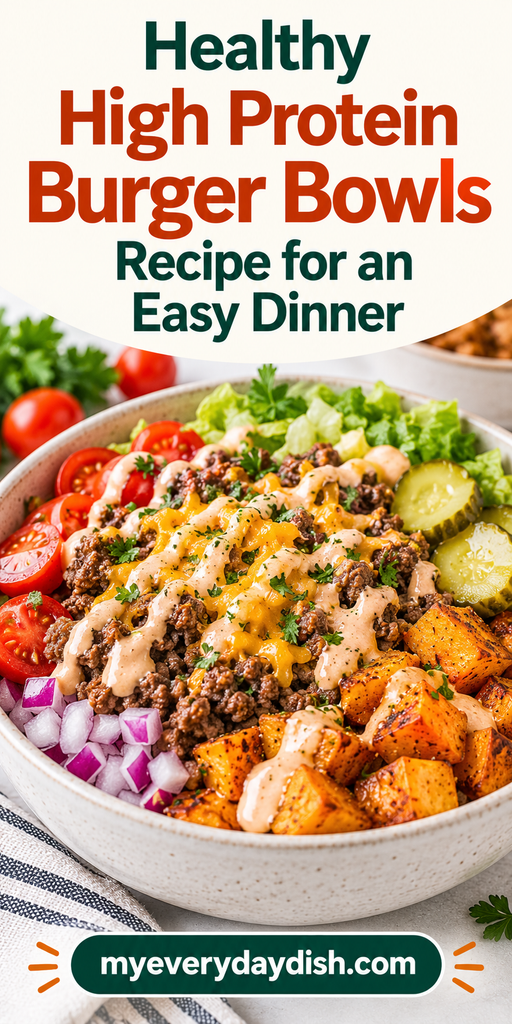
Healthy High Protein Burger Bowls Recipe for an Easy Dinner
Use a large sheet pan, a skillet, and a food thermometer. Keep the cooked ingredients separate from the cold toppings until you’re ready to eat, so the lettuce stays crisp.
Gather the ingredients for your burger bowls
Choose lean ground meat if you prefer less grease to drain. Gather these ingredients before heating the oven:
- Lean ground beef or ground turkey.
- Potatoes or sweet potatoes, plus olive oil for roasting.
- Chopped romaine or iceberg lettuce, tomatoes, sliced pickles, and thinly sliced red onion.
- Shredded cheddar or another cheese you enjoy, which you can leave out.
- Plain Greek yogurt or mayonnaise, ketchup, yellow mustard, and pickle juice for the sauce.
- Garlic powder, onion powder, paprika, salt, and black pepper for seasoning.
Red onion is optional if you prefer a milder bowl. Use dill pickles for a sharper topping or sweet pickles if you want a gentler finish.
Prepare the vegetables and roast the potatoes
Heat the oven to 425°F. Scrub the potatoes, dry them, then cut them into small, even cubes so they cook at a similar rate.
Toss with olive oil, paprika, salt, and pepper. Spread them across the sheet pan in a single layer, leaving space between pieces. Crowded potatoes release steam and soften instead of developing browned edges.
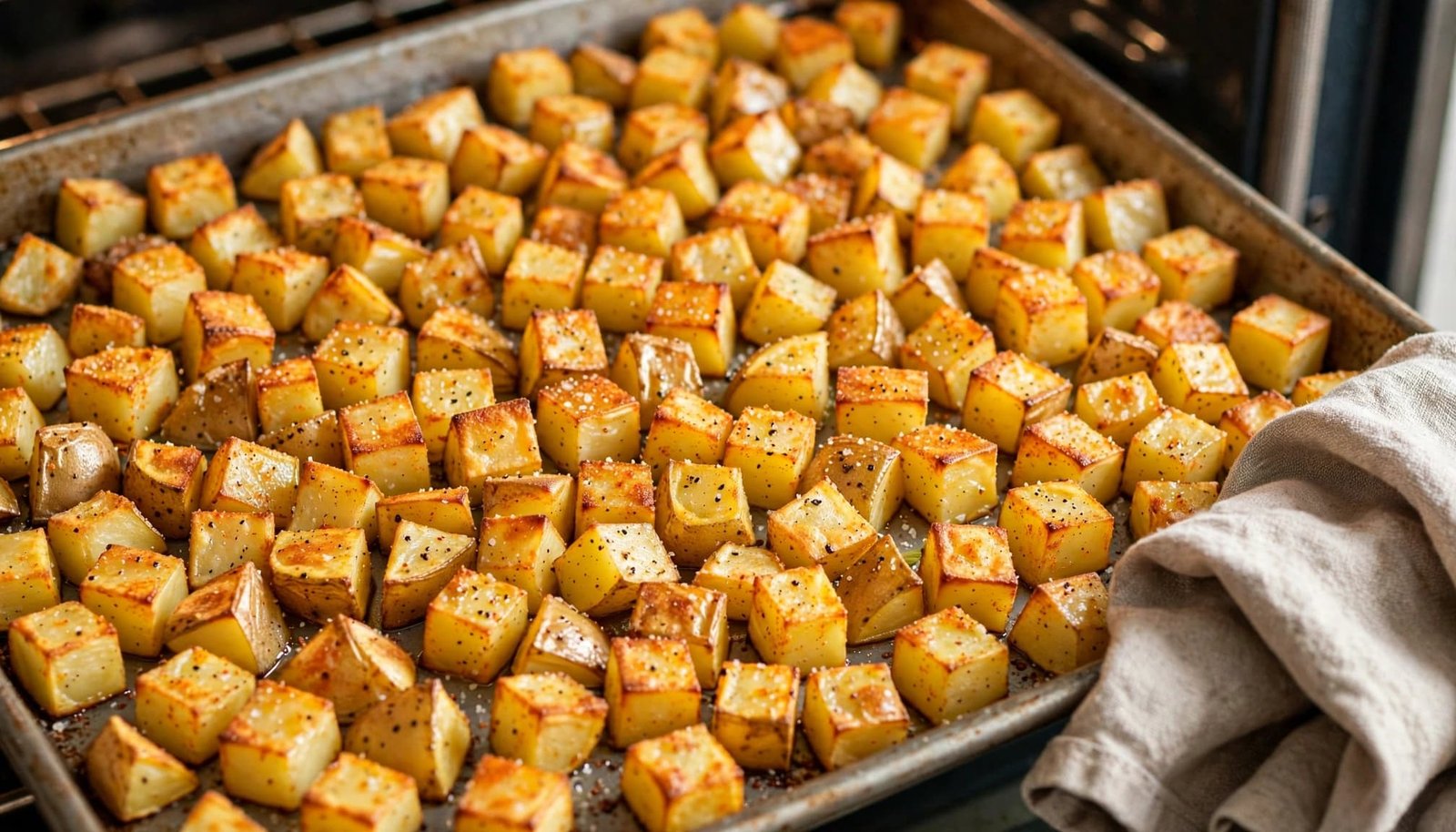
Roast until browned underneath, then turn and continue until a fork slides easily through the centers. While they cook, wash and dry the lettuce, chop the tomatoes, and portion the pickles and onion.
Cook the seasoned burger meat safely
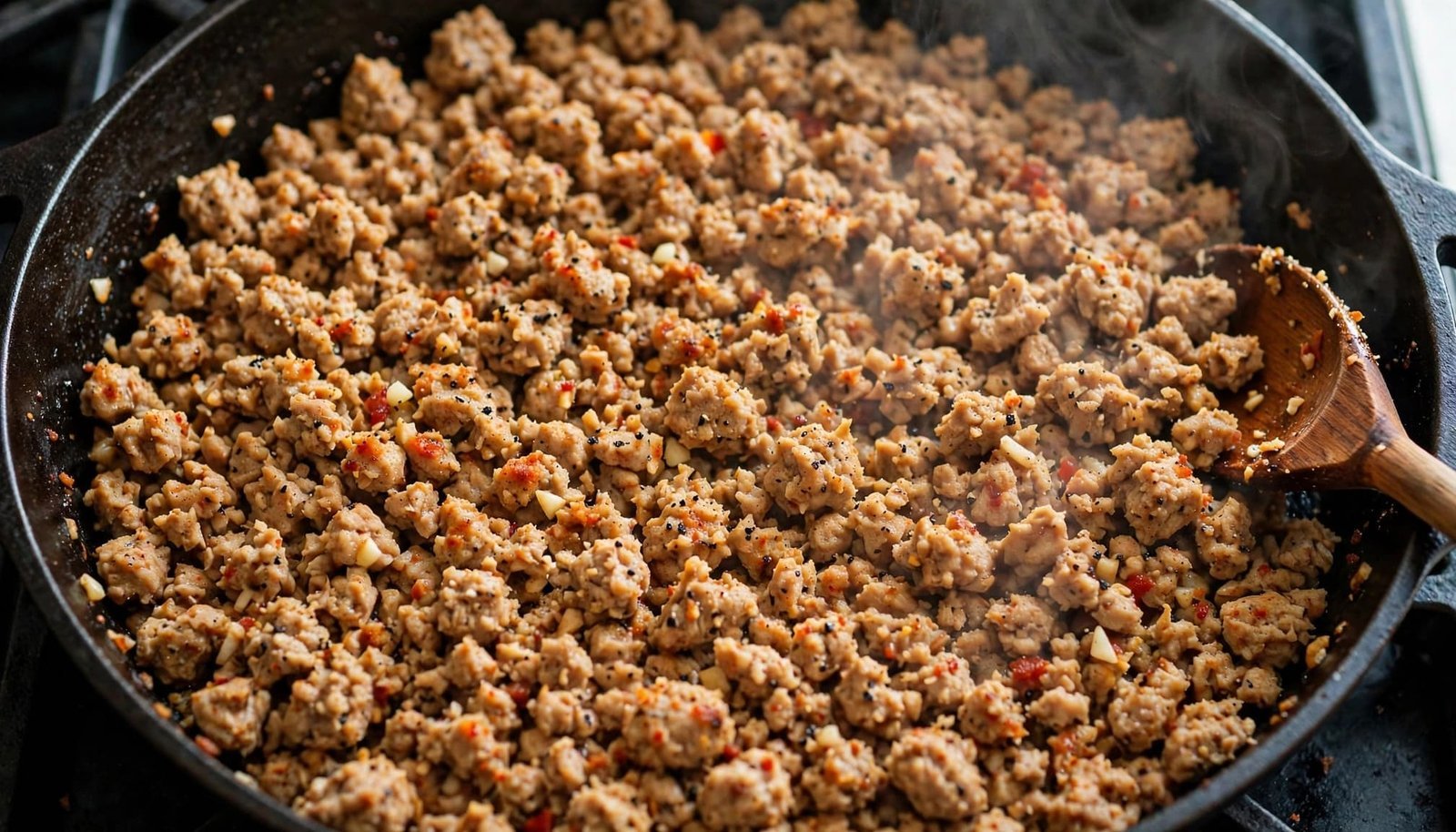
Heat the skillet over medium-high heat. Add the ground meat and break it into small crumbles with a sturdy spoon. Let it sit briefly between stirring so the surface can brown.
Stir in garlic powder, onion powder, paprika, salt, and pepper. If liquid collects, continue cooking until the excess evaporates, then drain any unwanted grease.
Read also: 12 Healthy Vegetarian Soup Ideas for Dinner
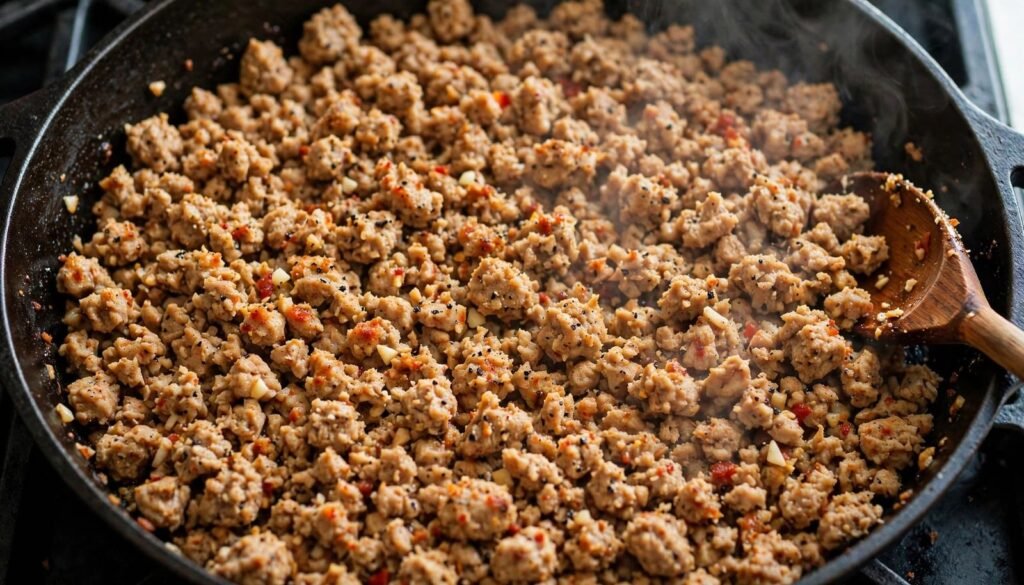
Use a food thermometer rather than color alone. The USDA safe-temperature chart lists 160°F for ground beef and 165°F for ground turkey or chicken. Gather the crumbles into a thicker mound to take a reading without touching the pan.
Build the bowls and add the burger sauce
Stir Greek yogurt or mayonnaise with ketchup and mustard until smooth. Add pickle juice gradually until the sauce drizzles easily, then taste before adding salt. The pickles and mustard already bring a salty, tangy flavor.
Divide the lettuce among bowls, then add tomatoes, pickles, and onion. Spoon the warm meat and roasted potatoes alongside the greens. Scatter cheese over the meat if you want it to soften slightly.
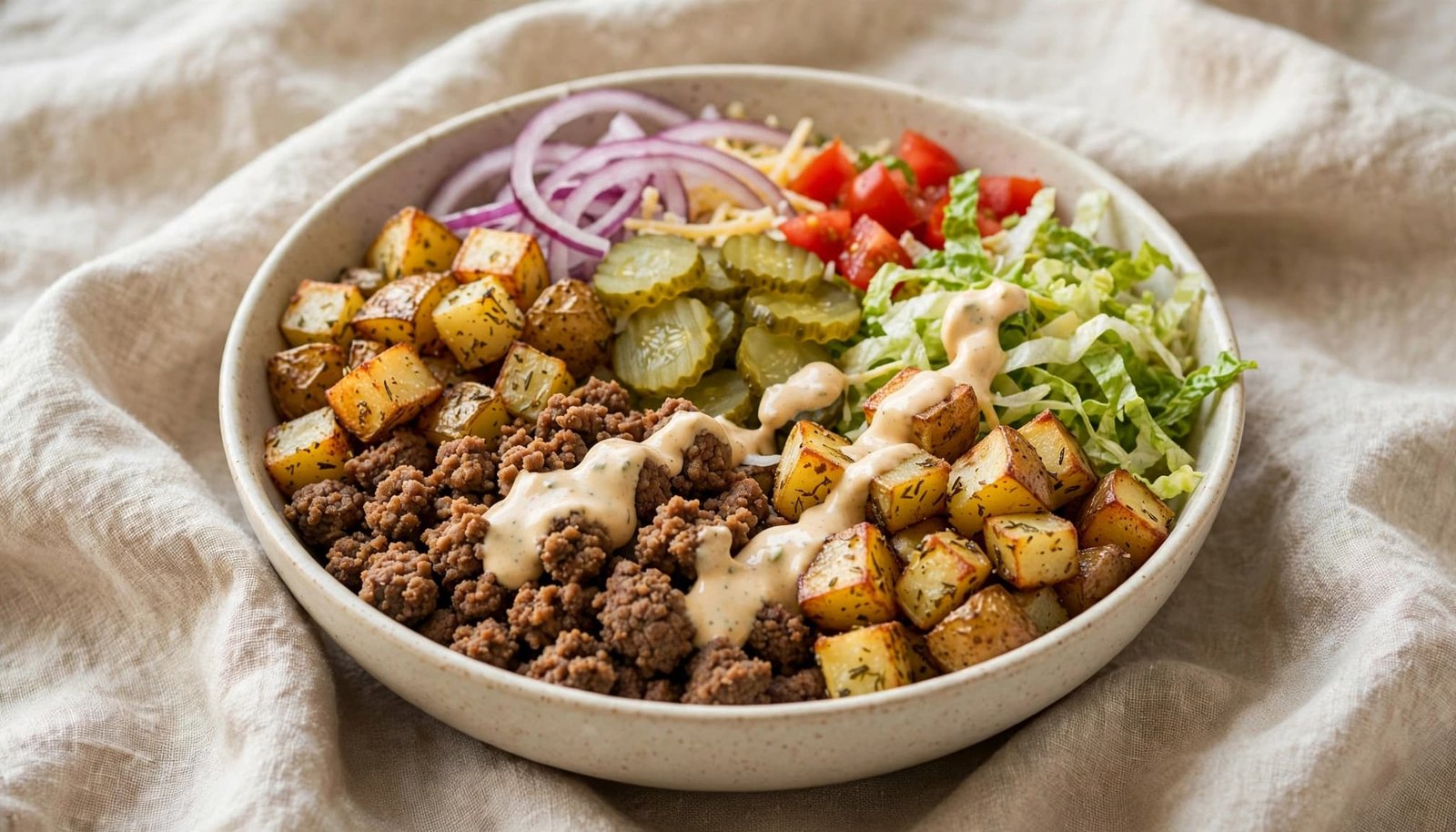
Finish with a thin drizzle of sauce and pass the rest at the table. Keep most of the sauce off the potatoes, and serve promptly while their edges are crisp.
What makes these burger bowls a filling, high-protein dinner
The meat, potatoes, and vegetables give the bowl different textures and make it easy to adjust. Keep the portions suited to your appetite rather than letting the bowl’s size decide how much you add.
Read also: 35 Easy Fall Dinner Ideas for the Whole Family
Portion the meat before adding the extras
Divide the cooked meat before arranging the toppings if you want similar bowls. Loose crumbles are easy to distribute unevenly, especially when some disappear beneath the lettuce.
The protein content of high protein burger bowls depends on the meat you choose and how much goes into each portion. Cheese, sauce ingredients, and substitutions also change the finished bowl’s nutrition, so a single estimate wouldn’t describe every version.
Keep extra lettuce and tomatoes nearby for anyone who wants more vegetables. Offer additional meat separately rather than mixing everything together before serving.
Choose toppings that add flavor without weighing down the bowl
Use enough cheese to scatter across the meat rather than cover the whole bowl. Add pickles for tang, tomatoes for juiciness, and a little onion for a sharper bite.
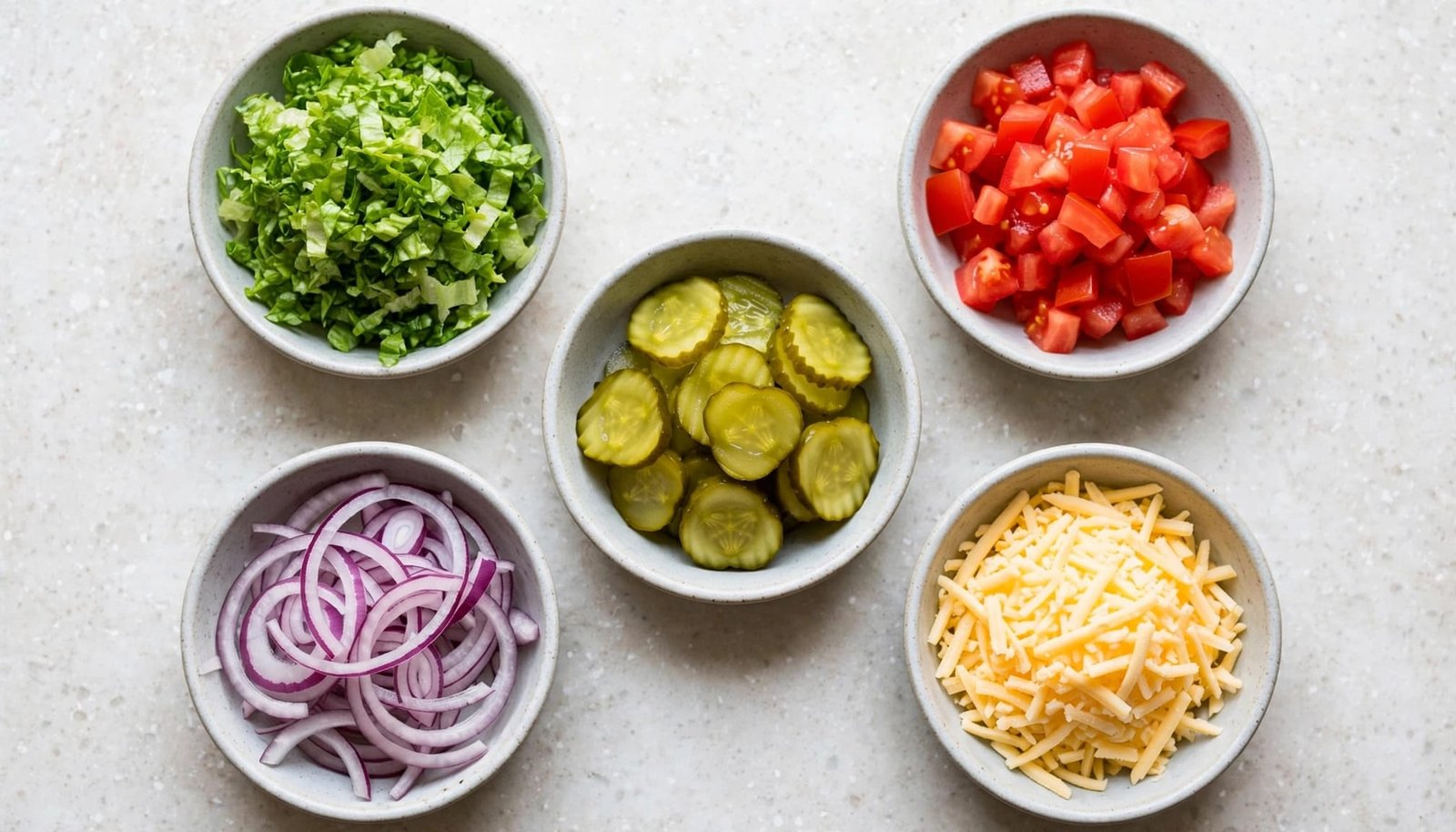
Plain Greek yogurt makes a tangier sauce than mayonnaise. If that tastes too sharp, combine the two rather than adding more ketchup, which also changes the sweetness.
Add sauce after arranging the bowl. Tossing everything together early softens the lettuce and coats the potatoes before you can enjoy their crisp edges.
Taste a bite with the pickles before adding more salt. Small adjustments are easier once the toppings are together.
Easy swaps and make-ahead tips for burger bowls
Change one or two components to suit your pantry. Keeping the other ingredients familiar makes it easier to judge seasoning and texture.
Swap the meat, base, or toppings to fit your needs
Ground chicken, turkey, or plant-based crumbles can replace beef. Plant-based products vary in texture and preparation, so they won’t necessarily brown or cook like ground meat.
Use cooked rice instead of potatoes when you want a softer base. For another rice-based dinner, our Korean beef and broccoli bowls pair seasoned meat with cooked vegetables.
Extra greens make a cool, crunchy base, while roasted sweet potatoes bring a sweeter flavor. These swaps change the bowl’s texture, cooking needs, and nutrition.
Leave out the cheese or use a dairy-free version if needed. A mayonnaise-based sauce avoids yogurt, though you’ll still need suitable ingredients for your dietary needs.
Store and reheat leftovers without soggy greens
Pack cooked meat, potatoes, fresh vegetables, and sauce separately in airtight containers. Use shallow containers for the cooked components so they cool more quickly.
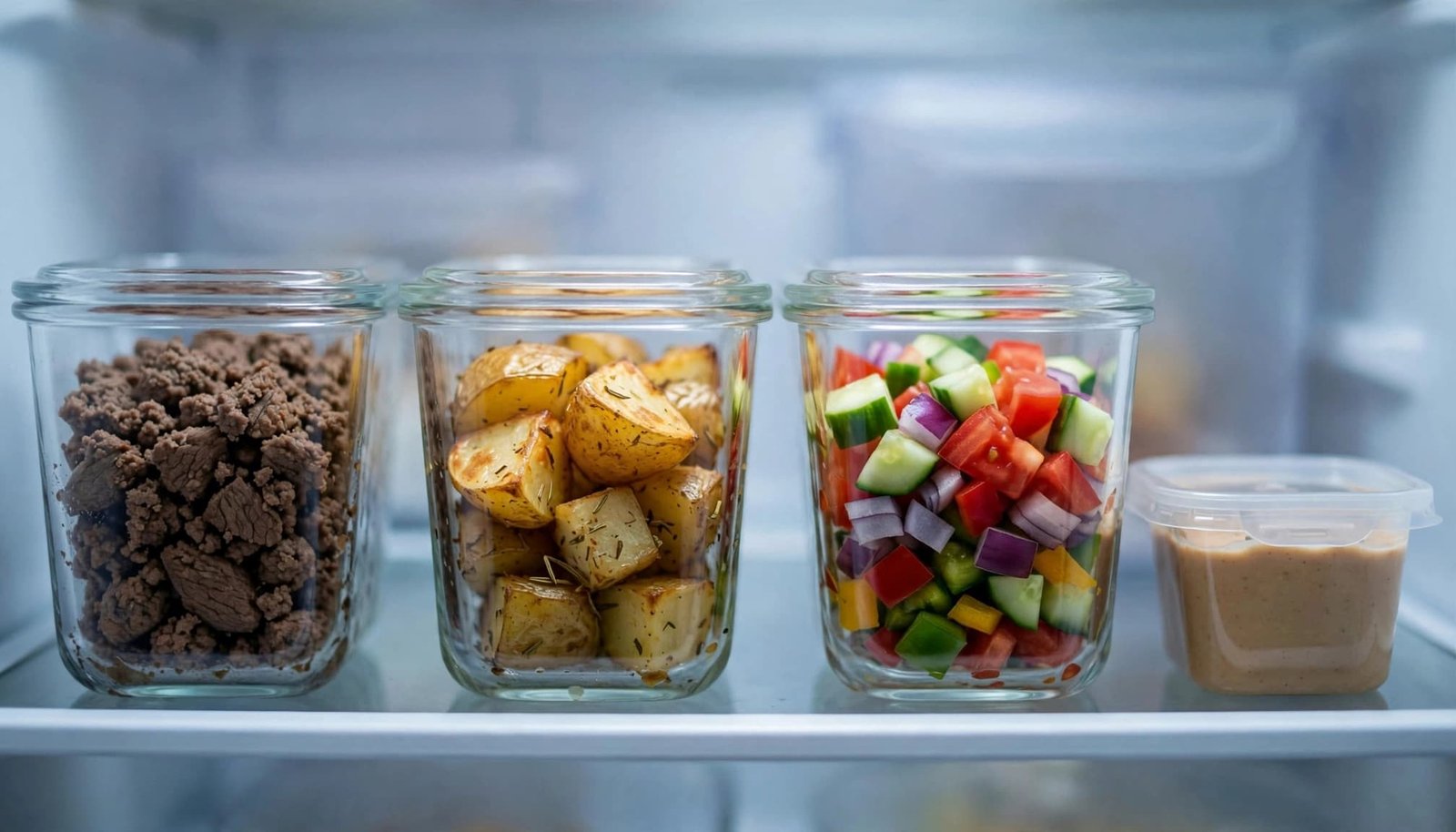
Refrigerate perishable ingredients within two hours, or within one hour when the temperature is above 90°F. The USDA leftovers guidance recommends using refrigerated leftovers within 3 to 4 days.
Reheat meat and potatoes to 165°F before assembling a fresh bowl. Warm the meat separately, then use the oven or air fryer for potatoes if you want firmer edges. Microwaving is convenient, but the potatoes will be softer.
Frequently Asked Questions
Can I make burger bowls with ground turkey?
Yes, ground turkey works with the same garlic, onion, and paprika seasoning. If the skillet looks dry, add a little oil before the meat starts sticking. Stop cooking once it reaches the safe temperature, since continued heat can make the crumbles dry.
How much protein is in a burger bowl?
There’s no single protein amount for every burger bowl. The type and portion of meat, along with the cheese and sauce, determine the amount in your serving. Changing those ingredients means any nutrition estimate needs to change too.
Can I make the components ahead of time?
Yes, but leave the final assembly until you’re ready to eat. Dry washed lettuce thoroughly before refrigerating it, and keep chopped tomatoes away from the greens so their juices don’t collect underneath. You can also mix the sauce ahead, then stir it before serving.
How long do burger bowl leftovers last in the fridge?
Properly refrigerated cooked meat and potatoes last 3 to 4 days. Count that period from when you cooked them, not when you assembled the bowls. The USDA’s ground beef safety guidance also covers safe handling and storage; adding fresh toppings doesn’t extend the cooked meat’s storage period.
What can I use instead of potatoes?
Roasted cauliflower, cooked quinoa, or shredded cabbage offer different textures without changing the burger-style toppings. Cauliflower needs room on the pan to brown, while cabbage can go straight into the bowl after washing and drying. Choose quinoa when you want a tender base rather than something crisp.
Keep Burger Night Simple
A good burger bowl brings warm, seasoned meat together with crisp vegetables and a sauce you can adjust. Keep the components separate until serving, and you can change each bowl without making another dinner.
Try your favorite burger toppings, then save the recipe for a busy weeknight. Start with the potatoes, and the rest can come together while they roast.
Save the pin for later

I’m the creator of My Everyday Dish, a food blog focused on easy homemade recipes, comforting family meals, simple baking, and seasonal food ideas. I love finding practical ways to make everyday cooking less stressful and more enjoyable. Here, I share recipes with simple ingredients, clear instructions, and plenty of flavor, helping you make delicious meals and treats you’ll feel confident serving at home.
Leave a Reply