
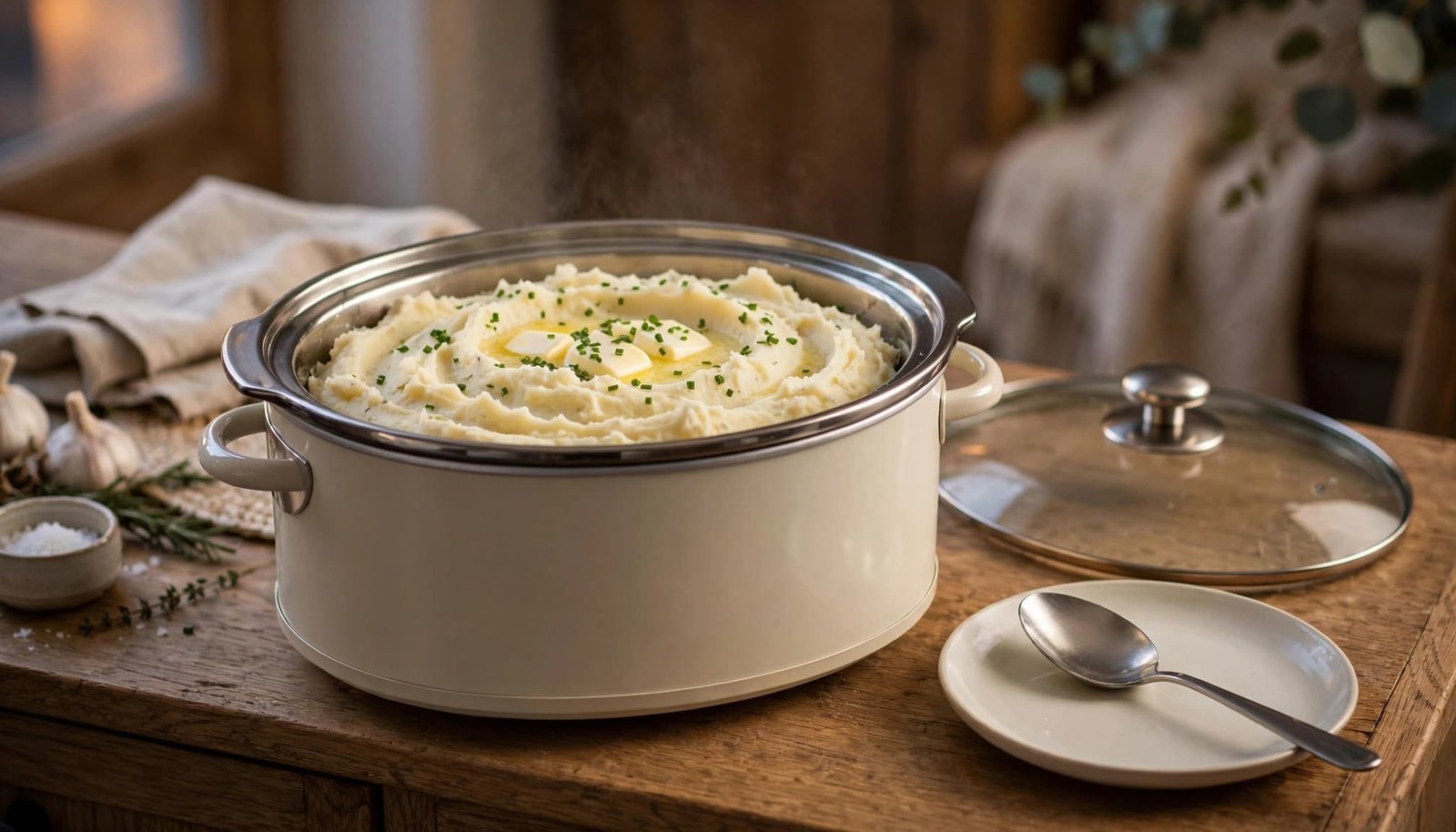
Creamy mashed potatoes are easier to fit into dinner when you don’t have to watch a pot on the stove. These slow cooker mashed potatoes cook in broth until tender, then get mashed with butter and warm milk or cream. Russets work well because they soften into a light, fluffy mash that takes seasoning easily.
You can keep the texture slightly rustic or make it smoother, depending on how you mash and how much dairy you add. The hands-off cooking time leaves room for the rest of dinner, though the potatoes still need a tenderness check near the end. Start with evenly cut pieces and keep the finishing liquid flexible.
Easy Slow Cooker Mashed Potatoes Recipe With Russet Potatoes
Use a 6-quart slow cooker for this batch, leaving enough room to mash and stir without spilling. Gather these ingredients before you begin:
- 5 pounds russet potatoes, peeled and cut into 1-inch chunks.
- 1 cup chicken or vegetable broth.
- 1/2 cup butter, cut into pieces.
- Salt and pepper, adjusted to taste.
- Up to 1 cup milk or cream, warmed before adding.
- Optional cream cheese for a richer finish.
The broth provides moisture during cooking, while milk or cream loosens the potatoes after mashing. You might not need the full cup of dairy, especially if you prefer a thicker scoop.
Plan on 3 to 4 hours on HIGH or 6 to 8 hours on LOW. Slow cookers vary, so the potatoes must be fork-tender before you mash them. Allow time for peeling and chopping before starting the cooking clock.
How to Make Slow Cooker Mashed Potatoes, Step by Step
Peel and cut the russet potatoes
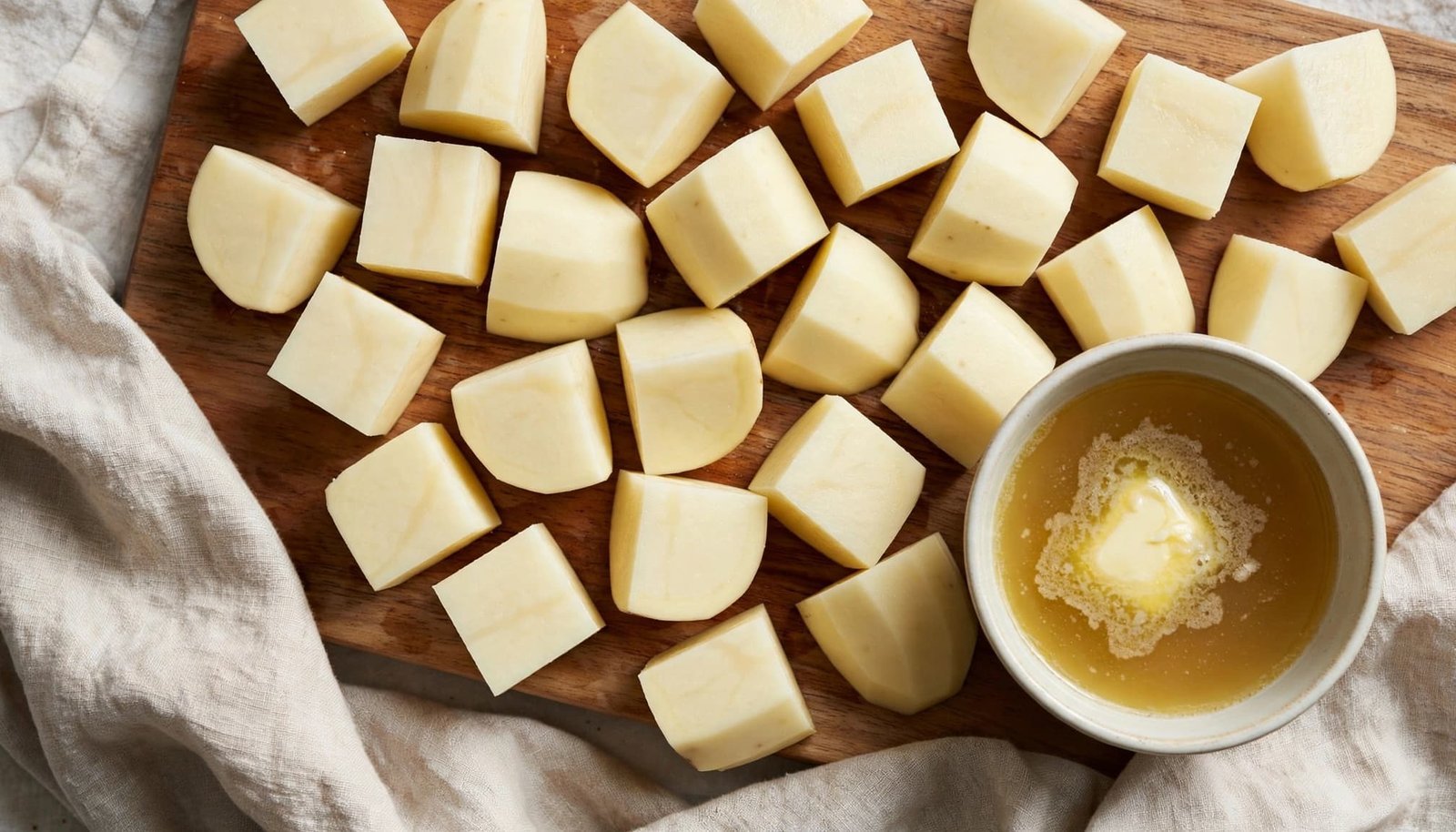
Wash the potatoes, then peel away the skins. Rinse away any remaining dirt before cutting them into evenly sized 1-inch chunks.
Work through the larger potatoes carefully so you don’t leave thick pieces among much smaller ones. Similar sizes help the whole batch soften at about the same rate.
Set the prepared pieces directly in the slow cooker as you work. If you rinse them after cutting, let excess water drain away before adding the measured broth. This keeps the cooking liquid close to the amount intended.
Add the potatoes, broth, butter, and seasoning
Pour the broth over the potatoes, then scatter the butter pieces across the top. Add a modest amount of salt and pepper, especially if your broth or butter already contains salt.
The broth won’t cover the potatoes, and you don’t need to add enough liquid to submerge them. Keep the lid fitted securely so moisture stays inside during cooking.
A stir once during cooking is optional. If you stir, work quickly and replace the lid rather than leaving the cooker uncovered while you prepare other food.
Cook until the potatoes are very tender
Cook on HIGH for about 3 to 4 hours or LOW for about 6 to 8 hours. Begin testing near the early end of your chosen range.
Pierce a potato chunk with a fork or paring knife. It should slide through the center easily, without a firm or crunchy middle.
Test a few pieces, including larger chunks and potatoes near the center of the cooker. If any resist, replace the lid and continue cooking. Mashing won’t soften an undercooked center, so wait until the whole batch breaks apart easily.
Mash and add milk or cream gradually
Mash the tender potatoes directly in the cooker with a potato masher. Work through the larger pieces before deciding how much finishing liquid you need.
Warm the milk or cream, then stir it in a small splash at a time. Pause between additions so you can see how the potatoes settle.
Add softened cream cheese now if you want extra richness, then taste before adding more salt or pepper. For a smoother mash, use a hand mixer briefly on low speed. Stop once the texture looks right, since overmixing can make potatoes gummy.
Simple tips for fluffy, flavorful mashed potatoes
Choose the right texture and dairy
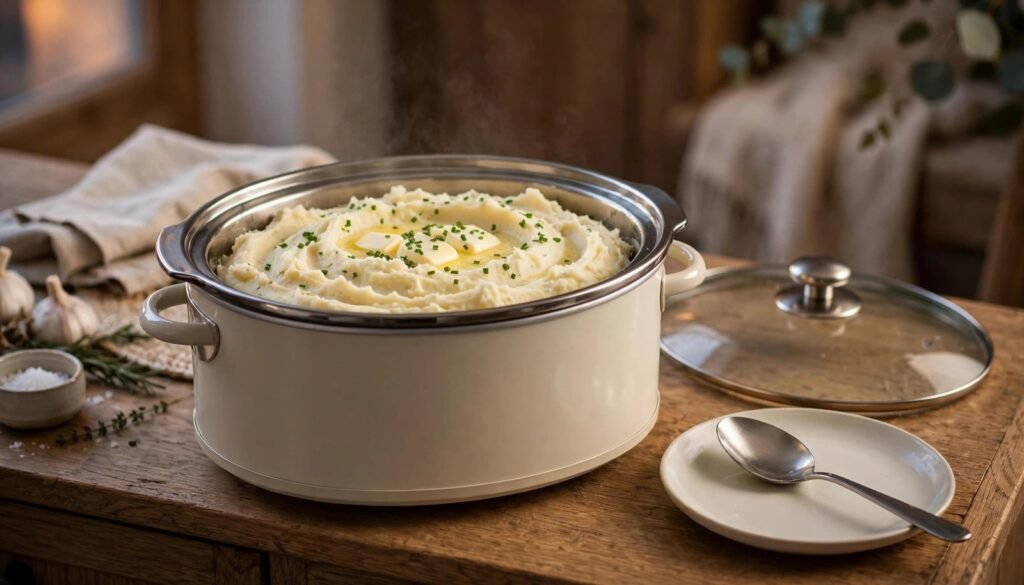
Russets have a starchy texture that breaks down easily when fully cooked. A potato masher leaves a few soft pieces, while brief mixing gives you a more even consistency. Either approach works, so stop at the texture you enjoy.
Keep the two liquids separate in your planning. Broth is the cooking liquid in this version, and milk or cream goes in afterward.
Milk gives you a lighter finish, while cream makes the potatoes richer. Our mashed potatoes with heavy cream offer another option if you prefer that fuller texture. Add either liquid gradually rather than treating the listed amount as a requirement.
Fix common texture and seasoning problems
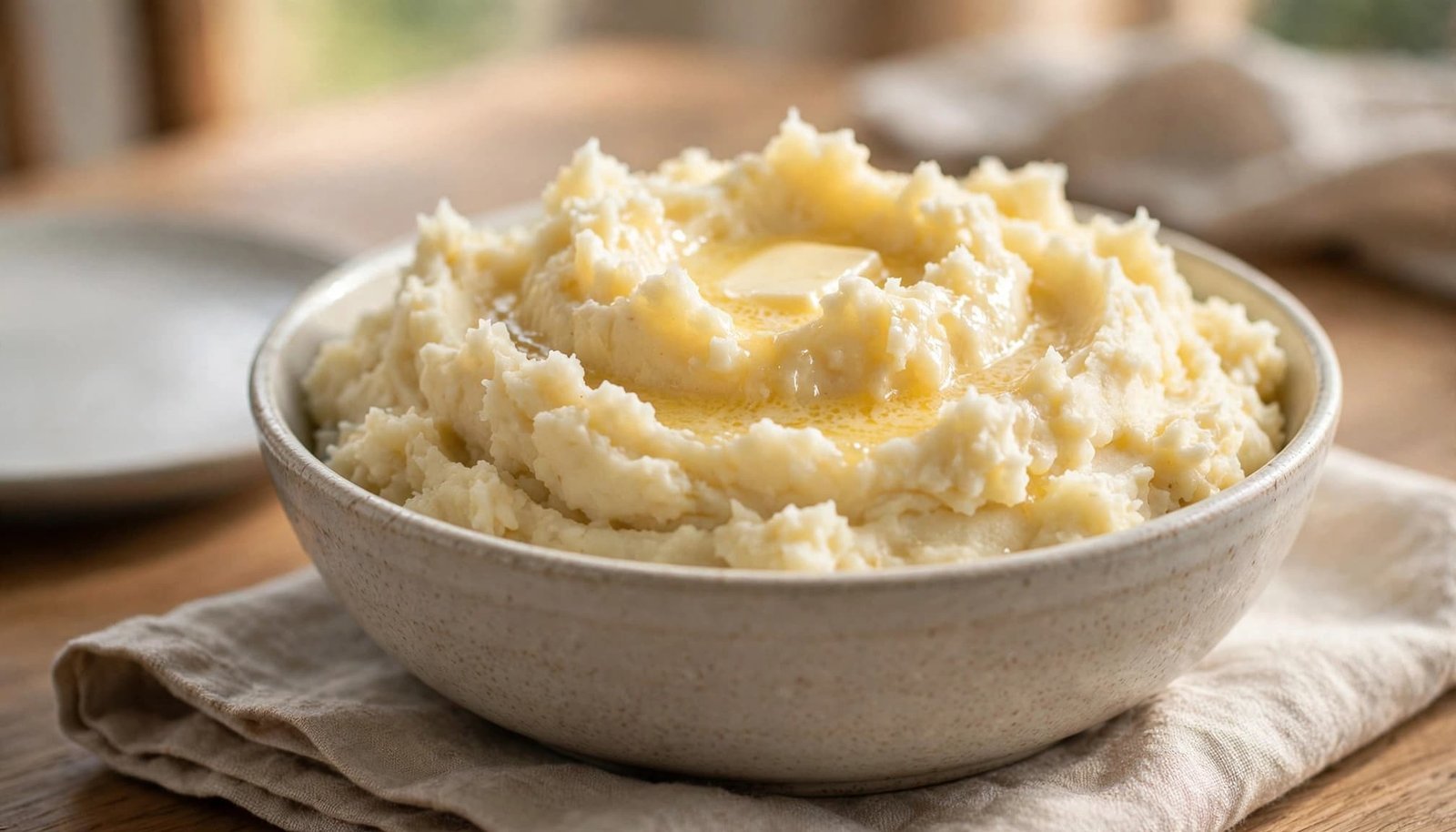
Stir a little more warm milk or cream into potatoes that seem dry or crumbly. If they’re smooth but too thick, use smaller additions until they loosen enough to spoon comfortably.
For potatoes that already look loose, stop adding dairy. Let them stand briefly before judging the texture again, since a hot mash can settle as it rests. Don’t try to thicken them by beating harder, which can make the texture sticky.
Taste near the end, after any cheese or other additions have been mixed in. Add salt and pepper in small amounts, then taste again. Broth, salted butter, and cheese all affect how much seasoning the finished potatoes need.
Easy ways to serve and customize your mashed potatoes
Serve these slow cooker mashed potatoes with roast chicken, meatloaf, pork chops, or a holiday turkey. Their mild flavor also works beside roasted vegetables and mushroom gravy. For a larger gathering, our easy Thanksgiving side dish recipes give you other dishes to serve alongside them.
Add garlic, herbs, or cheese
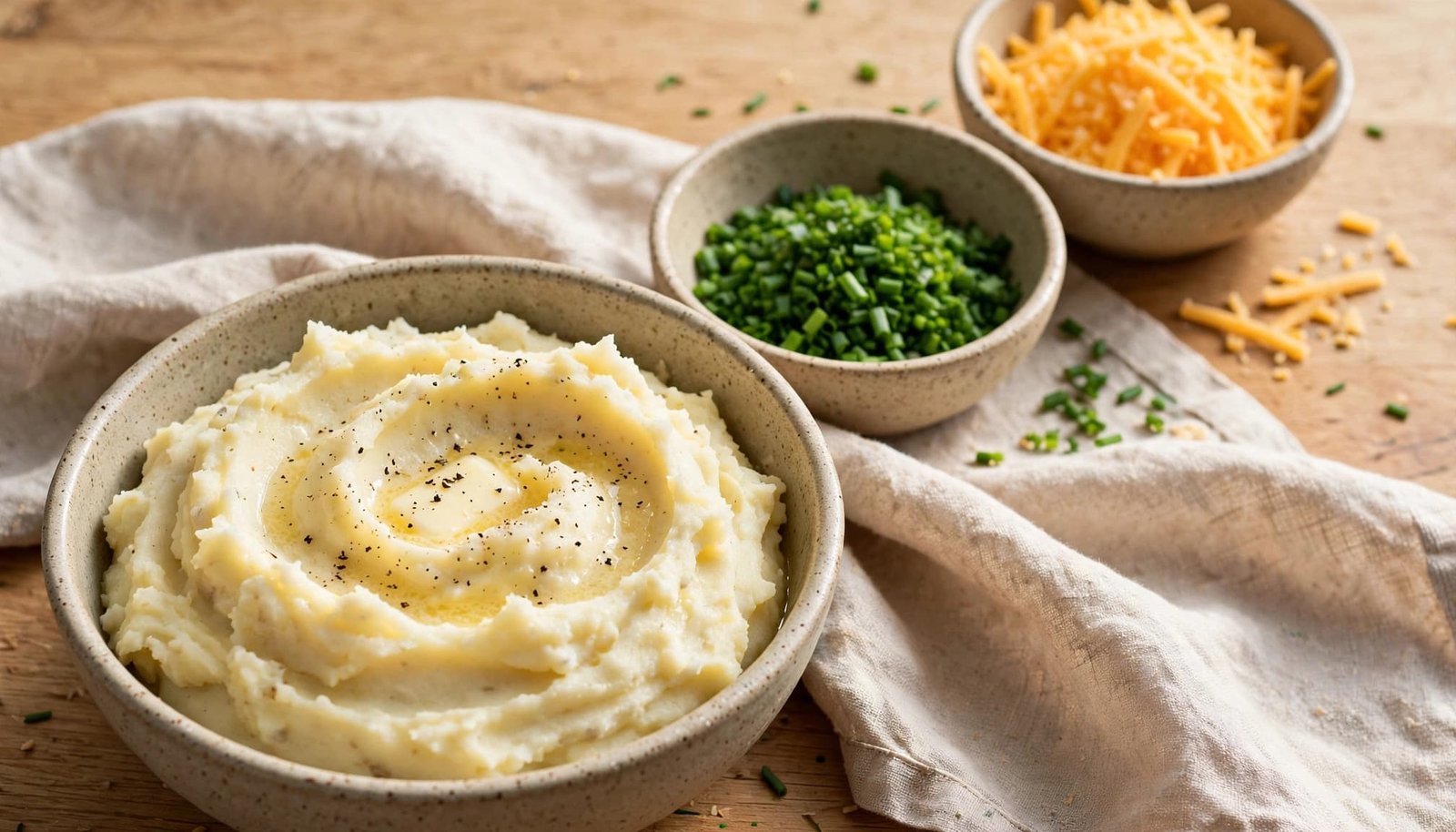
Stir in roasted or cooked garlic after mashing for a mellow garlic flavor. Add chopped chives or parsley near serving time so their flavor stays fresh.
Shredded cheddar gives the potatoes a stronger flavor, while a little sour cream adds tang. Mix in one addition at a time and taste before adding more. Keep the seasoning restrained until the cheese or sour cream is fully incorporated.
Keep the potatoes warm for serving
Switch the cooker to WARM after mashing and keep it covered between servings. Hamilton Beach recommends holding its slow-cooker mashed potatoes on WARM for up to 1 hour, a useful short serving window.
Don’t leave perishable food at room temperature for more than 2 hours. The USDA’s leftover safety guidance shortens that limit to 1 hour when temperatures exceed 90°F.
How to store and reheat leftover mashed potatoes
Transfer leftovers promptly to shallow covered containers rather than refrigerating one deep, heavy batch. Smaller portions cool more quickly and let you reheat only what you need.
The USDA’s food-safety basics recommend shallow containers and immediate refrigeration for rapid cooling. Don’t leave the potatoes on the counter waiting for them to reach room temperature.
If you’re making the potatoes ahead, finish cooking and mashing them before cooling and refrigerating. Keep extra finishing dairy separate so you can adjust the texture during reheating rather than making the mash loose beforehand.
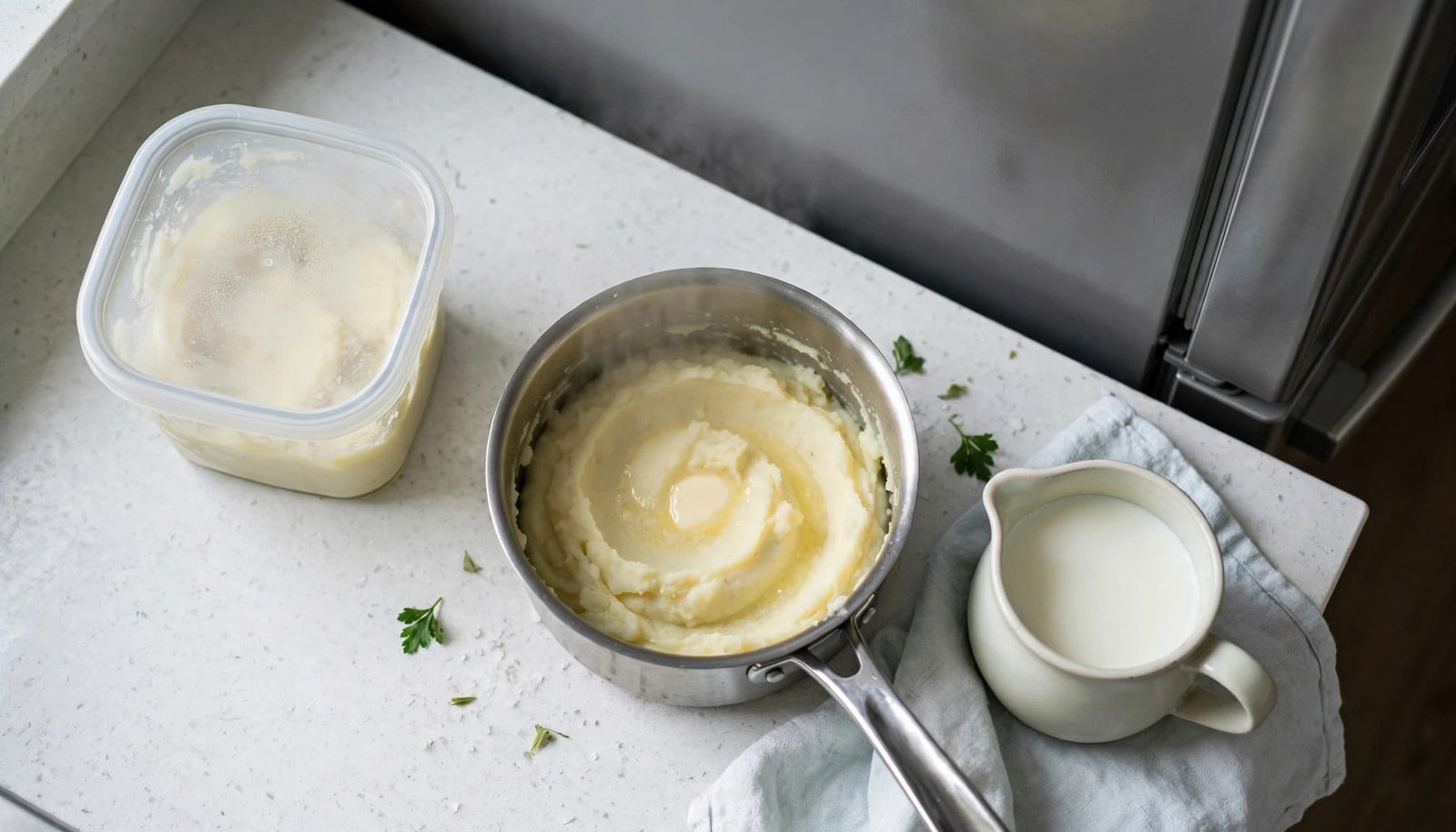
Reheat gently in a saucepan with a splash of milk or cream, stirring often so the bottom doesn’t scorch. Add more liquid only after the first splash is incorporated.
For a single portion, microwave in short intervals and stir between each one. Break up cold pockets as you stir, then heat leftovers to 165°F throughout before serving.
Cold mashed potatoes are firmer than freshly made potatoes, so give them time to warm before making large adjustments. Once hot, taste and add seasoning only if needed.
Frequently Asked Questions
Do I need to boil the russet potatoes first?
No, the raw potato chunks cook directly in the slow cooker with broth. There’s no separate boiling or draining step before mashing.
Can I cook these mashed potatoes on LOW?
Yes, allow about 6 to 8 hours on LOW. Use tenderness rather than the clock alone, since the size of your potato pieces and your cooker affect the timing.
When should I add the milk or cream?
Add it after the potatoes have cooked and you’ve mashed the larger pieces. Stir in warm dairy gradually so you can stop when the potatoes reach your preferred consistency.
What should I do if the potatoes are not tender yet?
Replace the lid and continue cooking, then test again. Wait until a fork or knife passes easily through several pieces before you begin mashing.
A Simple Potato Side With Less Stovetop Watching
Slow cooker mashed potatoes give you a familiar side without keeping a pot on the stove. Evenly cut russets and a careful tenderness check help you get a soft mash for everyday dinners or gatherings.
Keep the finishing dairy flexible, then adjust salt and pepper after mashing. You can leave a little texture or make the potatoes smoother, with the final consistency suited to your table.
Save the pin for later

I’m the creator of My Everyday Dish, a food blog focused on easy homemade recipes, comforting family meals, simple baking, and seasonal food ideas. I love finding practical ways to make everyday cooking less stressful and more enjoyable. Here, I share recipes with simple ingredients, clear instructions, and plenty of flavor, helping you make delicious meals and treats you’ll feel confident serving at home.
Leave a Reply