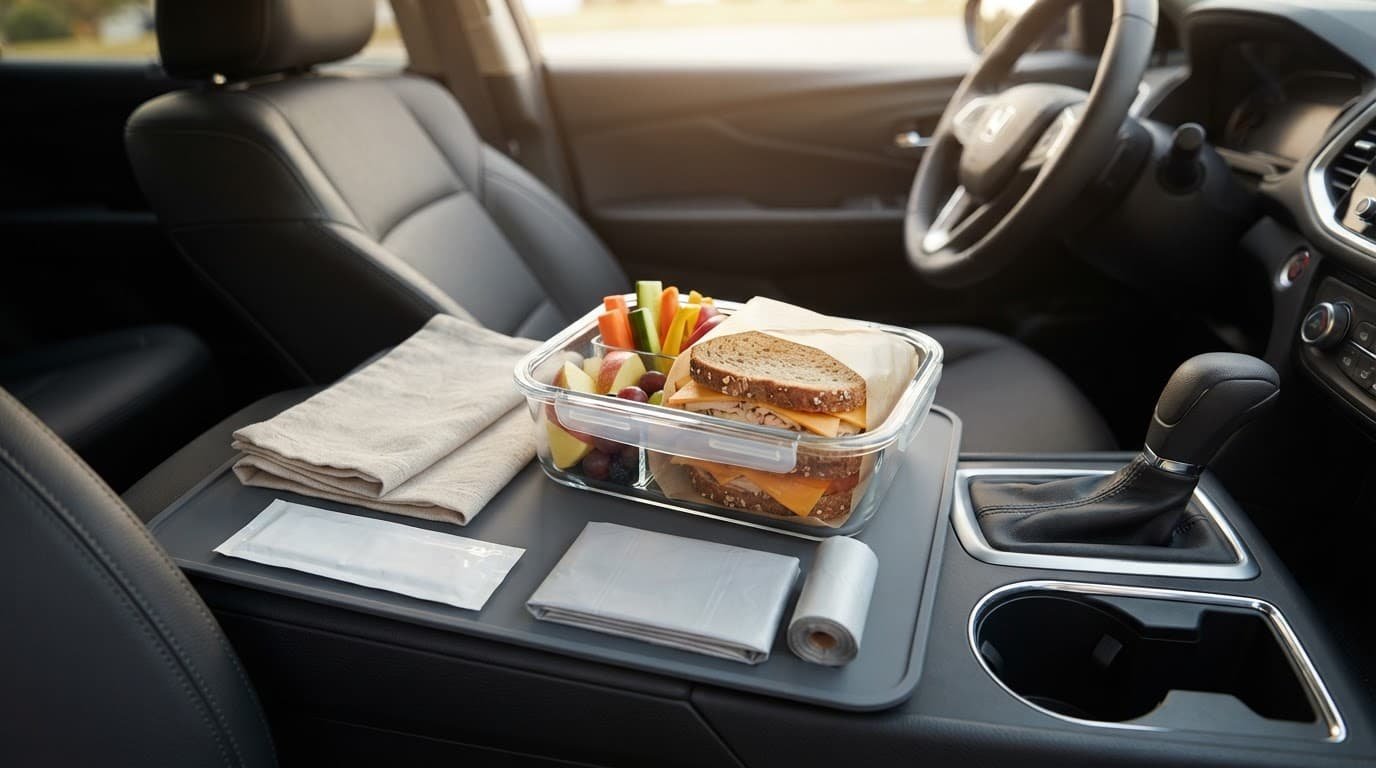
Eating in the car can turn a simple lunch into a cleanup job. Food drips onto your hands, crumbs collect in the seat, melted cheese sticks to the wrapper, and anything that needs two hands takes your attention away from the road.
Even a well-packed meal can become difficult when you’re dealing with traffic, turns, sudden stops, or an awkward container.
This collection of 100 mess-free lunch ideas focuses on practical foods that are compact, filling, easy to pack, and designed to keep spills to a minimum. You’ll find sturdy wraps and sandwiches, protein-rich snacks, fresh fruit and vegetables, dry foods that travel well, and bento-style combinations with a little variety in every container.
Some ideas work best cold, while others are better saved for a planned stop with a safe place to sit and eat.
Safety comes first: never eat while traffic or road conditions require your full attention. The safest choice is to pull over before opening your lunch, and perishable foods should stay properly chilled in an insulated bag with ice packs. Start with these reliable wraps and sandwiches, then build a road lunch that stays contained from the first bite to the last.
What Makes a Lunch Safe and Mess Free in the Car?
A good car lunch needs to stay contained, easy to hold, and simple to eat during a planned stop. The best choices have a firm texture, compact portions, few crumbs, and no ingredients that drip or slide out after the first bite.
Food should also require little or no equipment. A sandwich you can hold with one hand is easier to manage than a salad that needs a fork, dressing, and several loose toppings. Before leaving, prepare each item so you won’t need to unwrap, cut, or assemble anything on the road.
Choose Firm, Compact Foods
Firm foods hold their shape when you pick them up. Thick bread, sturdy tortillas, cheese cubes, cooked chicken, sliced apples, and roasted vegetables usually travel better than soft or watery ingredients.
Cut larger foods into halves, sticks, bites, or sealed portions before packing. A wrap cut in half is easier to handle than a long roll, while carrot sticks create less mess than a handful of shredded vegetables. Small portions also help you eat at a planned stop without balancing a full meal in your lap.
Look for these useful features when choosing lunch ideas:
- The food has a firm texture and doesn’t collapse easily.
- Each portion fits comfortably in one hand.
- Crumbs stay limited, especially with sturdy bread or a tortilla.
- Fillings remain inside instead of sliding onto your clothes.
- The meal needs no utensils, or only a utensil when you’re parked.
Avoid foods with loose toppings, runny sauces, or greasy surfaces. A few crumbs are manageable, but a sandwich covered in shredded lettuce and wet dressing can create a cleanup problem before you reach your destination.
Keep Fillings Dry and Secure
Soggy bread can make even a simple sandwich difficult to hold. Keep wet ingredients separate until you’re ready to eat, or use a barrier such as cheese, lettuce leaves, or a thin layer of butter between the bread and moist fillings.
Tomatoes, pickles, juicy vegetables, and heavily dressed ingredients can release liquid during storage. If you include them, pat them dry first and pack them separately when possible. You can also choose roasted peppers, cucumber spears, or firm apple slices instead of especially juicy fillings.
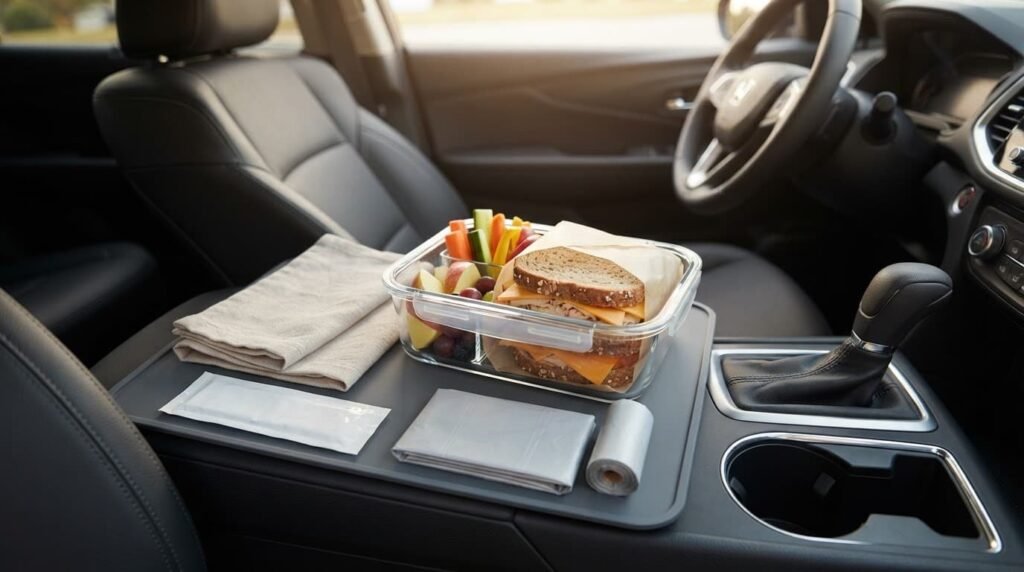
A leak-resistant container keeps small foods from shifting around the bag. Place sandwiches in a snug container or reusable sandwich pouch, then use separate compartments for fruit, vegetables, and snacks. Wraps should stay seam-side down so the filling presses against the tortilla instead of escaping.
For perishable foods, use an insulated lunch bag with at least two cold sources. The USDA recommends keeping cold food at 40 degrees F or below and discarding perishables left out for more than two hours, or one hour when temperatures exceed 90 degrees F. Follow the USDA guidance for keeping bag lunches safe, especially when a commute turns into a longer trip.
Pack a Small Cleanup Kit
Even a well-designed lunch can leave a few crumbs or a smear of sauce. Pack cleanup supplies in the same place every time, so you can reach them quickly when parked.
A practical kit includes:
- Several napkins for dry spills and greasy fingers.
- Wet wipes for hands and small messes.
- A small trash bag for wrappers, peels, and used wipes.
- A leak-resistant container for foods that need extra protection.
- A resealable bag for unfinished portions or dirty packaging.
Keep the trash bag open and accessible after you park, rather than burying it under the lunch. If something leaks, place the container inside a second sealed bag before it goes into the cooler.
These ideas are designed for convenience during a road trip or commute, not to encourage distracted driving. Pull over before opening containers, unwrapping food, or eating. When traffic, weather, or road conditions demand your attention, keep both hands available and save lunch for a safe stopping place.
How to Pack Easy Car-Friendly Lunches That Stay Fresh
Fresh, mess-free food starts with smart packing. Choose foods that hold their shape, chill them quickly, and keep every wet ingredient in its own sealed container. A few extra minutes at home can prevent soggy bread, warm yogurt, and leaks during the drive.
Build the Lunch Around Temperature
Start by chilling perishable ingredients before packing them. Cold chicken, eggs, cheese, yogurt, dips, and cut fruit should go straight from the refrigerator into an insulated lunch bag or small cooler. A soft-sided bag works well for a commute, while a hard cooler offers better protection for longer road trips.
Use two frozen gel packs whenever possible. Place one at the bottom of the bag and another on top of the perishable food. This surrounds the meal with cold air and helps prevent warm spots. Frozen water bottles or frozen juice boxes can work as additional cold sources, but leave enough room for the food to sit snugly without crushing it.
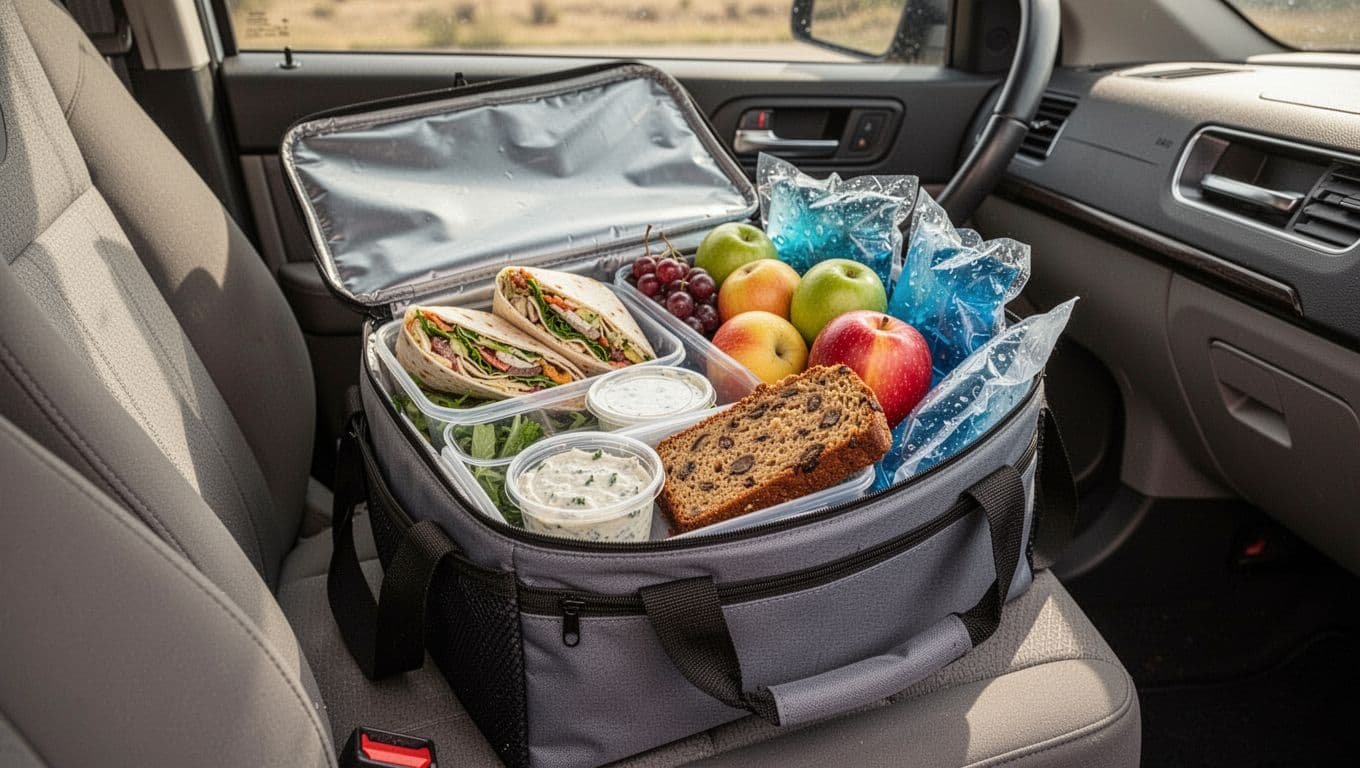
Keep the bag closed until you’re ready to eat, and store it out of direct sunlight. A hot car can raise food temperatures quickly, especially when the cooler sits on a warm seat or dashboard. If you’ll be away from refrigeration for several hours, pack extra cold sources or plan to buy a fresh meal later.
The USDA recommends keeping cold foods at 40°F or below and hot foods at 140°F or above. Perishable food should not remain unrefrigerated for more than two hours, or more than one hour when temperatures exceed 90°F. The USDA food safety temperature guidance explains why the 40°F to 140°F range requires extra care.
Hot foods need the right container as well as the right temperature. Preheat an insulated food jar with hot water, empty it, then add steaming food. Keep the lid closed until you stop to eat, and check that leftovers reached 165°F before packing them.
Read also: 20 Easy Lunch Recipes for Busy Workdays
Seal Moist Ingredients Separately
Sauces, dressings, yogurt, salsa, and dips can turn a neat lunch into a leaking mess. Pack each one in a small, leak-resistant container with a secure lid. Place those containers upright in a separate reusable bag, then add them to the cooler where they can’t shift against bread or fruit.
For wraps and sandwiches, spread only a thin layer of sauce, or leave it out until serving. Pack hummus with vegetables, ranch with pretzels, and yogurt with fruit in their own containers. This keeps the main food firm and lets you control each bite.
If you’re choosing recipes for the week, browse easy everyday meal ideas for foods that can be portioned before you leave. A slice of moist banana zucchini bread also travels well as a portable side or sweet finish when wrapped separately.
Cook Ingredients Before You Pack
Cook meat, eggs, fish, and leftovers to safe internal temperatures before cooling and packing them. Poultry needs to reach 165°F, while ground meat and eggs should reach 160°F. Fish requires 145°F, and leftovers should be reheated to 165°F before they go into a hot container.
Use a food thermometer when preparing chicken wraps, meatballs, egg bites, or reheated pasta. Then refrigerate cooked food promptly instead of leaving it on the counter to cool for a long period. Once packed, keep it cold until you reach a safe place to eat.
Pack the food cold, keep the cooler closed, and separate every ingredient that can leak.
Before leaving, check that lids are tight, gel packs are fully frozen, and the lunch bag stays upright. That simple routine keeps car-friendly lunches fresh, contained, and ready for a safe stop.
Read also: 30 Healthy Lunch Ideas for Work That Are Easy to Make
100 Mess-Free Lunch Ideas for Eating While Driving
The best car-friendly lunches are compact, sturdy, and easy to portion before you leave. Choose foods that hold their shape, keep wet ingredients contained, and don’t require a knife and fork.
For safety, pull over before opening containers or eating. Keep meat, eggs, dairy, fish, and other perishable foods chilled at 40°F or below in an insulated bag with cold packs.
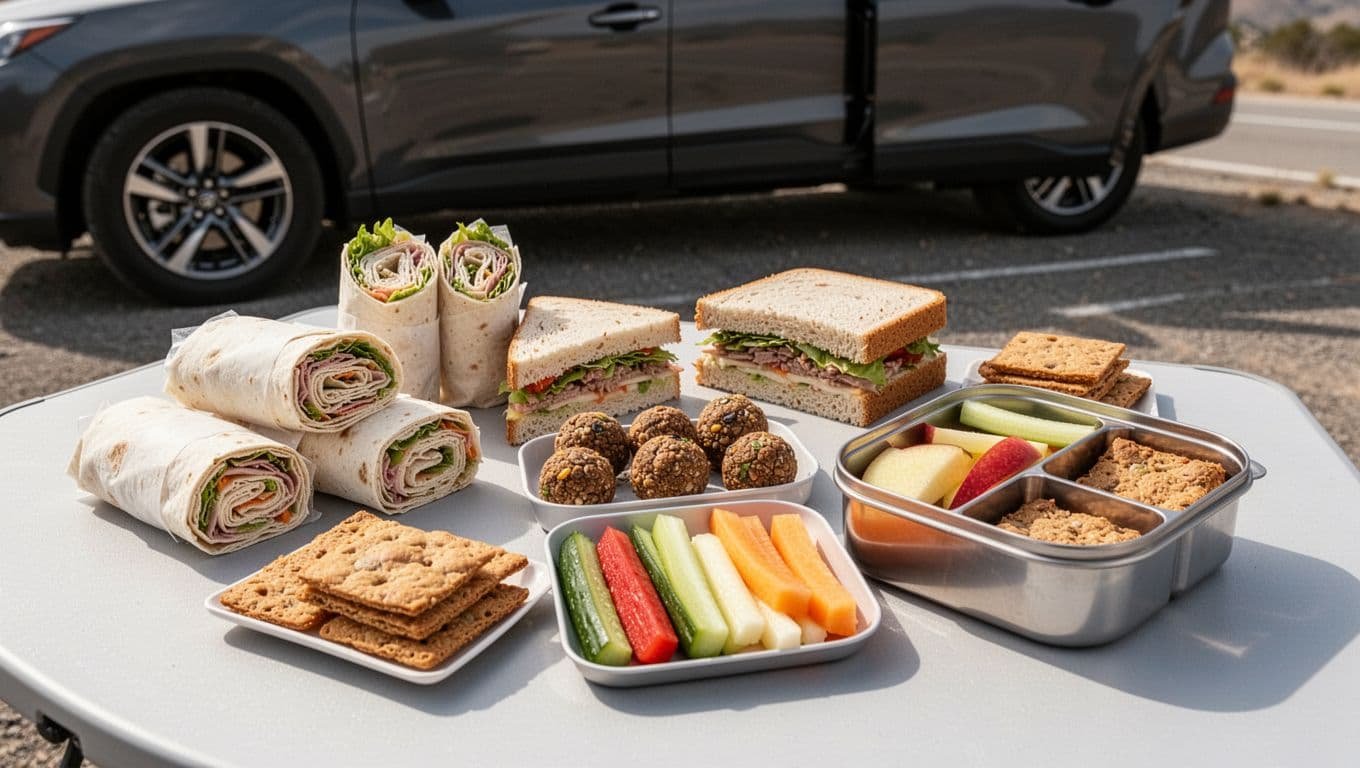
Wraps, Roll-Ups, and Pressed Sandwiches That Hold Together
Tortillas, pita, bagels, and pressed bread are often easier to handle than soft bread piled with wet fillings. Wrap each item tightly, cut it into manageable portions, and pack sauces separately when needed.
- Turkey and cheese tortilla pinwheels: Roll tightly, chill, and slice into bite-size rounds.
- Hummus and roasted vegetable wrap: Use firm roasted vegetables and wrap in parchment.
- Chicken Caesar wrap: Add crisp chicken and pack the dressing separately.
- Ham and cheese roll-ups: Secure each roll with a toothpick or wrap snugly.
- Peanut butter and banana tortilla: Use a thin spread and a firm banana.
- Tuna lettuce wraps: Place tuna in sturdy lettuce leaves and seal in a container.
- Egg salad pita pocket: Use a limited amount of filling to prevent overflow.
- Roast beef and cheddar wrap: Add spinach for structure, then roll tightly.
- Black bean and cheese burrito: Press out excess moisture before wrapping.
- Chicken pesto roll-ups: Use a light pesto layer to avoid greasy dripping.
- Turkey and avocado wrap: Choose firm avocado and skip excess sauce.
- Pressed Italian sandwich: Use sliced meats and cheese without tomato.
- Salmon and cream cheese bagel halves: Keep the cream cheese layer thin.
- Chickpea salad pita pocket: Mash the filling well so it stays contained.
- Mozzarella and basil flatbread roll: Pat the mozzarella dry before rolling.
- Grilled cheese sandwich fingers: Cool slightly, then cut into easy-to-hold strips.
- Barbecue chicken wrap: Pack barbecue sauce separately for dipping while parked.
- Breakfast burrito halves: Wrap eggs, potatoes, and cheese in foil or parchment.
- Caprese skewers with bread: Pair mozzarella, basil, and bread instead of loose salad.
- Turkey, apple, and cheddar sandwich: Use firm apple slices and press the sandwich.
Protein-Packed Bites for a Filling Road Trip Lunch
Small protein-rich foods can keep lunch satisfying without creating a large, unstable meal. Pack eggs, meat, fish, dairy, and other perishables with cold sources, then eat them soon after removing them from refrigeration.
- Mini frittata muffins: Bake them firm and pack them in a snug container.
- Hard-boiled eggs: Peel them at home and store them in a sealed container.
- Turkey meatballs with toothpicks: Bake them until firm and add picks before leaving.
- Chicken salad lettuce cups: Fill sturdy lettuce leaves lightly to prevent spilling.
- Cheese cubes with whole-grain crackers: Keep crackers separate so they stay crisp.
- Beef or turkey jerky: Choose thick pieces that resist crumbling.
- Baked chicken tenders: Cool completely, then wrap each portion separately.
- Ham and cheese skewers: Alternate firm cubes and secure them in a shallow container.
- Roasted chickpeas: Let them cool fully so they remain crunchy.
- Edamame pods: Pack chilled pods in a sealed container with a small trash bag.
- Smoked salmon cucumber rounds: Use thick cucumber slices and minimal cream cheese.
- Mini quiches: Bake them in small molds for firm, self-contained portions.
- Egg and cheese breakfast muffins: Keep them chilled until you’re ready to stop.
- Falafel bites with hummus: Pack the hummus separately in a leak-resistant cup.
- Tofu cubes with sesame seasoning: Press the tofu dry before seasoning.
- Mini turkey burgers: Skip loose toppings and wrap each slider individually.
- Tuna-stuffed mini peppers: Fill peppers lightly and keep them upright.
- Cottage cheese with crackers: Use a sealed cup and pack crackers separately.
- Grilled chicken strips: Slice them evenly and wrap them in parchment.
- Bean-and-cheese quesadilla wedges: Cook until firm and pack wedges in a stack.
Fruit and Vegetable Lunches That Stay Neat and Fresh
Firm produce creates less juice and usually needs less preparation on the road. Slice everything at home, use separate compartments, and choose whole fruits when peeling would be inconvenient.
- Apple slices with a nut butter pouch: Add a small sealed pouch for dipping.
- Grapes and cheddar cubes: Pack both in separate compartments to prevent moisture.
- Clementines with cheese sticks: Leave clementines whole for easy peeling at a stop.
- Banana with a peanut butter packet: Choose a firm banana and keep the packet sealed.
- Carrot and cucumber sticks with hummus: Use a leak-resistant cup for the hummus.
- Snap peas with turkey slices: Pair crisp peas with rolled turkey portions.
- Celery sticks filled with cream cheese: Chill them upright in a narrow container.
- Bell pepper strips with pita chips: Pack the chips away from any dip.
- Pear wedges with walnuts: Choose a firm pear and coat wedges lightly with lemon.
- Berries with yogurt: Use a leak-resistant yogurt container and keep it cold.
- Melon cubes with mozzarella: Drain the melon well before packing.
- Broccoli florets with ranch: Pack the ranch on the side in a sealed cup.
- Mini cucumbers with tuna packets: Keep the tuna unopened until you’re parked.
- Cherry tomatoes with mozzarella pearls: Use a secure container to prevent rolling.
- Dried fruit with fresh apple: Keep dried fruit separate so the apple stays crisp.
- Avocado half with lime: Bring a spoon and eat this only when parked.
- Roasted vegetable skewers: Use firm vegetables and wrap the ends securely.
- Sweet potato wedges: Roast them until firm, then cool before packing.
- Jicama sticks with lime: Pack lime separately to keep the sticks dry.
- Fruit-and-cheese bento box: Add firm fruit, cheese cubes, and a sealed crunchy side.
Dry Snacks and Baked Lunches With Almost No Cleanup
Low-moisture foods are useful when you want almost no spills or cleanup. Wrap baked foods individually, and choose sturdy containers that keep crumbs from spreading throughout the car.
- Trail mix: Use a resealable pouch with larger pieces that are easy to grab.
- Homemade oat bars: Wrap each bar in parchment or a small reusable sleeve.
- Portable banana zucchini bread: Wrap individual slices before placing them in a firm container.
- Whole-grain crackers with hard cheese: Keep cheese in a separate compartment.
- Rice cakes with nut butter packets: Use packets instead of an open jar.
- Roasted corn nuts: Pack them in a small sealed bag to control crumbs.
- Baked vegetable chips: Choose thicker chips that won’t crumble immediately.
- Pretzel-and-cheese packs: Separate the pretzels from cheese to preserve texture.
- Granola clusters: Use a container with a tight lid instead of a loose bag.
- Popcorn: Fill a sealed bag only partway so pieces don’t spill when opened.
- Seaweed snack sheets: Keep them flat in a rigid container.
- Whole-grain cereal cups: Choose larger cereal pieces that create fewer crumbs.
- Almond flour muffins: Wrap each muffin individually to contain loose crumbs.
- Oatmeal breakfast cookies: Bake them firm and stack them between parchment sheets.
- Dried fruit and seed mix: Use a wide-mouth container for easier access.
- Rice crackers with salmon packets: Keep the packet unopened until you’re ready to eat.
- Whole-wheat pita chips: Pack them in a rigid container to prevent crushing.
- Homemade energy bites: Chill them first, then place them in one layer.
- Tortilla chips with bean dip: Use a sealed dip cup and a small chip portion.
- Mini cornbread squares with turkey slices: Wrap the cornbread separately to reduce crumbs.
Bento-Style Lunch Combos With Every Item in Its Place
Compartmented containers help keep wet and dry foods apart, but don’t assume every bento box is leakproof. Check the manufacturer’s seal, and place dips or juicy foods in separate leak-resistant cups.
- Turkey pinwheels with grapes and crackers: Keep each item in its own compartment.
- Mini pancakes with sausage links and berries: Use small pancakes that stay firm when cold.
- Chicken strips with cucumber and pita: Pack cucumber away from the pita.
- Cheese quesadilla wedges with apple slices: Cool the quesadilla before closing the container.
- Hummus with carrots and pretzel sticks: Use a sealed cup for the hummus.
- Sushi-style cucumber sandwiches with edamame: Press the bread firmly around the filling.
- Mini bagel pizzas with grapes: Serve the bagel pizzas cold and wrap them separately.
- Ham roll-ups with melon and crackers: Drain the melon before adding it to the box.
- Egg muffins with orange wedges: Keep the egg muffins chilled and oranges peeled at home.
- Peanut butter toast fingers with banana: Use firm toast and pack banana pieces separately.
- Cold pasta salad with cheese cubes: Choose short pasta and a sealed container.
- Falafel with cucumber and pita chips: Keep hummus in a separate leak-resistant cup.
- Roast beef bites with pear slices: Use toothpicks for the beef and firm pear pieces.
- Tuna crackers with carrot sticks: Pack tuna in a sealed pouch or cup.
- Chicken salad lettuce cups with berries: Keep the filling modest and berries dry.
- Mini waffles with turkey bacon: Cool both foods before packing them together.
- Black bean dip with tortilla strips and bell pepper: Seal the dip and separate the strips.
- Cheese and fruit skewers with oat bars: Wrap the skewers and oat bar individually.
- Turkey meatballs with roasted potatoes: Use toothpicks and a sturdy shallow container.
- Jerky, hard cheese, apple slices, and whole-grain crackers: Arrange each item in its own compartment.
Perishable combinations should remain chilled until you’re ready to eat. The USDA recommends using an insulated container with cold sources and discarding perishable food left at room temperature for more than two hours, or one hour when temperatures exceed 90°F. You can review the USDA guidance for safe bag lunches before packing a longer road trip.
How to Choose the Best Lunch for Your Route and Appetite
The best lunch depends on more than what sounds good at home. Consider how long you’ll drive, whether you can stop, how hot the weather will be, and how hungry you’ll feel when you reach your next safe stopping place.
A short commute may only need a compact snack box, while a full road trip calls for a chilled, protein-rich meal. Match the food to the route before you pack it, and you’ll avoid carrying something that melts, leaks, or leaves you hungry.
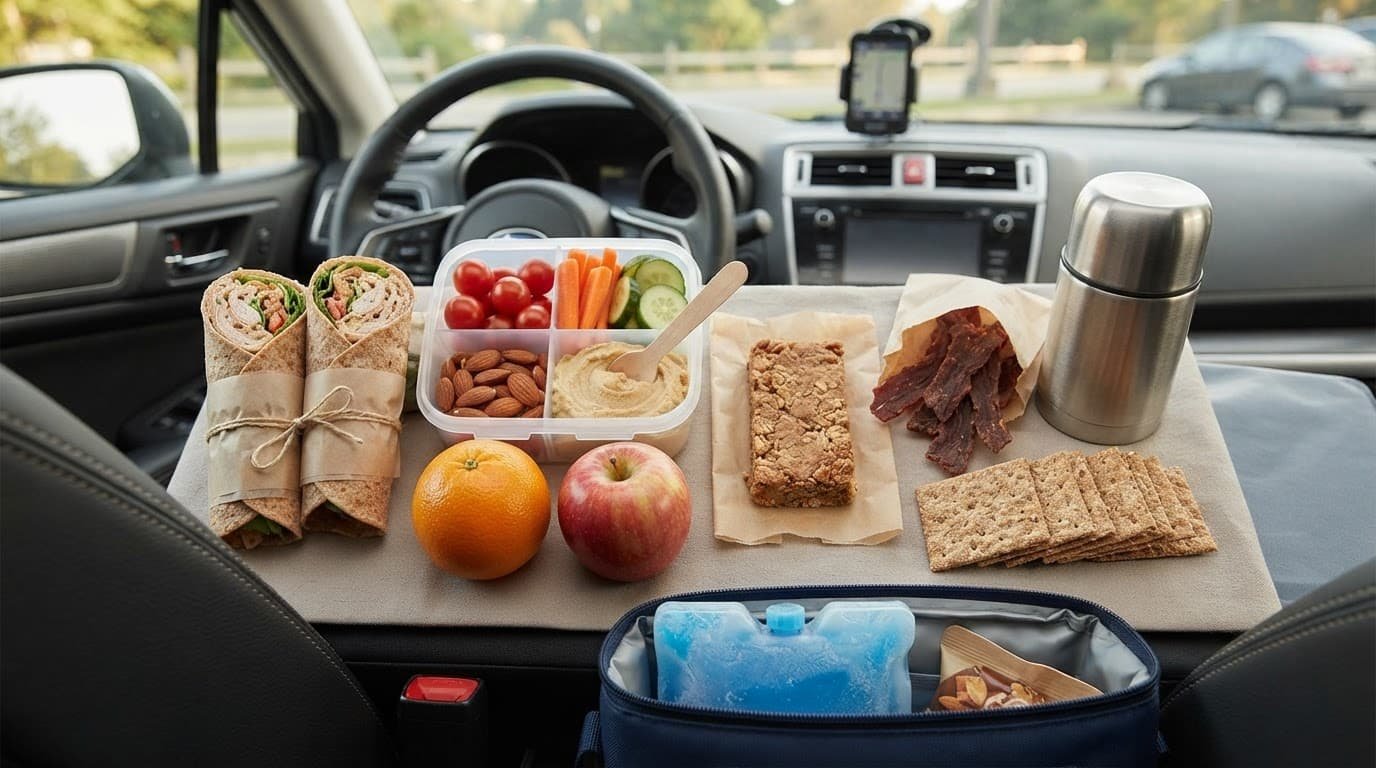
Match the Food to the Drive
For short stops or hot travel conditions, choose dry, shelf-stable foods that don’t depend on a cooler. Crackers, jerky, whole fruit, nuts, roasted chickpeas, and baked bars are easier to carry because they resist leaking and warming.
When you have an insulated cooler with frozen gel packs, chilled foods give you more filling options. Pack chicken, cheese, hard-boiled eggs, yogurt, tuna, or cut vegetables directly from the refrigerator. Keep the cooler at 40°F or below, and use plenty of ice or frozen packs. The USDA’s bag lunch safety guidance recommends at least two cold sources for small insulated lunch bags.
For a quick meal break, choose a compact handheld food such as a tightly wrapped burrito, pita pocket, pinwheel, or pressed sandwich. Still, pull over before opening the package or eating. Soup can also work when you’re parked, packed in a sealed, preheated thermos. Use easy lunch-friendly soup recipes as inspiration for a planned stop, not for eating while actively driving.
| Lunch format | Mess level | Storage needs | Fullness |
|---|---|---|---|
| Wraps and pressed sandwiches | Low to medium | Cool or room temperature, depending on fillings | High |
| Snack boxes | Low | Cooler for meat, dairy, or dips | Medium to high |
| Baked foods | Low | Usually shelf-stable for short trips | Medium |
| Chilled protein options | Low when sealed | Insulated cooler with cold packs | High |
Build a Small Lunch That Satisfies
A small lunch feels more substantial when it combines protein, fiber, and healthy fats. Pair turkey with whole-grain crackers, hummus with vegetables, or peanut butter with an apple. Nuts, seeds, avocado, olive-based spreads, and cheese can add staying power, although dairy and other perishables need reliable chilling.
Choose vegetarian options such as falafel, roasted chickpeas, egg bites, or cheese with fruit. For dairy-free meals, use hummus, nut butter, tofu, beans, or dairy-free protein bites. Gluten-free travelers can pack corn tortillas, rice crackers, potatoes, fruit, and gluten-free baked bars.
If you’re limiting sugar, favor jerky, eggs, vegetables, cheese, nuts, or unsweetened whole-grain snacks. Kid-friendly lunches work best when familiar foods stay separate, such as apple slices, turkey roll-ups, crackers, and a small baked treat. High-moisture foods need stronger temperature control, while dry snacks remain easier to carry when the route gets long or the weather turns hot.
Frequently Asked Questions
Even with the right recipes and packing methods, a few practical questions can come up before you leave. These answers cover the details that often decide whether a car lunch stays convenient or becomes difficult to manage.
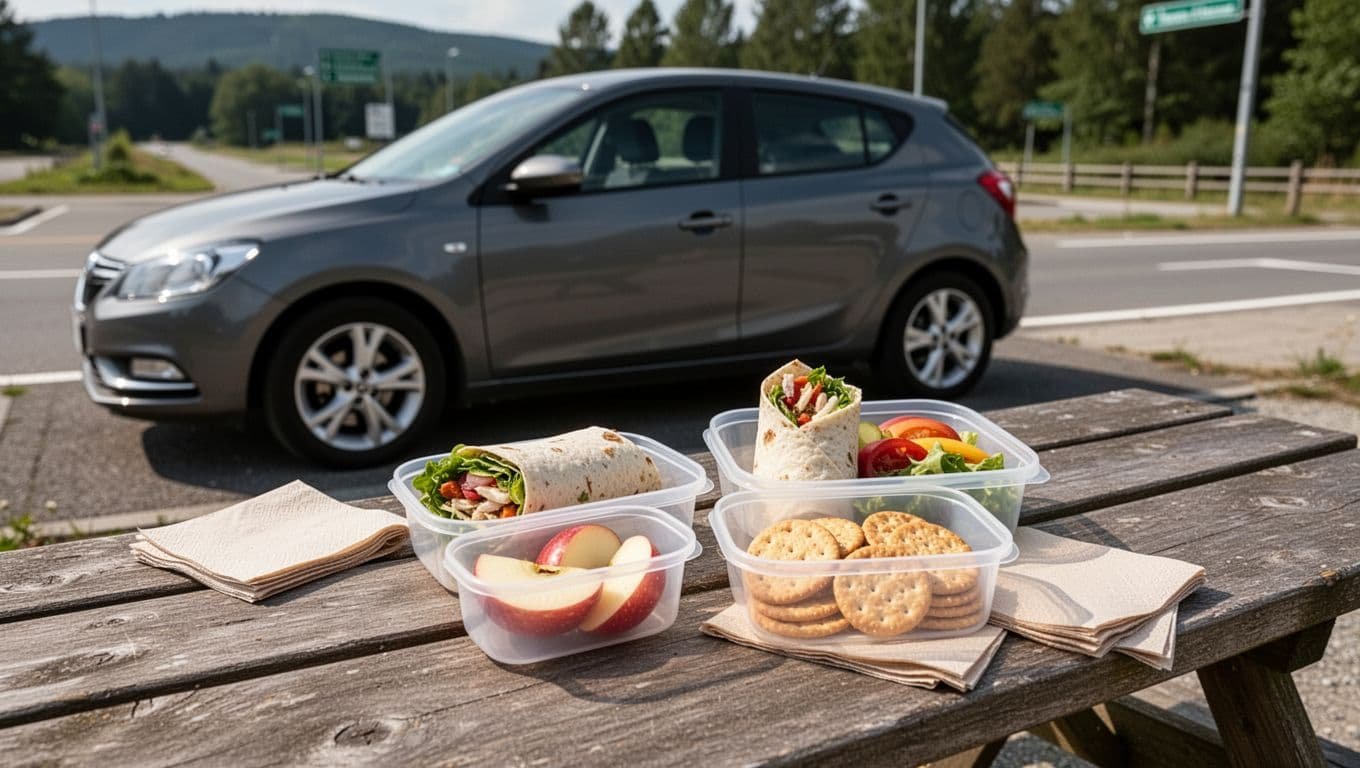
What are the best lunch foods if I don’t have a cooler?
Choose shelf-stable foods that don’t depend on refrigeration for a short trip. Whole fruit, jerky, trail mix, crackers, nut butter packets, roasted chickpeas, pretzels, and individually wrapped baked goods are practical choices.
For a more filling meal, combine a dry protein with a sturdy carbohydrate. Peanut butter with crackers, jerky with an oat bar, or roasted chickpeas with pita chips can keep you satisfied without adding sauces or perishable ingredients.
Can I prepare a car-friendly lunch the night before?
Yes, but store each food according to its safety needs. Prepare dry foods and baked items the night before, then refrigerate sandwiches, cooked meat, eggs, cheese, fruit, and dips in sealed containers.
Pack the insulated lunch bag in the morning with fully frozen cold sources. If you assemble a sandwich ahead of time, keep wet fillings away from the bread and wrap the sandwich tightly so it holds its shape overnight.
What type of container works best for eating in the car?
A shallow, sturdy container with a secure lid usually works better than a deep container. It keeps food from shifting and lets you see the contents without digging through the entire lunch bag.
Use separate leak-resistant cups for hummus, dressing, salsa, yogurt, and other moist foods. A divided container is useful for dry foods, but don’t assume its compartments are leakproof unless the manufacturer says they are.
How can I keep crumbs from spreading through the car?
Start with foods that have a firm texture and a manageable portion size. Wrap sandwiches, bars, muffins, and quesadilla wedges individually, then place them in a container that prevents movement.
Avoid opening large bags of chips or crackers inside the car. Portion dry snacks into small resealable bags at home, and keep a trash bag within reach for wrappers, peels, and used napkins.
The easiest cleanup is the one you prevent before leaving the driveway.
Is it safe to eat lunch while driving?
Eating takes your hands, eyes, and attention away from driving, even when the food seems easy to handle. The National Highway Traffic Safety Administration includes eating and drinking among common forms of distracted driving, so the safest approach is to pull over before opening or eating your lunch.
Choose foods that are simple to eat after you park, rather than trying to make a meal manageable at moving speed. For more food-handling information, the USDA food safety resources cover safe preparation, storage, and transport.
What should I do with leftover lunch at the end of the trip?
Return perishable leftovers to refrigeration as soon as possible. If food has spent too long in a warm car, has lost its chill, or sat without reliable cold sources, discard it instead of relying on smell or appearance.
Dry foods can usually return to the pantry if their packaging stayed clean and dry. For reusable containers, empty them promptly, rinse away residue, and wash them thoroughly before the next trip so odors and bacteria don’t build up.
Conclusion
A car lunch should make the trip easier, not turn the seats and floor into a cleanup job. Choose firm handheld foods that hold their shape, then pair one filling main item with fruit, vegetables, and a small snack from these 100 ideas. Wraps, pressed sandwiches, pinwheels, meatballs, cheese, crackers, and sturdy produce are easier to portion and pack than foods with loose toppings or runny fillings.
Prepare single servings before leaving so you won’t need to cut, assemble, or open several containers on the road. Pack sauces, dips, and other moist ingredients separately, and keep meat, eggs, dairy, fish, and other perishables cold in an insulated bag with frozen cold sources. Discard perishable food that stays out too long, especially in a hot car.
Most importantly, no lunch is worth distracted driving. Pull over before opening your meal or eating, even when the food seems simple to handle. With a little preparation, your commute or road trip can stay cleaner, easier, and more enjoyable from the first bite to the final mile.
Save the pin for later

I’m the creator of My Everyday Dish, a food blog focused on easy homemade recipes, comforting family meals, simple baking, and seasonal food ideas. I love finding practical ways to make everyday cooking less stressful and more enjoyable. Here, I share recipes with simple ingredients, clear instructions, and plenty of flavor, helping you make delicious meals and treats you’ll feel confident serving at home.
Leave a Reply