
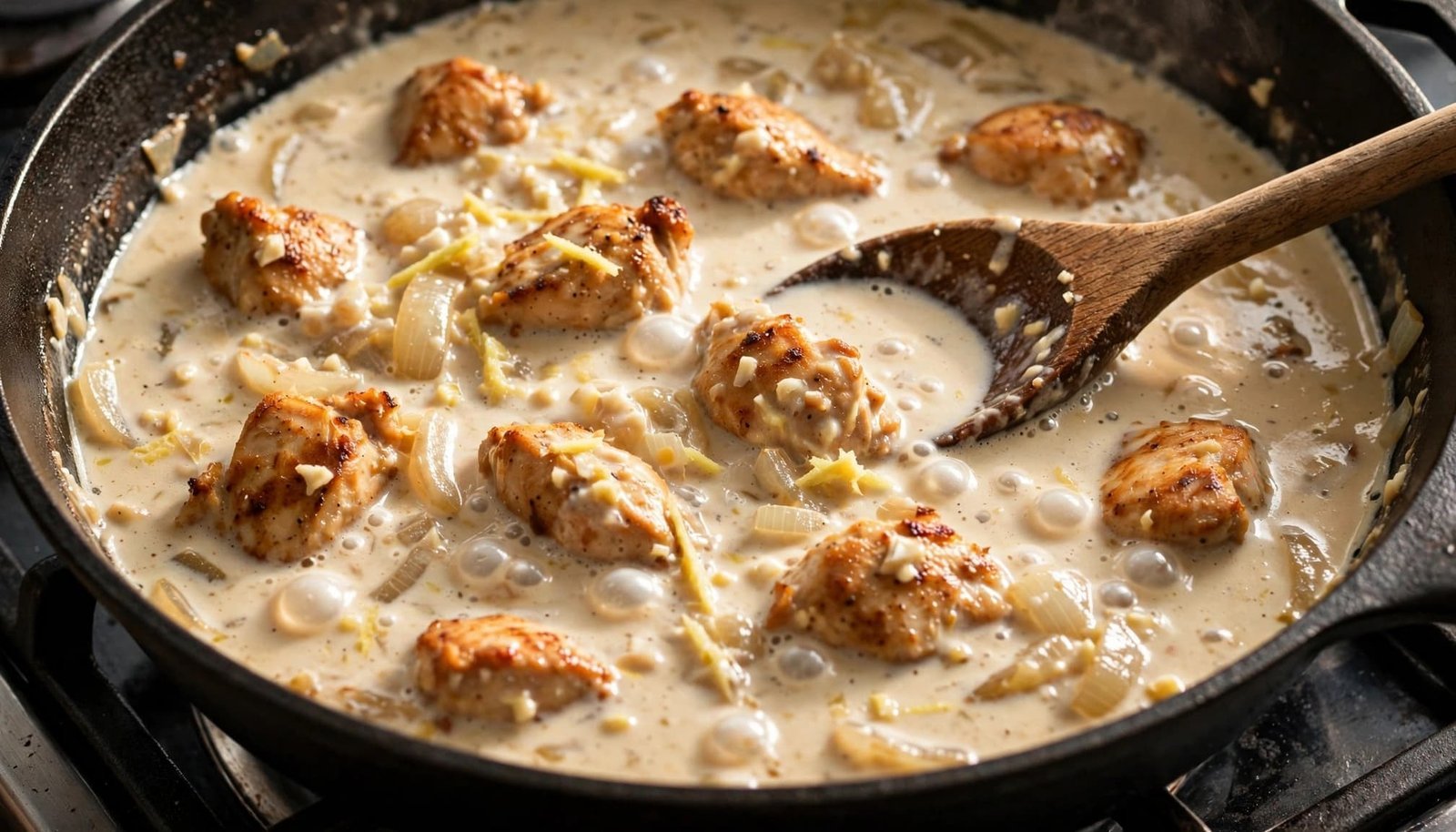
Tender chicken in a coconut milk sauce makes a comfortable dinner with little preparation. This creamy Chinese chicken with coconut milk combines savory soy sauce, fresh garlic, and ginger in a one-pan dinner that pairs well with rice.
It’s a Chinese-inspired home-cook adaptation rather than a traditional Chinese dish, with lime and chili available if you want them. Brown the chicken first, then build the sauce in the same skillet so the browned bits add flavor. The step-by-step method below keeps the cooking manageable and gives you clear stopping points.
Creamy Chinese Chicken With Coconut Milk: Ingredients and Step-by-Step Recipe
Serves: 4, with rice or another side
Prep time: 15 minutes
Cook time: About 25 to 30 minutes
Total time: About 40 to 45 minutes
You’ll need a large, deep skillet, a cutting board, a knife, a wooden spoon, and a food thermometer. A 12-inch skillet gives the chicken room to brown without crowding.
What You’ll Need for the Coconut Milk Chicken
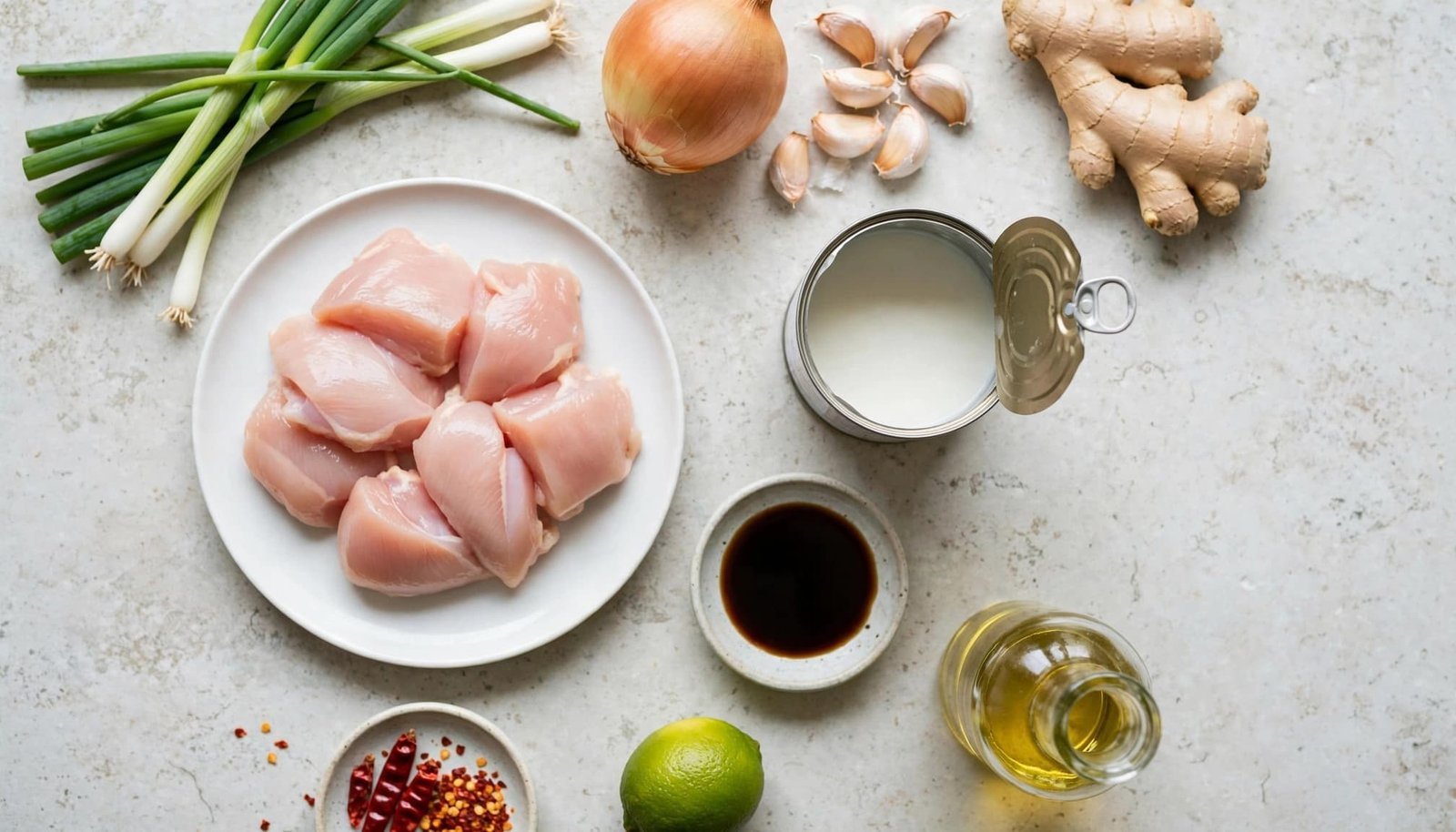
- 1½ pounds boneless, skinless chicken thighs or breasts
- 1 tablespoon neutral cooking oil, plus a little more if needed
- 1 medium onion, finely diced
- 4 garlic cloves, minced
- 1 tablespoon freshly grated ginger
- One 13.5-ounce can unsweetened, full-fat coconut milk
- 2 tablespoons low-sodium soy sauce
- ¼ teaspoon ground black pepper
- Up to ¼ cup low-sodium chicken broth or water, optional
- 1 to 2 teaspoons fresh lime juice, optional
- 1 teaspoon brown sugar, optional
- ¼ teaspoon chili flakes, optional
- A small pinch of salt, only if needed after tasting
Chicken thighs stay juicy through gentle simmering. Breasts give you a leaner result, but they need closer attention near the end so they don’t become dry.
Full-fat coconut milk gives the sauce more body than light coconut milk. Choose unsweetened canned coconut milk rather than a refrigerated coconut beverage, which is usually too thin for this sauce.
Low-sodium soy sauce gives you more control over seasoning. Keep the extra salt aside until the chicken is cooked and you can taste the finished sauce.
How to Cook the Chicken and Build the Sauce
Have the onion, garlic, and ginger ready before heating the skillet. Once the garlic goes in, the next steps move quickly.
- Prepare the chicken. Pat it dry, then cut it into roughly 1-inch pieces. Season with the black pepper. Keep the pieces similar in size so smaller ones don’t overcook while larger pieces finish.
- Brown in batches. Heat the oil over medium-high heat. Add the chicken in a single layer and cook for about 2 to 3 minutes per side. Transfer it to a plate; it doesn’t need to be cooked through yet. Repeat with the remaining chicken.
- Soften the onion. Reduce the heat to medium. Add the onion and cook for 4 to 5 minutes, stirring occasionally, until softened. Add a little more oil if the skillet looks dry.
- Add the aromatics. Stir in the garlic, ginger, and optional chili flakes. Cook for 30 to 60 seconds, until fragrant. Don’t let the garlic turn dark, because burnt garlic makes the sauce bitter.
- Build the sauce. Stir in the coconut milk and soy sauce, scraping the bottom to release the browned bits. Add the optional sugar if using. Pour in broth or water only if you’d like a looser sauce.
- Finish cooking the chicken. Return the chicken and its juices to the skillet. Reduce the heat and gently simmer for about 6 to 10 minutes, stirring occasionally, until the thickest pieces reach 165°F. Follow USDA’s chicken temperature guidance rather than relying on color alone.
- Taste and finish. Remove the skillet from the heat. Stir in 1 teaspoon lime juice if using, then taste before adding more lime or any salt. Spoon the chicken and sauce over rice.
Cooking time varies with the size of your chicken pieces and the heat of your stove. Start checking early, especially when using breasts.
Read also: Easy Homemade Tortellini Soup With Chicken Broth
How to Get a Smooth, Balanced Coconut Milk Sauce

Coconut milk gives the sauce richness, while soy sauce adds savory flavor and salt. Ginger brings a little warmth, and garlic keeps the coconut flavor from dominating.
For creamy Chinese chicken with coconut milk, aim for a sauce that lightly coats a spoon. Stir as the coconut cream melts into the liquid, then keep the heat low enough for small bubbles.
Reduce the sauce before adding more soy sauce. As liquid evaporates, the salt already in the pan becomes more concentrated.
If the sauce looks thin, simmer it gently for a few more minutes. Remove fully cooked chicken first if reducing the sauce would keep it on the heat too long.
Loosen a thick sauce with broth or water, adding a tablespoon at a time. A hard boil isn’t necessary; gentle heat gives you more control over thickness and chicken doneness.
Add lime near the end for brightness. Use the optional sugar sparingly if you prefer a slightly sweeter sauce, then taste again before changing anything else.
What to Serve With This Easy Chicken Dinner
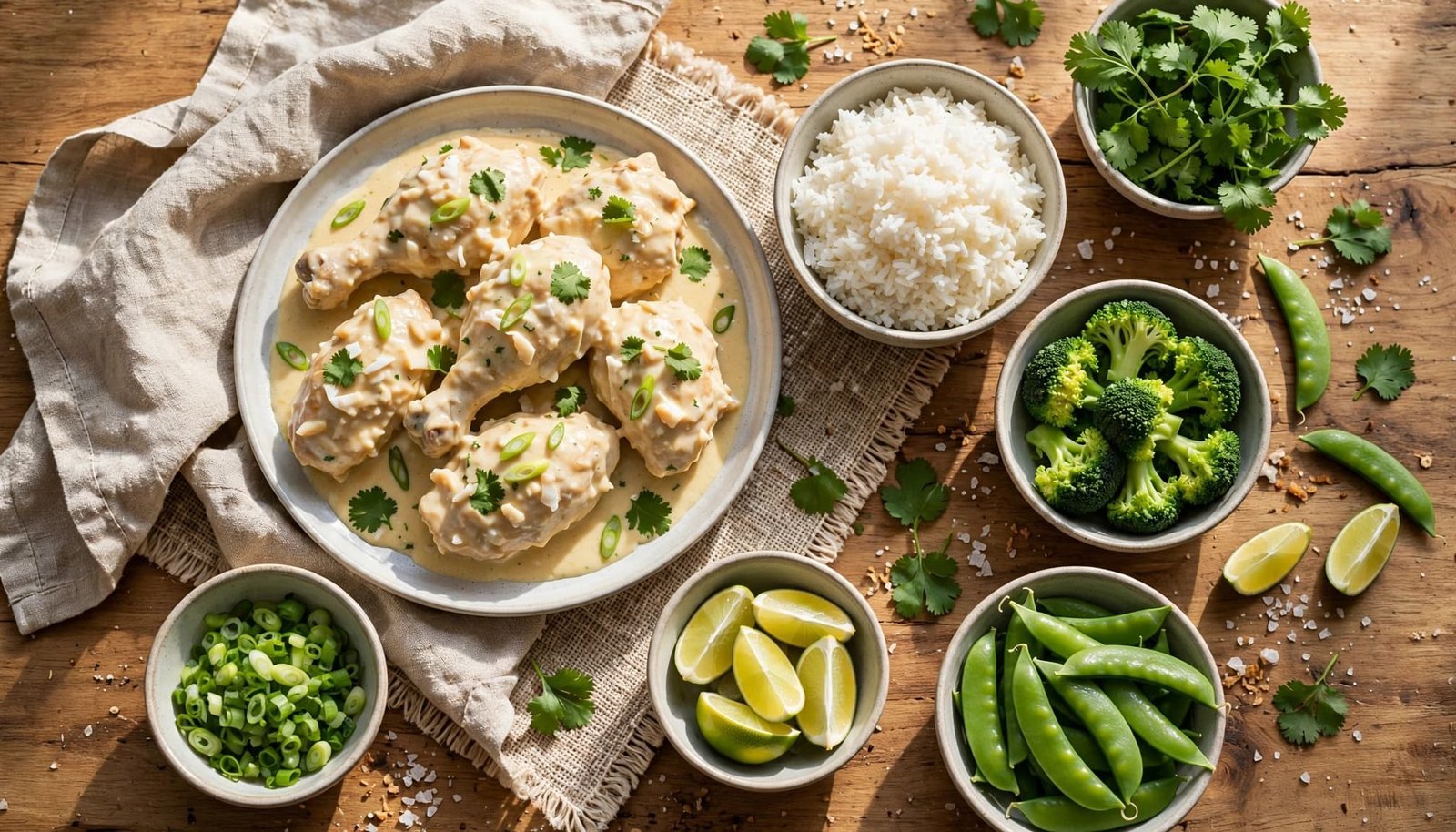
Steamed jasmine rice is a useful first choice because it catches the sauce without adding another strong flavor. Long-grain white rice or brown rice works too; start brown rice early because it takes longer.
Rice noodles make another simple base. Cook and drain them separately, then spoon the chicken and sauce over individual portions so the noodles don’t absorb everything before serving.
Add steamed broccoli, quickly cooked green beans, or snap peas for a fresh side. Keep their seasoning light, since the coconut sauce already brings garlic, ginger, and soy.
Offer scallions, cilantro, lime wedges, or chili flakes at the table. This lets you keep the skillet mild while giving each person room to adjust their bowl.
If you prefer a dinner where the grains cook with the chicken, our one-pot chicken and rice is another practical family option.
Easy Ingredient Swaps and Flavor Variations
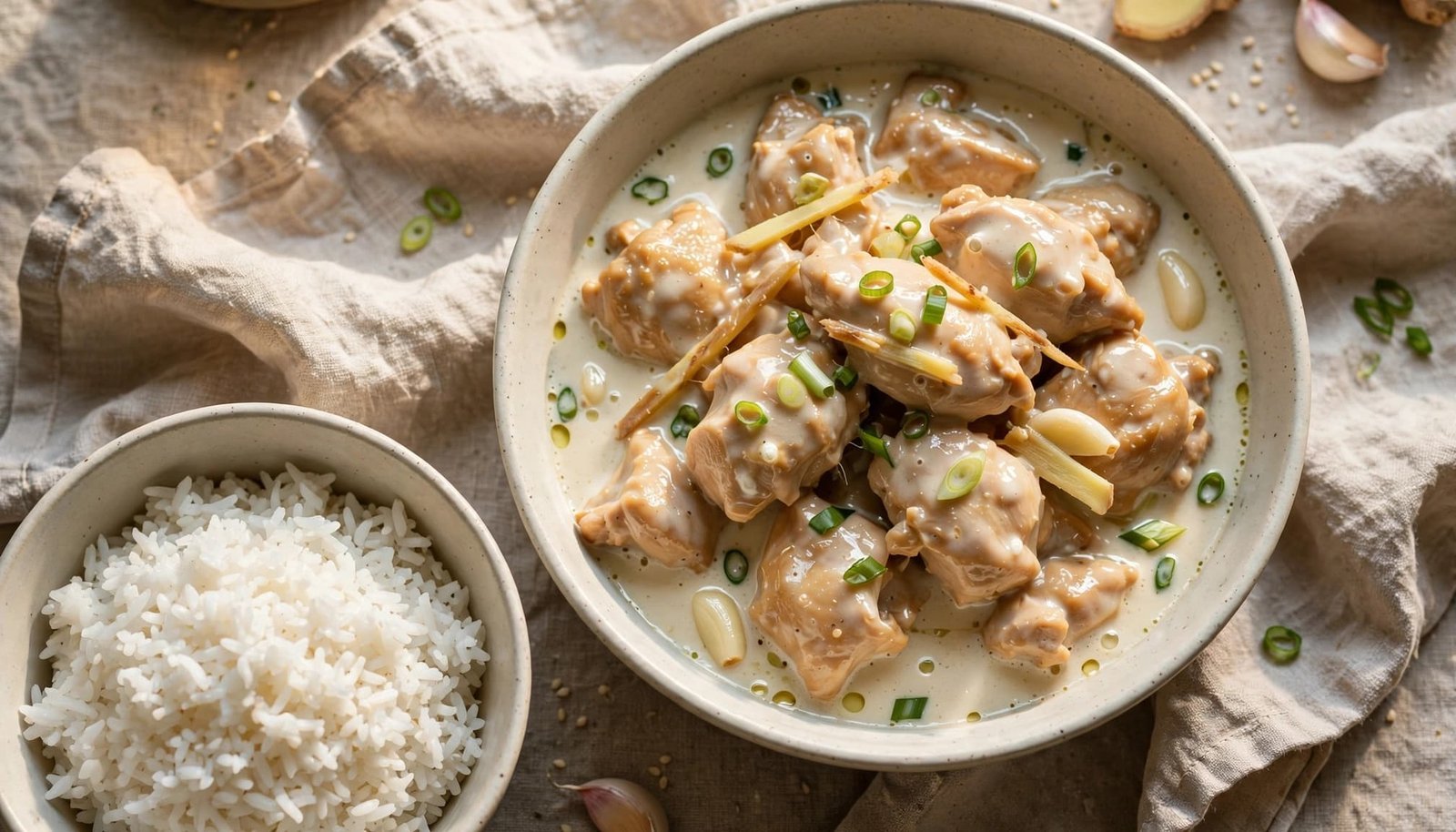
Use thighs or breasts in the same amount, keeping the thermometer as your guide. Trim excess fat from thighs before cutting them, and avoid mixing very small pieces with larger chunks.
Add about 1 cup of small broccoli florets, sliced bell pepper, or snap peas during the final few minutes. Cut vegetables evenly and stop cooking while they still have some bite. Larger additions may need a splash of broth.
Leave out chili for a mild version, then offer flakes at the table. Add lime gradually near the end if you want a brighter finish without making the sauce sharply sour.
Unsweetened coconut cream gives a thicker, richer result, but you may need extra water or broth. Don’t substitute sweetened cream of coconut, which is intended for sweet preparations.
Curry paste is a deliberate variation rather than a required ingredient. It changes the flavor profile, so leave it out when you want soy, ginger, and garlic to remain the main seasonings.
How to Store and Reheat Leftovers Safely

Divide leftovers into shallow, airtight containers and refrigerate within 2 hours of cooking. Shorten that to 1 hour when the surrounding temperature is above 90°F. Don’t wait for a full skillet to cool completely on the counter.
Keep refrigerated chicken for three to four days. Freeze individual portions for longer storage, and use them within three to four months for best quality.
Thaw frozen portions in the refrigerator before reheating. Warm the chicken and sauce gently in a covered skillet, adding a splash of broth or water if the sauce has thickened.
Stir occasionally so the sauce heats evenly, then check that both the chicken and sauce reach 165°F. USDA’s leftover storage and reheating guidance supports the three-to-four-day refrigerator window and reheating temperature.
Store rice separately if possible. This keeps it from absorbing the sauce while refrigerated and lets you adjust each portion when serving.
Frequently Asked Questions
Can I use light coconut milk?
Yes, light coconut milk works, but the sauce will usually be thinner and less rich. Simmer it gently to reduce it a little if needed, removing cooked chicken first so it stays tender.
Can I make this recipe ahead of time?
You can cook the chicken and sauce ahead, then refrigerate them promptly in shallow containers. Reheat gently until everything reaches 165°F, adding broth or water to loosen the sauce. Add fresh toppings after reheating so they keep their texture.
How can I make the sauce thicker?
Try gentle simmering first, especially if the sauce needs only a small adjustment. For a quicker fix, mix 1 teaspoon cornstarch with 1 tablespoon cold water until smooth. Stir it into the simmering sauce and cook for 1 to 2 minutes, then reassess before adding more.
Is this an authentic Chinese recipe?
This is a Chinese-inspired home-cook recipe, not a traditional Chinese dish. Soy sauce, ginger, and garlic provide its flavor cues, while coconut milk makes a creamy sauce suited to this easy skillet method.
A Simple Dinner With Room to Adjust
Brown the chicken, soften the aromatics, then finish everything in a gently simmering coconut sauce. The most useful stopping point is 165°F, which keeps doneness clear without relying on a fixed cooking time.
Serve your creamy Chinese chicken with coconut milk over rice, with vegetables alongside and extra sauce spooned on top. Keep lime and chili available so everyone can adjust their portion without changing the whole pan.
Save the pin for later


I’m the creator of My Everyday Dish, a food blog focused on easy homemade recipes, comforting family meals, simple baking, and seasonal food ideas. I love finding practical ways to make everyday cooking less stressful and more enjoyable. Here, I share recipes with simple ingredients, clear instructions, and plenty of flavor, helping you make delicious meals and treats you’ll feel confident serving at home.
Leave a Reply